Gas Fireplace Logs: Complete Guide to Realistic & Efficient Gas Log Sets
Everything you need to know before buying gas logs — vented vs ventless, BTU sizing, realistic ceramic designs, safety requirements, and expert recommendations for your home.
START YOUR RESEARCHWhy Gas Logs Matter: Gas fireplace logs are the quickest way to transform an existing fireplace into a warm, realistic focal point — without the mess of wood. But choosing the wrong type can lead to poor flame quality, safety issues, or wasted energy. This guide walks you through every decision so you can buy with confidence.
What Are Gas Fireplace Logs?
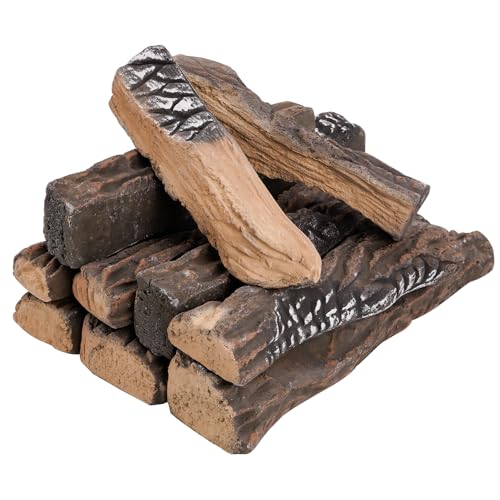
Gas fireplace logs are artificial logs arranged around a gas burner inside a fireplace. When ignited, they produce a flame that mimics a real wood fire. They are typically made from ceramic fiber, refractory cement, or high-temperature composite materials that withstand continuous heat without cracking or discoloring.
Unlike a full gas fireplace insert, gas logs are a decorative and heating accessory designed to sit inside an existing firebox — whether that is a traditional masonry fireplace or a prefabricated unit. They are available in two main configurations: vented and ventless. Each has distinct advantages, installation requirements, and safety considerations that we will break down in the next section.
Modern gas log sets have evolved significantly. Entry-level models offer basic flame patterns and simple controls, while mid-range and premium sets feature hand-painted details, glowing embers, and remote or thermostat operation. If you are still deciding between fuel types, our electric vs gas fireplace comparison can help clarify which direction makes sense for your home.
Vented vs Ventless Gas Logs: Which Is Right for You?
This is the single most important decision you will make. The choice affects installation cost, heating efficiency, indoor air quality, and legal compliance in your area.
| Feature | Vented Gas Logs | Ventless Gas Logs |
|---|---|---|
| Ventilation | Requires a working chimney or flue | No chimney required; burns indoor air |
| Heating Efficiency | Lower — most heat escapes up the chimney | Higher — nearly all heat stays in the room |
| Flame Realism | Taller, more natural flame with soot and embers | Smaller, cleaner blue flame; less realistic |
| Indoor Air Quality | Safe — combustion byproducts vent outside | Requires oxygen depletion sensor (ODS) and CO detector |
| Installation | Needs existing chimney; simpler setup | No chimney needed; ideal for apartments or ventless fireboxes |
| Best For | Homes with a chimney that want maximum realism | Spaces without a chimney or where heating is the priority |
If you have a masonry chimney and want the most authentic fire experience, vented logs are the traditional choice. If you live in a modern home without a flue or want to maximize heat output, ventless logs are the practical option — but you must follow ventless fireplace log guidelines carefully, including room size requirements and carbon monoxide monitoring. For a broader look at installation rules, see our gas fireplace requirements guide.
Types of Gas Logs by Fuel and Design
Gas logs are not one-size-fits-all. They are engineered for specific fuel sources and aesthetic preferences. Here is what you need to know.
By Fuel Type
- Natural Gas Logs: Connected to your home's gas line. Convenient and cost-effective for continuous use. Requires a gas line plumbed to the firebox.
- Propane Fireplace Logs: Ideal for rural homes or areas without natural gas. Requires a propane tank or cylinder. Burns slightly hotter than natural gas.
- LP (Liquid Propane) Conversion Kits: Many log sets are convertible between natural gas and propane with a simple orifice change.
By Design and Realism
- Standard Ceramic Logs: Entry-level and mid-range sets. Molded ceramic with basic coloring. Durable and affordable.
- Hand-Painted Logs: Mid-range to premium. Artisans add bark texture, char marks, and ember glow for higher realism.
- See-Through Log Sets: Designed for double-sided fireplaces. Logs are arranged to look good from both sides.
- Gas Log Sets with Ember Bed: Includes glowing embers, lava rocks, or vermiculite to simulate a real coal or ash bed.
If you are comparing log styles across fuel types, our guide to logs for gas fireplace covers compatibility and sizing in more detail. For electric alternatives that require no gas line, see electric fireplace logs.
Sizing Your Gas Logs: BTU and Firebox Dimensions
Buying the wrong size gas log set is one of the most common mistakes. If the logs are too large, they will not fit the firebox. If the BTU output is too high for the room, you will overheat the space and waste fuel.
Measuring Your Firebox
Before shopping, measure the inside of your firebox: width at the front, width at the rear, depth, and height. Most manufacturers list a minimum firebox size for each log set. As a rule of thumb, the log set should be no wider than two-thirds of the front width of the firebox.
Calculating BTU Needs
BTU (British Thermal Unit) measures heat output. For a rough estimate, you need about 20–30 BTU per square foot of room space in a moderately insulated home. A small bedroom might need 5,000–10,000 BTU, while a large open living room could require 30,000 BTU or more.
Ventless logs are typically rated higher in efficiency because they do not lose heat up a chimney. Vented logs produce more ambiance than usable heat. For a precise calculation, use our fireplace BTU calculator or review the gas fireplace heating capacity BTU guide.
Pro Tip: If you are replacing an old log set, check the burner's BTU rating before buying new logs. The logs must match the burner's output and size. Mixing components from different manufacturers can void warranties and create safety hazards.
Realism, Controls, and Features to Look For
Not all gas logs look the same. The level of realism depends on materials, burner design, and added features. Here is what separates entry-level from luxury sets.
- Burner Type: Pan burners are basic; T-burners and triple-T burners produce taller, more dramatic flames. Ember bed burners create a glowing coal effect.
- Flame Height and Color: Premium sets offer taller flames with yellow tips and blue bases, mimicking real wood combustion.
- Remote and Thermostat Controls: Mid-range and high-end sets include remote controls, wall switches, or thermostatic operation. For replacement options, see fireplace remote control replacement.
- Glowing Embers and Ash Bed: Rock wool, lava rocks, and glowing ember fibers add depth and realism.
- Hand-Painted Details: Top-tier logs feature realistic bark, knots, and char patterns that look convincing even when the fire is off.
If you want to compare how gas logs stack up against other realistic options, our most realistic electric fireplace with mantel review shows how far electric flame technology has come. For a direct comparison, see gas fireplace logs vs electric fireplace logs.
Safety, Ventilation, and Maintenance Essentials
Gas logs are safe when installed and maintained correctly. The two most important safety devices are a carbon monoxide detector and, for ventless sets, an oxygen depletion sensor (ODS).
✓ Safety Must-Haves
- Install a fireplace carbon monoxide detector in the same room
- Ensure proper fireplace ventilation requirements are met
- Keep children and pets away with a fireplace screen with glass doors
- Have a fire extinguisher near fireplace for emergencies
- Schedule annual gas fireplace inspection
✗ Common Mistakes to Avoid
- Using ventless logs in a bedroom or small enclosed space without checking local codes
- Ignoring the ODS or bypassing safety shutoffs
- Placing logs incorrectly — always follow the manufacturer's arrangement diagram
- Skipping annual cleaning of the burner and logs
- Using the wrong fuel type (natural gas vs propane) without a conversion kit
Maintenance Schedule
- Monthly: Dust logs with a soft brush. Check for spider webs or debris around the burner.
- Annually: Inspect the burner, pilot assembly, and ODS. Clean the gas fireplace burner according to manufacturer instructions. Replace glowing embers if they are discolored.
- Before Heating Season: Follow our fall fireplace inspection checklist and winter fireplace preparation guide.
For a complete maintenance routine, see our gas fireplace maintenance guide and fireplace maintenance schedule. If you notice unusual smells or weak flames, consult our gas fireplace troubleshooting section.
How to Choose the Best Gas Fireplace Logs for Your Home
Use this checklist to narrow down your options before you buy.
- Determine vented or ventless. Do you have a chimney? Do you want maximum heat or maximum realism?
- Confirm your fuel type. Natural gas or propane? Check the gas line or tank you have.
- Measure your firebox. Width, depth, and height. Compare against manufacturer minimums.
- Calculate BTU needs. Match the log set's output to your room size. Avoid oversized burners.
- Decide on realism level. Entry-level for budget; mid-range for balance; premium for hand-painted detail and advanced controls.
- Check local codes. Some areas restrict ventless logs. Confirm with your local building department.
- Plan for safety. Budget for a CO detector, screen, and annual inspection.
For a broader buying framework, see our gas fireplace buying guide and fireplace buying guide. If you are considering a full insert instead of logs, compare gas fireplace inserts and gas fireplace inserts with blower options.
Frequently Asked Questions About Gas Fireplace Logs
Ready to Choose Your Gas Logs?
You now have the knowledge to select the right vented or ventless gas log set for your home. Compare top-rated options below and find the perfect match for your firebox, fuel type, and heating needs.
VIEW RECOMMENDED GAS LOGS