
Vented vs Ventless Gas Fireplace: Complete Comparison
Understand the key differences between vented and ventless gas fireplaces to make the best choice for your home heating needs
SEE FULL COMPARISONUnderstanding Gas Fireplace Venting Options
When considering a gas fireplace for your home, one of the most important decisions you'll face is choosing between vented and ventless options. This choice significantly impacts installation requirements, efficiency, safety considerations, and overall performance. Understanding the fundamental differences between these two types will help you make an informed decision that aligns with your home's structure, your heating needs, and your personal preferences.
Both vented and ventless gas fireplaces offer the convenience of gas fuel with realistic flame effects, but they operate quite differently. The right choice depends on various factors including your home's construction, local building codes, ventilation capabilities, and specific heating requirements. This comprehensive comparison will guide you through every aspect you need to consider.
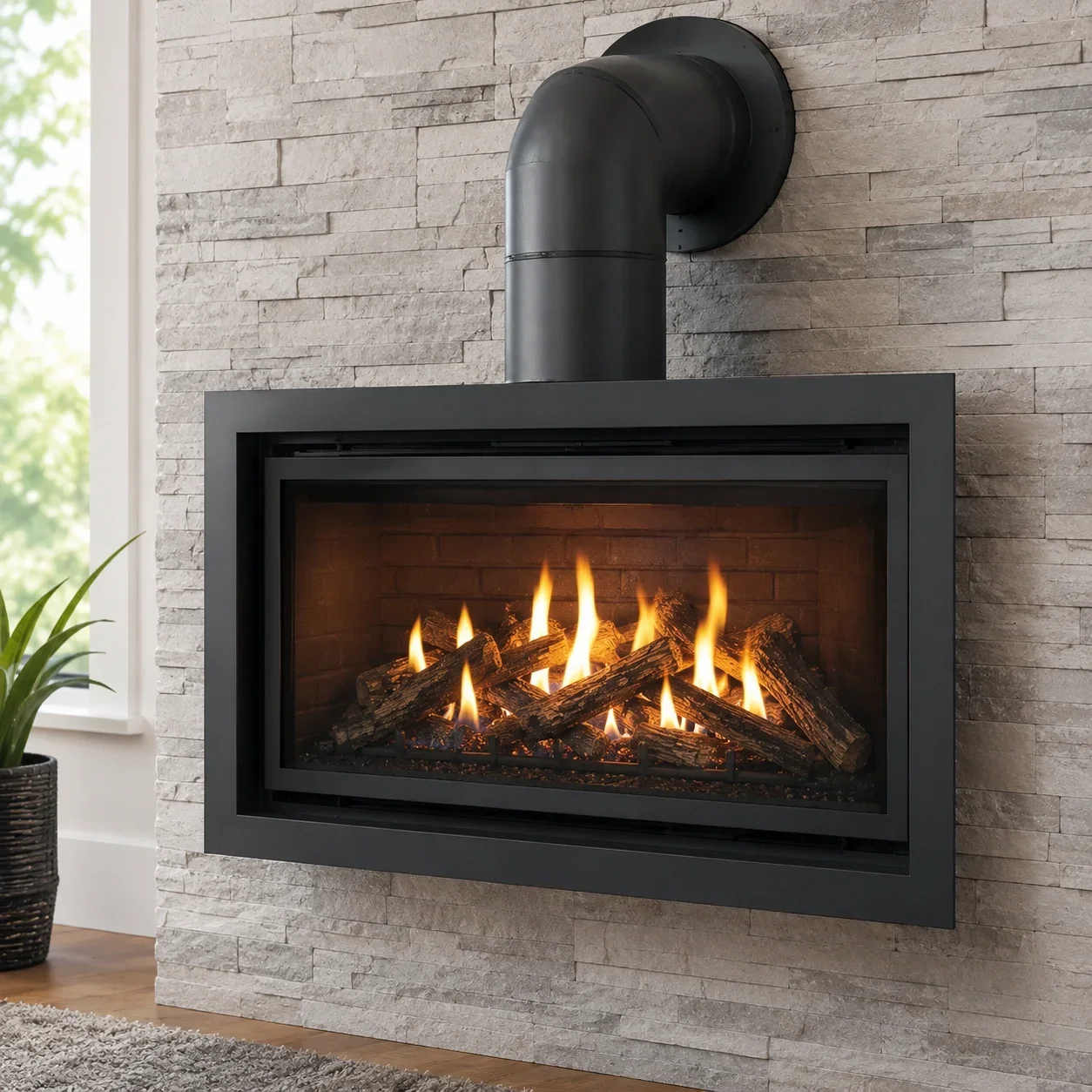
Vented Gas Fireplaces
Require external venting to exhaust combustion byproducts outside. They offer more realistic flames and don't affect indoor air quality, making them ideal for living spaces where air quality is a priority.

Ventless Gas Fireplaces
Operate without external venting, making installation simpler and more flexible. They're nearly 100% efficient since all heat stays inside, perfect for smaller spaces or homes without existing chimneys.
Top Vented and Ventless Gas Fireplace Recommendations
⚠️ AFFILIATE DISCLOSURE: This website contains affiliate links. As an Amazon Associate, we earn from qualifying purchases. If you make a purchase through these links, we may receive a small commission at no additional cost to you. Read our full affiliate policy.

Duluth Forge Dual Fuel Ventless Gas Fireplace Insert - 32,000 BTU, Remote Control - Model# FDI32R
Check price on Amazon
Duluth Forge Dual Fuel Ventless Gas Stove - 26,000 BTU, Remote Control, Matte Black Finish - Model# FDSR25
Check price on Amazon
Pleasant Hearth VFS2-PH30DT 30,000 BTU 32" Intermediate Gas vent free stove, Black
Check price on Amazon
Duluth Forge Ventless Natural Gas Log Set - 24 in. Stacked Oak, 33,000 BTU, Remote Control - Model# DLS-N24R-2
Check price on Amazon
Duluth Forge Ventless Liquid Propane Gas Log Set - 24 in. Split Oak, 33,000 BTU, Remote Control - Model# DLS-L24R-1
Check price on Amazon
Comfort Glow Dual Fuel Ashen Grey Vent Free Gas Fireplace, 26K BTU GFD3840T | Natual Gas or Liquid Propane Fireplace, Adjustable Thermostat, Heats up to 900 sq ft Area, Electronic Spark Ignition, ODS
Check price on Amazon
Ventless Linear Gas Fireplace with Wall Switch, Natural Gas, 30-Inch, Black | Heavy-Duty Steel, 14,000 BTU Vent Free Heat, Intermittent Pilot, Slim Linear Design, Boulevard SL, Empire Comfort Systems
Check price on Amazon
Comfort Glow Dual Fuel Ashen Grey Vent Free Gas Fireplace, 33K BTU GFD4605R | Natual Gas or Liquid Propane Fireplace, Thermostatic Remote, Heats up to 1,200 sq ft Area, Electronic Spark Ignition, ODS
Check price on AmazonHow Vented and Ventless Fireplaces Work
Understanding the operational differences between these two types of gas fireplaces is essential for making an informed decision.

Vented Gas Fireplaces
Vented gas fireplaces work similarly to traditional wood-burning fireplaces in that they require a chimney or direct vent system to exhaust combustion byproducts outside. They draw air from outside for combustion and expel all exhaust gases, including carbon monoxide, water vapor, and nitrogen dioxide, through a venting system.
There are two main types of vented systems:
- Direct vent systems: Use a sealed combustion chamber with both intake and exhaust pipes, typically installed through a wall. These are the most efficient vented option and can be installed in various locations.
- B-vent systems (natural vent): Draw combustion air from inside the home and exhaust through a vertical chimney. These are less efficient than direct vent systems but offer more traditional aesthetics.
Ventless Gas Fireplaces
Ventless gas fireplaces, also called vent-free or unvented fireplaces, burn gas at a carefully controlled rate to ensure complete combustion, theoretically producing minimal byproducts. They don't require any external venting, instead releasing all heat and a small amount of water vapor and carbon dioxide directly into the room.
These units include an Oxygen Depletion Sensor (ODS) safety feature that automatically shuts off the gas if oxygen levels in the room drop below safe thresholds. While they're designed to operate cleanly, they do introduce combustion byproducts into your living space, which is a key consideration for those with respiratory sensitivities.
Efficiency Comparison
Heating efficiency is a crucial factor when choosing between vented and ventless options, as it directly impacts both your comfort and your energy usage.
Vented Gas Fireplace Efficiency
Ventless Gas Fireplace Efficiency
Ventless fireplaces are technically more efficient since all heat produced stays in the room, but this doesn't always translate to better overall heating performance. Vented fireplaces, especially direct vent models, can often heat larger spaces more effectively despite their lower efficiency ratings because they can handle higher BTU outputs without the air quality concerns that limit ventless units.
For more details on fireplace heating capacity, see our BTU guide to help determine the right size for your space.
Detailed Feature Comparison
The following table provides a comprehensive side-by-side comparison of key features to help you evaluate which option best meets your specific requirements.
| Feature | Vented Gas Fireplace | Ventless Gas Fireplace |
|---|---|---|
| Efficiency Rating | 50-85% (varies by type) | 99.9% |
| Venting Required | Yes (chimney or direct vent) | No |
| Installation Complexity | More complex, requires venting route | Simple, can install almost anywhere |
| Investment Level | Mid-range to premium | Entry-level to mid-range |
| Indoor Air Quality Impact | None (exhaust goes outside) | Minimal but present |
| Flame Realism | High (especially with direct vent) | Moderate (more yellow/blue flame) |
| Heat Output Control | Excellent (thermostat or remote) | Good (limited by room size) |
| Moisture Production | Minimal (exhausted outside) | Significant (1 gallon per 100,000 BTU) |
| Location Flexibility | Limited by venting route | High (can install on any wall) |
| Size Options | Wide range (small to large) | Limited (small to medium) |
| Safety Sensors | Standard safety features | ODS required, additional sensors common |
| Building Code Restrictions | Few restrictions | Prohibited in some areas |
| Ideal Room Size | Any size (properly sized) | Small to medium (up to 1,000 sq ft) |
Pros and Cons of Each Option
Understanding the specific advantages and disadvantages of each fireplace type will help you weigh what matters most for your lifestyle and home environment.
Vented Gas Fireplaces
Pros
- No impact on indoor air quality
- More realistic flame appearance
- Available in larger sizes for bigger rooms
- Can be installed with TV above safely
- Fewer building code restrictions
- No moisture added to indoor air
- Lower risk of carbon monoxide concerns
- Can use more decorative vented logs
Cons
- Higher investment level for installation
- Lower efficiency (heat lost through venting)
- Limited installation locations
- Requires chimney or wall penetration
- More complex maintenance requirements
- Potential for downdraft issues
- May require structural modifications
Ventless Gas Fireplaces
Pros
- Nearly 100% efficient
- Lower investment level for installation
- Can be installed almost anywhere
- No chimney or wall penetration needed
- Excellent for small spaces
- Simple maintenance requirements
- Good option for apartments
- Retains all moisture in heated space
Cons
- Affects indoor air quality
- Adds moisture to indoor air
- Can produce odors
- Prohibited in some areas and building types
- Limited size options
- Less realistic flame appearance
- Requires adequate room ventilation
- Not suitable for bedrooms in many codes
Safety Considerations
Safety is paramount when choosing any gas appliance for your home. Understanding the specific safety considerations for each type will help you make an informed decision.
Important Safety Information
Both vented and ventless gas fireplaces must be installed according to manufacturer specifications and local building codes. Professional installation is strongly recommended for both types. Always install carbon monoxide detectors in your home regardless of which type you choose.
Vented Gas Fireplace Safety
Vented gas fireplaces are generally considered safer from an air quality perspective since all combustion byproducts are exhausted outside. However, they still require proper installation and maintenance to ensure safe operation:
- Proper venting installation to prevent exhaust leaks
- Regular inspection of vent pipes for damage or blockages
- Annual professional inspection to ensure safe operation
- Proper clearances from combustible materials
- Installation of carbon monoxide detectors in the home
Ventless Gas Fireplace Safety
Ventless gas fireplaces have additional safety considerations due to their operation without external venting:
- Oxygen Depletion Sensor (ODS) automatically shuts off gas if oxygen levels drop too low
- Requires adequate room size and ventilation per manufacturer specifications
- May not be approved for use in bedrooms, bathrooms, or small rooms
- Can produce moisture leading to condensation issues in poorly ventilated spaces
- Some people with respiratory conditions may be sensitive to the byproducts
- Not recommended for homes with severe air quality issues or high humidity
For more information on fireplace safety, see our guide on carbon monoxide signs and ventless vs electric safety.

Installation Requirements and Investment Levels
The installation process and requirements differ significantly between vented and ventless gas fireplaces, impacting both the initial investment and feasibility for your specific home.
Vented Gas Fireplace Installation
Ventless Gas Fireplace Installation

Vented Installation Considerations
Requires planning for vent routing, which may involve wall penetrations or chimney modifications. Professional installation is essential for safety and code compliance. For detailed requirements, see our gas fireplace installation guide.

Ventless Installation Considerations
More flexible installation options but still requires gas line connection and compliance with local codes regarding room size and ventilation. Despite being simpler, professional installation is still recommended for safety. Check our permit requirements guide before starting.
Maintenance Requirements
Understanding the ongoing maintenance needs of each fireplace type helps you anticipate the long-term care required for safe and efficient operation.
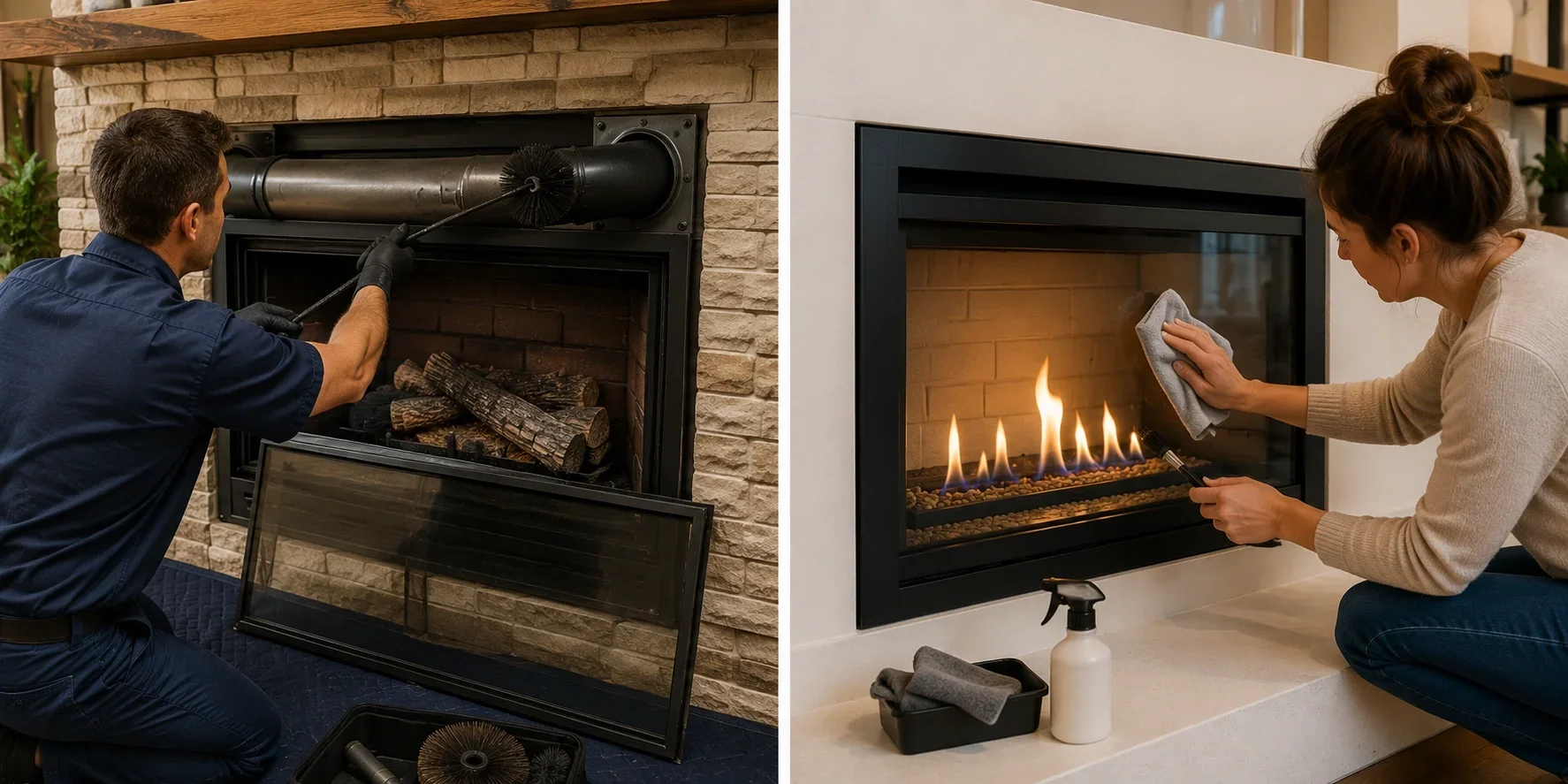
Vented Gas Fireplace Maintenance
Vented gas fireplaces require regular maintenance to ensure the venting system remains clear and functional:
- Annual inspection: Professional check of venting system, connections, and components
- Vent cleaning: Periodic cleaning of vent pipes to remove debris or obstructions
- Glass cleaning: Regular cleaning of the glass front
- Log maintenance: Replacement of ceramic logs if damaged or discolored
- Gasket replacement: Replacement of door gaskets as needed
For comprehensive guidance, see our gas fireplace maintenance guide.
Ventless Gas Fireplace Maintenance
Ventless gas fireplaces generally require less maintenance since there's no venting system to maintain:
- Annual inspection: Professional check of gas connections and components
- Burner cleaning: Regular cleaning of burner ports to ensure proper flame
- Glass cleaning: More frequent cleaning may be needed due to direct exposure
- ODS testing: Periodic testing of the oxygen depletion sensor
- Room ventilation: Ensuring adequate room ventilation per manufacturer specifications
Most maintenance tasks are simple enough for homeowners to perform themselves, making ventless units relatively low-maintenance overall.
Flame Realism and Aesthetics
The visual appeal of your fireplace is an important consideration, especially if you're prioritizing ambiance in addition to heating.

Vented Gas Fireplace Flames
Offer more realistic flame patterns that closely mimic natural wood-burning fires. The venting allows for taller, more dancing flames with yellow tips. Direct vent models provide the most realistic appearance and can be paired with decorative ceramic logs that closely resemble real wood.

Ventless Gas Fireplace Flames
Typically produce shorter, less dynamic flames that may appear more blue than yellow due to the complete combustion process. While modern ventless models have improved in realism, they generally can't match the appearance of vented options. Some models offer adjustable flame height and color to enhance realism.
If visual appeal is a primary concern and you're considering options for a modern living space, vented fireplaces typically provide a more authentic fireplace experience. For those primarily focused on efficient heating with some ambiance, ventless options may be sufficient.
Building Codes and Regulations
Before making your final decision, it's crucial to understand the regulatory landscape for each type of gas fireplace, as this may significantly impact your options.
Important Regulatory Information
Building codes vary significantly by location. Always check with your local building department before purchasing a gas fireplace. Some municipalities have additional restrictions beyond national codes. Professional installers are typically familiar with local requirements and can help navigate the permitting process.
Vented Gas Fireplace Regulations
Vented gas fireplaces are widely accepted under most building codes with relatively few restrictions:
- Must follow specific clearance requirements from combustible materials
- Venting system must comply with applicable standards
- Generally approved for installation in any room of the house
- May require permits depending on local regulations
- Must be installed by qualified professionals in many jurisdictions
Ventless Gas Fireplace Regulations
Ventless gas fireplaces face more restrictions in many areas:
- Prohibited entirely in some states and municipalities
- May be restricted from bedrooms and bathrooms
- Room size requirements (typically minimum 50-100 cubic feet per 1,000 BTU)
- Must have operable windows or other ventilation in the room
- May not be allowed in certain multi-family dwellings
- Some areas require specific approvals or certifications
For more information on fireplace regulations, see our guide on fireplace permit requirements and apartment installations.
Which Option Is Right for You?
Making the final decision between a vented and ventless gas fireplace requires considering your specific circumstances, priorities, and home environment. The following guidelines can help you determine which option best suits your needs.
Choose a Vented Gas Fireplace If:
You prioritize air quality, realistic flames, and have fewer installation constraints. A vented fireplace is ideal if you want the most authentic fireplace experience with minimal impact on indoor air quality.
- Indoor air quality is a primary concern
- You want the most realistic flame appearance
- You need to heat a larger space
- You're installing in a bedroom or bathroom
- Your home already has an existing chimney
- You live in an area with strict ventless regulations
- You want to install a TV above the fireplace
- You're concerned about moisture and odors
Choose a Ventless Gas Fireplace If:
You need maximum heating efficiency with minimal installation complexity. A ventless fireplace is ideal if you want supplemental heating in a space where traditional venting isn't feasible.
- Installation simplicity and lower investment are priorities
- You don't have an existing chimney or venting option
- You need to heat a smaller space efficiently
- Your local codes allow ventless appliances
- You're adding supplemental heat to a well-ventilated room
- No one in your household has respiratory sensitivities
- You want maximum heating efficiency
- You're installing in a location where venting would be impractical
If you're still uncertain, consider exploring other fireplace types or take our fireplace selection quiz to get a personalized recommendation based on your specific situation.
Frequently Asked Questions
Are ventless gas fireplaces really safe?
When properly installed and maintained according to manufacturer specifications, ventless gas fireplaces are designed to be safe. They include built-in safety features like Oxygen Depletion Sensors that automatically shut off the gas if oxygen levels drop too low. However, they do introduce combustion byproducts into your living space, which may be a concern for those with respiratory issues. Always follow manufacturer guidelines regarding room size and ventilation requirements.
Can I convert my vented fireplace to ventless?
In many cases, yes. You can often replace the vented gas log set or insert with a ventless model. However, this conversion must comply with local building codes and manufacturer specifications. The fireplace opening may need to be modified to meet ventless requirements. Professional assessment is essential before attempting this conversion to ensure safety and compliance.
Do ventless gas fireplaces cause condensation?
Yes, ventless gas fireplaces produce water vapor as a byproduct of combustion—approximately one gallon of water for every 100,000 BTU of gas burned. In well-ventilated rooms with normal humidity levels, this typically isn't a problem. However, in tightly sealed spaces or areas with existing moisture issues, this additional humidity can lead to condensation on windows, walls, or other surfaces, potentially causing mold or damage over time.
Why are ventless fireplaces banned in some areas?
Ventless fireplaces are restricted or banned in some areas due to concerns about indoor air quality, carbon monoxide risks, and moisture issues. Some building officials consider any combustion appliance that doesn't exhaust outside to be a potential hazard. The regulations vary significantly by state, county, and municipality, so it's essential to check local codes before purchasing a ventless unit.
Can I install a ventless fireplace in a bedroom?
In most jurisdictions, ventless fireplaces are not approved for installation in bedrooms. This restriction exists because bedrooms are typically smaller spaces with less ventilation, and occupants are sleeping and potentially less aware of air quality issues. Some areas may allow small BTU ventless units in bedrooms with specific requirements for room size and ventilation, but this is the exception rather than the rule.
Which type is better for heating a large room?
For larger spaces, vented gas fireplaces generally perform better despite their lower efficiency ratings. This is because they can handle higher BTU outputs without the room size restrictions that limit ventless options. A properly sized vented fireplace can effectively heat a large living area, while ventless units are typically limited to smaller rooms (usually up to 1,000 square feet). For very large spaces, you might also consider how fireplaces compare to central heating systems.
Conclusion
The choice between vented and ventless gas fireplaces involves balancing several factors including installation constraints, efficiency needs, safety considerations, and aesthetic preferences. Vented gas fireplaces offer superior air quality, more realistic flames, and greater flexibility for larger spaces, though they come with higher installation investment levels and more limited placement options. Ventless models provide exceptional efficiency, simpler installation, and greater placement flexibility, but with trade-offs in air quality, flame realism, and regulatory acceptance.
Consider your specific circumstances—home structure, local regulations, room size, and personal priorities—when making your decision. In many cases, the existing infrastructure of your home (like a pre-existing chimney) may make the decision more straightforward. When in doubt, consult with a certified fireplace professional who can assess your specific situation and provide personalized recommendations.
Whichever option you choose, proper installation by certified professionals and regular maintenance are essential for safety, efficiency, and longevity. Take time to explore the various styles and options available within each category to find the perfect gas fireplace that will enhance your home's comfort and value for years to come.