Are Electric Fireplaces Expensive to Run?
A comprehensive cost analysis to help you understand the real expenses of operating an electric fireplace and how it compares to other heating options
Quick Answer: Electric fireplaces are generally not expensive to run compared to other heating options. The average cost to operate an electric fireplace is approximately $0.08-$0.15 per hour, which translates to about $12-$45 per month with regular use. This makes them one of the most cost-effective heating solutions available.
Understanding Electric Fireplace Energy Consumption
When considering whether electric fireplaces are expensive to run, it's essential to understand how they consume energy. Unlike traditional wood-burning fireplaces that require constant fuel replenishment, electric fireplaces operate on a simple principle: they convert electrical energy into heat with remarkable efficiency.
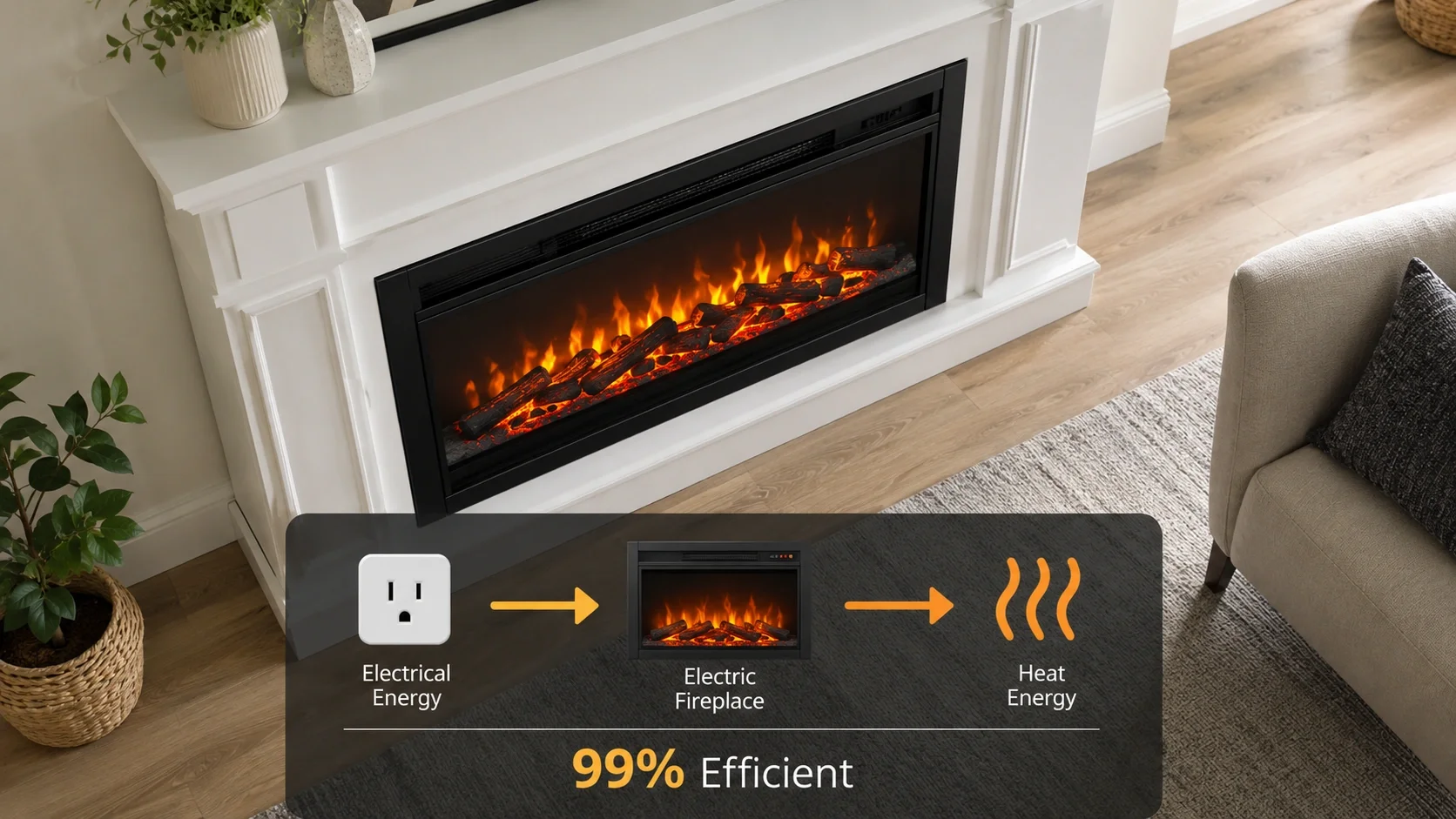
Electric fireplaces convert nearly 100% of their energy input into heat, making them extremely efficient compared to other heating options
Most electric fireplaces on the market operate between 750 watts and 1,500 watts, with the higher end being the standard for full-heat mode. The lower setting (750 watts) is typically used for zone heating smaller areas or for maintaining temperature, while the 1,500-watt setting provides maximum heating output.
To put this in perspective, a standard space heater operates at similar wattages, but electric fireplaces often provide additional features like flame effects, thermostat controls, and sometimes even fan-forced heating, which can distribute warmth more effectively throughout a room.
Calculating the Actual Running Cost
The cost to run an electric fireplace depends on three primary factors: the wattage of the unit, your local electricity rate, and how many hours per day you use it. Let's break down the calculation with current average electricity rates in the United States.
Step 1: Convert watts to kilowatts (kW)
1,500 watts ÷ 1,000 = 1.5 kW
Step 2: Multiply by hours of use per day
1.5 kW × 8 hours = 12 kWh per day
Step 3: Multiply by your electricity rate (using average US rate of $0.12 per kWh)
12 kWh × $0.12 = $1.44 per day
Step 4: Calculate monthly cost
$1.44 × 30 days = $43.20 per month
Total estimated monthly cost: $43.20 for 8 hours of daily use at maximum heat
However, this calculation represents the maximum possible cost. Most users don't run their electric fireplaces at maximum heat for 8 hours daily. If you use the lower setting (750 watts) or run the fireplace for fewer hours, your costs will be significantly lower.
💡 Money-Saving Tip:
Using your electric fireplace's thermostat feature to maintain a set temperature rather than running it continuously at maximum heat can reduce your energy consumption by 20-30%. This is because the fireplace will automatically cycle on and off to maintain the desired temperature.
Cost Comparison: Electric vs. Other Heating Options
To determine if electric fireplaces are expensive to run, it's helpful to compare them with alternative heating solutions. The following table breaks down the estimated monthly costs based on 8 hours of daily use:
| Heating Option | Energy Source | Monthly Cost (8 hrs/day) | Efficiency Rating |
|---|---|---|---|
| Electric Fireplace | Electricity | $15-$45 | 99-100% |
| Gas Fireplace (Ventless) | Natural Gas | $20-$50 | 70-90% |
| Propane Fireplace | Propane | $40-$100 | 70-90% |
| Wood-Burning Fireplace | Wood | $30-$80 (wood costs) | 10-30% |
| Ethanol Fireplace | Ethanol Fuel | $60-$150 | 85-95% |
| Traditional Space Heater | Electricity | $15-$45 | 99-100% |
✅ Key Insight:
Electric fireplaces are among the most cost-effective heating options available. While they have similar operating costs to traditional space heaters, they offer superior aesthetics, safety features, and often better heat distribution. Compared to gas and wood-burning options, electric fireplaces typically cost less to operate monthly and require no ongoing fuel purchases or maintenance costs.
Factors Affecting Electric Fireplace Running Costs
Several variables can impact how much it costs to run your electric fireplace. Understanding these factors can help you optimize usage and minimize expenses:
1. Wattage Setting
Most electric fireplaces offer multiple heat settings, typically 750W (low) and 1,500W (high). Running your fireplace on the lower setting reduces energy consumption by 50% while still providing adequate warmth for smaller spaces or milder temperatures. Some premium models offer additional intermediate settings for more precise control.
2. Local Electricity Rates
Electricity costs vary significantly by region. As of 2026, the average residential electricity rate in the US is approximately $0.12 per kilowatt-hour, but this can range from $0.08 in states like Louisiana and Washington to over $0.25 in Hawaii and Connecticut. Check your utility bill for your exact rate to calculate your specific costs.
3. Usage Patterns
How long and how frequently you use your electric fireplace directly impacts costs. Using it for 4 hours daily instead of 8 will cut your expenses in half. Many homeowners find that using their electric fireplace during peak cold hours (morning and evening) while letting their central heating maintain a lower baseline temperature offers the best balance of comfort and cost.
4. Room Size and Insulation
The size of your room and its insulation quality significantly affect how hard your electric fireplace must work. A well-insulated 200-square-foot room will heat more quickly and require less energy than a poorly insulated space of the same size. Using your electric fireplace for zone heating in well-insulated areas maximizes efficiency.
5. Thermostat Settings
Electric fireplaces with built-in thermostats can maintain a set temperature without running continuously. Setting your thermostat to 68-70°F instead of 75°F can reduce energy consumption by 10-15%. The thermostat prevents the unit from running unnecessarily once the desired temperature is reached.

Digital thermostat controls allow for precise temperature management, helping to optimize energy consumption
Real-World Cost Scenarios
To give you a more practical understanding of electric fireplace operating costs, let's examine three common usage scenarios:
Scenario 1: Occasional Use (Ambiance)
Many homeowners use their electric fireplaces primarily for ambiance, running just the flame effects without heat for a few hours each evening during gatherings or relaxation time. In this case:
- Flame effects only (no heat): Approximately 100-200 watts
- Daily usage: 3 hours
- Monthly cost: $1.50-$3.00
Scenario 2: Supplemental Heating
Using your electric fireplace to supplement your central heating system in a frequently used room:
- Heat setting: 1,500 watts (high) with thermostat control
- Daily usage: 4-6 hours (thermostat cycles on and off)
- Effective runtime: Approximately 3-4 hours due to cycling
- Monthly cost: $15-$25
Scenario 3: Primary Heat Source
Using your electric fireplace as the main heat source in a small, well-insulated room:
- Heat setting: 1,500 watts (high) with thermostat control
- Daily usage: 8-10 hours (thermostat cycles on and off)
- Effective runtime: Approximately 5-7 hours due to cycling
- Monthly cost: $25-$40
⚠️ Important Note:
These scenarios assume average US electricity rates. Your actual costs may vary based on local rates, room conditions, and specific usage patterns. However, even in the primary heat source scenario, electric fireplaces remain significantly less expensive to operate than most alternatives.
Hidden Costs and Potential Savings
When evaluating whether electric fireplaces are expensive to run, it's important to consider both hidden costs and potential savings that might not be immediately obvious:
Hidden Costs to Consider
- Initial purchase price: Quality electric fireplaces typically cost between $200-$800, with premium models reaching $1,200. While this is an upfront investment, it's generally lower than installing gas or wood-burning alternatives.
- Electricity rate increases: Utility rates may increase over time, affecting long-term operating costs. However, this affects all electric appliances equally.
- Reduced efficiency in extremely cold conditions: In sub-freezing temperatures, electric fireplaces may need to run longer to maintain comfortable temperatures.
Significant Savings Opportunities
- No installation costs: Unlike gas or wood fireplaces, most electric models require no professional installation, saving $500-$2,500 in installation fees.
- Minimal maintenance: Electric fireplaces require no chimney cleaning, annual inspections, or fuel storage, saving $150-$300 annually compared to other options.
- Zone heating benefits: By using your electric fireplace to heat only the room you're occupying rather than your entire home, you can reduce your overall heating costs by 20-30%.
- No fuel storage or delivery: Eliminates the need and cost of storing wood, propane tanks, or arranging fuel deliveries.
- Lower insurance premiums: Some insurance companies offer reduced premiums for electric fireplaces compared to open-flame alternatives due to their enhanced safety profile.

Zone heating with an electric fireplace allows you to reduce your central heating usage, resulting in significant energy savings
Energy-Saving Tips for Electric Fireplace Users
Maximizing the efficiency of your electric fireplace can further reduce operating costs. Here are proven strategies to minimize energy consumption without sacrificing comfort:
💡 Tip #1: Use the Thermostat Feature
Always use your electric fireplace's thermostat rather than running it continuously at maximum heat. Set your desired temperature and let the unit cycle on and off to maintain it. This simple practice can reduce energy consumption by 20-30%.
💡 Tip #2: Lower Your Central Heating
Reduce your central heating thermostat by 5-10°F when using your electric fireplace in a specific room. This prevents your central system from heating the entire house while you're only using one area, potentially saving 10-20% on your overall heating bill.
💡 Tip #3: Improve Room Insulation
Ensure windows and doors in the room where you use your electric fireplace are properly sealed. Use draft stoppers, weatherstripping, or thermal curtains to prevent heat loss. A well-insulated room requires less energy to heat.
💡 Tip #4: Use the Timer Function
Many modern electric fireplaces include timer functions that automatically turn the unit off after a set period. This prevents unnecessary operation if you fall asleep or leave the room, eliminating wasted energy.
💡 Tip #5: Optimize Placement
Position your electric fireplace in a central location within the room for optimal heat distribution. Avoid placing it near drafty windows or exterior walls where heat loss is greatest. For wall-mounted models, ensure they're installed at the recommended height for efficient heating.
💡 Tip #6: Use the Flame-Only Mode When Possible
If you're primarily seeking ambiance rather than heat, use the flame-only setting which consumes significantly less energy (typically 100-200 watts versus 1,500 watts for full heat mode).
Cost-Effective Electric Fireplace Features to Look For
When shopping for an electric fireplace with running costs in mind, certain features can help maximize efficiency and minimize expenses:
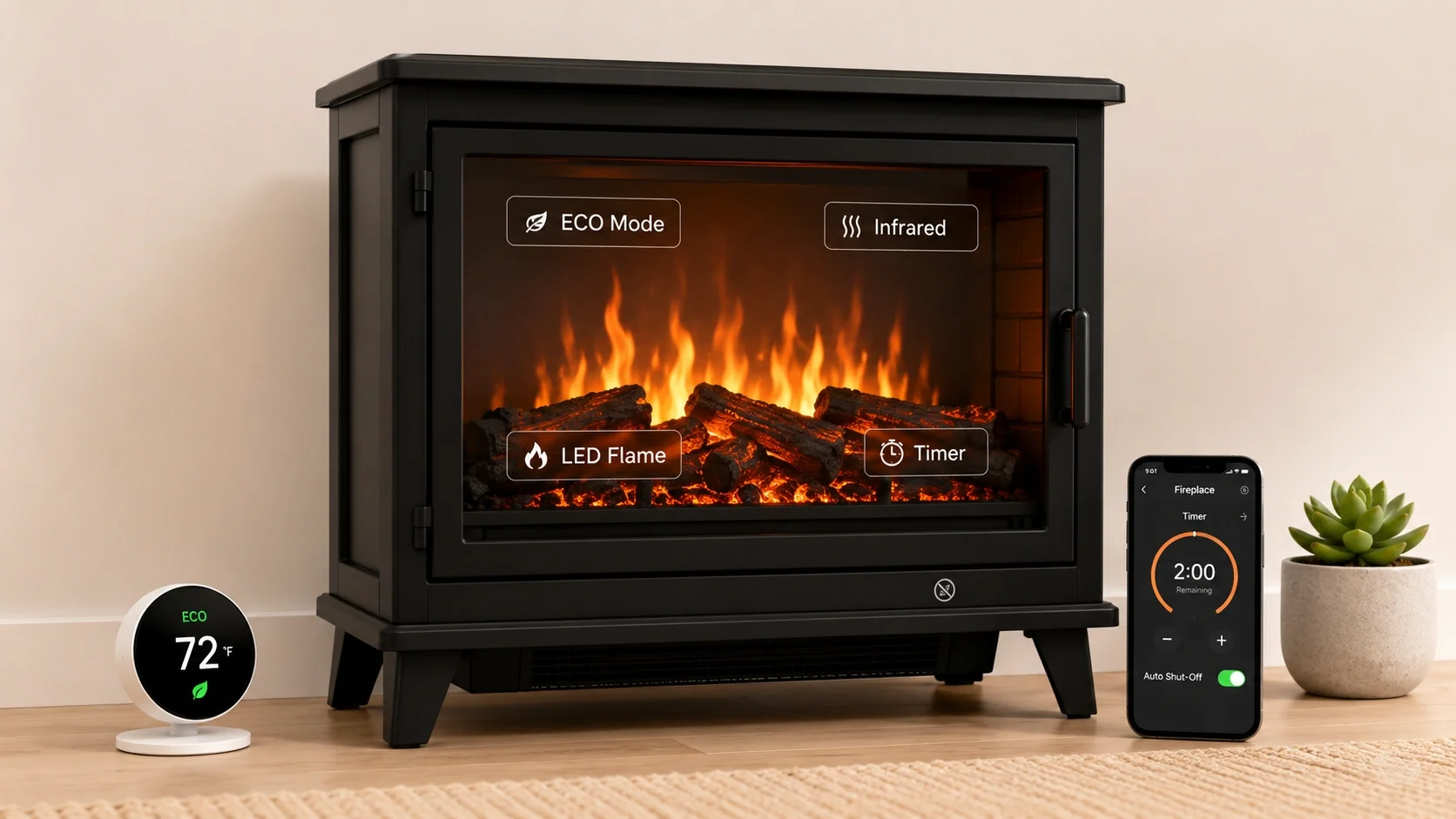
Look for these energy-saving features when selecting an electric fireplace to minimize long-term operating costs
- Adjustable heat settings: Models with multiple heat levels (typically 750W and 1,500W) allow you to match output to your needs, avoiding unnecessary energy consumption.
- Digital thermostat: More precise than manual controls, digital thermostats maintain temperature with minimal fluctuation, reducing on/off cycling.
- Timer functions: Automatic shutoff features prevent wasted energy when the fireplace is no longer needed.
- Infrared heating technology: Infrared models heat objects directly rather than air, creating a more efficient warming effect that can reduce energy consumption by 10-15% compared to fan-forced models.
- ECO mode: Some premium models include an ECO mode that optimizes energy consumption by automatically adjusting heat output based on room temperature.
- Programmable settings: Advanced models allow you to program different heat levels for different times of day, matching your usage patterns precisely.
- LED flame technology: Modern LED flame effects consume less energy than older incandescent bulb-based systems while providing more realistic flame simulation.
Regional Cost Variations
Electric fireplace operating costs vary significantly by region due to differences in electricity rates. Here's a breakdown of estimated monthly costs (8 hours daily at 1,500W) for different regions in the United States:
| Region | Avg. Electricity Rate (per kWh) | Monthly Cost Estimate |
|---|---|---|
| Pacific Northwest (WA, OR) | $0.09 | $32.40 |
| Southeast (LA, AR, MS) | $0.10 | $36.00 |
| Midwest (IL, IN, OH) | $0.12 | $43.20 |
| Northeast (NY, PA, NJ) | $0.16 | $57.60 |
| California | $0.20 | $72.00 |
| Hawaii | $0.28 | $100.80 |
These variations highlight the importance of checking your local electricity rates when calculating potential operating costs. Even in higher-rate regions, electric fireplaces often remain cost-competitive with other heating options when factoring in installation, maintenance, and fuel costs.
Long-Term Cost Analysis: Electric vs. Alternatives
When evaluating whether electric fireplaces are expensive to run, it's essential to consider the total cost of ownership over time, not just monthly operating expenses:

When considering total cost of ownership over 5 years, electric fireplaces often emerge as the most economical choice
5-Year Total Cost Comparison (Including Purchase, Installation, and Operation)
- Electric Fireplace: $600 (purchase) + $0 (installation) + $1,800 (operation) = $2,400 total
- Gas Fireplace: $1,500 (purchase) + $1,500 (installation) + $1,800 (operation) + $750 (maintenance) = $5,550 total
- Wood-Burning Fireplace: $2,000 (purchase) + $2,500 (installation) + $2,400 (wood) + $1,000 (maintenance) = $7,900 total
- Ethanol Fireplace: $800 (purchase) + $0 (installation) + $5,400 (fuel) = $6,200 total
✅ Bottom Line:
Over a 5-year period, electric fireplaces typically cost 50-70% less than gas or wood-burning alternatives when factoring in all expenses. This makes them not just affordable to run on a monthly basis, but the most economical choice in the long term for most homeowners.
Common Misconceptions About Electric Fireplace Costs
Several myths about electric fireplace operating costs can lead to unnecessary concern. Let's address these misconceptions:
Misconception #1: "Electric fireplaces will dramatically increase my electric bill"
Reality: While any additional appliance will increase your electricity usage, the impact of an electric fireplace is typically modest. Using the calculations above, even running an electric fireplace at maximum heat for 8 hours daily adds approximately $43 to a monthly bill—often less than the increase from running a second refrigerator or using an electric dryer frequently.
Misconception #2: "Flame effects consume as much energy as the heat function"
Reality: The flame effect in modern electric fireplaces uses LED technology that consumes only 100-200 watts—approximately 10-15% of the energy used by the heat function. Running just the flame effects for ambiance costs only pennies per hour.
Misconception #3: "Electric fireplaces are less efficient than gas alternatives"
Reality: Electric fireplaces are actually more efficient in terms of energy conversion. They convert nearly 100% of their electrical input into heat, while gas fireplaces typically achieve 70-90% efficiency due to heat lost through venting. This higher efficiency means less energy waste with electric models.
Misconception #4: "More expensive electric fireplaces cost less to run"
Reality: The purchase price of an electric fireplace doesn't directly correlate with operating costs. Two units with the same wattage will cost approximately the same to run, regardless of their price difference. However, more expensive models may offer features like programmable thermostats or ECO modes that can help reduce energy consumption through smarter operation.
Final Verdict: Are Electric Fireplaces Expensive to Run?
Based on comprehensive analysis of energy consumption, regional cost variations, and comparison with alternative heating options, the answer is clear: electric fireplaces are not expensive to run. In fact, they represent one of the most cost-effective heating solutions available for most homeowners.
With average monthly operating costs between $15-$45 depending on usage patterns and local electricity rates, electric fireplaces offer exceptional value when you consider their benefits:
- Zero installation costs compared to gas or wood-burning alternatives
- Minimal maintenance requirements (no chimney cleaning or annual inspections)
- No fuel storage or delivery costs
- Precise temperature control for optimal energy efficiency
- Zone heating capability to reduce overall heating expenses
- Safety advantages that may lower insurance premiums
- Convenience of instant heat without preparation or cleanup
When evaluating the total cost of ownership—including purchase price, installation, maintenance, and operation—electric fireplaces consistently emerge as the most economical choice for homeowners seeking supplemental heating with aesthetic appeal.

Electric fireplaces offer the perfect balance of affordability, efficiency, and aesthetic appeal for any home
By following the energy-saving tips outlined in this guide and selecting a model with appropriate features for your needs, you can enjoy the warmth and ambiance of an electric fireplace without concern about excessive operating costs.