
Wood Fireplace Maintenance: The Complete Care & Cleaning Guide
Keep your wood burning fireplace safe, efficient, and looking beautiful with this step-by-step maintenance roadmap — from daily ash cleanup to annual chimney inspections.
A wood burning fireplace delivers unmatched warmth, ambiance, and a crackling sensory experience that no other heating appliance can replicate. But that charm comes with responsibility. Without consistent maintenance, creosote accumulates inside your chimney, draft performance degrades, and the risk of chimney fires rises dramatically. In fact, the National Fire Protection Association (NFPA) recommends that every wood fireplace and chimney be inspected and cleaned at least once a year — and more frequently if you burn heavily during winter.
This guide covers every aspect of fireplace maintenance specific to wood-burning units. Whether you are a first-time wood fireplace owner or a seasoned homeowner looking to refine your routine, you will find actionable steps, cost estimates, tool recommendations, and clear guidance on when to handle tasks yourself versus when to hire a professional. By the end, you will have the confidence to maintain your fireplace properly and the knowledge to shop for the right maintenance products.
Why Wood Fireplace Maintenance Is Non-Negotiable
Skipping maintenance does not just reduce efficiency — it creates real safety hazards. Here is what proper upkeep protects against:
Chimney Fire Prevention
Creosote — a highly flammable byproduct of incomplete combustion — builds up on chimney walls. Even a 1/8-inch layer can fuel a dangerous chimney fire. Regular cleaning eliminates this risk.
Carbon Monoxide Safety
Blocked or partially obstructed chimneys can force carbon monoxide back into your living space. Understanding carbon monoxide signs and maintaining clear ventilation is critical for your family's safety.
Optimal Heating Efficiency
A clean fireplace draws air properly, burns wood more completely, and radiates heat more effectively. Poor maintenance can reduce heating output by 20–40%, forcing you to burn more wood.
Extended Fireplace Lifespan
Corrosive ash, acidic creosote, and moisture damage degrade firebox bricks, mortar joints, and metal components over time. Routine care can add 10–15 years to your fireplace's lifespan.

Recommended Wood Fireplace Maintenance Supplies & Tools
⚠️ AFFILIATE DISCLOSURE: This website contains affiliate links. As an Amazon Associate, we earn from qualifying purchases. If you make a purchase through these links, we may receive a small commission at no additional cost to you. Read our full affiliate policy.

AMAGABELI Garden & Home 5 Pcs Fireplace Tools Set 31 Inch Indoor Black Handle Wrought Iron Large Fire Tool Accessories Set Holder Outdoor Fireset Modern Fire Pit Stand with Poker Brush Shovel Tong

himaly 32" Fireplace Fire Pit Poker Stick & 26" Tongs Heavy Duty Tool Set

Aboniris Hearth Tidy Set, All Black, Wood Stove Tool Set, Fireplace Companion Set

MAT 7-Banquet Fireplace Tool Sets Cast Iron with Stand Poker Shovel Brush

FEED GARDEN 5-Piece Fireplace Tool Set, 30" One-Piece Stand, Wrought Iron

Plow & Hearth 5 Piece Hand Forged Iron Compact Fireplace Tool Set 27.5" | Black Wrought Iron Handle for Outdoor Indoor | Stand Poker Shovel Brush Log Tongs Wood Stove Accessory

Fire Beauty Wrought Iron Firewood Log Rack with 4 Pcs Fireplace Tools Black

42 Inch Detachable Fire Tongs and Poker Set with Carrying Bag
Essential Wood Fireplace Maintenance Tools
Before diving into the maintenance routine, having the right fireplace accessories on hand makes every task faster and safer. Here is what every wood fireplace owner should keep nearby:
Fireplace Brush Set
Stiff-bristled brush for firebox walls and a replacement brush head for soot removal.
Fireplace Poker & Tongs
A poker for shifting logs and iron tongs for safe repositioning of burning wood.
Heat-Resistant Gloves
Heavy-duty fireplace gloves rated for high temperatures to protect hands during cleaning.
Metal Ash Container
A lidded metal bucket for safe ash storage before disposal. Never use plastic or paper bags.
Creosote Remover Spray
Chemical spray that breaks down light creosote deposits in the firebox and lower chimney.
Fireplace Glass Cleaner
Specialty cleaner for removing soot film from glass doors without scratching. See our glass cleaning guide.
Fireplace Screen or Doors
Screens or glass doors prevent embers from escaping and reduce soot spread in your room.
Daily & After-Each-Use Maintenance
The habits you build after every fire session have the biggest impact on long-term cleanliness and safety. These tasks take just 5–10 minutes but prevent the majority of buildup problems.
- Scoop out excess ash: Leave about a 1-inch ash bed at the bottom to insulate the firebox and help coals retain heat. Remove the rest with your ash shovel into a metal container. Ash removal is essential for airflow — learn the full process in our ash removal and disposal guide.
- Close the damper partially once the fire is out: After all embers are completely cold (wait at least 8–12 hours), close the damper to prevent warm indoor air from escaping up the chimney. If your damper gets stuck, address it promptly to avoid energy loss.
- Check for unextinguished embers: Use a flashlight to inspect the ash bed. Hidden embers can smolder for hours and pose a fire hazard. Practicing good ember safety is non-negotiable.
- Wipe down the hearth: Sweep any ash, bark, or debris that escaped onto the hearth area. This prevents ash from being tracked through your home and protects flooring.
Do not remove every last bit of ash. A thin layer (about 1 inch) acts as insulation, protecting the firebox floor and helping new fires catch faster. Only do a full ash clean-out at the start and end of each burning season.

Weekly Maintenance Routine
If you use your wood fireplace regularly — say, 3–5 times per week during winter — these weekly tasks keep things running smoothly between deeper cleaning sessions.
-
1
Inspect the firebox for cracks or damage
Look at the firebrick lining and mortar joints for any new cracks, spalling, or deterioration. Small hairline cracks are normal, but anything wider than 1/8 inch or crumbling mortar needs attention before the next burn.
-
2
Check the fireplace grate condition
Your fireplace grate takes intense heat every burn. Look for warping, sagging, or broken bars. A damaged grate restricts airflow and can collapse under heavy logs. Replace it if you see significant deformation.
-
3
Clean the fireplace glass doors (if equipped)
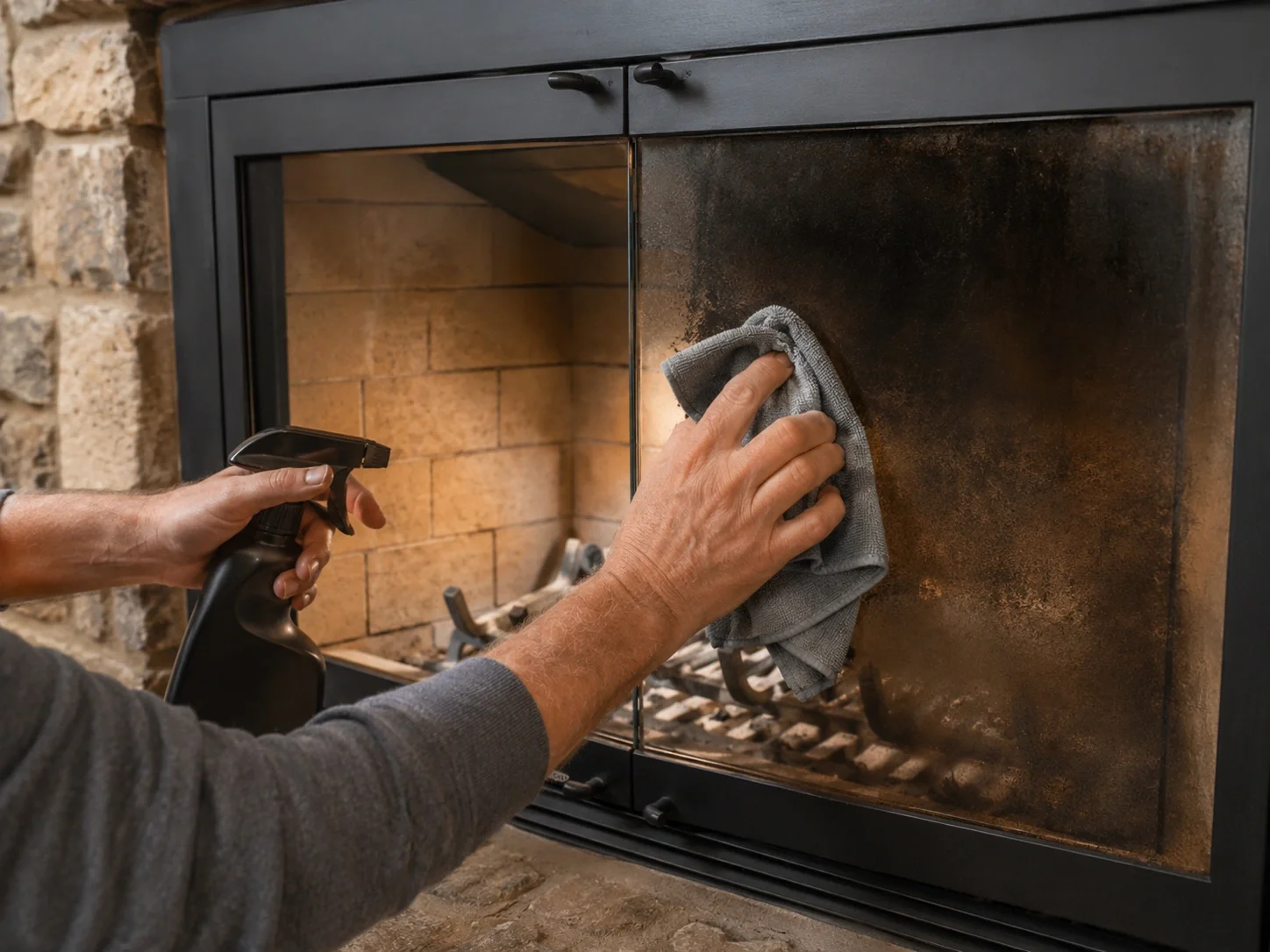
Soot accumulates quickly on glass doors. Use a dedicated fireplace glass cleaner and a soft cloth — never abrasive pads. For stubborn deposits, check our detailed fireplace glass cleaning guide for techniques.
-
4
Remove ash buildup completely (if needed)
If you have been burning daily, the ash layer may exceed the 1-inch rule. Do a full clean-out into your metal ash container. This is also a good time to dispose of accumulated ash properly.
-
5
Test the damper operation
Open and close the damper fully to ensure smooth movement. A damper that sticks, rattles, or does not seal fully wastes heated air and can cause draft problems. Lubricate the hinge if necessary.
Monthly Deep Cleaning
Once a month during the active burning season, set aside 30–45 minutes for a more thorough cleaning. This is where you tackle the grime that weekly maintenance cannot fully address.
Firebox Interior Scrub-Down
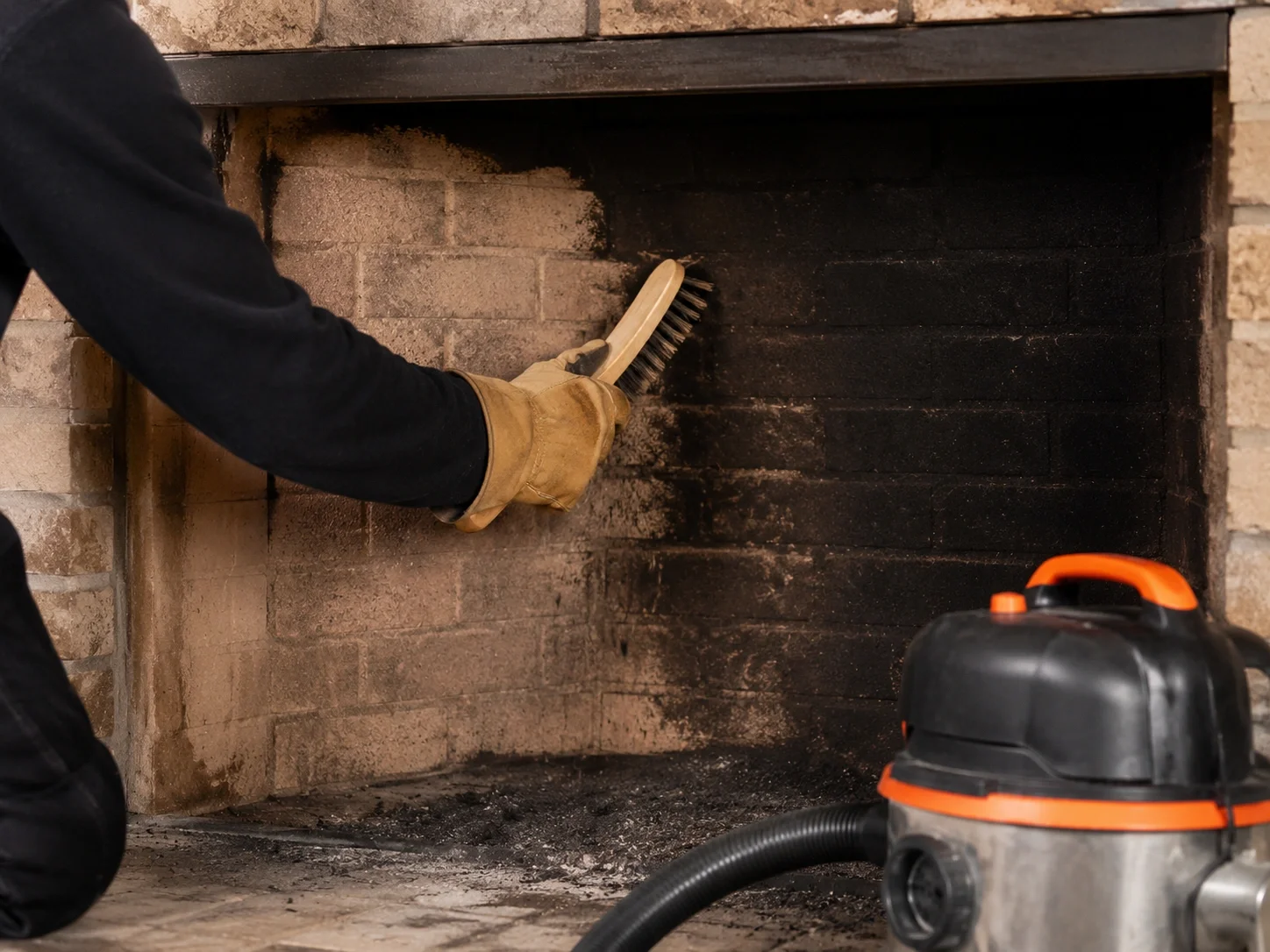
Using a stiff wire brush, scrub the interior walls of the firebox to loosen soot and light creosote deposits. Work from the top down, brushing in circular motions. Vacuum the loosened debris with a shop vac equipped with a HEPA filter — standard vacuums will blow fine soot particles back into the room.
Pay special attention to the smoke shelf (the horizontal ledge behind the damper), where creosote and debris tend to accumulate heavily. This area is often overlooked but is a common source of chimney fires if neglected.
Clean the Surround and Hearth
The fireplace surround — whether brick, stone, or tile — collects soot over time. For brick and stone cleaning, use a dry brushing method first, then a mild detergent solution with a stiff brush. Avoid acid-based cleaners on limestone or sandstone, as they can etch the surface. Rinse with a damp cloth and dry thoroughly.
Apply Creosote Remover Treatment
Spray a liquid creosote remover onto the firebox walls and the visible lower portion of the chimney flue. These products contain chemicals that break down creosote bonds, converting hard, glazed deposits into a flaky, brushable form. Apply it at the end of your monthly cleaning, then build a small hot fire the next day to activate the treatment. This proactive approach to creosote buildup prevention dramatically reduces the risk of stage 3 (glazed) creosote.
Spraying water on hot bricks or ash can cause steam explosions and crack the firebox lining. Always wait at least 24 hours after your last fire before performing any wet cleaning. If you must clean sooner, use only dry methods — brushing and vacuuming.
Annual Professional Inspection & Chimney Sweeping
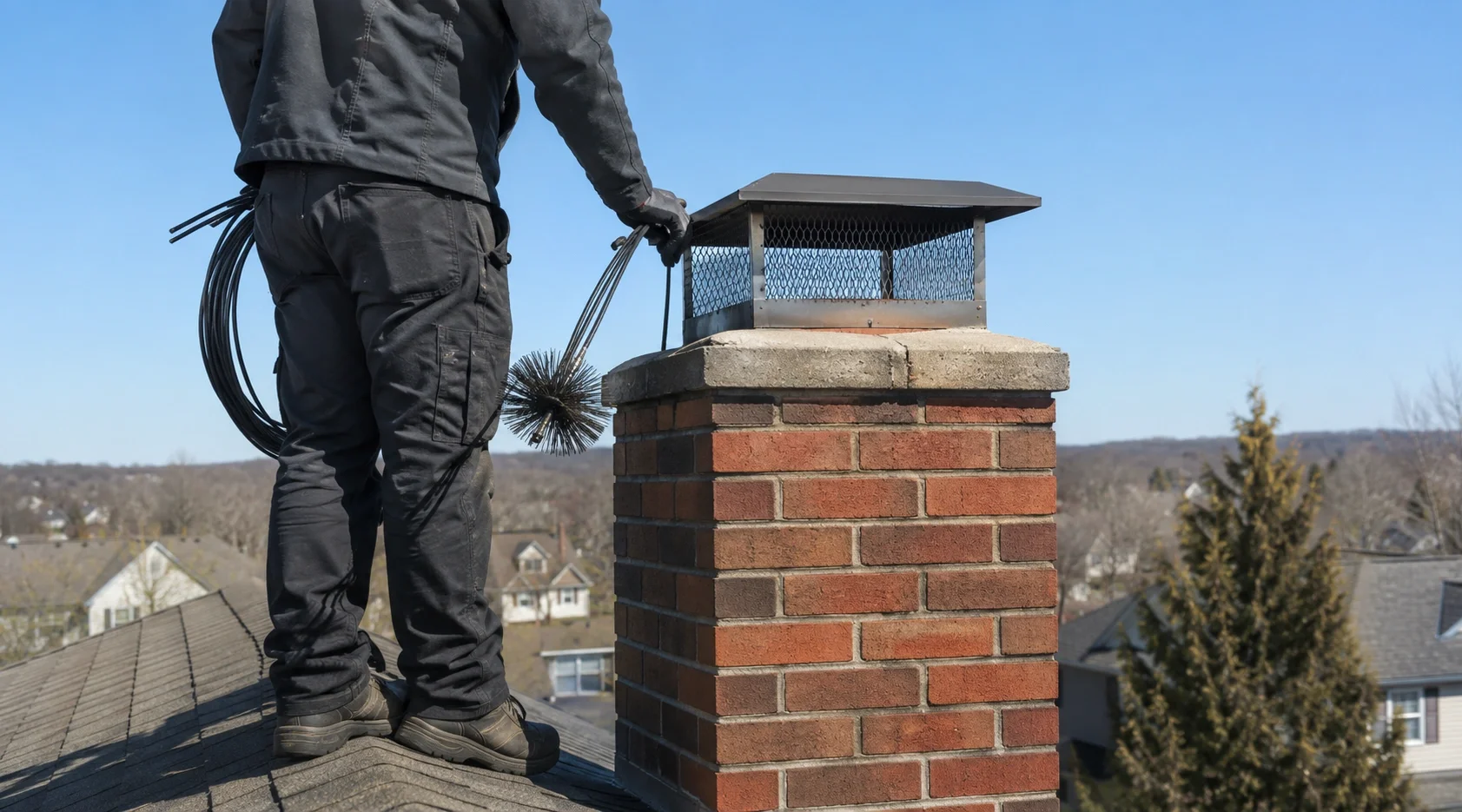
This is the single most important maintenance task — and the one you should never skip. A certified chimney sweep has the tools, training, and experience to inspect and clean areas you cannot safely reach. Schedule this in early fall, before the burning season begins, so any issues can be repaired before you need the fireplace.
What Happens During a Professional Inspection
A thorough annual fireplace inspection follows NFPA 211 standards and typically includes:
- Full chimney sweep: Mechanical brushing of the entire flue from bottom to top to remove all creosote layers. The sweep selects brush sizes to match your flue diameter precisely.
- Smoke shelf and damper area cleaning: These are high-deposit zones that homeowners often miss. The sweep removes all debris from the smoke shelf.
- Structural integrity check: Inspection of the chimney crown, flashing, mortar joints, firebox lining, and chimney cap for cracks, deterioration, or water damage.
- Draft and ventilation test: Verification that the chimney draws properly and that no obstructions (bird nests, leaves, debris) are blocking the flue.
- Video scan (Level 2 inspection): Many professionals now include a camera inspection of the flue interior, which reveals hidden cracks, separations, and glazed creosote that brushes alone cannot detect.
For a detailed walkthrough of what inspectors evaluate, see our chimney inspection guide and DIY inspection checklist for the tasks you can perform yourself between professional visits.
Understanding & Preventing Creosote Buildup
Creosote is the single biggest threat in wood fireplace ownership. It forms when wood smoke cools below 250°F before exiting the chimney, causing unburned tar particles to condense and stick to the flue walls. Understanding the three stages of creosote is essential for effective prevention.
| Stage | Appearance | Danger Level | Removal Method |
|---|---|---|---|
| Stage 1 | Flaky, black soot — similar to chimney dust | Low | Standard wire brush sweeping |
| Stage 2 | Dry, crunchy black flakes — resembles cracked tar | Moderate | Stiff brushing + chemical creosote remover |
| Stage 3 | Hard, glossy, tar-like coating — cannot be brushed | Extreme | Chemical treatment + rotary power tools (professional only) |
How to Prevent Creosote from Forming
Prevention is far easier — and cheaper — than removal. Follow these principles for every burn:
- Burn only seasoned hardwood: Wood that has been dried for at least 6–12 months with a moisture content below 20% burns hotter and cleaner. Green or wet wood produces excessive smoke and heavy creosote.
- Maintain a hot, lively fire: Smoldering, low-temperature fires are the primary cause of creosote buildup. Use the grate properly to elevate logs and allow airflow beneath them.
- Do not overload the firebox: Packing too many logs restricts oxygen, lowers the burn temperature, and increases smoke production. Build fires in a teepee or log cabin arrangement for optimal airflow.
- Ensure adequate chimney draft: A cold chimney creates a weak draft, causing smoke to linger and deposit creosote. Warm the flue with a rolled newspaper before loading the main fire. If you experience persistent draft problems, the chimney may need height adjustment or a draft inducer fan.
- Use creosote-modifying additives: Products like creosote remover powders or logs (tossed into a hot fire once per month) chemically alter creosote deposits, making them easier to remove during cleaning.
Invest in a $15–$30 wood moisture meter. Split a log and test the freshly exposed face. Readings above 20% mean the wood is too wet to burn efficiently. This simple tool pays for itself in reduced creosote problems and better heating performance.
How to Clean Wood Fireplace Glass Doors
Filmy, cloudy glass ruins the visual appeal of your fireplace and can actually etch the glass permanently if left untreated. Wood fireplace glass gets dirty from a combination of soot, carbon deposits, and mineral residue from burning wood.
-
1
Cool completely
Never clean glass while the fireplace is warm. Wait at least 24 hours after the last fire.
-
2
Remove loose soot
Use a dry, soft cloth or a brush with very soft bristles to wipe away loose particles without scratching.
-
3
Apply glass cleaner
Spray a dedicated fireplace glass cleaner (not Windex — ammonia-based products can damage the glass seal). Let it sit for 1–2 minutes.
-
4
Wipe in circular motions
Use a non-abrasive microfiber cloth. For stubborn baked-on deposits, a ceramic cooktop scraper works well without scratching.
-
5
Buff dry and inspect
Polish with a clean, dry cloth. Check for any remaining haze. Repeat if necessary.
For persistent condensation on fireplace glass or recurring foggy film, the issue may be related to burn quality rather than cleaning technique. Improving your wood seasoning and fire-building practices will reduce how often you need to clean the glass.
Proper Ash Removal & Disposal
Disposing of wood ash incorrectly is a surprisingly common mistake. Hot ash hidden beneath a cool surface layer has started countless house and garage fires. Follow this protocol every time:
-
1
Wait a minimum of 12–24 hours
Even if the surface looks cold, embers can hide underneath. Use a flashlight and spread the ash gently with your poker to confirm there are no glowing spots.
-
2
Transfer to a metal container with a lid
Use a dedicated metal ash bucket — never plastic bags, cardboard boxes, or paper containers. The lid seals out oxygen and prevents any hidden embers from reigniting.
-
3
Store outdoors, away from combustibles
Place the container on a non-combustible surface (concrete, brick, or dirt) at least 10 feet from your home, deck, or any flammable materials. Keep it there for at least 3–5 days before final disposal.
-
4
Dispose or repurpose
Wood ash can be added to compost piles (in moderation) as a soil amendment, or scattered on icy walkways for traction. Otherwise, bag it and place it in your regular trash.
Our complete ash removal and disposal guide covers additional tips, including how to test if ash is truly cold and creative ways to repurpose it in your garden.

Seasonal Maintenance Checklist
Wood fireplace care shifts with the seasons. Following a seasonal fireplace checklist ensures nothing falls through the cracks throughout the year.
Fall: Pre-Season Preparation
Before lighting your first fire of the season, complete these tasks. This is the most critical seasonal checkpoint. Our fall fireplace inspection guide covers this in detail.
- Schedule a professional chimney sweep and inspection
- Inspect and repair chimney cap and spark arrestor
- Check chimney flashing and seal any gaps with high-temperature caulk
- Clean the firebox thoroughly and do a full ash removal
- Test the damper and ensure it opens and closes fully
- Stock up on seasoned hardwood and verify moisture content
- Test or replace carbon monoxide and smoke detector batteries
Winter: Active Season Care
During heavy use, stay on top of daily and weekly tasks. Refer to our winter fireplace preparation tips for maximizing efficiency during cold months.
- Perform daily ash management (maintain the 1-inch rule)
- Monthly firebox scrub and creosote treatment
- Monitor for excessive smoke or poor draft — both signal creosote buildup or ventilation issues
- Keep firewood stored dry and covered — avoid burning wet wood at all costs
- Clean glass doors weekly to prevent permanent etching
Spring: Post-Season Cleanup
When burning season ends, a thorough spring cleanup sets you up for an easier fall. See our spring fireplace maintenance guide.
- Do a complete firebox clean-out — remove all ash without leaving the 1-inch layer
- Scrub firebox walls, smoke shelf, and damper area thoroughly
- Clean the fireplace surround, hearth, and mantel completely
- Close the damper tightly to prevent spring and summer downdrafts
Summer: Off-Season Protection
Even when not in use, your fireplace needs attention. Our summer fireplace care guide explains how to protect the system during warmer months.
- Install a chimney draft stopper or seal the damper to prevent conditioned air from escaping
- Inspect the chimney cap for summer storm damage or animal nesting
- Address any musty smells — these often indicate moisture intrusion in the chimney
- Schedule any off-season repairs (mortar repointing, crown repair, flashing replacement) — contractors are often more available and may offer lower rates
Common Wood Fireplace Problems & How to Fix Them
Even with diligent maintenance, issues can arise. Here are the most common problems wood fireplace owners encounter and how to resolve them. For a comprehensive troubleshooting resource, visit our fireplace troubleshooting hub.

Smoke Filling the Room Instead of Going Up the Chimney
This is the most frequently reported fireplace smoke problem. Causes include a cold chimney (poor initial draft), creosote obstruction, a closed or partially closed damper, or negative air pressure in the home from exhaust fans or tight insulation. Fix it by warming the flue first, checking the damper, and ensuring adequate combustion air supply. If the problem persists, the chimney may need to be taller or fitted with a draft-inducing cap.
Fireplace Turning Black with Soot
Excessive soot blackening indicates incomplete combustion — almost always caused by burning wet or unseasoned wood, restricted airflow, or a damper that does not open fully. Switch to properly seasoned hardwood, ensure the grate is not overloaded, and verify the damper opens to at least 90 degrees.
Persistent Musty or Smoky Odor When Not in Use
A musty smell from an idle fireplace typically points to moisture in the chimney combined with creosote deposits. Rain entering through a damaged chimney cap or cracked crown introduces water that activates the odor. Fix the water entry point, clean the chimney, and consider a chimney deodorizer or a draft stopper during the off-season.
Fireplace Not Heating Efficiently
If your fireplace produces flames but your room stays cold, the problem is likely heat loss up the chimney rather than radiation into the room. A fireplace making the room colder is a known phenomenon — the chimney draws more warm air out than the fire radiates back. Solutions include installing a fireplace insert, adding a blower fan, or using a draft stopper when the fire is out.
Wood Fireplace Maintenance Cost Breakdown
Understanding the cost of fireplace maintenance helps you budget appropriately and avoid surprise expenses. Here is a realistic breakdown of what to expect:
Annual Maintenance Budget
Costs can increase significantly if creosote has reached Stage 3 (glazed), which requires chemical treatment and specialized rotary cleaning — typically adding $200–$500 to the standard sweep fee. Structural repairs like mortar repointing, crown rebuilding, or liner replacement can cost $500–$3,000+. The best way to keep costs low is consistent preventive maintenance.
Many chimney sweep companies offer a 10–15% discount if you book your annual appointment in spring or summer — their off-season. Scheduling early also gives you time to address any repairs before fall arrives. Check out our fireplace energy saving tips for more ways to reduce costs.
When to Call a Professional Chimney Sweep
While many maintenance tasks are safe to DIY, certain situations demand professional expertise. Knowing when to call a chimney sweep can prevent dangerous situations and costly damage.
The recommended service frequency for a wood fireplace is at minimum one professional inspection per year. Heavy users should consider twice-yearly visits. Always hire a CSIA (Chimney Safety Institute of America) certified sweep — this certification ensures the technician follows established safety standards.
Complete Wood Fireplace Maintenance Schedule
Use this quick-reference table to stay on track throughout the year. For a printable version, see our fireplace maintenance schedule page.
| Task | Frequency | DIY or Pro |
|---|---|---|
| Ash removal (partial) | After each use | DIY |
| Hearth sweep & ember check | After each use | DIY |
| Firebox visual inspection | Weekly | DIY |
| Glass door cleaning | Weekly | DIY |
| Grate condition check | Weekly | DIY |
| Damper operation test | Weekly | DIY |
| Full firebox scrub-down | Monthly | DIY |
| Creosote remover application | Monthly | DIY |
| Surround & heart deep clean | Monthly | DIY |
| Full ash clean-out | Start & end of season | DIY |
| Chimney sweep & Level 2 inspection | Annually (fall) | Professional |
| Chimney cap & flashing check | Annually (fall) | Professional |
| Draft stopper installation | Annually (spring) | DIY |
| CO & smoke detector test | Bi-annually | DIY |
Ready to Equip Your Maintenance Kit?
Having the right tools and products makes wood fireplace maintenance faster, safer, and more effective. Below are our top recommended products for keeping your wood fireplace in peak condition.
View Recommended ProductsFrequently Asked Questions About Wood Fireplace Maintenance
Maintain Your Fireplace, Protect Your Home
Consistent wood fireplace maintenance is not optional — it is the difference between a safe, cozy heating experience and a serious hazard. Equip yourself with the right tools, follow this schedule, and never skip your annual professional inspection. Your fireplace will reward you with reliable warmth for decades.
Shop Maintenance Supplies Now