Kitchen Fireplace Ideas: Transform Your Cooking Space
Discover how a well-designed kitchen fireplace can create warmth, ambiance, and a stunning focal point in your home's heart
EXPLORE OPTIONSA kitchen fireplace is more than just a heating element—it's a design statement that transforms your cooking space into a warm, inviting gathering area. Whether you're renovating an existing kitchen or building a new one, incorporating a fireplace can add significant value to your home while creating a cozy atmosphere for family and friends.
Historically, kitchens were built around hearths, which served as the primary source of heat and cooking. Today's kitchen fireplaces honor this tradition while offering modern efficiency and design flexibility. From contemporary designs to rustic charm, there are numerous options to suit your kitchen's aesthetic and functional needs.
In this comprehensive guide, we'll explore various kitchen fireplace ideas, helping you understand the different types available, placement considerations, safety requirements, and design tips to create the perfect kitchen hearth for your home.

Benefits of Adding a Fireplace to Your Kitchen
Incorporating a fireplace into your kitchen design offers numerous advantages beyond simple aesthetics:
- Extended usability: A kitchen with a fireplace becomes a year-round gathering space, not just a functional cooking area during colder months.
- Increased home value: Fireplaces are consistently ranked as one of the most desirable features by homebuyers, potentially increasing your home's resale value by $1,200-$4,000 according to the National Association of Realtors.
- Energy efficiency: Supplemental heating from a fireplace can reduce your overall heating costs, especially in open-concept homes where heat can circulate to adjacent areas.
- Ambiance and comfort: The visual warmth and gentle crackling of a fire create an inviting atmosphere that makes cooking and entertaining more enjoyable.
- Emergency heating: During power outages, a non-electric fireplace can provide essential heat and a place to prepare simple meals.
- Design flexibility: Modern fireplace options come in various styles and sizes, making it possible to incorporate one into almost any kitchen layout.
Types of Kitchen Fireplaces
When considering a fireplace for your kitchen, several types are available, each with distinct advantages and considerations. The right choice depends on your kitchen's layout, your heating needs, local building codes, and personal preferences.

Electric Fireplaces
Electric fireplaces are the most versatile option for kitchens. They require no venting, can be installed almost anywhere, and come in various styles from wall-mounted units to inserts for existing fireplaces. Modern electric models feature realistic flame effects and can provide supplemental heating without the safety concerns of combustion-based options.
Price range: $400–$2,000
Best for: Small kitchens, apartments, and homeowners seeking easy installation with minimal disruption.
Gas Fireplaces
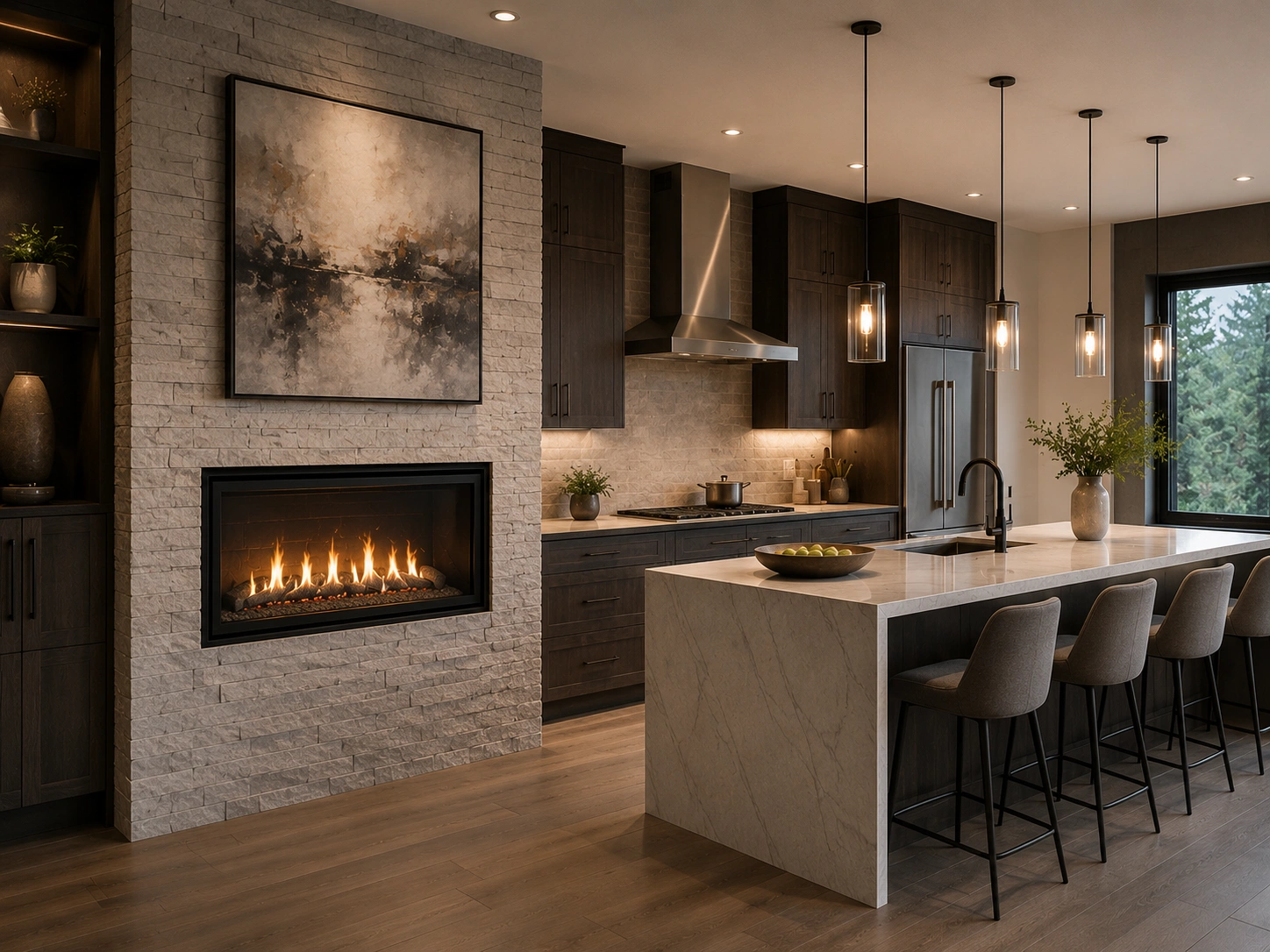
Gas fireplaces offer the convenience of instant heat with the realistic appearance of a wood fire. They can be direct-vented through an exterior wall, making them suitable for kitchens without existing chimneys. Many models feature remote controls and adjustable flame settings for precise temperature control.
Price range: $1,500–$4,500 (including installation)
Best for: Homeowners wanting authentic flame appearance with convenient operation and moderate heating capacity.
Wood-Burning Fireplaces
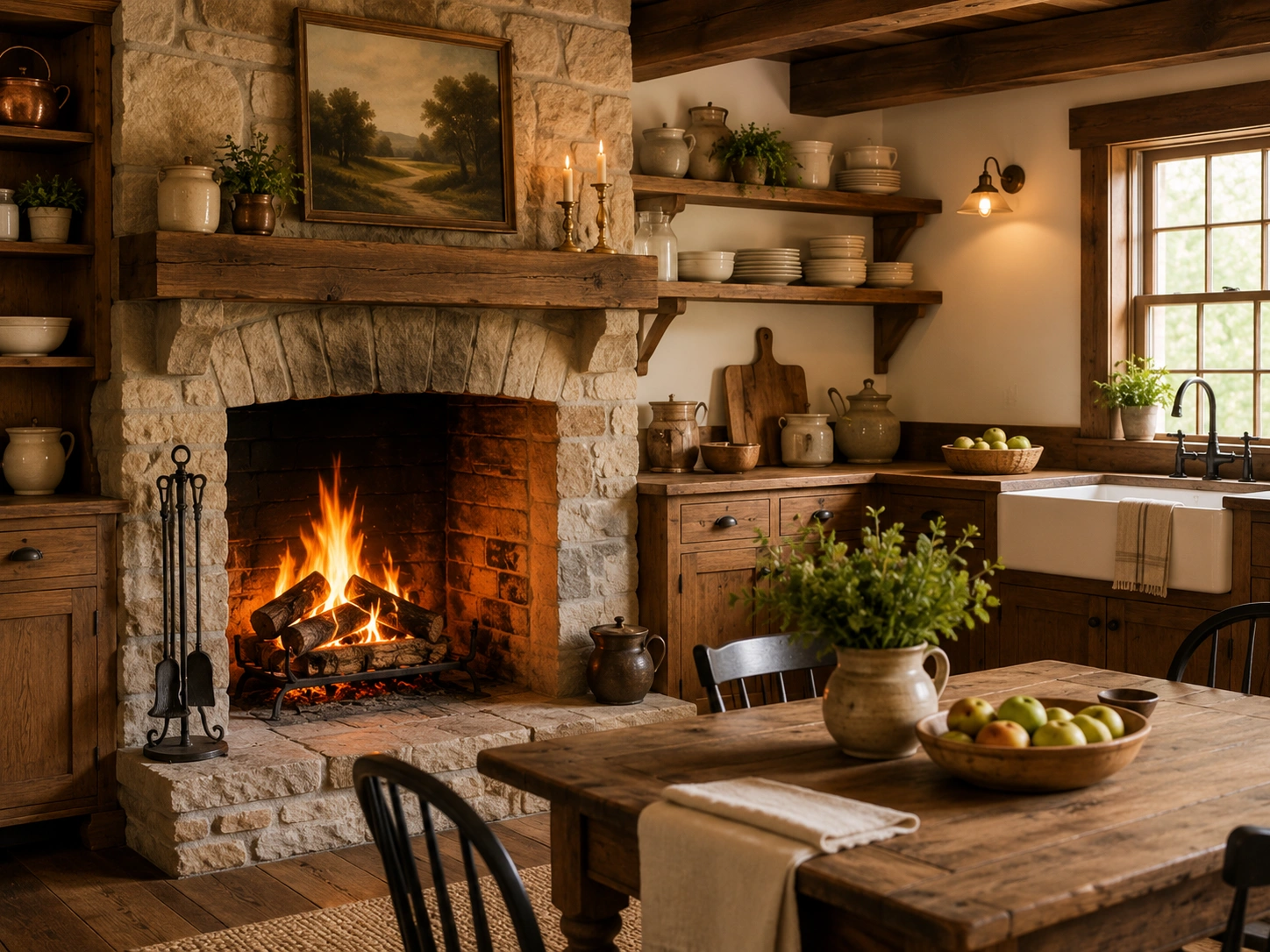
For those seeking authentic ambiance and the traditional experience, wood-burning fireplaces remain unmatched. They provide substantial heat and the sensory experience of a real fire. However, they require proper venting through a chimney and regular maintenance, including chimney cleaning.
Price range: $2,500–$7,500 (including installation and chimney work)
Best for: Traditional kitchens, rural homes with access to firewood, and those prioritizing authentic fireplace experience.

Ethanol Fireplaces
Ethanol fireplaces offer the real flame of a traditional fireplace without the need for venting. They burn clean bioethanol fuel, producing only water vapor and minimal carbon dioxide. Their compact size makes them ideal for smaller kitchens or as decorative accents.
Price range: $500–$3,000
Best for: Contemporary kitchens, urban homes, and those wanting real flames without installation complexity.
Kitchen Fireplace Placement Ideas
The placement of your kitchen fireplace significantly impacts both its functionality and aesthetic appeal. Here are the most popular placement options to consider:
Against an Exterior Wall
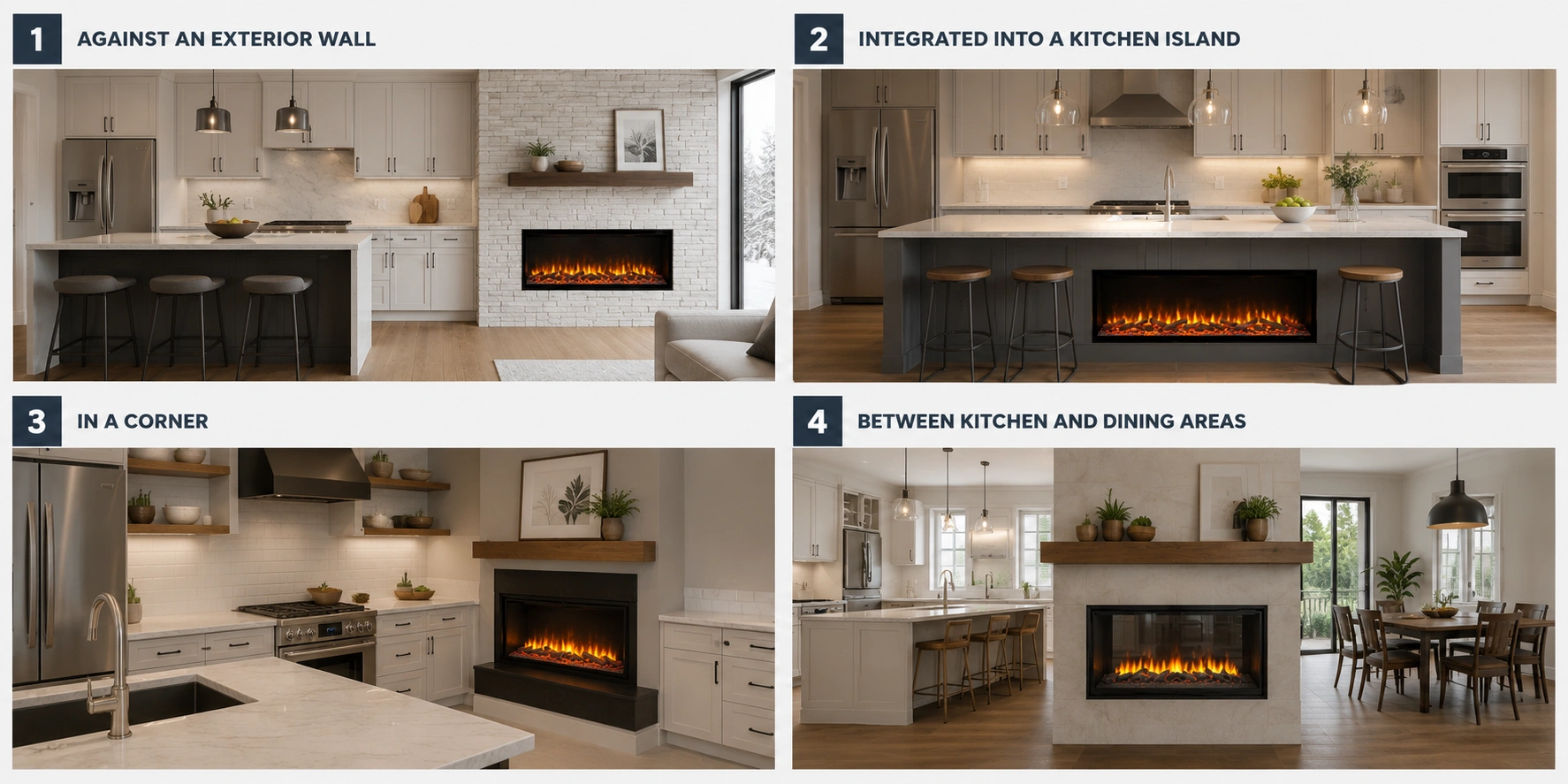
The most common and practical placement is against an exterior wall, especially for vented fireplaces. This allows for straightforward venting installation and creates a natural focal point in the kitchen. Positioning the fireplace at the end of a kitchen run or between windows can create visual balance.
Kitchen Island Integration
For a dramatic contemporary look, consider integrating a modern fireplace into your kitchen island. This placement works particularly well with electric fireplaces or ethanol models that don't require venting. The island fireplace creates a stunning division between cooking and dining areas while providing warmth for both spaces.
Corner Installation
Corner fireplaces make efficient use of space that might otherwise go unused. They're especially valuable in smaller kitchens where wall space is at a premium. A corner installation can create a cozy nook for casual dining or conversation while leaving more wall space for cabinetry.
Between Kitchen and Dining Areas
In open-concept homes, placing a fireplace between the kitchen and dining areas creates a natural transition zone. This placement allows the fireplace to serve both spaces, providing warmth and ambiance to the entire area. A see-through or double-sided fireplace design can be particularly effective in this location.
Breakfast Nook Surround
For kitchens with breakfast nooks, positioning a fireplace adjacent to this cozy spot creates an inviting area for morning coffee or casual meals. This placement turns an ordinary breakfast corner into a special gathering place that family members will gravitate toward.
Design Considerations for Kitchen Fireplaces
Integrating a fireplace into your kitchen requires thoughtful design planning to ensure it complements your space rather than competing with it. Consider these essential factors:
Key Planning Factors
- Scale and proportion: The fireplace should be appropriately sized for your kitchen. A massive fireplace can overwhelm a small kitchen, while a tiny unit might look lost in a large space. As a general rule, the fireplace width should be about one-third the width of the wall it's placed on.
- Material coordination: Select fireplace materials that complement your kitchen's existing finishes. A marble surround works well with contemporary kitchens, while brick or stone suits rustic designs. Ensure the fireplace materials coordinate with countertops, backsplashes, and flooring.
- Color harmony: The fireplace should either blend with your kitchen's color scheme or serve as a deliberate accent element. If your kitchen has neutral tones, a darker fireplace can create contrast and visual interest.
- Clearance requirements: Maintain proper clearance between the fireplace and combustible materials like cabinets. Follow manufacturer guidelines and local building codes, which typically require 36 inches of clearance from the fireplace opening to any combustible materials.
- Ventilation integration: Plan how the fireplace's ventilation will integrate with your kitchen's existing systems. For vented fireplaces, consider how the venting will affect exterior aesthetics and rooflines.
Kitchen Fireplace Design Tips
Create a Focal Wall
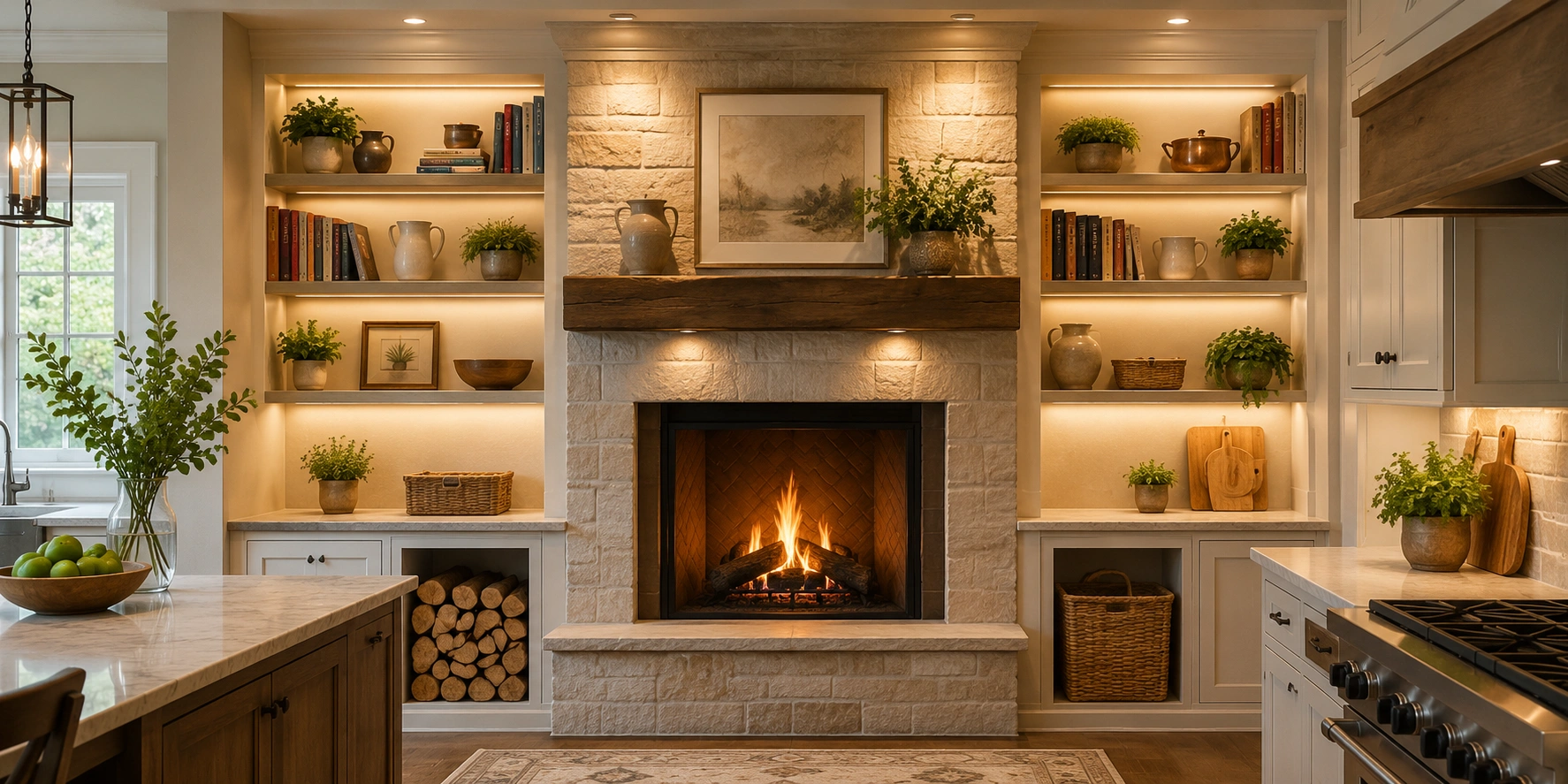
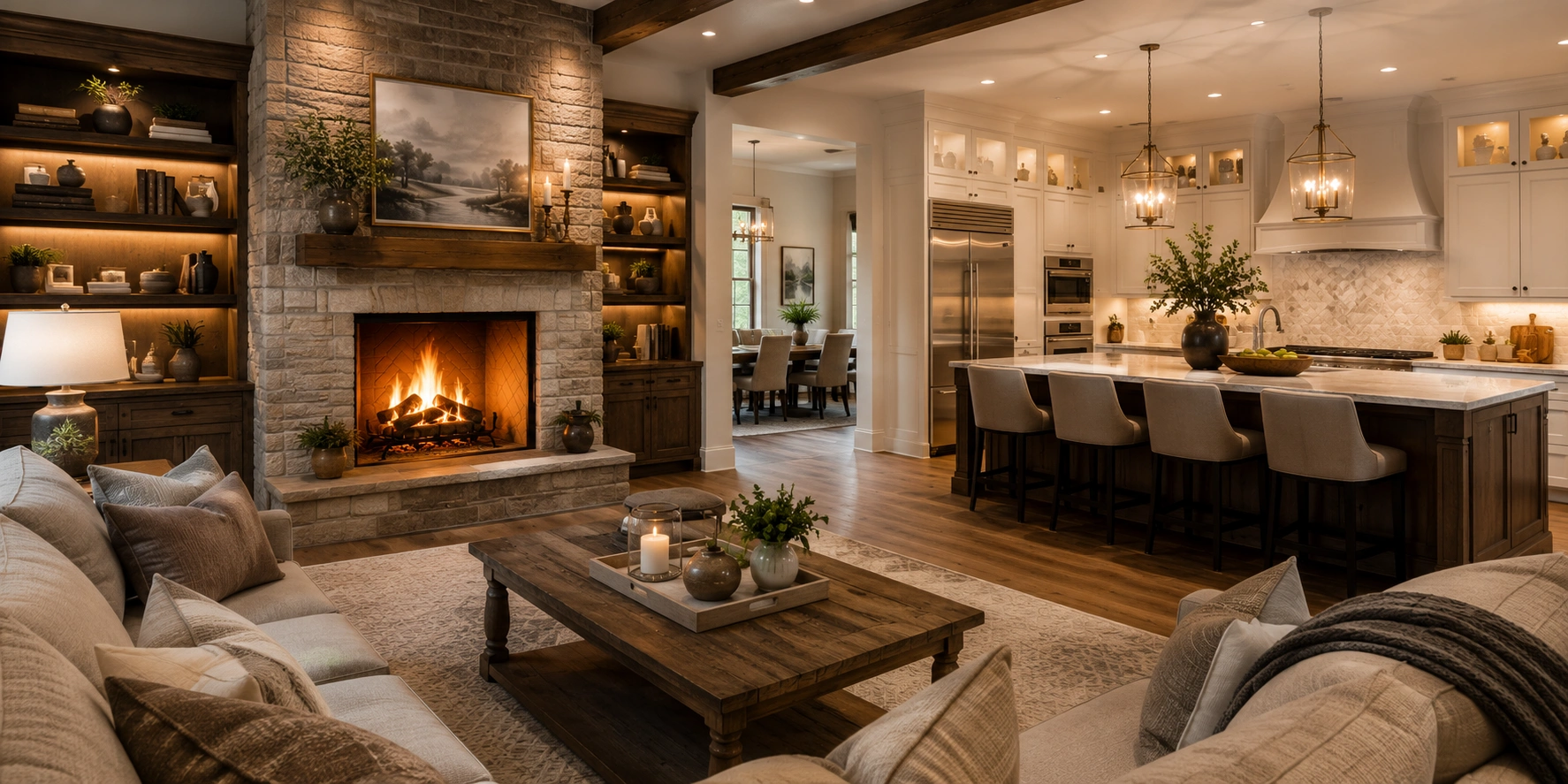
Design your fireplace wall to draw attention. Use contrasting materials, strategic lighting, or a distinctive mantel design to make the fireplace the star of your kitchen. Consider adding built-in shelving or cabinetry on either side to frame the fireplace.
Incorporate Storage
Maximize functionality by incorporating storage around your fireplace. Built-in cabinets or open shelving flanking the fireplace can hold cookbooks, decorative items, or kitchen essentials, making the fireplace wall both beautiful and practical.
Consider a Hearth Extension
A hearth extension in front of the fireplace can serve double duty as additional seating or display space. In smaller kitchens, this can be a clever way to add function without sacrificing floor space.
Coordinate with Backsplash
Extend your kitchen backsplash material around the fireplace to create visual continuity. This technique works especially well with tile, stone, or metal materials that can transition seamlessly between cooking and fireplace areas.
Add Task Lighting
Incorporate lighting specifically for the fireplace area. Recessed lighting above the fireplace can highlight the surround, while sconces on either side can provide ambient light for the entire kitchen zone.
Consider Seasonal Decor
Design your fireplace mantel and surround with seasonal decorating in mind. Include elements like built-in garland hooks or display ledges that make it easy to transition the fireplace decor throughout the year.
Kitchen Fireplace Safety Considerations
Safety is paramount when incorporating a fireplace into your kitchen, where cooking activities, flammable materials, and food preparation create unique considerations:
Essential Safety Measures
- Maintain proper clearance between the fireplace and combustible materials, including cabinets, curtains, and wooden furniture. Follow manufacturer guidelines and local building codes, which typically require at least 36 inches of clearance.
- Install a spark guard or fireplace screen to prevent embers from escaping, especially important in kitchens where flammable materials like paper towels and cooking oils may be nearby.
- For gas fireplaces, install carbon monoxide detectors within 10 feet of the fireplace and test them regularly. Kitchen environments can sometimes affect detector performance, so more frequent testing may be needed.
- Ensure proper ventilation to prevent smoke or cooking odors from lingering. This is particularly important in kitchens where cooking already introduces airborne particles and moisture.
- Keep a fire extinguisher rated for all fire types (A, B, and C) within easy reach of the fireplace but not so close that it could become unreachable in a fire.
- Establish and enforce a "kid-free zone" around the fireplace, using physical barriers like fireplace gates if necessary, especially in family kitchens.
- Schedule regular professional inspections and maintenance. Kitchen environments with cooking grease and moisture can accelerate certain types of fireplace deterioration.
- Consider the placement of your stove and cooking appliances in relation to the fireplace. Avoid positioning them directly opposite the fireplace where drafts might affect cooking or flames.
Kitchen Fireplace Cost Considerations
The cost of adding a fireplace to your kitchen varies significantly based on the type of fireplace, installation requirements, and design choices. Here's a breakdown of typical costs:
| Fireplace Type | Unit Cost | Installation Cost | Total Cost Range |
|---|---|---|---|
| Electric (Wall-mounted) | $400–$1,200 | $100–$300 | $500–$1,500 |
| Electric (Insert) | $600–$1,500 | $200–$500 | $800–$2,000 |
| Gas (Direct Vent) | $1,200–$3,000 | $1,500–$3,000 | $2,700–$6,000 |
| Gas (Ventless) | $800–$2,000 | $300–$800 | $1,100–$2,800 |
| Ethanol | $500–$2,500 | $0–$500 | $500–$3,000 |
| Wood-burning (New Construction) | $1,500–$4,000 | $3,000–$7,000 | $4,500–$11,000 |
| Wood-burning (Insert for Existing) | $1,200–$3,500 | $1,000–$2,500 | $2,200–$6,000 |
Additional costs to consider include:
- Mantel and surround: $500–$5,000+ depending on materials and customization
- Hearth extension: $300–$1,500 for stone or tile hearth
- Electrical work: $200–$800 for dedicated circuits (especially for electric fireplaces)
- Gas line installation: $500–$1,500 if no existing gas service
- Chimney construction or modification: $2,000–$6,000 for wood-burning fireplaces
- Permits and inspections: $100–$500 depending on local requirements
For a more detailed breakdown of fireplace costs, including long-term operating expenses, check out our comprehensive cost guide.
Kitchen Fireplace Maintenance Tips
Kitchen environments present unique maintenance challenges for fireplaces due to cooking grease, moisture, and food particles. Regular maintenance is essential for safety and efficiency:
For All Fireplace Types
Regardless of your fireplace type, these general maintenance practices apply:
- Clean the surround regularly: Kitchen grease can accumulate on fireplace surrounds, especially near cooking areas. Use appropriate cleaners for your specific surround material—mild soap for stone, specialized cleaners for glass doors.
- Check for grease buildup: Inspect areas around the fireplace for grease accumulation, which can be a fire hazard. Pay special attention to mantels, hearths, and any nearby surfaces.
- Protect from cooking splatters: Consider a decorative screen or barrier when cooking greasy foods to prevent splatters from reaching the fireplace.
- Monitor for moisture damage: Kitchens are humid environments. Watch for signs of moisture damage around your fireplace, including peeling paint, rust on metal components, or mold growth.
Type-Specific Maintenance
For detailed maintenance guidance specific to your fireplace type, refer to these resources:
- Electric fireplace maintenance: Focus on dust removal, vent cleaning, and electrical component inspection.
- Gas fireplace maintenance: Includes burner cleaning, pilot light inspection, and venting system checks.
- Wood fireplace maintenance: Covers chimney cleaning, creosote removal, and firebox inspection.
- Ethanol fireplace care: Focus on burner cleaning, fuel quality, and spill prevention.
Kitchen Fireplace Ideas by Style
Your kitchen's architectural style should guide your fireplace selection. Here are inspiring ideas for different kitchen designs:
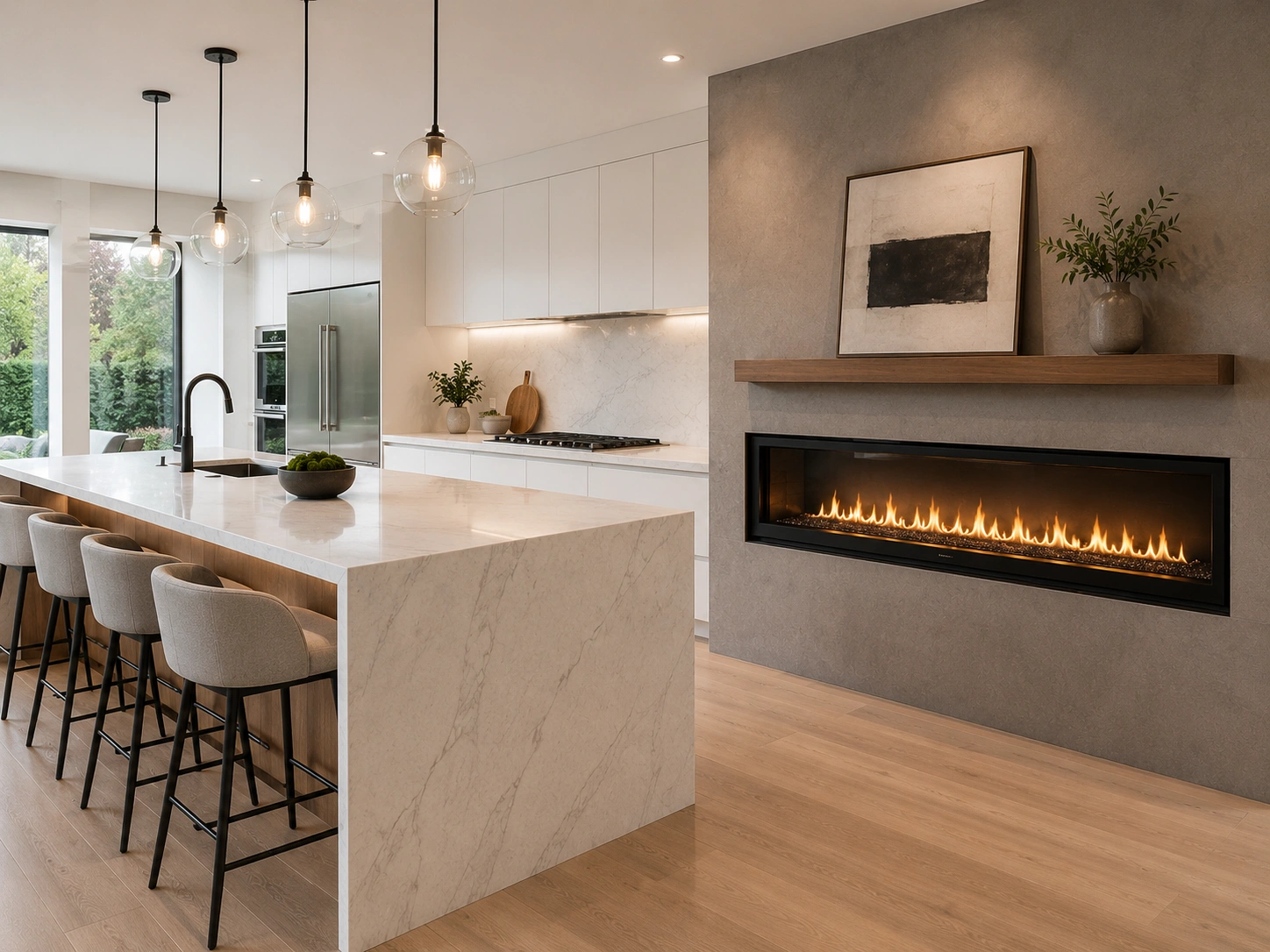
Modern Kitchens
For modern kitchen designs, consider a linear gas fireplace with a clean, frameless look. Wall-mounted electric fireplaces with minimal surrounds also work well. Focus on sleek materials like glass, polished concrete, or black steel that complement modern cabinetry and appliances.
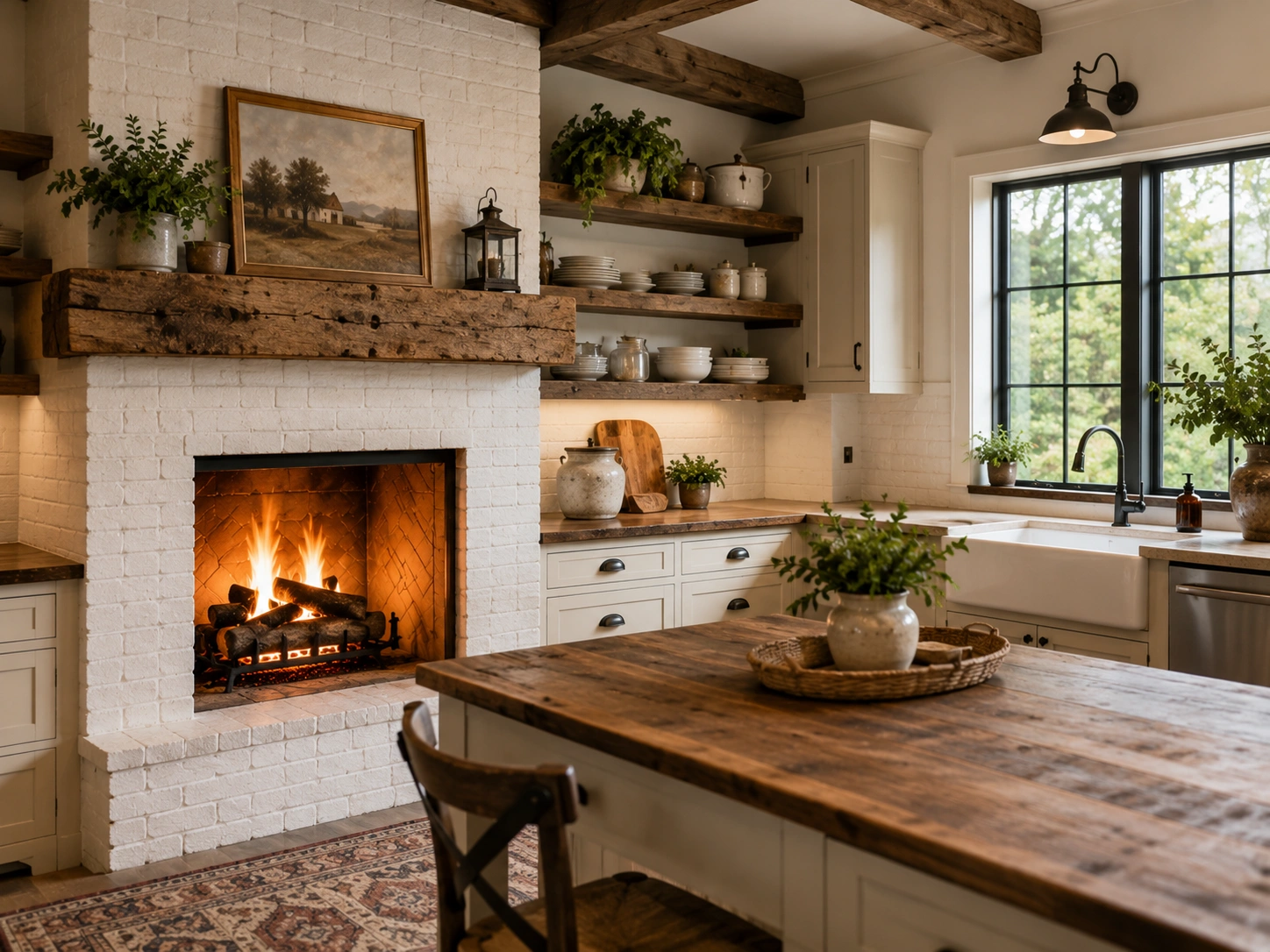
Farmhouse Kitchens
Farmhouse kitchens pair beautifully with white-painted brick fireplaces or simple wood surrounds. Consider a wood-burning insert for authenticity, or an electric model with realistic logs. Add a simple wooden mantel for displaying vintage kitchenware or seasonal decor.
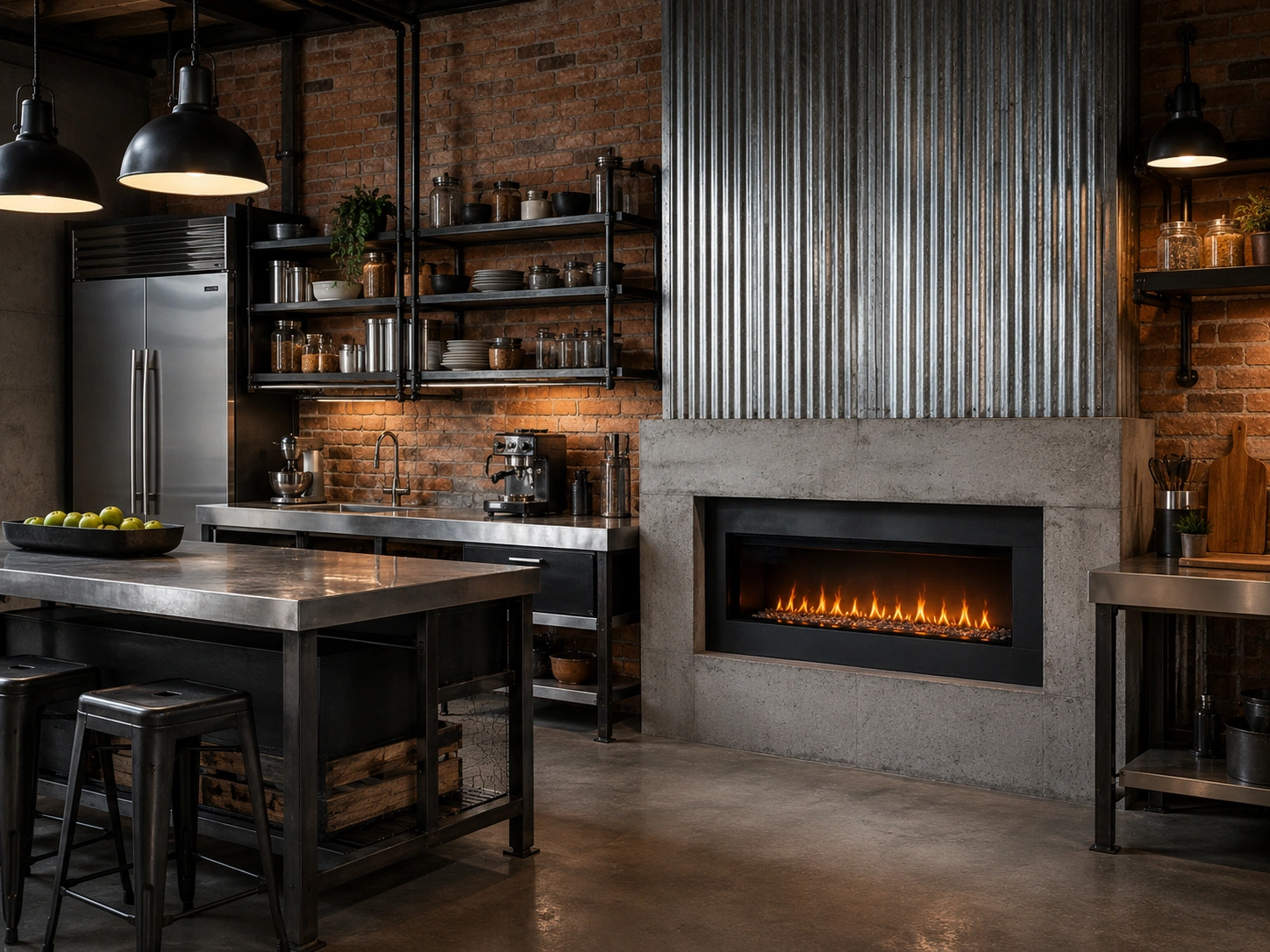
Industrial Kitchens
Industrial kitchens benefit from fireplaces with exposed metalwork, concrete surrounds, or reclaimed materials. A surround made from corrugated metal or concrete complements stainless steel appliances and open shelving. Consider a fireplace with visible ductwork for authentic industrial character.
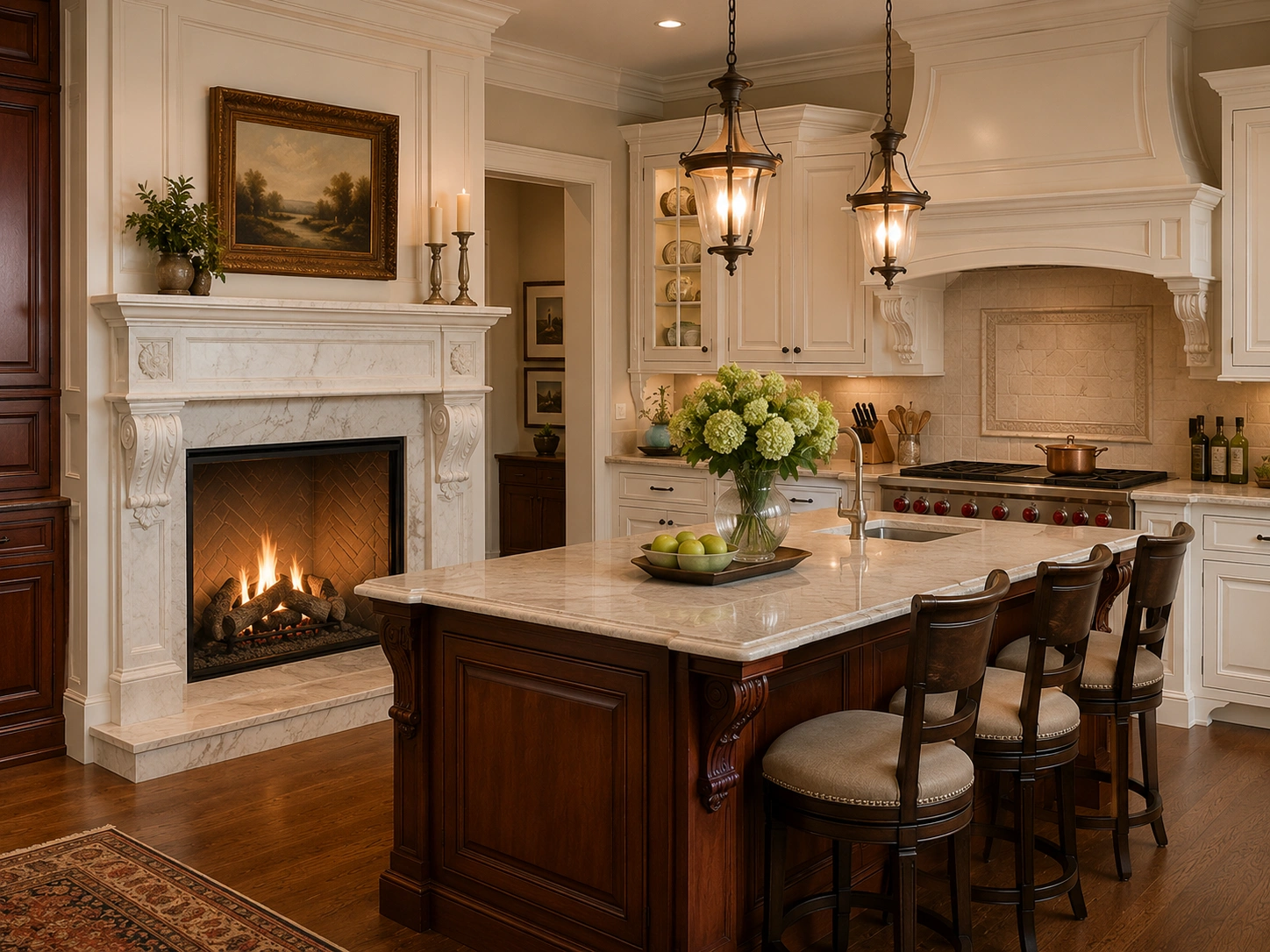
Traditional Kitchens
Traditional kitchens call for classic fireplace designs with marble surrounds, detailed mantels, and perhaps tile accents. A gas fireplace with a realistic log set provides the look of a wood fire without the maintenance. Consider built-in cabinetry flanking the fireplace for a cohesive, furniture-like appearance.
Conclusion: Creating Your Perfect Kitchen Hearth
A kitchen fireplace is more than just a heating appliance—it's a design element that can transform your cooking space into the true heart of your home. By carefully considering the type, placement, and design of your kitchen fireplace, you can create a space that's both functional for cooking and inviting for gathering.
Whether you opt for the convenience of an electric fireplace, the realism of a gas model, the tradition of wood burning, or the clean burning of ethanol, the right choice depends on your specific needs, budget, and kitchen layout. Remember to prioritize safety, especially in the cooking environment, and plan for proper maintenance to ensure your kitchen fireplace remains a beautiful and functional feature for years to come.
By following the ideas and guidelines in this article, you're well-equipped to make informed decisions about incorporating a fireplace into your kitchen design. The result will be a warm, welcoming space that enhances both your home's value and your daily living experience.