
Spring Fireplace Maintenance Guide
Winter is over—now it's time to protect your investment. Learn the essential steps to clean, inspect, and preserve your wood, gas, or electric fireplace for the off-season.
VIEW MAINTENANCE CHECKLISTAfter months of keeping your home warm and cozy, your fireplace has worked hard throughout the winter. Spring is the perfect time to give it the care it deserves. Proper fireplace maintenance not only ensures safe operation next winter but also prevents costly repairs, unpleasant odors, and pest infestations during the warmer months.
Whether you have a traditional wood-burning hearth, an efficient gas unit, or a modern electric insert, each type requires specific attention. This comprehensive guide walks you through everything you need to know about spring fireplace care, from basic cleaning to professional inspections.
Why Spring Fireplace Maintenance Is Essential
Skipping your spring maintenance routine can lead to significant problems. Creosote buildup left sitting in a chimney over the humid summer months can cause foul odors and increase the risk of a chimney fire next season. Moisture combined with soot creates acids that can damage mortar and metal components.
Furthermore, an open or damaged damper allows cool air from your air conditioner to escape up the flue, dramatically increasing your energy bills. A thorough spring cleaning and inspection ensure your indoor fireplace remains a valuable, safe, and efficient asset to your home.
💡 Pro Tip: Scheduling a professional chimney sweep in the spring is often cheaper and faster than booking one in the busy fall season. Beat the rush and save money!
Wood-Burning Fireplace Spring Care
Wood fireplaces require the most intensive spring cleaning due to ash accumulation and creosote deposits. Follow these steps to protect your masonry and chimney system.

1. Remove Ash and Debris
Never leave a thick layer of ash in the firebox over the summer. Ash absorbs moisture, which creates a caustic paste that can corrode the firebrick. Use a metal shovel to scoop the ashes into a metal container with a tight-fitting lid. For safe disposal methods, refer to our ash removal and disposal guide.
2. Inspect for Creosote Buildup
Creosote is the number one enemy of a wood-burning fireplace. If you notice more than 1/8 inch of black, flaky buildup inside the firebox or chimney, it is time for professional cleaning. Learn how to identify and manage this dangerous substance in our creosote buildup prevention article.
3. Check the Damper
Ensure the damper opens and closes smoothly and creates a tight seal when shut. A stuck or leaky damper can cost you hundreds in lost cooling. If it is hard to move, check out our tips for a stuck fireplace damper to see if it is a DIY fix or requires a professional.
4. Clean the Firebox and Glass
Scrub the firebrick with a wire brush and a mixture of warm water and vinegar. If your fireplace has glass doors, clean them thoroughly using a specialized cleaner to remove baked-on soot. Our detailed guide on how to clean fireplace glass provides the best techniques.
Gas Fireplace Spring Maintenance
Gas fireplaces are much cleaner than wood units, but they still require annual spring upkeep to maintain safety, efficiency, and appearance. Dust and pet hair can accumulate inside the vents and pilot assembly, causing operational issues later.

1. Clean the Glass and Logs
White haze on the inside of your gas fireplace glass is a common byproduct of combustion. Remove the glass front and clean it with a gas fireplace glass cleaner. While the glass is off, gently dust the ceramic logs and embers with a soft brush. Avoid moving the logs, as their placement is precisely calibrated for clean combustion.
2. Inspect the Burner and Pilot
Dust buildup on the burner can cause uneven flames or delayed ignition. Use a vacuum with a brush attachment to gently clean the burner pan. Check the pilot light flame—it should be blue with a small yellow tip. If the flame is weak or mostly yellow, it may need cleaning. Follow our comprehensive gas fireplace maintenance guide for detailed burner cleaning instructions.
3. Test Safety Features
Spring is the time to verify that all safety mechanisms function correctly. Test the carbon monoxide detectors in your home and replace batteries if needed. Learn more about signs of carbon monoxide from fireplaces to keep your household safe year-round.
Electric Fireplace Spring Care
Electric fireplaces are low-maintenance, but they aren't no-maintenance. Dust is the primary enemy of electric units, as it can clog vents, reduce heating efficiency, and even create a fire hazard near the heating element.
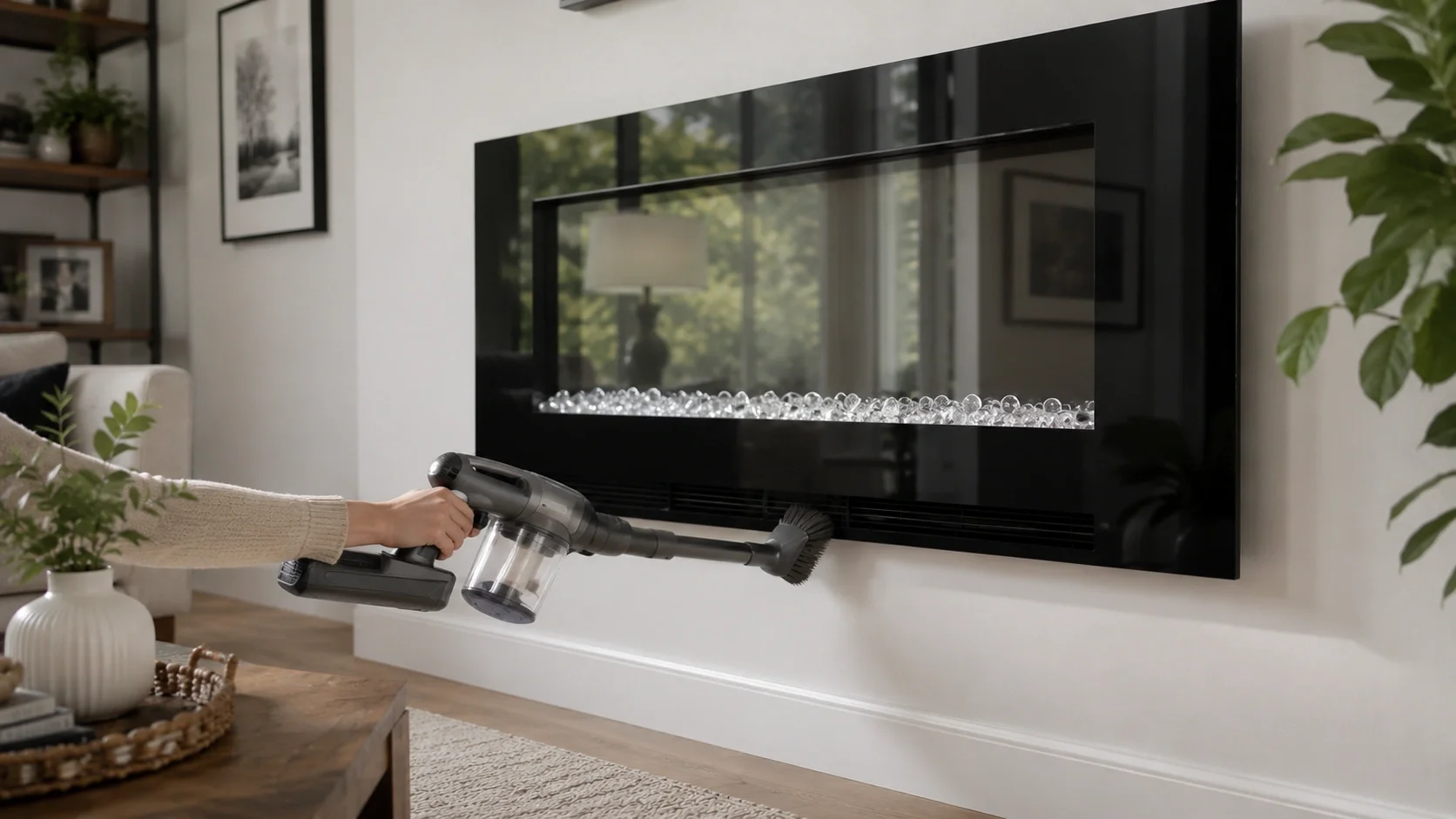
1. Dust the Interior and Vents
Unplug the unit before cleaning. Use a microfiber cloth or a vacuum with a soft brush to gently remove dust from the interior housing, heater outlet, and air intake vents. This ensures proper airflow for the next heating season. For more specifics, read our electric fireplace cleaning guide.
2. Inspect Cords and Bulbs
Check the power cord for any fraying or damage. If your electric fireplace uses traditional light bulbs for flame effects, spring is a great time to replace burnt-out bulbs. Modern LED units rarely need bulb replacements, but you should still verify the flame effect is operating correctly.
3. Test the Thermostat and Remote
Run the unit briefly to ensure the heater and flame functions work correctly. Replace the batteries in the remote control. If you are experiencing issues, our electric fireplace maintenance article offers easy troubleshooting steps.
Essential Spring Fireplace Maintenance Checklist
No matter what type of fireplace you own, use this quick checklist to make sure nothing is overlooked before you close it down for the summer.
✔️ Universal Tasks for All Fireplaces
- Vacuum and wipe down the interior firebox or housing
- Clean the glass doors or viewing window thoroughly
- Dust the exterior, mantel, and surrounding hearth
- Inspect the hearth and fireplace surround for cracks or damage
- Test the carbon monoxide and smoke detectors in the room
- Ensure the fireplace is completely turned off and unplugged (if electric)
✔️ Wood-Burning Specific Tasks
- Remove all ashes from the firebox
- Schedule a professional chimney sweep if needed
- Close the damper tightly to prevent AC loss
- Check the chimney cap for bird nests or debris
✔️ Gas Specific Tasks
- Vacuum the burner pan and pilot assembly
- Dust the ceramic logs carefully
- Inspect the gas line connection for wear
- Turn off the pilot light for the summer to save gas
Maintenance Costs: DIY vs. Professional Help
Deciding whether to handle spring maintenance yourself or hire a professional depends on the type of fireplace and the extent of the work needed. Understanding the costs of fireplace maintenance helps you budget appropriately.
DIY Maintenance Costs
Handling basic cleaning and inspections yourself is highly cost-effective. You will only need to purchase a few supplies:
- Chimney sweeping brush and rods: $35–$75
- Gas fireplace glass cleaner: $12–$20
- Microfiber cloths and vacuum attachments: $10–$25
For minor upkeep, DIY is perfectly fine. If you are comfortable with tools and following safety protocols, review our DIY fireplace inspection checklist.
Professional Service Costs
Some tasks are best left to certified experts. Hiring a professional ensures deep cleaning, structural integrity checks, and gas leak detection. Typical costs include:
- Professional chimney sweep and inspection: $150–$300
- Gas fireplace annual service and cleaning: $100–$200
- Chimney cap replacement: $150–$350
If you notice strong gas odors, damaged masonry, or excessive creosote, it is time to know when to call a chimney sweep. Investing in a professional service now can save you thousands in structural repairs down the line.

Protecting Your Fireplace During the Off-Season
Once your fireplace is clean and inspected, you need to protect it from summer humidity and pests. If you have a wood-burning fireplace, make sure the damper is firmly closed to keep humid air and insects out. Consider installing a top-sealing damper or a chimney cap if you do not already have one.
For gas and electric fireplaces, ensure the unit is unplugged or the pilot light is off. You can also use a custom fireplace cover to prevent dust from settling inside the firebox. These off-season steps naturally bridge into our comprehensive summer fireplace care routine, ensuring your unit stays pristine until fall.
For a complete year-round strategy, be sure to review our seasonal fireplace checklist and create a personalized monthly and yearly maintenance schedule.


