
Minimalist Fireplace Ideas: Clean Lines for Modern Living
Transform your space with minimalist fireplace designs that combine functionality and simplicity. Discover how clean aesthetics can create a stunning focal point without visual clutter.
EXPLORE MINIMALIST DESIGNSMinimalist design has become increasingly popular in modern homes, emphasizing simplicity, clean lines, and a "less is more" philosophy. When applied to fireplaces, this approach creates stunning focal points that enhance rather than overwhelm a space. A minimalist fireplace eliminates ornate details and unnecessary elements, allowing the natural beauty of materials and the warmth of the fire to take center stage.
In this comprehensive guide, we'll explore various minimalist fireplace ideas, from ultra-sleek wall-mounted designs to subtle recessed options. We'll discuss the key principles of minimalist design, material choices that complement this aesthetic, and practical considerations for implementation. Whether you're building a new home or remodeling your existing space, these ideas will help you create a fireplace that embodies modern elegance while providing the warmth and comfort you desire.
Core Principles of Minimalist Fireplace Design
Before exploring specific designs, it's essential to understand the fundamental principles that define minimalist fireplace aesthetics. These principles guide every aspect of the design process, from material selection to spatial arrangement:
Simple Geometric Forms
Minimalist fireplaces feature clean, uncomplicated shapes—typically rectangles or squares without ornate details or decorative elements.
Neutral Color Palette
Stick to monochromatic or analogous color schemes with whites, grays, blacks, and natural wood tones to create visual harmony.
Quality Materials
Use fewer materials but choose high-quality options with excellent textures and finishes to create visual interest without complexity.
Beyond these core principles, minimalist fireplace design also emphasizes negative space—the intentional empty areas around the fireplace that allow it to breathe within the room. Unlike traditional fireplaces that might feature elaborate mantels, hearths, and surrounding architecture, minimalist versions create impact through restraint rather than embellishment.
The goal is to create a fireplace that feels integrated with the architecture of the space rather than applied as a decorative element. This often means extending materials from the fireplace into the surrounding walls or using flush installations that create a seamless transition between the fireplace and its environment.
Minimalist Fireplace Design Ideas
The following design ideas showcase various approaches to minimalist fireplace aesthetics, each offering a unique interpretation of simplicity and elegance:

Wall-Mounted Floating Fireplaces
Wall-mounted fireplaces epitomize minimalist design by appearing to float without visible support. These wall fireplaces create dramatic visual impact through their seemingly gravity-defying installation. Available in both electric and gas options, they eliminate the need for a traditional hearth or surround, creating an incredibly clean appearance.
For maximum minimalist impact, choose a model with a frameless design that extends seamlessly from the wall. Black or dark gray frames create striking contrast against white walls, while white or light-colored units can blend almost invisibly with the surrounding surface. Consider models with remote-controlled features to maintain clean lines without visible controls.
The installation height can vary based on your preference and room layout. Mounting the fireplace at eye level when seated creates an intimate viewing experience, while higher placements can work well in rooms with high ceilings or when the fireplace shares a wall with a television.

Recessed Insert Fireplaces
Recessed fireplaces are installed directly into the wall, creating a flush surface that blends seamlessly with the surrounding architecture. This approach creates an incredibly clean look where the fireplace appears as a simple opening in the wall rather than a protruding element. The fireplace insert sits back from the wall surface, often with minimal or no visible frame.
For a truly minimalist aesthetic, extend the wall material around the fireplace opening without introducing a contrasting surround material. This creates continuity between the fireplace and the wall, making the fire itself the focal point rather than the structure containing it. Consider using the same paint or wall covering on the interior of the recess to create depth without visual complexity.
Recessed installations work particularly well with electric fireplaces, which don't require venting and can be installed virtually anywhere. However, direct-vent gas fireplaces can also be recessed with proper planning and construction.
Linear or Ribbon Fireplaces
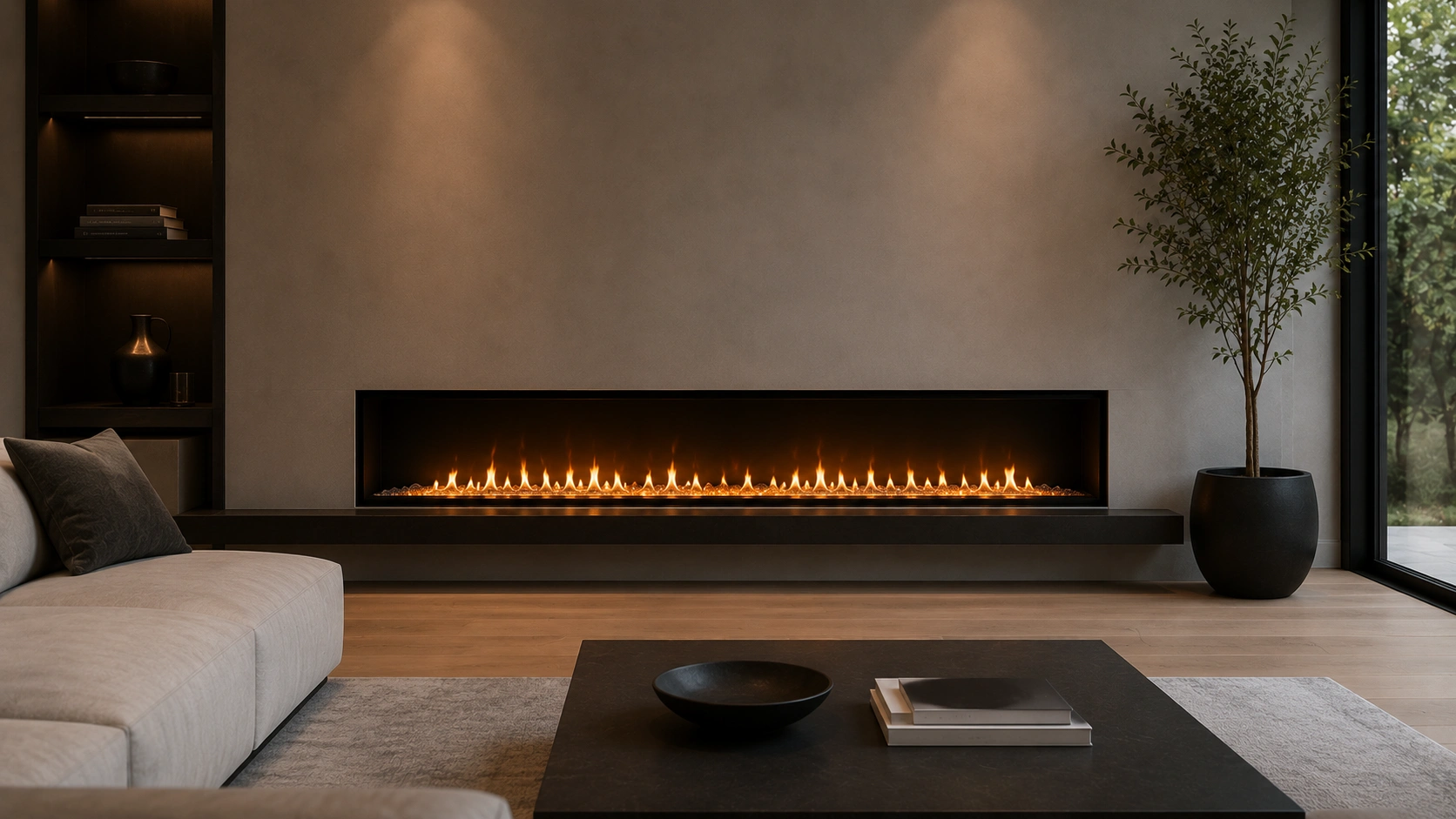
Linear fireplaces feature wide, horizontally oriented fireboxes that create a panoramic view of the flames. These designs prioritize width over height, creating a dramatic horizontal element that complements modern architecture. The elongated shape creates visual interest through proportion rather than ornamentation, making it perfect for minimalist aesthetics.
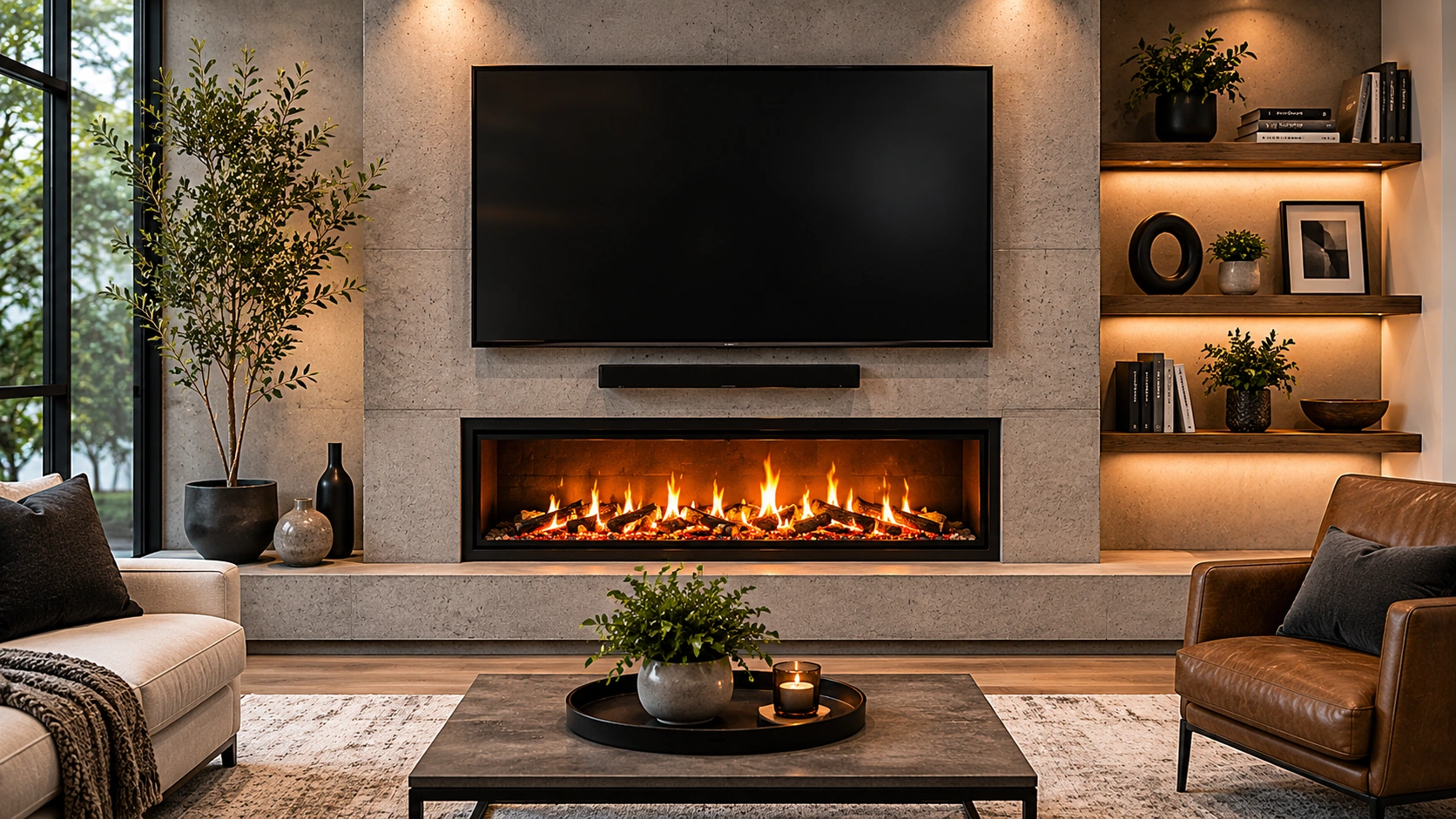
These fireplaces work exceptionally well in open-concept spaces, serving as a subtle room divider or defining a living area without obstructing sightlines. They also pair beautifully with TV and fireplace wall designs, as their horizontal orientation can complement rather than compete with a television mounted above.
For maximum impact, consider a "see-through" or double-sided linear fireplace that can be viewed from two adjacent spaces, creating connection between rooms while maintaining clean sightlines.
Concrete Surround Fireplaces
Concrete offers an ideal material for minimalist fireplace surrounds due to its clean appearance and ability to be formed into simple geometric shapes. A smooth concrete surround can frame a fireplace with minimal visual complexity while adding subtle texture and depth. The material's neutral gray tone works perfectly within minimalist color palettes.
For the most minimalist approach, consider a simple concrete slab that extends from floor to ceiling, with the fireplace opening cut directly into it. This creates a monolithic appearance that feels both substantial and refined. Alternatively, a simple concrete hearth with clean edges can ground the fireplace without introducing visual clutter.
Concrete can be finished in various ways to achieve different effects—from perfectly smooth and polished to subtly textured. Each finish creates a different character while maintaining the material's inherent minimalist qualities.

Frameless Glass Fireplaces
Frameless glass fireplaces eliminate visible borders around the fire viewing area, creating the illusion that the fire is floating within the wall. This approach maximizes the view of the flames while minimizing the visual presence of the fireplace structure. The result is an incredibly clean aesthetic where the fire itself becomes a piece of living art.
These designs work particularly well with electric fireplaces that feature realistic flame effects but don't require the structural elements needed for combustion. The lack of a frame means there's nothing to distract from the mesmerizing dance of the flames, creating a meditative focal point that's perfect for minimalist spaces.
For maximum impact, install a frameless fireplace in a wall of continuous material without introducing contrasting elements. This creates the impression that the fire exists within the architecture itself rather than being housed in a separate appliance.
Minimalist Fireplaces for Different Rooms
While minimalist fireplaces can enhance virtually any space, the approach may vary depending on the room's function and existing design. Here are tailored ideas for incorporating minimalist fireplaces throughout your home:

Living Room Minimalist Fireplaces
The living room is the most common location for a minimalist fireplace. Here, the fireplace should create a focal point without dominating the space. Consider a recessed installation with minimal surround, or a wall-mounted unit positioned to balance other elements in the room. For living room fireplace designs, maintain proportionality with the room size—avoid oversized installations in modest spaces.
Bedroom Minimalist Fireplaces
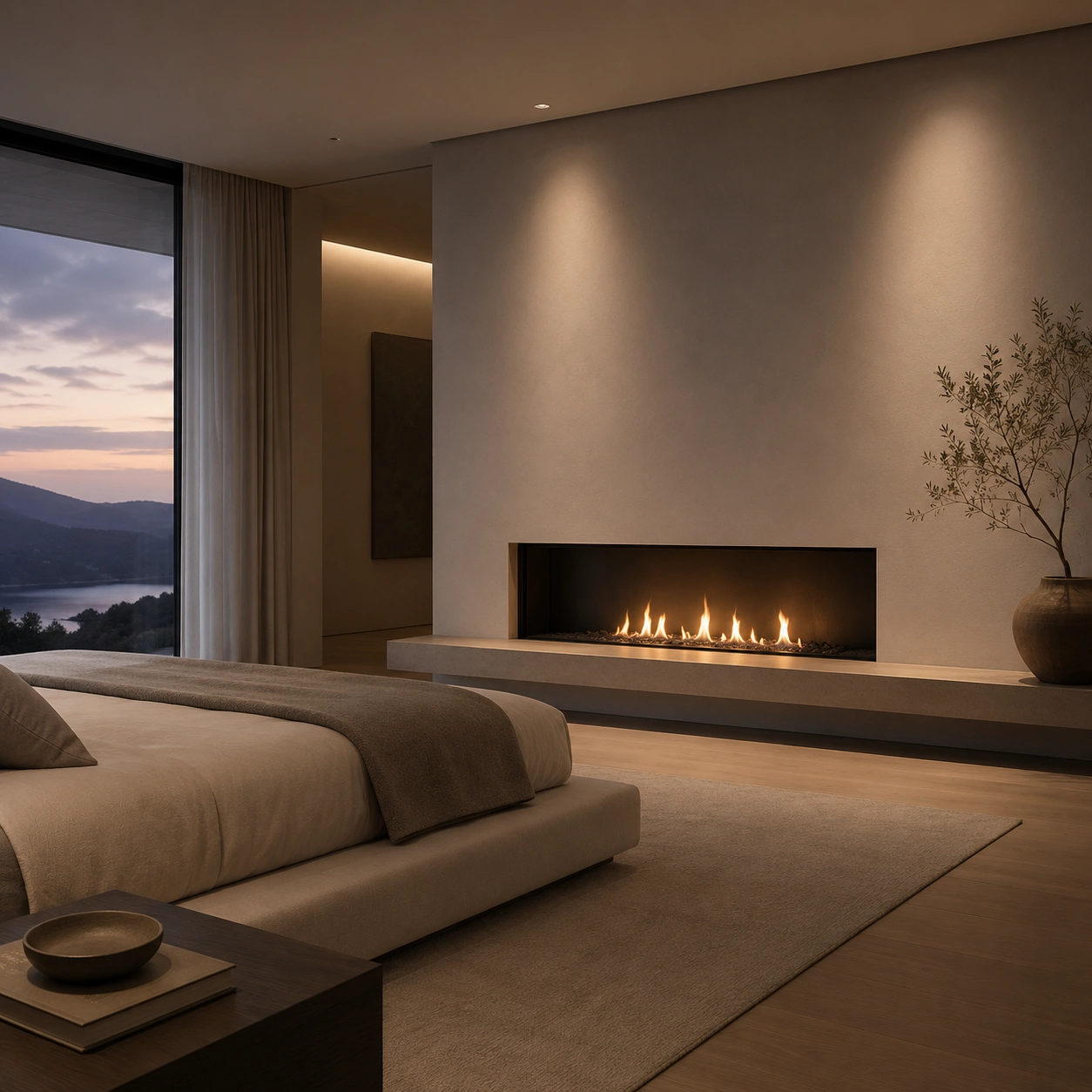
In bedrooms, minimalist fireplaces create a serene, spa-like atmosphere. A low-profile, horizontally oriented fireplace works well beneath a television or artwork. Consider a model with dimmable lighting and quiet operation to maintain the restful environment. Bedroom fireplace designs should prioritize subtle warmth over dramatic flame display.
Kitchen Minimalist Fireplaces
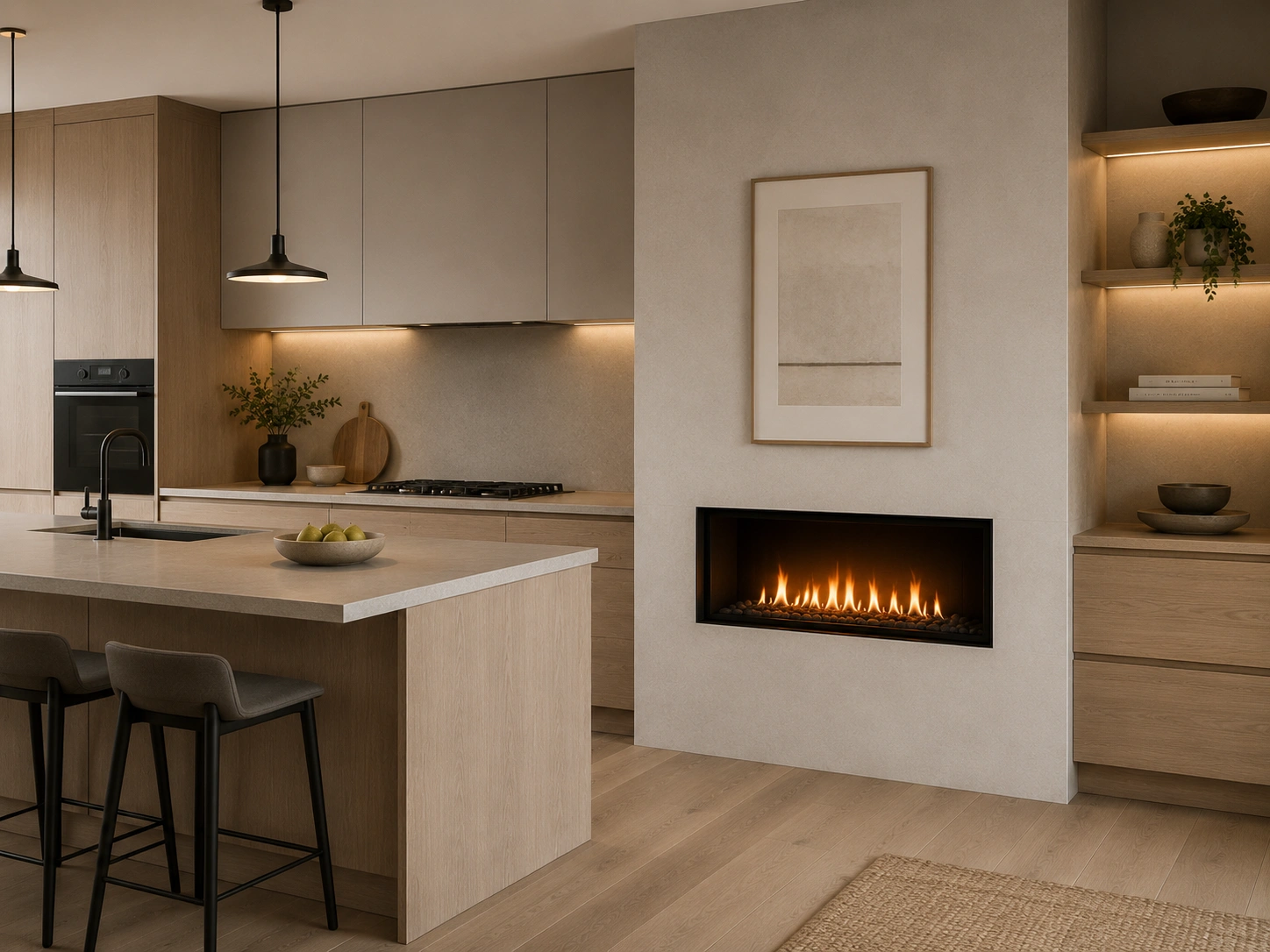
Kitchen fireplaces are gaining popularity in open-concept homes. A minimalist fireplace can serve as a visual anchor in a kitchen-living area without competing with cabinetry and appliances. Consider materials that complement your kitchen finishes—concrete pairs well with industrial designs, while sleek black units complement modern kitchens with dark accents.

Bathroom Minimalist Fireplaces
For the ultimate luxury, incorporate a minimalist fireplace in your master bathroom. Electric models work best in this moisture-prone environment. Position the fireplace to be visible from the soaking tub for a spa-like experience. Choose water-resistant materials and ensure proper installation to protect both the fireplace and the surrounding space from humidity damage.
Material Choices for Minimalist Fireplaces
The materials you choose for your minimalist fireplace significantly impact its overall aesthetic. The following options work particularly well with minimalist design principles:
| Material | Minimalist Qualities | Best Applications | Price Range |
|---|---|---|---|
| Concrete | Smooth, monolithic appearance; neutral color | Surrounds, hearths, full walls | $1,200-$3,500 |
| Steel | Clean lines, industrial aesthetic | Frames, surrounds, wall-mounted units | $800-$2,800 |
| Black Metal | Strong contrast, disappears visually | Frames, inserts, wall-mounted units | $600-$2,200 |
| Glass | Transparent, frameless options available | Fire viewing panels, room dividers | $500-$1,800 |
| Marble | Luxurious yet simple when minimally veined | Hearths, surrounds, mantel shelves | $2,000-$5,000 |
| Plaster | Seamless appearance, can be painted | Surrounds, integrated walls | $1,000-$2,500 |
| Natural Wood | Warm texture, clean when minimally grained | Mantel shelves, accents | $400-$1,200 |
Material Tip: For the most minimalist impact, limit your design to no more than two materials. A concrete surround with a black steel firebox creates striking contrast with minimal complexity. Alternatively, extending the wall material around the fireplace opening creates the ultimate seamless appearance.
Best Fireplace Types for Minimalist Aesthetics
While any fireplace can be adapted to minimalist design, certain types naturally align better with this aesthetic. Here's how different fireplace types work within minimalist frameworks:
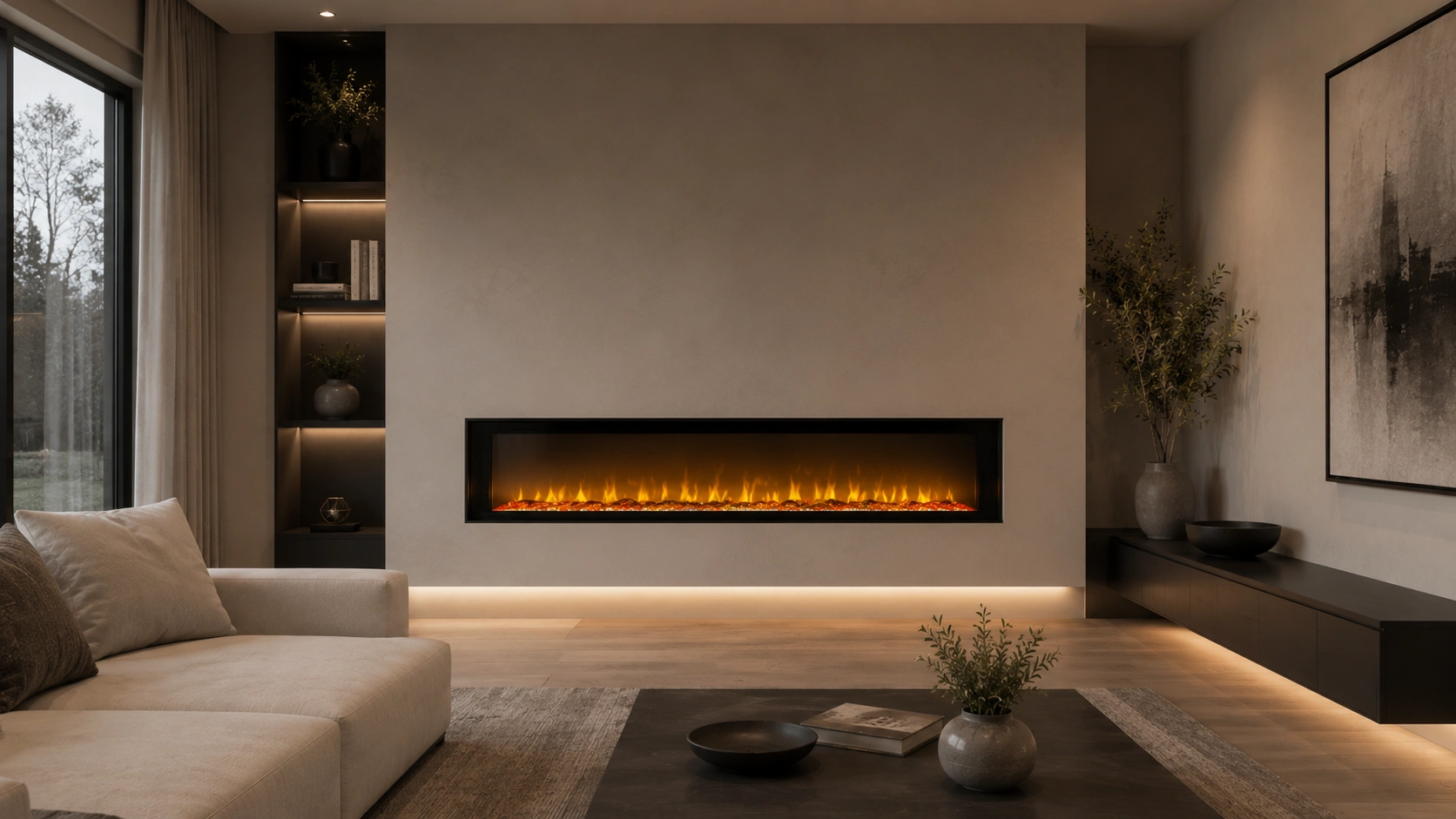
Electric Fireplaces
Electric fireplaces are ideal for minimalist designs due to their clean installation requirements—no venting, chimneys, or gas lines needed. They offer the most flexibility for placement and can be installed as ultra-thin wall units or recessed flush with the wall. Modern electric fireplaces feature realistic flame effects without the mechanical complexity of other options.
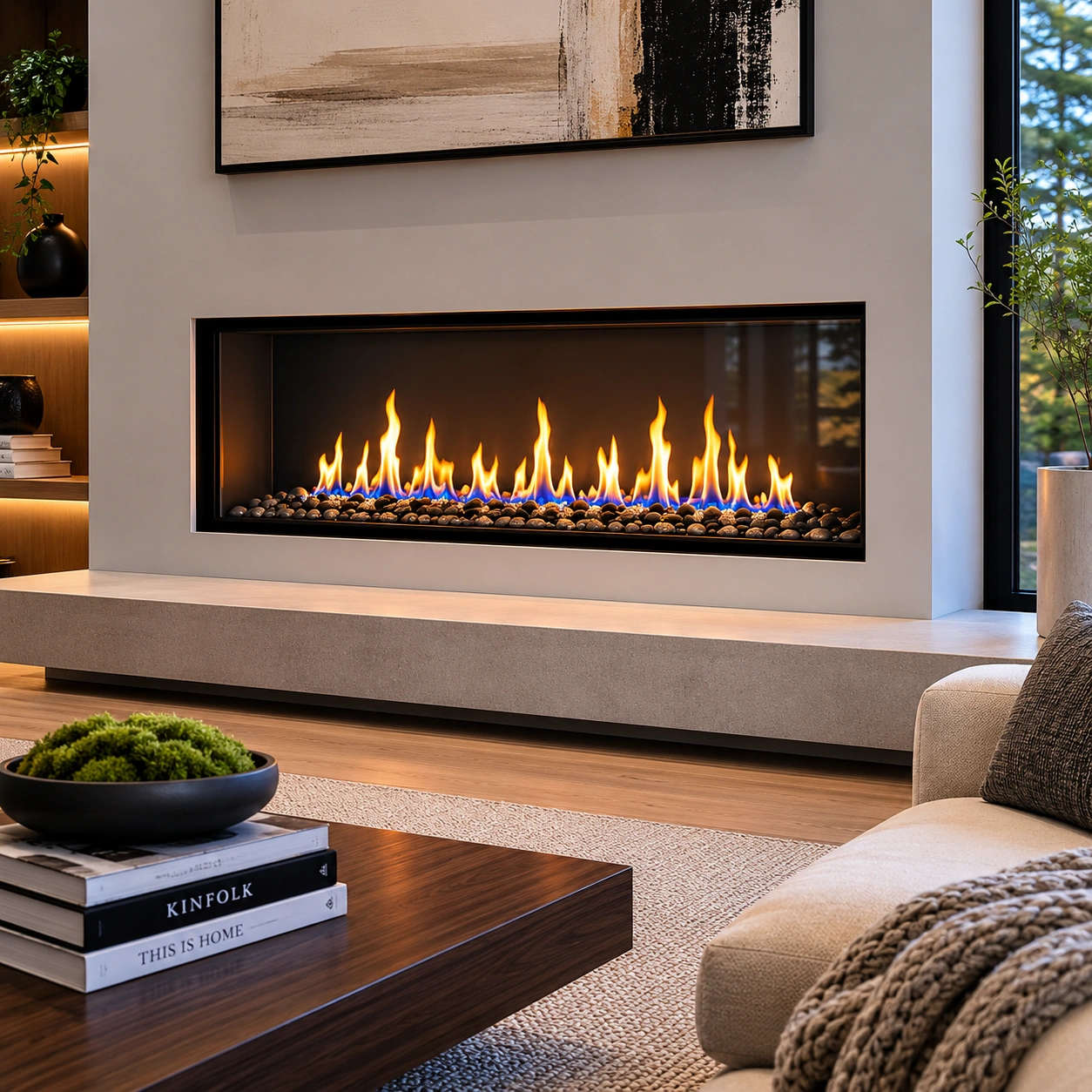
Direct-Vent Gas Fireplaces
Gas fireplaces with direct-vent systems offer real flames with minimal visual intrusion. The venting can be routed horizontally through an exterior wall, eliminating the need for a chimney. Choose models with clean-faced designs that minimize visible trim and framing for the most minimalist appearance.
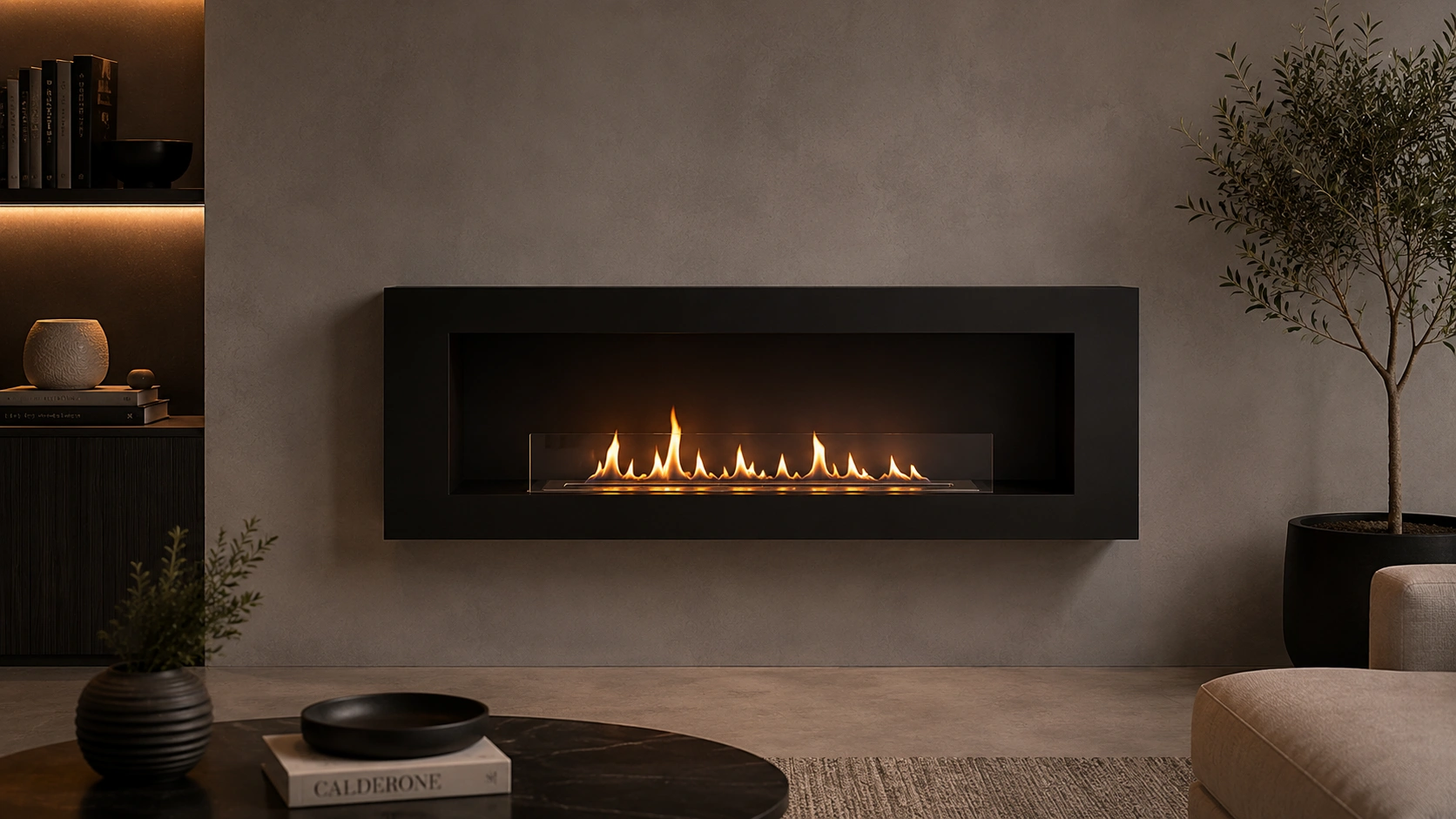
Ethanol Fireplaces
Ethanol fireplaces offer perhaps the cleanest installation possible—requiring no venting, utilities, or permanent installation in many cases. These burn bioethanol fuel and produce real flames without smoke or emissions. Their freestanding or wall-mounted designs often feature minimal framing, making them perfect for minimalist spaces.
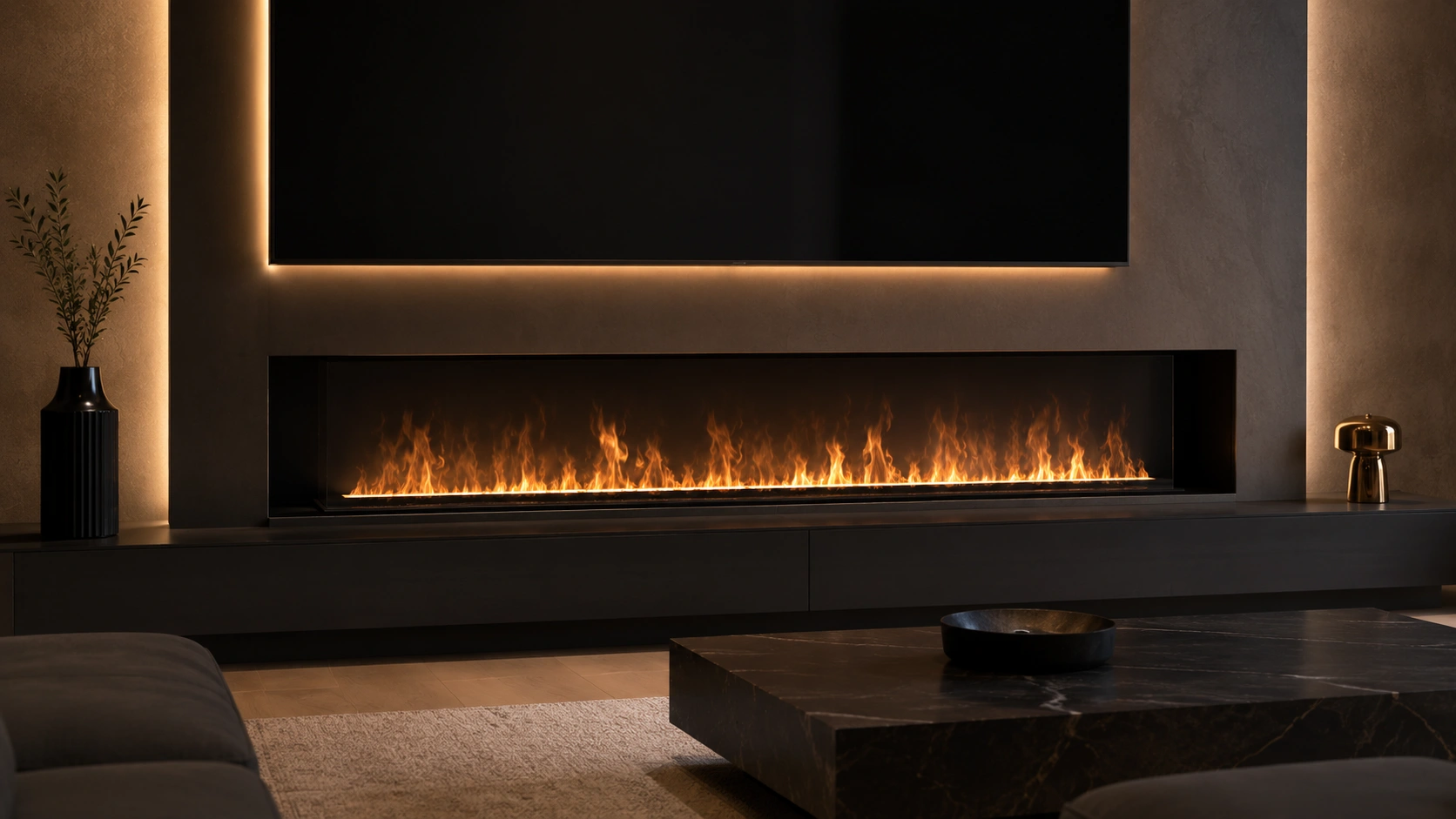
Water Vapor Fireplaces
Water vapor fireplaces use ultrasonic technology to create incredibly realistic flame effects from water mist. These units require only an electrical outlet and water supply, making them extremely easy to install in minimalist configurations. The flame effect is often more convincing than traditional electric fireplaces, with the added benefit of adding humidity to the air.
Important Consideration: While wood-burning fireplaces offer authentic ambiance, they typically require more structural elements (chimneys, hearths, etc.) that can complicate minimalist design. If you prefer real wood burning, consider a modern, clean-lined stove rather than a traditional open fireplace, or explore high-efficiency inserts with minimal visible framing.
Minimalist vs. Traditional Fireplaces: A Comparison
Understanding the key differences between minimalist and traditional fireplace approaches can help you determine which style best suits your home and preferences:
| Feature | Minimalist Fireplace | Traditional Fireplace |
|---|---|---|
| Design Philosophy | "Less is more" - simplicity and restraint | Ornate details and decorative elements |
| Visual Impact | Through negative space and proportion | Through embellishment and detail |
| Surround Design | Minimal or non-existent; often recessed | Elaborate with mantels, columns, molding |
| Material Palette | Limited to 1-2 materials | Multiple contrasting materials |
| Color Scheme | Neutral, monochromatic | Often multi-colored with contrasts |
| Hearth | Often eliminated or very subtle | Prominent feature, often raised |
| Mantel | Usually absent or extremely simple | Ornate shelf with decorative supports |
| Integration | Seamless with architecture | Distinct architectural element |
| Installation Flexibility | High - many non-vented options | Limited - often requires chimney |
| Maintenance | Generally lower | Often higher due to complexity |
It's worth noting that these approaches aren't mutually exclusive. Some homeowners successfully blend elements of both styles—for example, a minimalist fireplace frame with a subtle traditional detail, or a traditional layout with simplified modern materials. The key is maintaining visual harmony and avoiding a cluttered appearance.
If your home features traditional architecture but you prefer minimalist aesthetics, consider transitional designs that bridge both styles. A simple, clean-lined surround in a traditional material like marble can honor your home's character while embracing modern simplicity.
Pros and Cons of Minimalist Fireplaces
Advantages
- Visual Clarity: Creates a clean, uncluttered focal point that enhances rather than overwhelms the space.
- Versatility: Complements various interior styles from contemporary to industrial to Scandinavian.
- Space Efficiency: Often requires less floor space than traditional fireplaces, ideal for smaller homes.
- Easier Maintenance: Simpler designs with fewer crevices and details are easier to clean.
- Installation Flexibility: Many minimalist options (especially electric) don't require venting or chimneys.
- Timeless Appeal: Simple, clean designs tend to age better than trendy ornate styles.
- Enhances Modern Architecture: Perfectly complements contemporary home designs and open floor plans.
Disadvantages
- Limited Decor Space: Minimalist fireplaces often lack mantels or shelves for displaying decor items.
- Less Traditional Warmth: May lack the cozy, rustic charm some associate with fireplaces.
- Potential for Starkness: In rooms without other design elements, can feel too austere.
- Real Flame Limitations: The cleanest minimalist designs are often electric or vapor, not real fire.
- Higher Per-Square-Foot Cost: Premium materials and custom installation can increase costs.
- Less Sound: Many minimalist options lack the crackling sounds of traditional fireplaces.
- Design Discipline Required: Requires careful curation of surrounding elements to maintain the aesthetic.
Minimalist Fireplace Cost Considerations
The cost of a minimalist fireplace varies significantly based on the type of fireplace, materials, and installation requirements. Here's a breakdown of typical costs for different minimalist approaches:
Wall-Mounted Electric
Unit plus basic installation; no venting required
Recessed Electric
Unit plus wall modification and finishing
Custom Concrete Surround
Custom fabrication and installation
Additional cost factors to consider:
- Fireplace Type: Electric fireplaces typically cost less to install but may have higher perceived costs for premium models. Gas fireplaces require more installation work but offer real flames.
- Custom vs. Prefabricated: Custom minimalist designs cost significantly more than off-the-shelf units but offer more design control.
- Material Quality: High-end materials like premium concrete or custom metalwork increase costs but enhance the minimalist aesthetic.
- Installation Complexity: Recessed installations require wall modification, while wall-mounted units are simpler to install.
- Additional Features: Remote controls, smart home integration, and realistic flame effects add to the cost but enhance the experience.
Budget-Friendly Minimalist Approach: For a minimalist look on a budget, consider a simple electric wall-mounted fireplace with a black frame against a white wall. This creates strong contrast and clean lines without the expense of custom installation or premium materials. Pair with minimal decor and a clutter-free surrounding area to maximize the minimalist impact.
Minimalist Fireplace Maintenance Guide

One of the advantages of minimalist fireplaces is their relatively simple maintenance requirements. However, proper care is still essential to maintain their clean appearance. Here are maintenance guidelines specific to minimalist designs:
Daily and Weekly Care
- Wipe down glass surfaces daily with a microfiber cloth to prevent fingerprint buildup—particularly important for frameless designs.
- Dust surround surfaces weekly, paying attention to horizontal surfaces where dust accumulates.
- For electric and vapor fireplaces, check water levels or ensure proper ventilation weekly.
- Keep the area immediately around the fireplace free of clutter to maintain the minimalist aesthetic.
Monthly Maintenance
- Clean glass more thoroughly with appropriate glass cleaner to remove any buildup.
- Inspect for any scratches or damage to surround materials that could compromise the clean appearance.
- For gas fireplaces, check that the flame pattern remains even and adjusted properly.
- Verify that any remote controls or smart features are functioning correctly.
Annual Maintenance
- Have gas fireplaces professionally inspected and serviced to ensure safe operation.
- For concrete surrounds, consider applying a protective sealer if not previously done.
- Inspect electrical connections for electric and vapor fireplaces.
- Check wall-mounted installations to ensure secure attachment.
Important Note: For detailed maintenance information specific to your fireplace type, refer to our comprehensive guides on electric fireplace maintenance, gas fireplace maintenance, or ethanol fireplace maintenance. These resources provide type-specific advice that complements the general minimalist care guidelines above.
Minimalist Fireplaces with TV Integration

Combining a minimalist fireplace with a television is a popular design approach that creates a unified entertainment center while maintaining clean aesthetics. This combination works particularly well with minimalist design because both elements can be treated as simple geometric forms without competing visually.
For the most successful integration, consider these approaches:
- Vertical Alignment: Position the TV directly above the fireplace in a column arrangement. This creates a strong vertical element that can serve as an anchor for the room. Ensure proper spacing between the TV and fireplace to prevent heat damage—typically 12-18 inches for electric fireplaces and more for gas options.
- Material Continuity: Use the same material or finish for the fireplace surround and TV backing to create visual continuity. For example, a concrete wall section that houses both the fireplace and TV creates a unified composition.
- Concealed Wiring: Essential for maintaining the minimalist aesthetic. Route all cables through the wall rather than leaving them visible. Consider installing an in-wall power kit and cable management system.
- Proportional Balance: Ensure the TV and fireplace are appropriately sized relative to each other and the wall. An oversized TV above a small fireplace (or vice versa) creates visual imbalance.
- Integrated Media Cabinet: If storage is needed, incorporate a minimalist media cabinet below the fireplace that maintains the same design language. Avoid traditional entertainment centers with ornate details.
For more specific guidance on this combination, see our detailed article on TV above fireplace ideas, which addresses safety considerations, optimal heights, and design approaches.
Minimalist Fireplaces for Small Spaces

Minimalist fireplaces are particularly well-suited for small spaces due to their space-efficient designs and uncluttered appearance. In compact rooms, a traditional fireplace with its mantel, hearth, and surround can feel overwhelming, while a minimalist version can provide warmth without dominating the limited space.
For small spaces, consider these specific approaches:
- Corner Installations: A corner fireplace with a minimalist design can maximize floor space while creating a cozy focal point. Choose a model with a simple triangular or wedge-shaped surround that fits cleanly into the corner.
- Wall-Mounted Units: These eliminate the need for any floor space, making them ideal for apartments or small rooms. A slim, horizontally oriented model can provide visual interest without physical bulk.
- Double-Function Designs: Some minimalist fireplaces incorporate shelving or storage, providing additional functionality in space-constrained areas.
- Recessed Options: Installing a fireplace into the wall saves floor space and creates a seamless appearance. This works particularly well in small bathrooms or bedrooms.
- Tabletop Fireplaces: For the ultimate space-saving solution, consider a tabletop fireplace with a minimalist design. While smaller in scale, these can still provide visual warmth and ambiance.
When selecting a fireplace for a small space, pay special attention to heating capacity (BTU output). A fireplace that's too powerful for the space will cycle on and off frequently, while one that's too weak won't provide adequate warmth. For most small rooms (under 400 square feet), electric fireplaces with 4,000-5,000 BTU output are sufficient.
Expert Design Tips for Minimalist Fireplaces
To maximize the impact of your minimalist fireplace, consider these expert design tips:
1. Create Negative Space
Leave ample empty space around your fireplace. Resist the urge to fill every surface with decor. The breathing room around the fireplace is as important as the fireplace itself in creating a minimalist aesthetic.
2. Extend Materials
Continue the fireplace material onto adjacent walls or surfaces to create a seamless integration with the architecture. This technique makes the fireplace feel like an intentional part of the space rather than an added element.
3. Use Recessed Lighting
Highlight the fireplace with subtle recessed lighting rather than prominent fixtures. Adjustable LED recessed lights can create dramatic uplighting or downlighting that enhances the fireplace without introducing visual clutter.
4. Conceal Controls
Hide remote controls, switches, and other operational elements when not in use. Consider smart home integration that allows you to control the fireplace with your phone, eliminating the need for visible controls entirely.
5. Limit Decor
If you add decor around your fireplace, choose just one or two carefully curated pieces rather than a collection. A single piece of art or a simple vessel can complement the fireplace without competing with it.
6. Consider Scale
In minimalist design, scale is crucial. A fireplace that's too small for the wall will feel timid, while one that's too large will feel imposing. Aim for a fireplace that occupies roughly one-third of the wall width for balanced proportions.
Conclusion: Is a Minimalist Fireplace Right for You?
A minimalist fireplace offers a contemporary approach to home heating and ambiance that emphasizes simplicity, clean lines, and thoughtful design. This style works particularly well in modern homes, urban spaces, and for those who appreciate an uncluttered aesthetic that lets the fire itself become the focal point.
The decision to choose a minimalist fireplace should be based on your aesthetic preferences, lifestyle, and the architectural context of your home. If you find traditional fireplace designs too ornate or visually heavy, a minimalist approach can provide the warmth and comfort of a fireplace without the visual complexity. However, if you cherish the opportunity to display family photos, holiday decorations, and other items on a mantel, a minimalist design might feel too restrictive.
For many homeowners, a minimalist fireplace represents the perfect balance between form and function—providing practical heating while serving as a sophisticated design element that enhances rather than overwhelms the living space. By following the principles and ideas outlined in this guide, you can create a fireplace that embodies modern elegance while providing the warmth and comfort that makes a house feel like home.
Ready to Explore Your Options? Check out our recommended minimalist fireplaces below, or explore our other modern fireplace ideas for more inspiration. If you're still deciding on the right fireplace type for your needs, our fireplace selection guide can help you make the perfect choice for your home.


