
Freestanding vs Insert Fireplace: Complete Comparison
Discover which fireplace style best suits your home with our detailed analysis of freestanding and insert fireplaces, including installation requirements, costs, and heating efficiency.
SEE THE COMPARISONChoosing between a freestanding and insert fireplace is a common dilemma for homeowners looking to add warmth and ambiance to their space. Both options offer distinct advantages and limitations that make them better suited for different situations, room configurations, and personal preferences.
This comprehensive comparison will help you understand the key differences between these two popular fireplace styles, enabling you to make an informed decision based on your specific needs, budget, and home structure. Whether you're working with an existing fireplace opening or starting from scratch, we'll guide you through the factors that matter most when choosing between a freestanding unit and a fireplace insert.
Understanding Both Fireplace Types

Freestanding Fireplaces
Freestanding fireplaces are self-contained units that don't require an existing fireplace structure. They can be placed against a wall, in a corner, or even in the center of a room, offering greater flexibility in placement and design.
These units come in various styles, from traditional cast-iron stove designs to sleek contemporary models, and are available in all fuel types including electric, gas, wood-burning, and ethanol options.

Fireplace Inserts
Fireplace inserts are designed to be installed inside an existing masonry fireplace opening. They effectively transform an inefficient, drafty traditional fireplace into a highly efficient heating system while maintaining the traditional appearance.
Inserts are typically available as gas, electric, or wood-burning units and are enclosed in a metal box with glass fronts, allowing you to enjoy the flames while maximizing heat output and minimizing heat loss.
Top-Rated Freestanding & Insert Fireplaces
⚠️ AFFILIATE DISCLOSURE: This website contains affiliate links. As an Amazon Associate, we earn from qualifying purchases. If you make a purchase through these links, we may receive a small commission at no additional cost to you. Read our full affiliate policy.
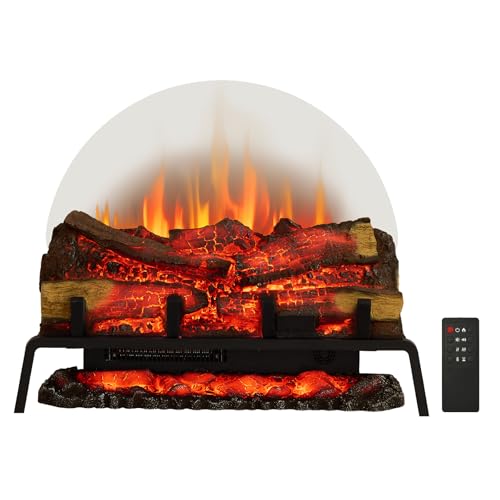
PuraFlame 27" Free Standing Electric Fireplace Log Set Insert, 750W/1500W Heater, 6 Flame Colors with 5 Brightness, Crackling Sound, Remote Control

Giantex 28.5" Electric Fireplace Insert, Wall Recessed/Mounted, Freestanding Fireplace with Remote Control, 3 Color Adjustable Flames, 2 Modes Heat, 8 H Timer, 5 Brightness Settings, 750/1500W Heater

LegendFlame 23" W Free Standing Electric Fireplace Log Set (EF290), Fireplace Insert, Heater 750W/1500W, Crackling Sound, Remote Control

PuraFlame 24" Free Standing Electric Fireplace Log Set Insert, 750W/1500W Heater, 6 Flame Colors with 5 Brightness, Crackling Sound, Remote Control

LegendFlame Carl 28" W Electric Fireplace Insert (EF262), Fireplace Heater 750/1500W, Fire Crackling Sound, Remote Control

DUMOS 42" Freestanding Electric Fireplace, 1500W/750W Wall Mounted or Recessed Insert Fireplaces Heater with Remote Control,13 Adjustable Flame Color, 12H Timer, Touch Screen, Inky

LegendFlame 25" W Free Standing Electric Fireplace Log Set (EF484), Fireplace Insert, Heater 750W/1500W, Crackling Sound, Remote Control…

21 Inches Electric Fireplace Insert Log Heater Set, Freestanding Heater with Adjustable Flame Brightness and Flicker Speed, 750w/1500w Heating, Overheat Protection, Remote Control
Side-by-Side Comparison
| Feature | Freestanding Fireplace | Fireplace Insert |
|---|---|---|
| Installation Requirements | Can be installed anywhere with proper venting; no existing fireplace needed | Requires an existing fireplace opening or framed enclosure |
| Installation Cost | $1,500-$4,000 (varies by fuel type and venting needs) | $2,000-$5,000 (includes modification of existing fireplace) |
| Heating Efficiency | 70-85% (gas and electric models) | 75-90% (significantly improves upon traditional fireplace efficiency) |
| Heat Output | 20,000-60,000 BTU (varies by size and fuel type) | 30,000-70,000 BTU (typically higher than freestanding units) |
| Space Requirements | Requires floor space and clearance from walls/furniture | Uses existing fireplace footprint, minimal additional space |
| Venting Options | Direct vent, natural vent, or ventless (depending on model) | Typically uses existing chimney with liner, or direct vent through wall |
| Placement Flexibility | High - can be placed against any wall or in corners | Low - limited to existing fireplace locations |
| Aesthetic Impact | Creates a focal point; adds architectural element to room | Enhances existing fireplace; more integrated appearance |
| DIY Potential | Higher for electric models; lower for gas/wood models | Generally lower; professional installation recommended |
| Maintenance | Varies by fuel type; generally easier access for cleaning | More challenging due to installation within masonry |
| Best For | Homes without existing fireplaces; flexible placement needs | Upgrading inefficient existing fireplaces; maximizing heat output |
Deep Dive: Freestanding Fireplaces
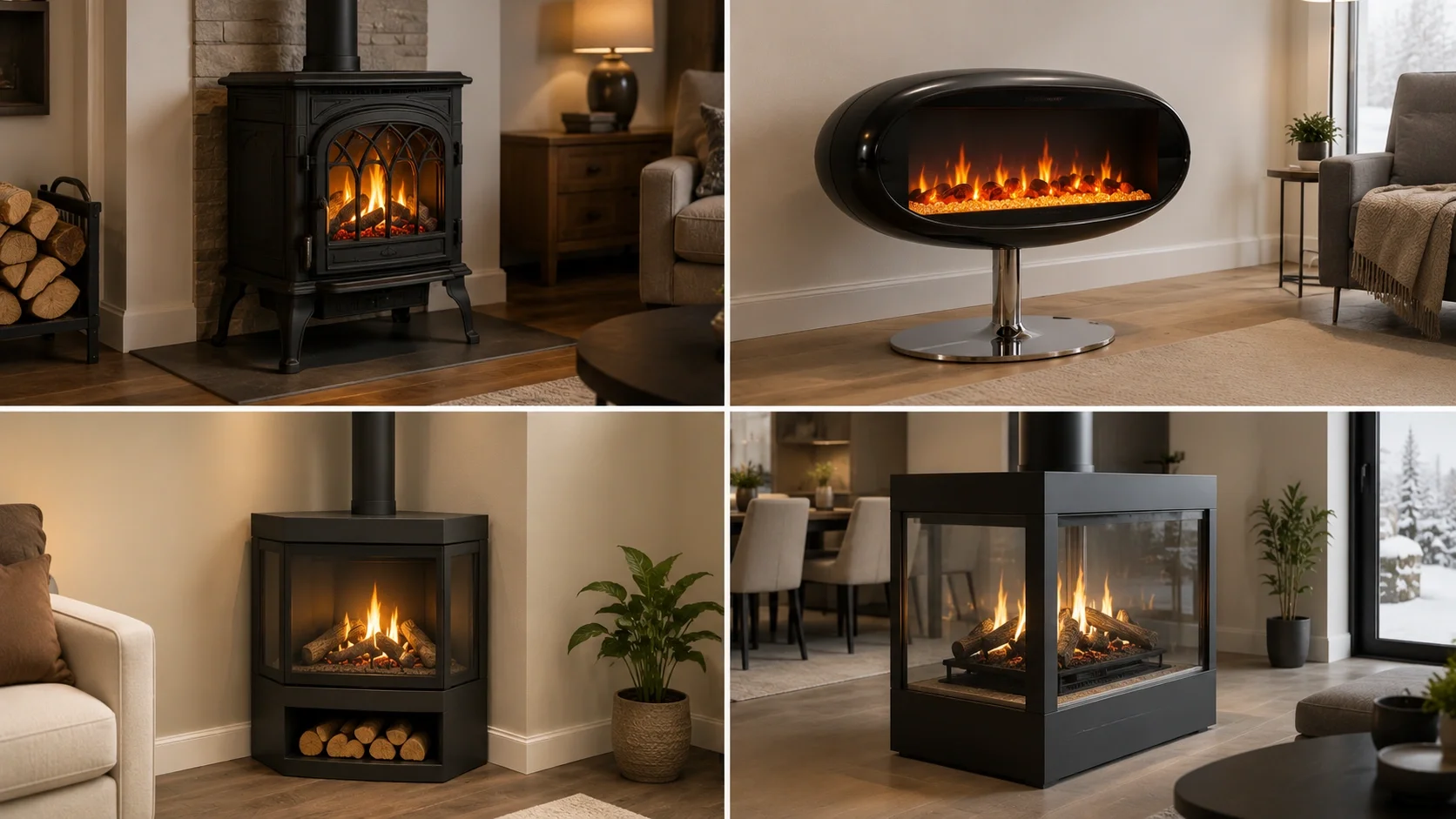
Freestanding fireplaces offer unmatched versatility in terms of placement and design options. Unlike inserts, they don't require an existing fireplace structure, making them ideal for homes that lack a traditional fireplace setup but still want the warmth and ambiance of a real fire.
Installation Considerations
While freestanding units offer placement flexibility, they do have specific installation requirements. Gas and wood-burning models need proper venting, which may involve running a chimney pipe through the ceiling or wall to the exterior. Electric freestanding fireplaces offer the easiest installation, typically requiring only a standard electrical outlet.
Regardless of fuel type, all freestanding fireplaces require adequate clearance from combustible materials, including walls, furniture, and curtains. These clearance requirements vary by model but typically range from 12-36 inches depending on the unit and fuel type.
Popular Freestanding Styles
Freestanding fireplaces come in several distinct styles to match different home aesthetics:
- Cast Iron Stoves: Traditional appearance with excellent heat retention; perfect for rustic or traditional interiors
- Modern Pedestal Units: Contemporary design with clean lines; ideal for modern or minimalist spaces
- Corner Units: Space-efficient design that fits neatly into corners; great for corner placement in smaller rooms
- Double-Sided Models: Open on two sides for viewing from multiple angles; perfect as room dividers in open-concept spaces
Advantages
- Can be installed in homes without existing fireplaces
- Greater flexibility in placement within a room
- Wide variety of styles and designs available
- Generally easier to clean and maintain
- Can be moved if you relocate (especially electric models)
- Often more affordable to install than inserts
- Radiant heat from all sides creates comfortable warmth
Disadvantages
- Requires floor space and clearance from walls
- May not integrate as seamlessly with room architecture
- Less efficient than inserts at preventing heat loss
- Can look like an addition rather than original feature
- Venting requirements may limit placement options
- May not increase home value as much as an insert
- Requires protective floor covering beneath unit
Deep Dive: Fireplace Inserts
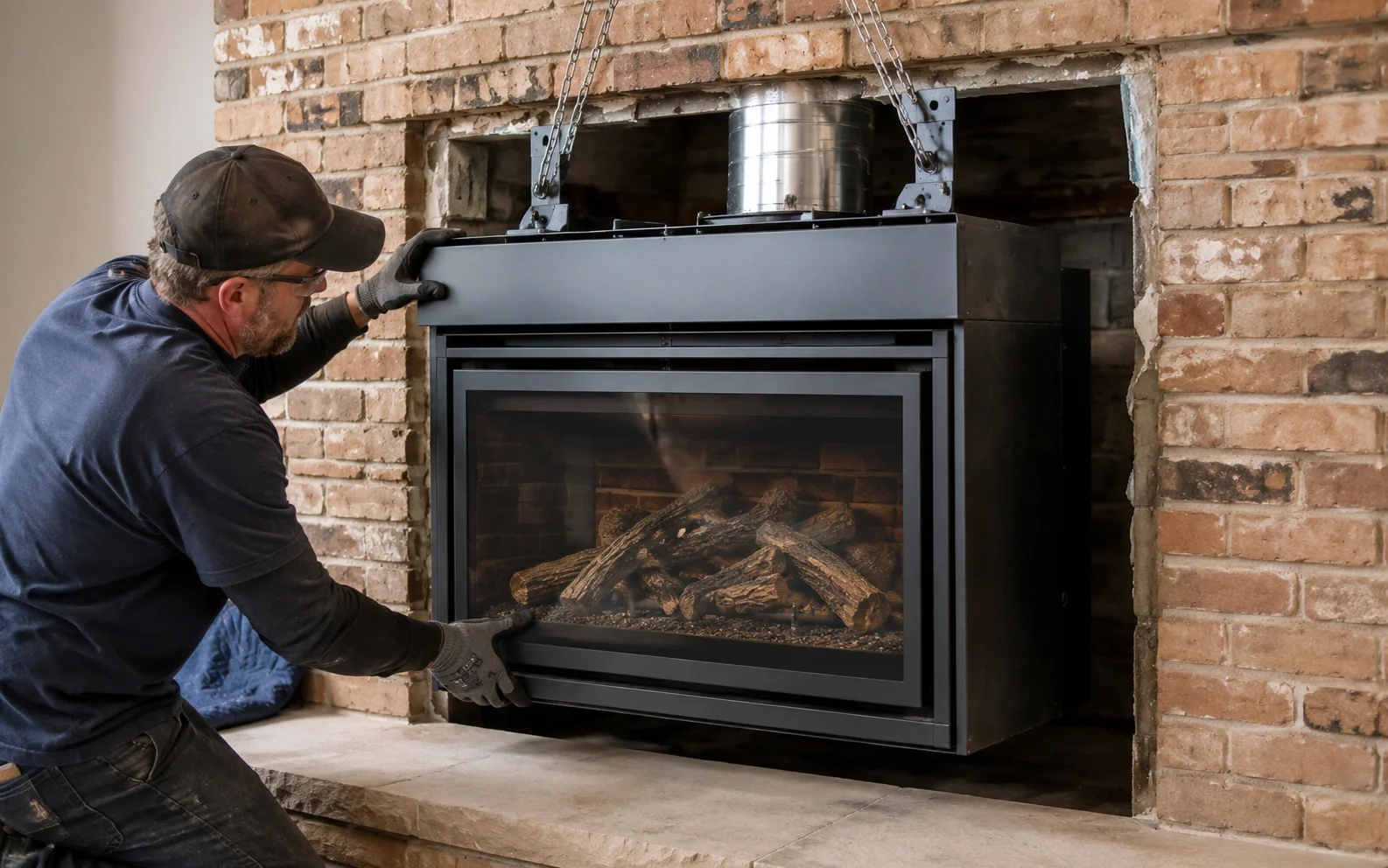
Fireplace inserts are specifically designed to transform existing, often inefficient, masonry fireplaces into high-performance heating systems. By installing an insert, you can dramatically improve your fireplace's efficiency from the typical 10-20% of a traditional open fireplace to 75-90% or higher.
How Inserts Improve Efficiency
Traditional open fireplaces lose up to 90% of their heat up the chimney and actually draw warm air from your home up the flue, making them net heat losers. Inserts solve this problem by enclosing the fire in a sealed combustion chamber with glass doors. This design:
- Prevents warm room air from being drawn up the chimney
- Captures and radiates heat into the room instead of losing it up the flue
- Uses the existing chimney for venting while improving draft control
- Often includes built-in fans to distribute heat more effectively
Installation Process
Installing a fireplace insert typically involves these steps:
- Measuring the existing fireplace opening to select the right size insert
- Preparing the fireplace by cleaning and inspecting the chimney
- Installing a stainless steel liner in the chimney (for gas and wood inserts)
- Placing the insert into the fireplace opening
- Sealing around the insert to prevent air leakage
- Connecting to fuel source (gas line or electrical outlet)
- Testing the system for proper operation and safety
While some handy homeowners might tackle DIY installation of electric inserts, gas and wood-burning inserts typically require professional installation to ensure proper venting, gas connections, and compliance with local building codes.
Advantages
- Dramatically improves heating efficiency of existing fireplaces
- Maintains the traditional appearance of a built-in fireplace
- Uses existing chimney structure, reducing installation complexity
- Higher heat output compared to most freestanding units
- Better at preventing heat loss than traditional fireplaces
- Typically adds more value to your home than freestanding units
- More integrated appearance that looks like original architecture
Disadvantages
- Requires an existing fireplace opening or framed enclosure
- Installation is more complex and often requires professionals
- Limited to existing fireplace locations in your home
- More difficult to clean and maintain due to installation
- Higher installation costs than most freestanding options
- Less flexibility if you want to change room layout later
- May require chimney liner replacement, adding to cost
Cost Analysis: Freestanding vs Insert
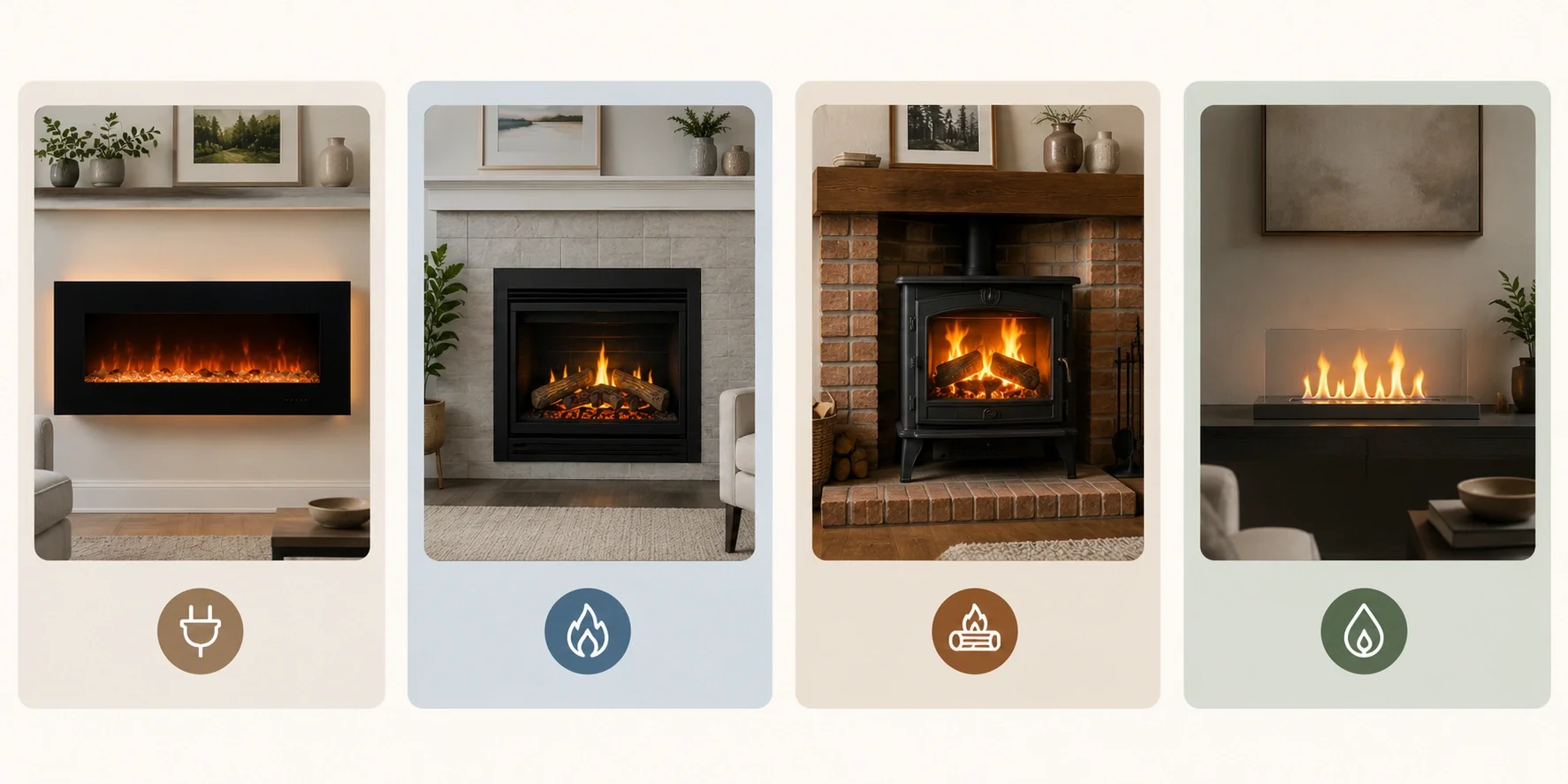
Understanding the full cost picture is essential when comparing these two options. Here's a detailed breakdown of expenses you can expect:
Freestanding Fireplace Costs
| Cost Component | Price Range |
|---|---|
| Unit Cost (Electric) | $400-$1,500 |
| Unit Cost (Gas) | $1,200-$3,500 |
| Unit Cost (Wood) | $800-$2,500 |
| Installation (Electric) | $0-$200 (DIY friendly) |
| Installation (Gas/Wood) | $500-$1,500 (professional recommended) |
| Venting System | $300-$1,000 (if needed) |
| Hearth Pad/Floor Protection | $100-$400 |
| Total Investment | $800-$6,400 |
Fireplace Insert Costs
| Cost Component | Price Range |
|---|---|
| Unit Cost (Electric) | $500-$2,000 |
| Unit Cost (Gas) | $1,500-$4,000 |
| Unit Cost (Wood) | $1,200-$3,500 |
| Installation Labor | $500-$1,500 (professional required) |
| Chimney Liner | $500-$1,500 (usually necessary) |
| Chimney Inspection/Cleaning | $150-$500 |
| Gas Line (if needed) | $300-$1,000 |
| Total Investment | $2,450-$8,000 |
While inserts generally have a higher total investment, they often provide better value in homes with existing fireplaces due to their superior efficiency and the fact that they're transforming an existing feature rather than adding a new one. For more detailed information on fireplace costs, see our comprehensive fireplace cost breakdown guide.
Key Factors in Your Decision
Beyond the basic comparisons, several specific factors should guide your final decision:
Existing Home Structure
If you already have a traditional masonry fireplace that's inefficient or drafty, an insert is typically the most cost-effective way to improve performance while maintaining the traditional appearance. However, if you lack an existing fireplace, a freestanding unit is likely your better option unless you're willing to undertake major construction to build a fireplace enclosure.
Heating Priorities
If your primary goal is maximum heat output and efficiency, inserts generally outperform freestanding units. Their sealed combustion system and integration with existing masonry provide superior heat retention and distribution. For more on heating efficiency, see our guide to energy-efficient fireplace types.
Room Layout and Design
Consider how the fireplace will function within your room's layout. Freestanding units can serve as room dividers in open-concept spaces or fill awkward corners, while inserts maintain a more traditional focal point arrangement against a wall. Your room's shape and proportions should influence which option works best aesthetically and functionally.
Maintenance Considerations
Think about long-term maintenance requirements. Freestanding units, especially those with electric components, are generally easier to access for cleaning and maintenance. Inserts, particularly wood-burning models, require more effort to maintain due to their enclosed installation within the masonry structure.
Home Value Impact
If increasing your home's resale value is a priority, inserts typically provide a better return on investment. They enhance an existing architectural feature rather than adding a freestanding element that some buyers might view as temporary. For more insights, see our article on whether a fireplace adds value to your home.
Making Your Final Decision
To help you determine which option is right for your specific situation, follow this decision-making process:
-
Assess Your Existing Fireplace Situation
Do you have an existing masonry fireplace? If yes, an insert is likely your most cost-effective option. If no, you'll need to consider a freestanding unit unless you're prepared for major construction to build an enclosure.
-
Evaluate Your Primary Goal
Is your main objective maximum heating efficiency, aesthetic appeal, or flexibility? For heating efficiency, inserts win. For placement flexibility, freestanding units have the advantage. For aesthetic integration with existing architecture, inserts generally look more built-in.
-
Consider Your Room's Layout
Analyze where the fireplace would best serve your space. Do you have an existing focal point wall where an insert would work? Or do you need the flexibility to place a freestanding unit in a corner or as a room divider?
-
Determine Your Budget Parameters
Establish your total budget including purchase, installation, and any necessary modifications. Remember to factor in long-term operating costs as well—more efficient units like inserts may cost more upfront but save money over time.
-
Evaluate DIY vs Professional Installation
Are you comfortable with DIY installation, or do you prefer professional installation? Electric freestanding units offer the most DIY potential, while gas and wood-burning inserts typically require professional installation for safety and code compliance.
-
Think About Long-Term Plans
Consider how long you plan to stay in your home and whether you might rearrange your space. Freestanding units offer more flexibility for future changes, while inserts provide a more permanent solution that may add more value when selling.
Ready to Choose Your Perfect Fireplace?
Now that you understand the key differences between freestanding and insert fireplaces, explore our top recommendations for both styles.
VIEW RECOMMENDED MODELS