
Ethanol vs Electric Fireplace: Which Is Right for You?
Complete comparison of real flame ethanol fireplaces and efficient electric fireplaces to help you make the best choice for your home
VIEW RECOMMENDATIONSWhen considering a ventless fireplace option for your home, both ethanol and electric fireplaces offer compelling advantages over traditional wood-burning or gas alternatives. Each provides unique benefits that cater to different priorities—from the authentic crackling flames of ethanol to the convenience and heating efficiency of electric models. This comprehensive comparison will help you understand the key differences, investment tiers, safety considerations, and performance characteristics to make an informed decision based on your specific needs.
Understanding Both Fireplace Types
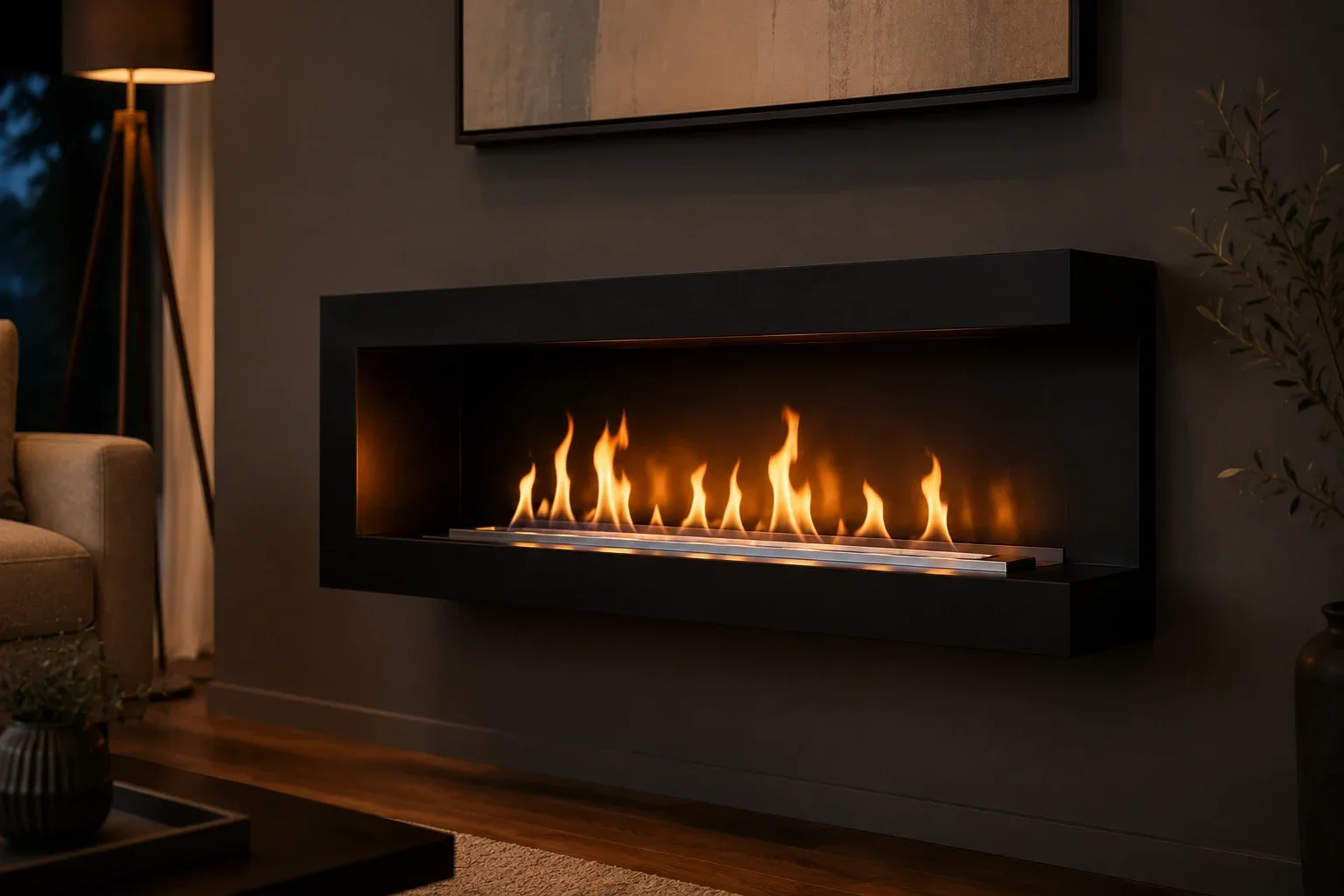
Ethanol Fireplaces
Ethanol fireplaces, also known as bioethanol or ventless fireplaces, burn bioethanol fuel to produce real flames without the need for a chimney or ventilation system. These fireplaces use renewable fuel made from plant materials, making them an eco-friendly option for homeowners seeking an authentic fire experience with minimal installation requirements.
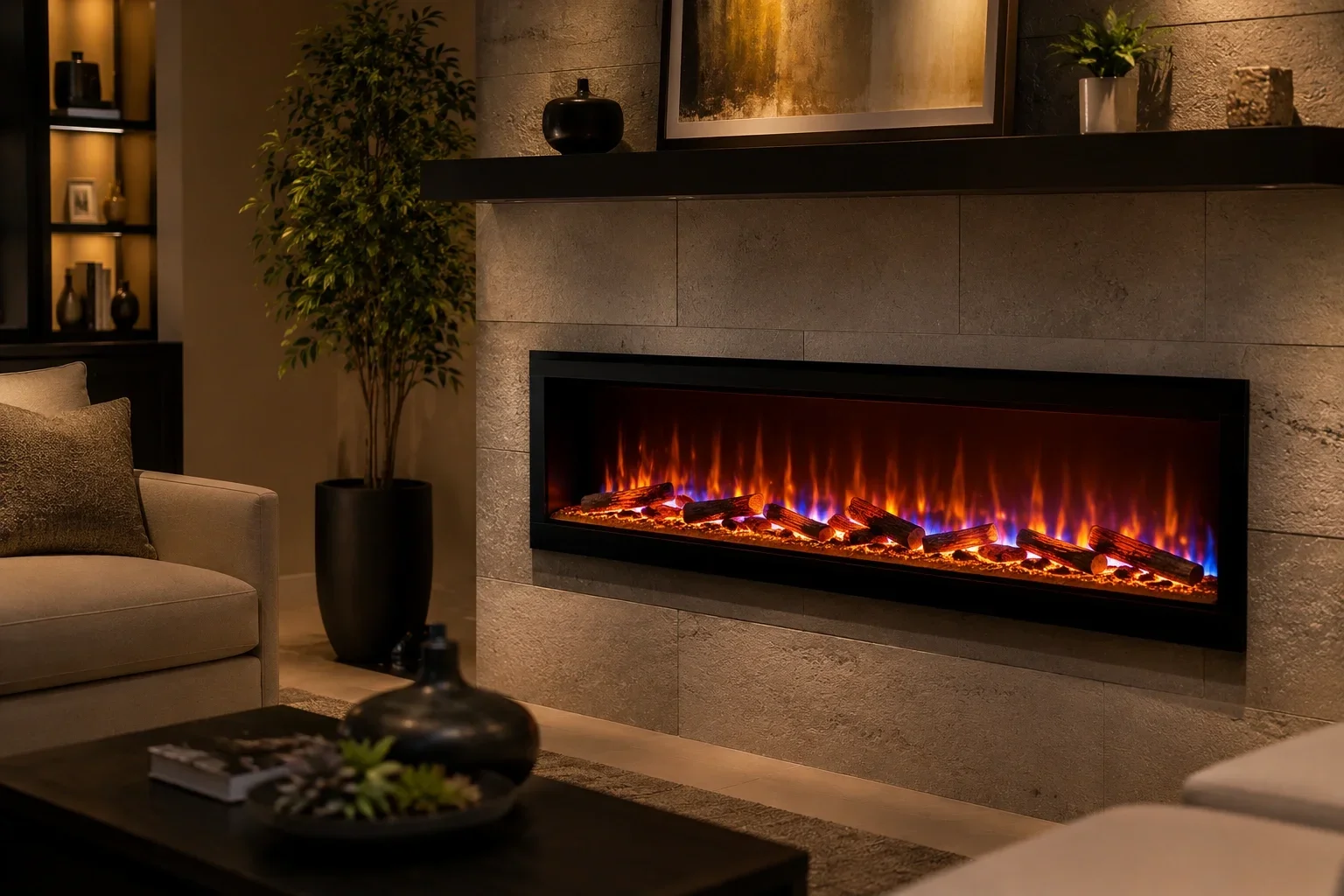
Electric Fireplaces
Electric fireplaces use LED technology to create realistic flame simulations while providing supplemental heating through built-in electric heaters. These versatile units can be installed virtually anywhere with access to a standard electrical outlet, making them one of the most flexible and user-friendly fireplace options available today.
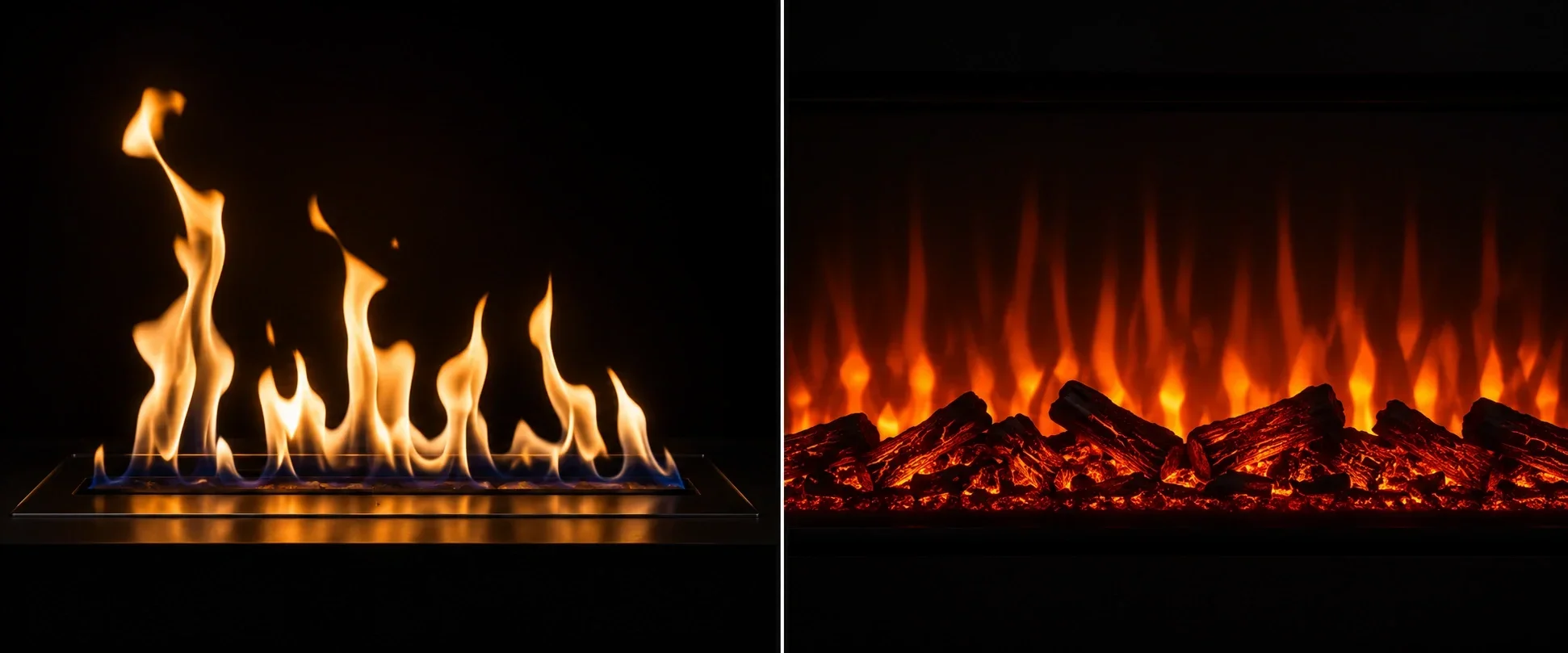
Real Flame vs. Simulated Flame Experience
Ethanol: Authentic Fire Experience
- Produces real, dancing flames that create an authentic fireplace ambiance
- Offers the crackling sound and subtle warmth radiation of traditional fireplaces
- Creates a distinctive scent that many find appealing and comforting
- Provides a mesmerizing, unpredictable flame pattern that varies naturally
- Enhances the sensory experience with visible smoke wisps when fuel is first lit
Electric: Advanced Flame Simulation
- Uses LED technology and mirrors to create highly realistic flame effects
- Offers adjustable flame brightness, speed, and color options
- Operates silently without any combustion sounds
- Provides consistent flame appearance without variation
- Some premium models include water vapor technology for enhanced realism
Heating Performance & Efficiency
Ethanol: Moderate Heating Capacity
- Typical heat output: 2,000-12,000 BTU depending on burner size
- Most effective for ambiance rather than primary heating
- Heat is primarily radiated from the flames rather than distributed by a fan
- Fuel consumption rate: 0.2-0.5 liters per hour depending on flame height
- Best suited for supplementing heat in smaller spaces (up to 400 sq ft)
Electric: Focused Heating Performance
- Typical heat output: 4,500-5,000 BTU (1,300-1,500 watts)
- Designed for effective zone heating in medium-sized rooms (up to 400-1,000 sq ft)
- Distributes heat via built-in fan for more even room warming
- Nearly 100% energy efficient with no heat lost through ventilation
- Offers infrared or fan-forced heating options for different warming needs

Installation & Setup Requirements
Ethanol: Flexible Placement
- No chimney, venting, or gas line required
- Can be installed on any non-combustible surface
- Available as wall-mounted, freestanding, tabletop, or built-in models
- Minimal assembly required—often ready to use out of the box
- Must maintain proper clearance from combustible materials
Electric: Simple Plug-and-Play
- Requires only access to a standard 120V electrical outlet
- Available in wall-mounted, insert, mantel, and freestanding designs
- No special tools or professional installation typically needed
- Can be hardwired for a cleaner look (optional)
- Some built-in models may require basic carpentry skills for installation

Investment Tier Comparison: Purchase & Operation
| Investment Factor | Ethanol Fireplace | Electric Fireplace |
|---|---|---|
| Initial Purchase Tier | Entry-level to Premium | Entry-level to Mid-range |
| Installation Tier | Entry-level | Entry-level |
| Fuel/Energy Operating Tier | Mid-range | Entry-level |
| Monthly Operating Tier (3hrs/day) | Mid-range to Premium | Entry-level |
| Annual Operating Tier | Mid-range to Premium | Entry-level |
| Maintenance Tier (Annual) | Entry-level | Entry-level |
While ethanol fireplaces may fall into a lower purchase tier for basic models, their ongoing operating tiers are significantly higher than electric fireplaces. For regular use, electric fireplaces typically fall one to two tiers below ethanol in operating costs, making them the more economical choice for daily heating needs.

Safety Features & Considerations
Ethanol: Real Flame Safety
- Produces real flames that can cause burns if touched
- Must be refueled when completely cool to prevent accidents
- Creates minimal emissions but does produce some CO2 and water vapor
- Requires proper ventilation in very small rooms
- Fire extinguisher should be kept nearby as a precaution
- No risk of carbon monoxide poisoning like gas fireplaces
Electric: Comprehensive Safety Systems
- No real flames, eliminating burn risk from fire
- Includes automatic shut-off if tipped over
- Overheat protection prevents excessive temperature
- Cool-to-touch glass even when heating
- No emissions, making it safe for those with respiratory issues
- Can be left unattended (though not recommended for extended periods)

Maintenance & Upkeep
Ethanol: Regular Cleaning Required
- Burner must be cleaned regularly to prevent residue buildup
- Spills should be cleaned immediately to prevent damage to surfaces
- Stainless steel components may need polishing to maintain appearance
- Fuel quality affects performance—lower grades create more soot
- Recommended maintenance schedule: cleaning after every 10-15 hours of use
Electric: Minimal Maintenance Needed
- Simply dust the exterior and clean the glass occasionally
- No soot, ash, or residue to clean
- LED lights last for years without replacement
- No fuel handling or storage requirements
- Annual inspection of electrical components is sufficient
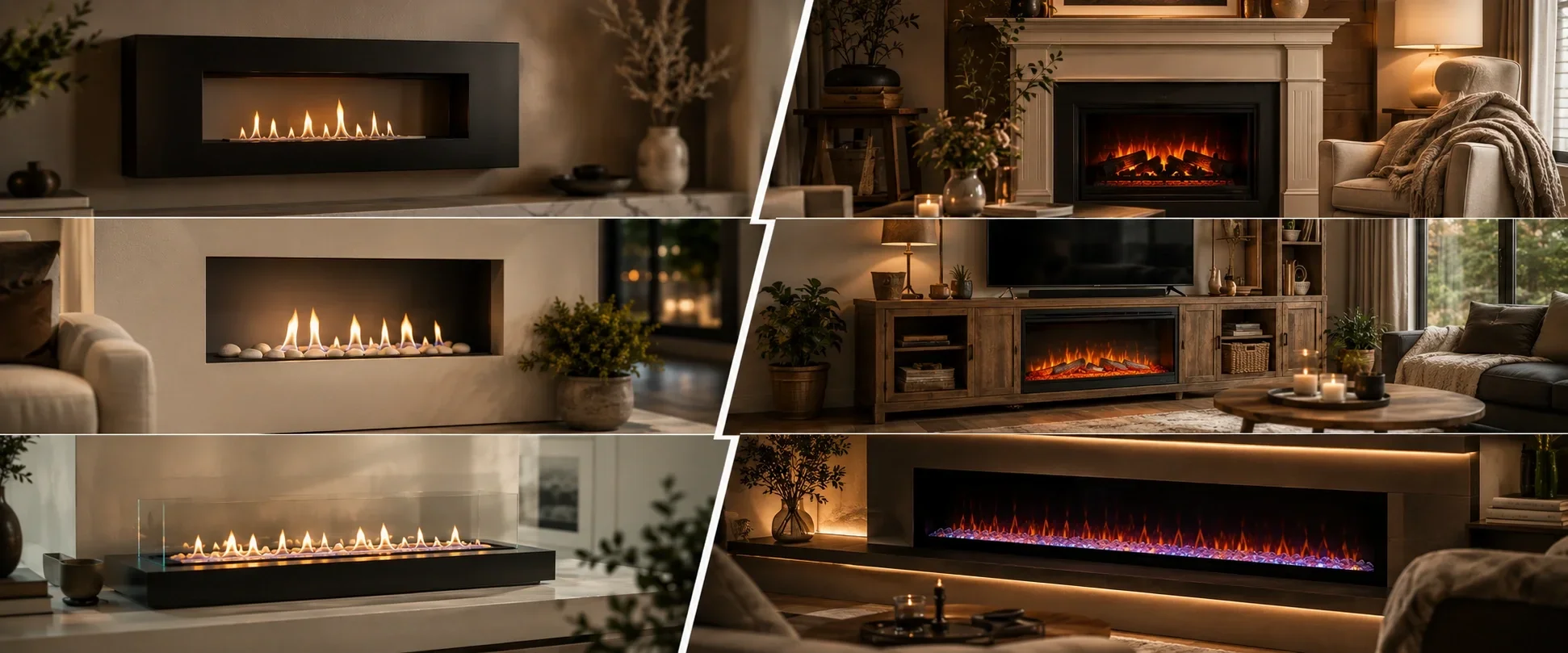
Design Flexibility & Aesthetics
Ethanol: Sleek & Minimalist
- Often features contemporary, modern designs with clean lines
- No need to hide gas lines or electrical connections
- Available in ultra-slim profiles perfect for wall mounting
- Can be customized with decorative surrounds and mantels
- Ideal for creating a focal point in minimalist spaces
Electric: Versatile Styling Options
- Available in virtually every style from traditional to ultra-modern
- Can be integrated into mantels, media centers, and custom cabinetry
- Options include inserts for existing fireplaces or standalone units
- Many models include customizable flame colors and brightness
- Perfect for TV and fireplace wall combinations
Environmental Considerations
Ethanol: Renewable but Consumable
- Bioethanol is made from renewable plant sources like corn and sugarcane
- Burning produces CO2, but it's considered carbon-neutral as plants absorbed CO2 during growth
- Requires manufacturing, packaging, and transportation of fuel
- No electricity consumption during operation
- Fuel containers create waste that must be properly disposed of or recycled
Electric: Clean but Grid-Dependent
- No direct emissions at point of use
- Environmental impact depends on your local electricity grid's energy mix
- More eco-friendly in regions with renewable energy sources
- Consumes electricity, but highly efficient in converting it to heat
- No fuel production, packaging, or transportation needed
Pros & Cons Summary
Ethanol Fireplace
Pros
- Real, authentic flames
- No venting or chimney required
- Flexible placement options
- Renewable fuel source
- Silent operation
- Minimal installation requirements
- No electricity needed to operate
Cons
- Higher ongoing operating tiers
- Limited heating capacity
- Requires fuel storage
- Real flame safety concerns
- Regular maintenance needed
- Indoor air quality considerations
- Fuel refilling required
Electric Fireplace
Pros
- Very low operating tiers
- Effective supplemental heating
- No real flames or emissions
- Virtually maintenance-free
- Multiple safety features
- Year-round use (flames without heat)
- Wide variety of styles and sizes
Cons
- Simulated rather than real flames
- Requires electrical outlet
- Doesn't work during power outages
- Fan noise on some models
- May increase electricity usage
- Not suitable for primary heating
- Less authentic sensory experience
Which Is Best For You?
Choose Ethanol If You:
- Prioritize authentic flame appearance over heating efficiency
- Want a fireplace for occasional use rather than daily heating
- Prefer silent operation without fan noise
- Need flexibility in placement without electrical access
- Value the sensory experience of real fire
- Are creating a contemporary design statement
- Don't mind the higher ongoing operating tiers
Choose Electric If You:
- Want effective supplemental heating for your space
- Plan to use your fireplace regularly throughout the season
- Prefer low maintenance and easy operation
- Have safety concerns about real flames
- Want to use the flame effect year-round without heat
- Need a solution for a small space or apartment
- Want to minimize ongoing operating tiers
The Final Verdict
Both ethanol and electric fireplaces offer excellent alternatives to traditional wood-burning or gas fireplaces, but they serve different primary purposes. If your main goal is creating an authentic, mesmerizing flame experience for occasional use and you don't mind the higher operating tiers, an ethanol fireplace delivers unmatched realism without the installation complications of other real-flame options.
However, for most homeowners seeking a practical, cost-effective solution that provides both ambiance and supplemental heating, an electric fireplace is typically the better choice. The dramatically lower operating tiers, minimal maintenance, comprehensive safety features, and versatile design options make electric fireplaces the more practical option for daily use. They're particularly well-suited for those who want the cozy atmosphere of a fireplace without the responsibilities and expenses associated with real flames.


