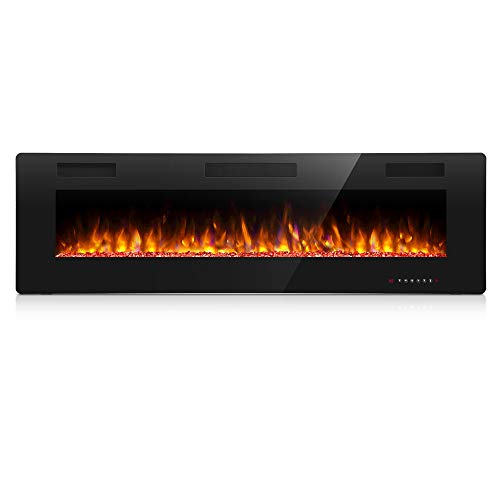
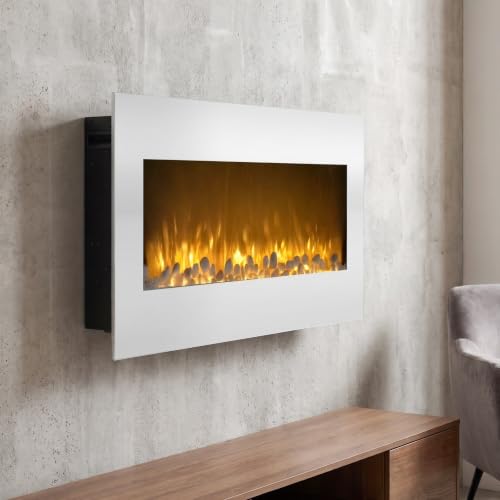
Tabletop vs Wall Mounted Fireplace: Which Is Right for You?
Complete comparison of portable tabletop fireplaces and wall-mounted models to help you choose the perfect electric fireplace for your space
VIEW COMPARISON TABLEQuick Answer: Tabletop fireplaces offer ultimate portability and flexibility, ideal for renters or those who want to move their fireplace between rooms. Wall-mounted fireplaces provide a permanent, space-saving solution with a more integrated look, perfect for homeowners looking to add a focal point to their room without sacrificing floor space.
When choosing between a tabletop fireplace and a wall-mounted fireplace, you're deciding between two very different approaches to adding fireplace ambiance to your space. Both are typically electric models that offer the convenience of plug-and-play operation without the need for venting or chimneys, but they differ significantly in installation, placement options, and visual impact.
This comprehensive guide examines every aspect of tabletop versus wall-mounted fireplaces to help you make the best choice for your specific needs, living situation, and design preferences.
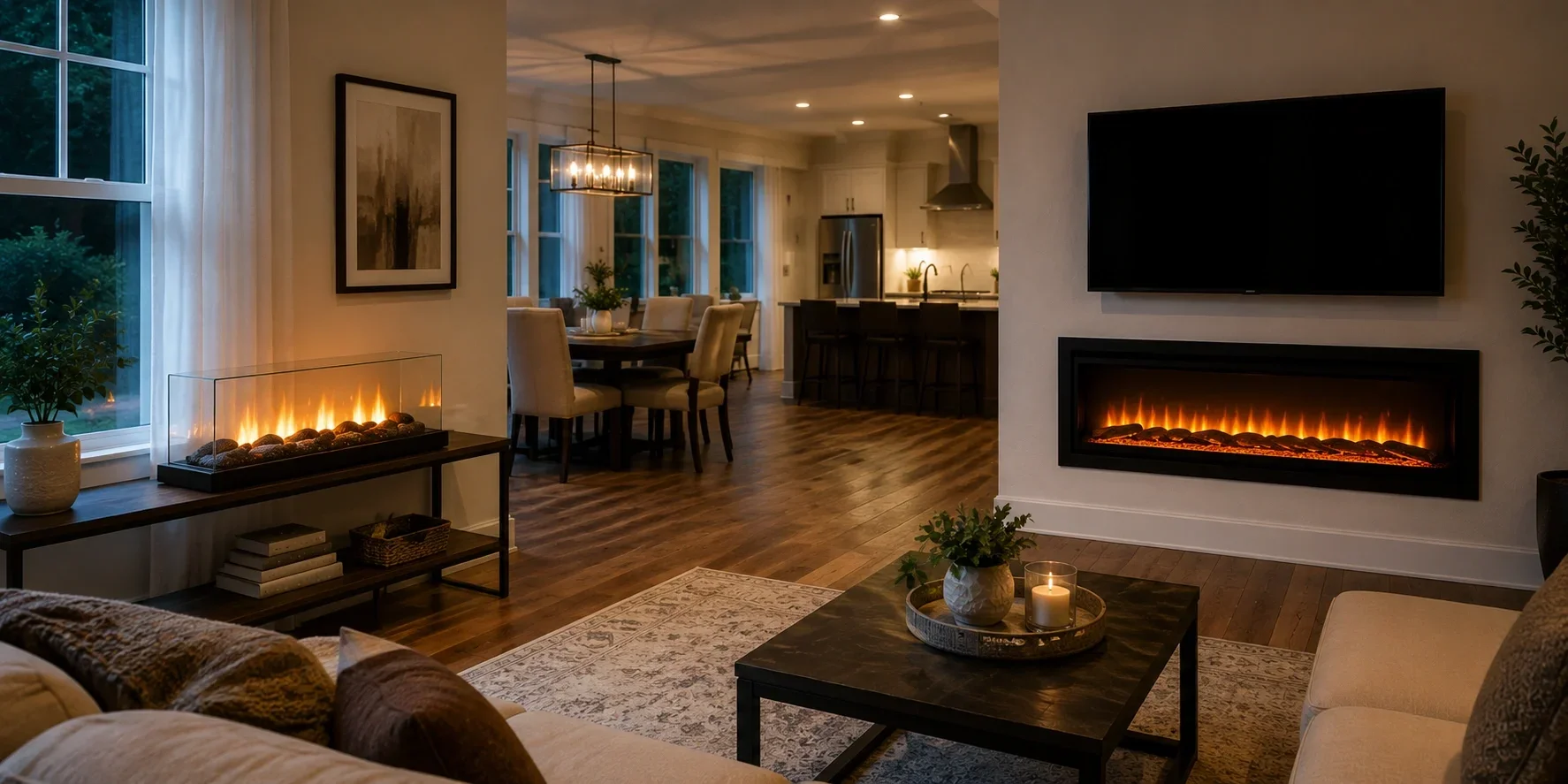
Understanding Tabletop Fireplaces
Tabletop fireplaces are compact, self-contained units designed to sit on a flat surface like a table, countertop, or shelf. They're among the smallest and most portable electric fireplace options available, making them perfect for adding ambiance to small spaces without permanent installation.
These miniature fireplaces typically feature realistic LED flame effects and often include a heating element, though their heating capacity is limited due to their small size. They're available in various styles, from traditional mantel designs to sleek modern cylinders and glass-enclosed models that can complement any modern interior or minimalist space.
Tabletop Fireplace Advantages
- Complete portability - move from room to room as needed
- No installation required - simply plug in and enjoy
- Perfect for renters who can't make permanent changes
- Entry-level investment tier
- Great for small spaces like apartments, dorms, or offices
- Can be stored away when not in use
- Wide variety of styles to match any decor
- Ideal for creating ambiance on patios or outdoor spaces (with appropriate models)
Tabletop Fireplace Limitations
- Limited heating capacity (usually under 1,500 BTUs)
- Smaller flame viewing area compared to wall-mounted models
- Can take up valuable surface space
- Less dramatic visual impact than wall-mounted options
- Cord management can be challenging on tables
- May not be child or pet-proof depending on design
- Limited to supplemental heating rather than room heating
Understanding Wall-Mounted Fireplaces
Wall-mounted fireplaces are designed to be installed directly on a wall, creating a floating effect that adds architectural interest to any room. They've become increasingly popular in modern homes due to their sleek appearance and space-saving design.
These fireplaces come in a range of sizes, from compact units perfect for bedrooms to large statement pieces that can span several feet and serve as dramatic focal points in living rooms. Many modern wall-mounted fireplaces feature panoramic flame views and can be integrated into TV and fireplace wall arrangements for a cohesive entertainment center design.

Wall-Mounted Fireplace Advantages
- Creates a dramatic focal point in any room
- Saves valuable floor space
- Larger flame viewing area for more impressive visual impact
- Better heating capacity (typically 2,000-5,000 BTUs)
- Looks like a permanent architectural feature
- Ideal for installing below a TV for a custom built-in look
- Hidden cord options for cleaner appearance
- Available in wide formats for panoramic flame views
Wall-Mounted Fireplace Limitations
- Requires wall mounting (though most are DIY-friendly)
- Less portable once installed
- Mid-range to premium investment tier
- Not suitable for all wall types (requires solid mounting surface)
- May not be an option for renters
- Requires careful measurement and positioning
- Harder to relocate if you rearrange your room
Detailed Comparison Table
| Feature | Tabletop Fireplace | Wall-Mounted Fireplace |
|---|---|---|
| Installation | None required (plug and play) | Wall mounting required (usually DIY-friendly) |
| Portability | Highly portable | Fixed once installed |
| Investment Tier | Entry-level | Entry-level to Mid-range |
| Heating Capacity | 500-1,500 BTUs | 2,000-5,000 BTUs |
| Room Heating Ability | Personal comfort zone only (50-150 sq ft) | Small to medium rooms (up to 400 sq ft) |
| Flame Viewing Area | Small (typically 8-15 inches wide) | Medium to large (typically 30-60+ inches wide) |
| Space Requirements | Requires table or shelf space | Uses wall space only, saves floor space |
| Visual Impact | Subtle, intimate ambiance | Dramatic focal point |
| Renter-Friendly | Yes | Usually no (requires wall mounting) |
| Assembly Time | 5-10 minutes (unpack and plug in) | 30-90 minutes (mounting and setup) |
| Cord Management | Cord visible on surface | Can often be hidden in wall or behind unit |
| Weight | Typically 5-15 lbs | Typically 30-80 lbs |
| Ideal Locations | Tables, counters, shelves, mantels | Living rooms, bedrooms, hallways, under TVs |
Installation Considerations
One of the most significant differences between tabletop and wall-mounted fireplaces is the installation process, which affects both initial setup and long-term flexibility.
Tabletop Fireplace Installation
Tabletop fireplaces are designed for maximum simplicity. Most require nothing more than removing them from the box, placing them on a flat surface, and plugging them into a standard electrical outlet. There's no assembly required beyond perhaps inserting decorative elements like glass beads or crystals that come with some models.
The only considerations for placement are ensuring the surface is stable, level, and heat-resistant (if the model produces heat), and that there's an accessible electrical outlet nearby. This makes tabletop fireplaces ideal for anyone who wants instant ambiance without any installation hassle.
Wall-Mounted Fireplace Installation
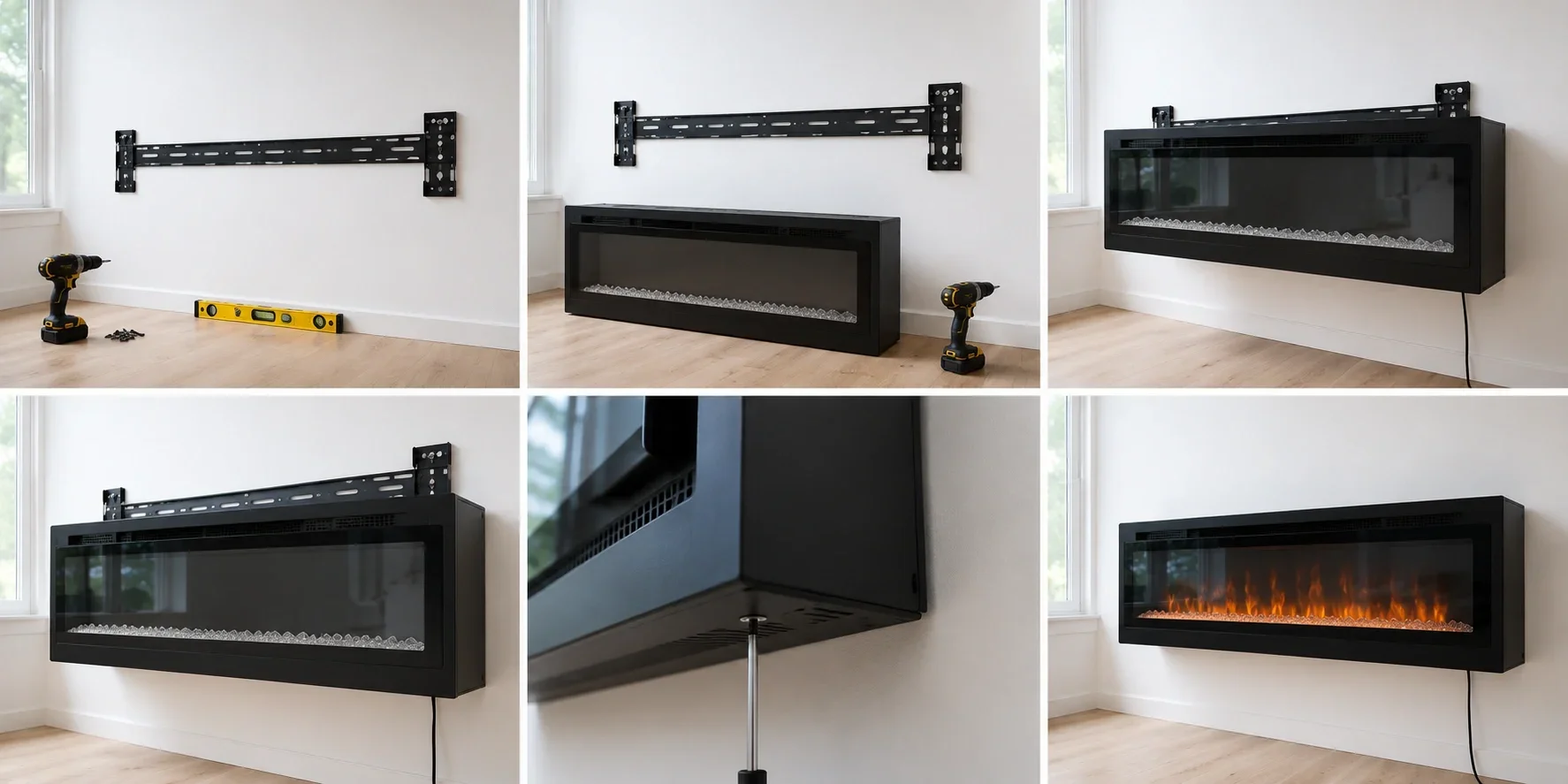
While wall-mounted fireplaces require more effort to install, most models are designed for DIY installation and come with detailed instructions and all necessary mounting hardware. The process typically involves:
- Choosing the right location and height on the wall
- Using a stud finder to locate wall studs for secure mounting
- Marking drilling points and installing the mounting bracket
- Hanging the fireplace unit on the bracket
- Connecting to power (either plugging into a nearby outlet or hardwiring)
- Hiding the power cord if desired (through a wall channel or behind furniture)
For those uncomfortable with DIY installation, professional installation is available and adds to the overall project tier. If you're considering other installation types, you might want to compare with wall-mounted vs built-in fireplaces or freestanding vs insert options.
Heating Performance Comparison
While both tabletop and wall-mounted fireplaces are primarily chosen for their aesthetic appeal, their heating capabilities differ significantly.
Tabletop Fireplace Heating
Due to their compact size, tabletop fireplaces have limited heating capacity, typically producing 500-1,500 BTUs. This is sufficient to create a personal comfort zone immediately around the unit but isn't powerful enough to effectively heat an entire room.
Tabletop fireplaces work best for:
- Adding warmth to a small personal space (like a desk area)
- Taking the chill off a small bathroom or enclosed porch
- Providing supplemental heat in a room that's already moderately warm
- Creating the sensation of warmth without significant actual heating
Many tabletop fireplaces also offer a flame-only mode that provides the visual ambiance without any heat output, which is perfect for year-round enjoyment.
Wall-Mounted Fireplace Heating
Wall-mounted fireplaces generally offer more substantial heating, with most models producing 2,000-5,000 BTUs. This allows them to effectively heat small to medium-sized rooms (up to 400 square feet), making them a more practical heating solution.
The heating technology in wall-mounted fireplaces often includes:
- Infrared heating that warms objects directly for more efficient, comfortable heat
- Fan-forced convection that circulates warm air throughout the room
- Adjustable thermostats and multiple heat settings for precise temperature control
- Timer functions for automated operation
For detailed information on selecting the right heating capacity for your space, our BTU guide provides calculations and recommendations based on room size and insulation.
Design and Aesthetic Considerations
The visual impact and design flexibility of tabletop versus wall-mounted fireplaces differ significantly, affecting how they integrate with your overall room design.
Tabletop Fireplace Design Options
Tabletop fireplaces come in a diverse range of styles to suit various aesthetics:
- Traditional miniature mantels with classic molding details
- Modern cylindrical designs with glass panels showing the flame from all angles
- Compact rectangular units with clean lines for contemporary spaces
- Rustic stone or metal designs that complement rustic decor
- Artistic sculptural pieces that double as decorative art objects
The small scale of tabletop fireplaces makes them versatile accent pieces that can be incorporated into existing decor without overwhelming the space. They work particularly well on:
- Coffee tables as a conversation piece
- Dining tables for intimate dinner ambiance
- Bookshelves or entertainment centers
- Bathroom counters for a spa-like atmosphere
- Bedroom nightstands for a cozy evening glow
Wall-Mounted Fireplace Design Options
Wall-mounted fireplaces offer more dramatic design possibilities:
- Ultra-thin profiles that appear to float on the wall
- Wide panoramic formats that create a "window of fire" effect
- Two-sided see-through models for room dividers
- Corner-mounting designs for awkward spaces
- Units with built-in media shelves or mantels for display
The larger size and wall placement of these fireplaces makes them natural focal points that can define a room's design. Popular placement strategies include:
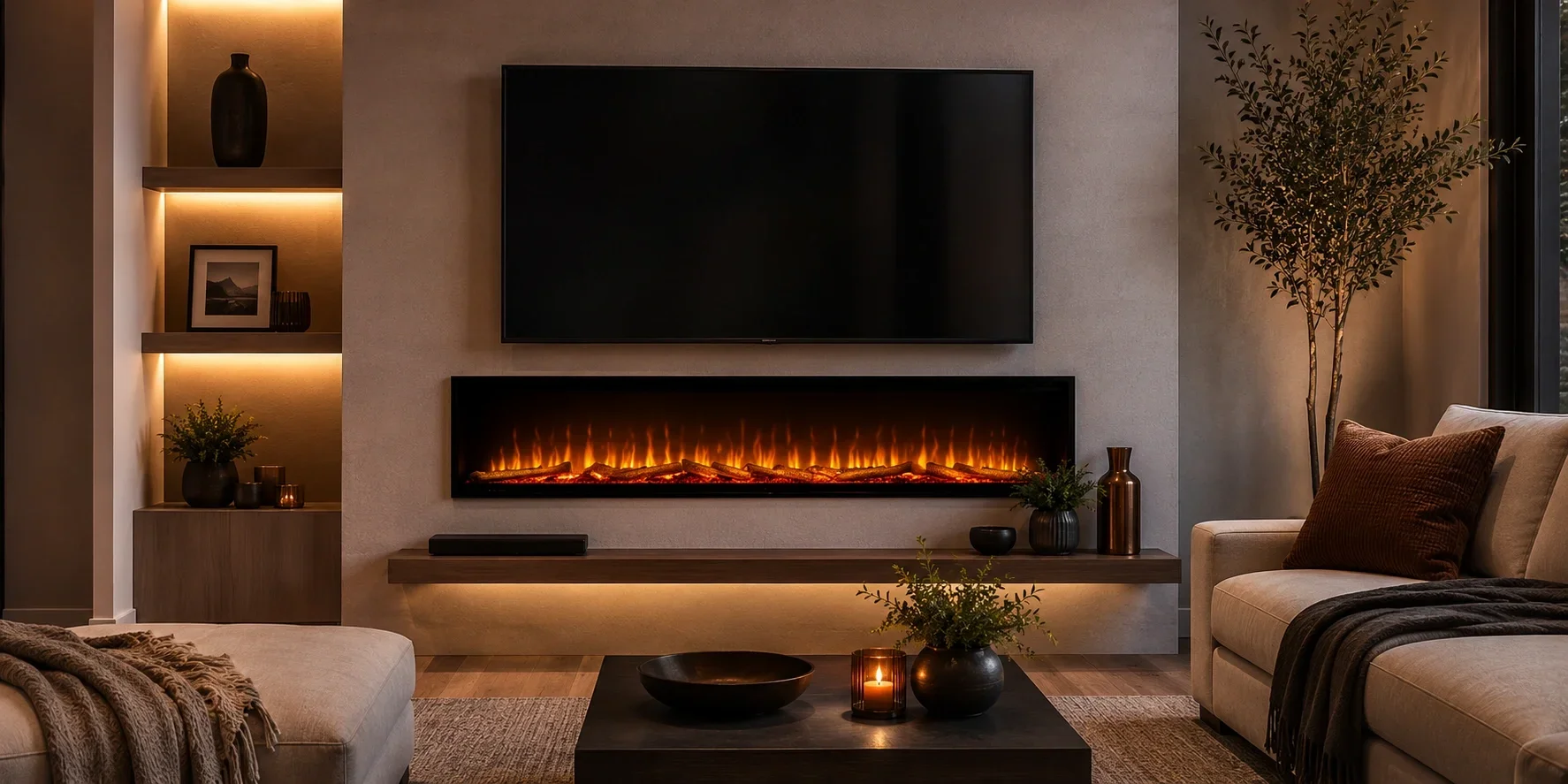
- Below a wall-mounted TV for a cohesive entertainment center
- In a corner installation to utilize unused space
- At eye level in a bedroom for a hotel-like luxury feel
- In a hallway or entryway to create a welcoming atmosphere
- As a room divider in open-concept spaces
Investment Tier Analysis
Understanding the full investment tier picture helps you make a decision that fits your project scope both initially and long-term.
Tabletop Fireplace Investment Tiers
Tabletop fireplaces are generally the entry-level option:
- Unit purchase tier: Entry-level
- Installation: None (DIY not required)
- Operating tier: Entry-level
- Maintenance: Minimal (occasional dusting)
Wall-Mounted Fireplace Investment Tiers
Wall-mounted fireplaces represent a higher tier but offer more features and impact:
- Unit purchase tier: Entry-level to Mid-range
- Installation: DIY to professional (entry-level to mid-range)
- Operating tier: Entry-level to Mid-range
- Maintenance: Minimal (occasional dusting and glass cleaning)
While wall-mounted fireplaces fall into a higher investment tier, they often provide better value in terms of heating capacity and visual impact. For a comprehensive look at fireplace investment tiers across all types, see our fireplace investment breakdown guide.
Safety Considerations
Both tabletop and wall-mounted fireplaces are generally safe options as electric models don't produce real flames, sparks, or emissions. However, there are some safety considerations specific to each type.
Tabletop Fireplace Safety
Key safety considerations for tabletop models include:
- Stability - ensure the unit can't be easily tipped over
- Surface protection - use a heat-resistant pad if placing on delicate surfaces
- Child and pet access - position out of reach of curious hands or paws
- Cord management - keep cords away from traffic areas to prevent tripping
- Clearance - maintain proper distance from flammable materials
Wall-Mounted Fireplace Safety
Wall-mounted models have different safety considerations:
- Secure mounting - ensure proper installation into wall studs
- Appropriate height - install at a safe height from the floor and furniture
- Weight limits - verify your wall can support the unit's weight
- Electrical safety - ensure proper grounding and circuit capacity
- TV safety - if installing below a TV, ensure proper clearance
Both types typically include safety features like automatic shut-off if the unit overheats or tips over, making them safer alternatives to traditional fireplaces. For more detailed safety information, see our guide on ventless vs electric fireplace safety.
Making Your Decision
After considering all these factors, which type of fireplace is right for you? Consider these decision points:
Choose a Tabletop Fireplace If You:
- Are renting and can't make permanent modifications
- Want the flexibility to move your fireplace between rooms
- Have a limited project scope for your fireplace purchase
- Only need ambiance or very localized heating
- Have the perfect spot already (a table, shelf, or counter)
- Want to try out a fireplace before committing to a permanent installation
- Live in a very small space where even a wall-mounted unit would be too large
Choose a Wall-Mounted Fireplace If You:
- Want a dramatic focal point for your room
- Need more substantial heating for a small to medium room
- Are looking to create a custom entertainment center with your TV
- Want to save floor space while still having a fireplace
- Own your home and can make permanent installations
- Prefer a clean, minimalist look without cords visible
- Want a more substantial flame viewing area for greater visual impact
For some homeowners, the ideal solution might be having both: a wall-mounted fireplace as the main feature in a living room, plus a tabletop model that can be moved to a bedroom, office, or outdoor space as needed.
Frequently Asked Questions
Can I use a tabletop fireplace as my primary heat source?
No, tabletop fireplaces are designed for ambiance and very localized heating, not as primary heat sources. Their limited BTU output (typically under 1,500 BTUs) makes them insufficient for heating an entire room effectively. If you need primary heating, consider a wall-mounted fireplace with higher BTU output or explore other energy-efficient fireplace options.
How difficult is it to install a wall-mounted fireplace?
Most wall-mounted fireplaces are designed for DIY installation and come with detailed instructions. The process typically takes 30-90 minutes and requires basic tools like a drill, level, and screwdriver. The most important step is properly locating and drilling into wall studs for secure mounting. If you're uncomfortable with this process, professional installation is available and adds to the overall project tier.
Can I mount a wall-mounted fireplace on any type of wall?
Wall-mounted fireplaces should be installed on sturdy walls that can support their weight. Drywall with wooden studs behind it is ideal. You should avoid mounting on hollow walls, walls with plaster over lath, or walls with potential hidden utilities without proper investigation. For alternative installation options, consider corner vs flat wall placement.
Do tabletop fireplaces use a lot of electricity?
No, tabletop fireplaces are generally energy-efficient. Running just the flame effect falls within an entry-level operating tier. Using the heating function increases this slightly but still remains within an entry-level tier. Even with daily use, the monthly operating tier is quite modest. For more details, see our guide on electric fireplace operating tiers.
Can I leave my tabletop or wall-mounted fireplace on overnight?
While electric fireplaces are generally safer than traditional options for overnight use, most manufacturers recommend turning them off when sleeping or leaving the house. If you need heat overnight, consider models with timer functions that automatically shut off after a set period. For more safety information, see our guide on fireplace overnight safety.
How do I clean and maintain a tabletop or wall-mounted fireplace?
Both types require minimal maintenance. Regular dusting of the exterior with a soft cloth is usually sufficient. For glass panels, use a glass cleaner applied to a cloth (not directly on the glass) and wipe clean. Avoid using abrasive cleaners or excessive water. For more detailed maintenance tips, see our electric fireplace maintenance guide.
Conclusion
Choosing between a tabletop and wall-mounted fireplace ultimately comes down to your specific needs, living situation, and design preferences. Tabletop fireplaces offer unmatched flexibility and portability at an entry-level tier, making them ideal for renters, those seeking a smaller project scope, or anyone who wants to add fireplace ambiance to multiple spaces. Wall-mounted fireplaces provide a more permanent, dramatic focal point with better heating capabilities, perfect for homeowners looking to enhance their living space with a statement piece.
Consider not just the initial tier and installation requirements, but how each option fits with your lifestyle, space constraints, and long-term plans for your home. Whatever you choose, both types of fireplaces can add warmth, comfort, and visual interest to your living space when selected and installed appropriately.
For more information on electric fireplace options, explore our comprehensive electric fireplace guide or use our fireplace selection tool to find the perfect match for your needs.