
Victorian Fireplace: Complete Guide to Classic Elegance
Discover the timeless beauty of Victorian fireplaces, from ornate mantels to intricate tile work, and learn how to bring this classic design into your modern home
EXPLORE FEATURESVictorian fireplaces represent the pinnacle of ornamental fireplace design, embodying the elaborate aesthetic of the Victorian era (1837-1901). These architectural masterpieces are characterized by their intricate detailing, rich materials, and romantic craftsmanship that transformed simple heating sources into stunning focal points. Whether you're restoring a period home or incorporating Victorian elements into contemporary design, understanding these fireplaces helps you appreciate their enduring appeal and make informed decisions about selection, installation, and maintenance.
The Victorian era saw fireplace design evolve from purely functional to highly decorative, with craftsmen incorporating Gothic Revival, Eastlake, Aesthetic Movement, and Queen Anne influences into their creations. Today, Victorian fireplaces remain highly sought after for their historical authenticity and the unmatched level of detail that's difficult to replicate in modern mass-produced units.

This comprehensive guide covers everything you need to know about Victorian fireplaces, from identifying authentic features to understanding investment tiers, installation requirements, and maintenance needs. Whether you're a homeowner considering a Victorian-style fireplace or simply appreciating historical design, you'll find valuable insights here.
Recommended Victorian Fireplaces
⚠️ AFFILIATE DISCLOSURE: This website contains affiliate links. As an Amazon Associate, we earn from qualifying purchases. If you make a purchase through these links, we may receive a small commission at no additional cost to you. Read our full affiliate policy.

45" Electric Fireplace with Mantel, Fireplace TV Stand with Roman Columns | Solid Wood Construction, 30” Bronze Arched Birdcage-Style Fireplace Insert, for Living Room, Black Finish
Check price on Amazon
48" Birdcage Electric Fireplace Tv Stand with Mantel for Living Room | Classic Birdcage Fireplace Insert, Adjustable Flame Brightness, Elegant Carved Square Columns,White+Bronze
Check price on Amazon
45" Birdcage-Style Electric Fireplace with Mantel, Tall Fireplace TV Stand | Elegant Carved Antique fireplace mantel, 30” Bronze Arched Fireplace Insert, for Living Room, White & Walnut Finish
Check price on Amazon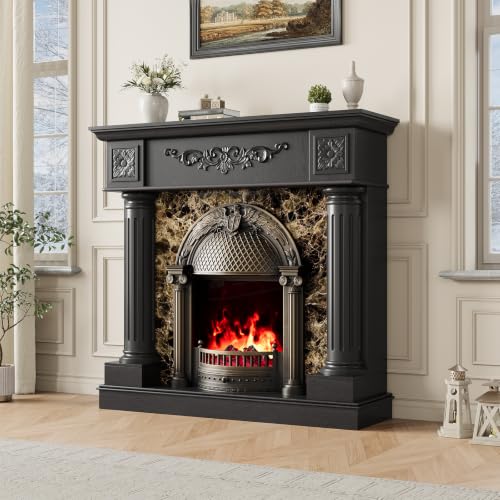
QUW 51" Electric Fireplace with Mantel, Farmhouse Fireplace TV Stand, Black | Vintage 46.9" Tall Entertainment Center for Living Room, 30" Birdcage-Style Insert, Classic Roman Column, Ambient Spotlight
Check price on Amazon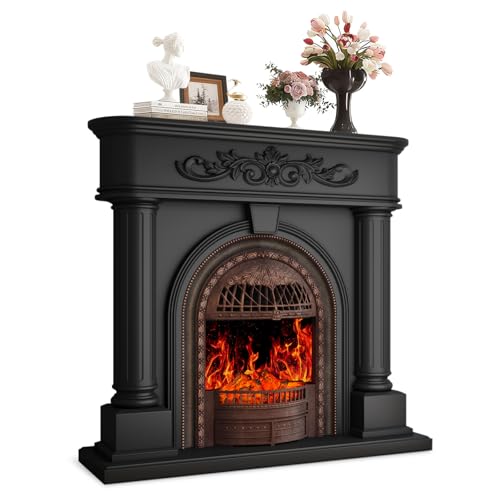
50” Solid Wood Electric Fireplace with Mantel, Black Roman Column TV Stand with Antique Bronze Finish Birdcage Heater Insert, Elegant Fireplace for Living Room, Bedroom & Entryway
Check price on Amazon
RECHHX 51.2” Solid Wood Electric Fireplace with Mantel, Fireplace TV Stand | Roman Column Retro Carved Design, 27.6” Egg Fireplace Heater Insert, White Painted Fireplace for Living Room, Bedroom
Check price on Amazon
SEI Furniture Cardona Carved Wood & Faux Marble Electric Fireplace, New Walnut
Check price on Amazon
78" Birdcage-Style Electric Fireplace with Mantel, Tall Fireplace TV Stand
Check price on AmazonIdentifying Authentic Victorian Fireplace Features
True Victorian fireplaces share distinctive characteristics that set them apart from other styles. Recognizing these features helps you distinguish authentic pieces from reproductions and ensures historically accurate restoration work.
Ornate Mantels
Elaborately carved wooden or cast iron mantels featuring floral motifs, scrollwork, acanthus leaves, and geometric patterns typical of the period.
Intricate Tile Work
Hand-painted ceramic tiles with floral, geometric, or scenic designs surrounding the firebox opening, creating colorful artistic displays.
Cast Iron Details
Decorative cast iron components including registers, grates, and inserts with ornate patterns and mechanical motifs.
Rich Materials
Use of marble, slate, ceramic tile, and exotic woods combined for visual depth and luxury appeal.
Symbolic Motifs
Featuring elements like gryphons, cherubs, Gothic arches, and classical column designs reflecting the era's eclectic influences.
Craftsmanship
Hand-carved details with exceptional precision and artistry that mass production cannot replicate.

Types of Victorian Fireplaces
Victorian fireplace design evolved significantly throughout the era, with different styles emerging during different periods. Each style reflects the design philosophy of its time, from the romantic excesses of early Victorian design to the cleaner lines of late Victorian aesthetics.
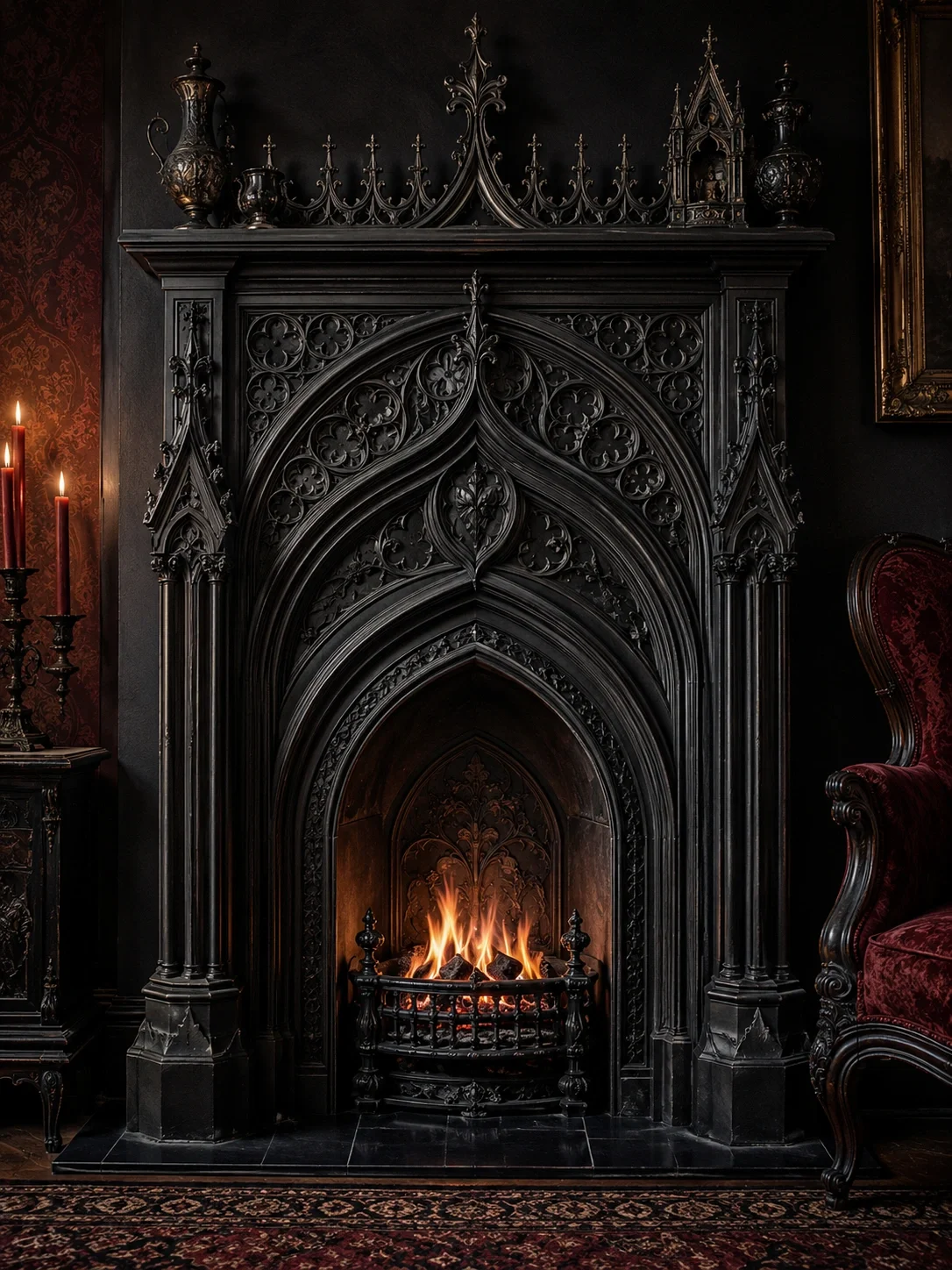
Gothic Revival (1840-1860)
Characterized by pointed arches, trefoil designs, and medieval-inspired elements. These fireplaces feature dark cast iron surrounds with intricate Gothic patterns and often include religious or heraldic symbols.
Investment Tier: Premium to luxury

Eastlake Style (1870-1890)
Created by Charles Eastlake, this style features geometric patterns, sunburst motifs, and stylized botanical elements. The design is more restrained than earlier Victorian styles but still highly detailed.
Investment Tier: Mid-range to premium
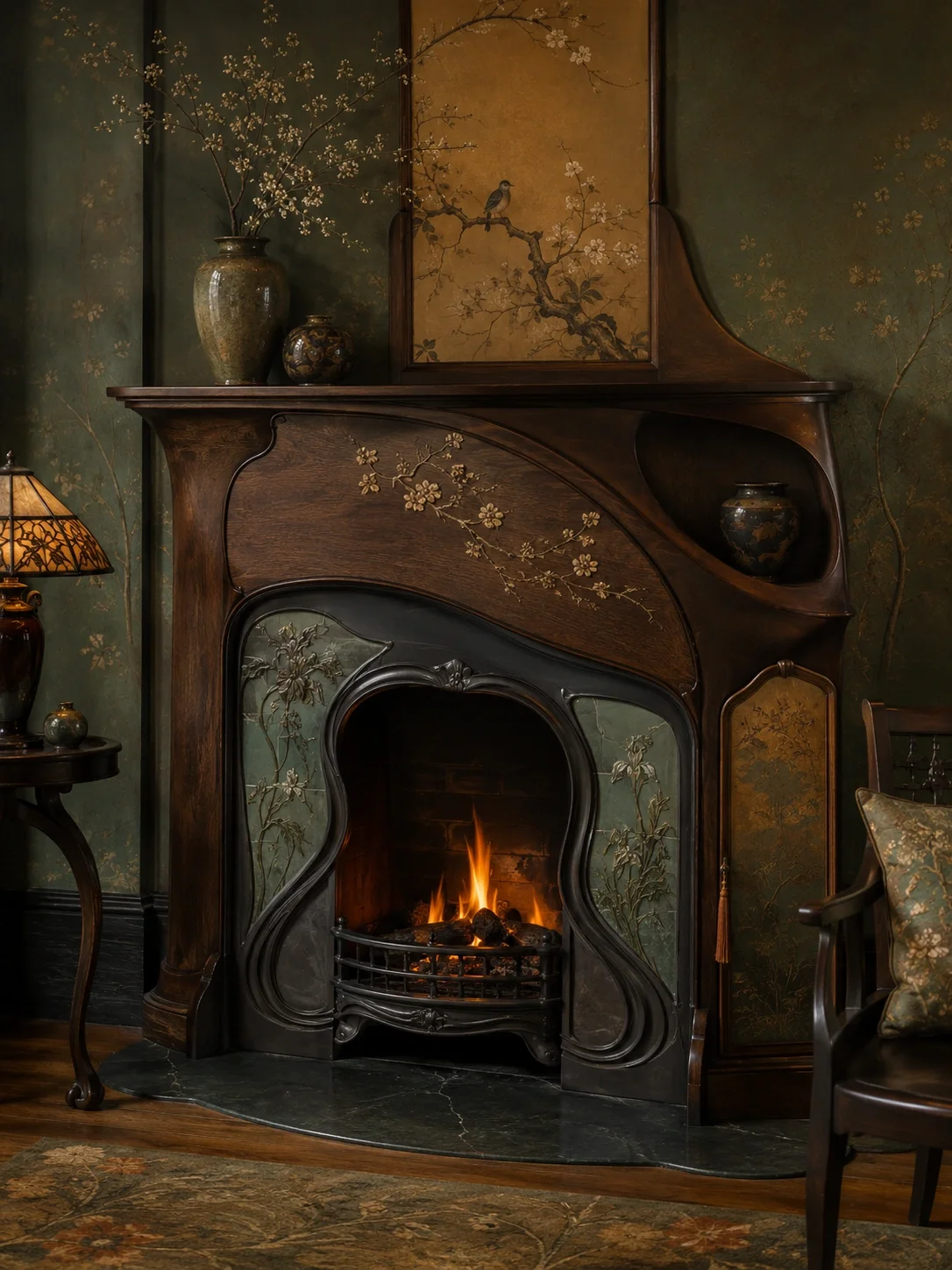
Aesthetic Movement (1880-1900)
Featuring flowing natural forms, asymmetrical compositions, and Japanese influences. These fireplaces emphasize organic curves and artistic expression over rigid symmetry.
Investment Tier: Mid-range to premium

Late Victorian (1890-1901)
Characterized by lighter colors, simpler lines, and refined elegance. These fireplaces maintain quality craftsmanship with reduced ornamentation compared to earlier periods.
Investment Tier: Mid-range to premium
While vintage fireplaces from other eras may share some characteristics, true Victorian designs feature the specific decorative vocabulary of the period. Understanding these distinctions helps you make historically appropriate choices for restoration or reproduction projects.
Materials and Construction
Victorian fireplaces utilized premium materials that contributed to both their beauty and durability. The choice of materials often indicated the homeowner's social status and the fireplace's intended level of ornamentation.
Cast Iron
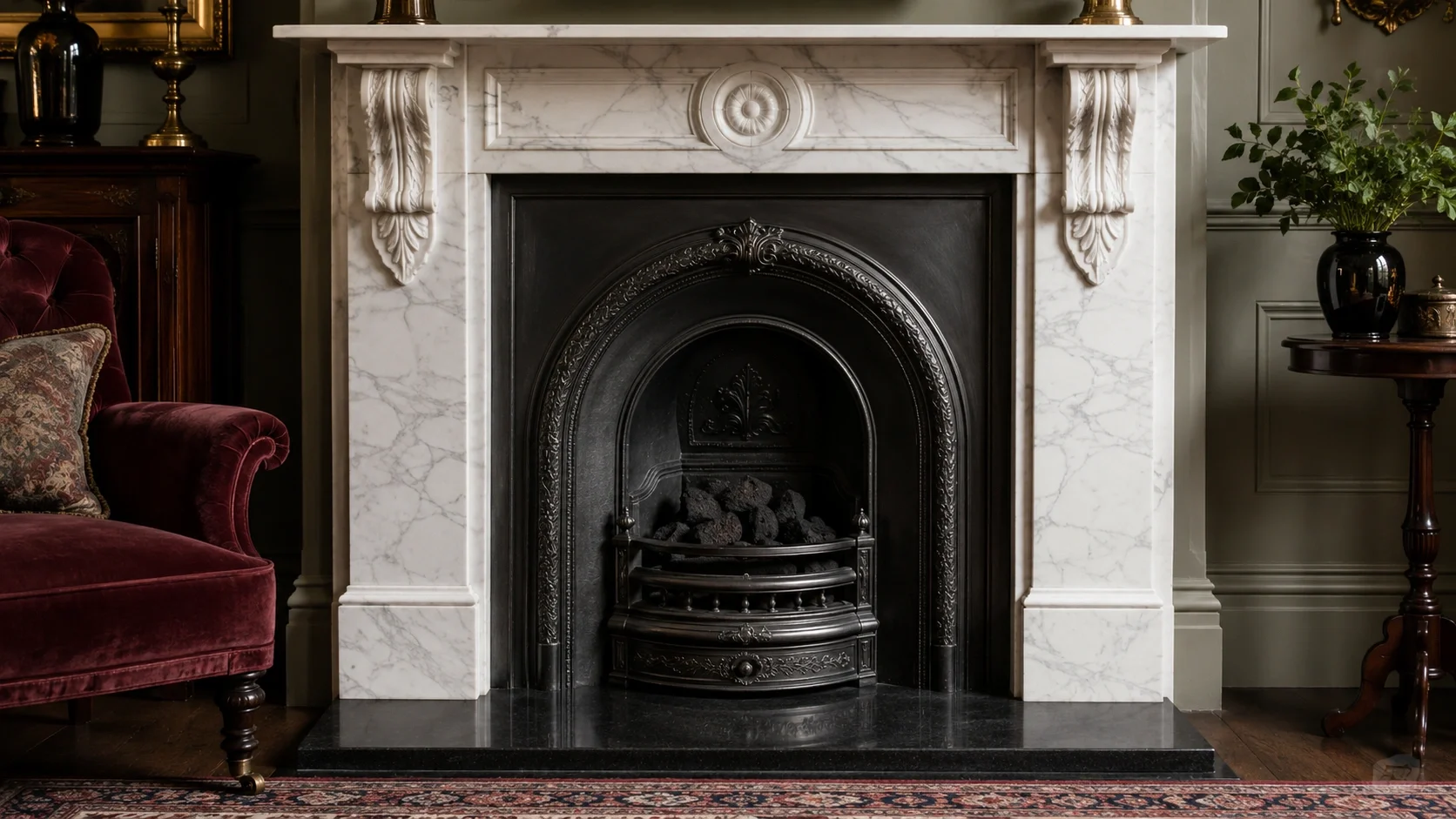
The signature material of Victorian fireplace construction. Cast iron allowed for intricate moldings and patterns that couldn't be achieved with other materials. It provided excellent heat radiation and became darker with age, which was often considered desirable. Gas fireplaces of this era typically featured elaborate cast iron fronts with remarkable detail work.
Marble and Stone
Expensive materials like marble, limestone, and slate were used for surrounds and hearths in upscale installations. Marble fireplace options often featured carved classical figures or botanical designs. These materials provided a cool, elegant contrast to the warm tones of the fire.
Ceramic Tile
Hand-painted ceramic tiles became a hallmark of Victorian design, allowing for colorful artistic expression around the firebox. Fireplace tile ideas from this period often featured floral patterns, scenic landscapes, or geometric designs. These tiles remain highly collectible today.
Exotic Woods
Rich hardwoods like mahogany, walnut, and rosewood were commonly used for mantels due to their beautiful grain patterns and workability. These woods took fine detail carving exceptionally well and aged gracefully.
Material Selection Tip
For authentic appearance, use materials and finishes appropriate to your home's era and style. Mixing genuine Victorian elements with modern materials can look incongruous. Consider consulting with preservation specialists when working with historic properties to ensure appropriate material choices.
Victorian Mantel Designs
The mantel is often the most elaborate component of a Victorian fireplace, serving as both a functional shelf and a canvas for artistic expression. Victorian fireplace mantel ideas ranged from modest to extravagantly ornate, with designs varying significantly by period and region.
Overmantels
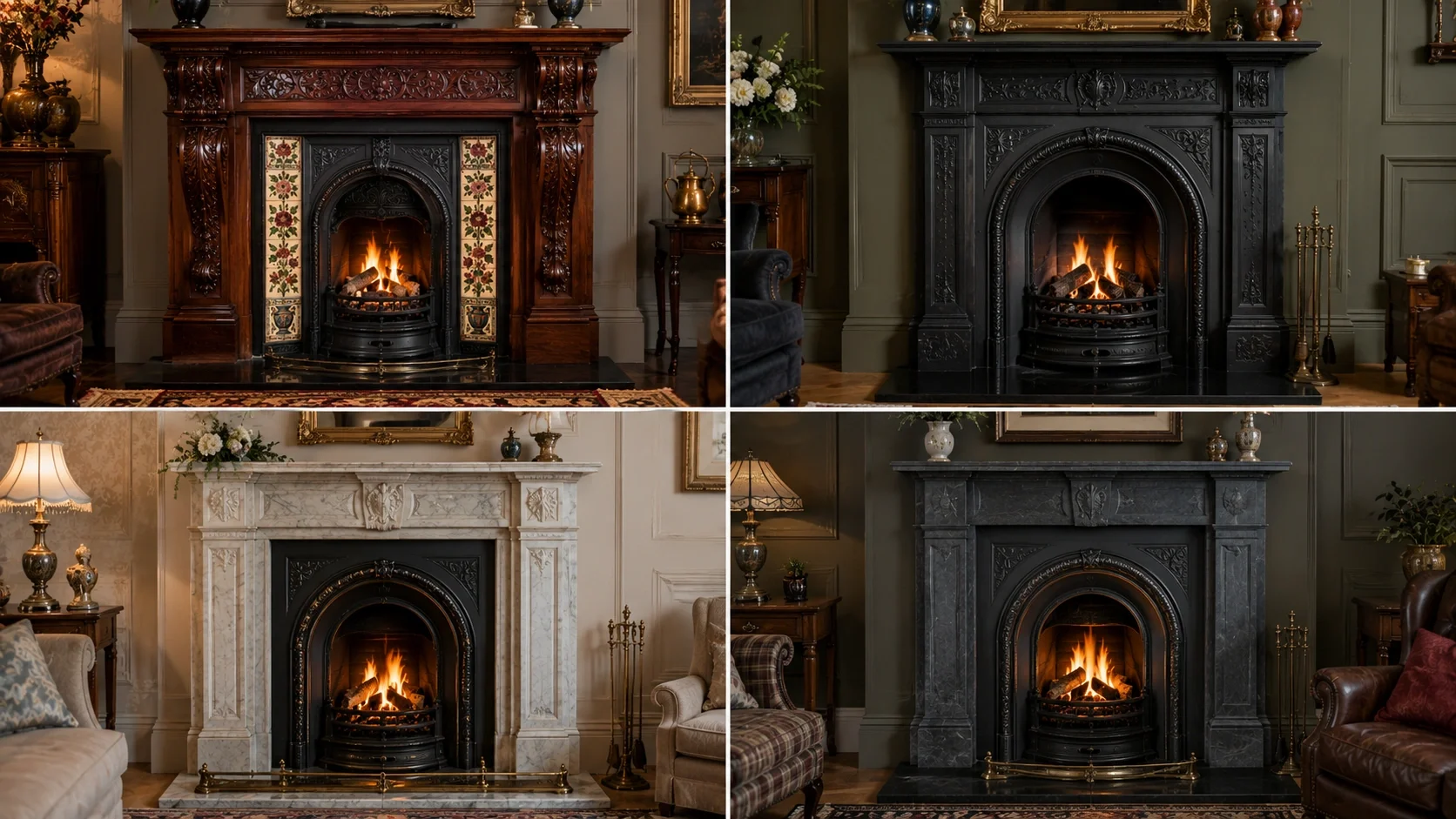
Extended shelves above the mantel provided space for displaying art, photographs, clocks, and decorative objects. Victorian overmantels often featured additional carvings, mirrors, or built-in cabinets with glass doors for displaying collections.
Carved Designs
Common carving motifs included acanthus leaves, scrollwork, egg-and-dart patterns, floral garlands, and classical figures. The level of carving detail often indicated the mantel's quality and value. Hand-carved pieces command premium prices due to their artistry.

Wooden Carved
Rich hardwood mantels with intricate hand-carved details, typically featuring floral and scroll patterns. These remain the most sought-after style for authentic restorations.

Cast Iron
Durable and affordable option with reproducible ornate designs. Cast iron mantels provided Victorian aesthetics at lower cost than hand-carved wood.
Marble
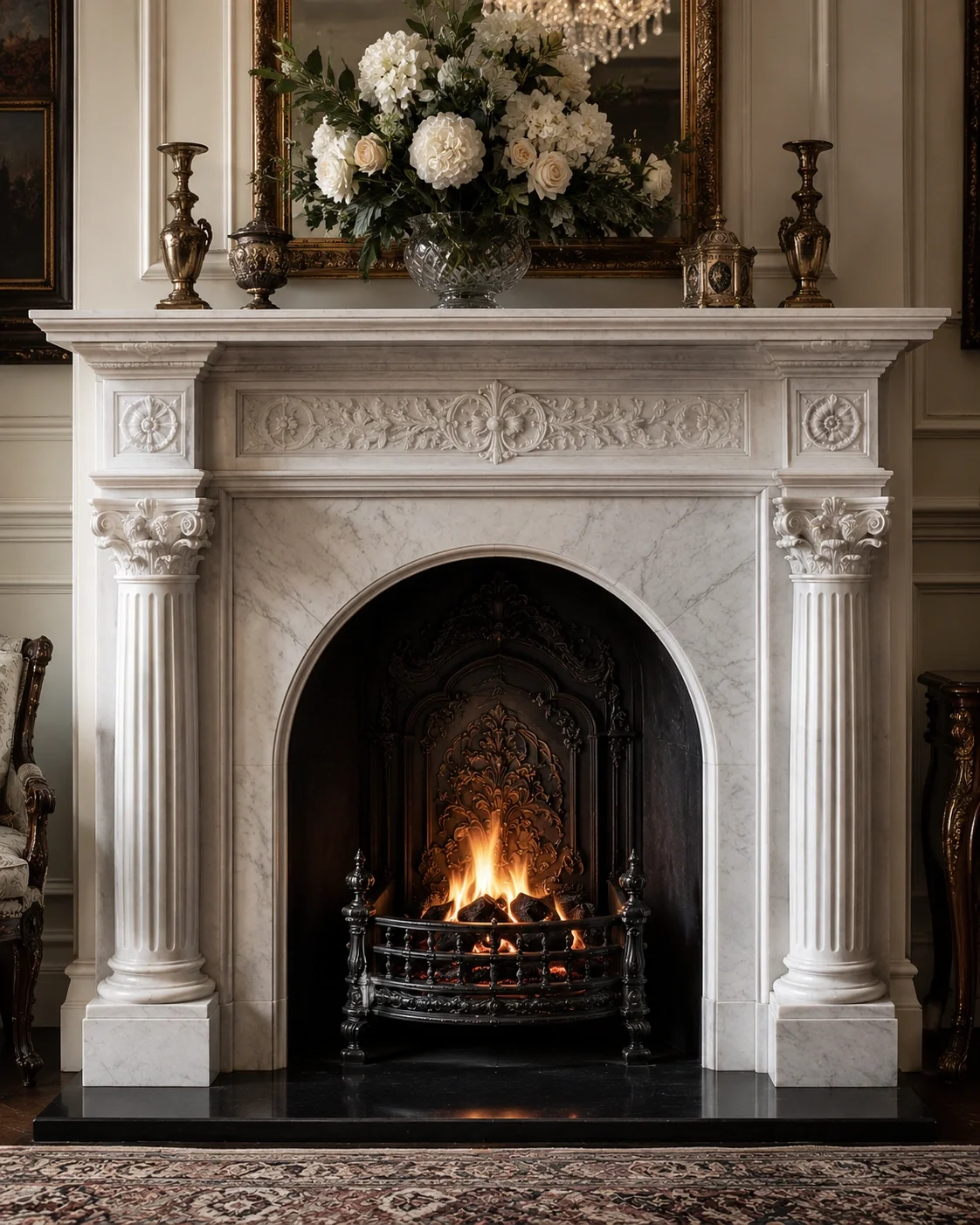
Luxurious option featuring classical motifs and fine craftsmanship. Marble mantels became status symbols in wealthy Victorian homes.
Slate
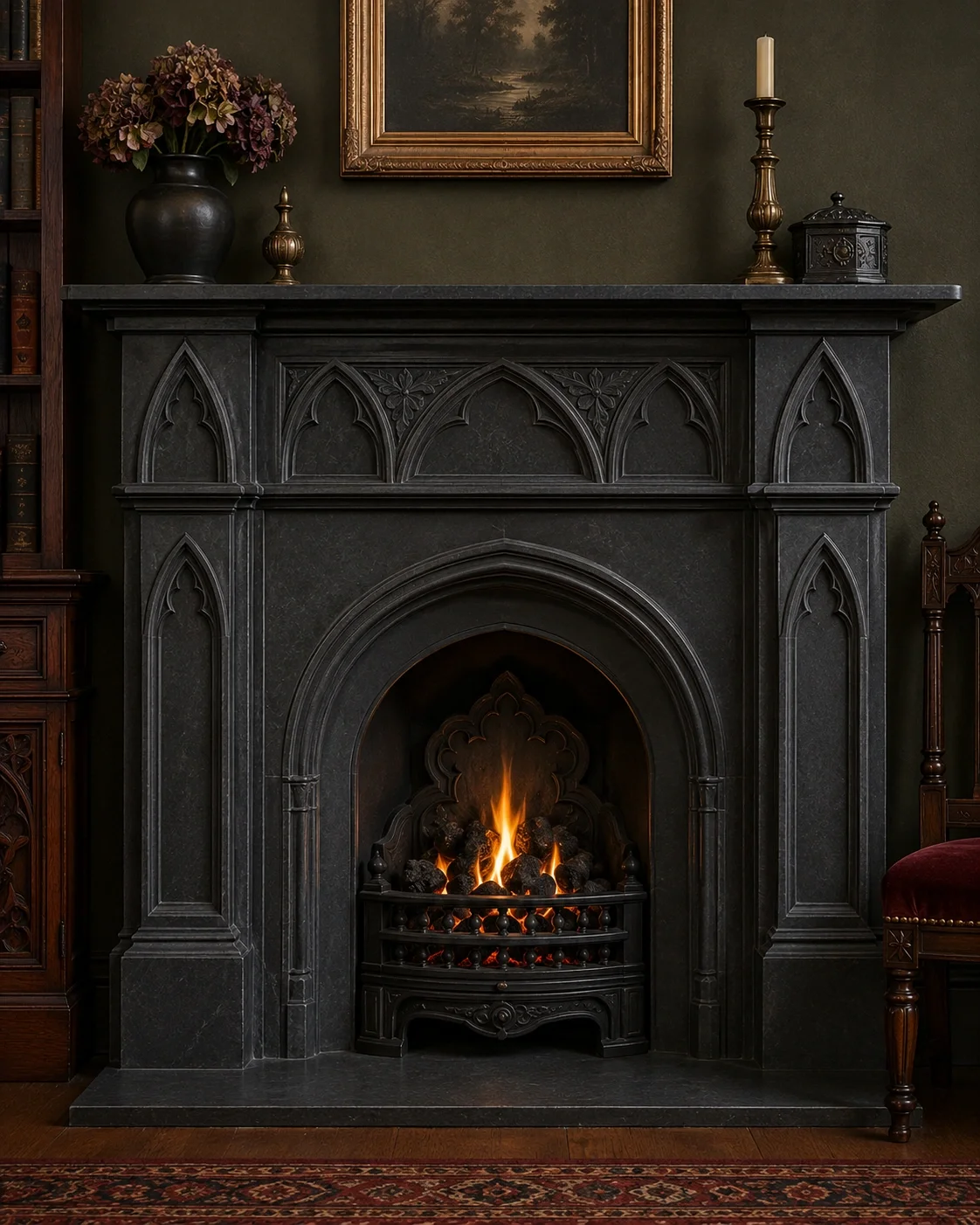
Dark, dramatic option often used in Gothic Revival designs. Slate mantels provided striking contrast and aged beautifully over time.
When selecting or restoring a Victorian mantel, verify the carving style matches your home's specific period and regional variations. Mixing styles from different Victorian periods can appear inconsistent and historically inaccurate.
Surrounds and Hearths
The area surrounding the firebox provided additional space for artistic expression and functional elements. Victorian fireplace surround ideas were often as ornate as the mantel itself.

Tile Surrounds
Ceramic tile surrounds became increasingly popular as the era progressed. Hand-painted tiles featured elaborate scenes, floral arrangements, and geometric patterns. Tile fireplace designs from this period are now highly collectible, with some examples selling for substantial sums at auction.
Cast Iron Surrounds
Ornate cast iron panels surrounding the firebox provided both functional protection and decorative appeal. These often featured intricate patterns that echoed mantel designs, creating a cohesive aesthetic.
Hearth Designs
The hearth—the floor area in front of the fireplace—was often made of decorative tiles, marble, or stone with decorative inlays. Victorian hearth designs might include mosaic patterns, geometric inlays, or symbolic motifs that tied the entire fireplace composition together.
Preservation Consideration
If you're working with an original Victorian surround, resist the urge to replace it with modern materials. Even damaged period tiles can often be restored by specialists, preserving historical integrity and value. Consult preservation specialists before making significant changes.
Advantages and Disadvantages
Like any design style, Victorian fireplaces have both benefits and limitations. Understanding these helps you make an informed decision about whether this style is right for your home.
Advantages
- Unmatched craftsmanship and artistic detail
- Historical authenticity and period accuracy
- Significant investment value and appreciation potential
- Rich materials that age beautifully
- Unique character compared to mass-produced units
- Strong appeal for restoration and historic homes
- Conversation pieces that tell a story
Disadvantages
- Higher initial investment than standard fireplaces
- Requires specialized installation expertise
- May need custom sizing and fitting
- Maintenance requires specific knowledge
- Limited availability of original pieces
- Can overwhelm small modern spaces if not scaled properly
- May not comply with current building codes without modifications
For many homeowners, the unique character and historical significance of a Victorian fireplace outweighs these challenges. The key is finding the right balance between historical authenticity and practical functionality for your specific situation.
Investment Tier Breakdown
Victorian fireplaces represent a significant investment, but tiers vary widely based on authenticity, materials, and craftsmanship. Here's what to expect across different project types:
While reproduction Victorian fireplaces offer the look at a more accessible tier, authentic pieces offer investment potential. For comprehensive tier analysis across all fireplace types, review our detailed fireplace cost breakdown which includes long-term value considerations.
Installation Considerations
Installing a Victorian-style fireplace requires specialized knowledge of historical construction methods and materials. Unlike standard modern fireplaces, these units often need custom fitting and expert handling.
Assessment and Planning
Document existing conditions, take detailed measurements, and research appropriate styles for your home's period and region. Consult with preservation specialists if working with original features.
Professional Sourcing
Locate skilled artisans specializing in Victorian reproduction or locate salvage yards with authentic pieces. Reputable suppliers often maintain relationships with foundries that can reproduce historical designs.
Structural Assessment
Verify that your wall can support the significant weight of Victorian materials like cast iron and stone. Older homes may need reinforcement. Check for proper clearances from combustibles.
Installation
Engage specialists experienced with period installations who understand proper clearances, ventilation requirements, and historical methods. Improper installation can damage both the fireplace and your home.
Inspection and Testing
Have the installation thoroughly inspected for code compliance and proper function. For gas units, verify all connections are leak-free before regular use.
Installation Tip
For comprehensive guidance on the installation process, review our fireplace installation guide which covers code requirements, permitting, and professional vs. DIY considerations specific to Victorian reproductions.
Maintenance Requirements
Proper maintenance preserves both the beauty and function of Victorian fireplaces while protecting your investment. These units require specific care different from modern units.
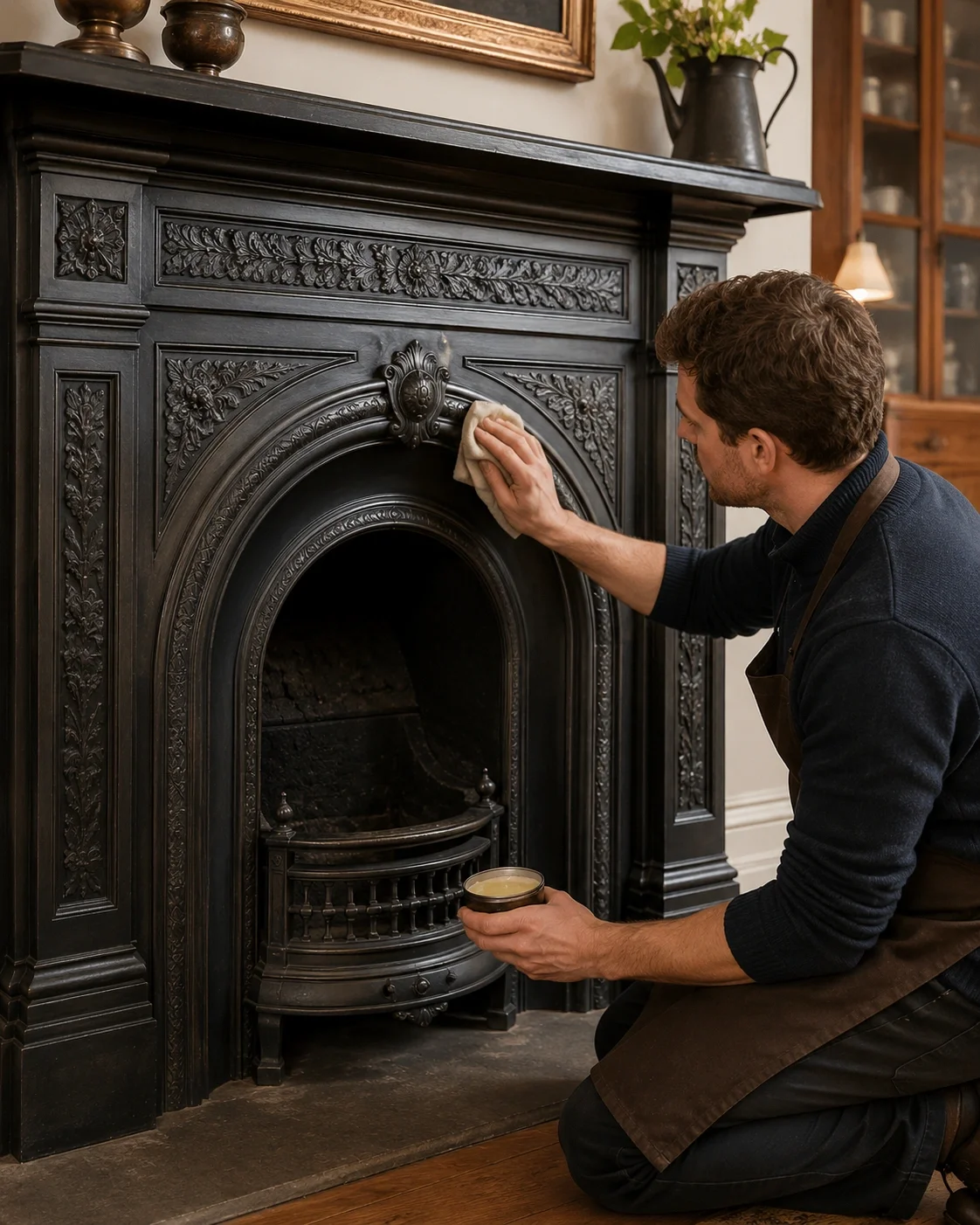
Cast Iron Care
- Avoid harsh chemical cleaners that can damage patina
- Apply protective wax annually to prevent rust
- Touch up paint as needed with matching high-temperature paint
- Inspect for cracks or structural issues annually
Tile and Stone Care
- Use pH-neutral cleaners only on ceramic tiles
- Repair damaged tiles promptly to prevent water infiltration
- Re-seal grout lines every few years
- Consult specialists for antique tile restoration
Mechanical Components
- Lubricate moving parts annually
- Check damper mechanisms for proper operation
- Have gas components inspected by licensed professionals
- Replace worn gaskets and seals to maintain efficiency
For detailed maintenance guidance across all fireplace types, explore our fireplace maintenance resource which includes specific advice for historical and reproduction units.
Modern Victorian Interpretations
Many homeowners appreciate Victorian aesthetics but prefer modern convenience. Several approaches blend both worlds successfully:
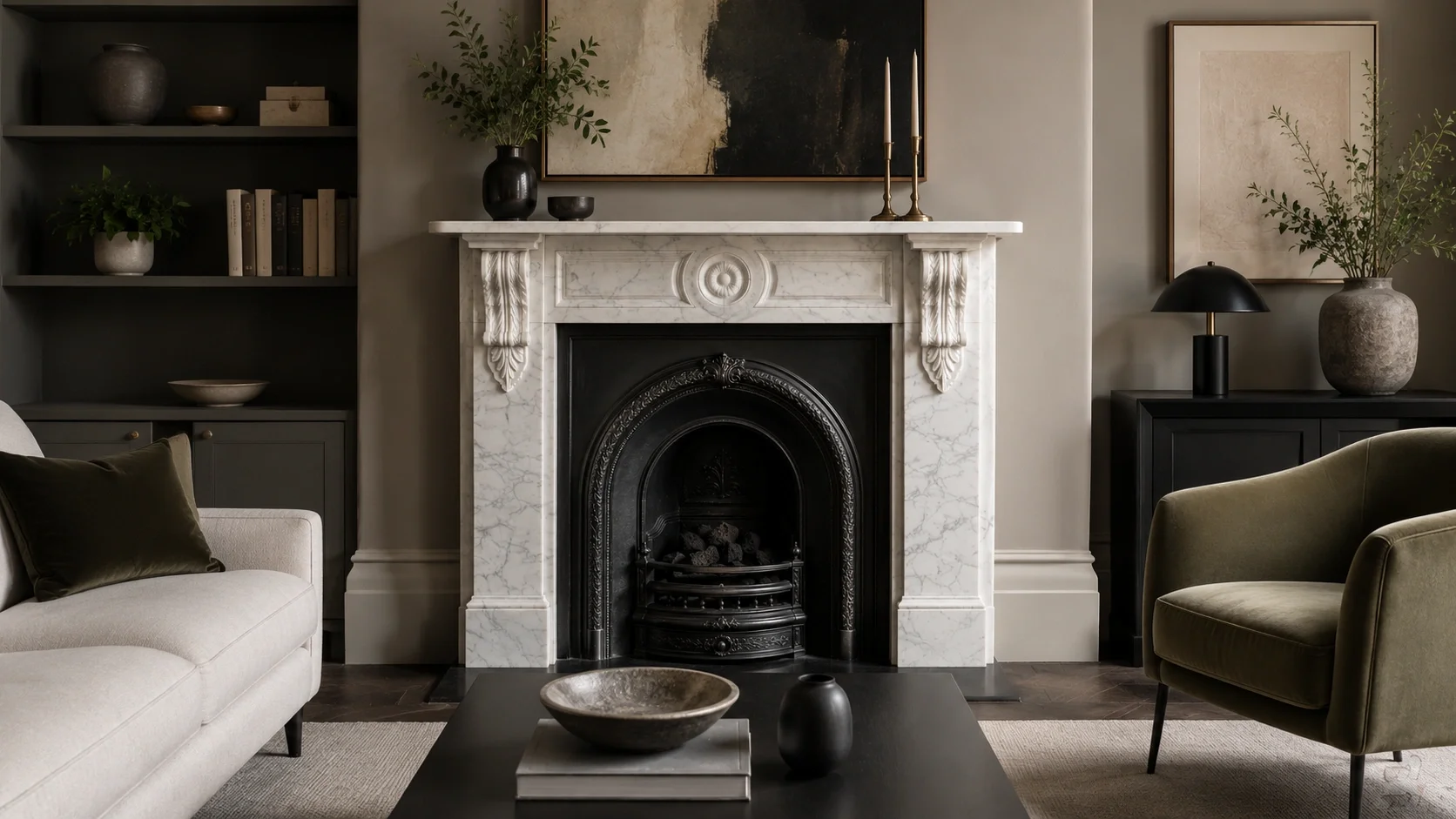
Contemporary Reproductions
Modern manufacturers create Victorian-inspired fireplaces using updated materials and technology while maintaining authentic design elements. These offer the Victorian look with improved efficiency and safety features.
Vintage Revival Mix
Combining genuine antique pieces with modern furnishings creates an eclectic, collected-over-time look that's popular in current design. This approach allows you to incorporate authentic Victorian elements without committing to a full historical aesthetic.
Simplified Victorian
Scaled-down Victorian details on modern units provide a subtle nod to the era without overwhelming contemporary spaces. This is particularly effective in minimalist interiors where ornate features would clash with clean lines.
Design Balance
The key to successful Victorian integration is balance. In modern settings, use Victorian pieces as focal points while keeping surrounding elements clean and simple. In traditional homes, feel free to embrace the full ornate aesthetic that defines the style.
Expert Buying Tips
Whether purchasing original antiques or modern reproductions, these tips will help you make the best choice:
Authentication
When buying antiques, verify authenticity through reputable dealers who can provide provenance documentation. Be wary of reproductions sold as originals. Look for signs of age-appropriate materials and construction methods.
Scale Appropriately
Victorian fireplaces are inherently grand and ornate. In smaller spaces, consider simplified versions or select specific elements rather than full Victorian installations to avoid overwhelming the room.
Quality Over Quantity
A single well-made Victorian piece will have more impact than multiple lesser-quality items. Invest in craftsmanship—the details are what make Victorian design special.
Professional Installation
Victorian fireplaces require expert installation due to their weight, complexity, and specific clearance requirements. The investment in professional installation protects your investment and ensures safety and code compliance.
Consider Maintenance
Factor in ongoing maintenance needs when budgeting. Authentic pieces and detailed reproductions require specialized care that costs more than standard fireplaces. Ensure you can access qualified maintenance services in your area.
Is a Victorian Fireplace Right for You?
Victorian fireplaces are ideal if you value historical authenticity, exceptional craftsmanship, and unique character in your home. They're particularly appropriate for:
- Historic or period-style homes seeking authentic restoration
- Homes with traditional or traditional fireplace elements to complement
- Homeowners who appreciate artistry and craftsmanship over mass production
- Properties where a statement piece will increase value significantly
- Those wanting to incorporate historical elements into modern designs selectively
However, if you prioritize minimal maintenance, strict budget constraints, or ultra-modern aesthetics, a full Victorian fireplace might feel overwhelming. In these cases, consider Victorian-inspired modern pieces that capture the essence of the style without the commitment.
By following this guide, you're well-equipped to evaluate Victorian fireplaces knowledgeably and make choices that enhance both your home's beauty and value for generations to come.