Electric Fireplace Inspection Guide
Ensure your electric fireplace operates safely and efficiently. Learn the step-by-step inspection process, identify hidden hazards, and know exactly when to call a professional.
Why Inspect Your Electric Fireplace? Although electric fireplaces don't burn solid fuel or produce real combustion, they still draw significant electrical current and generate heat. Regular inspections prevent electrical faults, extend the lifespan of your unit, and protect your home from fire hazards. A well-maintained unit also operates more efficiently, helping you get more out of every heating session.
When to Inspect Your Electric Fireplace
Unlike wood or gas units that require frequent chimney sweeping, electric fireplaces demand less intensive maintenance. However, they should still be inspected regularly. We recommend a thorough visual check every few months and a detailed mechanical inspection at least once a year—ideally before the heavy-use winter season begins.
Following a structured seasonal fireplace checklist ensures you never miss a critical maintenance window. If you use your unit as a primary heat source daily, consider inspecting it bi-annually.
Step-by-Step Visual Inspection Checklist
Before you begin, always turn off and unplug the unit. A visual inspection is your first line of defense against potential hazards. Here is what you need to examine:
External Visual Checkpoints
- Power Cord and Plug: Look for fraying, cracking, or exposed wires. Ensure the plug's prongs are not bent or corroded. A damaged cord is a serious shock and fire hazard.
- Housing and Casing: Inspect the outer shell for cracks, warping, or discoloration, which can indicate overheating.
- Glass Panel: Check for cracks or deep scratches. A compromised glass panel can shatter under heat. Learn how to safely clean your fireplace glass to get a clear view of the interior.
- Ventilation Openings: Ensure intake and exhaust vents are free of dust, pet hair, and debris. Blocked airflow is the primary cause of overheating.
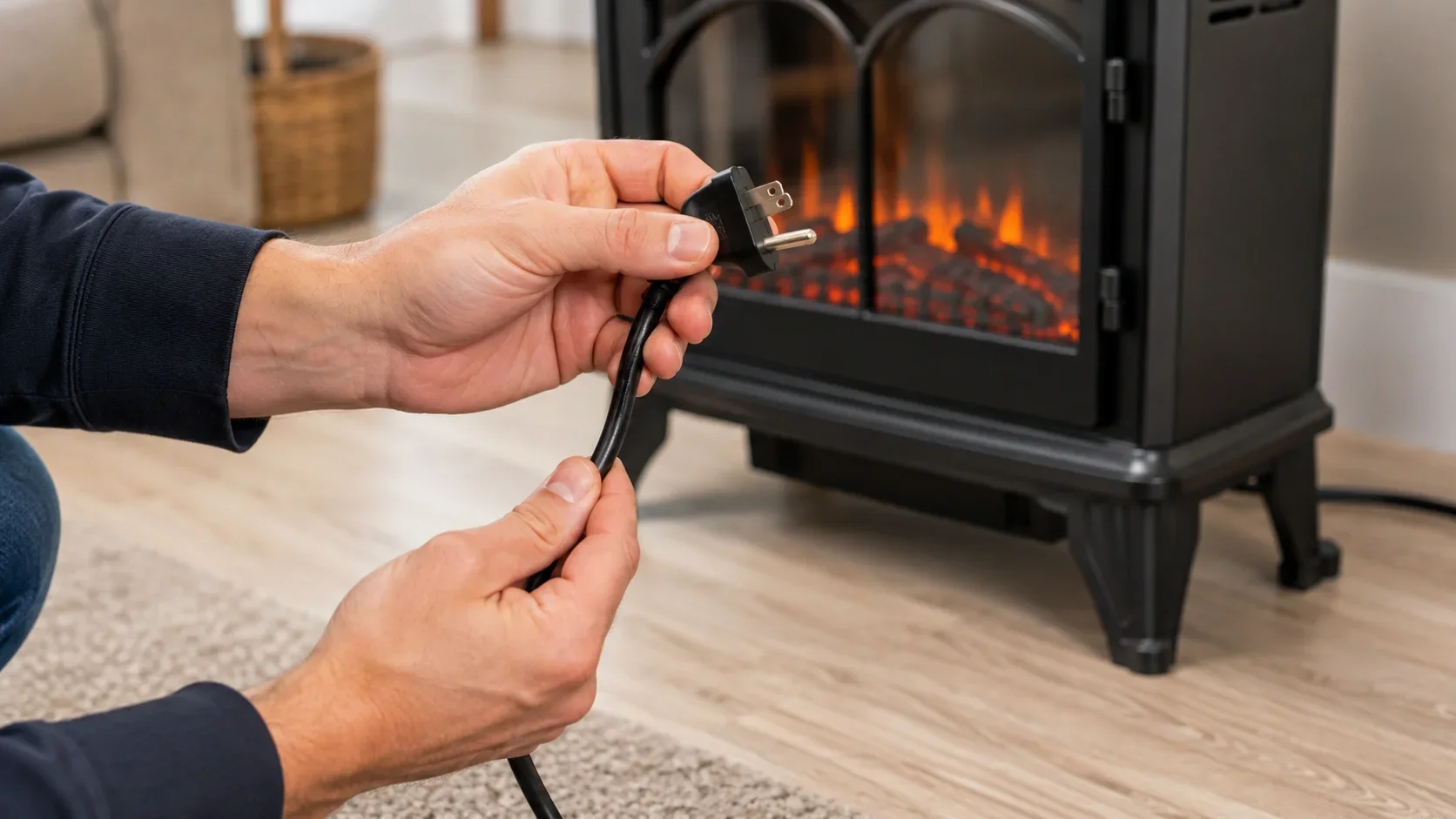
Carefully examine the power cord and plug for any signs of wear, fraying, or heat damage before each heating season.
Electrical and Heating Component Inspection
The internal components of an electric fireplace handle high voltages and extreme heat. While deep internal repairs should be left to professionals, you can safely inspect accessible areas.
1. Heating Element and Thermostat
Electric fireplaces typically use either infrared quartz tubes or fan-forced coil heaters. If your unit features infrared tubes, look for any dark spots or breakage in the tubes. For fan-forced models, check the coils for unusual wear. Test the thermostat responsiveness by adjusting the temperature settings to ensure the unit cycles on and off properly. A malfunctioning thermostat can cause the unit to overheat continuously.
2. Blower Fan and Motor
The blower fan distributes warm air into your room. Turn the unit on and listen to the fan. Grinding, squealing, or rattling noises indicate worn bearings or debris caught in the blades. If the fan is sluggish or fails to start, refer to our blower fan troubleshooting guide. A failing fan can cause the heater to overheat and trigger the safety shut-off switch. Understanding the differences in infrared vs fan-forced heating will help you diagnose issues specific to your model.
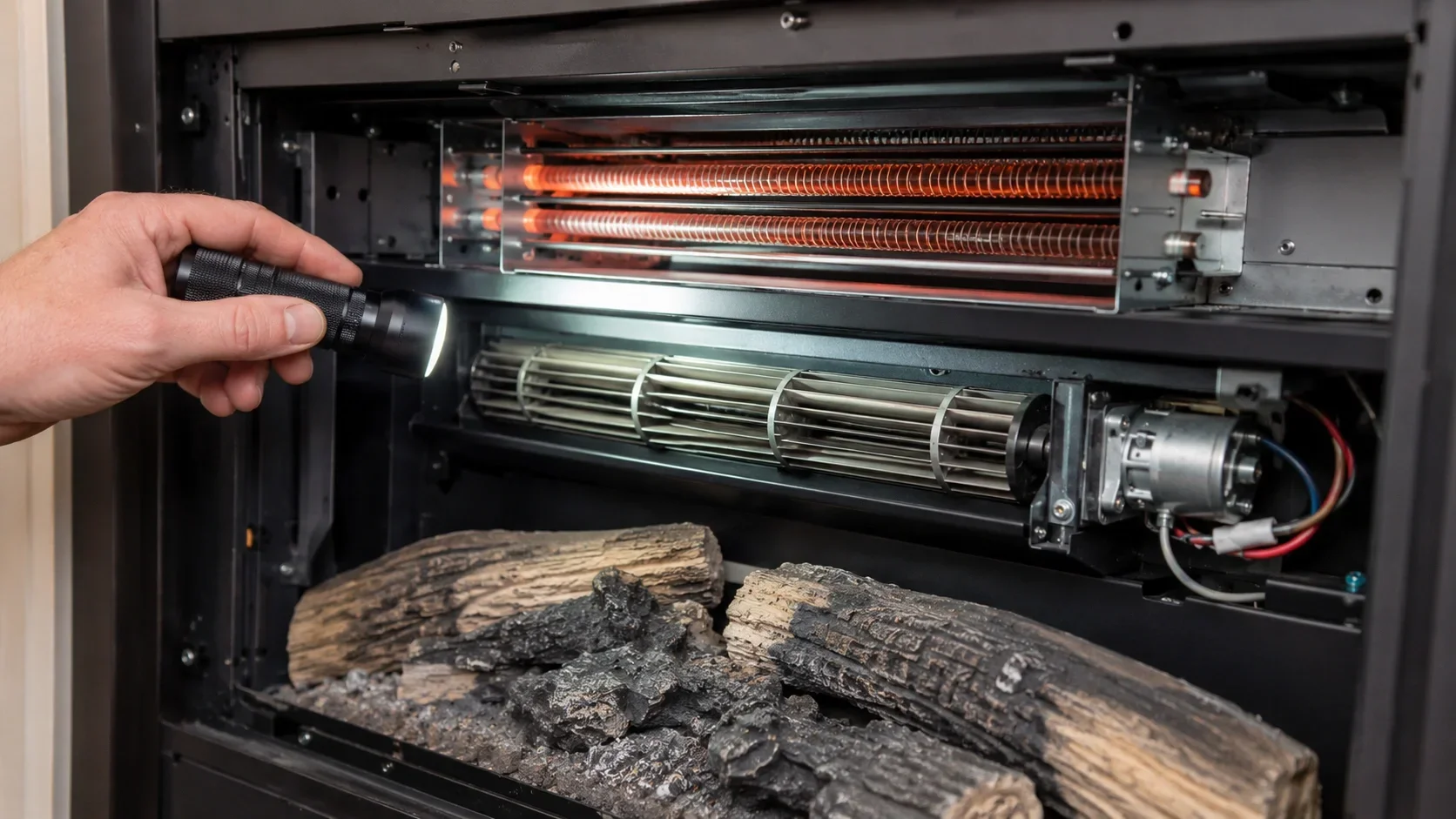
Inspecting the internal heating elements and blower fan ensures your unit operates at peak efficiency without overheating.
3. Wiring and Connections
If your unit allows access to the wire compartment (usually behind a panel), visually inspect the wire nuts and terminal blocks. Look for any signs of melted plastic, burn marks, or loose wires. If you notice a burning smell when the fireplace runs, stop using it immediately and consult an electrician. Persistent electrical issues can also cause your electric fireplace to trip the breaker.
Flame Effect and Remote Control Verification
The ambiance of an electric fireplace relies on its flame effect. While a malfunctioning flame effect doesn't usually pose a safety risk, it indicates an underlying electrical issue.
- LED/Flame Motor: If the flames freeze, flicker erratically, or fail to light up, the internal mirror rod motor or LED board may be failing. Troubleshoot this using our flame not working guide.
- Remote Control: Test all functions on your remote. If the unit fails to respond, replace the batteries first. If it still doesn't work, check the receiver inside the fireplace. You can find replacement steps in our remote control fix guide.
Wall-Mounted and Built-In Specific Inspections
The installation type of your electric fireplace dictates specific inspection routines. Proper mounting and ventilation clearance are crucial for safe operation.
Wall-Mounted Units
Verify that the mounting brackets are securely fastened to the wall studs. Over time, the weight of the fireplace and the expansion/contraction from heating can loosen screws. Ensure the unit sits flush against the wall and that no gaps have formed. Check the wall-mounted installation guidelines to confirm your unit has the required clearance from combustible materials.
Built-In and Hardwired Units
For units installed directly into the wall or hardwired into your home's electrical system, the inspection requires a bit more caution. Check the junction box for secure wiring and ensure the dedicated circuit breaker is properly rated. Hardwired units should ideally be inspected by a certified electrician. Understanding plug-in vs hardwired electrical requirements will help you maintain your specific setup safely.
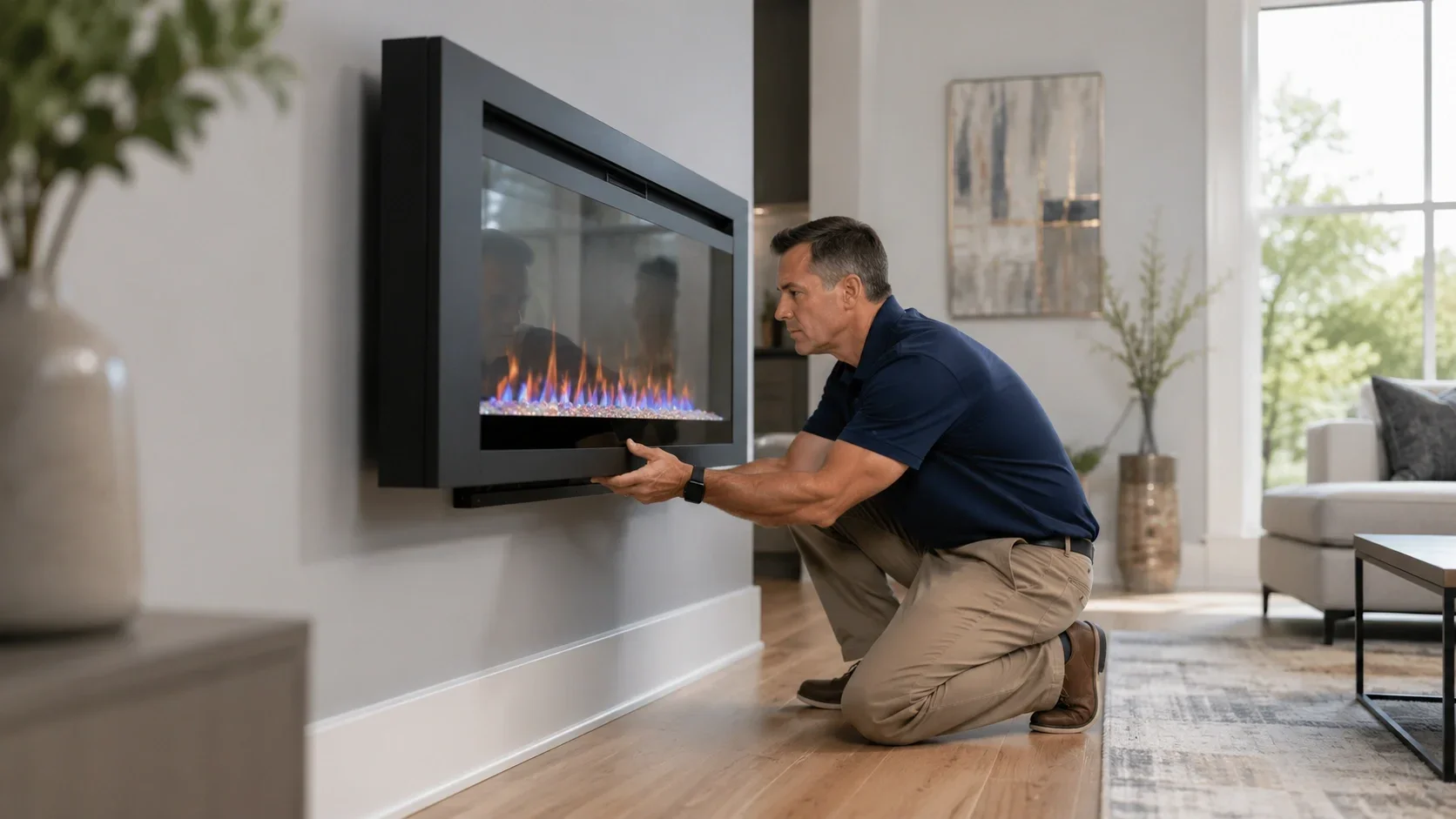
Ensure wall-mounted units are securely anchored and maintain proper clearance from combustible materials.
Professional Inspection vs. DIY
While basic cleaning and visual checks are excellent DIY tasks, certain situations require professional expertise. If you are comfortable with basic upkeep, our DIY fireplace inspection checklist is a great starting point. However, you should contact a certified technician or electrician if:
- You notice scorched wires, melted components, or a persistent burning smell.
- The unit repeatedly trips your circuit breaker or blows fuses.
- Your hardwired unit needs internal wiring adjustments.
- You suspect the heating element or internal thermostat has failed.
Knowing when to step back is crucial for safety. Trying to fix high-voltage components without training can lead to electrocution or void your manufacturer's warranty. For more complex installations, always consider the benefits of professional vs DIY installation and maintenance.
Investment Tier for Professional Electric Fireplace Inspection
If you decide to hire a professional, it helps to understand the potential investment tiers. While electric fireplaces are generally more affordable to maintain than gas or wood units, specialized repairs still fall into distinct tiers. Here is a tier-based breakdown of what you can expect:
| Service Type | Investment Tier |
|---|---|
| Basic Professional Diagnostic Fee | Entry-level |
| Thermostat Replacement (Parts & Labor) | Entry-level to Mid-range |
| Blower Fan Replacement (Parts & Labor) | Mid-range |
| Hardwired Electrical Inspection (by Electrician) | Entry-level to Mid-range |
⚠️ SAFETY WARNING: Always disconnect power before opening any access panels on your electric fireplace. Never operate the unit with the back panel removed. If you experience any electrical shock, no matter how minor, stop using the fireplace immediately and call a licensed electrician.
Maintaining Your Fireplace After Inspection
An inspection is only the first step; ongoing electric fireplace maintenance is what keeps your unit running smoothly for years. Regularly dust the interior with a dry microfiber cloth, keep the vents unobstructed, and never use abrasive cleaners on the glass or housing. By following a comprehensive monthly and yearly maintenance schedule, you can enjoy the warmth and ambiance of your electric fireplace with complete peace of mind.