Gas Fireplace Won't Light? Here's How to Fix It
A complete troubleshooting guide to diagnose and repair ignition problems in your gas fireplace safely and effectively.
Quick Reality Check: A gas fireplace that won't light is often caused by a dirty pilot light, a faulty thermocouple, or a gas supply issue. Before you panic, 90% of problems can be resolved with basic cleaning and inspection, which we'll walk you through step by step.
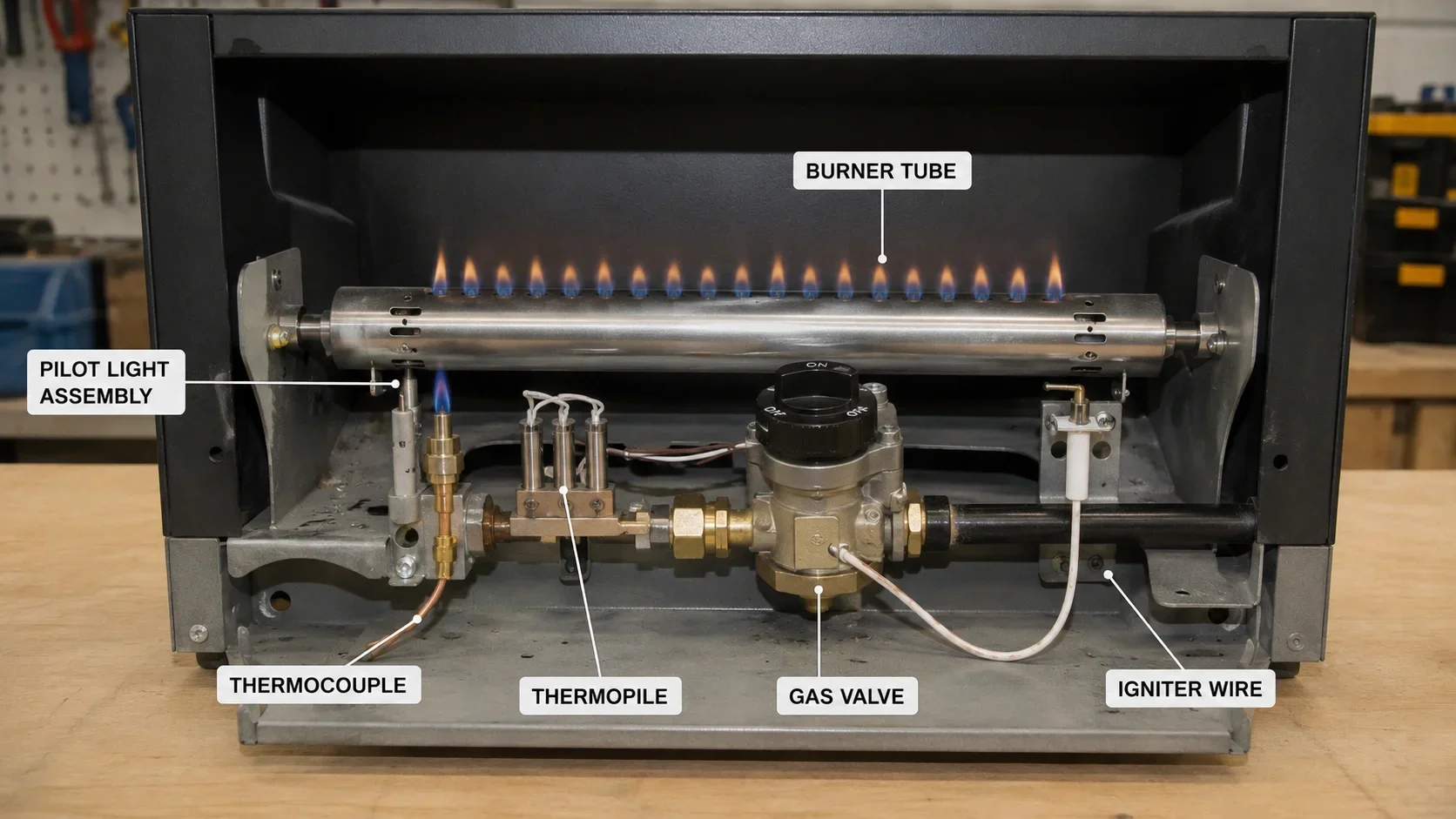
Few things are more frustrating on a cold evening than settling in, flipping the switch, and realizing your gas fireplace won't ignite. Whether you have a modern direct-vent insert or a traditional vented gas fireplace, ignition failures are common and often share similar root causes. Understanding how the ignition system works is the first step to getting your flames back. Most problems stem from the pilot light assembly, the thermocouple or thermopile, or an interruption in the gas flow.
Step 1: Perform These Initial Checks First
Before diving into component replacements, rule out the simplest explanations. Often, the issue is external to the fireplace's internal mechanics. A surprising number of service calls are resolved by verifying these basic elements, which can save you an unnecessary repair visit.
1 Verify the Gas Supply
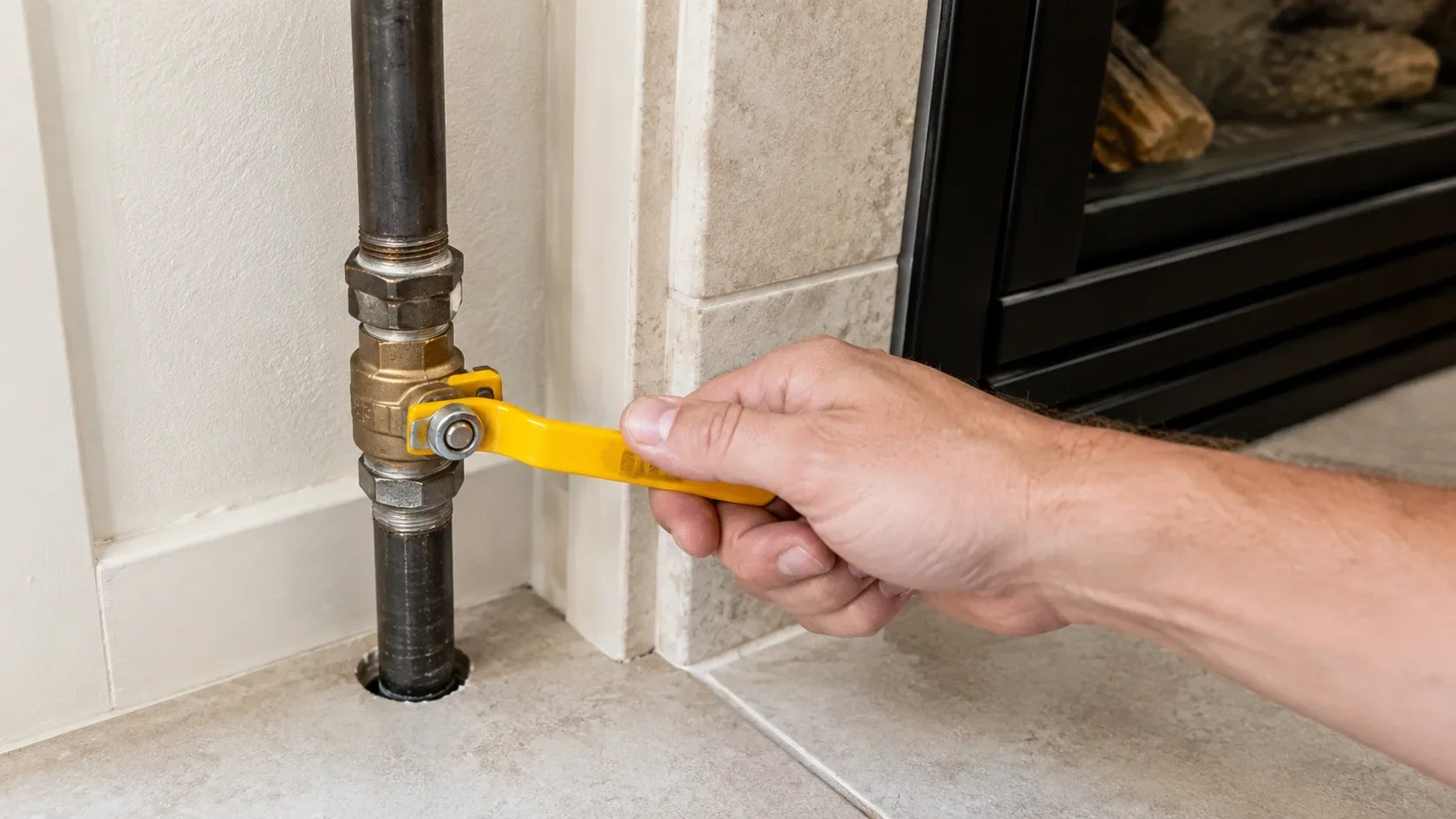
Ensure the gas shut-off valve, typically located on the wall or floor near the fireplace, is in the "On" position (parallel with the pipe). If you've recently had maintenance done or are starting the unit for the fall season, the valve may have been left closed. Also, check if other gas appliances in your home, like the stove, are working to rule out a whole-house supply issue.
2 Check the Electrical Power Source
Many modern gas fireplaces with electronic ignition or wall switches rely on electricity. Check your home's circuit breaker to ensure it hasn't tripped. If your model uses a battery-powered igniter or remote control, try replacing the batteries. A malfunctioning remote control can often mimic a mechanical failure.
Step 2: Diagnose Pilot Light and Ignition Problems
The pilot light is the heart of most standing-pilot gas fireplaces. If it's out, the main burner will never receive gas. Even if you have an electronic ignition system (IPI), understanding the pilot assembly is crucial. This is the most common failure point we see.
3 Relight the Pilot Light
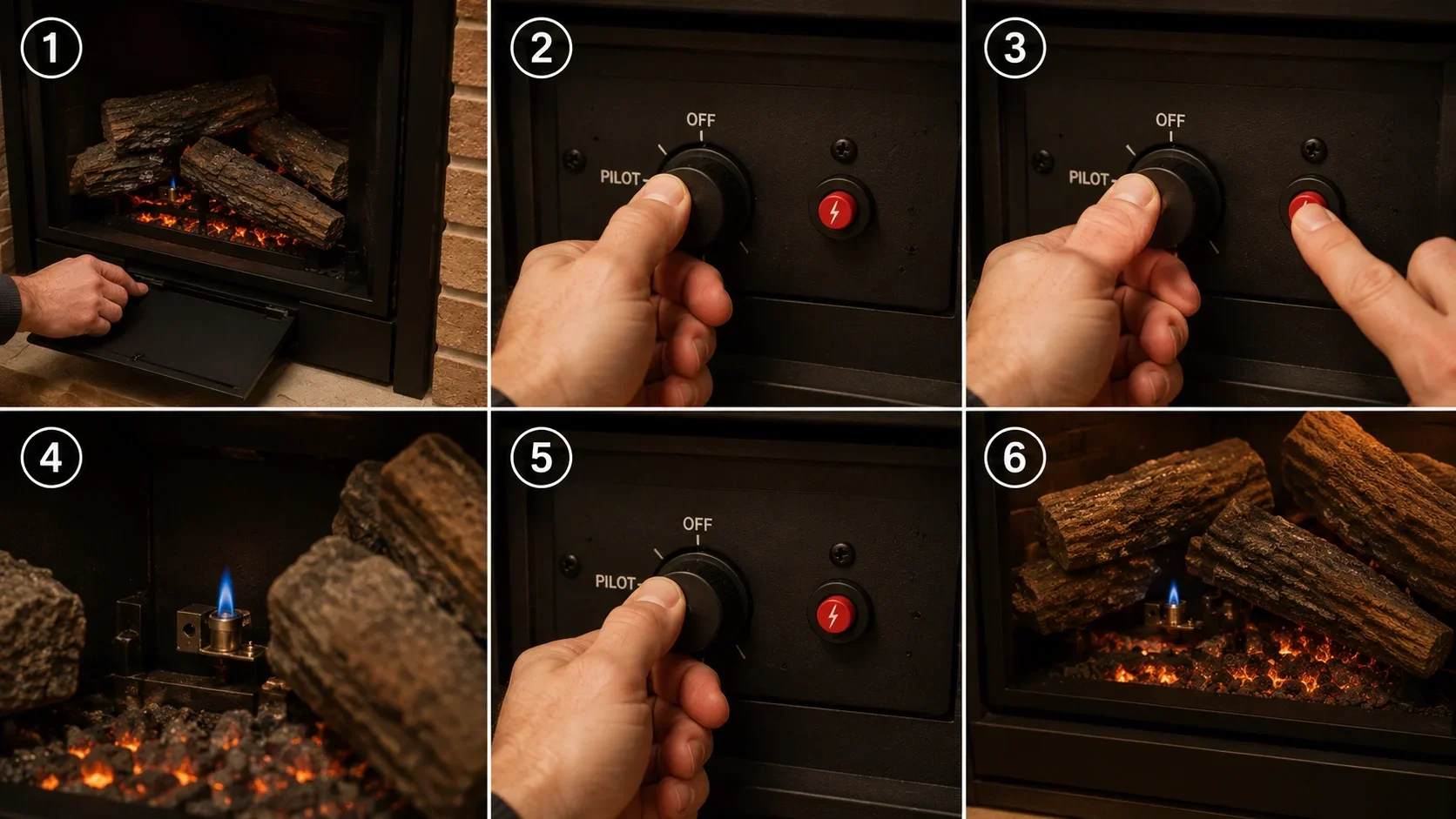
First, locate the gas valve control knob and turn it to the "Pilot" position. Press and hold the knob down to allow gas to flow to the pilot. While holding it, press the piezo igniter button repeatedly (it makes a clicking sound). Once lit, continue holding the knob for 30-60 seconds to heat the thermocouple. If the pilot goes out immediately when you release the knob, you likely have a thermocouple issue.
4 Clean a Clogged Pilot Orifice
If the pilot won't light or the flame is weak and yellow (instead of a sharp blue), the pilot orifice may be clogged with soot or debris. Turn off the gas completely, and use a can of compressed air or a fine needle to gently clear the tiny hole. This is a classic issue with propane fireplace setups, which run dirtier than natural gas. After cleaning, the pilot light will stay lit much more reliably.
Step 3: Test the Thermocouple and Thermopile
The thermocouple is a safety device that senses heat from the pilot flame. If it's faulty or not heated enough, it shuts off the gas supply to prevent leaks. A thermopile, often found in units with a wall switch or thermostat, generates the millivolt power needed to open the main gas valve. Testing these components with a multimeter can pinpoint the failure.
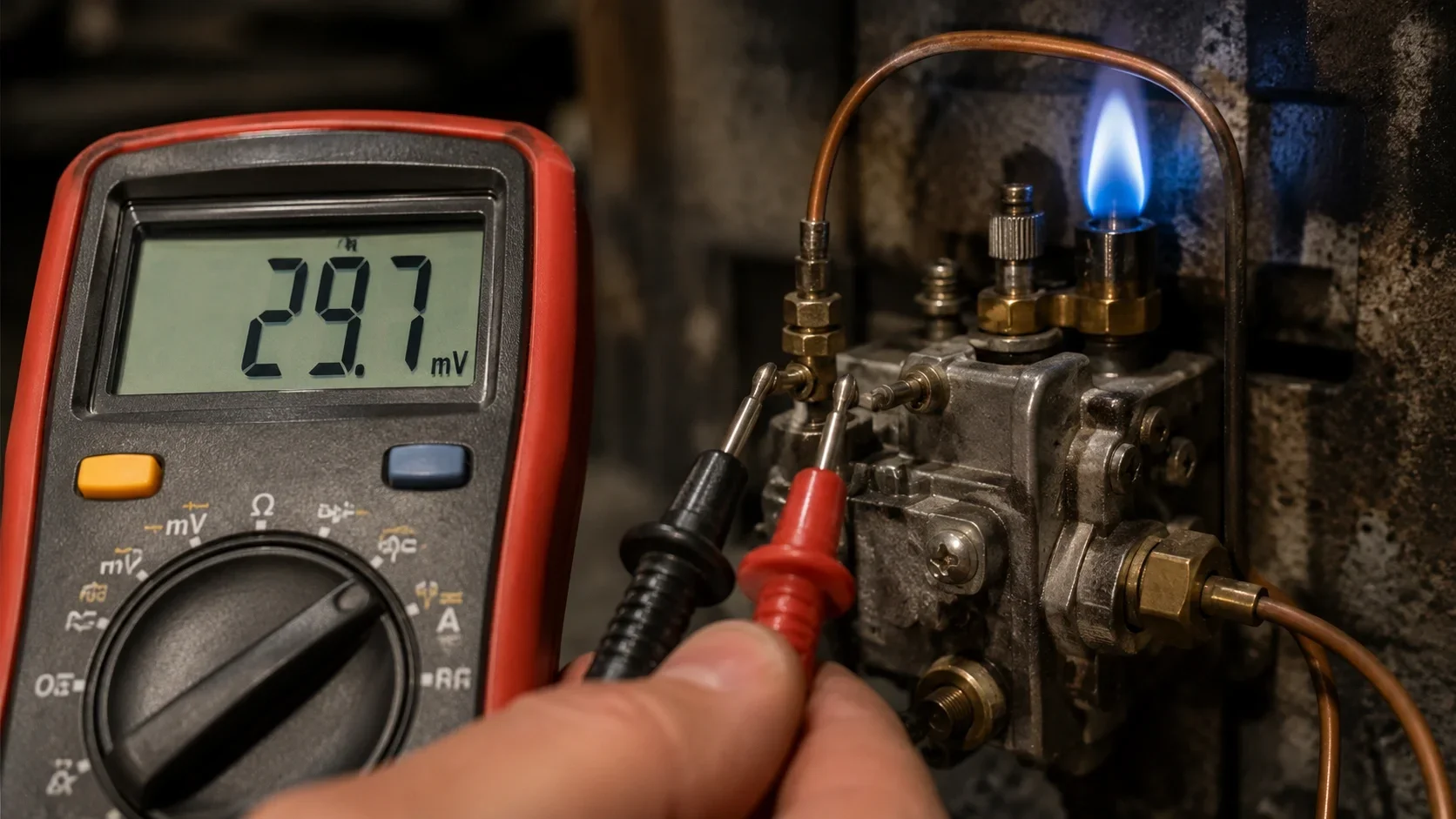
- Bad Thermocouple: If the pilot lights but won't stay lit after holding the knob, the thermocouple is likely burned out. Replacement is an Entry-level component, making it an affordable DIY fix.
- Weak Thermopile: If the pilot stays lit but the main burner doesn't ignite when you flip the switch, the thermopile might not be generating enough voltage (typically needs 350-500 millivolts).
- Loose Connections: Sometimes the wiring between the thermopile and the gas valve simply corrodes or loosens over time. Tightening connections with a screwdriver can restore function instantly.
Step 4: Inspect the Main Burner and Gas Valve
If your pilot light is strong and the thermopile tests fine, the problem lies further down the line. The main burner may be obstructed, or the gas valve itself could be stuck. Over the summer, spiders or dust can nest inside the burner tubes, blocking gas flow. This is especially common in outdoor fireplaces but happens indoors too.
5 Clean the Burner Ports
Turn off the gas and remove the decorative logs or glass media carefully. Use a vacuum cleaner with a brush attachment to remove dust and debris from the burner. Inspect the tiny ports where the flames emerge; a pin or paperclip can clear blockages. If you notice any soot buildup on the logs or glass, it indicates incomplete combustion and poor air mixture.
6 Listen for the Gas Valve
When you turn the switch to "On," you should hear a faint "click" or "thump" from the gas valve. If you hear nothing, and the thermopile is good, the valve may be defective. Replacing a gas valve is complex and involves disconnecting gas lines, so this is a job for a certified professional. A replacement valve is typically a Mid-range to Premium component, plus labor.
Step 5: Check for Air in the Line and Draft Issues
If the fireplace hasn't been used in months, air can get trapped in the gas line. Purging the line requires holding the pilot button for an extended period (sometimes 2-3 minutes) to bleed out the air. Additionally, a cold chimney flue can create a reverse draft, blowing the pilot out or preventing ignition. Pre-warming the flue with a rolled-up lit newspaper (for wood-ready chimneys) can establish an upward draft before you turn on the gas.
When to Call a Professional Technician
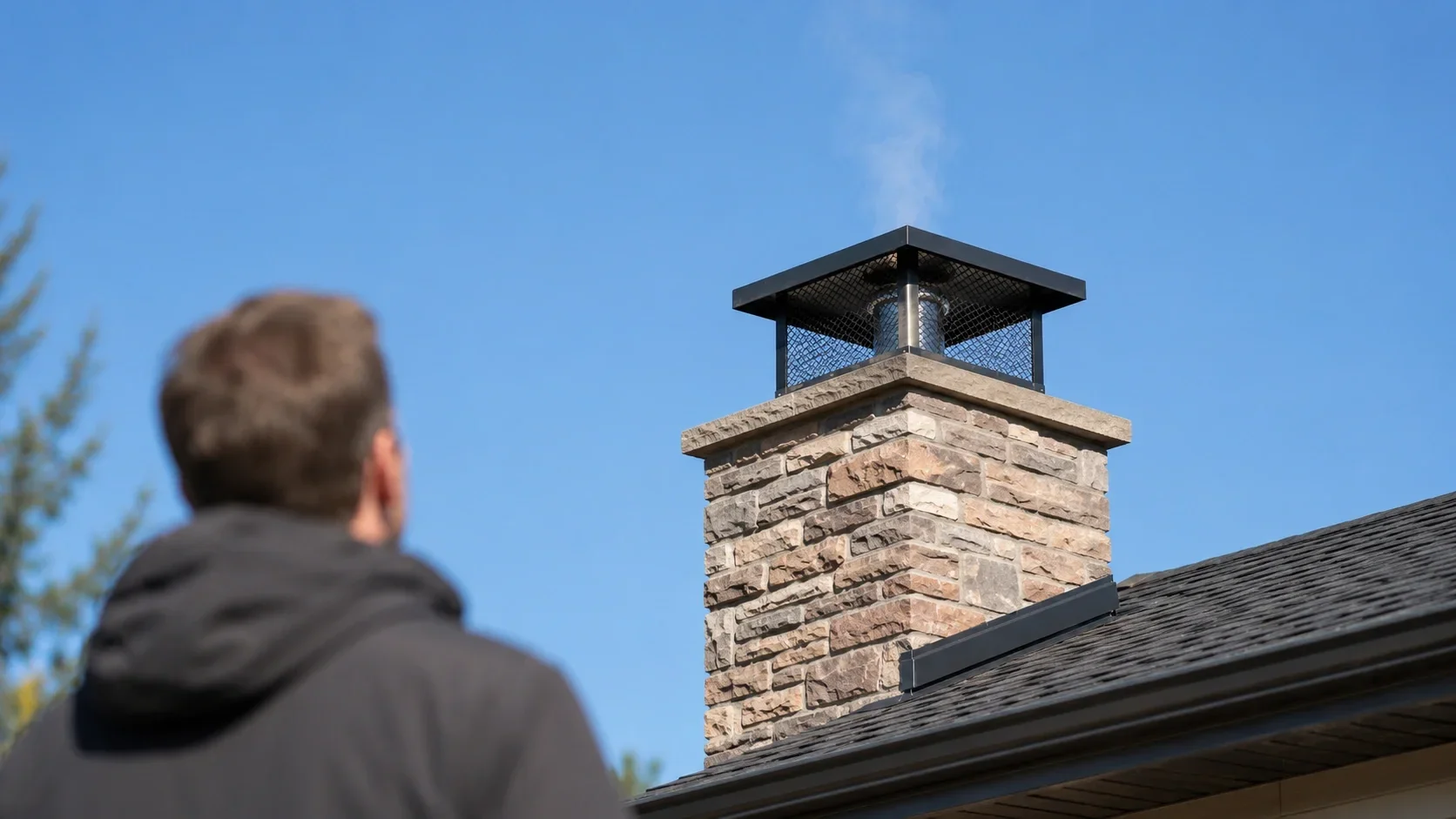
While many fixes are DIY-friendly, some situations demand expert help. If you've tried the steps above and still can't ignite the fireplace, or if you smell gas even when the unit is off, it's time to schedule a professional gas fireplace inspection. Complex issues like a cracked heat exchanger, faulty control board, or deep internal leaks are not safe for homeowner repair. Annual fireplace maintenance can prevent most of these issues before the heating season begins.
If the flame lights but is small and unimpressive, your problem might be different. Read our guide on fixing a weak flame on a gas fireplace for solutions to low burner output. And remember, whether you are looking at a vented vs. ventless unit, the ignition sequence fundamentals remain largely the same.
Still unsure about the diagnosis? Safety is paramount. Contact a licensed gas technician in your area. A diagnostic service call is an Entry-level to Mid-range investment, which is a small price for peace of mind and a warm home.