Fireplace vs Space Heater: Which Is Better for Your Home?
Comprehensive comparison of heating efficiency, costs, safety, and aesthetics to help you make the right choice for your heating needs
SEE COMPARISONQuick Answer: Fireplaces excel in ambiance, aesthetics, and can add value to your home, while space heaters offer portability, lower upfront costs, and targeted heating. The best choice depends on your primary heating goals, budget, and living situation.
Understanding the Basics
When it comes to heating your home, both fireplaces and space heaters serve the fundamental purpose of keeping you warm, but they do so in dramatically different ways. A fireplace is typically a built-in or freestanding heating appliance that becomes a permanent fixture in your home, while a space heater is a portable device that can be moved from room to room as needed.
The distinction between these two heating options goes beyond mere functionality. Fireplaces—whether electric, gas, or wood-burning—often serve as focal points in home design, contributing to both the aesthetic appeal and perceived value of your property. Space heaters, on the other hand, are primarily utilitarian devices designed for supplemental heating without the architectural commitment.
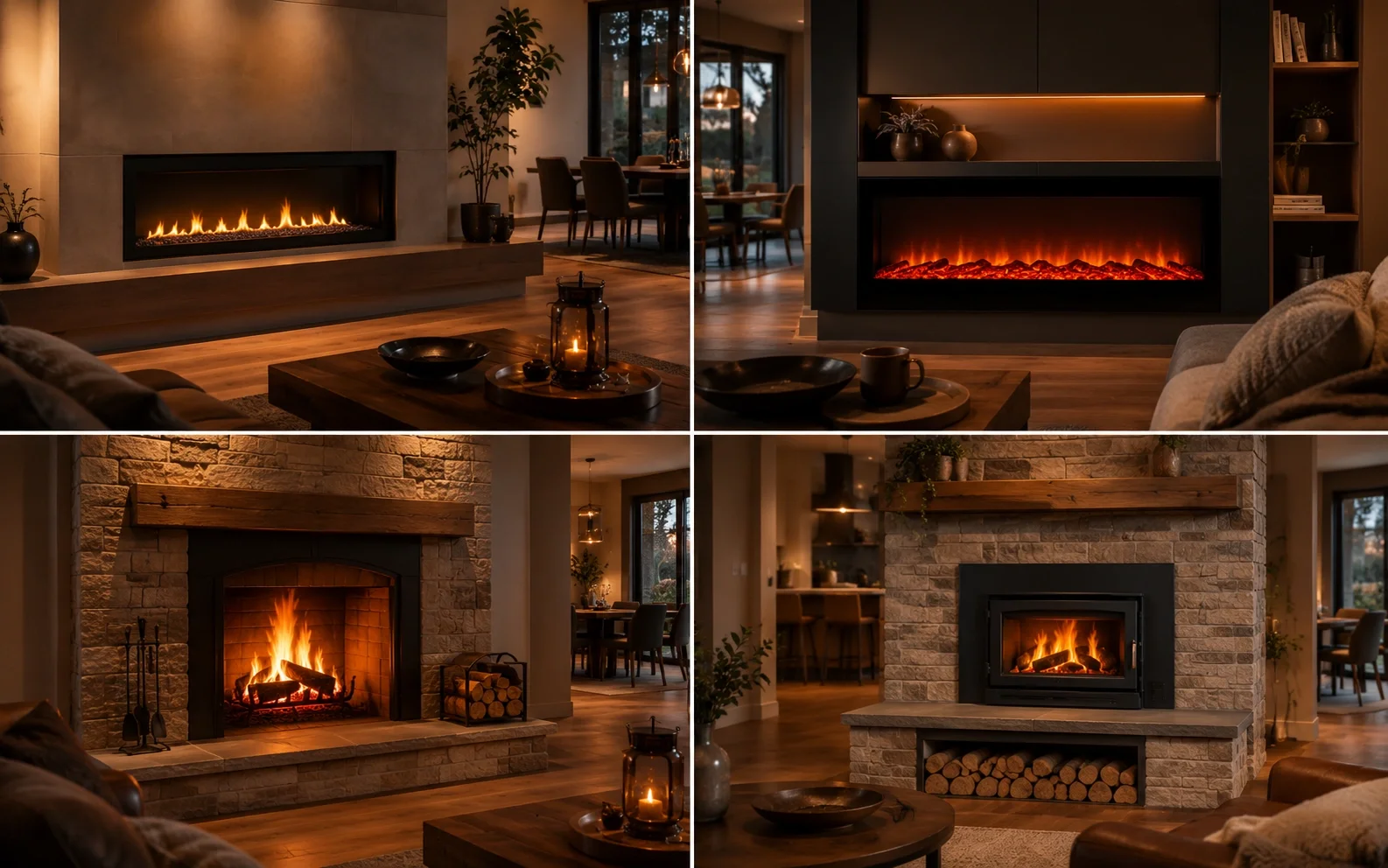
Different fireplace types offer varying levels of heating efficiency and aesthetic appeal
Heating Efficiency Comparison
When evaluating heating options, efficiency is a critical factor that directly impacts both your comfort and utility bills. Energy-efficient fireplaces can effectively heat significant portions of your home, though their efficiency varies dramatically based on type and installation.
Fireplace Heating Efficiency
Traditional wood-burning fireplaces are notoriously inefficient, with only 10-30% of the heat actually entering your room. The rest escapes through the chimney. However, modern alternatives have dramatically improved this equation:
- Gas fireplaces: 70-90% efficiency when properly installed
- Electric fireplaces: 99% efficiency (all electricity converts to heat)
- Wood-burning inserts: 65-80% efficiency compared to open fireplaces
- Ethanol fireplaces: Approximately 85% efficiency
The BTU output of fireplaces typically ranges from 20,000 to 60,000 BTUs for gas models, allowing them to heat areas from 400 to 1,200 square feet depending on insulation and ceiling height.
Space Heater Heating Efficiency
Space heaters are generally more straightforward in their efficiency metrics. Most electric space heaters operate at near-100% efficiency, converting all electrical energy into heat. However, their lower wattage (typically 1,500 watts or about 5,100 BTUs) means they can only effectively heat small areas of 150-300 square feet.
Some advanced space heaters use infrared heating technology, which warms objects directly rather than heating the air, potentially creating a more comfortable feeling of warmth at lower energy costs. However, their limited heating radius makes them better suited for personal comfort rather than whole-room heating.

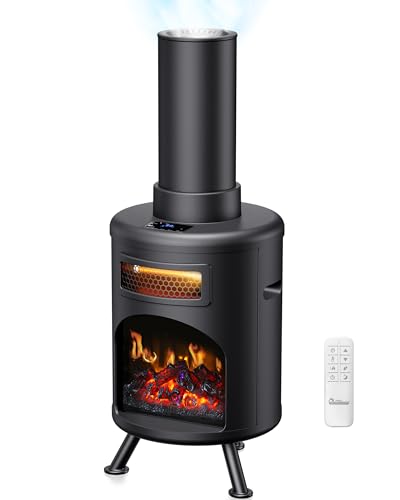
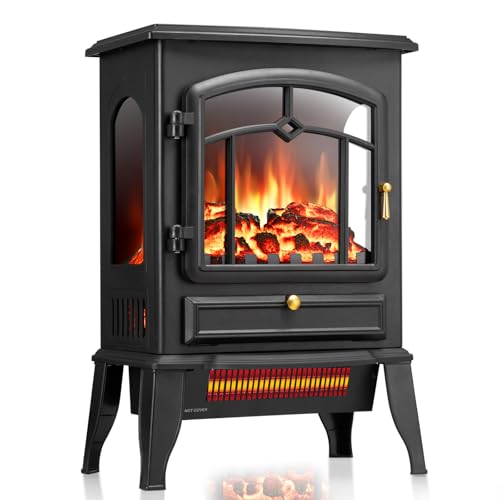
Space heaters come in various designs, each with specific heating capabilities
Detailed Comparison Table
| Feature | Fireplace | Space Heater |
|---|---|---|
| Heating Capacity | 400-1,200+ sq ft (depending on type) | 150-300 sq ft typically |
| Efficiency | 70-99% (varies by type) | 95-100% |
| Installation | Complex; often requires professional installation | Simple; plug and play |
| Portability | Fixed location | Highly portable |
| Aesthetic Appeal | High; serves as focal point | Low; primarily functional |
| Home Value Impact | Positive; can increase home value by $1,000-$5,000 | Minimal to none |
| Operating Cost | $0.15-$0.50 per hour (varies by fuel type) | $0.15-$0.20 per hour (electric models) |
| Initial Cost | $800-$5,000+ (including installation) | $30-$300 |
| Maintenance | Regular cleaning, inspections, potential repairs | Minimal; occasional dusting |
| Safety Concerns | Fire hazard, carbon monoxide (gas/wood), burns | Fire hazard, burns, tip-over risk |
| Noise Level | Quiet to moderate (depending on type) | Quiet to loud (fan-forced models) |
Pros and Cons
Fireplace Advantages
- Significant aesthetic value and home appeal
- Can increase property value
- Creates a cozy, inviting atmosphere
- Wide variety of styles to match any decor
- Higher heating capacity for larger spaces
- Can serve as emergency heat during power outages (gas/wood)
- Long-term durability with proper maintenance
- Some models offer realistic flame effects without heat for year-round enjoyment
Fireplace Disadvantages
- Higher initial investment and installation costs
- Permanent fixture with no portability
- Requires professional installation for most types
- Regular maintenance requirements
- Potential safety hazards (especially with gas and wood)
- May require chimney/venting system
- Less efficient in poorly insulated homes
- Heat distribution can be uneven in large spaces
Space Heater Advantages
- Low initial cost and no installation required
- Highly portable between rooms
- Targeted heating for immediate personal comfort
- Minimal maintenance requirements
- Energy-efficient for small spaces
- Available in various sizes and heating technologies
- No permanent changes to home structure
- Easy to store when not in use
Space Heater Disadvantages
- Limited heating capacity for larger spaces
- No aesthetic value or home improvement benefits
- Higher operating costs for continuous use
- Can be a fire hazard if used improperly
- Often noisy (fan-forced models)
- Does not add to home value
- Typically requires constant monitoring for safety
- May trip circuits if used with other high-wattage appliances
Cost Analysis
Financial Comparison: Fireplace vs Space Heater
Fireplace Costs
- Electric fireplace: $800-$2,500 (installed)
- Gas fireplace: $2,000-$5,000+ (installed)
- Wood-burning fireplace: $1,500-$5,000+ (installed)
- Operating cost: $0.15-$0.50 per hour
- Annual maintenance: $100-$300
- Expected lifespan: 15-30 years
Space Heater Costs
- Basic models: $30-$80
- Mid-range models: $80-$150
- Premium models: $150-$300
- Operating cost: $0.15-$0.20 per hour
- Annual maintenance: Minimal ($0-$20)
- Expected lifespan: 5-10 years
When considering running costs, it's important to factor in your heating patterns. A space heater might cost less per hour to operate, but if you're using it continuously throughout the day in multiple rooms, the costs can quickly add up. A properly sized fireplace can heat a larger area more efficiently, potentially reducing overall heating costs despite the higher initial investment.
Additionally, a fireplace can offer long-term savings by allowing you to lower your central heating thermostat and use zone heating in the rooms you occupy most frequently. This "supplemental heating" approach can reduce your overall energy consumption by 20-40% according to the U.S. Department of Energy.
Safety Considerations
Safety is a paramount concern with any heating appliance. When comparing safety aspects of fireplaces and space heaters, several key factors emerge:
Fireplace Safety
- Gas and wood fireplaces: Produce carbon monoxide, requiring proper ventilation and CO detectors
- Hot surfaces: Glass doors and metal surrounds can reach extreme temperatures
- Ember hazards: Wood-burning units can produce escaping embers
- Chimney fires: Creosote buildup in wood-burning fireplaces can cause chimney fires
- Professional installation: Reduces risk of gas leaks and improper venting
Space Heater Safety
- Tip-over hazards: Can easily be knocked over, especially by pets or children
- Fire risks: Placing too close to flammable materials is a common cause of home fires
- Electrical issues: Can overload circuits, especially in older homes
- Burn risks: External surfaces can become extremely hot
- Lack of supervision: Should never be left unattended while operating

Both heating options require proper safety precautions to prevent accidents
Electric fireplaces represent the safest option among fireplaces, as they produce no emissions and have cool-to-touch glass fronts in many models. Among space heaters, those with tip-over switches, overheat protection, and ceramic heating elements tend to be safer options.
Aesthetics and Home Value
One of the most significant differentiators between fireplaces and space heaters is their impact on home aesthetics and value. A well-designed fireplace can transform a room, creating a focal point that enhances the entire space. Whether you prefer a traditional look with ornate mantels and surrounds or a minimalist design with clean lines, fireplaces offer versatility that space heaters simply cannot match.
From a real estate perspective, fireplaces consistently rank as one of the most desired features in homebuyers. According to the National Association of Realtors, a fireplace can increase home value by $1,000 to $5,000, with some high-end installations yielding even greater returns. Fireplaces also help homes sell faster, with some studies showing a 12% increase in selling speed for homes with fireplaces compared to those without.
Space heaters, conversely, offer no aesthetic benefits and may even detract from a room's appearance when in use. They provide no lasting value to your home and must be stored when not in operation, making them purely functional devices with no design considerations.
Best Use Scenarios
Choose a Fireplace If You:
• Own your home and plan to stay for several years
• Value aesthetics and home improvement
• Need to heat larger spaces consistently
• Want to increase property value
• Prefer a permanent heating solution
• Enjoy the ambiance of a fire year-round
Choose a Space Heater If You:
• Rent your home or need a temporary solution
• Have a limited budget for heating
• Only need to heat small, specific areas
• Move frequently and need portability
• Want supplemental heat in addition to central heating
• Need immediate, targeted warmth in different rooms
Consider Both If You:
• Have a fireplace but need extra heat in distant rooms
• Want fireplace ambiance but need portable heating for occasional use
• Are remodeling in stages, starting with a fireplace now
• Need a backup heating method during fireplace maintenance
Making Your Decision
When deciding between a fireplace and space heater, consider these key questions:
- What's your primary goal? If aesthetics and home value are important, a fireplace wins. If pure functionality and portability are your priorities, a space heater is likely sufficient.
- What's your budget? Consider both upfront costs and long-term operating expenses. A fireplace requires more initial investment but may offer better value over time.
- How long will you be in your home? Fireplaces are better long-term investments, while space heaters make more sense for renters or those planning to move soon.
- What size space do you need to heat? For whole rooms or open floor plans, fireplaces generally outperform. For small offices or personal spaces, space heaters are sufficient.
- What's your home's infrastructure? Do you have gas lines, proper electrical circuits, or chimney access? These factors may influence which option is feasible.
Our Recommendation
For most homeowners looking for a permanent heating solution that adds value and beauty to their home, we recommend investing in a quality electric fireplace for its combination of safety, efficiency, and ease of installation. For those on a tight budget or in rental situations, a high-quality ceramic space heater with safety features provides excellent targeted heating without the commitment.
Ultimately, the best choice depends on your specific circumstances, but understanding these key differences will help you make an informed decision that meets both your heating needs and lifestyle preferences.