
How to Clean Fireplace Brick & Stone
Restore the original beauty of your brick or stone fireplace with proven cleaning methods, DIY solutions, and professional techniques that remove years of soot, creosote, and smoke stains
GET STARTEDWhy This Guide Matters: Over time, even the most beautiful brick fireplace or stone fireplace surround develops layers of soot, creosote, and smoke residue that dull its appearance and can even damage the surface. Whether you're preparing for a fireplace makeover or simply maintaining your current setup, this guide walks you through every cleaning method — from gentle DIY solutions for light stains to heavy-duty techniques for decades-old buildup.
Recommended Brick & Stone Fireplace Cleaners
⚠️ AFFILIATE DISCLOSURE: This website contains affiliate links. As an Amazon Associate, we earn from qualifying purchases. If you make a purchase through these links, we may receive a small commission at no additional cost to you. Read our full affiliate policy.

Quick N Brite Fireplace Gel Cleaner with Scrub Brush for Brick, Stone, Rock, Tile, and Marble, Nonabrasive Fireplace Cleaner, Made in the USA, 16 oz
Check price on Amazon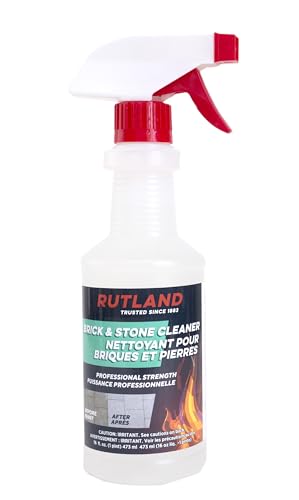
Rutland Brick and Stone Cleaner for Fireplace, Fire Brick, Terracotta, Marble & Porous Masonry - Non-Abrasive Industrial Emulsifier Cleaning Solution for Soot - Made in USA, 16 oz
Check price on Amazon
Fireplace Soot Remover with Scrub Brush Kit, Brick, Stone & Glass Cleaner | TACKLE FIREPLACE SOOT & RESIDUE – Helps Remove Smoke Marks, Ash Buildup And Grime From Brick, Stone & Glass Surfaces
Check price on Amazon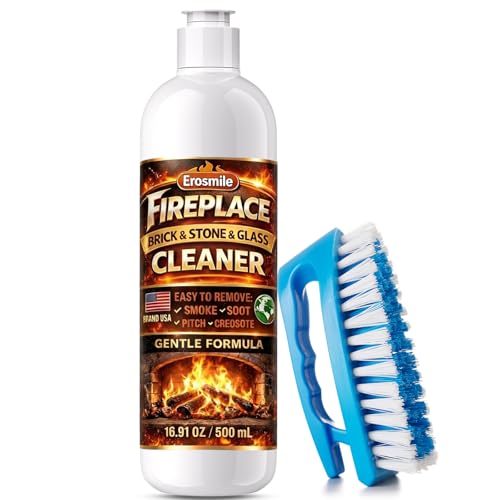
Fireplace Soot Remover with Scrub Brush Kit, Brick, Stone & Glass Cleaner | TACKLE FIREPLACE SOOT & RESIDUE – Helps Remove Smoke Marks, Ash Buildup And Grime From Brick, Stone & Glass Surfaces
Check price on Amazon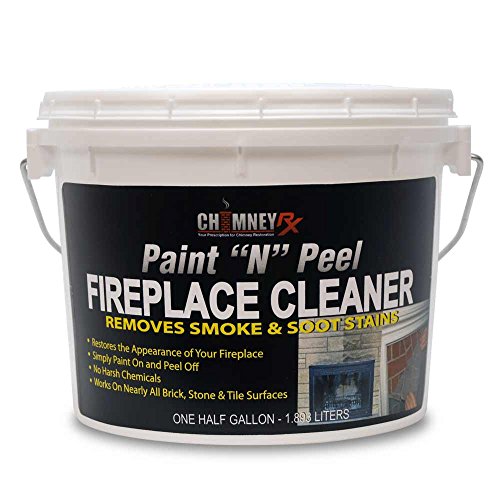
CHIMNEYRX 300467 Paint N Peel Fireplace Cleaner – Removes Smoke & Soot Stains from Brick, Tile, & Stone Surfaces Around Fireplace Fronts & Hearths – Water-Based, & Easy Peel-Off, 1/2 Gallon
Check price on Amazon
Zep Home Pro 2-in-1 Natural Stone Cleaner & Protectant. 24 Fl. Oz. (Pack of 1)
Check price on Amazon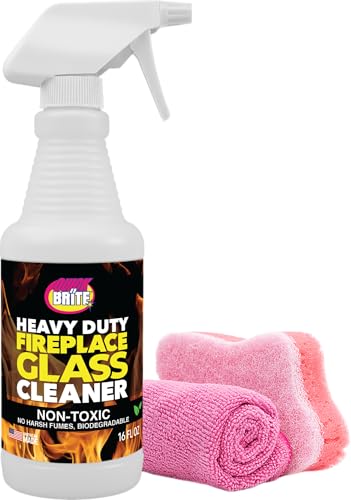
Quick N Brite Fireplace Glass Cleaner Kit with Cloth and Sponge, Removes Soot, Smoke, Creosote, and more, 16 oz, 1-Pack
Check price on Amazon
Quick 'n Brite Fireplace Cleaning Kit – Includes 16 oz Fireplace Glass Cleaner, 32 oz Brick & Stone Gel Fireplace Cleaner, Scrub Brush, Sponge and Microfiber Towel
Check price on AmazonUnderstanding Fireplace Stains on Brick & Stone
Before you start scrubbing, it's important to understand what you're dealing with. Different types of stains require different cleaning approaches. Using the wrong method can make the problem worse or even permanently damage your fireplace surface.

Surface Soot
Light, powdery black residue from burning wood or gas. Sits on the surface and is the easiest to remove. Common on the fireplace hearth and surround after regular use.
Embedded Creosote
Dark, tar-like substance that penetrates deep into brick and stone pores. Results from incomplete combustion. Extremely difficult to remove and can create a fire hazard if left untreated. Learn more about creosote buildup prevention.
Smoke Stains
Yellowish-brown discoloration caused by smoke rising along the face of the fireplace. Often appears above the opening on the fireplace surround and can etch into porous surfaces over time.
Carbon Blackening
Deep black stains that have bonded with the masonry over years of use. Most common on interior firebox walls. These stains are often permanent without professional-grade cleaners or sandblasting.
Efflorescence
White, powdery mineral deposits that appear on brick and stone when moisture moves through the masonry. Not a soot stain but often mistaken for one. Requires completely different treatment — acid-based removers rather than degreasers.
Mortar Stains
Hazy white or gray residue from mortar that was not properly cleaned during construction or fireplace remodeling. Can be removed with muriatic acid but requires extreme caution.
⚠️ Important Safety Note: Always test any cleaning solution on a small, hidden area of your brick or stone before applying it to the entire surface. Some natural stones — especially sandstone, limestone, and marble — are acid-sensitive and can be permanently etched by common cleaners like vinegar or TSP.
Essential Tools & Materials
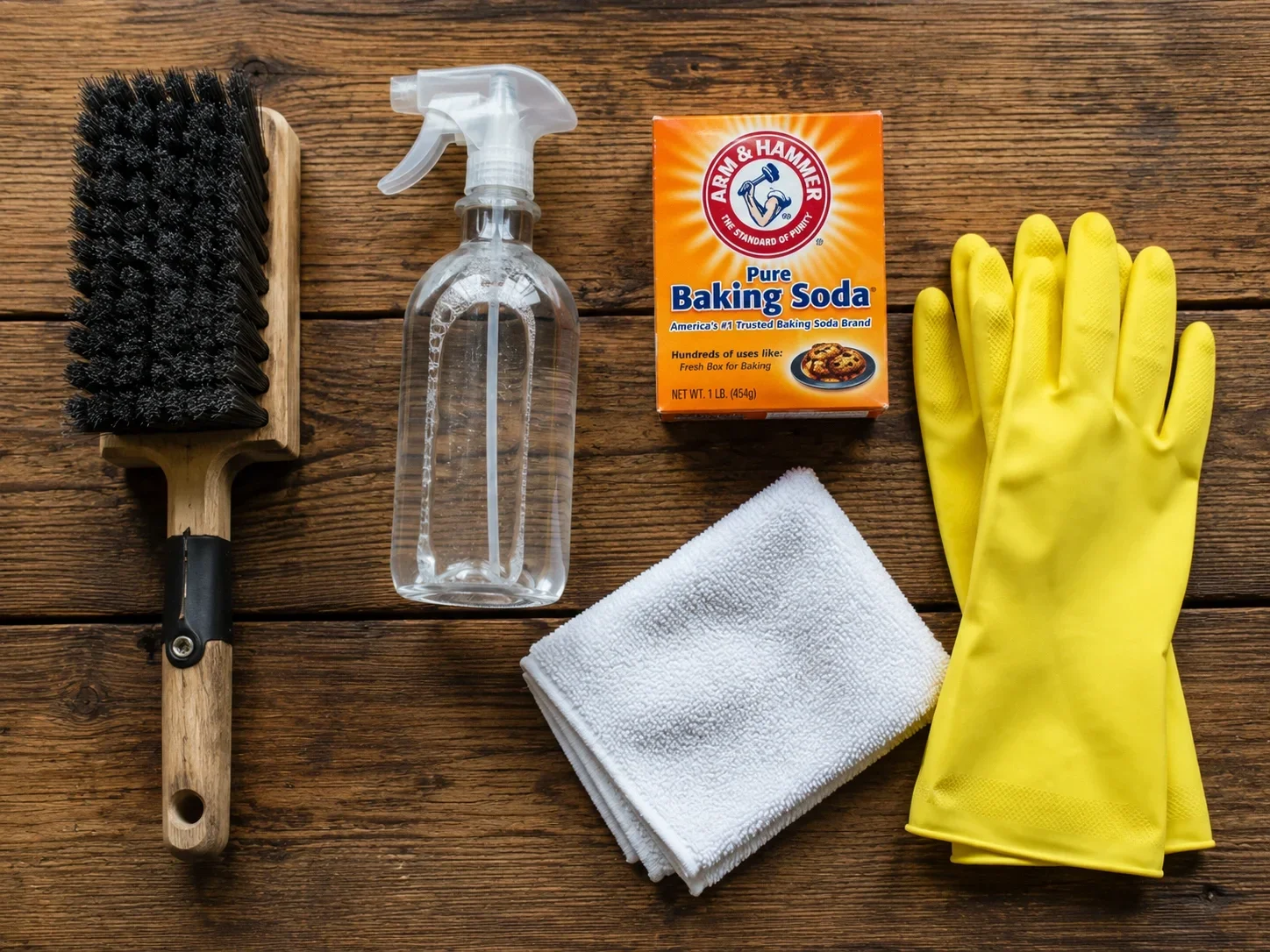
Gathering the right supplies before you start will save you time and frustration. Below is a comprehensive list organized by the type of cleaning you plan to do. For routine fireplace maintenance, you'll only need the basic supplies.
| Tool / Material | Purpose | Investment Tier |
|---|---|---|
| Stiff-bristled nylon brush | Scrubbing soot from brick & stone | Entry-level |
| Wire brush (brass or stainless) | Heavy-duty mortar & creosote removal | Entry-level |
| Brick scrub brush with handle | Leverage for tough stains | Entry-level |
| Spray bottles | Applying cleaning solutions | Entry-level |
| Drop cloths / plastic sheeting | Protecting floors and furniture | Entry-level |
| Rubber gloves & safety goggles | Skin and eye protection | Entry-level |
| Baking soda | Mild abrasive paste for DIY cleaner | Entry-level |
| White vinegar | Acid-based DIY cleaner (not for all stone) | Entry-level |
| Dish soap (degreasing) | Breaking down soot oils | Entry-level |
| TSP (Trisodium Phosphate) | Heavy-duty degreasing | Entry-level |
| Commercial brick/stone cleaner | Formulated for tough fireplace stains | Entry-level to mid-range |
| Shop vacuum with HEPA filter | Dry soot and debris removal | Mid-range |
💡 Pro Tip: Invest in a shop vacuum with a HEPA filter if you clean your fireplace regularly. Standard household vacuums can blow fine soot particles back into the air. A HEPA-filtered shop vac captures those particles safely and makes prep work much faster — especially useful before cleaning the fireplace glass as well.
How to Clean a Brick Fireplace Step by Step
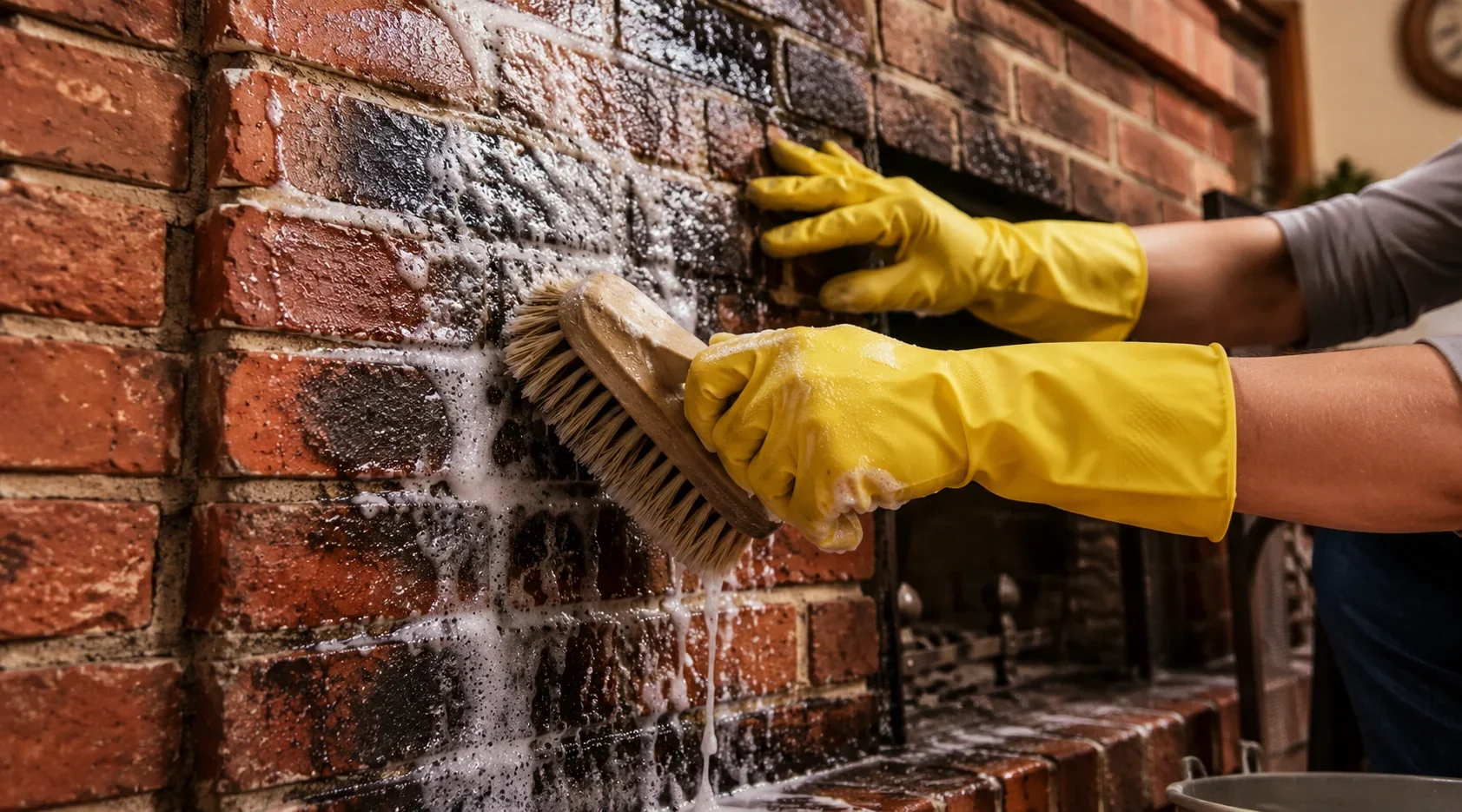
Brick is one of the most common fireplace materials in American homes, found everywhere from traditional fireplace designs to rustic and modern settings. Its porous surface readily absorbs soot and creosote, making regular cleaning essential. Here's the complete process.
Preparation
- Clear the area. Remove all fireplace decor, grates, tools, and accessories. Lay down drop cloths or plastic sheeting to protect floors and surrounding furniture from drips and splatter.
- Remove loose soot and ash. Use a shop vacuum with a brush attachment or a dry stiff brush to remove as much loose soot, ash, and debris as possible from the brick surface. Work from the top down to avoid re-depositing soot on already-cleaned areas.
- Protect yourself. Put on rubber gloves, safety goggles, and an N95 mask. Soot contains fine particles that are harmful to inhale, and cleaning solutions can irritate skin and eyes.
- Test your cleaner. Apply your chosen cleaning solution to a small, inconspicuous area of the brick. Wait 10 minutes, then rinse and check for discoloration or damage. If the brick looks fine, proceed with the full cleaning.
Cleaning Process
- Apply cleaning solution. Starting from the top of the fireplace surround, spray or sponge your cleaning solution onto the brick. Work in sections of about 3–4 square feet so the solution doesn't dry before you can scrub it.
- Let it sit. Allow the cleaner to penetrate the soot for 5–15 minutes depending on severity. For a baking soda paste, leave it on for 20–30 minutes to draw out the soot from the pores.
- Scrub thoroughly. Using a stiff-bristled nylon brush, scrub the brick in small circular motions. Apply firm pressure but avoid pressing so hard that you damage the mortar joints. For stubborn stains, use a brass wire brush with care.
- Rinse with clean water. Use a spray bottle filled with clean water or a damp sponge to rinse away the loosened soot and cleaning residue. Change your rinse water frequently — rinsing with dirty water will redeposit soot.
- Repeat if necessary. Heavy stains may require 2–3 applications. For deeply embedded creosote, consider a commercial creosote remover designed for masonry.
- Dry the surface. Wipe the brick with clean, dry microfiber cloths or allow it to air dry. Good ventilation will speed up drying and prevent moisture issues.
💡 Pro Tip: If you're planning to paint your brick fireplace, cleaning is a critical first step. Paint will not adhere properly to soot-covered brick, and any residue left behind will eventually bleed through the paint. Clean thoroughly, let the brick dry for 48–72 hours, then apply a stain-blocking primer before painting.
How to Clean a Stone Fireplace Step by Step
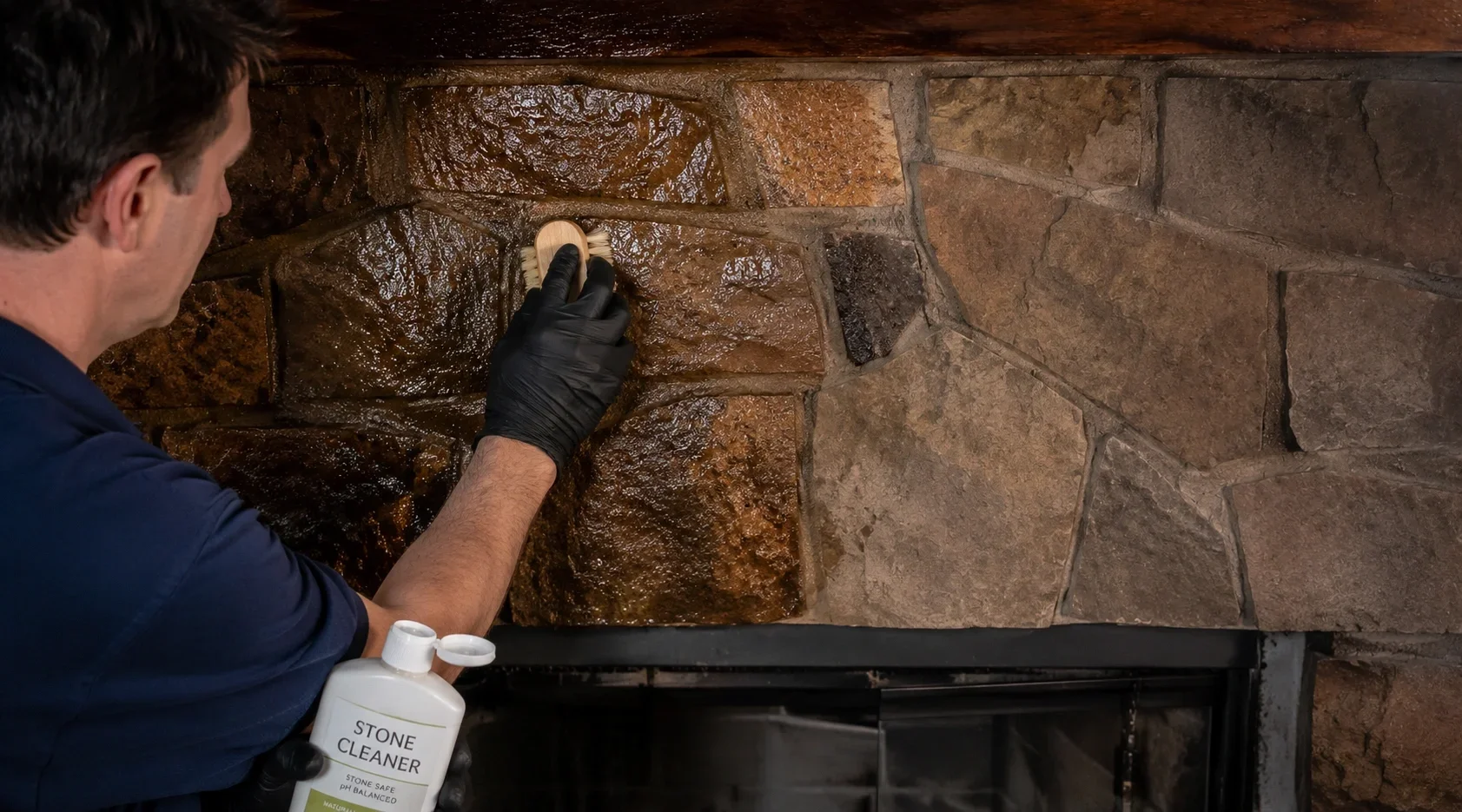
Natural stone fireplaces — whether fieldstone, soapstone, sandstone, granite, or slate — require more delicate handling than brick. Stone varies dramatically in porosity and chemical sensitivity, so choosing the right cleaner is critical to avoid etching or discoloration.
Know Your Stone First
Before cleaning, identify your stone type. Here's a quick reference for common fireplace stones:
Granite & Slate
Dense and non-porous. Can handle stronger cleaners including TSP and mild acids. Relatively easy to clean. Safe for most DIY methods.
Sandstone & Limestone
Very porous and acid-sensitive. Never use vinegar, TSP, or muriatic acid. Use pH-neutral stone cleaners only. Extra rinsing required.
Fieldstone & River Rock
Varied composition — some stones in the surround may be harder than others. Test cleaners on multiple stones. Use the gentlest effective method.
Soapstone
Dense but soft. Avoid abrasive scrubbing that can scratch. Mineral oil can be applied after cleaning to restore the stone's natural dark finish.
Stone Cleaning Process
- Dry brush first. Use a soft- to medium-bristle brush to remove all loose soot and dust. Stone surfaces are often irregular, so pay extra attention to crevices and mortar joints where soot accumulates.
- Apply a pH-neutral stone cleaner. For most natural stones, start with a pH-neutral cleaner specifically formulated for natural stone. Spray evenly across the surface, working in small sections.
- Let the cleaner dwell. Allow 5–10 minutes of dwell time. Do not let the cleaner dry on the stone — if it starts to dry, mist it lightly with water.
- Gently scrub with a soft brush. Unlike brick, stone requires a gentler touch. Use a soft-bristle nylon brush or a non-scratch scrub pad. Work in circular motions, following the natural texture of the stone.
- Rinse thoroughly. This is the most important step for stone. Residual cleaner can leave streaks or cause discoloration over time. Rinse with clean water at least twice, changing your rinse cloth between passes.
- Address stubborn stains individually. For isolated dark stains, apply a poultice paste (baking soda and water for gentle stones; commercial poultice for harder stones) directly to the stain, cover with plastic wrap, and leave for 24–48 hours. The paste will draw the stain out of the stone pores.
- Apply stone sealer (optional). After cleaning and drying, consider applying a penetrating stone sealer to protect the surface from future staining. This is especially recommended for porous stones like sandstone.
⚠️ Never Do This: Do not use a pressure washer on indoor stone fireplaces. The high-pressure water can damage mortar joints, force water behind the stone, and cause structural damage. If your outdoor fireplace needs pressure washing, use the lowest setting and maintain at least 12 inches of distance.
DIY Fireplace Brick & Stone Cleaning Solutions
If you prefer to avoid commercial chemical cleaners, several effective DIY solutions can be made with common household ingredients. These are especially useful for light to moderate soot stains and are significantly more affordable.
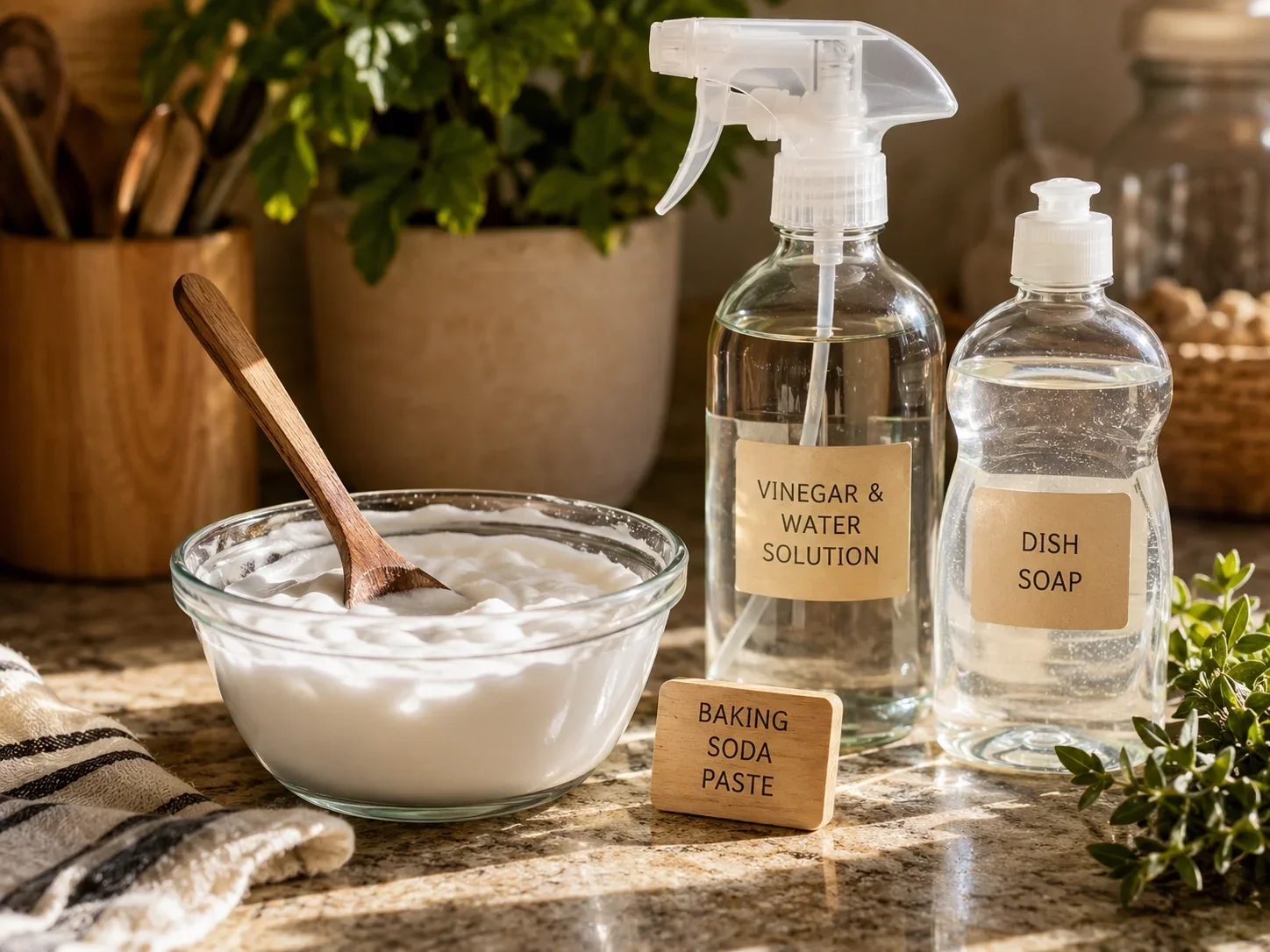
1. Baking Soda Paste (Safest for All Surfaces)
Best for: Light to moderate soot on brick and all stone types
- Mix ½ cup baking soda with 3–4 tablespoons warm water to form a thick paste
- Apply paste directly to soot-stained areas using a sponge or brush
- Let sit for 20–30 minutes to draw out soot from pores
- Scrub with a nylon brush, then rinse thoroughly with clean water
Investment Tier: Entry-level
2. Vinegar & Water Solution (Brick & Hard Stone Only)
Best for: Moderate soot and smoke stains on brick, granite, and slate
- Mix equal parts white vinegar and warm water in a spray bottle
- Add a few drops of dish soap for extra degreasing power
- Spray onto the surface and let sit for 5–10 minutes
- Scrub with a stiff brush and rinse thoroughly
Investment Tier: Entry-level
⚠️ Do NOT use on sandstone, limestone, or marble — the acid will etch the surface.
3. Dish Soap & Warm Water (Gentle Maintenance Clean)
Best for: Routine cleaning after every 5–10 uses
- Add 2–3 tablespoons of degreasing dish soap to a gallon of warm water
- Dip a stiff brush into the solution and scrub the surface
- Rinse with clean water and dry with a microfiber cloth
Investment Tier: Entry-level
4. TSP Solution (Heavy-Duty Degreasing)
Best for: Heavy soot, creosote, and smoke stains on brick only
- Dissolve ¼ cup TSP (trisodium phosphate) in 1 gallon of warm water
- Apply with a sponge, scrub thoroughly, and rinse multiple times
- Wear full protection: gloves, goggles, long sleeves
Investment Tier: Entry-level
⚠️ TSP is a strong chemical. Ensure excellent ventilation. Not safe for natural stone.
5. Cream of Tartar Paste (Gentle Whitening)
Best for: Light stains on light-colored brick and stone
- Mix cream of tartar with a small amount of water to form a paste
- Apply to stained areas and let dry completely
- Brush off the dried paste and rinse the surface
Investment Tier: Entry-level
How to Clean Fireplace Mortar Joints
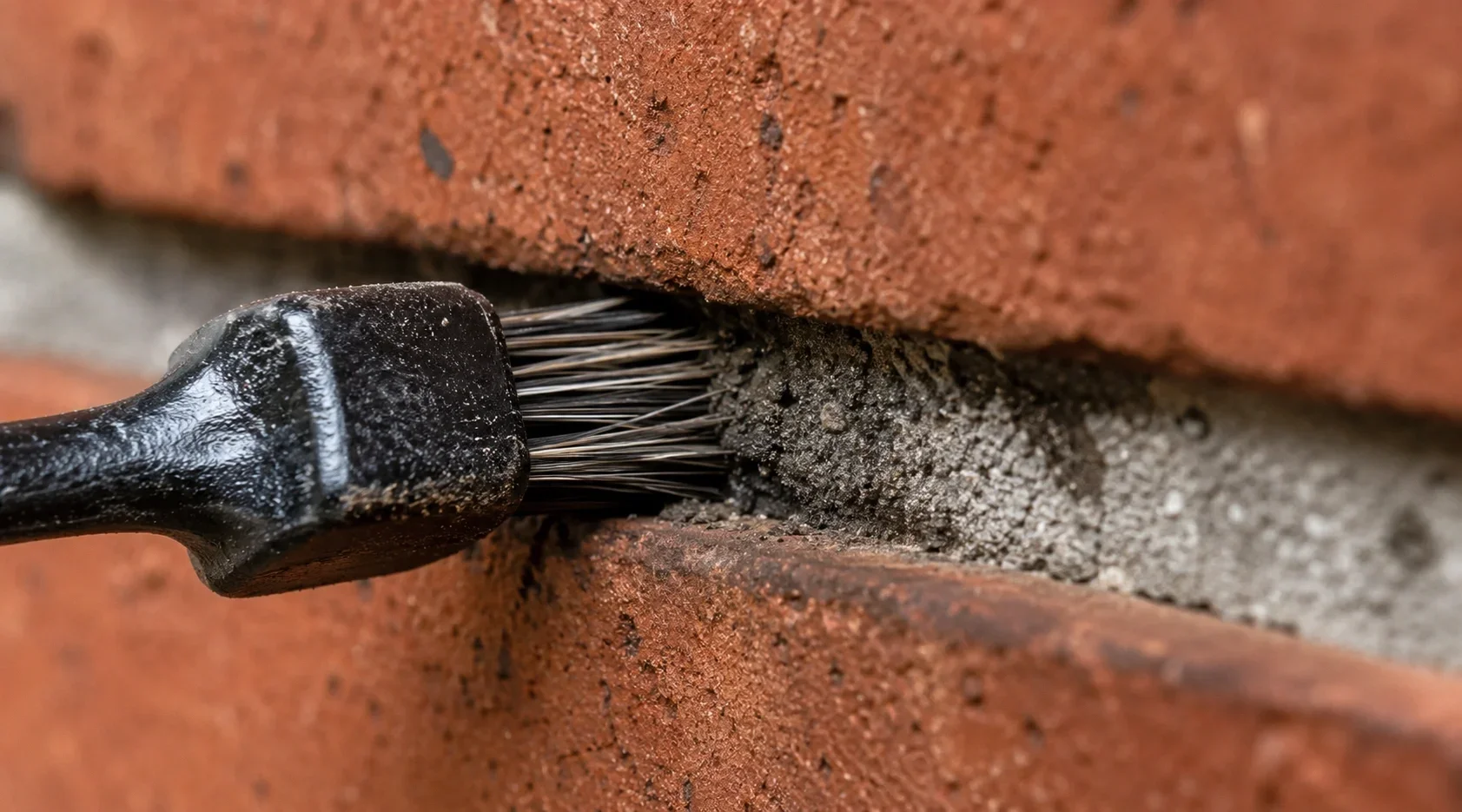
Mortar joints — the lines of mortar between bricks and stones — are often the most stubborn areas to clean. Their recessed position and porous composition make them magnets for soot and creosote. If left uncleaned, dirty mortar joints can make an otherwise clean fireplace look dingy.
Step-by-Step Mortar Cleaning
- Apply cleaning solution to joints only. Use a small brush or an old toothbrush to apply your cleaning solution directly into the mortar joints. This prevents wasting cleaner on already-clean brick or stone faces.
- Let it penetrate. Allow 10–15 minutes of dwell time. Mortar is highly porous and needs extra time to absorb and break down embedded soot.
- Scrub with a mortar brush or old toothbrush. Use a small, stiff-bristled brush that fits into the joints. Work along each joint line in a back-and-forth motion. For deep joints, a wire brush specifically designed for masonry joints provides better leverage.
- Rinse carefully. Use a spray bottle to direct clean water into the joints. Avoid soaking the mortar — excessive water can weaken old mortar over time. A light mist is sufficient.
- Inspect for damage. While cleaning, check for cracked, crumbling, or missing mortar. Damaged mortar joints should be repointed by a professional. Loose mortar allows moisture intrusion and can compromise the structure of your fireplace surround.
⚠️ Mortar Caution: If your mortar is old and crumbly, aggressive scrubbing can cause further damage. In this case, use only gentle cleaning solutions and minimal pressure. Consider having the mortar repointed before deep cleaning — this is a common step in DIY fireplace makeovers.
Commercial Cleaners vs DIY Solutions
Choosing between commercial products and homemade cleaners depends on the severity of your stains, your stone type, and your budget. Here's an honest comparison to help you decide.
DIY Baking Soda Paste
Entry-level
Best for: Light soot
Safe for: All surfaces including delicate stone
Effort level: Moderate — requires paste application and dwell time
Limitation: Ineffective against heavy creosote or decades-old stains
DIY Vinegar Solution
Entry-level
Best for: Moderate soot on brick
Safe for: Brick, granite, slate only
Effort level: Low to moderate
Limitation: Cannot be used on acid-sensitive stones; odor lingers
Commercial Brick Cleaner
Entry-level to mid-range
Best for: Moderate to heavy stains
Safe for: Brick and masonry (check label for stone compatibility)
Effort level: Low — formulated for fast results
Advantage: Breaks down creosote that DIY methods cannot
Commercial Stone Cleaner
Mid-range
Best for: Natural stone fireplaces
Safe for: pH-neutral formulas safe for all stone types
Effort level: Low
Advantage: Specifically formulated to clean without etching; often includes sealer
TSP (Heavy-Duty)
Entry-level
Best for: Severe soot and creosote on brick
Safe for: Brick only — NOT for stone
Effort level: High — requires full protective gear and ventilation
Limitation: Strong chemical; requires multiple rinses
Professional Cleaning Service
Mid-range to premium
Best for: Decades of buildup, delicate stone, or prep for painting
Safe for: All surfaces — professionals know how to handle each material
Effort level: None for you
Advantage: Guaranteed results; includes inspection for damage
💡 Our Recommendation: For most homeowners, start with the baking soda paste for light stains or a commercial pH-neutral stone cleaner for natural stone. If you're dealing with a wood-burning fireplace with heavy creosote, invest in a commercial masonry cleaner specifically designed for creosote removal — it will save you hours of scrubbing compared to DIY methods.
Deep Cleaning Techniques for Stubborn Stains
Sometimes standard cleaning methods aren't enough. If your fireplace has decades of accumulated soot, deeply embedded creosote, or smoke damage that has penetrated the masonry, these advanced techniques can help.
Poultice Method for Deep Stains
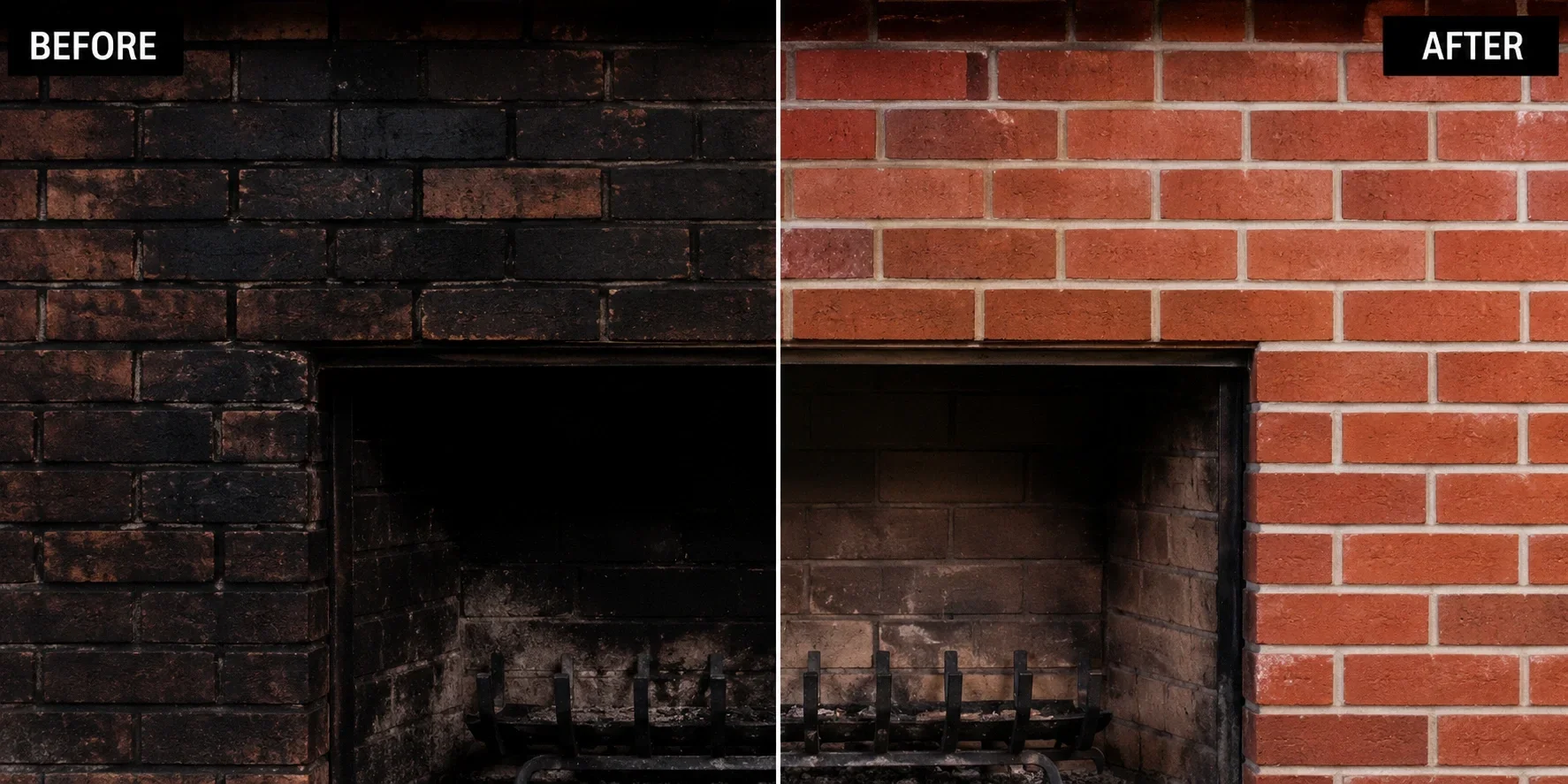
A poultice is a paste applied to a stain and left for an extended period (24–48 hours) to draw out deeply embedded contaminants from the pores of brick or stone. This method is particularly effective for isolated dark stains on natural stone fireplaces.
- Prepare the poultice. For brick: mix TSP with enough water to form a thick paste. For stone: mix baking soda with hydrogen peroxide to form a paste. Commercial poultice powders are also available in the mid-range tier.
- Apply a thick layer (¼ to ½ inch) directly over the stain, extending slightly beyond the stained area.
- Cover with plastic wrap and tape the edges to seal. This prevents the poultice from drying too quickly and keeps it in contact with the stain.
- Wait 24–48 hours. The poultice needs time to draw the stain out of the pores. For deep stains, 48 hours is recommended.
- Remove the poultice. Peel off the plastic wrap and scrape away the dried paste with a plastic putty knife. Do not use a metal scraper on stone.
- Rinse and inspect. Rinse the area thoroughly with clean water. If the stain is lighter but still visible, repeat the process. Multiple applications may be needed for very deep stains.
Chemical Stripping for Severe Creosote
When creosote has hardened and bonded with the masonry over many years, chemical strippers designed for masonry may be necessary. These products fall in the mid-range tier and dissolve the creosote bond, allowing it to be scrubbed away. Always work in a well-ventilated area and wear full protective gear including a respirator, not just a dust mask.
⚠️ Avoid Sandblasting: Some homeowners consider sandblasting or media blasting for heavily stained fireplaces. While effective at removing stains, sandblasting also removes the outer layer of brick and stone, permanently altering the surface texture and potentially damaging mortar joints. If you're considering this approach for your stucco fireplace or masonry, consult a professional first.
Preventing Future Soot & Stain Buildup
The best cleaning strategy is prevention. By adopting a few simple habits, you can dramatically reduce how often you need to deep clean your brick or stone fireplace.
- Wipe down the surround with a damp cloth after every 5–10 uses of your wood fireplace
- Apply a penetrating masonry sealer every 2–3 years to reduce soot absorption into brick and stone pores
- Burn only seasoned hardwood (oak, maple, ash) — avoid softwoods, wet wood, and treated lumber that produce more smoke and creosote
- Ensure proper draft by opening the damper fully before lighting fires and having the chimney cleaned annually
- Install glass doors on your fireplace to contain soot and prevent it from settling on the surround
- Use a fireplace screen to catch sparks and reduce soot splatter on surrounding stone or brick
- Keep the firebox clean — remove ashes regularly using proper ash removal techniques
- Follow a fireplace maintenance schedule that includes seasonal inspections and routine cleaning
💡 Sealer Recommendation: A high-quality penetrating masonry sealer creates an invisible barrier that prevents soot from penetrating deep into the pores of your brick or stone. This makes future cleaning significantly easier — often just a damp cloth is needed instead of scrubbing. Apply after a thorough cleaning when the surface is completely dry.
Common Mistakes to Avoid
Even well-intentioned cleaning can cause permanent damage if done incorrectly. Here are the most frequent mistakes homeowners make when cleaning brick and stone fireplaces:
Using Vinegar on Soft Stone
Acidic cleaners (vinegar, lemon juice) will etch sandstone, limestone, and marble. The damage is permanent and appears as dull, rough patches on the surface. Always use pH-neutral cleaners on these stones.
Scrubbing Too Aggressively
Using wire brushes on soft brick or stone can scratch and gouge the surface. Steel wire brushes should only be used on hard, vitrified brick. Even then, brass wire brushes are a safer choice.
Skipping the Rinse
Leaving cleaning residue on brick or stone causes white streaks, discoloration, and can attract more dirt over time. Always rinse thoroughly with clean water after cleaning.
Cleaning While the Fireplace Is Warm
Applying liquid cleaners to warm masonry can cause rapid evaporation that drives stains deeper into the pores. Always ensure the fireplace is completely cool before cleaning.
Using Colored Cloths
Dye from colored towels and rags can transfer onto damp brick and stone. Always use white microfiber cloths or plain white cotton rags for wiping and drying.
Neglecting Mortar Joints
Cleaning only the face of the brick or stone while ignoring the mortar joints makes the fireplace look incomplete. Dirty mortar between clean bricks creates an uneven, patchy appearance.
When to Call a Professional
While most fireplace brick and stone cleaning is a manageable DIY project, some situations warrant professional help. Knowing when to hire a pro can save you from costly mistakes.
- The stains have been present for many years. Decades-old creosote and smoke damage may require professional-grade chemical treatments or media blasting that aren't safe for untrained use.
- You have a delicate or valuable stone fireplace. Antique Victorian or vintage fireplaces with intricate stone carvings require specialized care to avoid damage.
- The mortar is deteriorating. If mortar joints are crumbling or missing, cleaning can worsen the damage. A professional mason can repoint the mortar before cleaning.
- You smell gas or notice structural cracks. These are safety issues that must be addressed before cleaning. Contact a certified fireplace technician and review gas fireplace safety guidelines.
- You're preparing to sell your home. A professionally cleaned fireplace makes a stronger impression on buyers. The mid-range investment can pay for itself in perceived home value.
- The fireplace has water damage or efflorescence. White mineral deposits indicate moisture problems that cleaning alone won't solve. A professional can diagnose and address the underlying moisture source. Check our guide on when to call a chimney sweep.
Keep Your Fireplace Looking Its Best Year-Round
Regular cleaning extends the life of your brick and stone surfaces and keeps your fireplace looking beautiful. Explore our complete maintenance guides for every part of your fireplace.
VIEW ALL MAINTENANCE GUIDESFrequently Asked Questions
The best cleaner depends on the stain severity. For light soot, a mixture of warm water and dish soap works well. For moderate stains, a paste of baking soda and water or a TSP solution is effective. For heavy creosote buildup, use a commercial brick and stone fireplace cleaner specifically formulated to break down creosote and soot.
Yes, white vinegar can be used to clean fireplace brick. Mix equal parts white vinegar and warm water in a spray bottle, apply to the brick surface, let it sit for 5–10 minutes, then scrub with a stiff-bristled brush. However, vinegar is an acid and should not be used on certain natural stones like marble, limestone, or sandstone, as it can etch the surface.
You should wipe down your brick or stone fireplace surround after every 5–10 uses to prevent soot buildup. A deep cleaning should be done at least once a year, ideally during your seasonal fireplace maintenance. If you use your fireplace frequently during winter, consider a mid-season deep clean as well.
Pressure washing can damage fireplace brick and stone, especially older or deteriorating mortar joints. It can force water into cracks, weaken the mortar, and cause spalling on brick surfaces. If you must use pressure washing on an outdoor fireplace, use the lowest pressure setting and keep the nozzle at least 12 inches from the surface. For interior fireplaces, avoid pressure washing entirely and use manual cleaning methods instead.
To remove black soot stains from a stone fireplace, start by dry-brushing loose soot with a stiff-bristled brush. Then apply a commercial stone-safe soot remover or a paste made from baking soda and water. Let it sit for 15–20 minutes, then scrub gently with a soft-bristle brush. Rinse thoroughly with clean water. For porous stones like sandstone, test any cleaner on a small hidden area first.
Never paint directly over soot stains. Soot contains oils that will bleed through regular paint within weeks. If you want to paint your brick fireplace, you must first clean it thoroughly, then apply a stain-blocking primer specifically designed for smoke and soot (such as KILZ Restoration or BIN Shellac-Based Primer). Only then can you apply your topcoat. See our guide on painted fireplace ideas for the complete process.