
Complete RV Fireplace Buying Guide
Everything you need to know about adding a fireplace to your motorhome, camper, or travel trailer
VIEW TOP PICKSWhat Is an RV Fireplace?
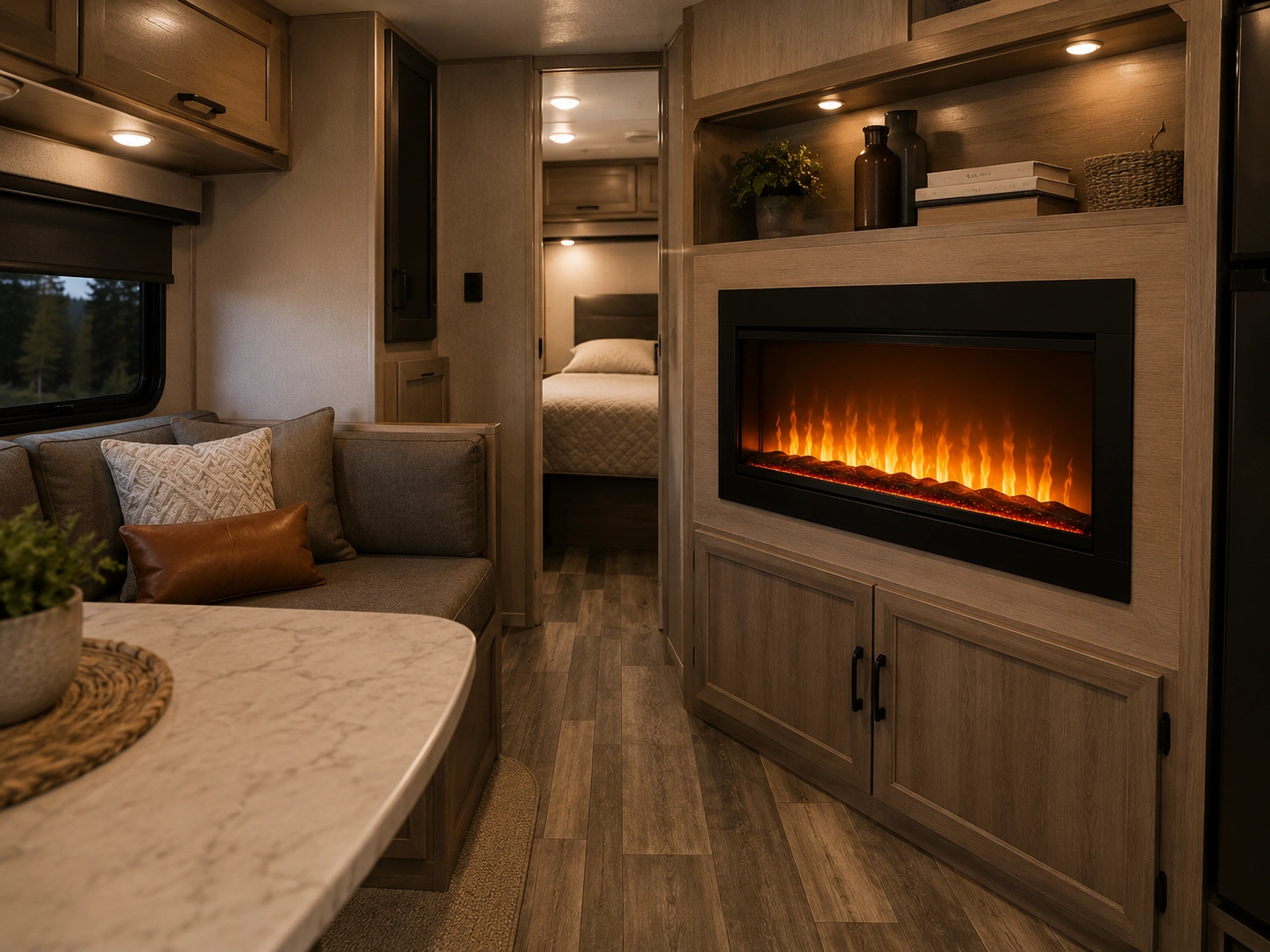
An RV fireplace is a compact heating appliance specifically designed for installation in recreational vehicles, motorhomes, travel trailers, and campers. Unlike standard home fireplaces, RV models are engineered to operate safely in confined spaces with limited electrical power and specific venting requirements.
These fireplaces provide the cozy ambiance of a traditional fireplace while offering practical heating benefits for your RV. Most small fireplace options available for RVs are electric-powered, though propane models exist for those who prefer gas heating. They're perfect for extending your camping season into cooler months or creating a comfortable living space during winter trips.
For those exploring different fireplace types, RV fireplaces represent a specialized category that prioritizes safety, efficiency, and space optimization over the large-scale heating capacity of residential units.
Types of RV Fireplaces
Electric RV Fireplaces
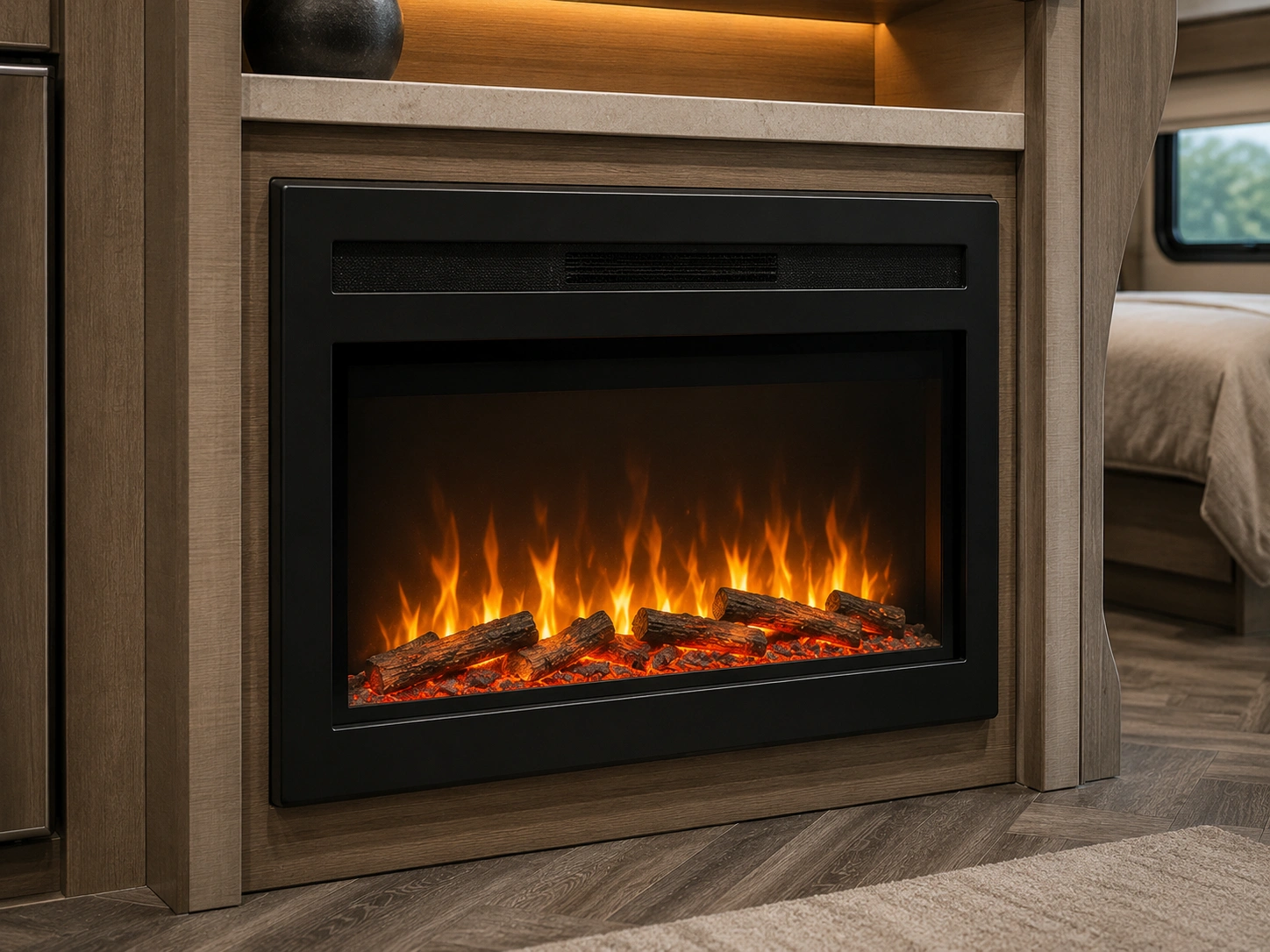
The most popular choice for RV owners, electric fireplaces plug into standard 120V outlets and require no venting. They use LED technology to create realistic flame effects while providing supplemental heat through built-in fan-forced or infrared heaters. These units are lightweight, easy to install, and safe for enclosed spaces.
For a detailed comparison, see our guide on electric fireplaces and learn about infrared vs. fan-forced heating options.
Propane RV Fireplaces
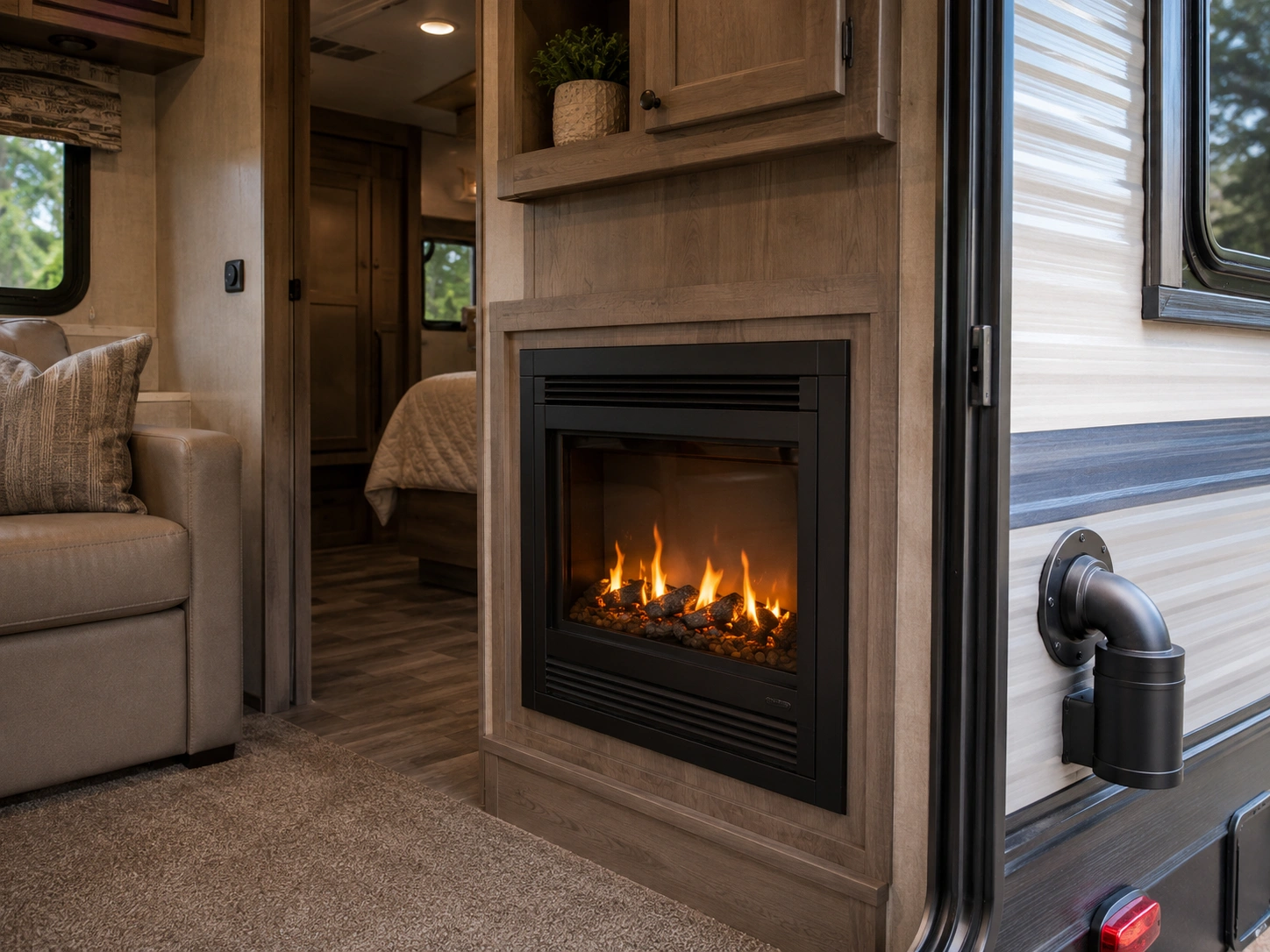
Less common but highly effective, propane RV fireplaces connect directly to your RV's existing propane system. These units provide more heat output than electric models and can operate during power outages. However, they require proper venting and professional installation to ensure safety. Learn more about propane fireplace options.
Ventless RV Fireplaces
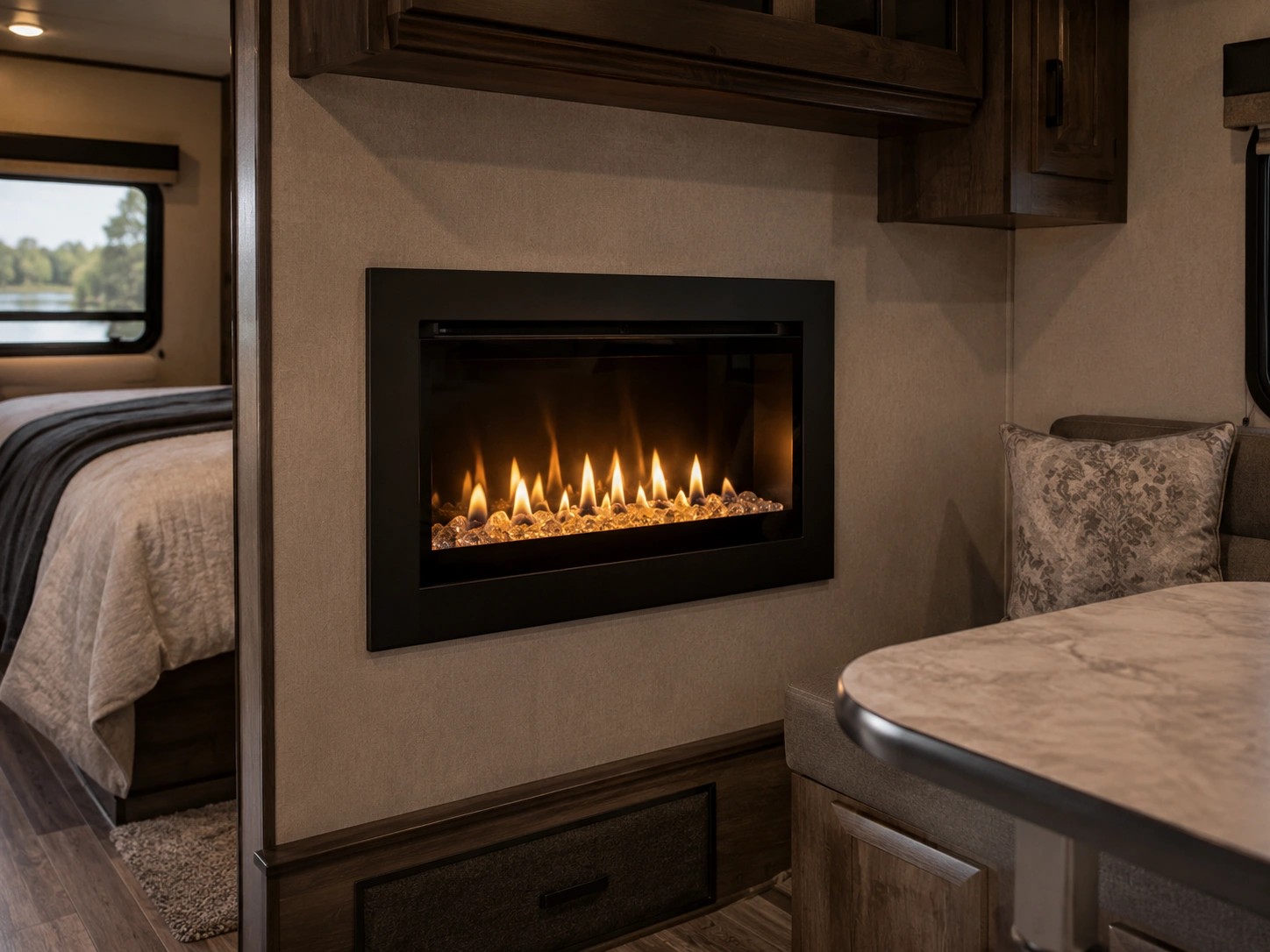
Ventless models, typically electric or gel-fueled, don't require any external venting, making them ideal for RVs where chimney installation isn't possible. While convenient, it's important to understand the differences between vented and ventless fireplaces regarding safety and air quality considerations.

Wall-Mounted RV Fireplaces
Designed to maximize space efficiency, wall-mounted units attach directly to the RV wall, freeing up valuable floor space. These are particularly popular in smaller campers and travel trailers. For more installation options, explore our wall-mounted vs. built-in fireplace comparison.
Top RV Fireplace Recommendations
⚠️ AFFILIATE DISCLOSURE: This website contains affiliate links. As an Amazon Associate, we earn from qualifying purchases. If you make a purchase through these links, we may receive a small commission at no additional cost to you. Read our full affiliate policy.

Tangkula 26" Electric Fireplace Insert, 750W/1500W Recessed Curved Fireplace Heater with Remote Control, Overheat Protection, 6H Timer, Adjustable Flame Colors and Brightness

RecPro 26" RV Recessed Electric Fireplace

Furrion 30" Electric Fireplace for RV-FF30SC15A-BL

RecPro 30" RV Electric Fireplace

30" Electric Fireplace Wall Mounted and Recessed 750/1500w W/Remote Control
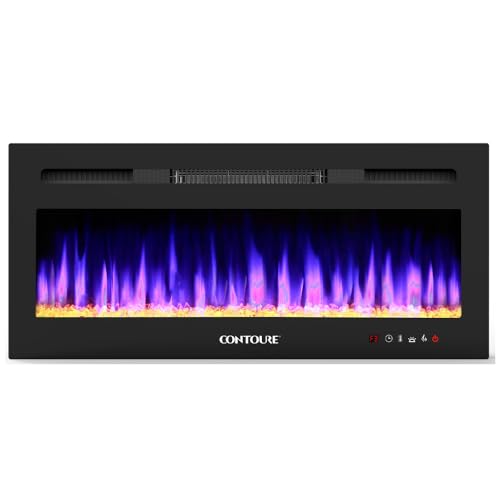
CONTOURE 31 in Built-in RV Electric Fireplace Heater with Remote

RecPro RV 26" Electric Fireplace

Giantex 28.5" Electric Fireplace Insert, Wall Recessed/Mounted, Freestanding Fireplace with Remote Control, 3 Color Adjustable Flames, 2 Modes Heat, 8 H Timer, 5 Brightness Settings, 750/1500W Heater
Key Benefits of RV Fireplaces

Space-Saving Design
RV fireplaces are specifically engineered for compact spaces, with slim profiles that fit into standard RV wall cavities or mount flush against walls.

Energy Efficient
Most electric RV fireplaces consume minimal electricity while providing effective zone heating, reducing the load on your RV's primary heating system. Learn about most energy-efficient fireplace types.

Safe Operation
Modern RV fireplaces include automatic shutoff features, cool-to-touch glass, and tip-over protection, making them safe for use in moving vehicles and tight quarters.

Cozy Ambiance
Realistic LED flame effects create the warm, inviting atmosphere of a traditional fireplace, enhancing your RV's living space even when the heat function is off.

Easy Installation
Most electric models require minimal installation—simply mount, plug in, and enjoy. No special tools, venting, or professional help needed for basic setups. See our electric fireplace installation guide.
Convenient Control
Remote controls and programmable thermostats allow you to adjust heat and flame settings from anywhere in your RV. Compare manual vs. remote-controlled fireplace options.
RV Fireplace Sizing Guide
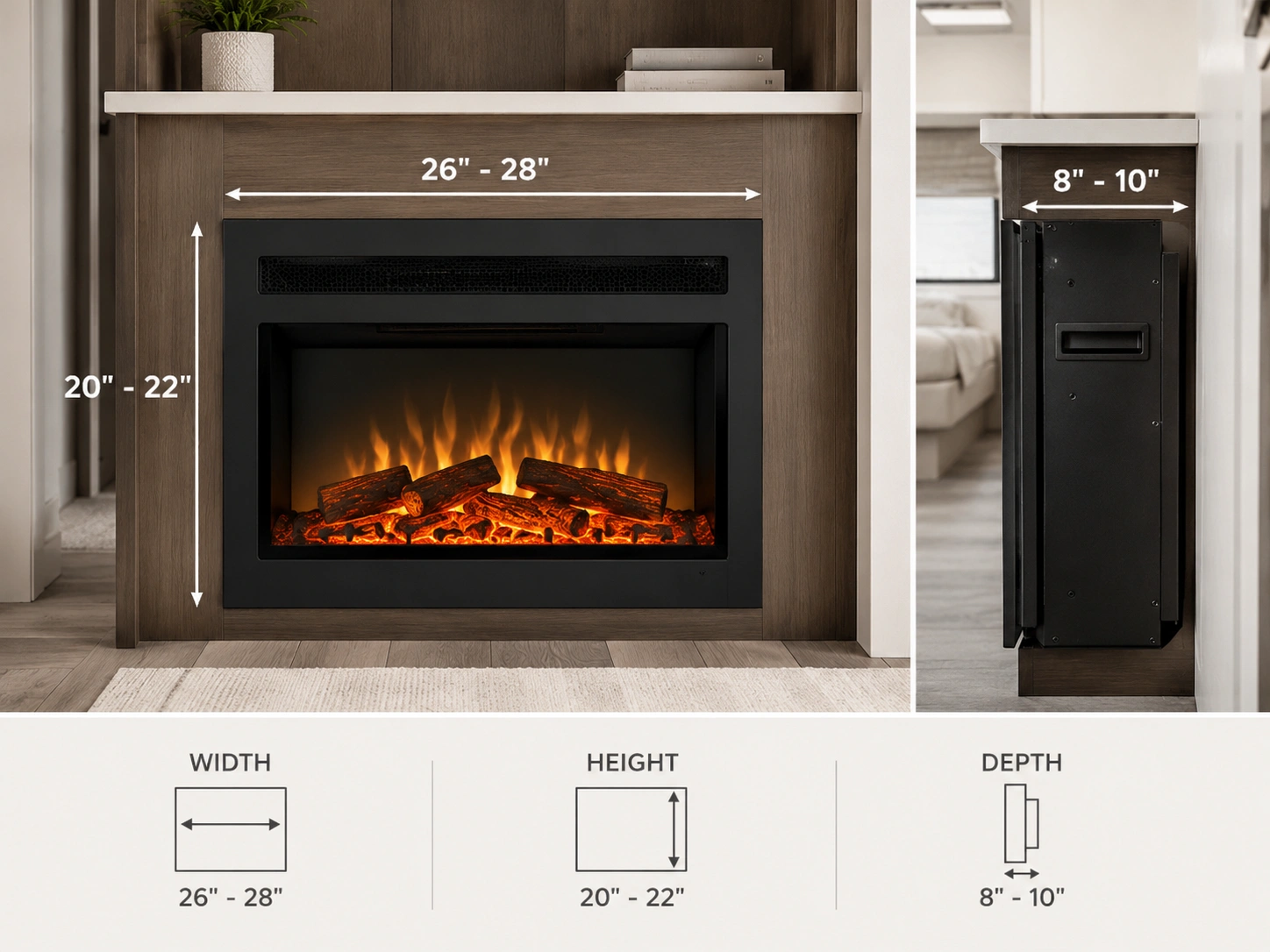
Choosing the right size fireplace for your RV is crucial for both aesthetics and functionality. Unlike residential fireplaces that need to heat large open spaces, RV fireplaces are designed for zone heating in relatively small areas.
For most RVs, you'll want to consider these factors:
Standard RV Cutout Dimensions: Most RV fireplaces are designed to fit standard openings of approximately 26-28 inches wide, 20-22 inches tall, and 8-10 inches deep. Always measure your existing space or planned installation area before purchasing.
BTU Requirements: RV fireplaces typically range from 4,000 to 5,000 BTUs, sufficient for heating 150-400 square feet of living space. For detailed calculations, refer to our fireplace heating capacity BTU guide.
Weight Considerations: Electric RV fireplaces typically weigh between 25-45 pounds, which is manageable for most RV installations. Propane models may be heavier due to additional components. Always consider the weight distribution in your RV.
RV Fireplace Comparison
| Feature | Electric RV | Propane RV | Gel-Fueled |
|---|---|---|---|
| Heat Output (BTU) | 4,000-5,000 | 8,000-15,000 | 3,000-4,000 |
| Power Source | 120V Electric | LP Gas | Gel Canisters |
| Venting Required | No | Yes | No |
| Installation Cost | $50-$200 | $300-$800 | $50-$150 |
| Operating Cost (per hour) | $0.08-$0.15 | $0.60-$1.20 | $0.80-$1.50 |
| Realistic Flame | High (LED) | Very High | High (Real) |
| Maintenance | Low | Medium-High | Medium |
| Works During Power Outage | No | Yes | Yes |
For more comprehensive comparisons between fuel types, see our electric vs gas fireplace and propane vs. natural gas fireplace guides.
RV Fireplace Costs
Purchase & Installation Costs
Operating Costs
For a broader perspective on fireplace costs across all types, see our comprehensive fireplace cost breakdown and electric vs. gas fireplace running costs comparison.
RV Fireplace Safety
Safety is paramount when installing and operating a fireplace in your RV. The confined space and mobile nature of recreational vehicles require special precautions:
Carbon Monoxide Detection
Install battery-operated carbon monoxide detectors near your fireplace and in sleeping areas. Learn about signs of carbon monoxide from fireplaces.
Electrical Capacity
Ensure your RV's electrical system can handle the fireplace's power draw. Most units use 12-15 amps. Learn about what to do if your fireplace trips the breaker.
Secure Mounting
Properly secure the fireplace to withstand RV movement and vibrations. Use appropriate mounting hardware for your wall type and consider additional bracing for travel.
Clearances
Maintain proper clearances from combustible materials and furniture. See our guide on furniture distance from fireplaces for specific recommendations.
Ventilation Requirements
Understand the fireplace ventilation requirements for your specific model. Electric units need adequate air circulation, while propane models require proper exhaust venting.
Usage Limits
Avoid running your fireplace continuously for extended periods. Learn about leaving a fireplace on overnight and sleeping with a fireplace on safely.
RV Fireplace Installation Process
Choose Your Location
Select an appropriate location considering electrical access, clearances from combustibles, and aesthetic placement. Popular locations include entertainment centers, bedroom walls, or replacing existing heating units. Ensure the chosen spot can accommodate the fireplace's dimensions and depth requirements.
Prepare the Opening
Measure and cut the opening according to your fireplace's specifications. For wall-mounted installations, locate studs and install a secure mounting bracket. For built-in installations, frame the opening and ensure proper support. If replacing an existing unit, remove the old fireplace and clean the area.
Electrical Connection
For electric fireplaces, ensure you have a nearby 120V outlet. If hardwiring is preferred, connect to a dedicated circuit with appropriate amperage. For propane models, connect to the RV's propane system following manufacturer specifications and local codes. Always turn off power before making electrical connections.
Install the Unit
Slide the fireplace into the prepared opening or mount it to the wall bracket according to the manufacturer's instructions. Secure with provided hardware, ensuring it's level and properly supported. For propane units, install any required venting components through the RV wall or roof.
Test and Finish
Restore power and test all functions including heat, flame effects, and remote control operation. Install any trim pieces or surround panels to complete the installation. Check for proper operation, unusual sounds, or smells. Allow the unit to run for at least 15 minutes to ensure everything works correctly before regular use.
Frequently Asked Questions
Do RV fireplaces really heat the RV?
Yes, RV fireplaces can effectively heat your living space, though they're designed for zone heating rather than warming the entire RV. Most electric models produce 4,000-5,000 BTUs, sufficient to raise the temperature in a 150-400 square foot area by 10-15 degrees. For more details, see our article on do electric fireplaces really heat a room.
Can I use an RV fireplace while driving?
No, for safety reasons, you should never operate a fireplace while your RV is in motion. The flame effect can be used while parked, but the heating function should be turned off before traveling. This prevents fire risks from vibrations, sudden stops, or potential gas leaks in propane models.
How much electricity does an RV fireplace use?
Most electric RV fireplaces use between 1,200-1,500 watts when the heating element is on, consuming approximately 12-15 amps. The flame effect alone uses significantly less power, around 50-100 watts. Learn more about fireplace electricity usage and how it affects your RV's power system.
Can I replace my RV's factory fireplace with a different model?
Yes, you can typically replace a factory-installed RV fireplace with a different model, but you'll need to match the dimensions carefully. Most RV fireplaces follow standard sizing, but always measure your existing unit's cutout dimensions before purchasing a replacement. Some modification may be required for a perfect fit.
Do I need a special outlet for an RV fireplace?
Most electric RV fireplaces plug into a standard 120V household outlet, which is the same type used throughout your RV. However, ensure the circuit can handle the additional load. Avoid using extension cords, and if possible, plug directly into a dedicated outlet to prevent overloading the circuit.
How do I maintain my RV fireplace?
RV fireplace maintenance is relatively simple. Regularly dust the exterior and clean the glass with a soft cloth. For electric models, vacuum the air intake vents periodically. For propane models, annual professional inspection is recommended. See our electric fireplace maintenance and gas fireplace maintenance guides for detailed instructions.