Propane vs Natural Gas Fireplace: Which Is Right for You?
Complete comparison of costs, efficiency, installation requirements, and performance to help you choose the perfect gas fireplace for your home
SEE COMPARISONUnderstanding the Propane vs Natural Gas Debate
When considering a gas fireplace for your home, one of the most important decisions you'll face is choosing between propane and natural gas as your fuel source. Both options offer the convenience of instant heat and realistic flames without the hassle of wood, but they differ significantly in terms of availability, cost, efficiency, and installation requirements.
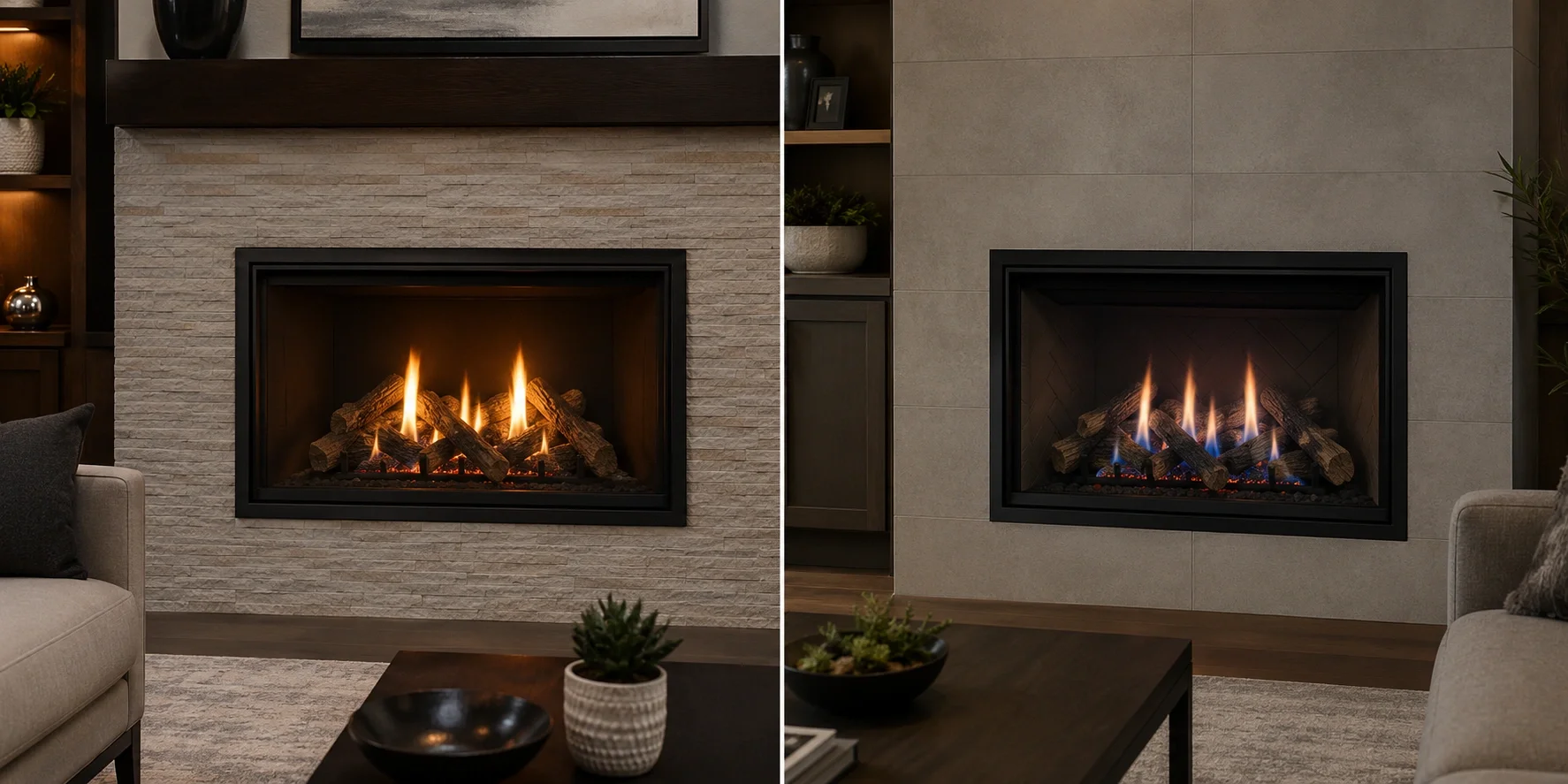
This comprehensive guide will help you understand the key differences between propane and natural gas fireplaces, allowing you to make an informed decision based on your specific circumstances, location, and heating needs. Whether you're building a new home, renovating an existing space, or simply upgrading your current heating system, this comparison will provide the insights you need to choose the best option for your situation.
Key Differences at a Glance
Before diving into the details, let's look at the fundamental differences between propane and natural gas fireplaces:
| Feature | Propane Fireplace | Natural Gas Fireplace |
|---|---|---|
| Fuel Source | Liquid petroleum gas stored in tanks | Piped gas from utility company |
| Availability | Available anywhere (with tank delivery) | Only where utility lines exist |
| Energy Content | ~2,500 BTU per cubic foot | ~1,030 BTU per cubic foot |
| Installation | Requires propane tank system | Requires gas line connection |
| Initial Cost | Higher (tank system needed) | Lower if line already exists |
| Operating Cost | Generally higher per BTU | Generally lower per BTU |
| Carbon Footprint | Slightly higher emissions | Slightly lower emissions |
Detailed Comparison
Propane Fireplaces
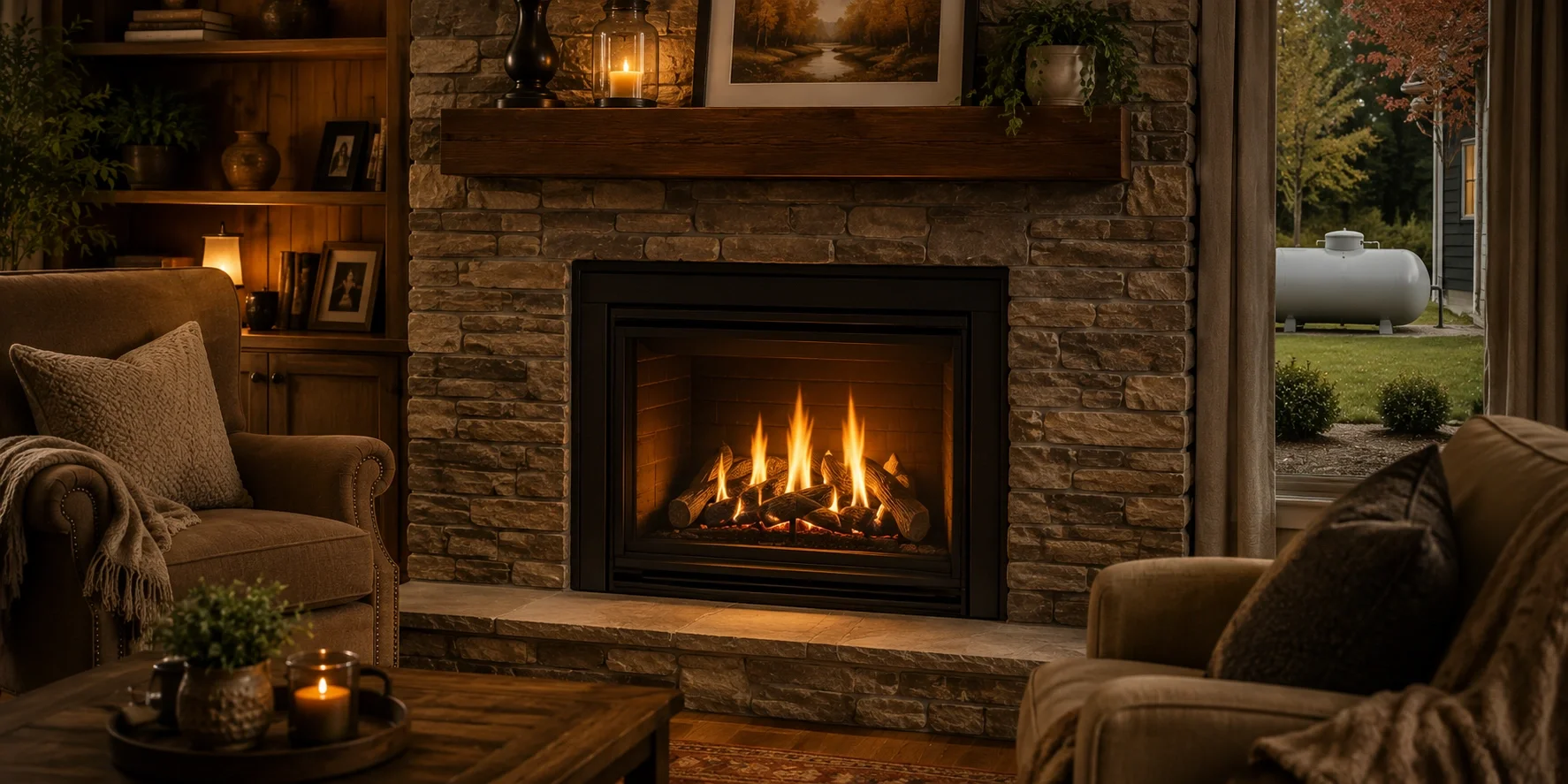
Propane fireplaces use liquid petroleum gas (LPG) stored in tanks on your property. They're an excellent option for homes without access to natural gas lines, offering the convenience of gas heating in rural or remote locations.
Pros
- Available anywhere (no gas line needed)
- Higher heat output per unit (2.5x more BTU than natural gas)
- Portable fuel source (tank can be moved)
- Works during power outages (with proper setup)
- Good for outdoor fireplaces in remote areas
Cons
- Requires tank storage (space considerations)
- Higher fuel costs per BTU
- Need to monitor tank levels and schedule deliveries
- Initial setup costs for tank system
- Potential for running out of fuel if not monitored
Natural Gas Fireplaces
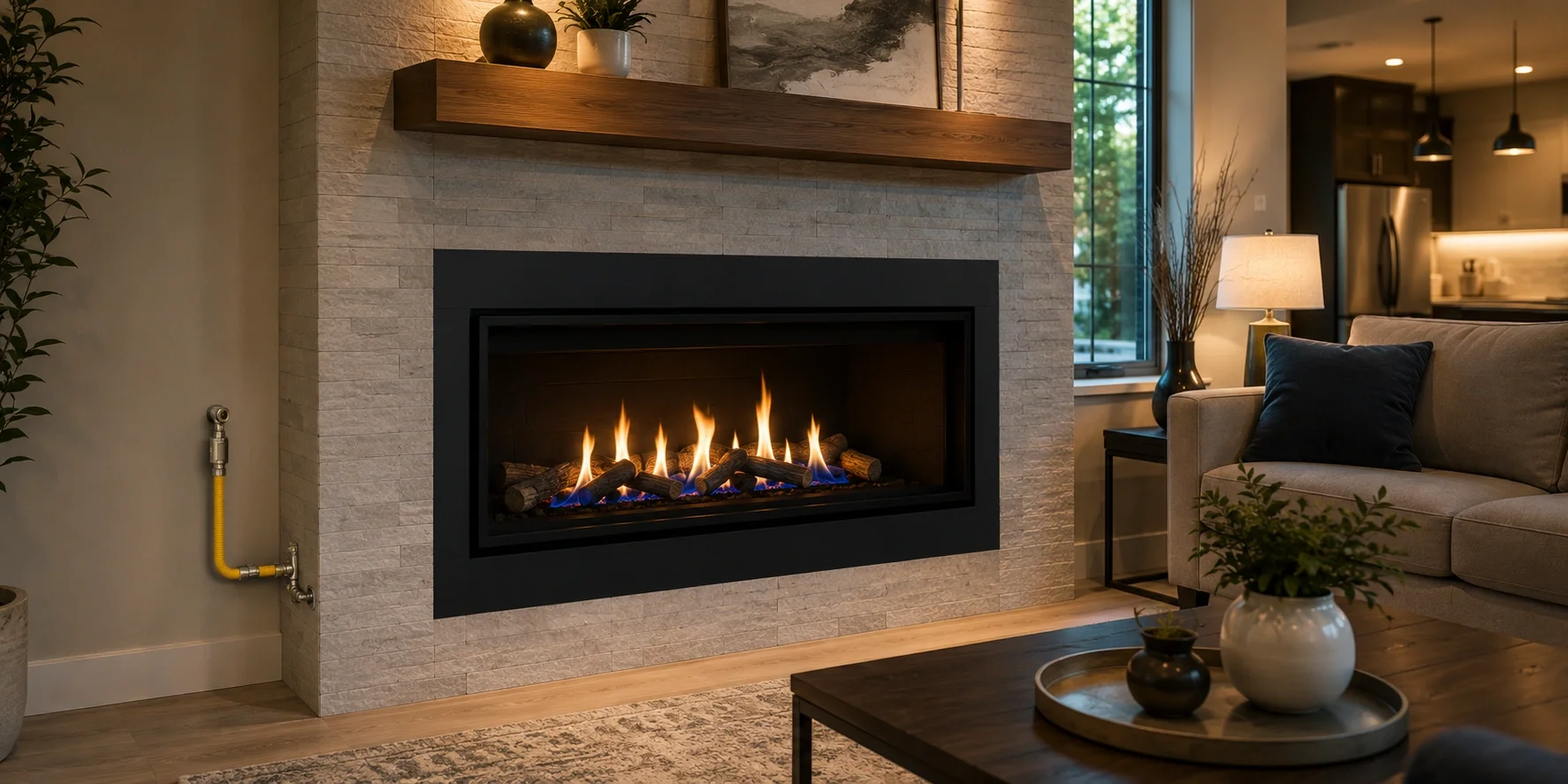
Natural gas fireplaces connect directly to your home's gas supply through utility lines. They offer the convenience of continuous fuel supply without the need for tank storage or scheduled deliveries.
Pros
- Continuous fuel supply (no refilling needed)
- Generally lower operating costs
- No tank storage required
- Cleaner burning with slightly lower emissions
- Convenient for living room fireplaces with constant use
Cons
- Only available where gas lines exist
- Lower heat output per unit than propane
- May not work during power outages (without backup)
- Subject to utility price fluctuations
- Connection costs if new line needed
Cost Analysis: Propane vs Natural Gas
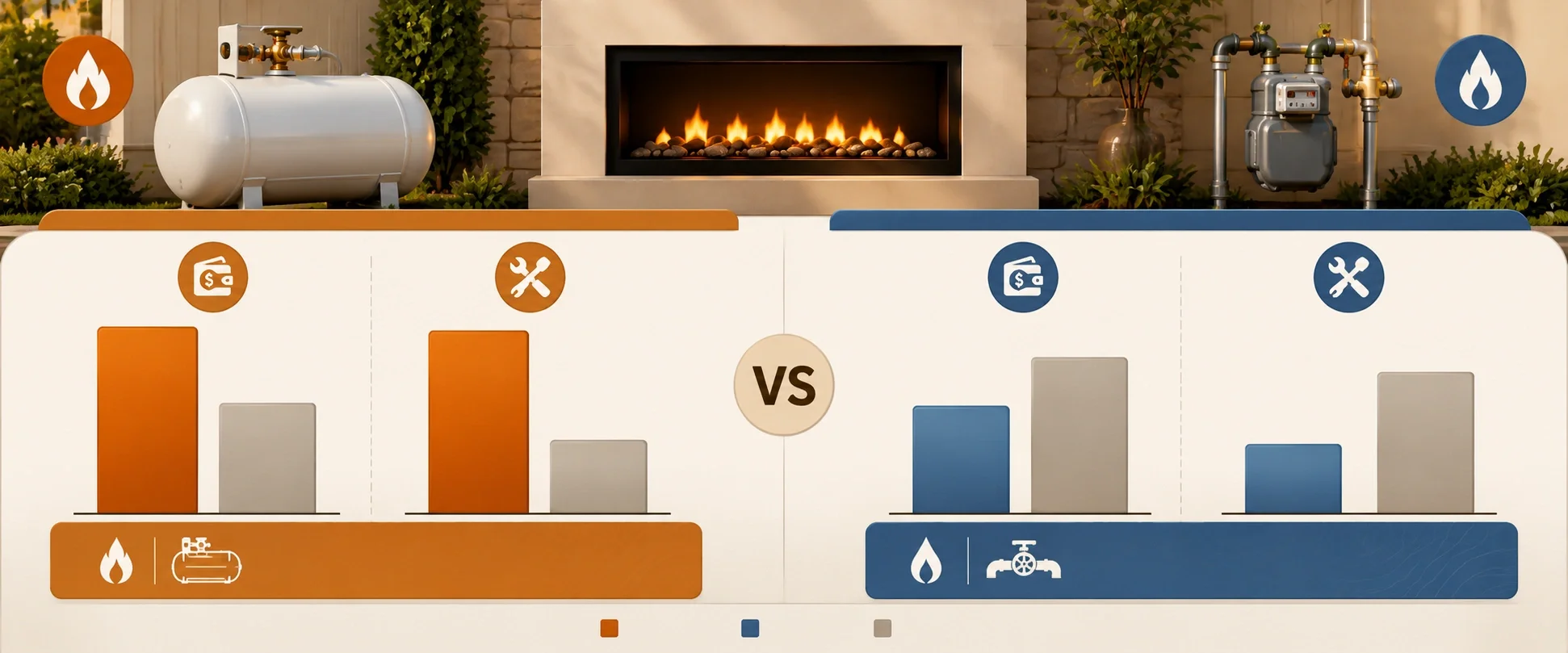
Understanding the complete cost picture is essential when choosing between propane and natural gas fireplaces. Let's break down the expenses:
Initial Installation Costs
Propane: $2,500–$5,000 (including tank system and installation)
Natural Gas: $1,500–$3,500 (if gas line already exists) or $3,000–$7,000 (if new line needed)
Operating Costs
The operating cost depends on your local fuel prices and usage patterns. On average:
- Propane costs approximately $2.50–$3.50 per gallon (varies by region and season)
- Natural gas costs approximately $1.00–$1.50 per therm (varies by region and season)
For a typical 30,000 BTU gas fireplace running 4 hours daily during heating season:
- Propane: $30–$50 per month
- Natural Gas: $15–$30 per month
Cost Verdict
If you already have access to a natural gas line, natural gas is typically the more economical choice in the long run due to lower fuel costs. However, if you don't have gas lines, the high cost of running a new line may make propane the more practical option. For a detailed breakdown of fireplace costs, check our comprehensive guide.
Efficiency and Performance Comparison
Heat Output
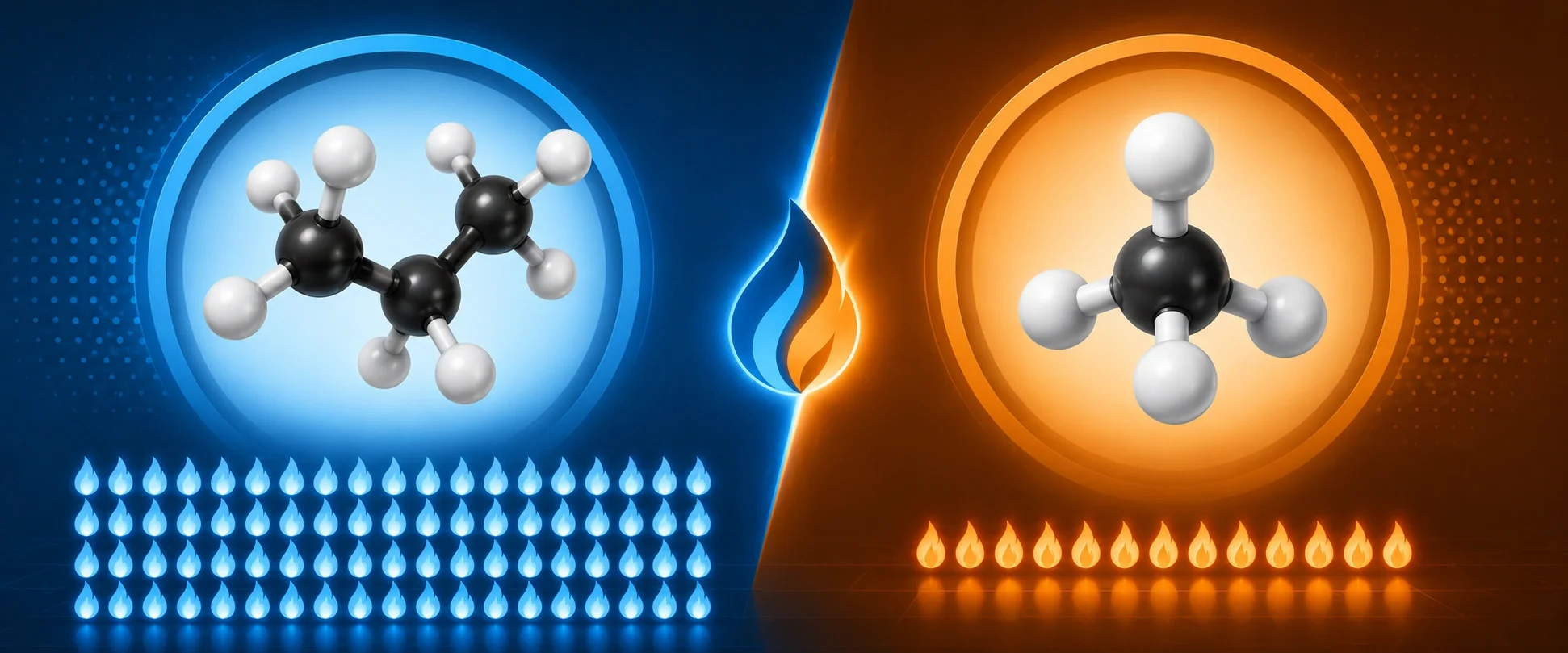
Propane contains about 2,500 BTU per cubic foot, while natural gas contains about 1,030 BTU per cubic foot. This means propane delivers more than twice the heat energy per unit volume compared to natural gas. For spaces that need rapid heating or higher heat output, propane may have an advantage.
Combustion Efficiency
Both propane and natural gas fireplaces can achieve similar combustion efficiency ratings (typically 70-90% for modern vented models and 99% for ventless models). The fuel type itself doesn't significantly impact the fireplace's efficiency rating.
Flame Appearance
Both fuels can produce realistic, attractive flames when used with quality gas fireplace logs. However, some homeowners report that propane produces slightly more vibrant, yellow-orange flames compared to the slightly bluer flames of natural gas. This difference is subtle and largely depends on the specific fireplace model and log set.
Heating Capacity
When comparing heating capacity, propane's higher BTU content means you can potentially heat a larger space with the same flow rate. For example, a fireplace rated for 40,000 BTU will deliver more actual heat when using propane compared to natural gas, assuming the same flow rate.
Installation Requirements and Considerations

Propane Installation
Installing a propane fireplace requires setting up a propane tank system, which includes:
- Propane tank (typically 100-500 gallons for residential use)
- Regulator and safety valves
- Underground or above-ground piping from tank to fireplace
- Tank location must meet specific clearance requirements
- May require permits from local authorities
For more details on the installation process, see our gas fireplace installation requirements guide.
Natural Gas Installation
Natural gas fireplace installation involves:
- Connection to existing gas line or installation of new line
- Proper sizing of gas line to ensure adequate pressure
- Installation of shut-off valve and emergency controls
- May require utility company involvement for new connections
- Typically requires permits and inspection
Installation Verdict
If your home already has natural gas service, connecting a fireplace is relatively straightforward. If you don't have gas service, installing a complete propane system is usually less expensive and less invasive than running a new natural gas line from the street, especially if your home is far from the main gas line. For DIY vs professional installation considerations, both fuel types typically require professional installation for safety and code compliance.
Safety Considerations

Both propane and natural gas fireplaces are generally safe when properly installed and maintained, but there are some safety differences to consider:
Propane Safety
- Propane is heavier than air and will pool at ground level if leaked
- Requires proper ventilation to prevent accumulation
- Tank systems include safety regulators and excess flow valves
- Regular tank inspections are recommended
- Carbon monoxide detectors are essential (as with all combustion appliances)
Natural Gas Safety
- Natural gas is lighter than air and will rise if leaked
- Utility companies add odorant (mercaptan) for leak detection
- Automatic shut-off valves can be installed for safety
- Regular line inspections are recommended
- Carbon monoxide detectors are essential (as with all combustion appliances)
For more information on carbon monoxide safety with gas fireplaces, check our dedicated guide. Both fuel types require proper maintenance to ensure safe operation.
Maintenance Requirements

The maintenance requirements for propane and natural gas fireplaces are very similar, as the fireplace components themselves are nearly identical. The main differences relate to the fuel delivery systems:
Propane-Specific Maintenance
- Monitor tank fuel levels and schedule deliveries
- Annual tank inspection by certified technician
- Check regulator and valves for proper function
- Ensure tank and piping are protected from corrosion
- Verify adequate clearance around tank as per regulations
Natural Gas-Specific Maintenance
- Periodic inspection of gas line connections
- Check for gas leaks using proper detection methods
- Ensure shut-off valves operate properly
- Verify gas pressure is within recommended range
- Consider installing a gas leak detector near the fireplace
For both types, follow the general gas fireplace maintenance guidelines, including annual professional inspections, cleaning of fireplace glass, and checking of all safety components.
Environmental Impact

When considering the environmental impact of your fireplace choice, both propane and natural gas have advantages and disadvantages:
Carbon Emissions
Natural gas burns slightly cleaner than propane, producing about 15% fewer carbon emissions per BTU of heat generated. However, both are fossil fuels and contribute to greenhouse gas emissions.
Extraction and Production
Natural gas is primarily extracted from underground reserves and processed at the source, while propane is a byproduct of both natural gas processing and petroleum refining. The extraction processes for both have environmental impacts, including potential groundwater contamination and habitat disruption.
Transportation
Natural gas is transported through pipelines, which have a lower carbon footprint per energy unit compared to the truck transportation required for propane delivery. However, pipeline construction and maintenance also have environmental impacts.
Environmental Verdict
If environmental impact is a primary concern, natural gas has a slight edge due to lower carbon emissions and more efficient transportation. However, for the most environmentally friendly option, consider electric fireplaces powered by renewable energy sources, or ethanol fireplaces which use biofuel. For more on energy efficiency, see our guide to the most energy-efficient fireplace types.
Best Applications for Each Fuel Type

When to Choose Propane
- Homes without access to natural gas lines
- Rural or remote properties
- Outdoor fireplaces in areas without gas service
- Properties where running a gas line would be prohibitively expensive
- Situations requiring higher heat output in a compact space
- RV fireplaces and mobile applications
- Backup heating during power outages (with proper setup)
When to Choose Natural Gas
- Homes already connected to natural gas service
- Urban and suburban properties with established gas infrastructure
- Living room fireplaces used frequently during heating season
- Situations where lower operating costs are a priority
- Properties where tank storage would be impractical
- Homeowners who prefer the convenience of continuous fuel supply
- Indoor fireplaces in areas with strict tank placement regulations
Frequently Asked Questions
In most cases, yes. Many modern gas fireplaces are designed to be convertible between propane and natural gas with a conversion kit. This typically involves changing the gas orifice, adjusting the gas pressure regulator, and sometimes modifying the burner. However, conversion should always be performed by a qualified technician to ensure safety and proper operation. Check with the fireplace manufacturer about conversion options for your specific model.
Both propane and natural gas can produce highly realistic flames when used with quality ceramic fireplace logs and modern burner technology. Propane tends to produce slightly more yellow-orange flames, while natural gas flames may have a slightly bluer tint. However, the difference is subtle, and most people wouldn't notice a significant difference in flame appearance between the two fuels when using the same fireplace model and log set.
The refill frequency depends on your tank size, fireplace usage, and heat output. For a typical 40,000 BTU fireplace running 4 hours daily during a 4-month heating season, you would use approximately 200-250 gallons of propane. With a standard 500-gallon residential tank, this means refilling once or twice per heating season. Many propane suppliers offer automatic delivery services based on your usage patterns to ensure you never run out.
Whether using propane or natural gas, most modern gas fireplaces are designed with safety features that allow for extended operation. However, leaving a fireplace on overnight comes with some risks and should be done with caution. Always follow the manufacturer's guidelines, ensure proper ventilation, and install carbon monoxide detectors nearby. For maximum safety, consider using a fireplace with a thermostat that will automatically cycle on and off to maintain a set temperature rather than running continuously.
Yes, a gas fireplace can add value to your home, typically between $1,000 and $5,000 depending on the quality of installation and the local real estate market. Both propane and natural gas fireplaces are considered desirable features by many homebuyers, though natural gas may have a slight edge in areas where it's commonly available since it doesn't require tank storage. A well-maintained, professionally installed gas fireplace in a central location like the living room can be a significant selling point.
If your propane tank runs empty, your fireplace will simply stop working until the tank is refilled. Unlike natural gas, which flows continuously from the utility, propane requires monitoring to ensure you don't run out unexpectedly. Many modern propane systems include monitoring devices that alert you when levels are low. If you do run out, after refilling, you may need to reset the system or have a technician restart it to ensure proper pressure and purge any air from the lines.
The Final Verdict: Propane or Natural Gas?
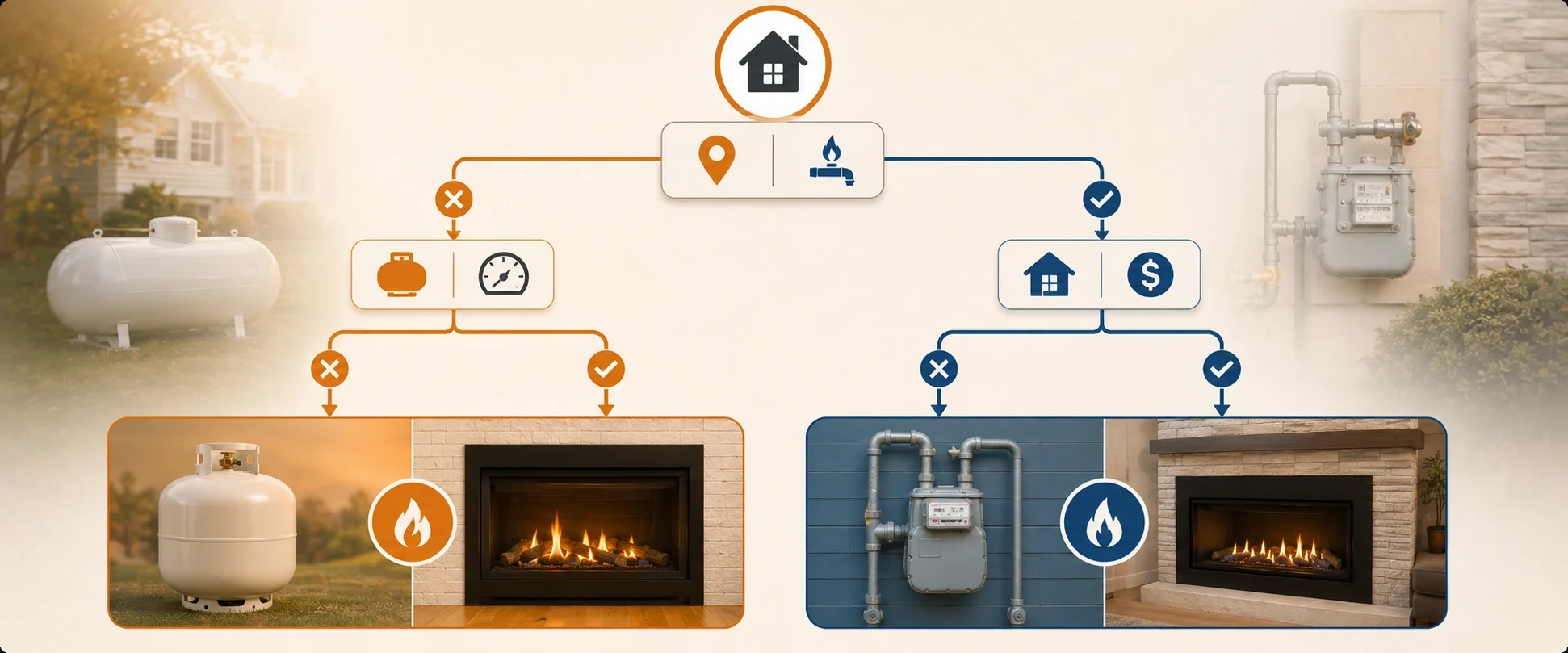
The choice between propane and natural gas fireplaces ultimately comes down to your specific circumstances:
Choose Propane If:
- You don't have access to natural gas lines
- You live in a rural or remote area
- You need a portable fuel solution
- Higher heat output is a priority for your space
- You want an outdoor fireplace without gas line access
Choose Natural Gas If:
- Your home already has natural gas service
- Lower operating costs are important to you
- You prefer the convenience of continuous fuel supply
- You don't want to deal with tank storage and monitoring
- Environmental impact is a significant concern
Both propane and natural gas fireplaces offer excellent heating performance, convenience, and ambiance compared to wood-burning options. By considering your specific needs, location, and budget, you can select the option that will provide the most satisfaction and value for years to come.
For more information on choosing the right fireplace for your home, check out our comprehensive fireplace selection guide or explore other fireplace comparisons to understand all your options.