Fireplace Sizing Worksheet: Calculate Your Perfect Fit
Step-by-step guide to determine the exact BTU requirements for your space and avoid costly sizing mistakes
USE THE WORKSHEETWhy Proper Fireplace Sizing Matters
Choosing the right size fireplace is one of the most critical decisions in your buying process. An undersized unit will struggle to heat your space, running constantly and increasing energy costs. An oversized fireplace will cycle on and off frequently, creating uncomfortable temperature fluctuations and wasting energy.
Our fireplace sizing worksheet takes the guesswork out of this equation by providing a systematic approach to calculating the exact heating capacity you need based on your specific room conditions.
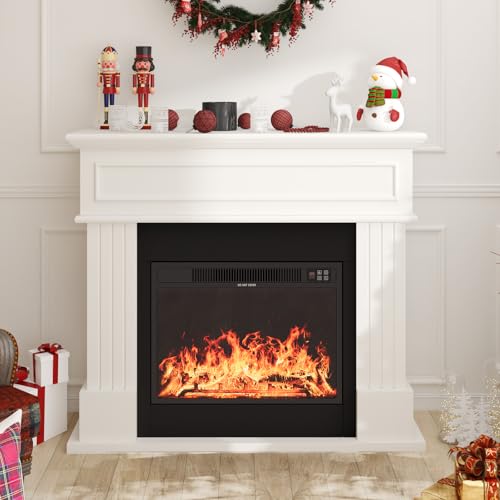
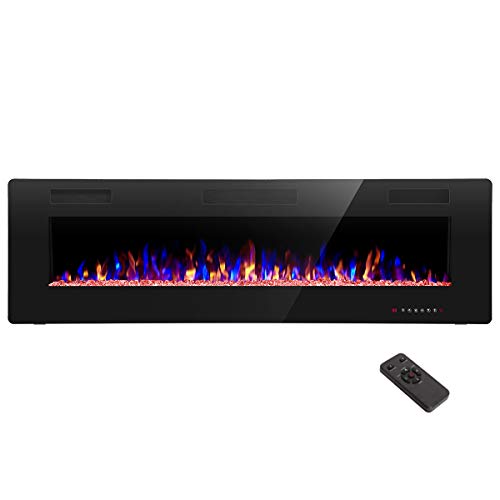
Whether you're considering an electric fireplace, gas fireplace, or wood-burning fireplace, this worksheet will help you make an informed decision that ensures optimal comfort and efficiency.
Quick Tip: Before using this worksheet, gather basic measurements of your room including length, width, and ceiling height. You'll also need to assess your home's insulation quality and note any features that affect heat retention.
Understanding BTU and Heating Capacity
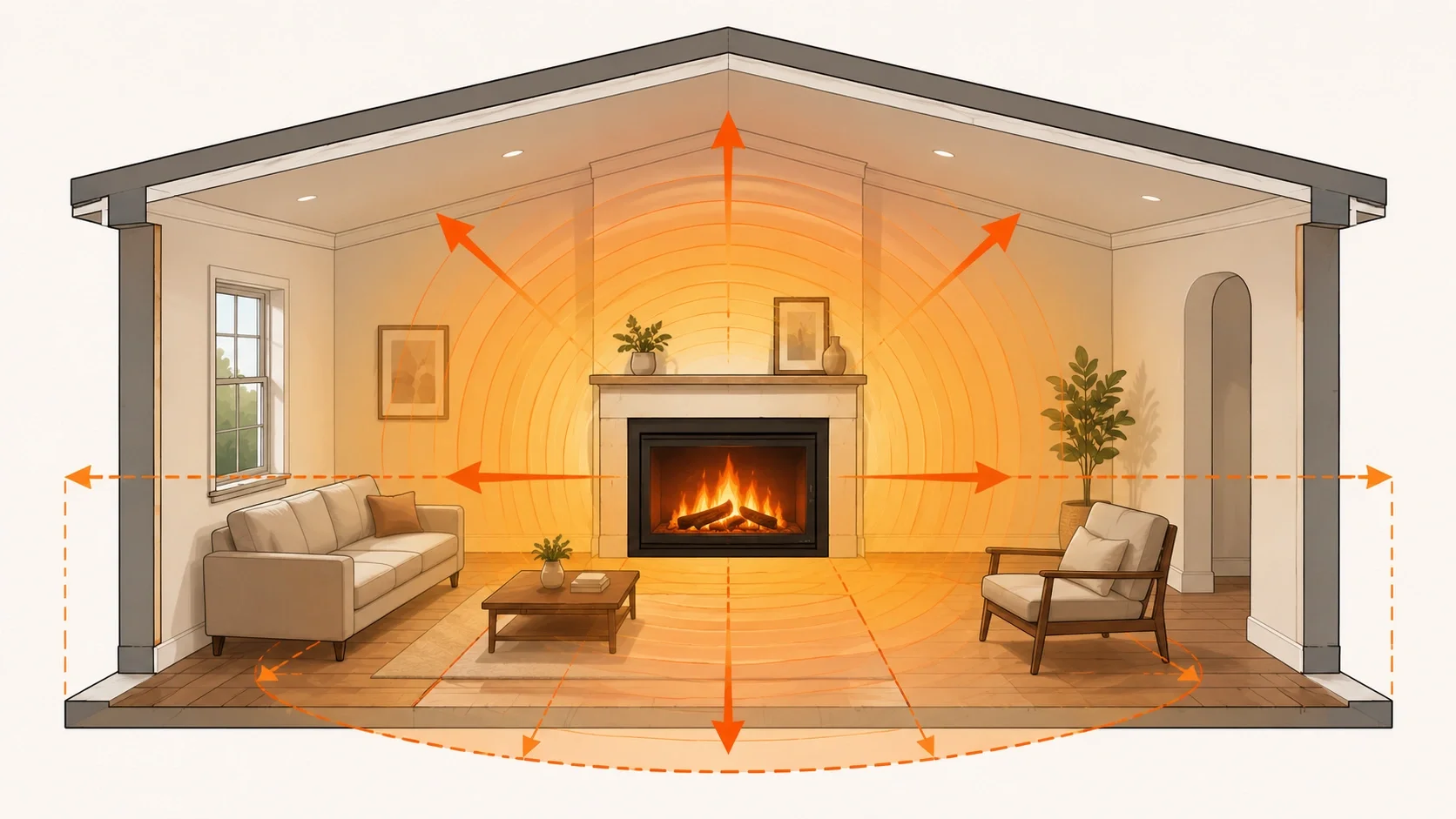
BTU (British Thermal Unit) measures the amount of heat required to raise the temperature of one pound of water by one degree Fahrenheit.
Before diving into calculations, it's essential to understand what BTU ratings mean for fireplace performance. The BTU rating indicates the maximum heat output a fireplace can produce when operating at full capacity.
For residential fireplaces, BTU requirements typically range from:
| Room Size | Square Footage | Recommended BTU Range |
|---|---|---|
| Small Bedroom/Office | 100-300 sq ft | 4,000-8,000 BTU |
| Medium Living Room | 300-600 sq ft | 8,000-15,000 BTU |
| Large Open Plan | 600-1,000 sq ft | 15,000-25,000 BTU |
| Great Room/Open Concept | 1,000+ sq ft | 25,000-40,000+ BTU |
Remember that BTU input and output are different. A fireplace with 30,000 BTU input but 70% efficiency only delivers 21,000 BTU of actual heat. Always check the efficiency rating when comparing models.
Fireplace Sizing Worksheet
Follow these steps to calculate the ideal fireplace size for your space. This worksheet accounts for room dimensions, insulation quality, climate factors, and other variables that affect heating requirements.
For rooms with vaulted or cathedral ceilings, use the average height rather than the peak height. For example, if your ceiling ranges from 8 feet to 14 feet, use approximately 11 feet as your calculation height.
The standard formula uses 3.5 BTU per cubic foot for average conditions. This provides a baseline that we'll adjust in the following steps based on your specific situation.
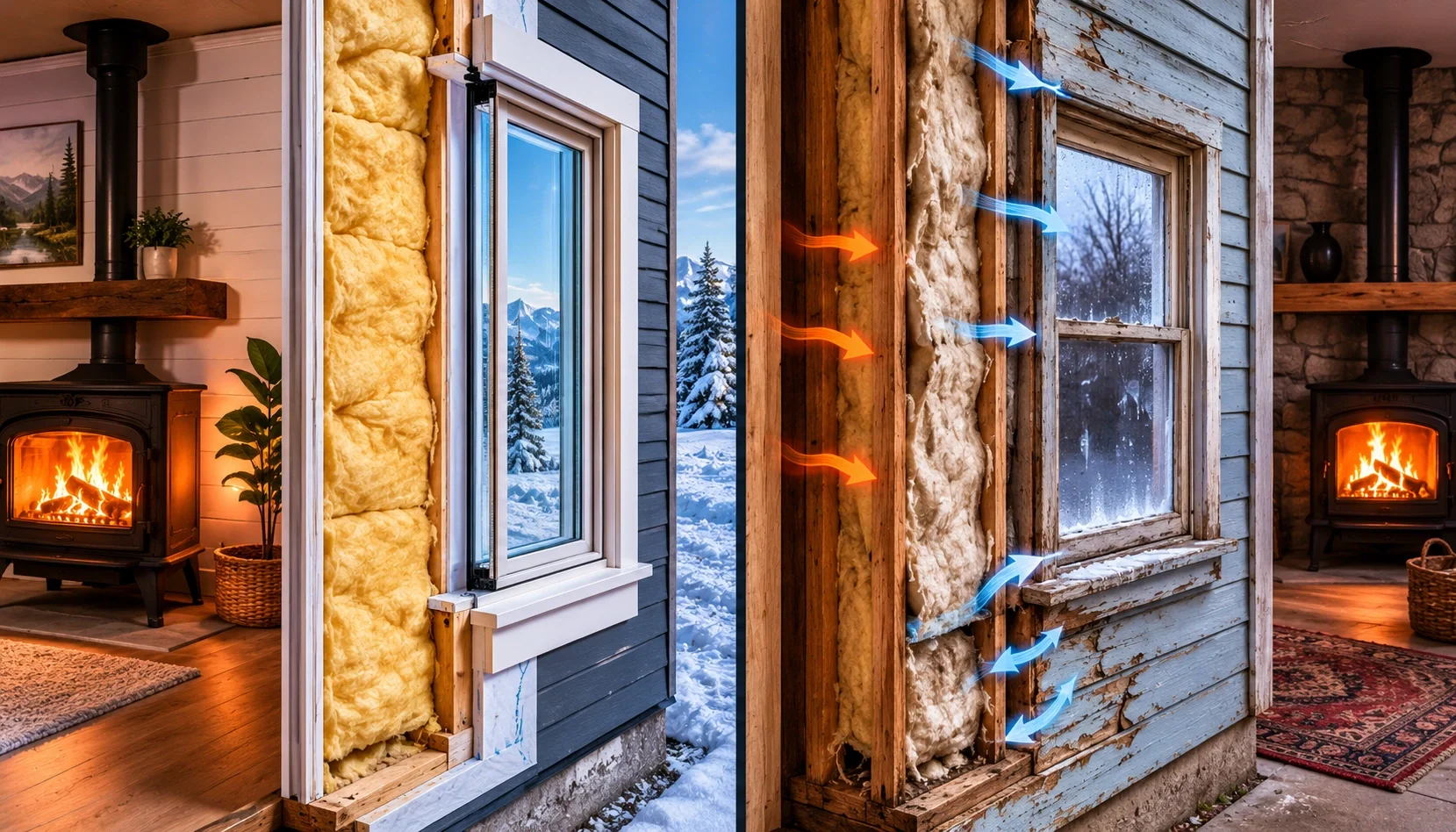
Proper insulation significantly impacts your heating requirements and energy efficiency.
Select the adjustment factor that best describes your home's insulation quality:
| Insulation Quality | Description | Adjustment Factor |
|---|---|---|
| Excellent | New construction, R-49 in attic, double-pane windows, well-sealed | 0.9 |
| Good | Recent renovation, adequate insulation, some upgrades | 1.0 |
| Average | Standard construction, some air leaks, moderate insulation | 1.1 |
| Poor | Older home, minimal insulation, single-pane windows, drafts | 1.3 |
| Very Poor | Historic home, no insulation, significant air infiltration | 1.5 |
Different climate zones require different heating capacities. Select your climate zone based on your location:
| Climate Zone | Regions | Winter Design Temp | Climate Factor |
|---|---|---|---|
| 1-2 (Hot) | Southern Florida, Hawaii | 40-50°F | 0.7 |
| 3 (Warm) | Southern California, Texas, Gulf Coast | 30-40°F | 0.8 |
| 4 (Moderate) | Mid-Atlantic, Southern Midwest | 20-30°F | 0.9 |
| 5 (Cool) | Northern Midwest, New England | 10-20°F | 1.0 |
| 6-7 (Cold) | Upper Midwest, Northern New England | 0-10°F | 1.2 |
| 8 (Very Cold) | Alaska, parts of Northern Minnesota | Below 0°F | 1.4 |
Certain room features require additional adjustments to your BTU calculation. Add or subtract the following percentages as applicable to your space:
| Room Feature | Adjustment | Reason |
|---|---|---|
| Large Windows (over 15% of wall area) | +10% | Increased heat loss through glass |
| North-facing walls | +5% | Less solar heat gain |
| Frequent door openings to outside | +15% | Heat loss from air exchange |
| Open floor plan (no doors) | +20% | Heat disperses to adjacent areas |
| Heated floors or ceilings | -10% | Supplemental heating reduces load |
| Large masonry fireplace (existing) | +15% | Draws room air up chimney when not in use |
| Well-shaded from sun | +5% | Less passive solar heating |
| Solar heat gain (south-facing windows) | -5% | Passive solar heating reduces load |
Sizing Considerations by Fireplace Type
Once you've calculated your basic BTU requirement, it's important to understand how different fireplace types may affect your final selection:
Electric fireplaces are typically sized more conservatively since they're often used for supplemental heating rather than primary heat. For electric units, you can often select a model with 10-20% less BTU capacity than your calculated requirement, as these units are commonly used to take the chill off rather than fully heat a space.
However, if you plan to use an electric fireplace as your primary heat source, select a model that meets or slightly exceeds your calculated requirement.
Gas fireplaces offer more consistent heat output and can be sized more precisely to your requirements. For gas units, aim for a model that provides your calculated BTU at about 70-80% of its maximum capacity to allow for efficient operation without constant cycling.
For example, if your calculation indicates 20,000 BTU, look for a gas fireplace with a maximum output of approximately 25,000-28,000 BTU.
Wood-burning fireplaces have more variable heat output and are harder to size precisely. When selecting a wood-burning unit, it's generally better to err on the larger side, as you can control heat output by adjusting the amount of wood and air intake.
Consider a fireplace insert for improved efficiency if you're adding a wood-burning unit to an existing masonry fireplace.
Real-World Sizing Examples
Room dimensions: 16 ft × 20 ft × 9 ft ceiling
Insulation: Good (factor 1.0)
Climate: Zone 5 - Cool (factor 1.0)
Special features: Large windows (+10%)
Calculation:
- Room volume: 16 × 20 × 9 = 2,880 cubic feet
- Base BTU: 2,880 × 3.5 = 10,080 BTU
- Insulation adjustment: 10,080 × 1.0 = 10,080 BTU
- Climate adjustment: 10,080 × 1.0 = 10,080 BTU
- Special adjustment: 10,080 × 1.10 = 11,088 BTU
Recommendation: A gas fireplace with 14,000-15,000 BTU maximum output or an electric fireplace with 5,000 BTU output (supplemental heating)
Room dimensions: 24 ft × 30 ft × 12 ft vaulted ceiling (average 10 ft)
Insulation: Excellent (factor 0.9)
Climate: Zone 6 - Cold (factor 1.2)
Special features: Open floor plan (+20%), north-facing (+5%)
Calculation:
- Room volume: 24 × 30 × 10 = 7,200 cubic feet
- Base BTU: 7,200 × 3.5 = 25,200 BTU
- Insulation adjustment: 25,200 × 0.9 = 22,680 BTU
- Climate adjustment: 22,680 × 1.2 = 27,216 BTU
- Special adjustment: 27,216 × 1.25 = 34,020 BTU
Recommendation: A gas fireplace with 40,000-45,000 BTU maximum output or a wood-burning fireplace with at least 40,000 BTU capacity
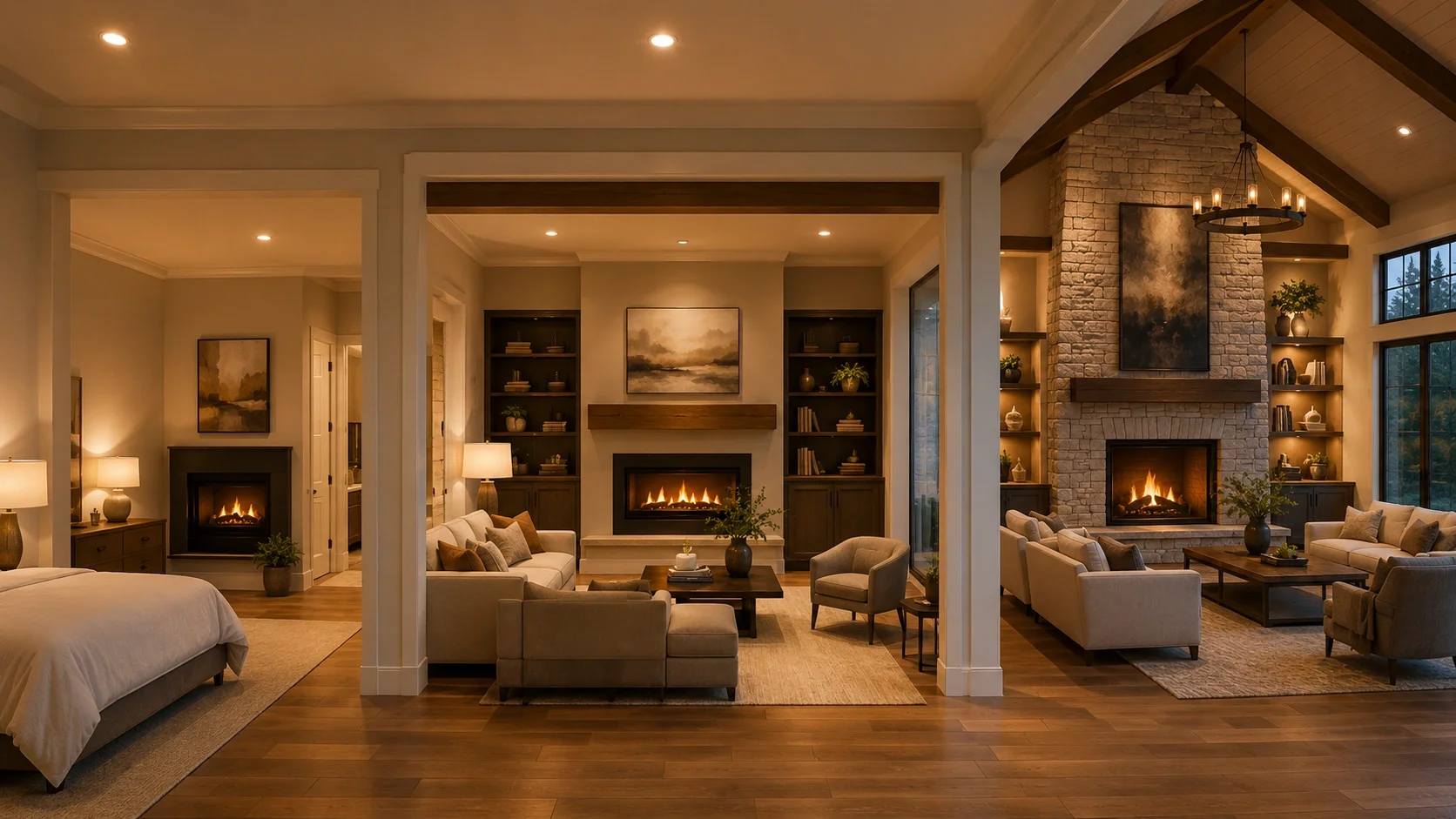
Properly sized fireplaces for different room dimensions and configurations.
Room dimensions: 12 ft × 14 ft × 8 ft ceiling
Insulation: Average (factor 1.1)
Climate: Zone 4 - Moderate (factor 0.9)
Special features: None
Calculation:
- Room volume: 12 × 14 × 8 = 1,344 cubic feet
- Base BTU: 1,344 × 3.5 = 4,704 BTU
- Insulation adjustment: 4,704 × 1.1 = 5,174 BTU
- Climate adjustment: 5,174 × 0.9 = 4,657 BTU
- Special adjustment: 4,657 × 1.0 = 4,657 BTU
Recommendation: A small electric fireplace with 4,000-5,000 BTU output or a compact small gas fireplace with 8,000-10,000 BTU maximum output
Common Fireplace Sizing Mistakes to Avoid
Many homeowners mistakenly believe bigger is always better. An oversized fireplace will cycle on and off frequently, creating uncomfortable temperature swings and reducing efficiency. This is particularly problematic with gas fireplaces that have thermostatic controls.
Using only square footage without accounting for ceiling height is a common error. Rooms with high ceilings have significantly more volume to heat, requiring additional BTU capacity.
In modern homes with open concept layouts, heat doesn't stay confined to a single room. Failing to account for heat dispersal to adjacent areas leads to undersized fireplaces that struggle to maintain comfortable temperatures.
Manufacturers often advertise input BTU, which is the fuel energy consumed, not the heat delivered to your room. Always check the efficiency rating and calculate the actual output BTU when comparing models.
Rooms with large or numerous windows, especially if they're single-pane, lose heat much faster than well-insulated walls. Not accounting for this can result in an undersized fireplace that can't keep up with heat loss.
Using the same sizing formula regardless of climate zone is a mistake. A fireplace sized perfectly for a mild climate will be woefully inadequate in a cold climate region, while the reverse leads to wasted energy in warmer areas.
Special Sizing Considerations
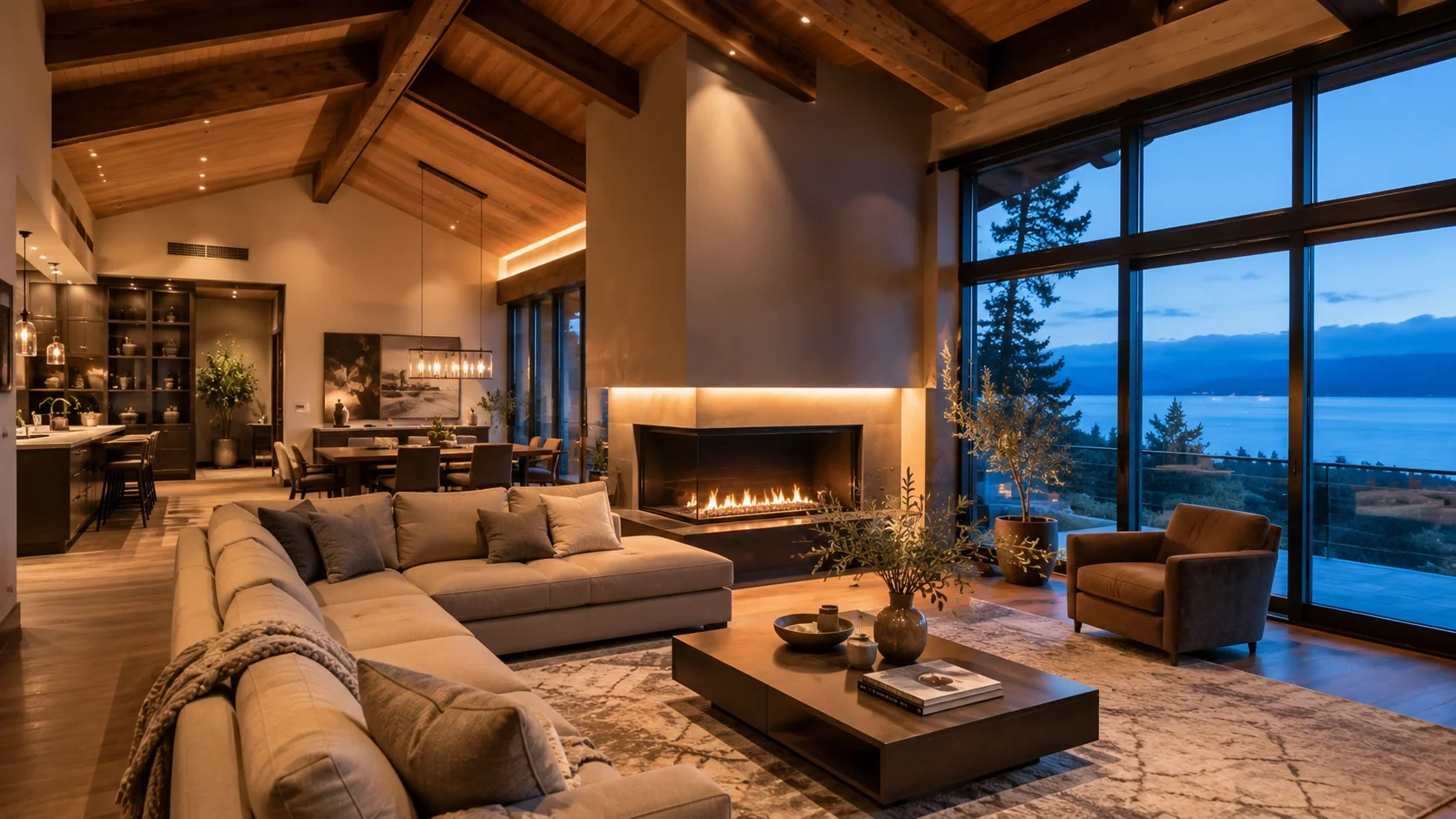
Unique room configurations may require adjustments to standard sizing calculations.
For Corner Fireplaces
Corner installations can affect heat distribution since the fireplace is positioned against two walls. For corner units, consider increasing your BTU requirement by 5-10% to compensate for reduced radiant heat exposure to the room.
For Wall-Mounted Fireplaces
Wall-mounted units, particularly electric fireplaces, may have reduced efficiency compared to insert models since they don't benefit from surrounding insulation. Consider increasing your requirement by 10-15% for wall-mounted installations.
For Outdoor Fireplaces
Outdoor fireplaces present unique challenges since there's no insulation to retain heat. For outdoor applications, focus more on the radiant heat zone (typically 6-10 feet from the unit) rather than trying to heat a specific square footage. Look for models with higher BTU outputs and directional heating capabilities.
For RV Fireplaces
RVs have minimal insulation and significant air infiltration. For mobile applications, increase your BTU requirement by 30-50% compared to a similarly sized room in a stationary home. Also consider power limitations when selecting electric models for RVs.
For complex installations, unusual room configurations, or if you're unsure about any aspect of sizing, consult with a certified fireplace installer. They can perform a detailed heat loss calculation and recommend the ideal unit for your specific situation.
Next Steps After Sizing
Once you've determined the appropriate BTU requirement for your space, you're ready to explore specific fireplace options. Here's what to do next:
- Review different fireplace types that match your BTU requirements
- Consider your fuel preferences: gas vs. electric, electric vs. wood, etc.
- Evaluate installation requirements: venting needs, electrical requirements, etc.
- Determine your budget including installation costs
- Research specific models within your BTU range
- Consult with a professional installer for final recommendations
With your sizing calculation complete, you're now equipped to make an informed decision about the perfect fireplace for your home. Use our comprehensive buying guide to continue your research and find the ideal unit that meets both your heating needs and design preferences.