Ethanol Fireplaces: The Ultimate Ventless Solution
Discover how these eco-friendly, smokeless fireplaces can transform any space without chimneys or gas lines
EXPLORE ETHANOL FIREPLACESWhat You'll Learn in This Guide
This comprehensive guide covers everything you need to know about ethanol fireplaces, including how they work, their benefits and drawbacks, different types available, installation requirements, safety considerations, running costs, and top product recommendations. By the end, you'll have all the information needed to decide if an ethanol fireplace is right for your home.
What Is an Ethanol Fireplace?

An ethanol fireplace, also known as a bioethanol fireplace, is a type of ventless fireplace that burns bioethanol fuel (denatured alcohol) to produce a real flame without the need for a chimney, flue, or gas connection. These fireplaces have gained significant popularity in recent years due to their clean-burning properties and installation flexibility.
Unlike traditional wood-burning fireplaces or even gas alternatives, ethanol fireplaces produce no smoke, soot, ash, or harmful emissions like carbon monoxide. The only byproducts are water vapor and carbon dioxide in amounts similar to human breath, making them an environmentally friendly heating option.
Ethanol fireplaces come in various styles, from sleek modern designs to more traditional looks, and can be installed virtually anywhere in your home—on walls, as freestanding units, built into furniture, or even as tabletop versions.
How Do Ethanol Fireplaces Work?
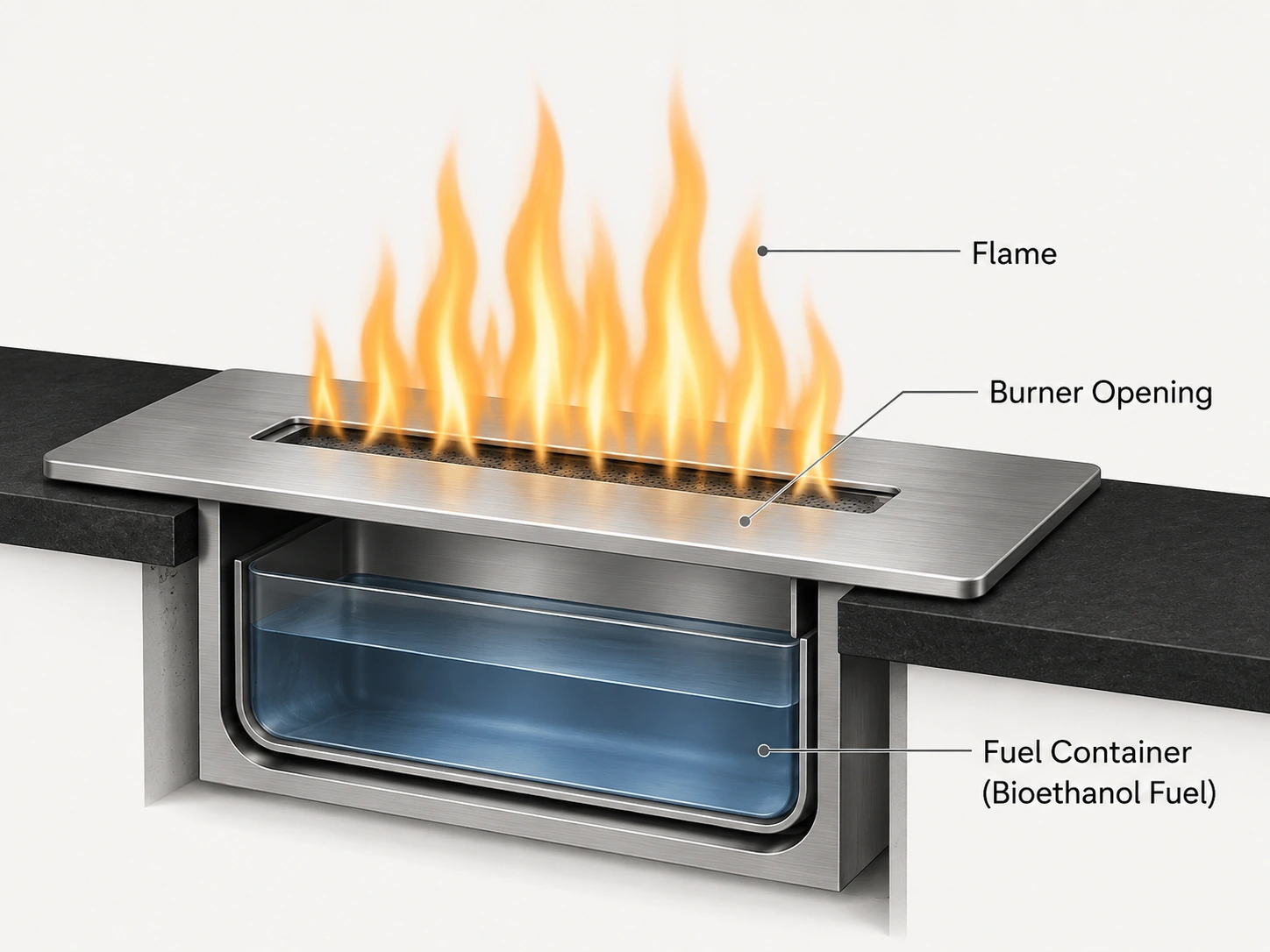
Ethanol fireplaces operate on a simple principle: they burn bioethanol fuel in a specially designed burner to produce a real flame. Here's how the process works:
- Fuel Container: The fireplace contains a stainless steel burner tray or tank that holds the bioethanol fuel. These burners come in various sizes, typically holding between 0.5 to 5 liters of fuel.
- Ignition: The fuel is lit manually using a long lighter or match. Some premium models include electronic ignition systems for added convenience.
- Combustion: The bioethanol burns cleanly, producing a vibrant orange flame. The flame height can usually be adjusted by controlling the opening of the burner with a sliding mechanism.
- Heat Production: As the fuel burns, it releases heat into the surrounding area. The amount of heat depends on the burner size and flame setting.
- Extinguishing: The fire is extinguished by closing the burner's control slider, which cuts off oxygen to the flame. Some models include a special snuffer tool for this purpose.
The entire process is self-contained, requiring no external connections, ventilation, or electricity (unless you choose a model with additional features like LED lighting or electronic ignition).
Benefits of Ethanol Fireplaces
Advantages
- No Ventilation Required: Unlike gas fireplaces or wood-burning options, ethanol fireplaces don't need chimneys or flues.
- Eco-Friendly: Bioethanol is a renewable energy source made from plant materials like corn, sugarcane, or potatoes.
- Clean Burning: No smoke, soot, ash, or harmful emissions—just water vapor and minimal CO2.
- Easy Installation: Most models require no professional installation and can be set up in minutes.
- Design Flexibility: Available in countless styles and can be installed virtually anywhere.
- Real Flame: Unlike electric fireplaces, ethanol models produce a genuine, flickering flame.
- Portable: Many models can be moved from room to room as needed.
- No Utilities Connection: No need for gas lines, electrical wiring, or chimney construction.
Considerations
- Limited Heating Capacity: Most ethanol fireplaces are better for ambiance than primary heating.
- Fuel Costs: Ongoing fuel expenses can add up with frequent use.
- Flame Size Limitations: Even large models have smaller flames than traditional fireplaces.
- Indoor Air Quality: While clean-burning, they do consume oxygen and release some CO2.
- Refueling Process: Requires manual refilling when the fuel runs out.
- Real Flame Risks: Like any open flame, there are inherent safety considerations.
- No Residual Heat: Once extinguished, heat production stops immediately.
Types of Ethanol Fireplaces
Ethanol fireplaces come in several configurations to suit different spaces and design preferences. Understanding these types will help you choose the best option for your home.
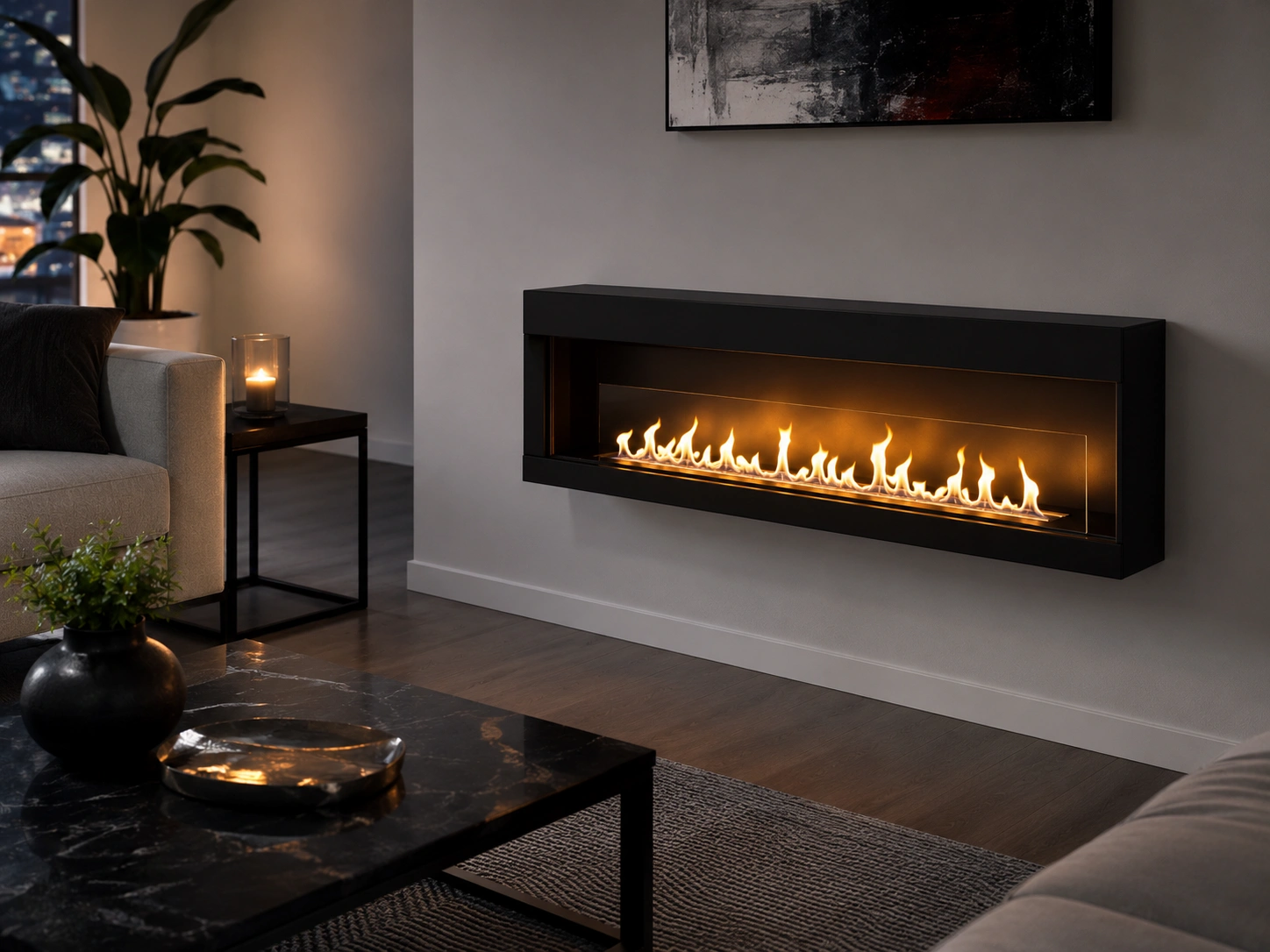
Wall-Mounted Ethanol Fireplaces
These models attach directly to your wall, creating a dramatic focal point. They're perfect for contemporary spaces and work well in living rooms or bedrooms. Installation typically requires just a few screws and can be done without professional help. Prices range from $300–$1,200 depending on size and design complexity.

Freestanding Ethanol Fireplaces
These self-contained units offer maximum flexibility as they can be placed anywhere in your home. They're ideal for renters or those who want to move their fireplace between rooms. Many feature decorative elements that enhance their visual appeal. Expect to pay $200–$1,000 for quality freestanding models.

Built-In Ethanol Fireplaces
Designed to be incorporated into walls, custom cabinetry, or existing fireplace openings, these create a seamless, custom look. They're perfect for remodeling projects or new constructions. While more expensive ($400–$2,000+), they offer the most polished, integrated appearance.

Tabletop Ethanol Fireplaces
Compact and portable, these small units can be placed on tables, countertops, or other surfaces. They're perfect for adding ambiance to kitchens, dining areas, or even outdoor spaces. They're also the most affordable option, typically costing $50–$300.
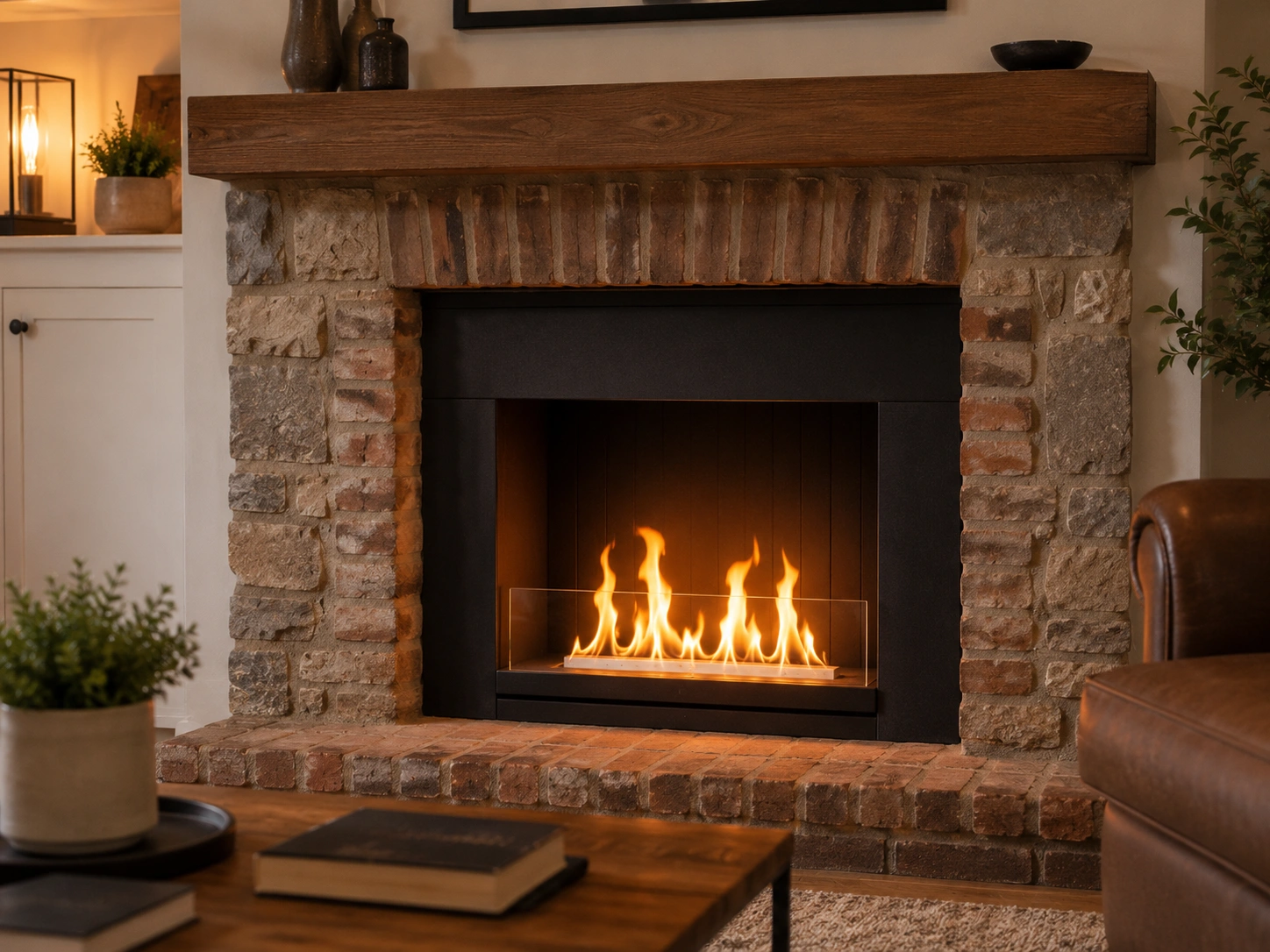
Ethanol Fireplace Inserts
These are designed to fit into existing fireplace openings, converting wood-burning or gas fireplaces to clean-burning ethanol. They're an excellent option for those who want to update an existing fireplace without major renovations. Prices typically range from $300–$1,500 depending on size.

Outdoor Ethanol Fireplaces
Specifically designed for outdoor use, these models are constructed with weather-resistant materials and often feature protective covers. They extend your living space to patios, decks, and gardens, creating a cozy atmosphere for outdoor entertaining. Expect to pay $200–$1,200 for outdoor-rated models.
Ethanol Fireplace vs. Other Fireplace Types
Understanding how ethanol fireplaces compare to other options helps determine if they're the right choice for your specific needs.
| Feature | Ethanol | Electric | Gas | Wood |
|---|---|---|---|---|
| Venting Required | No | No | Yes (most models) | Yes |
| Real Flame | Yes | No (simulation) | Yes | Yes |
| Heat Output (BTU) | 2,000-12,000 | 4,000-5,000 | 10,000-40,000 | 20,000-60,000 |
| Installation Complexity | Easy | Easy | Moderate to Difficult | Difficult |
| Average Cost | $200-$2,000 | $150-$1,500 | $1,000-$5,000 | $2,000-$10,000+ |
| Running Cost (per hour) | $1.50-$3.00 | $0.15-$0.30 | $0.40-$1.00 | $1.00-$3.00 |
| Maintenance | Low | Very Low | Medium | High |
| Smoke/Emissions | None | None | Minimal | Significant |
For a more detailed comparison, check out our comprehensive ethanol vs. electric fireplace analysis or see how ethanol stacks up against gas and wood-burning options.
Ethanol Fireplace Safety Considerations

While ethanol fireplaces are generally safe when used properly, it's essential to understand and follow safety guidelines:
Fuel Handling Safety
- Only use high-quality bioethanol fuel specifically designed for fireplaces (typically 95-97% ethanol).
- Never refuel a burning fireplace—always wait until completely cool (usually 15-20 minutes after extinguishing).
- Wipe up any spills immediately, as ethanol is highly flammable.
- Store fuel in its original container away from heat sources and out of reach of children and pets.
- Never add fuel to a hot burner, as this can cause dangerous flash-back.
Operational Safety
- Always use the provided tools to light and extinguish the fireplace.
- Keep flammable materials at least 3 feet away from the fireplace.
- Never leave a burning fireplace unattended.
- Ensure adequate room ventilation, especially in smaller spaces.
- Place the fireplace on a stable, level surface.
- Keep children and pets at a safe distance from the flame.
Room Size Considerations
For safety reasons, ethanol fireplaces have recommended room size minimums based on their burner capacity:
- Small burners (0.5-1L): Minimum 20m² (215 sq ft)
- Medium burners (1.5-2.5L): Minimum 30m² (323 sq ft)
- Large burners (3-5L): Minimum 40m² (430 sq ft)
For more detailed safety information, see our guide on ventless vs. electric fireplace safety.
Installation Guide for Ethanol Fireplaces
One of the biggest advantages of ethanol fireplaces is their straightforward installation process. Unlike gas fireplaces that require professional installation, most ethanol models can be set up by homeowners.
Wall-Mounted Ethanol Fireplace Installation
- Choose Location: Select a wall away from flammable materials, with at least 3 feet of clearance on all sides.
- Mark Mounting Points: Use a level to mark where the brackets will be installed.
- Drill Holes: Drill appropriate holes for wall anchors (for drywall) or directly into studs if possible.
- Install Brackets: Secure the mounting brackets to the wall.
- Hang Fireplace: Lift the fireplace onto the brackets and secure according to manufacturer instructions.
- Test Stability: Ensure the unit is secure and level before adding fuel.
Freestanding Ethanol Fireplace Setup
- Select Location: Choose a stable, level surface with adequate clearance.
- Position Unit: Place the fireplace in your chosen location.
- Check Stability: Ensure it doesn't wobble and is level.
- Verify Clearances: Confirm there's at least 3 feet of clearance from combustible materials.
- Ready for Use: The fireplace is ready to be fueled and lit.
Professional Installation Consideration
While most ethanol fireplaces are designed for DIY installation, you may want to consider professional installation for large built-in models or if you're incorporating the fireplace into custom cabinetry. For more complex projects, see our guide on DIY vs. professional fireplace installation.
Ethanol Fireplace Running Costs
Understanding the ongoing costs of operating an ethanol fireplace helps you budget appropriately and compare it to other heating options.
Fuel Costs
Bioethanol fuel typically costs between $3-$5 per liter. The consumption rate depends on the flame height setting:
- Minimum flame: Approximately 0.2-0.3 liters per hour
- Medium flame: Approximately 0.4-0.5 liters per hour
- Maximum flame: Approximately 0.6-0.8 liters per hour
This translates to an hourly operating cost of approximately:
- Minimum flame: $0.60-$1.50 per hour
- Medium flame: $1.20-$2.50 per hour
- Maximum flame: $1.80-$4.00 per hour
Cost Comparison Example
If you use your ethanol fireplace for 4 hours each evening during winter (approximately 120 days), your annual fuel cost would be:
- At minimum flame: $288-$720 per year
- At medium flame: $576-$1,200 per year
- At maximum flame: $864-$1,920 per year
For comparison, see our detailed analysis of electric vs. gas fireplace running costs and how ethanol fireplaces fit into the broader picture of daily fireplace running expenses.
Ethanol Fireplace Maintenance
One of the appeals of ethanol fireplaces is their minimal maintenance requirements compared to other fireplace types. Here's what you need to know about ethanol fireplace maintenance:
Regular Maintenance Tasks
- Cleaning the Burner: Wipe the burner with a damp cloth when cool to remove any residue.
- Exterior Cleaning: Dust the fireplace regularly and clean the exterior with appropriate cleaners for the material (stainless steel, glass, etc.).
- Checking for Damage: Inspect for any signs of wear, damage, or fuel leaks before each use.
- Storing Properly: If not used for extended periods, clean thoroughly and store fuel separately.
Seasonal Maintenance
For optimal performance, include your ethanol fireplace in your seasonal maintenance checklist:
- Before Winter: Clean thoroughly, check all components, and ensure you have adequate fuel supply.
- After Winter: Clean the burner thoroughly, empty any remaining fuel, and cover or store the unit.
Ethanol Fireplace Design Ideas
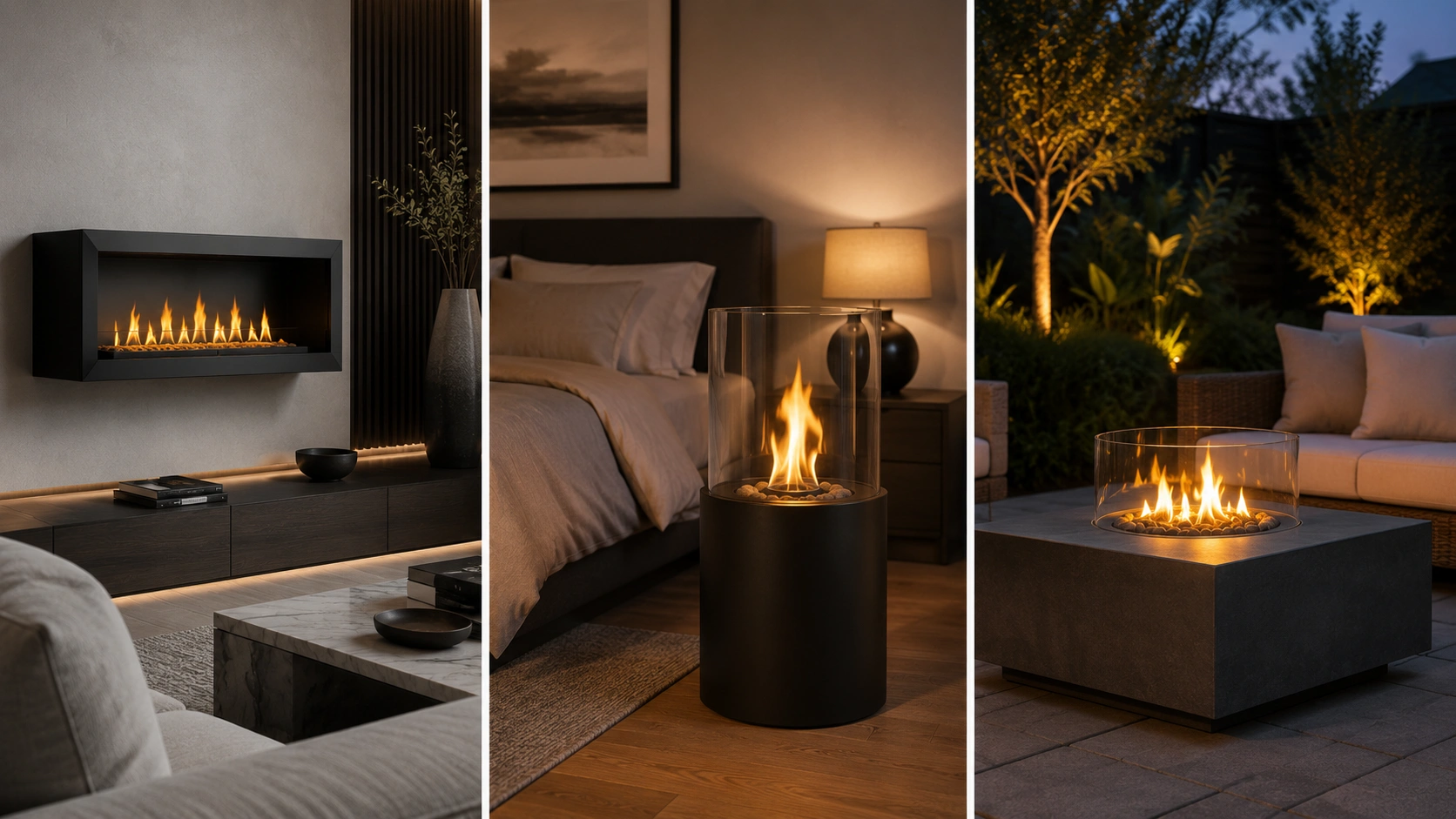
Ethanol fireplaces offer incredible design versatility. Here are some popular ways to incorporate them into your home:
Living Room Focal Points
A wall-mounted ethanol fireplace can serve as a stunning fireplace wall feature in your living room. Pair it with a minimalist mantel design or surround it with built-in shelving for a custom look.
Bedroom Ambiance
Create a romantic atmosphere in your bedroom with a compact ethanol fireplace. Consider a model with a glass surround for safety while maintaining the visual appeal of the flames.
Bathroom Luxury
Transform your bathroom into a spa-like retreat with a small ethanol fireplace. Ensure the model is rated for high-humidity environments and maintains proper distance from water sources.
Outdoor Extensions
Extend your living space with an outdoor ethanol fireplace on your patio or deck. These create a cozy gathering spot for evening entertaining without the need for gas lines or wood storage.
Room Dividers
Double-sided ethanol fireplaces can serve as elegant room dividers in open-concept spaces, providing both visual separation and ambiance to both areas.
Choosing the Right Ethanol Fireplace
With so many options available, selecting the perfect ethanol fireplace requires considering several factors:
Room Size and Heating Needs
While ethanol fireplaces are primarily for ambiance, they do produce some heat. Consider your room size and whether you need supplemental heating. For smaller spaces, a compact ethanol fireplace may suffice, while larger rooms might benefit from models with bigger burners.
Design Aesthetic
Choose a style that complements your existing décor. From sleek stainless steel for minimalist spaces to more ornate designs for traditional rooms, there's an ethanol fireplace to match any aesthetic.
Burner Capacity
Larger burners provide bigger flames and more heat but consume fuel faster. Consider how often you'll use the fireplace and at what flame setting when choosing burner size.
Budget Considerations
Ethanol fireplaces range from affordable tabletop models to premium built-in units. Consider both the initial purchase price and ongoing fuel costs when determining your budget. For a comprehensive look at fireplace costs, see our fireplace cost breakdown.
Safety Features
Look for models with safety features like:
- Adjustable flame controls
- Fuel spill trays
- Automatic extinguishing mechanisms
- Heat-resistant glass barriers
- Stable, tip-resistant bases
Not Sure Which Fireplace Type Is Right for You?
If you're still deciding between different fireplace types, check out our comprehensive guide to choosing the right fireplace for your home or explore the pros and cons of all options in our fireplace pros and cons comparison.