Gas Fireplace Won't Turn Off? Here's What to Do Immediately
A gas fireplace that refuses to shut down isn't just an annoyance—it's a potential safety hazard. Discover the step-by-step fixes for stuck burners, faulty switches, and thermopile issues.
⚠️ SAFETY FIRST: If you smell a strong gas odor (rotten eggs) in your home, evacuate immediately and call your gas utility emergency line. Do not operate any electrical devices. The fixes below are for units where the flame stays on but you don't smell leaking unburnt gas.
It’s a sinking feeling: you flip the wall switch or press the remote to turn your gas logs off for the night, and nothing happens. The flames keep dancing. Unlike a fireplace that won’t light, a gas fireplace that stays stuck “on” signals a failure in the control system. This guide breaks down exactly why your unit is burning uncontrollably and how to safely regain command.
Quick Emergency Shutoff: Stop the Flame Right Now
Before diagnosing the problem, you need to kill the fire. If the wall switch or remote isn't working, follow these manual override steps:
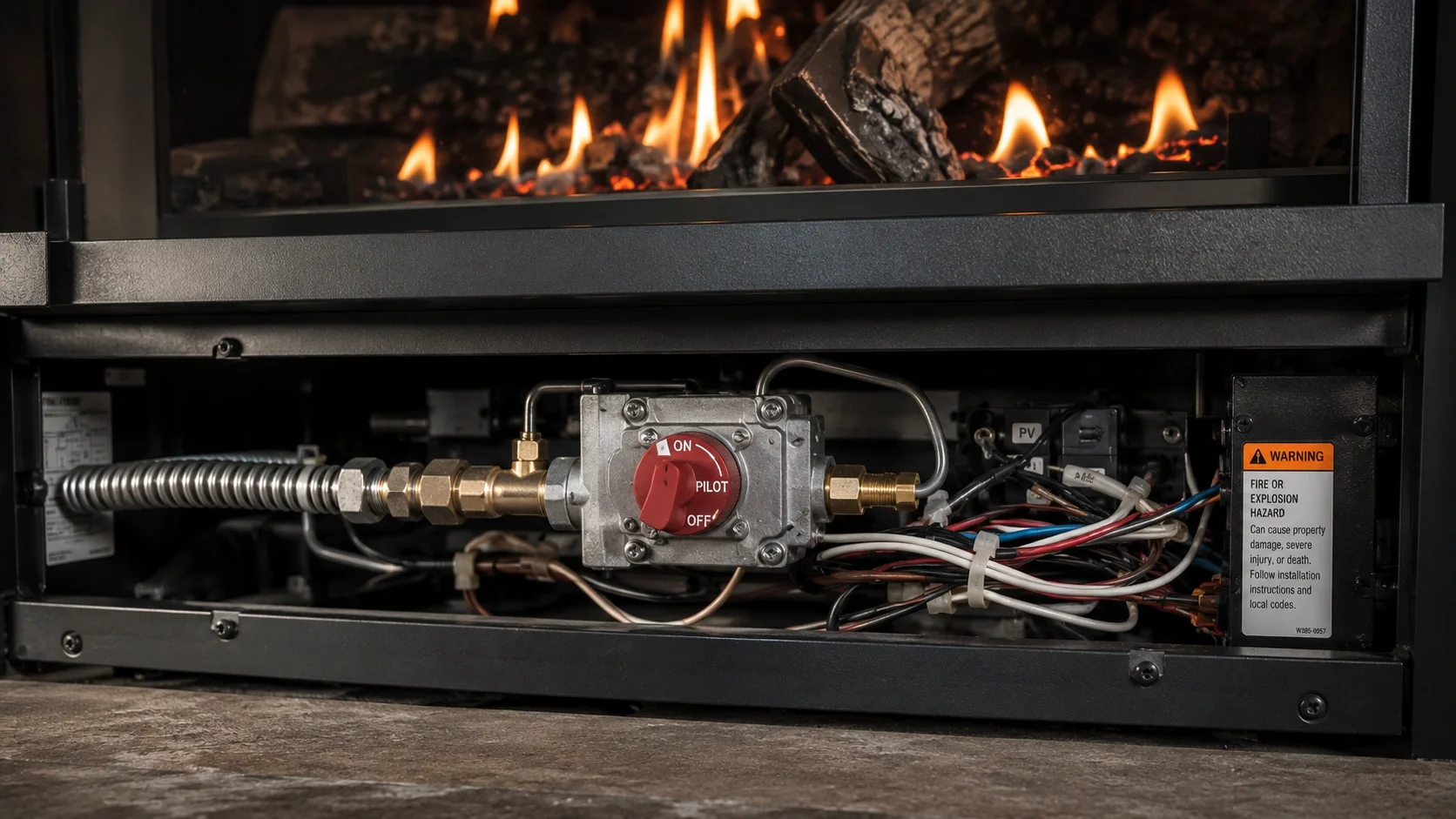
- Locate the gas control valve. This is usually behind the lower access panel (the louvered grille beneath the glass).
- Find the "On/Pilot/Off" knob. It's often red or black. Turn it slightly inward and rotate it to the "Off" position. This mechanically cuts the gas flow to the burner and pilot.
- If the knob is stuck or missing, close the main gas supply shutoff valve. This is the heavy-duty gas valve located in the line running to the fireplace, usually in the basement, crawlspace, or an access panel in the wall nearby.
Once the fire is safely out, you can begin troubleshooting. For more general maintenance that prevents future scares, reviewing our gas fireplace inspection guide is a smart start.
7 Reasons Your Gas Fireplace Won't Turn Off
-
1
Faulty Wall Switch (Most Common)
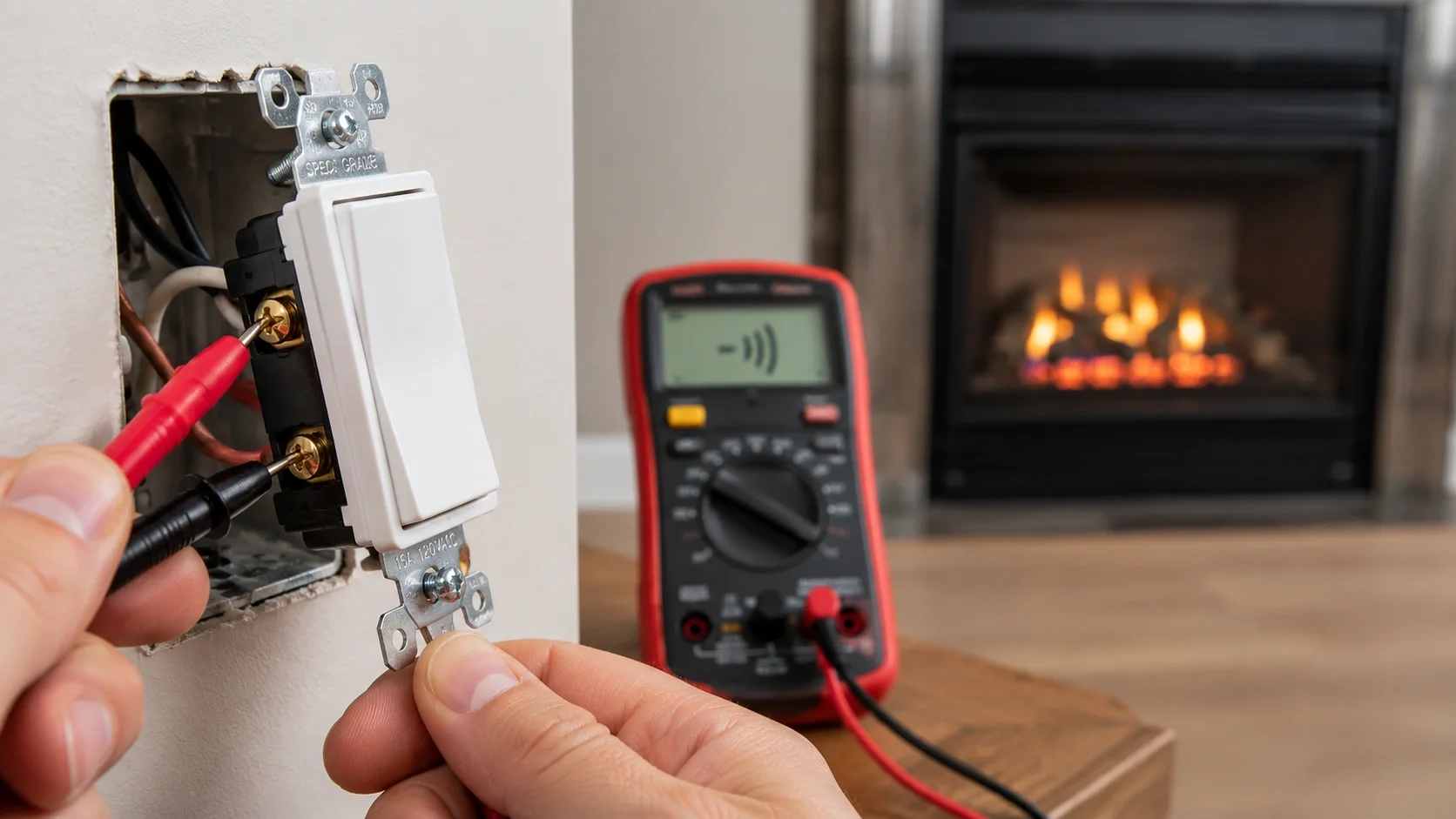
Most modern gas fireplaces operate on a millivolt system. The wall switch is a low-voltage "dry contact" switch. If the switch internals weld together or short out due to a power surge or dust, it keeps the circuit closed. The fireplace thinks your finger is still pressing "on."
Fix: Gently remove the wall switch plate (ensure it's not a high-voltage switch!). Use a multimeter to test for continuity. If the switch shows continuity regardless of the toggle position, it's faulty. Replace it with a standard SPST light switch—this is a $3–$10 DIY fix.
-
2
Stuck Remote Control Transmitter
If you use a wireless remote or thermostat to control the flame height and on/off function, a low battery can sometimes send sporadic "hold" signals. Alternatively, the remote might have physical debris keeping the button physically pressed, or it has lost its programming sync with the receiver box inside the fireplace.
Fix: First, remove the batteries from the remote. If the fireplace turns off, the remote was the culprit. Clean the contacts, insert fresh batteries, and check the remote control manual for re-syncing instructions. If the unit stays on even with the remote batteries out, the issue is the receiver box (see step 4).
-
3
Thermopile Producing Excess Voltage
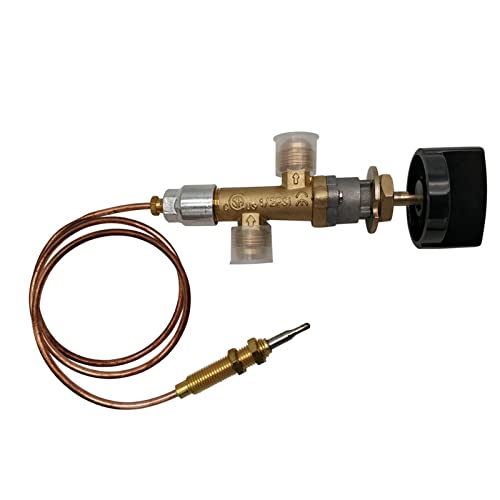
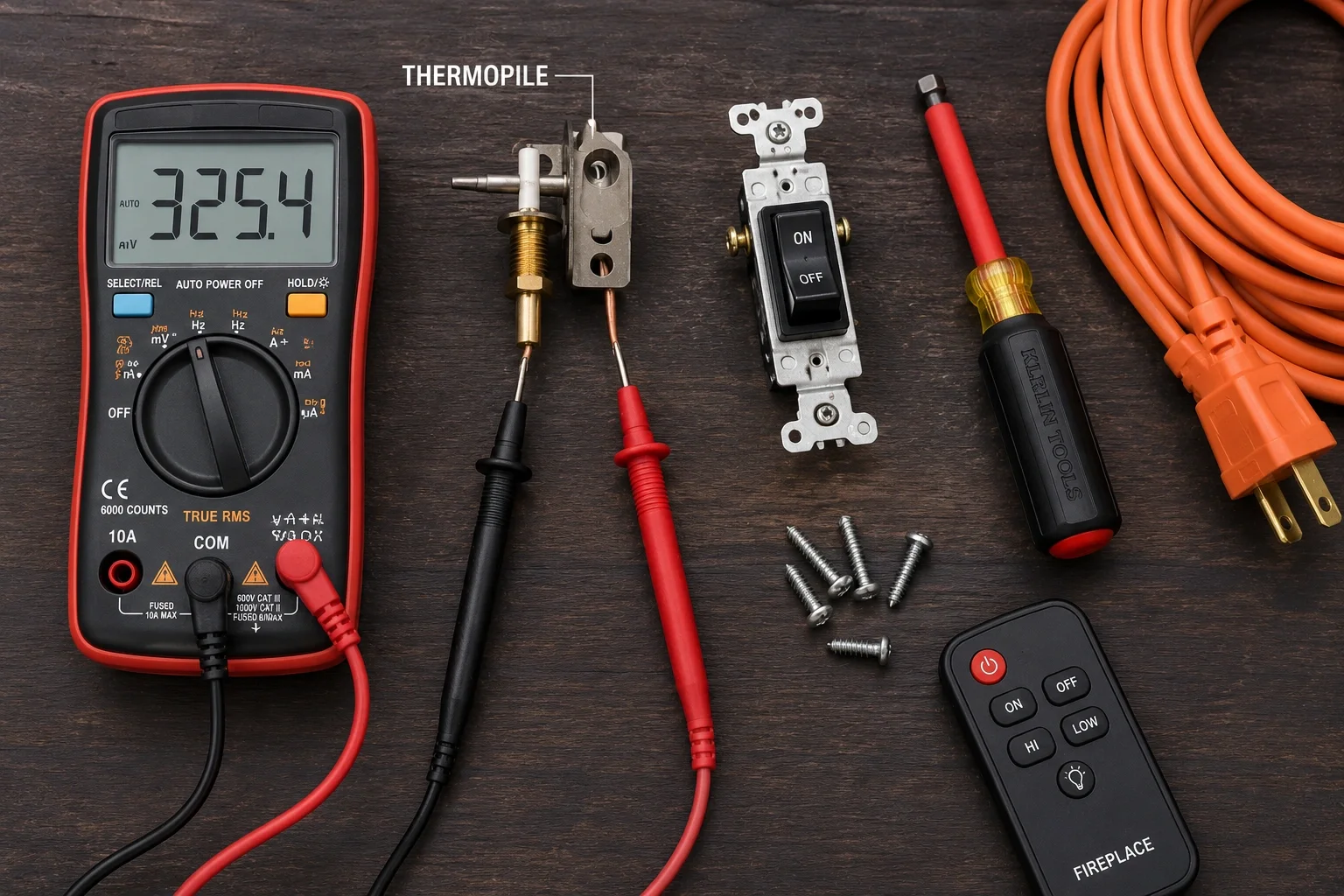
A gas fireplace uses a thermopile (and a thermocouple for the pilot) to generate the electricity that opens the main gas valve. If the thermopile is over-firing or defective, it might generate voltage above the dropout threshold (usually around 750 millivolts). This "ghost" voltage tricks the valve into staying open even when the switch circuit is broken.
Fix: This requires a multimeter. Measure the voltage across the TP and TH/TP terminals on the gas valve. With the burner running, a healthy reading is generally 350–550 mV. If it's consistently above 650mV even after the switch is off, the thermopile assembly likely needs replacement. This is often a $40–$80 part.
-
4
Faulty Receiver or Control Module
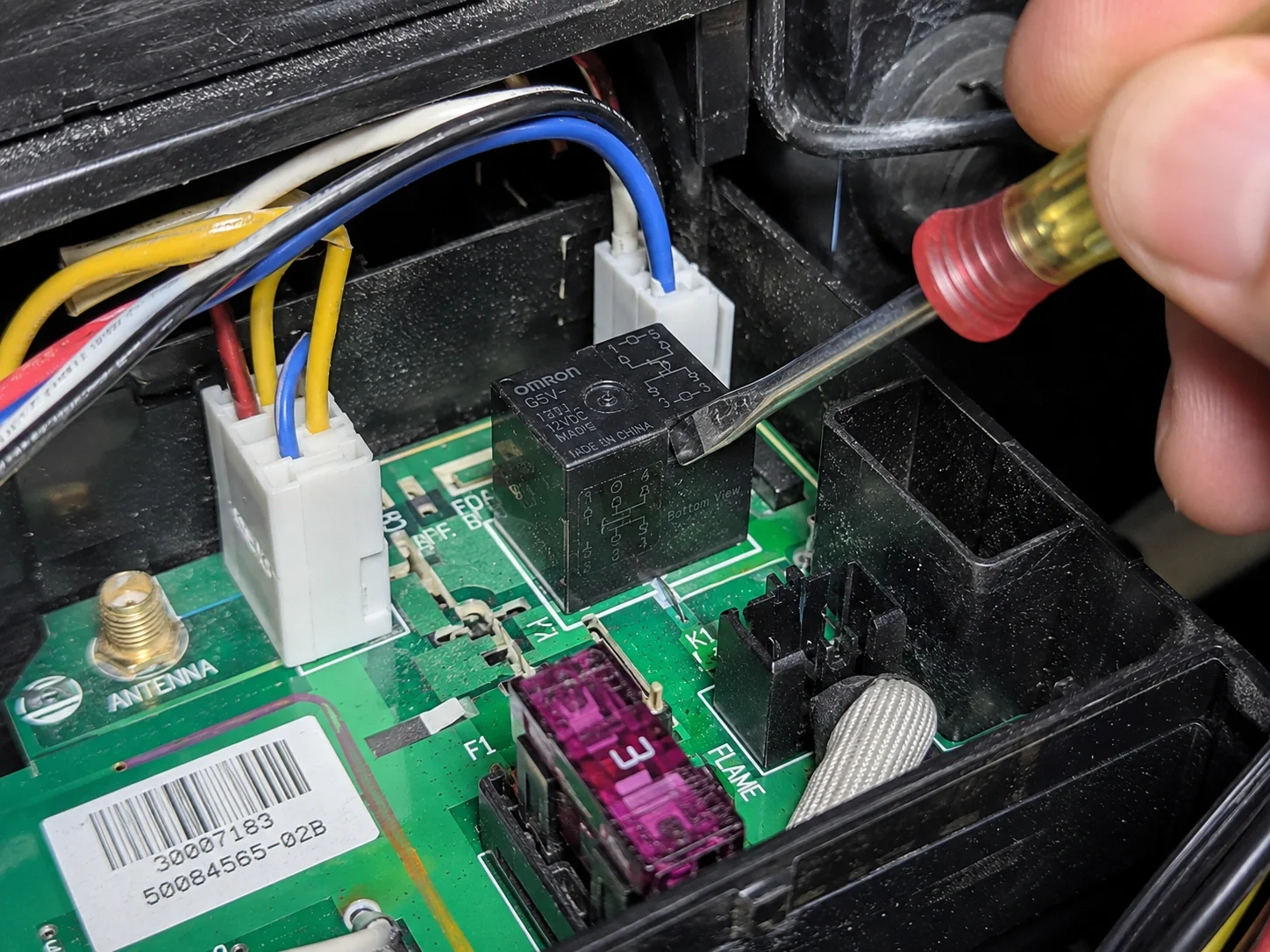
For models with built-in receivers (often hidden behind the lower panel), a failed relay on the control board can physically stick "closed." This is common after power outages or electrical storms. A stuck relay bridges the connection permanently, rendering your commands useless.
Fix: Turn off the fireplace and its main breaker. Locate the control module (a black box with wire terminals). Lightly tap the relay casing with the back of a screwdriver. If that temporarily fixes it, the relay is failing and the board needs replacement. Modern replacement kits range from $100–$250, and if you're unsure about wiring, check our guide on hiring a pro vs. DIY.
-
5
Shorted Wiring (Pinched Thermopile Wire)
The wiring running from the wall switch or the thermopile to the gas valve is surprisingly thin. If a wire gets pinched under a metal edge of the fireplace frame during installation, the insulation can rub off over time. This creates a short circuit that permanently jumps the switch connection, keeping the fireplace on.
Fix: Carefully inspect the orange/red wiring harness from the fireplace body to the gas valve. Look for pinched spots or copper wire touching the metal chassis. Wrap any frayed spots with electrical tape, or replace the wire leads.
-
6
Main Gas Valve Internally Stuck
The gas valve itself is a mechanical device. Over years of use, especially with contaminants in the gas line, the valve's internal plunger can become sticky or gummed up. If it physically fails to close even when the magnet is de-energized, the gas flow continues.
Warning: A mechanically stuck valve is a significant hazard. Tapping it lightly with a wrench might temporarily break it loose, but this is a sign of permanent failure. Do not operate the fireplace. You must replace the gas valve assembly ($180–$350 for the part). This is a job for a licensed technician, as gas leak testing is mandatory.
-
7
Wall Switch Wiring Short in an Older Home
In some older installations, the builder might have used standard Romex electrical wire for the millivolt switch run, but a nail or screw driven into the wall to hang a picture later punctured the cable, creating a short circuit. Because it's low voltage, you won't see sparks, but the fireplace sees a constant "on" signal.
Fix: Disconnect one of the two switch wires from the "TH" terminal on the gas valve. If the fireplace shuts off, the short is inside the wall wiring, not the switch. You can run a new length of wire externally (using a paintable wire channel) to bypass the buried short until you can open the wall. Understanding the pros and cons of various fireplace types often highlights how different wiring setups impact reliability.
Understanding the Critical Difference: Pilot vs. Main Burner
It's important to assess *what* won't turn off. A healthy pilot light (a tiny blue flame) is designed to stay on 24/7 during the heating season in many standing-pilot systems. That's normal. The problem arises when the main burner (the big roaring flame) refuses to stop. However, if the pilot itself won't shut off even with the knob in the "Off" position, you likely have a defective gas control valve that needs immediate professional replacement. For seasonal shutdowns where you intentionally want the pilot off, our guide on summer fireplace care walks you through the steps.
When to Call a Professional vs. DIY Fix
A gas fireplace that won't turn off is one scenario where safety trumps curiosity. Here's a quick guide:
- Safe to DIY: Replacing a wall switch, changing remote batteries, visually inspecting pinched wires (while the power and gas are fully off).
- Call a Certified Technician ($85–$150 service call): Replacing a thermopile assembly that requires opening the sealed combustion chamber, replacing a gas valve, or repairing a control module that involves re-wiring high-voltage components. Also, if you detect any gas odor. Look for a technician certified by the National Fireplace Institute (NFI).
Ignoring a stuck gas fireplace can lead to overheating the unit, cracking the firebox, or wasting massive amounts of gas. A typical vented gas fireplace can burn 30,000–40,000 BTU per hour. If left running overnight, this could easily cost $15–$25 in wasted fuel and pose a serious carbon monoxide risk if a blockage occurs, making a working ventilation system essential.
Tools You'll Need for Diagnosis
To safely trace the issue without calling a pro immediately, arm yourself with these tools (available at most hardware stores):
- Digital Multimeter: Essential for reading millivolts (DC) and testing continuity (resistance).
- Insulated Screwdrivers: To remove the decorative trim and access panels.
- Contact Cleaner: To spray dirty switch terminals.
- Nut Drivers (1/4-inch): Often needed to remove component mounting screws.