Electric vs Gas Fireplace: Efficiency & Operating Tier Comparison
Discover the real efficiency differences between each fireplace type. Compare operating tiers, understand efficiency factors, and make an informed choice for your home.
COMPARE OPERATING TIERSEfficiency Consideration: While initial purchase tier is important, long-term operating efficiency significantly impacts your total ownership value. This comprehensive guide breaks down every efficiency factor to help you make a well-informed decision between electric and gas fireplaces.
Understanding the Efficiency Difference
When comparing electric fireplaces and gas fireplaces, the operating tiers extend beyond just the fuel or electricity consumed. A complete analysis must consider installation complexity, maintenance requirements, efficiency ratings, and regional energy rate variations. This comprehensive breakdown will help you understand the true operating tier of each option.
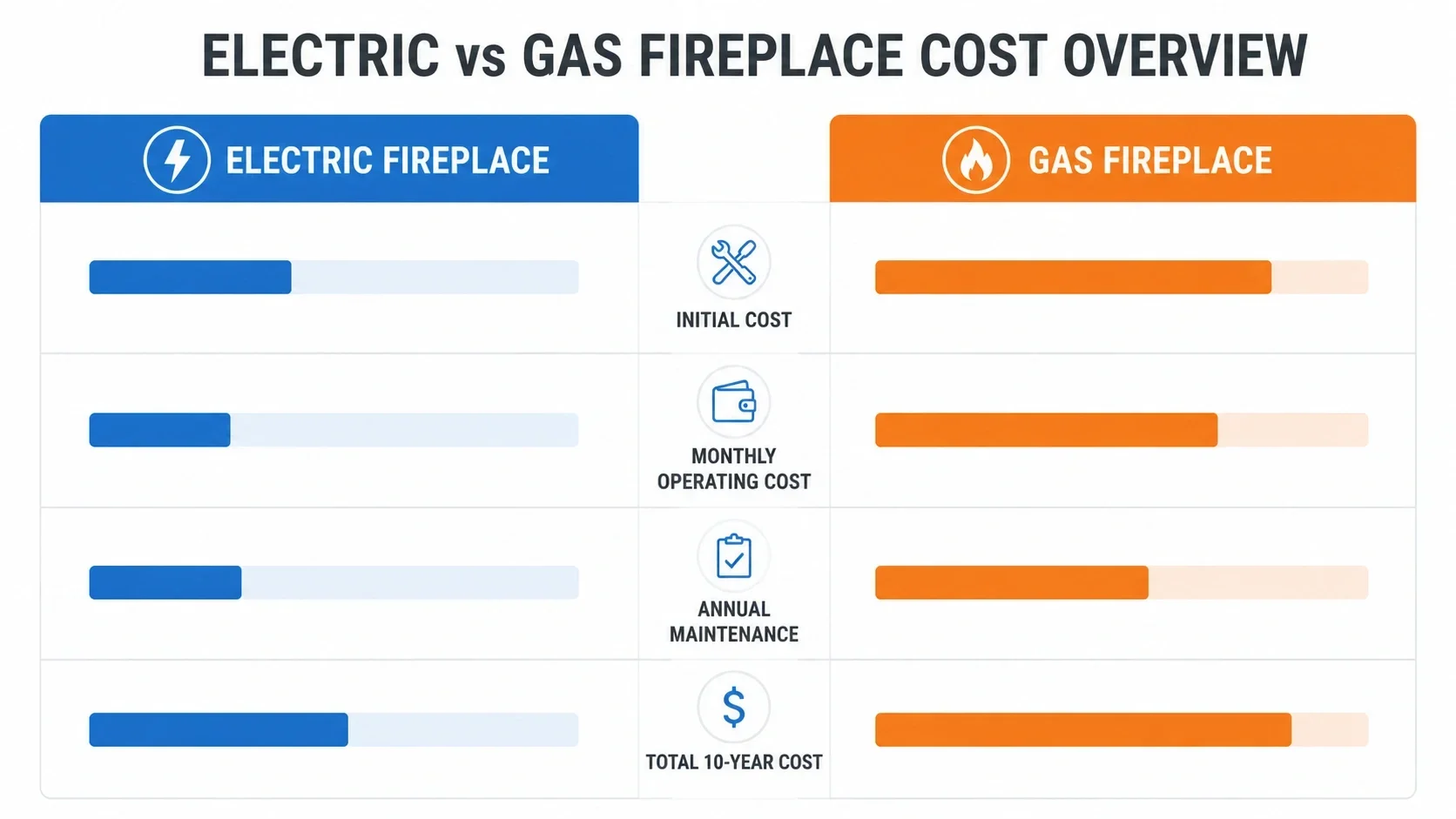
The fundamental difference lies in their energy sources: electric fireplaces convert electricity directly into heat with near 100% efficiency at the point of use, while gas fireplaces burn natural gas or propane, which involves combustion losses and venting requirements. However, the energy rate per unit varies significantly between electricity and gas, creating a complex efficiency equation that depends on multiple factors.
Initial Investment Tiers
Before examining ongoing efficiency, it's essential to understand the upfront investment tier required for each fireplace type, as this significantly impacts the total ownership value over time.
| Investment Component | Electric Fireplace | Gas Fireplace |
|---|---|---|
| Unit Purchase Tier | Entry-Level to Mid-Range | Mid-Range to Premium |
| Installation Complexity | Simple (plug-in) | Complex (vent/gas line) |
| Professional Installation Tier | Entry-Level (optional) | Mid-Range to Premium (required) |
| Venting Requirements | None | Entry-Level to Mid-Range |
| Gas Line Extension (if needed) | N/A | Mid-Range |
| Overall Initial Investment Tier | Entry-Level to Mid-Range | Mid-Range to Premium |
Initial Investment Advantage: Electric Fireplaces
Electric fireplaces typically sit in a significantly lower initial investment tier than gas fireplaces. For budget-conscious homeowners or those without existing gas lines, this substantial difference can be the deciding factor. The simple installation process for electric models often allows for DIY setup, further reducing the investment tier.
Operating Tier Breakdown
The ongoing operational efficiency represents the most significant difference between electric and gas fireplaces over time. Understanding how these tiers are calculated helps you estimate your actual operating efficiency.
Electric Fireplace Efficiency
Electric fireplaces use resistance heating or infrared technology to generate warmth. The operating tier depends on the wattage, usage hours, and your local electricity rate tier. Most electric fireplaces consume 1,200-1,500 watts on high heat settings.
Gas Fireplace Efficiency
Gas fireplaces consume natural gas or propane measured in therms or gallons. Operating tier depends on the BTU rating, usage patterns, and local gas rate tier. Most residential gas fireplaces use 20,000-40,000 BTUs per hour.
How to Calculate Your Electric Fireplace Operating Tier
Use this simple formula to determine your daily and monthly efficiency tier:
Example: For a 1,500-watt electric fireplace running 5 hours daily, the operating tier is typically determined by your regional electricity rate tier.
How to Calculate Your Gas Fireplace Operating Tier
Use this formula to determine your natural gas fireplace operating tier:
Example: For a 30,000 BTU gas fireplace running 5 hours daily, the operating tier is typically determined by your regional natural gas rate tier.
Monthly Operating Tier Comparison
The following table compares typical monthly operating tiers based on average usage patterns and national average energy rates. Your actual tier may vary based on local rates and usage habits.
| Usage Scenario | Electric Fireplace | Gas Fireplace (Natural Gas) | Gas Fireplace (Propane) |
|---|---|---|---|
| Occasional Use (2 hrs/day, weekends only) | Entry-Level | Entry-Level to Mid-Range | Mid-Range |
| Regular Use (4 hrs/day, 5 days/week) | Entry-Level to Mid-Range | Mid-Range | Mid-Range to Premium |
| Primary Heat Source (8 hrs/day, daily) | Mid-Range | Mid-Range | Premium |
| Ambiance Only (flame effect, no heat) | Entry-Level | Entry-Level | Entry-Level to Mid-Range |
Operating Tier Advantage: Depends on Usage Pattern
For occasional or regular use, electric fireplaces typically operate in a lower tier than natural gas fireplaces and significantly lower than propane models. However, for continuous daily use as a primary heat source, natural gas fireplaces can shift to a competitive tier due to the lower energy rate per BTU of natural gas compared to electricity in most regions.
Energy Efficiency Comparison
Efficiency directly impacts operating tier, making it a crucial factor in the overall efficiency analysis. Understanding how each fireplace type converts energy into usable heat helps explain the tier differences.
| Efficiency Factor | Electric Fireplace | Gas Fireplace |
|---|---|---|
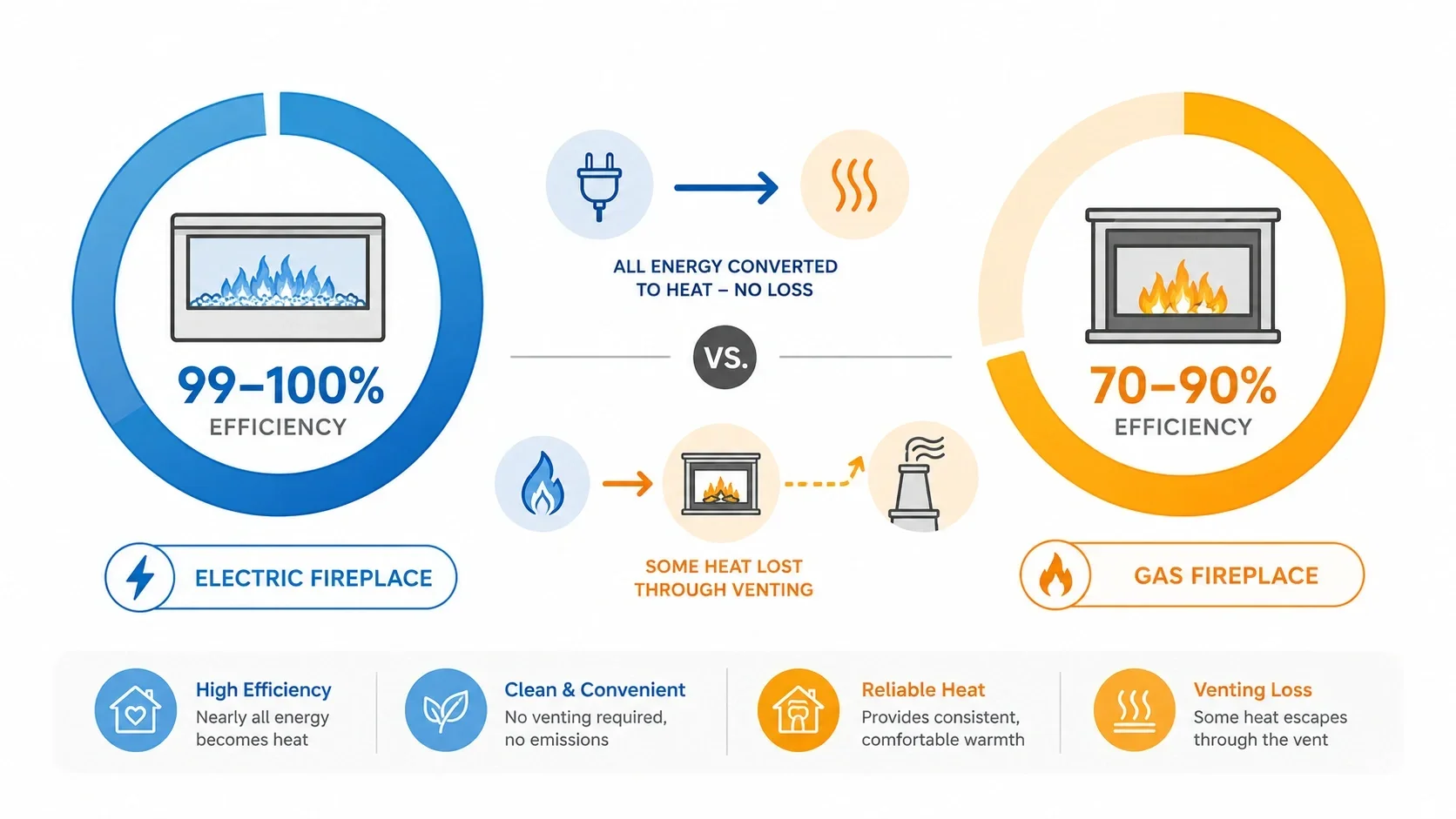
| Heat Conversion Efficiency | 99-100% | 70-90% |
| Heat Loss Through Venting | None | 10-30% |
| Zone Heating Capability | Excellent | Good |
| Thermostat Control Precision | High | Moderate |
| Heat Distribution | Limited (immediate area) | Better (with blower) |
| Cold Air Draft Issues | None | Possible when off |
While electric fireplaces achieve near-perfect efficiency at the point of use, it's important to consider the full energy cycle. Electricity generation at power plants typically has 30-40% efficiency, meaning the overall system efficiency is lower. However, for the homeowner, only the point-of-use efficiency matters for evaluating the operating tier.
Gas fireplaces, particularly ventless models, can achieve higher effective efficiency (up to 99%) since all heat remains in the room. However, vented models lose 10-30% of heat through the exhaust, reducing their operating tier despite providing better air quality.
Regional Efficiency Variations
Energy rates vary significantly across different regions, dramatically impacting which fireplace type offers the best operating tier. The following breakdown shows how location affects the efficiency equation.
Northeast Region
Gas has a slight advantage in this region due to higher electricity rate tiers and moderate natural gas costs.
Southeast Region
Electric fireplaces operate in a significantly lower tier in this region due to lower electricity rate tiers.
Midwest Region
Operating tiers are relatively similar, with gas having a slight advantage for heavy users due to abundant natural gas supply.
West Coast
Variable tiers across this region. In high electricity rate areas, gas may offer a lower operating tier for frequent use.
Important Regional Consideration
Before making your decision, check your local utility rate tiers using your most recent bills. Energy rates can vary by 50% or more even within the same region. Some utilities offer time-of-use pricing that shifts electric fireplaces to a lower operating tier during off-peak hours.
Maintenance Tier Comparison
Beyond energy costs, maintenance requirements represent a significant portion of long-term ownership tiers. Understanding these differences helps evaluate the true operating tier of each option over its lifespan.
| Maintenance Task | Electric Fireplace | Gas Fireplace |
|---|---|---|
| Annual Inspection | Entry-Level (self-check) | Mid-Range (professional) |
| Cleaning | Entry-Level (DIY) | Entry-Level to Mid-Range (professional) |
| Chimney/Vent Cleaning | N/A | Mid-Range (annually) |
| Parts Replacement | Entry-Level (bulbs/heating element) | Entry-Level to Mid-Range (various components) |
| Gas Line Maintenance | N/A | Entry-Level to Mid-Range (occasionally) |
| Estimated Annual Maintenance Tier | Entry-Level | Mid-Range |
The minimal maintenance requirements of electric fireplaces represent a significant efficiency advantage. Most electric models only require occasional dusting and bulb replacement, tasks that can be easily performed by homeowners without professional assistance.
In contrast, gas fireplace maintenance requires annual professional inspections to ensure safe operation, check for gas leaks, and clean components. The chimney or vent system also requires regular cleaning to prevent creosote buildup and ensure proper drafting, adding substantially to the long-term ownership tier.
Long-Term Ownership Tier Analysis
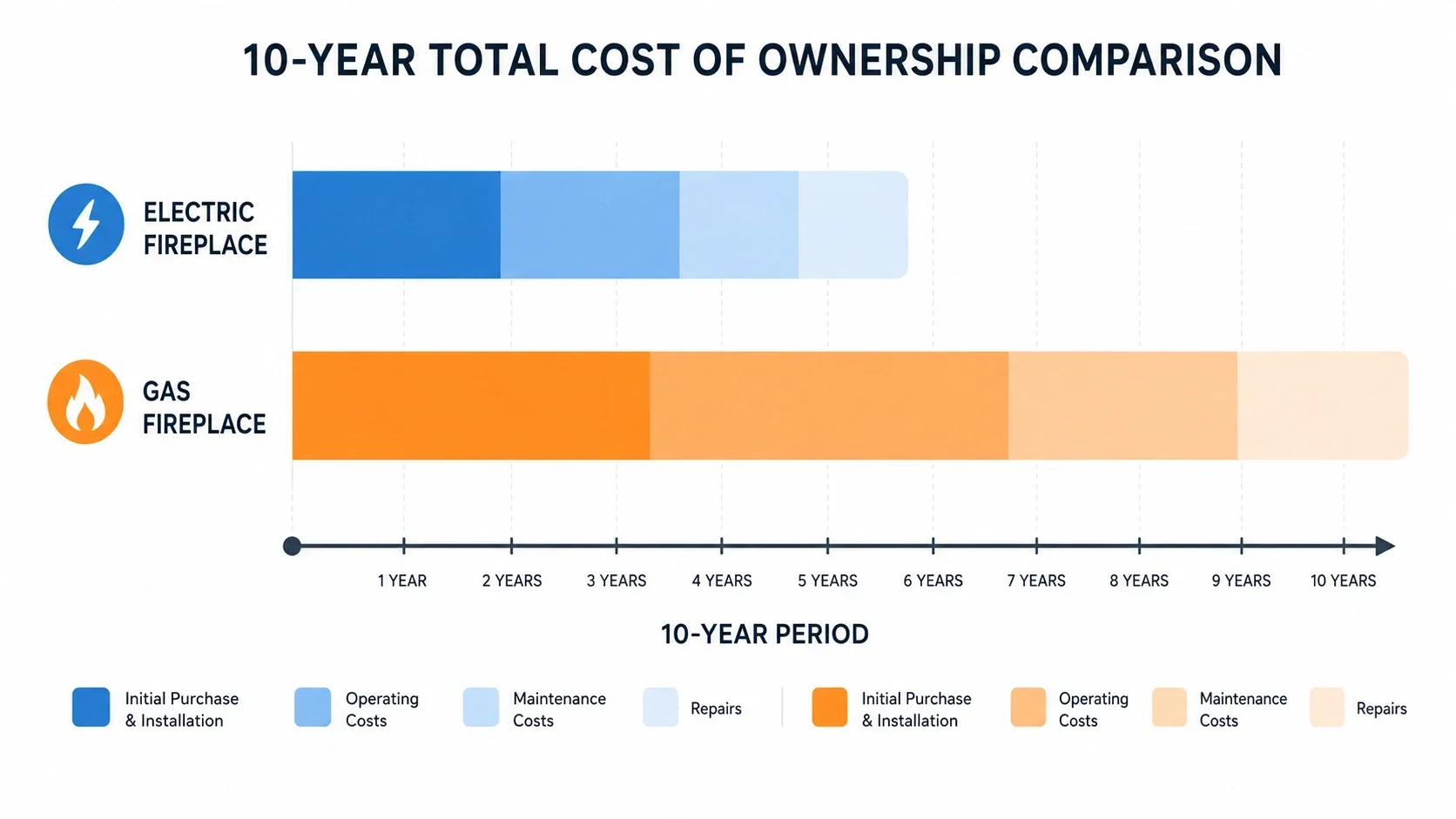
When evaluating the total ownership tier over a 10-year period, the picture becomes clearer. This analysis combines initial tiers, operating tiers, and maintenance tiers to show the true long-term efficiency difference.
| Ownership Category (10-Year Period) | Electric Fireplace | Gas Fireplace |
|---|---|---|
| Initial Purchase & Installation Tier | Entry-Level to Mid-Range | Mid-Range to Premium |
| Operating Tier (moderate use) | Entry-Level to Mid-Range | Mid-Range |
| Maintenance Tier | Entry-Level | Mid-Range to Premium |
| Repairs & Parts Tier | Entry-Level | Mid-Range |
| Overall 10-Year Ownership Tier | Entry-Level to Mid-Range | Mid-Range to Premium |
| Annual Equivalent Tier | Budget-Friendly | Mid-Range |
Long-Term Tier Advantage: Electric Fireplaces
Over a 10-year period, electric fireplaces typically sit in a significantly lower ownership tier than gas fireplaces. This represents a major efficiency advantage in total ownership tier, making electric models the clear winner for most homeowners, especially those who use their fireplace for supplemental heating rather than as a primary heat source.
Which Option Is Most Efficient for You?
The most economical choice depends on your specific circumstances, usage patterns, and local energy rate tiers. Use this decision guide to determine which fireplace type offers the best operating tier for your situation.
Choose an Electric Fireplace If:
You use the fireplace occasionally for ambiance
Electric fireplaces sit in a lower operating tier for occasional use, making them ideal for weekend or evening enjoyment without significant energy expenses.
You live in a region with low electricity rate tiers
In areas where electricity sits in the entry-level rate tier, electric fireplaces are almost always more economical to operate than gas alternatives.
You want to minimize maintenance expenses
With annual maintenance tier in the entry-level range compared to mid-range for gas fireplaces, electric models offer significant long-term savings.
You're working with a limited initial budget
The lower installation tier makes electric fireplaces accessible to more homeowners without financing.
Choose a Gas Fireplace If:
You plan to use it as a primary heat source
For continuous daily use, natural gas fireplaces can shift to a more competitive operating tier in regions with moderate gas rate tiers.
You live in an area with high electricity rate tiers
In regions where electricity sits in the premium rate tier, gas fireplaces typically offer lower operating tiers for regular use.
You already have a gas line in your home
Eliminating the gas line installation component significantly improves the value proposition of gas fireplaces.
You prioritize realistic flame appearance
While not an efficiency factor, if you're willing to accept a higher ownership tier for the most realistic flame experience, gas fireplaces deliver superior visual authenticity.
Efficiency Tips for Both Fireplace Types
Regardless of which fireplace type you choose, these strategies can help minimize operating tier while maximizing comfort and enjoyment.
For Electric Fireplaces
- Use the thermostat effectively Major Efficiency Gain
- Opt for infrared heating technology Moderate Efficiency Gain
- Run during off-peak hours Significant Tier Shift
- Use flame effect only when not heating Highest Efficiency Tier
- Properly size for your room Moderate Efficiency Gain
For Gas Fireplaces
- Choose a direct-vent model Moderate Efficiency Gain
- Install a programmable thermostat Moderate Efficiency Gain
- Schedule regular maintenance Minor Efficiency Gain
- Use the blower fan effectively Moderate Efficiency Gain
- Consider a ventless model if permitted Significant Tier Shift
For additional strategies on improving fireplace operating efficiency, explore our comprehensive guide on fireplace energy-saving tips that covers seasonal adjustments, zoning techniques, and smart home integration options.
Final Verdict on Operating Tiers
When analyzing the complete efficiency picture—initial investment tier, operating tier, and maintenance tier—electric fireplaces emerge as the more efficient choice for most homeowners. They offer lower operating tiers for occasional use, lower total ownership tier over 10 years, and minimal maintenance requirements.
However, gas fireplaces can be more efficient in specific scenarios: for homeowners who use their fireplace as a primary heat source in regions with low natural gas rate tiers, or those who already have gas infrastructure in place. For these specific situations, the higher initial tier can be offset through lower operating tiers over time.
Ultimately, the most efficient choice depends on your unique circumstances, including your usage patterns, local energy rate tiers, existing infrastructure, and budget constraints. By using the calculation methods and decision frameworks provided in this guide, you can determine which option offers the best efficiency for your specific situation.
Next Steps: Now that you understand the efficiency implications, explore our comprehensive comparison of all three major fireplace types or check our fireplace sizing worksheet to ensure you select the right capacity for your space.