Comprehensive Fireplace Comparisons
Make an informed decision with our detailed analysis of different fireplace types, features, and installation options to find the perfect fit for your home.
EXPLORE COMPARISONSChoosing the right fireplace for your home involves more than just picking the most attractive option. With various fuel types, installation methods, and features available, making an informed decision requires understanding how different options compare in terms of efficiency, cost, maintenance, and suitability for your specific needs.
Our comprehensive fireplace comparisons break down the key differences between popular options, helping you weigh the pros and cons of each based on factors that matter most to you. Whether you're deciding between gas and electric, considering vented versus ventless options, or trying to determine if a fireplace should primarily serve heating or aesthetic purposes, we've got you covered with detailed analysis and expert insights.
Comparison Categories
Fuel Type Comparisons
Understand the fundamental differences between fireplaces based on their fuel source, which impacts everything from installation requirements to daily operation costs.
Installation & Venting
Compare different installation approaches and venting requirements to determine what's feasible for your home structure and budget.
Feature Comparisons
Dive into specific features that affect your fireplace's performance, convenience, and visual appeal.
Scenario Comparisons
Explore which fireplace type works best for specific situations and use cases.
Gas vs Electric: The Ultimate Fireplace Showdown

The gas vs electric fireplace debate is perhaps the most common comparison homeowners face when shopping for a new fireplace. Both options offer distinct advantages that make them suitable for different situations, budgets, and preferences.
| Factor | Gas Fireplace | Electric Fireplace |
|---|---|---|
| Installation Complexity | Requires gas line, professional installation | Simply plug in, DIY-friendly |
| Heat Output | Higher BTU output (20,000-60,000 BTU) | Lower BTU output (4,500-5,000 BTU) |
| Operating Cost | $0.50-$1.50 per hour | $0.08-$0.15 per hour |
| Initial Cost | $2,000-$5,000 installed | $300-$2,500 |
| Venting Requirements | Vented or ventless options available | No venting needed |
| Flame Realism | Very realistic with actual flames | Improving but still less realistic |
| Maintenance | Annual inspection, occasional cleaning | Minimal - occasional dusting |
| Heat During Power Outage | Yes (with proper setup) | No |
| Ideal For | Primary heating, homes with gas lines | Apartments, supplemental heat, ease of use |
When deciding between gas fireplaces and electric fireplaces, consider your primary goal. If you need substantial heating power and have access to a gas line, a gas fireplace is likely the better choice despite higher installation costs. However, if you're looking for ambiance with occasional heat, especially in a rental or without existing gas infrastructure, an electric model offers excellent value with minimal hassle.
For those concerned about running costs, electric fireplaces win in terms of daily operation expenses, typically costing just pennies per hour compared to dollars for gas models. This makes them particularly attractive for occasional use rather than as a primary heat source.
Vented vs Ventless: Which Gas Fireplace is Right for You?

If you've decided on a gas fireplace, the next critical decision is whether to choose a vented or ventless model. This comparison has significant implications for installation possibilities, efficiency, and safety considerations.
Vented Gas Fireplaces
Vented models exhaust combustion byproducts outside through a chimney or direct vent system. While slightly less efficient (70-80% efficiency rating) because some heat escapes with exhaust, they offer superior safety with no indoor air quality concerns. They can handle higher BTU outputs and provide more realistic flames.
Ventless Gas Fireplaces
Ventless models boast near 100% efficiency since all heat stays in the room. They don't require chimney or vent installation, making them ideal for locations where venting isn't possible. However, they do produce small amounts of moisture and combustion byproducts indoors, which concerns some homeowners despite built-in safety features like oxygen depletion sensors.
Key Decision Factors
Installation Location: Ventless models offer more flexibility for placement since they don't require access to an exterior wall or chimney. This makes them ideal for interior walls, basements, and apartments where venting isn't possible.
Climate Considerations: In very humid climates, the additional moisture produced by ventless models can be problematic. In dry climates, this moisture might actually be beneficial.
Local Regulations: Some states and municipalities restrict or prohibit ventless gas appliances. Always check local codes before purchasing.
Health Sensitivities: Those with asthma, allergies, or chemical sensitivities may prefer vented models despite the lower efficiency.
Heating vs Ambiance: Defining Your Fireplace's Purpose
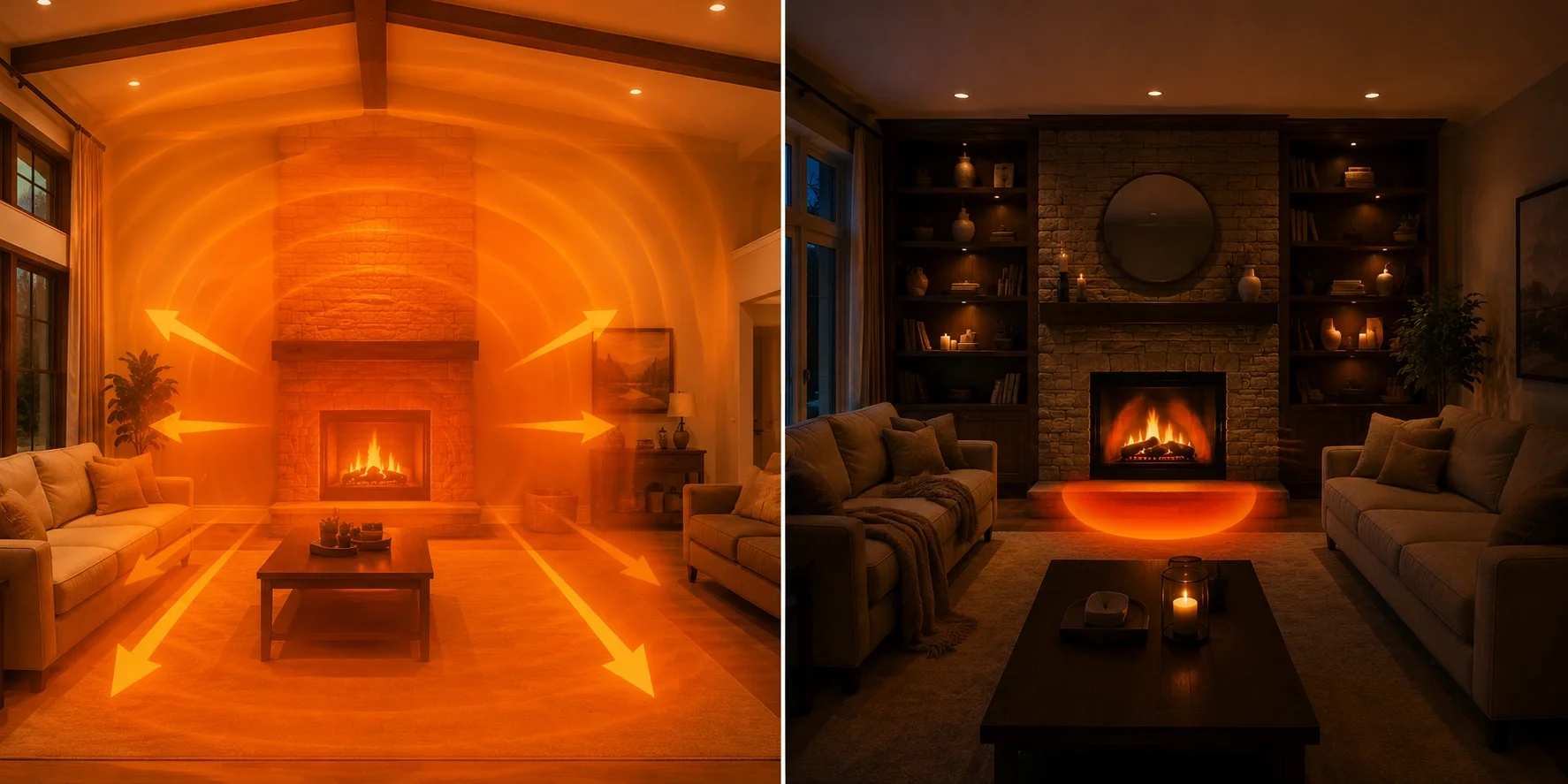
Understanding whether your primary goal is heating or ambiance significantly impacts which fireplace type will best meet your needs. This fundamental distinction should guide all other comparison factors.
Fireplaces Optimized for Heating
If heating is your primary goal, you'll want to focus on high-BTU models with efficient heat distribution systems. Wood-burning fireplaces and high-output gas models typically offer the best heating performance. Look for features like:
- High BTU ratings (40,000+ for substantial heating)
- Built-in blowers or fans for heat distribution
- Infrared heating technology for more efficient warmth
- Thermostat controls for consistent temperature maintenance
- Proper sizing for your room's square footage (see our sizing guide)
Fireplaces Focused on Ambiance
For visual appeal and mood-setting, electric fireplaces and ethanol models often excel. These options prioritize realistic flame effects and aesthetic design over heating capacity. Key features to look for include:
- Advanced flame technology (LED or water vapor effects)
- Customizable flame colors and speeds
- Decorative media options (crystals, logs, rocks)
- Ability to operate flames without heat
- Design-forward aesthetics that complement your decor style
Many modern fireplaces successfully bridge both purposes, offering substantial heat output with impressive visual effects. The comparison between fireplaces and space heaters can help you understand how your fireplace's heating capabilities stack up against dedicated heating appliances.
Key Factors in Every Fireplace Comparison

Regardless of which specific comparison you're making, certain fundamental factors should always guide your decision. These universal considerations help ensure you choose a fireplace that meets both your immediate needs and long-term expectations.
1. Total Cost of Ownership
Look beyond the purchase price to understand the complete financial picture. This includes installation costs, daily operating expenses, maintenance requirements, and potential fuel costs over the fireplace's lifespan. Sometimes a more expensive initial purchase proves more economical long-term.
2. Installation Requirements
Consider what modifications your home will need. Does the option require chimney or venting? Will you need to run a gas line or upgrade your electrical panel? Some options like electric fireplaces offer simple plug-and-play installation, while others require professional installation and potentially significant home modifications.
3. Heating Efficiency
Understand how effectively each option converts fuel to usable heat. Energy efficiency varies significantly between types, with electric models typically achieving near 100% efficiency at the point of use, while wood-burning options range from 60-80% depending on design and operation.
4. Maintenance Demands
Be realistic about the upkeep you're willing to perform. Maintenance requirements range from minimal (electric) to substantial (wood-burning). Consider annual inspection needs, cleaning frequency, and any ongoing tasks like ash removal or glass cleaning.
5. Safety Considerations
Evaluate safety aspects including carbon monoxide risks, burn hazards, and child safety. Each fireplace type has specific safety considerations, from the open flames of wood-burning models to the electrical components of electric options.
Common Mistakes in Fireplace Comparisons
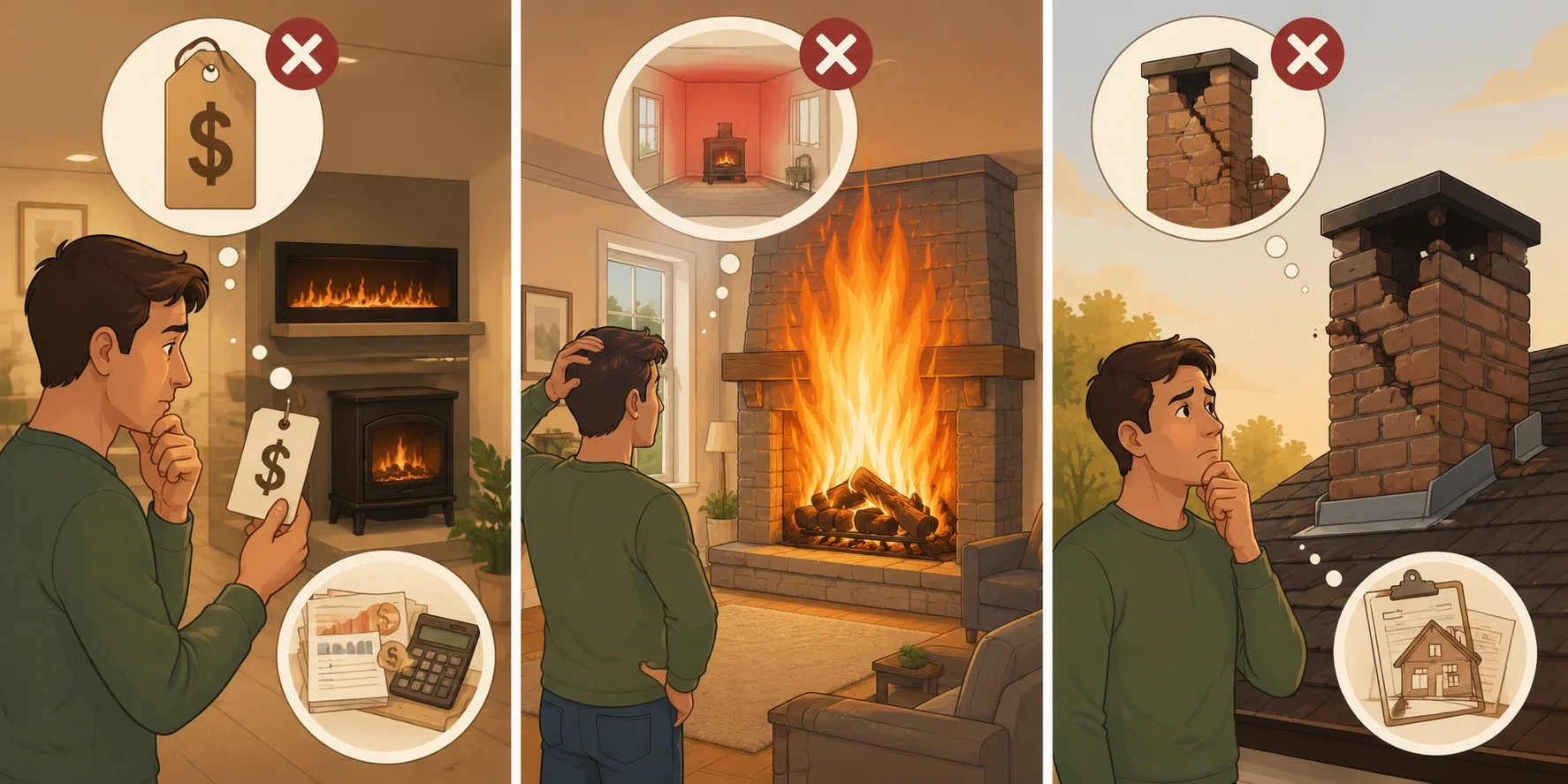
Even with thorough research, homeowners often fall into predictable traps when comparing fireplaces. Being aware of these common mistakes can help you make a more objective decision.
-
Focusing Only on Initial Price
Many buyers choose based solely on purchase price without considering long-term operating costs. A cheaper fireplace that costs significantly more to run can quickly exceed the total cost of a more efficient model. Always calculate the five-year cost projection including fuel and maintenance.
-
Overestimating Heating Needs
Purchasing a fireplace with excessive BTU output for your space leads to inefficient operation and potentially uncomfortable temperature swings. Use our sizing worksheet to match capacity to your actual room requirements.
-
Ignoring Installation Constraints
Falling in love with a fireplace style that doesn't work with your home's structure leads to disappointment and wasted research time. Before comparing specific models, determine what installation types are actually feasible in your space.
-
Underestimating Maintenance Requirements
Choosing a fireplace with maintenance demands that don't match your lifestyle leads to neglected units that perform poorly or become safety hazards. Be honest about the upkeep you'll realistically perform.
-
Disregarding Local Regulations
Some fireplace types face restrictions in certain areas. Permit requirements and code limitations can eliminate otherwise appealing options. Check local regulations early in your comparison process.
How to Make Your Final Decision
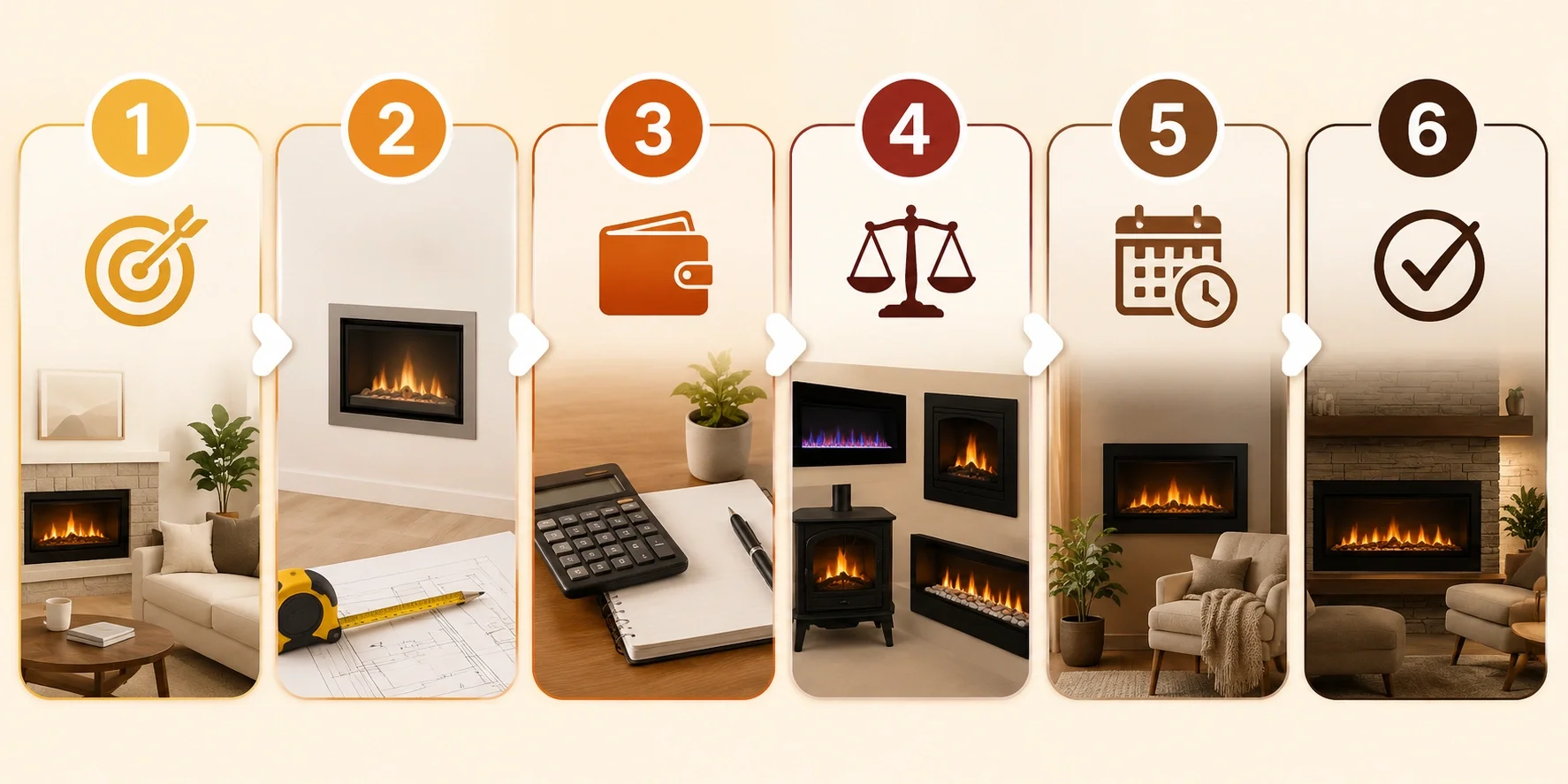
With all these comparison factors in mind, here's a systematic approach to making your final fireplace selection:
-
Define Your Primary Purpose
Clearly determine if heating, ambiance, or a combination is your main goal. This fundamental decision narrows your options significantly and provides a framework for all subsequent comparisons.
-
Assess Your Installation Constraints
Evaluate what's physically possible in your space. Consider venting access, gas line availability, electrical capacity, and structural limitations. This practical assessment often eliminates several options regardless of their appeal.
-
Establish Your Budget Parameters
Determine not just your purchase budget, but also what you're willing to spend on installation and ongoing operation. Understanding the total financial commitment prevents surprises later.
-
Compare Within Your Viable Options
Focus your detailed comparisons only on options that passed the previous three steps. This prevents wasted time analyzing fireplaces that aren't practical for your situation.
-
Evaluate Long-Term Implications
Consider maintenance requirements, fuel availability, and potential resale value. Think about how your needs might change over the 15-20 year lifespan of a quality fireplace.
-
Make Your Selection with Confidence
Once you've completed this process, make your decision knowing you've considered all relevant factors. There's no single "best" fireplace—only the best one for your specific situation and needs.
Ready to Find Your Perfect Fireplace?
Now that you understand the key comparisons, explore our detailed guides for specific fireplace types to make your final decision with confidence.
COMPLETE BUYING GUIDE