
Plug-In vs Hardwired Electric Fireplace: Which Is Right for You?
Discover the key differences between plug-in and hardwired electric fireplaces to make the best choice for your home, budget, and heating needs
When considering an electric fireplace for your home, one of the most important decisions you'll face is whether to choose a plug-in or hardwired model. While both options provide the warmth and ambiance of a traditional fireplace without the hassle of wood or gas, they differ significantly in installation requirements, power output, and overall functionality.
This comprehensive guide will help you understand the key differences between plug-in and hardwired electric fireplaces, so you can make an informed decision based on your specific needs, budget, and home setup. Whether you're looking for a simple solution to add ambiance to your living room or a more permanent heating solution, we'll help you find the perfect option.
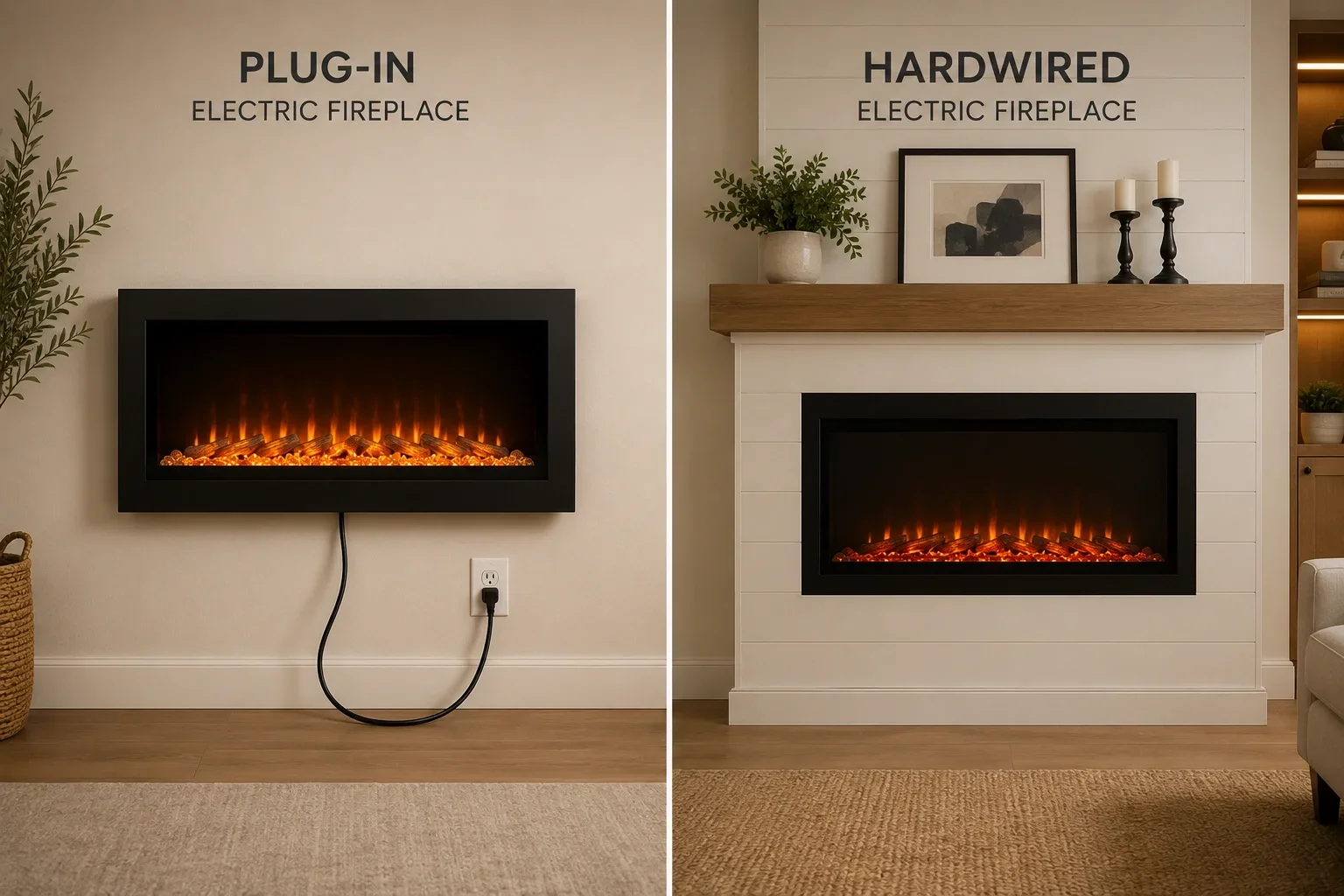
What is a Plug-In Electric Fireplace?
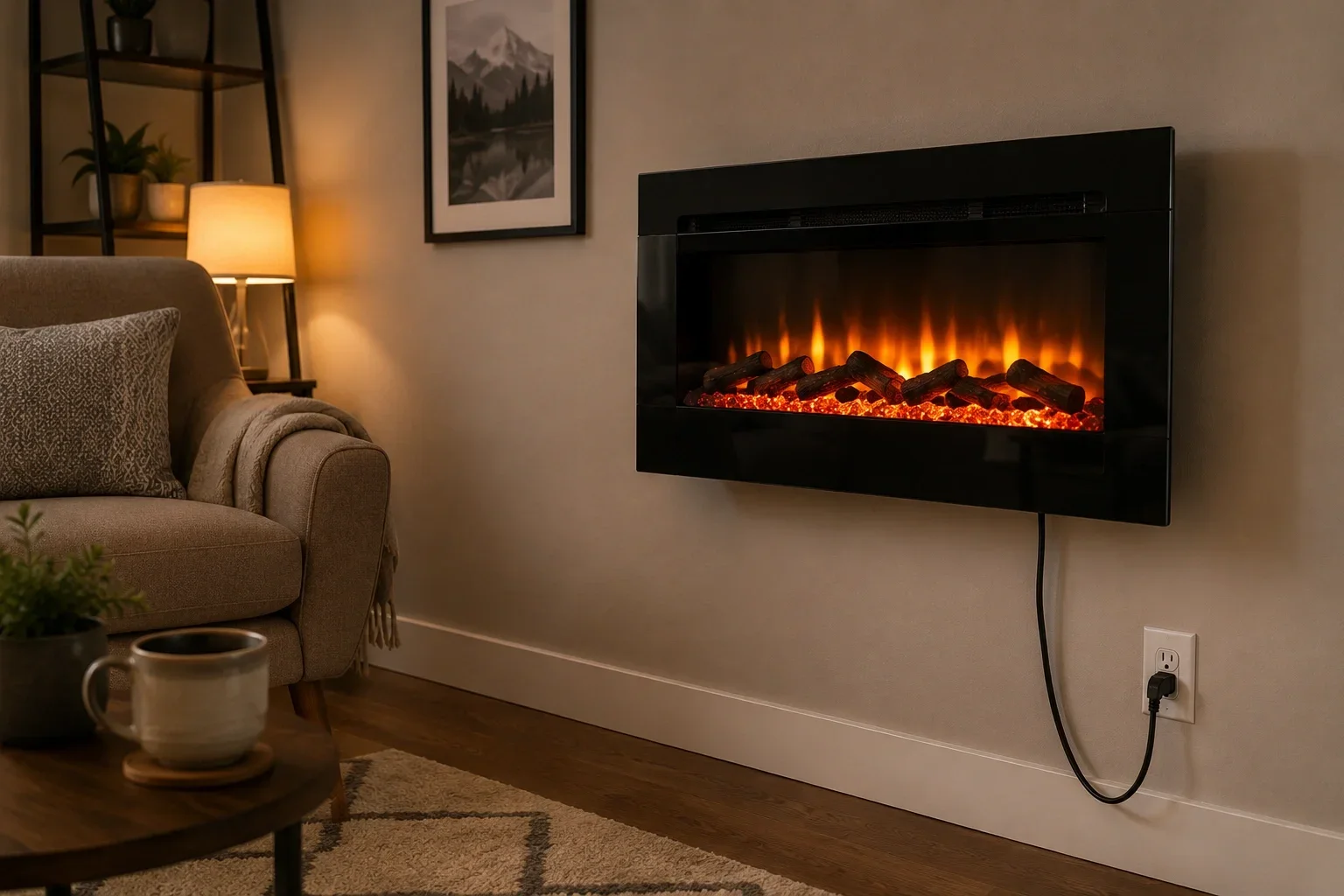
A plug-in electric fireplace, as the name suggests, is designed to be plugged directly into a standard electrical outlet. These units are typically portable or semi-permanent and come in various styles including wall-mounted, freestanding, and insert models.
Most plug-in electric fireplaces operate on a standard 120V household circuit and draw between 1,200 and 1,500 watts of power, producing approximately 4,000 to 5,100 BTUs of heat. This makes them suitable for warming smaller spaces or providing supplemental heating in medium-sized rooms.
What is a Hardwired Electric Fireplace?
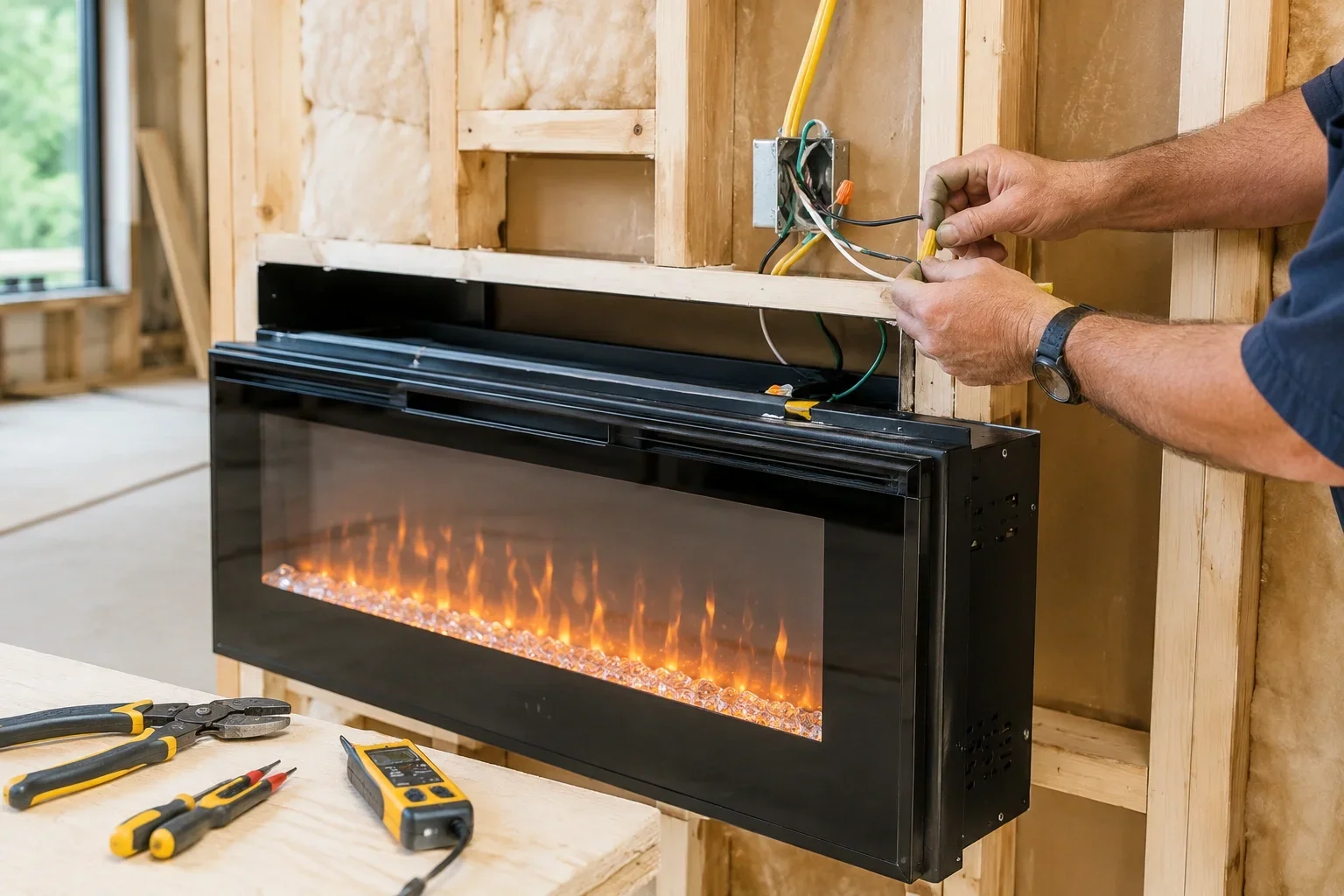
A hardwired electric fireplace is permanently connected to your home's electrical system, typically requiring a dedicated circuit. These units are usually installed into a wall or as part of a custom fireplace surround, creating a more built-in appearance.
Hardwired fireplaces can operate on either 120V or 240V circuits. The 240V models can draw significantly more power—often between 3,000 and 5,000 watts—producing 10,000 to 17,000 BTUs of heat, making them capable of warming larger spaces more effectively.
Key Differences at a Glance
| Feature | Plug-In Electric Fireplace | Hardwired Electric Fireplace |
|---|---|---|
| Installation | Simple, no professional help needed | Requires professional electrician |
| Power Source | Standard 120V outlet | Dedicated 120V or 240V circuit |
| Heat Output | 4,000-5,100 BTUs (1,200-1,500W) | 5,100-17,000 BTUs (1,500-5,000W) |
| Heating Capacity | Up to 400 sq. ft. | Up to 1,000 sq. ft. (depending on model) |
| Installation Value Tier | DIY-friendly | Mid-range service tier (professional installation) |
| Unit Value Tier | Entry-level to mid-range | Mid-range to premium |
| Portability | High - can be moved easily | Low - permanent installation |
| Aesthetic Integration | Less seamless, may show cords | More seamless, built-in appearance |
| Ideal For | Renters, temporary setups, small spaces | Homeowners, permanent installations, larger spaces |
Pros and Cons Comparison
Plug-In Electric Fireplace
Pros:
- Easy installation - no professional help needed
- Lower initial investment with no installation expenses
- Portable - can be moved from room to room
- Perfect for renters who can't make permanent changes
- Can be taken with you when moving
- Simple to set up and start using immediately
- Wide variety of affordable options available
Cons:
- Limited heating capacity for larger spaces
- Visible power cord may detract from aesthetics
- May overload circuits if other appliances share the same outlet
- Less seamless integration with room design
- Typically fewer customization options
- Not suitable for primary heating in most climates
Hardwired Electric Fireplace
Pros:
- Higher heating capacity for larger spaces
- More seamless, built-in appearance
- No visible cords for a cleaner look
- Dedicated circuit prevents overloading
- Often more customizable with surrounds and mantels
- Can serve as primary heating in moderate climates
- Generally higher quality construction
Cons:
- Higher initial investment plus installation expenses
- Requires professional installation
- Not portable - permanent installation
- Not suitable for renters
- More complex installation process
- Difficult to relocate if you change your mind
- May require permits depending on local codes
Installation Process Comparison
The installation process is one of the most significant differences between plug-in and hardwired electric fireplaces. Understanding what's involved can help you determine which option is more practical for your situation.
Plug-In Fireplace Installation
- Choose a location near a standard 120V outlet
- Unpack the fireplace and assemble any components
- Position the fireplace in your desired location
- Plug the power cord into the outlet
- Turn on the fireplace and adjust settings
- Enjoy your new fireplace immediately!
Time required: 15-30 minutes | Skills needed: None | Tools required: None
Hardwired Fireplace Installation
- Plan the location and ensure access to electrical wiring
- Hire a licensed electrician for the electrical work
- Install a dedicated circuit (if not already present)
- Prepare the wall or surround for the fireplace unit
- Mount the fireplace and connect it to the electrical system
- Complete the aesthetic surround installation
- Have the work inspected (if required by local codes)
Time required: 4-8 hours | Skills needed: Professional electrician | Tools required: Electrical tools, mounting hardware
Value Tier Breakdown
Understanding the total value tier of ownership is crucial when deciding between plug-in and hardwired electric fireplaces. Here's a detailed breakdown of the tiers you can expect for each option.
Plug-In Fireplace
Hardwired Fireplace
Professional Installation
Annual Operating Tier
Value Note: While hardwired fireplaces have a higher upfront investment tier, they often provide better value for larger spaces where higher heating output is needed. For smaller spaces or supplemental heating, a plug-in model may be more cost-effective overall.
Which is Better for Different Scenarios?
For Renters
Winner: Plug-In Electric Fireplace
If you're renting your home, a plug-in electric fireplace is almost always the better choice. Since you can't make permanent modifications to the property, a plug-in model allows you to enjoy the ambiance and warmth of a fireplace without violating your lease agreement. These units can be easily taken with you when you move, making them a good investment for renters who change residences frequently.
For Homeowners
Winner: Depends on Needs
Homeowners have more flexibility and can choose either option based on their specific needs. If you're looking for a permanent addition to your home that increases value and provides substantial heating, a hardwired fireplace may be worth the investment. However, if you want flexibility or are testing out whether a fireplace works in a particular space, starting with a plug-in model can be a wise decision.
For Large Open Concept Spaces
Winner: Hardwired Electric Fireplace
For large open concept spaces, a hardwired electric fireplace typically outperforms plug-in models. The higher wattage options (particularly 240V models) can produce significantly more heat, making them better suited for warming expansive areas. Additionally, the seamless installation of a hardwired unit often looks more proportional in larger spaces.

For Small Rooms or Apartments
Winner: Plug-In Electric Fireplace
For small rooms or apartments, a plug-in electric fireplace is usually the better choice. These spaces don't require the high heat output of a hardwired model, and the lower investment and easy installation make plug-in units more practical. Many plug-in models are specifically designed for smaller spaces and offer a good balance of heat output and energy efficiency.
For Primary Heating
Winner: Hardwired Electric Fireplace
If you're planning to use your fireplace as a primary heat source rather than just for ambiance, a hardwired electric fireplace is generally the better option. The higher heat output of hardwired models, especially those running on 240V, makes them more capable of maintaining comfortable temperatures throughout your home. Some hardwired models also include advanced features like thermostatic control and zone heating capabilities.
For Aesthetics and Design Integration
Winner: Hardwired Electric Fireplace
When it comes to seamless integration with your home's design, hardwired fireplaces have a distinct advantage. Without visible cords and with the ability to be fully integrated into custom surrounds and mantels, hardwired models create a more polished, built-in appearance. This makes them particularly popular for modern fireplace designs and high-end installations.
Energy Efficiency Comparison
Both plug-in and hardwired electric fireplaces are generally 100% efficient at converting electricity to heat, as all the energy used is converted into warmth (unlike gas or wood fireplaces which lose some heat through vents or chimneys). However, there are some efficiency considerations to keep in mind:
For plug-in models: The lower wattage means they use less electricity per hour, but they may need to run longer to heat a space. They're ideal for zone heating—warming just the room you're using rather than the whole house.
For hardwired models: While they use more electricity per hour due to higher wattage, they can heat larger spaces more quickly and effectively. Some high-end hardwired models include features like programmable thermostats and eco-modes that optimize energy use.
For more information on fireplace efficiency, check out our guide on the most energy-efficient fireplace types.
Safety Considerations
Both plug-in and hardwired electric fireplaces are generally very safe options, especially compared to wood-burning or gas alternatives. However, there are specific safety considerations for each type:
For plug-in models:
- Avoid using extension cords, which can overheat
- Don't plug into an outlet that already has multiple appliances
- Ensure the cord isn't a tripping hazard
- Keep the unit away from water sources
- Check that the outlet is properly grounded
For hardwired models:
- Always use a licensed electrician for installation
- Ensure the circuit is properly rated for the fireplace's power requirements
- Include appropriate circuit breakers and safety cut-offs
- Follow local building codes and permit requirements
- Have the installation inspected when complete
For more detailed safety information, see our guide on electric fireplace safety.
Maintenance Comparison
One of the advantages of electric fireplaces over other types is their minimal maintenance requirements. Both plug-in and hardwired models share similar maintenance needs:
- Regular dusting of the exterior and components
- Periodic cleaning of the glass front
- Checking that vents are unobstructed
- Replacing light bulbs or LED components as needed (in some models)
The main maintenance difference is that hardwired models may require occasional inspection of the electrical connections by a professional, while plug-in models simply need their cords checked for damage. For detailed maintenance instructions, see our electric fireplace maintenance guide.
Our Recommendation
After carefully comparing plug-in and hardwired electric fireplaces, our recommendation depends on your specific situation:
Choose a Plug-In Electric Fireplace if:
- You're renting your home or can't make permanent modifications
- You need a solution for a small to medium-sized room (up to 400 sq. ft.)
- You want the flexibility to move the fireplace between rooms
- You're on a tighter budget and want to avoid installation costs
- You're using the fireplace primarily for ambiance rather than heating
- You want a quick, easy solution that you can set up yourself
Choose a Hardwired Electric Fireplace if:
- You own your home and can make permanent modifications
- You need to heat a large space (over 400 sq. ft.)
- You want a seamless, built-in appearance without visible cords
- You're planning to use the fireplace as a primary heat source
- You're willing to invest more for higher quality and performance
- You're incorporating the fireplace into a custom design or renovation
For most homeowners looking for a permanent addition to their home that provides substantial heating, we generally recommend a hardwired electric fireplace. However, if you're unsure about your long-term needs or want to test out having a fireplace in a particular space, starting with a high-quality plug-in model can be a smart first step.
Frequently Asked Questions
In most cases, no. Plug-in electric fireplaces are designed specifically to operate on standard 120V household current and typically don't have the internal components needed for hardwiring. Attempting to modify a plug-in unit to be hardwired could be dangerous and would likely void the warranty. If you want a hardwired installation, it's best to purchase a fireplace specifically designed for that purpose.
Yes, in general, hardwired electric fireplaces can produce more heat than plug-in models, especially those that operate on 240V circuits. While a typical plug-in model produces around 4,000-5,100 BTUs, a 240V hardwired model can produce 10,000-17,000 BTUs. This makes hardwired models better suited for larger spaces or for use as a primary heat source. For more information on heating capacity, see our BTU guide.
The cost to have an electrician hardwire a fireplace typically falls in the mid-range service tier, depending on several factors: whether a new circuit needs to be installed, the distance from the electrical panel, local labor rates, and the complexity of the installation. If a new 240V circuit is required, tiers may be higher. Always get multiple quotes from licensed electricians before proceeding with the installation.
No, hardwired electric fireplaces are designed to be directly connected to your home's electrical system, not plugged into an outlet. They typically don't come with a power cord or plug. Attempting to add a plug to a hardwired unit would be unsafe and could void the warranty. If you want a fireplace that plugs into an outlet, choose a model specifically designed for that purpose.
In most jurisdictions, yes, you'll need a permit to install a hardwired electric fireplace, especially if new electrical circuits are being added. Building codes vary by location, so it's important to check with your local building department. A licensed electrician will typically handle the permitting process as part of their service. For more information, see our guide on fireplace permit requirements.
Yes, it's possible for a plug-in electric fireplace to trip your circuit breaker, especially if it's sharing the circuit with other high-wattage appliances. Most plug-in electric fireplaces draw 12-15 amps, which is close to the capacity of a standard 15-amp circuit. To avoid tripping the breaker, try to plug the fireplace into a dedicated outlet on its own circuit. If you experience frequent tripping, consult with an electrician about your options. For troubleshooting help, see our guide on electric fireplaces that keep tripping breakers.
Final Thoughts
Choosing between a plug-in and hardwired electric fireplace ultimately comes down to your specific needs, budget, and home situation. Plug-in models offer convenience, affordability, and flexibility, while hardwired options provide higher performance, better aesthetics, and more permanent solutions.
By carefully considering factors like your heating requirements, installation capabilities, and long-term plans for your space, you can select the option that will provide the most satisfaction and value. Whichever type you choose, an electric fireplace can add warmth, ambiance, and comfort to your home without the hassle and mess of traditional fire options.
If you're still unsure which option is best for you, consider consulting with a fireplace specialist who can assess your specific space and needs. They can provide personalized recommendations based on factors like room size, insulation, existing electrical infrastructure, and your aesthetic preferences.


