
Do You Need a Chimney or Vent for a Fireplace?
Complete guide to understanding venting requirements for different fireplace types
EXPLORE FIREPLACE OPTIONSOne of the most common questions homeowners have when considering a fireplace installation is whether they need a chimney or vent. The answer depends entirely on the type of fireplace you choose, your home's structure, and your heating needs. Understanding these requirements before making a purchase decision can save you significant investment in installation costs and prevent potential safety issues down the line.
This comprehensive guide will help you understand which fireplace types require chimneys, which need alternative venting systems, and which operate completely vent-free. By the end, you'll have a clear understanding of what's required for your specific situation and be ready to make an informed purchase decision.
Fireplace Types and Their Venting Requirements
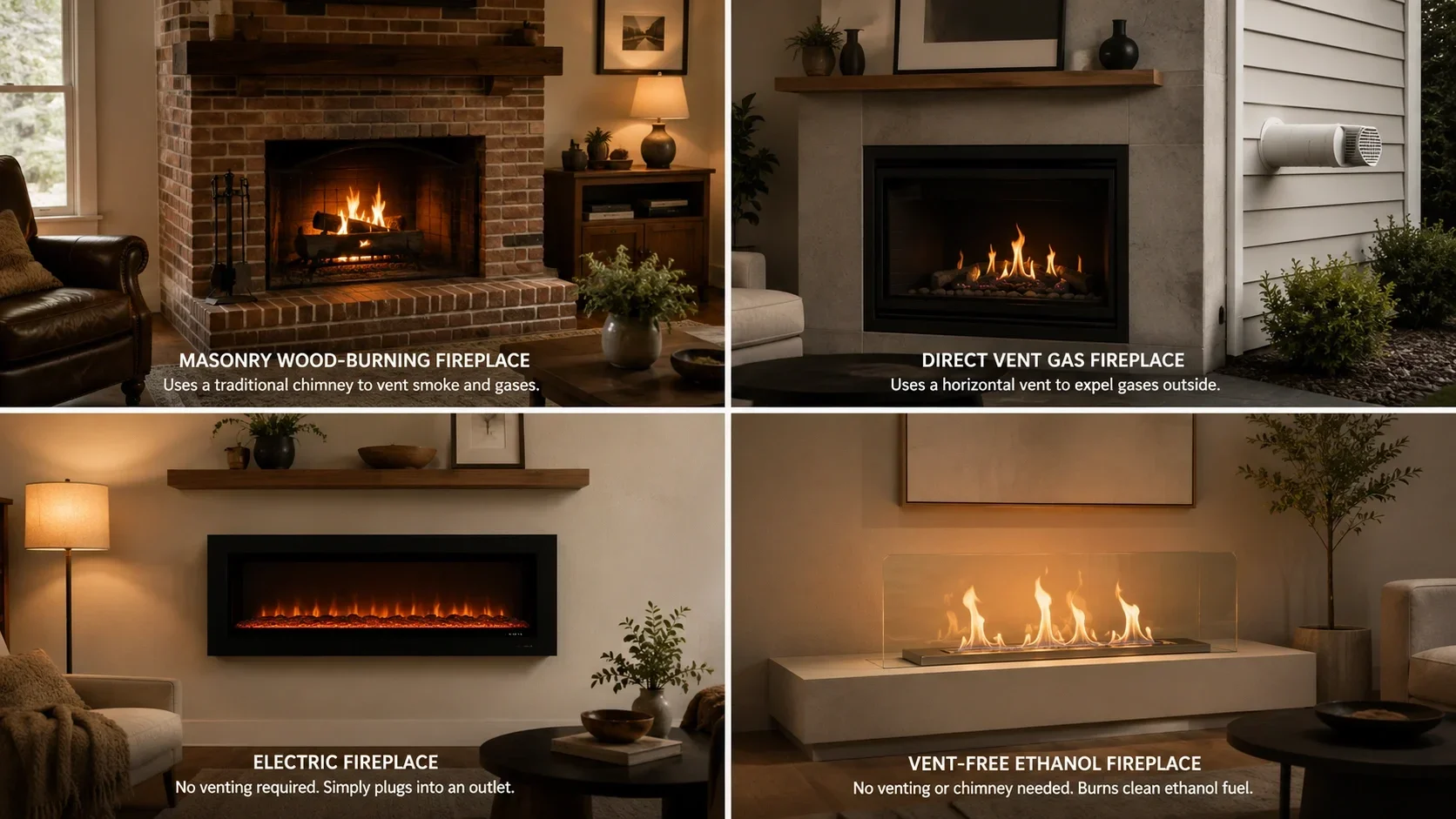
Not all fireplaces are created equal when it comes to venting requirements. The type of fuel your fireplace uses is the primary factor determining whether you need a traditional chimney, a direct vent system, or no venting at all. Let's examine each fireplace type and its specific requirements.
Wood-Burning Fireplaces
Wood-burning fireplaces always require a chimney or vent system. This is non-negotiable due to the significant amount of smoke, gases, and particulate matter produced when burning wood. These byproducts contain carbon monoxide and other harmful substances that must be safely expelled from your home.
Traditional wood fireplaces require a masonry chimney that meets specific height and diameter requirements to ensure proper draft. The chimney must extend at least 3 feet above the roofline and 2 feet higher than any part of the building within 10 feet horizontally. This ensures proper draft and prevents downdrafts that could push smoke back into your home.
Installation Investment: Installing a new chimney for a wood-burning fireplace typically falls in the Premium to luxury tier, depending on your home's construction and local building codes.
Gas Fireplaces
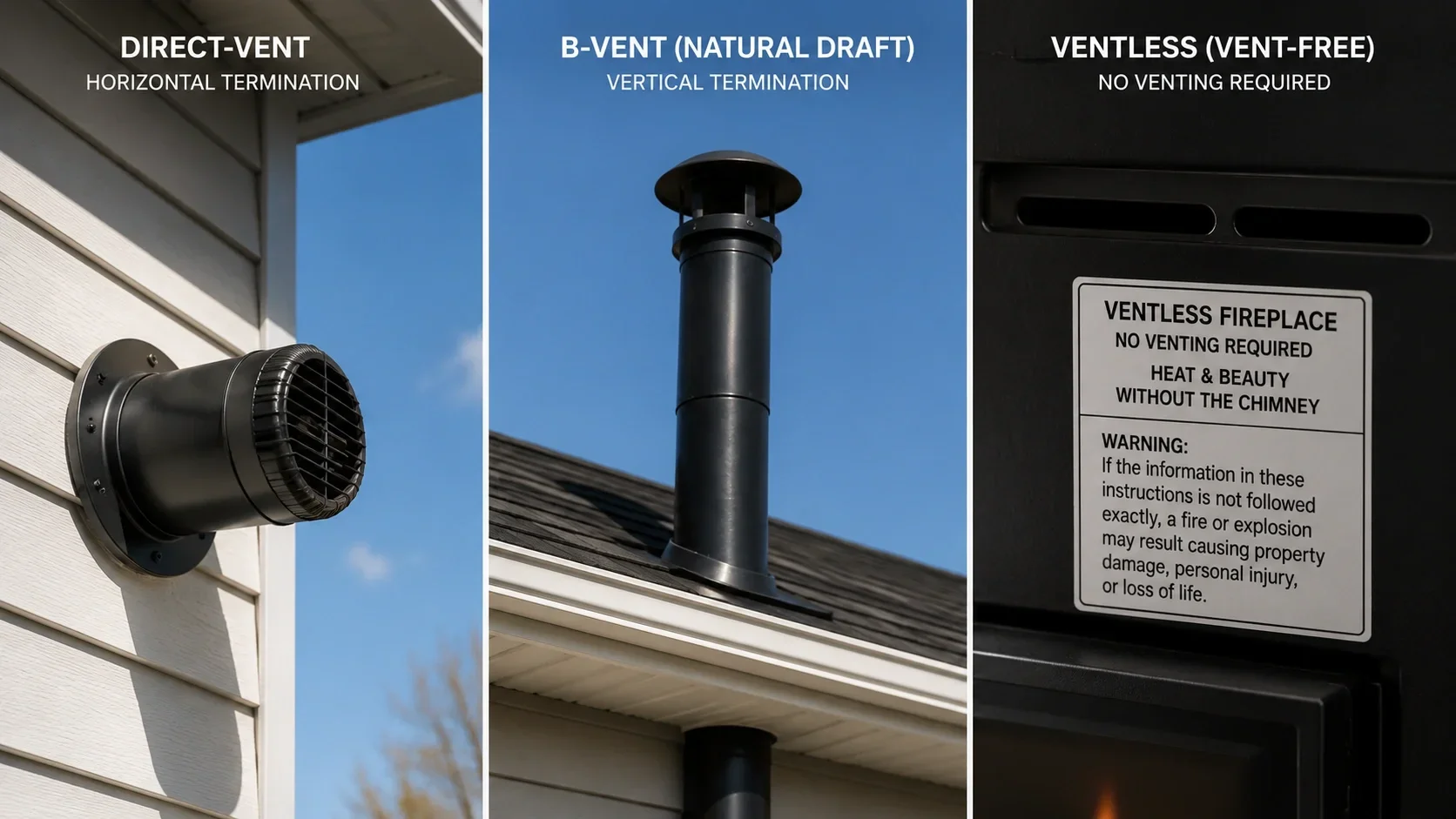
Gas fireplaces offer more flexibility in venting options than wood-burning units. There are three main categories of gas fireplaces based on their venting requirements:
1. Direct Vent Gas Fireplaces: These units use a coaxial vent system that draws combustion air from outside through the outer pipe while expelling exhaust through the inner pipe. They can be vented horizontally through an exterior wall or vertically through the roof, making them ideal for homes without existing chimneys. Direct vent fireplaces are highly efficient (70-85% efficiency) because they don't use indoor air for combustion.
2. B-Vent (Natural Vent) Gas Fireplaces: These units use a single pipe to vent exhaust gases upward, similar to a traditional chimney. They draw combustion air from the room, making them less efficient than direct vent models (typically 60-70% efficiency). B-vent fireplaces can use existing chimneys if properly lined, or a new vent pipe can be installed.
3. Vent-Free Gas Fireplaces: These units are designed to operate without any venting whatsoever. They burn gas so efficiently that they produce minimal exhaust, which is released directly into the room. While convenient, vent-free fireplaces have some limitations and considerations we'll discuss in detail later.
Electric Fireplaces
Electric fireplaces are the simplest option when it comes to venting—they require none at all. Since they don't produce any real flames or combustion byproducts, there's nothing to vent. This makes electric fireplaces incredibly versatile and easy to install in virtually any room of your home, including apartments and condos where other fireplace types wouldn't be possible.
The only requirements for electric fireplaces are access to a standard electrical outlet (120V for most models) and sufficient space for the unit itself. Some larger models may require a dedicated circuit to prevent overloading, but this is still far less complex than installing a chimney or vent system.
Ethanol Fireplaces
Ethanol fireplaces burn bioethanol fuel, which produces very clean combustion with minimal emissions. Like electric fireplaces, most ethanol fireplaces are vent-free, making them extremely versatile for installation in any room. The small amount of water vapor and carbon dioxide produced during combustion is generally considered safe for indoor air quality when used according to manufacturer guidelines.
Some larger or commercial ethanol fireplaces may require minimal ventilation, but residential models typically operate completely vent-free. This makes ethanol fireplaces an excellent option for homeowners who want real flames without the complexity of venting systems.
Understanding Venting Systems in Detail
For fireplaces that do require venting, there are several different systems available. Understanding these options will help you determine what's possible in your specific situation and what installation investment tiers to expect.
Traditional Masonry Chimneys
Masonry chimneys are the oldest and most traditional venting solution. Built from brick, stone, or concrete blocks, they provide excellent durability and can last for decades with proper maintenance. However, they're also the most investment-heavy option to install, especially in homes that don't already have one.
If your home has an existing masonry chimney, it can often be used for a new wood-burning fireplace or adapted for a gas fireplace with the addition of a stainless steel liner. The liner protects the masonry from corrosive combustion byproducts and improves drafting efficiency.
Factory-Built Chimneys
Factory-built (or prefabricated) chimneys consist of multiple layers of metal piping with insulation between them. They're significantly more accessible than masonry chimneys and can be installed more quickly. These systems are specifically designed for use with factory-built fireplaces and must be used as a complete system—mixing components from different manufacturers is not permitted by building codes.
Factory-built chimneys typically fall in the Entry-level to mid-range tier for materials and installation, making them a more budget-friendly option than masonry chimneys. They're also lighter weight, which can be advantageous in certain structural situations.
Direct Vent Systems
Direct vent systems use a specialized coaxial pipe (pipe within a pipe) that simultaneously exhausts combustion products and draws in fresh air for combustion. This sealed system is highly efficient and safe, as it completely isolates the combustion process from your indoor air.
Direct vent systems can be installed in several configurations:
Direct Vent Installation Options
- Horizontal termination through an exterior wall (most common)
- Vertical termination through the roof
- Combination horizontal-vertical installations for complex routing
- Rear vent, top vent, or bottom vent configurations depending on the fireplace model

B-Vent Systems
B-vent (natural vent) systems use a single pipe to exhaust combustion gases upward, typically through the roof. Unlike direct vent systems, they draw combustion air from the room rather than from outside. This makes them less efficient but often allows for installation using an existing chimney when properly lined.
B-vent systems must terminate above the roofline according to specific height requirements to ensure proper drafting. They cannot be terminated horizontally, which limits installation options compared to direct vent systems.
Vent-Free Fireplaces: What You Need to Know
Vent-free (or ventless) fireplaces offer the ultimate installation flexibility since they don't require any chimney or vent system. However, they come with specific considerations that homeowners should understand before making a purchase decision.
Advantages of Vent-Free Fireplaces
- No chimney or venting required—install anywhere
- Nearly 100% energy efficient (all heat stays in room)
- Lower installation investment (entry-level to mid-range vs. premium for vented)
- Easy to retrofit in existing homes
- Available in gas and electric models
Limitations of Vent-Free Fireplaces
- Produce some moisture and trace emissions
- Not permitted in some states or municipalities
- Size limited by room volume (typically max 40,000 BTU)
- Can affect indoor air quality in tightly sealed homes
- Some people notice slight odors during operation
Important Safety Note: Vent-free fireplaces are equipped with oxygen depletion sensors (ODS) that automatically shut off the unit if oxygen levels drop below safe thresholds. However, they're not recommended for people with respiratory issues, asthma, or chemical sensitivities. Always check local codes before installing a vent-free fireplace, as they're prohibited in some areas including parts of California, New York, and Massachusetts.
For most homeowners, vented fireplaces remain the preferred option due to their cleaner operation and fewer restrictions. However, vent-free models can be an excellent solution for supplemental heating in well-ventilated spaces where installing a vent system isn't practical or cost-effective.
Choosing the Right Option for Your Home
Selecting the appropriate fireplace and venting system depends on several factors specific to your home and needs. Consider the following decision points:
Existing Infrastructure
If your home already has a chimney, your options expand significantly. A properly sized and maintained chimney can accommodate a wood-burning fireplace, or be adapted for a gas fireplace with a liner. This can substantially reduce your installation investment compared to homes without existing chimneys.
For homes without chimneys, electric fireplaces and direct vent gas fireplaces typically offer the best balance of performance and installation practicality. These options avoid the substantial investment of adding a new chimney while still providing excellent heating and ambiance.
Heating Efficiency Priorities
If your primary goal is heating efficiency, direct vent gas fireplaces offer the best combination of high efficiency (70-85%) and clean operation. Vent-free fireplaces are technically more efficient (99%+) but have limitations on size and some people have concerns about indoor air quality.
For those primarily seeking ambiance rather than heating, electric fireplaces provide the easiest installation with no venting required, though their heating capacity is limited compared to gas or wood options.
Installation Investment Considerations
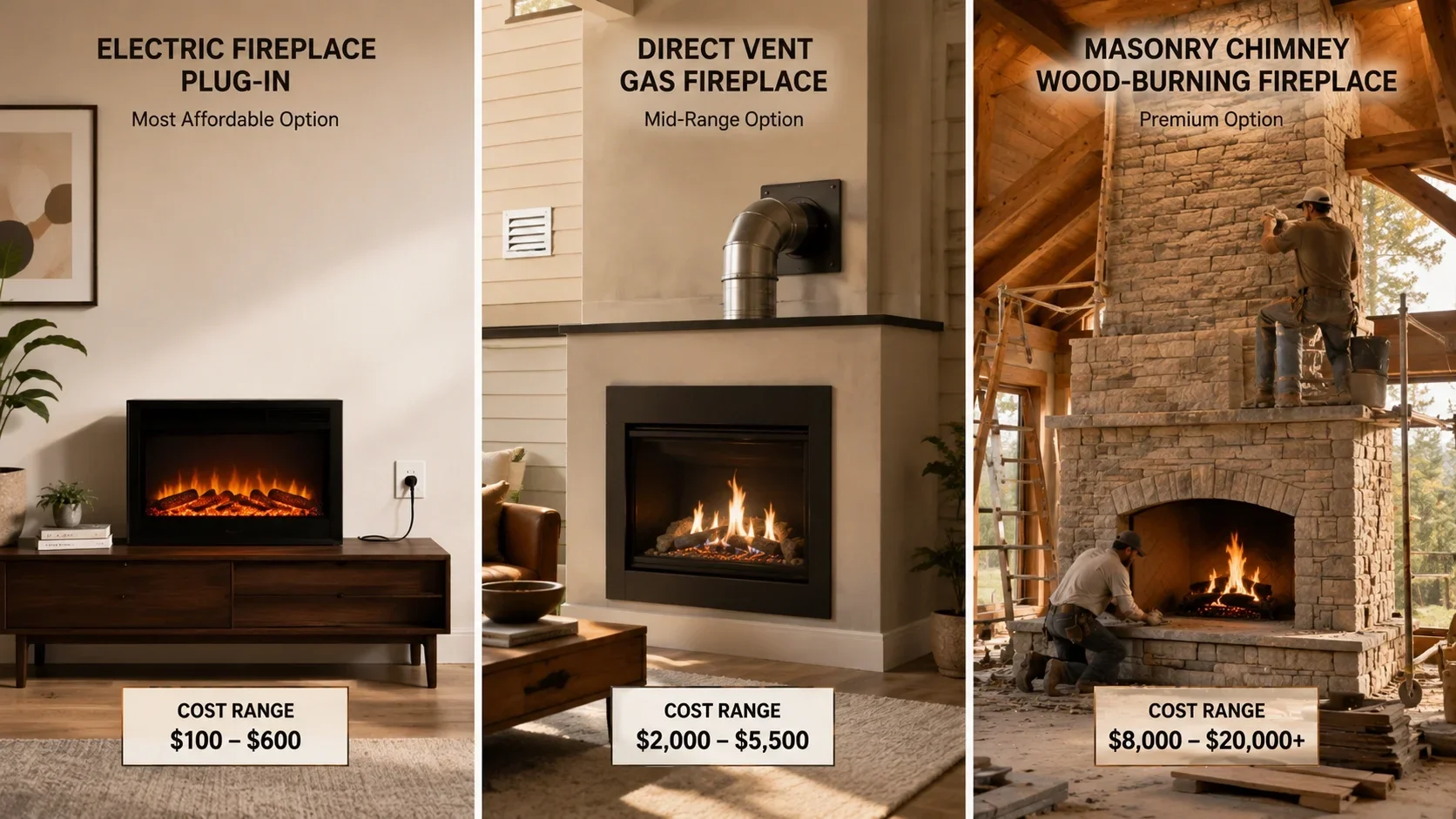
Your budget will significantly influence your options. Here's a rough tier comparison for complete installation (fireplace unit plus venting):
| Fireplace Type | Venting Required | Typical Installation Tier |
|---|---|---|
| Electric | None | Entry-level |
| Vent-Free Gas | None | Entry-level to mid-range |
| Direct Vent Gas | Coaxial pipe system | Mid-range |
| B-Vent Gas | Single pipe vent | Mid-range |
| Gas with Existing Chimney | Chimney liner | Mid-range |
| Wood with Existing Chimney | Chimney (existing) | Mid-range |
| Wood with New Chimney | New masonry chimney | Premium to luxury |
Home Layout and Room Location
Where you want to install the fireplace significantly impacts your options. Interior rooms without access to exterior walls limit you to electric, vent-free, or options with vertical venting through the roof. Rooms with exterior walls offer more flexibility for direct vent installations.
For corner installations, direct vent fireplaces with rear venting often work well, as the vent can run along the adjacent wall to the exterior. Wall-mounted fireplaces typically use direct vent systems with horizontal termination or are electric models requiring no venting.
Local Building Codes and Restrictions
Always check local building codes before deciding on a fireplace type. Some jurisdictions have specific requirements regarding:
Common Code Considerations
- Minimum chimney heights and clearance requirements
- Restrictions on vent-free fireplaces (prohibited in some areas)
- Permit requirements for fireplace installations
- Required clearances to combustible materials
- Mandatory safety features like carbon monoxide detectors
- Specific vent termination requirements (distance from windows, doors, etc.)
Maintenance Requirements by Venting Type
Different venting systems require varying levels of maintenance to ensure safe and efficient operation. Understanding these requirements helps you plan for long-term ownership costs and effort.
Chimney Maintenance
Traditional masonry and factory-built chimneys require the most maintenance. Annual chimney inspections are essential, with cleaning recommended when creosote buildup reaches 1/8 inch thickness. For wood-burning fireplaces, this typically means annual cleaning, while gas fireplaces with chimney venting may only need cleaning every few years.
Chimney maintenance tiers typically fall in the entry-level to mid-range for inspection and cleaning, with additional tiers for any necessary repairs. Over time, you may also need to replace chimney caps, repair mortar joints, or reline the chimney, with investment tiers ranging from entry-level to premium depending on the work needed.
Direct Vent System Maintenance
Direct vent systems require less maintenance than traditional chimneys but still need periodic attention. Annual inspection of the vent termination is recommended to ensure it remains clear of debris, bird nests, or other obstructions. The interior portions of the vent system should be checked during routine gas fireplace maintenance.
Maintenance tiers for direct vent systems are typically entry-level annually, significantly less than traditional chimney maintenance.
Vent-Free Fireplace Maintenance
Vent-free fireplaces have the simplest maintenance requirements since there's no venting system to inspect or clean. However, the burner and logs should still be cleaned annually to ensure proper operation and flame appearance. The oxygen depletion sensor should be tested regularly to verify it's functioning correctly.
Maintenance tiers for vent-free fireplaces are typically entry-level annually, making them the most economical option from a maintenance perspective.
Making Your Final Decision
With all this information in mind, here's a quick decision framework to help you choose the right fireplace and venting option for your situation:
Choose Electric If:
- You want the simplest installation possible
- You're installing in a rental property or apartment
- Budget is a primary concern
- Ambiance is more important than heating power
- You want zone heating for a small to medium room
Choose Vent-Free Gas If:
- You want real flames without venting complexity
- Local codes allow vent-free appliances
- You have adequate room volume for the fireplace size
- No one in your household has respiratory sensitivities
- You want higher heating output than electric options
Choose Direct Vent Gas If:
- You want high efficiency with clean operation
- You have access to an exterior wall for venting
- You want more heating power than vent-free allows
- Indoor air quality is a top concern
- You're willing to invest more for superior performance
Choose Wood-Burning With Existing Chimney If:
- You want the traditional wood-burning experience
- Your home already has a suitable chimney
- You're willing to handle firewood and maintenance
- You want the highest possible heat output
- You value the ambiance and aroma of a real wood fire
Final Recommendation: For most homeowners seeking the best balance of performance, efficiency, and installation practicality, direct vent gas fireplaces offer the optimal solution. They provide high heating efficiency, clean operation, and flexible installation options without the substantial investment of adding a traditional chimney. If you have an existing chimney, adapting it for a gas fireplace with a liner can also be an excellent cost-effective option.
By understanding your specific needs, home constraints, and local requirements, you can select the perfect fireplace and venting solution that will provide years of comfort and enjoyment. When you're ready to make a purchase, explore our recommended fireplaces below that are specifically suited for various venting situations.


