
Gas Log Set vs Gas Insert: Complete Comparison Guide
Understanding the key differences between gas log sets and gas inserts to help you make the right choice for your home heating needs
VIEW COMPARISON TABLE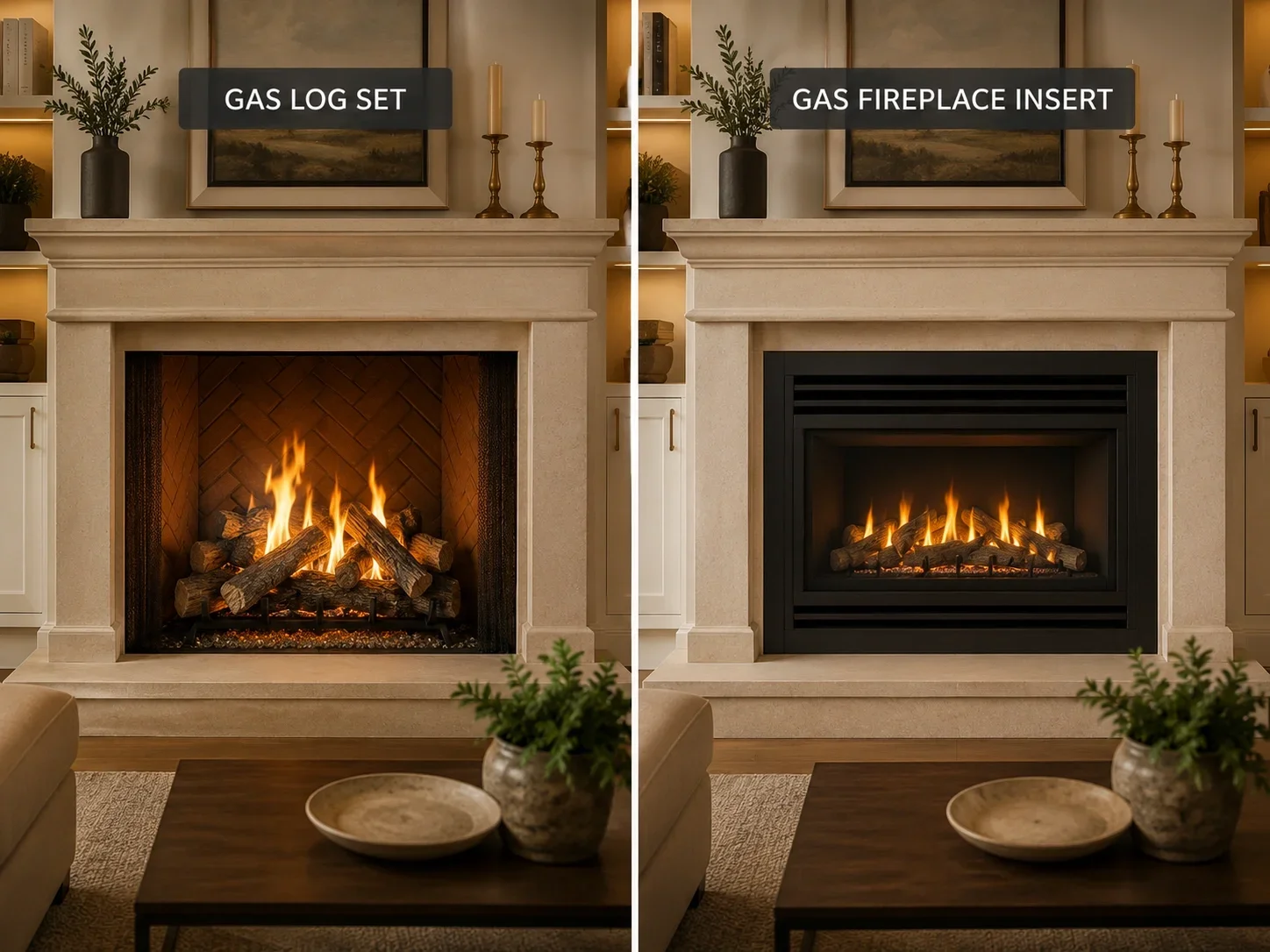
When upgrading your existing wood-burning fireplace to gas, you'll face a fundamental decision: should you install a gas log set or a gas insert? While both options transform your traditional fireplace into a convenient gas-powered heating source, they differ significantly in efficiency, installation requirements, heating performance, and overall investment level.
This comprehensive guide examines every aspect of gas log sets versus gas inserts to help you make an informed decision based on your specific needs, budget tier, and home setup. Whether you're primarily looking for ambiance, efficient heating, or a balance of both, understanding these differences is crucial for selecting the right option for your home.
We'll explore the technical differences, installation considerations, investment tiers, and maintenance requirements for each option, providing you with the detailed information needed to make a confident purchase decision.
Recommended Gas Log Sets & Inserts
⚠️ AFFILIATE DISCLOSURE: This website contains affiliate links. As an Amazon Associate, we earn from qualifying purchases. If you make a purchase through these links, we may receive a small commission at no additional cost to you. Read our full affiliate policy.

Duluth Forge Ventless Natural Gas Log Set - 24 in. Split Oak, 33,000 BTU, Remote Control - Model# DLS-N24R-1
Check price on Amazon
EROMMY 24 Inch Ventless Fireplace Logs Set, Only Used for Natural Gas | Remote Control, 32000 BTU Gas Fireplace Insert, South America Silk Floss Wood, Brown
Check price on Amazon
Real Fyre 24-Inch Live Oak Vented Gas Log Set, Natural Gas, Match-Lit with Burner, Grate & Gas Connection Kit, 75,000 BTU
Check price on Amazon
Barton 10-Piece Ceramic Gas Fireplace Logs, Realistic Wood-Look Stackable Decorative Log Set for Vented Gas Fireplaces, Fire Pits & Fireplace Inserts
Check price on Amazon
Duluth Forge Ventless Liquid Propane Gas Log Set - 24 in. Split Oak, 33,000 BTU, Remote Control - Model# DLS-L24R-1
Check price on Amazon
Duluth Forge Ventless Natural Gas Log Set - 18 in. Stacked Oak, 30,000 BTU, Remote Control - Model# DLS-N18R-2
Check price on Amazon
Duluth Forge Ventless Liquid Propane Gas Log Set - 24 in. Split Red Oak, 33,000 BTU, T-Stat Control - Model# DLS-L24T-1
Check price on Amazon
Americangaslogs Gas Fireplace Valve Manual Safety Pilot Control System for Gas Log Sets – Compatible with Natural Gas & Propane, Includes Heat Shield and Pilot Kit (Manual, Silvery)
Check price on AmazonUnderstanding Gas Log Sets
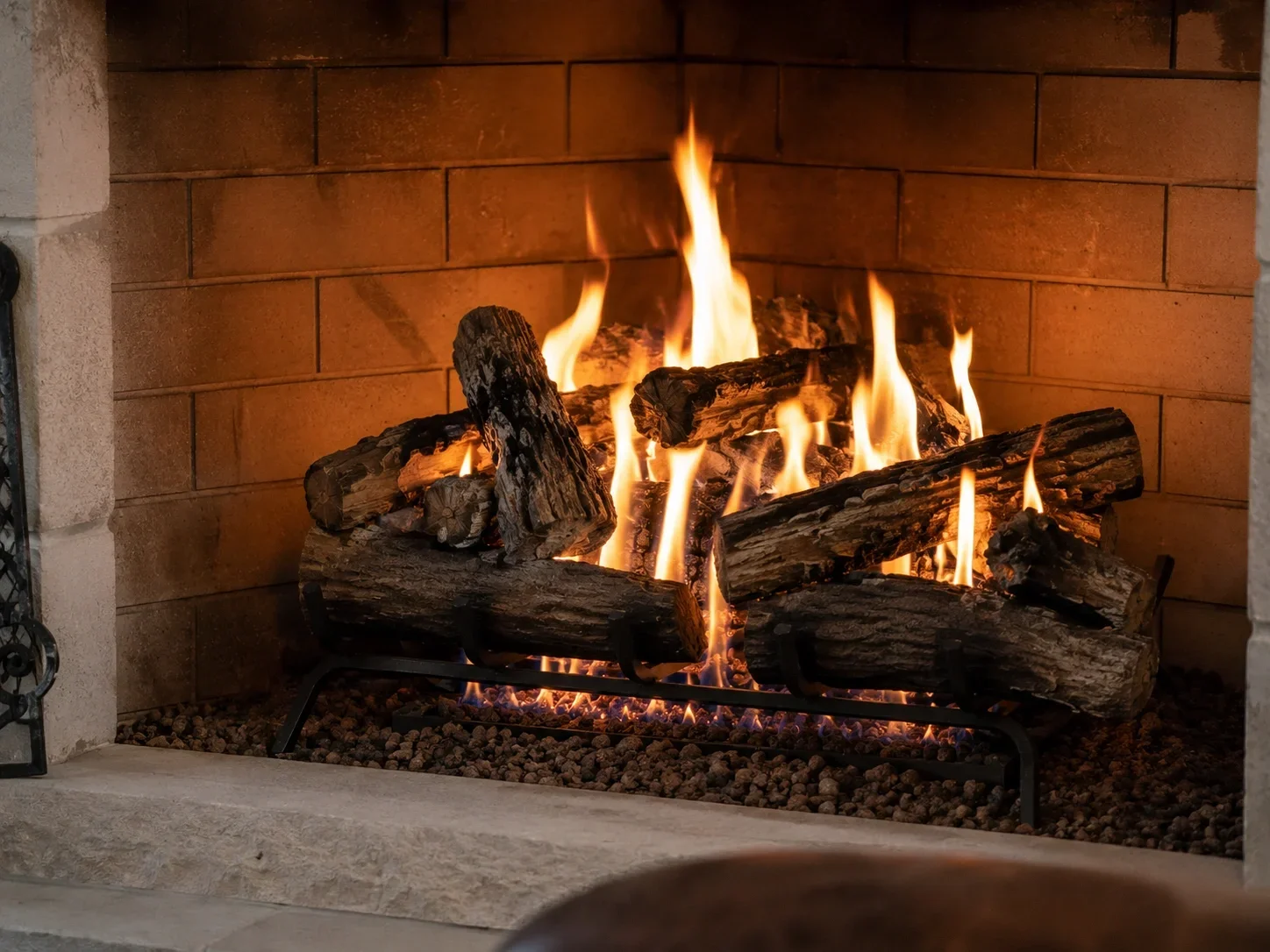
A gas log set consists of ceramic or refractory logs designed to mimic the appearance of real wood, placed inside an existing fireplace. These logs sit on a burner pan connected to your gas supply and are available in both vented and ventless configurations.
Gas log sets are essentially decorative appliances that provide a realistic flame appearance. They're designed to fit directly into your existing fireplace without modifying the firebox structure, making them the simpler and less invasive option when converting from wood to gas.
Types of Gas Log Sets
- Vented Gas Logs: Require an open damper and existing chimney to vent combustion byproducts outside. These offer the most realistic flame appearance but provide minimal heating efficiency (typically 10-20%).
- Ventless Gas Logs: Don't require a chimney and burn gas more completely, offering higher efficiency (up to 99%). However, they produce moisture and may affect indoor air quality.
Key Features of Gas Log Sets
- Minimal installation requirements
- Realistic flame appearance
- Entry-level to mid-range investment
- Easy to install in existing fireplaces
- Available for natural gas or propane
- Various log styles and arrangements
- Optional remote control and blower accessories
Understanding Gas Inserts
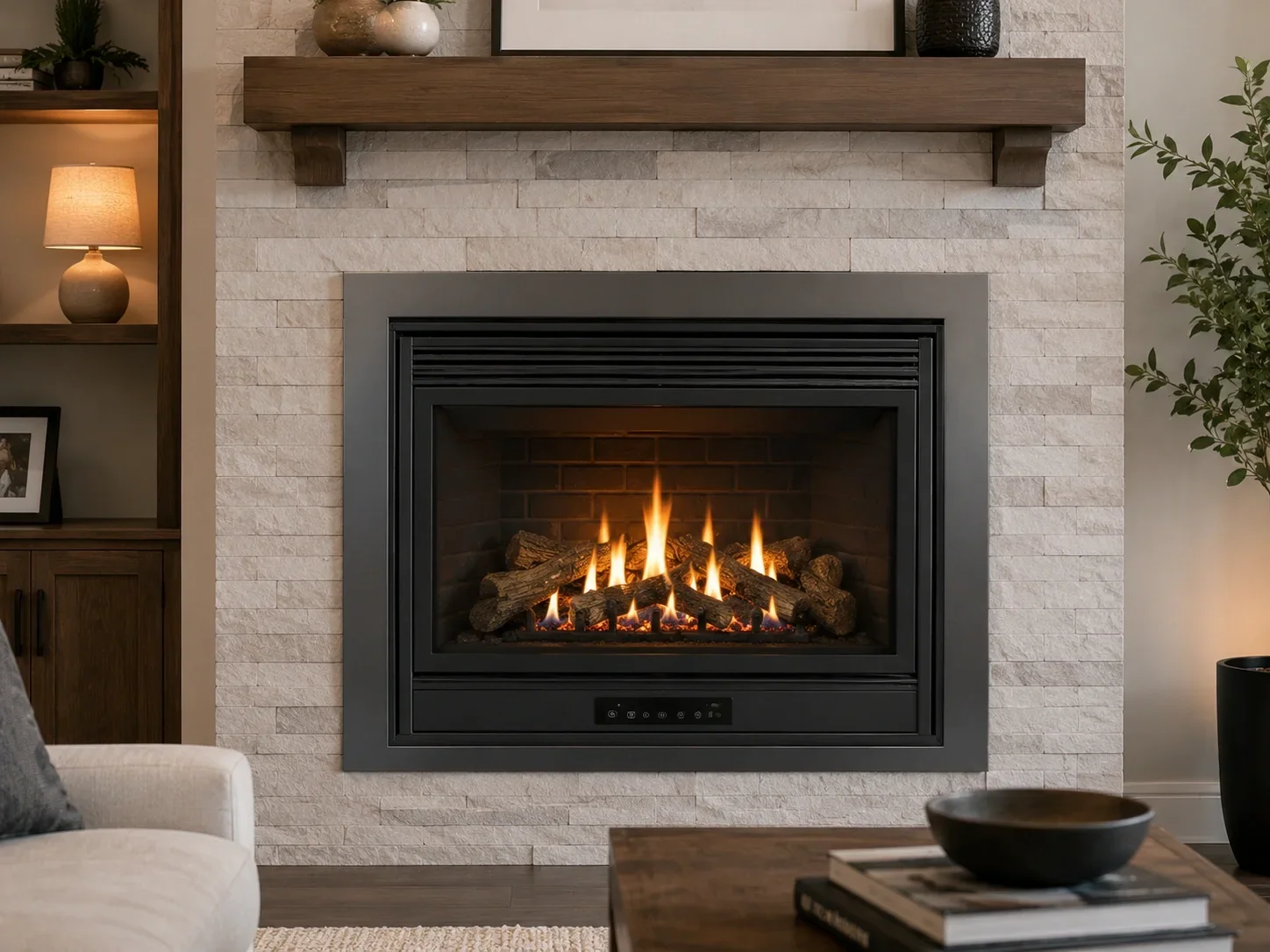
A gas insert is a complete, self-contained fireplace unit that slides into your existing fireplace opening. Unlike gas log sets, inserts are fully enclosed systems with their own insulated firebox, glass front, and dedicated venting system.
Gas inserts are engineered as high-efficiency heating appliances, often featuring double-wall construction, heat exchangers, and forced-air blowers to maximize heat output and distribution throughout your home. They represent a more comprehensive upgrade to your fireplace system.
Types of Gas Inserts
- Direct Vent Inserts: Use a coaxial vent system that draws combustion air from outside and exhausts through a concentric pipe. These are the most efficient option (typically 70-85% efficiency) and don't affect indoor air quality.
- B-Vent Inserts: Use a single pipe to exhaust combustion gases through the existing chimney while drawing combustion air from the room. Less efficient than direct vent but simpler to install in some existing chimney configurations.
Key Features of Gas Inserts
- Complete, self-contained heating system
- High energy efficiency (70-85%)
- Sealed combustion system
- Built-in blower for heat distribution
- Glass front for safety and efficiency
- Multiple fan speeds and thermostat controls
- Significant heating output (up to 40,000+ BTU)
Detailed Comparison: Gas Log Set vs Gas Insert
| Feature | Gas Log Set | Gas Insert |
|---|---|---|
| Installation Complexity | Simple; drops into existing fireplace | More complex; may require chimney liner |
| Investment Level | Entry-level to mid-range | Mid-range to premium |
| Installation Investment | Entry-level | Mid-range to premium |
| Heating Efficiency | 10-99% (varies by type) | 70-85% |
| Heating Capacity | Up to 40,000 BTU (vented) or 30,000 BTU (ventless) | Up to 40,000+ BTU |
| Heat Distribution | Radiant heat only (unless optional blower added) | Forced-air blower system |
| Realistic Flame Appearance | Excellent (especially vented) | Good to very good |
| Glass Front | Optional (mostly open front) | Standard (sealed unit) |
| Venting Requirements | Existing chimney (vented) or none (ventless) | Dedicated venting system (direct vent or B-vent) |
| Impact on Indoor Air Quality | Vented: minimal; Ventless: can increase moisture and decrease oxygen | Minimal (sealed combustion) |
| Maintenance Requirements | Annual inspection; clean logs and burner | Annual inspection; clean glass, heat exchanger, and blower |
| Lifespan | 10-15 years | 15-20+ years |
| Operating Expense Tier | Lower to moderate (depending on usage and type) | Moderate (more efficient but used more for heating) |
| Best For | Ambiance, occasional use, budget-conscious homeowners | Primary or supplemental heating, energy efficiency |
Heating Efficiency & Performance
One of the most significant differences between gas log sets and gas inserts lies in their heating efficiency and performance capabilities. Understanding these differences is crucial if you're considering either option as a heating source versus purely for ambiance.
Gas Log Set Efficiency
Vented Gas Logs:
Efficiency: 10-20%
Vented gas logs operate similarly to traditional wood fireplaces, with most heat escaping up the chimney. They provide radiant heat directly to the room but lose significant energy through the venting process.
Ventless Gas Logs:
Efficiency: Up to 99%
Ventless options are extremely efficient as all heat remains in the room, but they produce moisture and may affect indoor air quality, especially in well-insulated homes.
Gas Insert Efficiency
Efficiency: 70-85%
Gas inserts feature sealed combustion systems and heat exchangers that capture and distribute heat effectively. Their built-in blowers actively circulate warm air throughout your space, making them significantly more effective at heating than most gas log sets.
Important Note: While ventless gas logs boast high efficiency percentages, gas inserts typically provide more effective overall heating due to their forced-air distribution systems and larger BTU outputs.
Installation Requirements & Process
The installation process differs significantly between gas log sets and gas inserts, affecting both initial investment levels and the scope of your fireplace installation project.
Gas Log Set Installation
Measure your fireplace opening to ensure proper fit
Verify gas line availability and proper pressure
For vented logs: ensure chimney is clear and properly functioning
Place the burner pan in the fireplace and connect to gas line
Arrange the logs according to manufacturer's instructions
Test for gas leaks and proper flame pattern
Total installation time: 2-4 hours
Professional installation required? Recommended, but simpler than inserts
Gas Insert Installation
Precisely measure fireplace opening and depth for proper fit
Install appropriate venting system (direct vent or B-vent)
May require chimney liner installation for proper drafting
Position insert and secure according to manufacturer specifications
Connect gas line and electrical components (for blower and controls)
Install facing and trim to seal the insert to the fireplace opening
Test all functions, including blower, thermostat, and safety features
Total installation time: 4-8 hours
Professional installation required? Absolutely required
Building Code Considerations: Both gas log sets and inserts must comply with local building codes and manufacturer specifications. Many jurisdictions require permits and professional installation for gas appliances. Check with your local building department before proceeding with either option.
Investment Level Comparison: Gas Log Set vs Gas Insert
Understanding the complete investment picture—including upfront expenses, installation, and long-term operating costs—is essential for making a financially sound decision between these two options.
Gas Log Set Investment Tiers
Gas Insert Investment Tiers
Long-term Value Consideration: While gas inserts require a higher upfront investment, their superior efficiency can lead to lower operating costs over time, potentially offsetting the initial outlay within 5-10 years, especially if you use the fireplace frequently for heating rather than just ambiance.
Pros and Cons Comparison
Gas Log Set Pros
- Lower initial investment (entry-level to mid-range)
- Simpler installation process
- Excellent realistic flame appearance (especially vented)
- No modification to existing fireplace structure
- Easy to remove or replace
- Works with existing chimney (vented models)
- Wide variety of log styles and arrangements
Gas Log Set Cons
- Lower heating efficiency (especially vented models)
- Limited heat distribution without optional blower
- Ventless models can affect indoor air quality
- Not suitable as primary heating source
- May require leaving damper open (venting heat)
- Shorter expected lifespan (10-15 years)
Gas Insert Pros
- High heating efficiency (70-85%)
- Effective heat distribution with built-in blower
- Can serve as primary or supplemental heating
- Sealed combustion protects indoor air quality
- Longer lifespan (15-20+ years)
- Better safety features and controls
- May increase home value more than log sets
Gas Insert Cons
- Higher initial investment (mid-range to premium)
- More complex installation requiring professional help
- May require chimney modifications
- Less realistic flame than vented gas logs
- Permanent installation difficult to remove
- Glass front requires regular cleaning
Maintenance Requirements
Proper maintenance of your gas fireplace is essential for safety, efficiency, and longevity. Here's how the maintenance requirements compare between gas log sets and gas inserts.
Gas Log Set Maintenance
- Annual inspection: Check burner, gas connections, and venting (if applicable)
- Log cleaning: Gently remove dust and soot from ceramic logs
- Burner maintenance: Clear any debris from burner ports
- Pilot light: Ensure proper operation and clean if necessary
- Chimney inspection: For vented models, ensure chimney is clear and functioning
- Optional blower: Clean and lubricate if installed
Estimated annual maintenance tier: Entry-level
Gas Insert Maintenance
- Annual professional inspection: Comprehensive check of all components
- Glass cleaning: Regular cleaning to maintain appearance and efficiency
- Heat exchanger: Inspection and cleaning to maintain efficiency
- Blower maintenance: Cleaning and lubrication of fan components
- Venting system: Inspection of direct vent or B-vent components
- Controls and safety features: Testing of thermostats, limit switches, etc.
Estimated annual maintenance tier: Entry-level to mid-range
Which Option Is Right for You?
Choose a Gas Log Set If:
- Your primary goal is creating ambiance rather than heating
- You have a limited budget for the conversion project
- You want to maintain the traditional open-fireplace look
- You only use your fireplace occasionally
- Your existing chimney is in good condition (for vented models)
- You want a simpler installation with minimal modifications
- You might want to remove or replace the unit in the future
Choose a Gas Insert If:
- You want to use your fireplace as a significant heat source
- Energy efficiency is a priority for you
- You're concerned about indoor air quality
- You want to reduce heat loss through your chimney
- You plan to use your fireplace frequently
- You want advanced features like thermostatic control
- You're looking for a long-term investment with better ROI
Compromise Option: If you're torn between the two, consider a ventless gas log set with an aftermarket blower kit. This combination provides better efficiency than standard vented logs while maintaining a lower investment level than a full insert, though it still won't match the heating performance of a dedicated insert system.
Frequently Asked Questions
While gas log sets are simpler to install than inserts, both typically require professional installation for safety and code compliance. Gas connections must be made by qualified technicians, and improper installation can lead to gas leaks, carbon monoxide hazards, and voided warranties. Always check local building codes and manufacturer requirements before attempting any gas appliance installation.
It depends on the type. Vented gas log sets require a functioning chimney to exhaust combustion byproducts. Ventless gas log sets don't require a chimney. Gas inserts typically require some form of venting—either through an existing chimney (with a liner) or through a direct vent system that can be routed through a wall or roof. Learn more about chimney requirements for different fireplace types.
Vented gas log sets generally provide the most realistic flame appearance, as they're designed to mimic the look of a wood fire with taller, more random flames. Gas inserts have improved significantly in recent years and offer good flame realism, but the sealed glass front and more controlled combustion process typically result in slightly less natural-looking flames compared to high-quality vented gas logs.
Yes, you can typically replace a gas log set with a gas insert, assuming your fireplace opening meets the insert's dimensions. This is actually a common upgrade path for homeowners who initially installed gas logs for ambiance but later decided they want more heating efficiency. The process involves removing the log set and burner, then installing the insert with appropriate venting.
Gas log sets typically last 10-15 years with proper maintenance, though the ceramic logs themselves may last longer if well cared for. Gas inserts generally have a longer lifespan of 15-20+ years due to their more robust construction and sealed combustion design. Both can potentially last longer with excellent maintenance and proper use. Learn more about fireplace lifespans for different types.
Ventless gas log sets are designed with safety features including oxygen depletion sensors (ODS) that automatically shut off the unit if oxygen levels drop too low. However, they do produce water vapor and can affect indoor air quality in tightly sealed homes. Some states and municipalities restrict or prohibit ventless gas appliances. Learn more about ventless fireplace safety before making your decision.