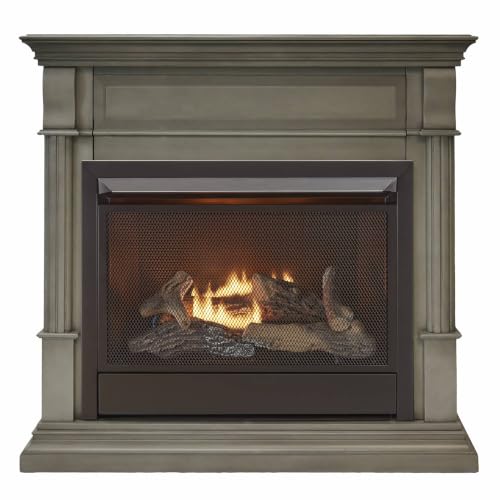
Gas Fireplace Insert with Blower and Remote Control
A gas fireplace insert with a built-in blower and remote control is one of the most efficient and convenient ways to upgrade an existing wood-burning fireplace. This guide explains how these features work together, what to look for, and how to choose the right model for your home.
View Recommended ModelsWhy this combination matters: The insert converts an open, inefficient masonry fireplace into a sealed, high-efficiency heating appliance. The blower distributes warm air into the room instead of letting it escape up the chimney, while the remote control adds convenience and programmable comfort.
What Is a Gas Fireplace Insert with Blower and Remote?
A gas fireplace insert is a self-contained unit designed to fit inside an existing fireplace opening. Unlike a gas log set, which is essentially decorative and loses most of its heat up the flue, an insert is a sealed combustion appliance. It draws air from the room (or from outside, in direct-vent models), heats it, and circulates it back into the living space.
When you add a blower and a remote control, the insert becomes a true zone-heating solution. The blower moves heated air through the room at a much higher rate than natural convection alone. The remote lets you turn the unit on and off, adjust the flame height, and in many cases control the thermostat and blower speed without leaving your seat.
🔥 Sealed Combustion
The insert is sealed from the room air, which means no drafts, no smoke spillage, and much higher efficiency than a traditional open fireplace. Direct-vent models pull combustion air from outside, so they do not compete with your home's heating system.
💨 Blower Fan
The blower pulls cool room air across the hot heat exchanger and pushes warm air back into the room. This dramatically increases the amount of usable heat delivered to the living space, especially in larger rooms.
📱 Remote Control
A remote control allows you to operate the fireplace from across the room. Many remotes include a thermostat that cycles the burner on and off to maintain a set temperature, which improves comfort and reduces gas usage.
Key Benefits of This Setup
- Higher heating efficiency: A sealed insert with a blower can deliver far more heat into the room than a traditional open fireplace. This is especially important if you want the fireplace to contribute to home heating.
- Better heat distribution: The blower moves warm air throughout the room, reducing hot and cold spots and making the space more comfortable.
- Convenience: A remote control lets you start, stop, and adjust the fireplace without bending down or reaching behind the unit. Programmable thermostats can maintain a consistent temperature.
- Cleaner operation: Gas inserts produce very little ash, soot, or creosote. There is no need to haul firewood or clean up ashes.
- Improved safety: Sealed combustion and optional oxygen depletion sensors (ODS) make gas inserts safer than open wood fires. Many models also include a safety shut-off if the pilot light goes out.
How the Blower and Remote Work Together
The blower and remote are not just separate features; they are designed to work as a system. The remote typically controls the burner, the flame height, and the blower speed. In many models, the remote also includes a thermostat that reads the room temperature and automatically adjusts the burner and blower to maintain your desired setting.
This integrated control is what makes a gas insert with blower and remote so effective. Without the blower, much of the heat would simply radiate from the front of the unit. Without the remote, you would have to manually adjust the unit every time the room temperature changed. Together, they turn the fireplace into a convenient, responsive heating appliance.
Insert vs. Traditional Open Fireplace
| Feature | Open Wood Fireplace | Gas Insert with Blower & Remote |
|---|---|---|
| Heating Efficiency | Very low; most heat escapes up the chimney | High; sealed combustion and blower deliver usable heat |
| Heat Distribution | Poor; mostly radiant heat near the hearth | Excellent; blower circulates warm air throughout the room |
| Convenience | Manual operation; requires wood and ash cleanup | Remote control; no wood, no ash, programmable thermostat |
| Safety | Open flame; embers and smoke can escape | Sealed combustion; optional safety sensors and shut-off |
| Installation | Already in place, but inefficient | Fits into existing fireplace; professional installation recommended |
| Maintenance | Frequent chimney cleaning and ash removal | Annual inspection; minimal cleaning |
What to Look For When Choosing a Model
BTU Output & Heating Capacity
Match the BTU output to the size of the room you want to heat. A gas fireplace heating capacity BTU guide can help you estimate the right range. For reference, a typical insert produces between 20,000 and 40,000 BTUs, which is enough to heat a medium to large living room.
Venting Type
Direct-vent models are the most common for inserts. They use a coaxial pipe that pulls in outside air for combustion and exhausts gases outside. This makes them safe for most homes and eliminates the need for a traditional chimney. Learn more in our gas fireplace venting requirements article.
Blower Features
Look for a variable-speed blower, which lets you adjust the airflow to your preference. A quiet blower is also important, especially if the fireplace is in a living room or bedroom. Auto-on/off blowers are a nice convenience because they start only when the unit is warm enough.
Remote Control Capabilities
Basic remotes control on/off and flame height. More advanced remotes include a thermostat, programmable timers, and blower speed control. A gas fireplace remote control replacement is often available if you need to upgrade or replace a lost remote.
Efficiency Rating
Higher efficiency means more heat delivered per unit of gas. Look for models with efficiency ratings in the 70–90% range. This is especially important if you plan to use the fireplace as a primary or secondary heat source.
Installation Requirements
Measure your existing fireplace opening carefully. Most inserts are designed to fit standard masonry or prefabricated fireplaces. For prefabricated units, check that the insert is approved for your specific fireplace model. A gas fireplace insert into wood burning fireplace guide can help you understand the process.
Installation Considerations
Installing a gas insert is not a do-it-yourself project for most homeowners. It involves running a gas line, installing a venting system, and ensuring proper clearances from combustible materials. A qualified technician should perform the installation and check for leaks and proper ventilation.
The good news is that most inserts are designed to fit into existing fireplace openings with minimal modification. The installer will typically run a flexible gas line from the nearest supply, connect the venting, and secure the insert in place. In many cases, the entire job can be completed in a single day.
Before installation, check local building codes and permit requirements. Some areas require a permit for gas appliance installation, and some homeowners associations may have restrictions. For a broader overview, see our gas fireplace requirements page.
Maintenance Tips
- Annual inspection: Have a qualified technician inspect the insert, venting, and gas connections once a year. This is the most important maintenance step.
- Clean the glass: Use a non-abrasive fireplace glass cleaner to remove soot and film. Avoid ammonia-based cleaners, which can damage the glass.
- Clean the blower: Dust and debris can accumulate on the blower blades and motor. Unplug the unit and use a soft brush or vacuum to clean the blower compartment.
- Check the remote batteries: Replace batteries at least once a year, or more often if you use the remote frequently.
- Inspect the venting: Check for any signs of corrosion, blockage, or disconnection. If you notice anything unusual, contact a professional.
For more detailed maintenance guidance, see our gas fireplace maintenance guide and fireplace inspection checklist.
Common Issues and Troubleshooting
Even the best gas inserts can develop issues over time. Here are some of the most common problems and what they usually mean:
Pilot Light Won't Stay Lit
This is often caused by a dirty pilot assembly, a faulty thermocouple, or a draft. Cleaning the pilot orifice and checking the thermocouple connection usually solves the problem. If not, the thermocouple may need to be replaced. See our pilot light keeps going out guide.
Weak Flame
A weak flame can be caused by low gas pressure, a blocked burner orifice, or a faulty regulator. If the flame is yellow or orange instead of blue, it may indicate incomplete combustion, which requires professional attention. See our gas fireplace weak flame article.
Blower Not Working
Check the power supply, the blower switch, and the blower motor. If the blower is getting power but not turning, the motor may need to be replaced. See our fireplace blower fan not working guide.
Remote Not Responding
The most common cause is dead batteries. If new batteries do not solve the problem, the remote may need to be re-paired with the receiver, or the receiver may be faulty. See our electric fireplace remote fix article for general troubleshooting steps.
Frequently Asked Questions
Most gas inserts are designed to fit into masonry fireplaces or factory-built (prefabricated) fireplaces. However, not all inserts are approved for all fireplace types. You must check the manufacturer's specifications and local building codes. In some cases, a chimney liner or venting modification is required. For prefabricated fireplaces, the insert must be listed for use with that specific model.
Most residential gas inserts produce between 20,000 and 40,000 BTUs. With a blower, the effective heating capacity is significantly higher than a radiant-only unit. As a general rule, a 30,000 BTU insert can heat an area of roughly 1,000 to 1,500 square feet, depending on insulation, ceiling height, and climate. Use our fireplace BTU calculator for a more precise estimate.
Yes, most blowers and remote receivers require a standard electrical connection. Some models use a plug-in adapter, while others can be hardwired. If you want the fireplace to operate during a power outage, you may need a battery backup or a model that can run without electricity. See our can you use a gas fireplace without electricity article for more details.
An annual professional inspection is recommended. The technician will check the burner, pilot assembly, venting, gas connections, and blower. Regular maintenance helps ensure safe operation and peak efficiency. For a full checklist, see our annual fireplace inspection guide.
It depends on the size of your home and the climate. A high-efficiency gas insert with a blower can serve as a supplemental heat source for a large room or an open-concept living area. For whole-home heating, you would typically need a central furnace or multiple zone heaters. See our can a fireplace heat an entire house article for a detailed discussion.
Ready to Upgrade Your Fireplace?
A gas fireplace insert with a blower and remote control is one of the most practical home improvements you can make. It reduces energy waste, increases comfort, and adds convenience. Browse our recommended models below to find the right fit for your space.
See Recommended Models