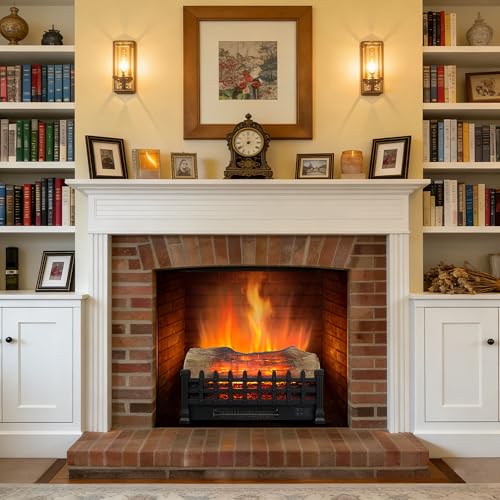
Replacing Wood Burning Fireplace with Electric Insert
A complete guide to converting your old wood-burning fireplace into a clean, efficient electric insert — without the mess, chimney, or maintenance
START READINGWhy Make the Switch? Replacing a wood burning fireplace with an electric insert eliminates chimney maintenance, improves indoor air quality, and gives you instant, controllable heat at the push of a button — all while keeping the charm of a real fireplace.
Why Replace Your Wood Burning Fireplace with an Electric Insert?
Wood burning fireplaces have long been a cherished feature in many homes, offering warmth and ambiance during cold months. However, they come with significant drawbacks: constant ash cleanup, chimney sweeping, smoke odors, and inefficient heating that often sends more warmth up the chimney than into your room. For many homeowners, the question is no longer whether to replace their wood burning fireplace, but what to replace it with.
An electric fireplace insert has emerged as one of the most practical and popular solutions. Unlike gas or propane alternatives, electric inserts require no fuel lines, no venting, and no chimney. They can be installed into your existing fireplace opening with minimal renovation, and they deliver consistent, zone-focused heat with virtually no maintenance. If you're considering which fireplace is right for your home, an electric insert deserves serious consideration.
This guide walks you through every aspect of replacing a wood burning fireplace with an electric insert: the benefits, the step-by-step process, compatibility considerations, cost tiers, and how to choose the best model for your space. By the end, you'll have the confidence to make an informed decision and complete your conversion smoothly.
Key Benefits of Electric Inserts Over Wood Burning
No Chimney Required
Electric inserts need no chimney or venting. You can seal off your old flue, eliminating drafts and heat loss permanently. This also means no chimney maintenance ever again.
Zero Mess, Zero Ash
Say goodbye to ash removal, soot, and creosote. Electric inserts produce no combustion byproducts, so your indoor air stays clean and your fireplace area stays spotless.
Instant Heat & Control
Electric inserts heat up immediately. With adjustable thermostats and remote controls, you can fine-tune temperature and flame intensity without tending a fire.
High Energy Efficiency
Nearly 100% of the electricity an electric insert consumes is converted to heat. This makes them far more efficient than traditional wood fireplaces, which lose most heat up the chimney.
Safe & Clean Operation
No open flames, no carbon monoxide, no embers. Electric inserts are among the safest fireplace options, ideal for homes with children or pets. Learn more about electric fireplace safety.
Year-Round Ambiance
Many electric inserts let you operate the flame effect without heat, so you can enjoy the cozy look of a fire even in summer. Pair with crackling sound for added realism.
Step-by-Step: How to Replace a Wood Burning Fireplace with an Electric Insert
The conversion process is more straightforward than most homeowners expect. While every fireplace is unique, the general steps below apply to most standard masonry and prefabricated wood burning fireplaces. If you're unsure about any step, consult a professional — especially if your fireplace has structural or gas-related components.
-
Assess Your Existing Fireplace
Measure the width, height, and depth of your firebox opening. Note any obstructions such as a gas line, damper mechanism, or hearth dimensions. Check whether your fireplace is masonry or prefabricated (zero-clearance). This determines what type of electric insert will fit and whether any modification is needed. For a deeper look at sizing, see our fireplace sizing worksheet. -
Choose the Right Electric Insert
Select an insert that fits your opening with a small margin for ventilation. Consider heating capacity (measured in BTU or watts), flame realism, thermostat features, and whether you want a built-in or freestanding unit. If you want the most realistic look, explore realistic electric fireplace inserts with heat. For larger openings, a large electric fireplace with mantel may be a better fit. -
Disconnect and Remove Old Components
If your wood fireplace has a gas log set or starter, have a licensed professional cap the gas line first. Remove the grate, log holder, and any loose firebrick or damaged refractory panels. Clean out ash and debris thoroughly. If your fireplace has glass doors, you may be able to reuse them or remove them depending on the insert design. Learn about glass fireplace doors if you plan to keep them. -
Seal the Chimney or Flue
Since electric inserts don't vent, you should seal the damper and flue to prevent drafts and moisture. A chimney balloon or inflatable draft stopper is a common solution — see our fireplace draft stopper guide. For a permanent solution, a chimney cap and sealed damper work well. This step is critical for energy efficiency. -
Prepare the Opening
Ensure the firebox floor is level and clean. If the opening is uneven or too deep, you may need to build a simple frame or platform to support the insert. Some inserts come with adjustable leveling feet. If you're installing into a prefabricated fireplace, check that the insert's dimensions match the metal firebox. For masonry fireplaces, you may need to modify the opening slightly with a masonry saw or grinder. -
Install the Electric Insert
Slide the insert into the opening. Most models are designed for a friction fit or come with mounting brackets. Connect the power cord to a nearby outlet. If you want a cleaner look, consider hardwiring vs plug-in options. For a built-in look, you may want to frame around the insert with tile or stone — see heat-resistant tiles for fireplaces. -
Finish and Test
Once installed, turn on the insert and test all functions: flame effect, heat settings, thermostat, remote control, and any crackling sound features. Check for any gaps around the insert and seal them with fire-rated caulk or trim. If you're adding a mantel or surround, now is the time to complete that work. For inspiration, browse fireplace remodel before and after ideas.
If you prefer professional installation, search for electric fireplace insert installation near me to find qualified technicians in your area. For a broader overview of installation options, see our plug-and-play electric fireplace installation guide.
Will an Electric Insert Fit Your Existing Fireplace?
Compatibility is the most common concern homeowners have when considering this conversion. The good news is that electric inserts are designed to fit into a wide range of existing fireplace openings, including both masonry and prefabricated models. Here's what to check:
- Opening dimensions: Measure your firebox width, height, and depth. Most electric inserts list a "minimum opening" requirement. If your opening is slightly smaller, you may need to trim the opening or choose a smaller insert. If it's larger, you can frame around the insert for a custom look.
- Fireplace type: Masonry fireplaces are generally straightforward. Prefabricated (zero-clearance) fireplaces may have metal components that require slight modification. If you have a zero-clearance wood burning fireplace, check with the insert manufacturer for compatibility.
- Gas line or electrical: If your wood fireplace has a gas line for a log set, it must be capped by a professional. Most electric inserts require a standard 120V outlet nearby. If no outlet exists, you'll need to install one or use an extension cord temporarily.
- Hearth and surround: Consider how the insert will look with your existing hearth and surround. You may want to update these elements at the same time. For ideas, see concrete fireplace surround ideas and stone fireplace wall ideas.
If you're unsure whether your fireplace is a good candidate, consult a professional. For more on matching inserts to existing fireplaces, see our articles on electric fireplace inserts to fit in existing fireplace and best electric fireplace insert for existing fireplace.
Wood Burning vs. Electric Insert: Side-by-Side Comparison
| Feature | Wood Burning Fireplace | Electric Fireplace Insert |
|---|---|---|
| Venting Required | Yes — chimney or flue | No — zero venting |
| Maintenance | Ash removal, chimney sweeping, creosote prevention | Minimal — occasional dusting |
| Heating Efficiency | Low — most heat escapes up the chimney | High — nearly 100% heat conversion |
| Installation Complexity | High — requires chimney, masonry, permits | Low — slides into existing opening, plug-in or hardwire |
| Indoor Air Quality | Smoke, ash, and particulates released indoors | Clean — no combustion byproducts |
| Safety | Open flame, embers, carbon monoxide risk | No open flame, no CO, cool-to-touch options |
| Ambiance | Authentic crackling fire (but messy) | Realistic LED flame with optional crackling sound |
| Year-Round Use | Limited — too hot in summer | Flame-only mode available for year-round ambiance |
Understanding Cost Tiers for Electric Inserts
Electric fireplace inserts are available across a wide range of quality and feature tiers. Rather than focusing on specific prices, it's more useful to understand what each tier offers so you can match your expectations and budget.
- Entry-level / Budget-friendly: Basic flame effects, simple on/off heat, manual controls. These are ideal for homeowners who want ambiance and supplemental heat without extra features. They typically have smaller heating capacities and less realistic flames.
- Mid-range / Mid-priced: Improved flame realism, remote control, adjustable thermostat, and multiple heat settings. These inserts offer a good balance of features and performance for most households.
- Premium / High-end: Advanced LED flame technology, crackling sound, smart home integration, and higher heating capacities. These models often include smart Wi-Fi controllers and more sophisticated thermostats.
- Luxury / Top-tier: The most realistic flame effects, custom sizing, premium materials, and advanced safety features. These are designed for homeowners who want a seamless, high-end look and maximum performance.
When comparing tiers, remember that mid-range models often offer the best value for most homeowners, while premium and luxury tiers are best for those who want the most realistic experience or specific smart-home features. For a broader cost breakdown, see our fireplace cost breakdown and electric fireplace running costs guides.
Maintenance After the Switch
One of the biggest advantages of switching to an electric insert is the dramatic reduction in maintenance. However, a little care will keep your insert running smoothly for years:
- Dust the vents and glass: Use a soft cloth or vacuum brush to remove dust from the heater vents and flame window. See our cleaning electric fireplace guide for detailed steps.
- Check the power cord: Inspect the cord periodically for wear or damage. If you hardwired the unit, have an electrician check connections every few years.
- Test the thermostat and remote: Ensure all controls work properly, especially before winter. If you have issues, see electric fireplace remote fix.
- Schedule annual inspections: Even though electric inserts need less maintenance, an annual check of the unit and its connections is wise. See our electric fireplace inspection guide.
For a complete seasonal checklist, see our fireplace maintenance checklist and electric fireplace maintenance tips.
Ready to Make the Switch?
Explore our recommended electric fireplace inserts below and find the perfect fit for your existing fireplace. Clean, efficient, and beautiful — your new electric insert is waiting.
VIEW RECOMMENDED INSERTSFrequently Asked Questions
Can I replace my wood burning fireplace with an electric insert?
Yes, in most cases. Electric inserts are designed to fit into existing fireplace openings, whether masonry or prefabricated. You'll need to remove old components, seal the chimney, and ensure a power source is available. For a detailed guide, see our article on electric fireplace insert to replace wood burning.
Do I need a chimney for an electric fireplace insert?
No. Electric inserts do not require a chimney or venting. In fact, you should seal your existing chimney to prevent drafts. This is one of the biggest advantages of switching to electric. Learn more in our do fireplaces need a chimney guide.
How much does it cost to replace a wood burning fireplace with an electric insert?
The cost varies depending on the insert tier and whether you hire a professional. Entry-level inserts are budget-friendly, while premium models with advanced features are a larger investment. DIY installation can reduce overall expenses. For a detailed breakdown, see our cost of converting a wood burning fireplace to electric guide.
Are electric fireplace inserts energy efficient?
Yes. Electric inserts convert nearly all electricity into heat, making them highly efficient. They also allow zone heating, so you can warm only the rooms you're using. See our are electric fireplaces expensive to run article for more details.
What size electric insert do I need for my existing fireplace?
Measure the width, height, and depth of your fireplace opening. Choose an insert that fits within these dimensions with a small margin for ventilation. Most manufacturers list compatible opening sizes. For help, see our fireplace sizing worksheet and how to size a fireplace guide.
Can I install an electric insert myself?
Yes, many homeowners can install an electric insert themselves, especially plug-in models. However, if you need to cap a gas line, modify masonry, or hardwire the unit, professional help is recommended. See our DIY vs professional fireplace installation guide for more information.
Will an electric insert look realistic in my old fireplace?
Modern electric inserts feature highly realistic LED flame effects, glowing embers, and optional crackling sounds. Many homeowners find them indistinguishable from a real fire at a glance. For the most realistic options, see our most realistic electric fireplace insert with heat guide.
Final Thoughts
Replacing a wood burning fireplace with an electric insert is one of the smartest upgrades a homeowner can make. It eliminates the mess, maintenance, and inefficiency of wood burning while preserving the cozy ambiance that makes a fireplace so special. Whether you're motivated by convenience, safety, energy savings, or simply wanting a cleaner home, an electric insert delivers on all fronts.
With the step-by-step guidance and compatibility tips in this article, you're well-equipped to plan your conversion. Take your time choosing the right insert for your space, and don't hesitate to consult a professional for installation if needed. Your new electric fireplace will provide years of clean, efficient warmth and beauty.
For more information on related topics, explore our fireplace buying guide and electric vs gas vs wood fireplace comparison.