
Wood Burning Stove Insert for Zero Clearance Fireplace
Everything you need to know before upgrading your prefabricated fireplace with a high-efficiency wood burning insert — compatibility, sizing, efficiency ratings, installation requirements, and product recommendations.
Explore Inserts ↓What Is a Zero Clearance Fireplace?
A zero clearance fireplace is a factory-built, prefabricated fireplace that can be installed with minimal clearance to combustible materials. Unlike traditional masonry fireplaces that require a massive brick or stone surround and a full masonry chimney, zero clearance units are constructed with insulated metal boxes and are typically framed into a wall with wood studs. They are common in modern homes, manufactured homes, and renovations where a masonry fireplace would be impractical or too heavy.
Because these fireplaces are built to precise manufacturer specifications, they are not automatically compatible with every aftermarket insert. That is why understanding the difference between a masonry fireplace and a zero clearance unit is critical before you shop for a wood burning stove insert for zero clearance fireplace.
Key Characteristics of Zero Clearance Fireplaces
- Factory-built with a metal firebox and insulated outer shell
- Can be installed close to wood framing (typically 0–2 inches)
- Use a dedicated chimney system (often triple-wall or air-cooled)
- Often have a smaller firebox than masonry fireplaces
- Must be listed for use with an insert — check the rating plate
If you are still deciding whether a wood insert is the right choice versus other options, our guide to choosing the right fireplace can help you compare fuel types and installation scenarios.
Can You Install a Wood Burning Insert in a Zero Clearance Fireplace?
The short answer is: sometimes, but not always. A standard wood burning insert designed for masonry fireplaces is not approved for zero clearance installations. However, a growing number of manufacturers produce inserts specifically listed and tested for zero clearance fireplaces. These units are engineered to work within the constraints of a prefabricated firebox and chimney system.
How to Check Compatibility
- Locate the rating plate. Open the firebox door or look behind the fireplace screen. The rating plate (also called the data plate) lists the manufacturer, model number, and whether the unit is approved for use with an insert.
- Measure the firebox opening. Record the width, height, and depth of the existing firebox. You will need these measurements to compare against insert specifications.
- Verify chimney type and condition. Most zero clearance fireplaces use a specific chimney system. A wood insert typically requires a stainless steel liner running the full length of the chimney.
- Check local codes. Some jurisdictions restrict or prohibit insert installations in zero clearance fireplaces regardless of manufacturer listing. Always confirm with your local building department.
- Consult a certified specialist. A chimney sweep or fireplace installer can confirm whether your unit is a viable candidate. You can find professionals through our wood burning stove insert installation near me resource.
Red Flags That May Prevent Installation
- Rating plate does not mention insert compatibility
- Firebox is too small for any available insert
- Chimney system is damaged, discontinued, or incompatible with a liner
- Clearances to combustibles cannot be maintained
- Local code explicitly prohibits the modification
Benefits of a Wood Burning Stove Insert
If your zero clearance fireplace is compatible, adding a wood burning insert transforms an open, inefficient firebox into a controlled-combustion heating appliance. The benefits are substantial:
✓ Advantages
- Heating efficiency jumps from roughly 10% to 60–80%+
- Longer burn times — up to 8–12 hours on a single load
- Reduced smoke and emissions through secondary combustion
- Less wood consumption for the same heat output
- Improved safety with a closed glass door
- Can reduce reliance on central heating
- Adds aesthetic charm and a focal point
✗ Limitations
- Not all zero clearance fireplaces are compatible
- Requires a stainless steel chimney liner
- Professional installation is strongly recommended
- Firebox size may limit insert options
- Regular maintenance and chimney cleaning required
- Upfront investment is higher than a simple screen or grate
For a broader look at how wood inserts compare to other upgrade paths, see our articles on wood burning stove fireplace inserts and high-efficiency wood burning fireplace inserts.
Sizing and Specifications
Getting the size right is the single most important factor for a successful installation. An insert that is too large will not fit; one that is too small will leave gaps and reduce efficiency. Use the table below as a general reference, but always verify against your specific fireplace and the insert's specification sheet.
| Specification | What to Measure / Check | Why It Matters |
|---|---|---|
| Firebox Width | Measure the widest point of the opening | Insert must fit inside with room for the surround |
| Firebox Height | Measure from the floor of the firebox to the top of the opening | Ensures the insert does not protrude or block the opening |
| Firebox Depth | Measure from the front opening to the back wall | Determines how far the insert extends into the room |
| Chimney Flue Size | Measure the inner diameter of the flue | Liner must match or be properly adapted |
| Clearances | Check manufacturer specs for side, top, and front clearances | Prevents overheating of combustible materials |
| BTU Output | Match to room size and insulation | Oversized or undersized units waste energy |
For a deeper dive into heating capacity, see our BTU guide for fireplaces. If you are also considering a blower to distribute heat more effectively, our article on wood burning stove inserts with blowers explains how they work and when they are worth adding.
Efficiency and Performance
Modern wood burning inserts use advanced combustion technology to extract far more heat from each log. Two key features to look for are secondary combustion (which burns off gases that would otherwise escape as smoke) and catalytic converters (which lower the ignition temperature of those gases for even cleaner burns).
Efficiency ratings for quality inserts typically range from 60% to over 80%. Higher efficiency means less wood for the same heat, fewer chimney emissions, and less creosote buildup. If efficiency is a top priority, our guide to the most energy-efficient fireplace types can help you compare wood inserts against gas, electric, and pellet options.
Performance Features Worth Prioritizing
- Secondary burn tubes — reburn smoke for higher efficiency
- Catalytic combustor — ideal for low, slow burns and long overnight fires
- Variable-speed blower — pushes warm air into the room
- Glass door with air wash — keeps the view clear
- Thermostatic control — maintains consistent heat output
- Refractory firebox lining — withstands high temperatures and improves combustion
Installation: What to Expect
Installing a wood burning insert in a zero clearance fireplace is not a simple drop-in project. It typically involves running a stainless steel liner through the existing chimney, connecting the insert to the liner, installing a surround panel to cover the gap between the insert and the fireplace opening, and verifying clearances. Because of the complexity and safety implications, professional installation is strongly advised.
- Inspection and measurement — A certified technician inspects the fireplace, chimney, and framing.
- Chimney liner installation — A stainless steel liner is run from the top of the chimney down to the insert.
- Insert placement — The insert is positioned into the firebox and connected to the liner.
- Surround and trim — A decorative surround covers the gap around the insert for a finished look.
- Blower and electrical — If the insert has a blower, it is wired or plugged in.
- Testing and inspection — A test fire is lit, draft is checked, and the installation is inspected for safety.
If you want to understand the broader installation landscape, see our fireplace installation guide. For cost expectations, our fireplace cost breakdown covers the range of investment tiers you may encounter.
Maintenance and Safety Essentials
Once installed, a wood burning insert requires regular care to stay efficient and safe. Annual chimney inspections, periodic liner checks, and consistent ash removal are the foundation of a healthy system. Creosote buildup is the leading cause of chimney fires, so burning dry, seasoned wood and maintaining proper draft is essential.
For a detailed routine, follow our fireplace maintenance checklist and learn how to prevent creosote buildup. If you notice smoke rolling into the room instead of going up the chimney, our guide to fireplace smoke problems can help you diagnose the issue.
Safety Checklist
- Install carbon monoxide detectors on every level of the home
- Keep a fire extinguisher rated for wood fires nearby
- Maintain clearance between the insert and furniture or curtains
- Use a spark screen or glass door to prevent ember escape
- Schedule annual professional chimney inspections
- Never leave a fire unattended without a screen or door
Recommended Wood Burning Stove Inserts
Below is a curated selection of wood burning inserts suitable for various zero clearance fireplace setups. These products are grouped by their position in the market — from budget-friendly to premium — so you can match your priorities for efficiency, burn time, and features.
When comparing options, focus on firebox size, BTU range, efficiency rating, and whether the unit is listed for zero clearance installation. If you are unsure about sizing, revisit our fireplace sizing guide before making a decision.
Top Wood Burning Stove Inserts for Zero Clearance Fireplaces
⚠️ AFFILIATE DISCLOSURE: This website contains affiliate links. As an Amazon Associate, we earn from qualifying purchases. If you make a purchase through these links, we may receive a small commission at no additional cost to you. Read our full affiliate policy.

Comfort Glow Wood Fireplace Insert, Indoor Wood Stove - CGWI1800 | Indoor Wood Stove Insert, Fits 18" Logs, Heats Up To 1,200 Sq Ft, Blower & Face Plate, Heavy-Duty Steel, 100 CFM Blower
Check price on Amazon
ProCom 32in. Universal Ventless Firebox Insert - Zero Clearance Design - Model# PC32VFC
Check price on Amazon
Ashley Hearth AW2020-P 2,000 sqft Wood Stove with Legs and Pedestal | Freight Shipping Required
Check price on Amazon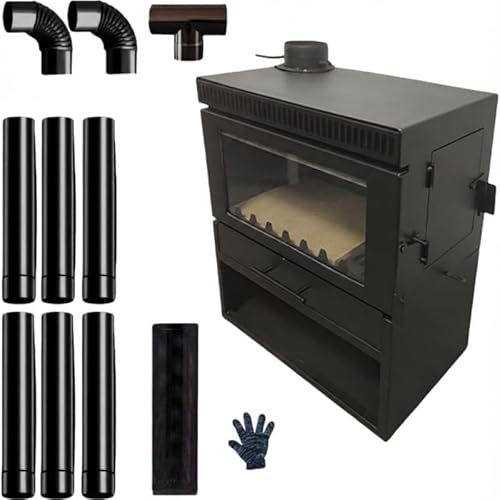
Cast Iron Wood Burning Stove Fireplace, Secondary Combustion Clean Burn System, Large Viewing Glass, Dual Loading Doors, Airwash Technology, Flue Damper & Log Rack
Check price on Amazon
Fireside Chimney Supply Basic FireSafe Flexible Chimney Liner Insert Kit | Fireplace Insert | Wood Stove Stainless Steel Chimney Liner Kit | Made in the USA | Heavy-Duty 6 Inch x 15 Feet
Check price on Amazon
Hot Tent Stove,AVOFOREST Wood Burning Stove,Small Wood Stove with 7 Stainless Chimney Pipes for Outdoor Heating & Cooking, Ice Fishing, Hunting
Check price on Amazon
Cedolio 32" x24" x1"(Thick) Ceramic Fiber Blanket Fireproof Insulation | Baffle Rated to 2400F, High-Temperature Resistance for Stoves, Kilns, Forges, Wood Stove Baffle, Fireplace and Pizza Ovens
Check price on Amazon
Cedolio 24" x12"x1" (Thick) Ceramic Fiber Blanket Fireproof Insulation | Baffle Rated to 2400F, High-Temperature Resistance for Stoves, Kilns, Forges, Wood Stove Baffle, Fireplace and Pizza Ovens
Check price on AmazonRelated Guides for Your Fireplace Upgrade
Whether you are still in the research phase or ready to install, these in-depth articles cover the next steps in your journey.
Frequently Asked Questions
Yes, but only if the insert is specifically rated and listed for zero clearance applications. Standard wood stove inserts are designed for masonry fireplaces and cannot be safely installed in a prefabricated zero clearance unit without proper listing and clearance verification. Always check the rating plate on your fireplace and confirm with a certified installer.
Check the manufacturer's rating plate inside the firebox. It must state that the fireplace is listed for use with a wood burning insert. You also need to verify the insert's dimensions fit within the firebox and that clearances to combustibles can be maintained. If the plate does not mention insert compatibility, assume it is not approved.
Sizing depends on your specific fireplace opening dimensions (width, height, and depth) and the insert's firebox size. Measure your existing firebox carefully and compare it to the insert's specification sheet. Most zero clearance fireplaces accept small to medium inserts, but some compact models may not accommodate even the smallest available units.
Yes. A wood burning stove insert is significantly more efficient than an open fireplace. Inserts use a closed combustion system, which reduces heat loss up the chimney and can improve heating efficiency from around 10 percent to as high as 70 percent or more, depending on the model and installation quality.
Yes, most installations require a stainless steel chimney liner that runs the full length of the chimney. The liner protects the chimney structure, improves draft, and is often required by code and manufacturer instructions. A proper liner also makes future cleaning easier and safer.
It depends on the size of your home, insulation, layout, and the insert's BTU output. A high-efficiency insert can meaningfully supplement or even replace central heating in a well-insulated, open-plan space. For a full discussion, see our article on whether a fireplace can heat an entire house.
Ready to Upgrade Your Zero Clearance Fireplace?
Browse our recommended wood burning inserts above, or explore our full buying guide for more help choosing the right model for your home.
View Full Buying Guide