
Free Standing Propane Gas Fireplace: The Ultimate Guide
Discover how a freestanding propane gas fireplace can provide efficient, versatile, and convenient heat for your home, even during power outages.
Start Your ResearchWhy Choose a Free Standing Propane Gas Fireplace? Unlike built-in units, a freestanding propane gas fireplace offers unparalleled flexibility. They are an excellent choice for homeowners seeking a reliable heat source that doesn't rely on electricity, making them ideal for off-grid living or as a backup during winter storms. This guide will walk you through everything you need to know, from venting options and efficiency ratings to installation and maintenance.
What is a Free Standing Propane Gas Fireplace?
A free standing propane gas fireplace, often referred to as a gas stove, is a self-contained heating appliance that operates on propane fuel. Unlike traditional fireplaces that are built into a wall, these units stand independently, allowing you to place them in virtually any room with proper clearance. They are designed to be a primary or supplemental heat source, offering the charming ambiance of a real fire with the convenience of a gas appliance.
These units are particularly popular for their ability to function without a traditional chimney, thanks to advanced venting technologies. For those considering a larger project, understanding the differences between a built-in and a freestanding unit is crucial, which is covered in our guide on built-in vs freestanding fireplace.
Key Benefits of a Freestanding Propane Fireplace
Advantages
- Installation Flexibility: Can be placed almost anywhere, from a living room to a sunroom or cabin.
- No Electricity Needed: Many models use a millivolt system, meaning they can operate during a power outage.
- High Efficiency: Zone heating allows you to warm only the rooms you use, reducing overall energy consumption.
- Realistic Flame: Offers the cozy, dancing flames and often the warmth of a traditional wood stove.
- Venting Options: Available in vent-free, direct-vent, and B-vent models to suit different home layouts.
Considerations
- Fuel Storage: Requires a propane tank, either a large external tank or smaller refillable cylinders.
- Clearance Requirements: Must be placed away from combustible walls and furniture, as specified by the manufacturer.
- Vent-Free Models: While convenient, they release some moisture and require proper ventilation to maintain indoor air quality.
- Professional Installation: Connecting to a gas line and installing venting should be done by a licensed professional.
Venting Options for Propane Gas Stoves
The venting method is one of the most critical decisions when choosing a freestanding propane fireplace. It dictates both placement and installation complexity. If you are still deciding if you need a vent, our article on do you need a chimney or vent can provide more clarity.
- Vent-Free (or Ventless): These models are highly efficient, as they are designed to burn propane so cleanly that nearly all combustion byproducts are safe for indoor air. They are perfect for rooms where running a vent is impractical. However, they do add humidity to the air. For a deeper dive, see our guide on DIY ventless fireplace.
- Direct-Vent: This is a sealed combustion system. It draws air from outside for combustion and exhausts all byproducts directly outside through a coaxial pipe. This is the safest and most efficient vented option, as it doesn't use indoor air for combustion and maintains indoor air quality. It's an excellent choice for any room, including bedrooms. For a built-in alternative, you might look at a 36″ direct vent gas fireplace insert.
- B-Vent (Natural Vent): This type uses a vertical vent pipe that relies on the natural draft of hot gases rising to expel exhaust. It uses indoor air for combustion and requires a vertical run. It's less common for freestanding units but can be found.
Installation requirements are specific to each type, and we recommend reviewing a comprehensive gas fireplace installation requirements guide before you begin.
Efficiency, Sizing, and Heating Capacity
Propane is a highly efficient fuel, and modern freestanding gas fireplaces are designed to maximize its heat output. The efficiency is typically measured by the Annual Fuel Utilization Efficiency (AFUE) rating. Higher-rated models convert more fuel into heat, saving you on running costs.
Sizing your fireplace correctly is essential to ensure it can adequately heat your space. A unit that is too small will struggle, while one that is too large will cycle on and off frequently, wasting energy. The key is to determine the BTU (British Thermal Unit) requirement for your room. Our guide on fireplace heating capacity and BTU guide explains how to calculate this. For smaller spaces, a lower BTU unit, such as those designed for a gas fireplace for small living room, is more appropriate.
One of the biggest advantages of a freestanding gas stove is its ability to act as a zone heater. Instead of heating the whole house, you can efficiently heat the room you're in. Depending on the model and your climate, a gas stove can even contribute significantly to heating your home, as discussed in our article on can a fireplace heat an entire house.
How to Choose the Best Free Standing Propane Fireplace
With many models on the market, consider these factors to find the perfect one for your needs. For a broader overview, our fireplace buying guide is a great resource.
- Heating Needs: Determine the square footage of the area you want to heat. This will dictate the BTU output you need. A mid-range or high-end model will offer better controls and more even heat distribution for larger spaces.
- Style and Design: Freestanding stoves come in various styles, from traditional cast-iron look to sleek, contemporary designs. Choose a style that complements your home's decor. For a more rustic feel, consider a free standing gas stove for heating.
- Venting Method: Based on your room's layout and your desire for efficiency vs. installation ease, decide between vent-free, direct-vent, or B-vent.
- Features: Look for features like a thermostat for consistent temperature control, a remote control for convenience, and a blower to circulate warm air more effectively. A propane ventless heater with blower is a popular combination. Some high-end models offer smart Wi-Fi controls, a feature we cover in our smart Wi-Fi fireplace controller guide.
- Safety and Certification: Ensure the unit is certified by a recognized testing agency (like CSA or UL) and is designed specifically for propane use.
Recommended Free Standing Propane Gas Fireplaces
⚠️ AFFILIATE DISCLOSURE: This website contains affiliate links. As an Amazon Associate, we earn from qualifying purchases. If you make a purchase through these links, we may receive a small commission at no additional cost to you. Read our full affiliate policy.

Comfort Glow Dual Fuel Walnut Vent Free Gas Fireplace, 26,000 BTU GFD3810T | Natual Gas or Liquid Propane Fireplace, Adjustable Thermostat, Heats up to 900 sq ft Area, Electronic Spark Ignition, ODS
Check price on Amazon
ProCom Dual Fuel Ventless Gas Fireplace System - 10,000 BTU, T-Stat Control, Apple Spice Finish - Model# FS100T-3AS
Check price on Amazon
Comfort Glow Dual Fuel Ashen Grey Vent Free Gas Fireplace, 26K BTU GFD3840T | Natual Gas or Liquid Propane Fireplace, Adjustable Thermostat, Heats up to 900 sq ft Area, Electronic Spark Ignition, ODS
Check price on Amazon
ProCom Dual Fuel Ventless Gas Fireplace Insert - Arched Door, 10,000 BTU, T-Stat Control - Model# PCS100T
Check price on Amazon
Duluth Forge Ventless Natural Gas Fireplace with Mantel - 26,000 BTU, T-Stat Control, Auburn Cherry Finish - Model# DFS-300NT-3AC
Check price on Amazon
Duluth Forge Ventless Natural Gas Fireplace with Mantel - 26,000 BTU, Remote Control, Auburn Cherry Finish - Model# DFS-300NR-3AC
Check price on Amazon
Comfort Glow Dual Fuel Ashen Grey Vent Free Gas Fireplace, 33K BTU GFD4605R | Natual Gas or Liquid Propane Fireplace, Thermostatic Remote, Heats up to 1,200 sq ft Area, Electronic Spark Ignition, ODS
Check price on Amazon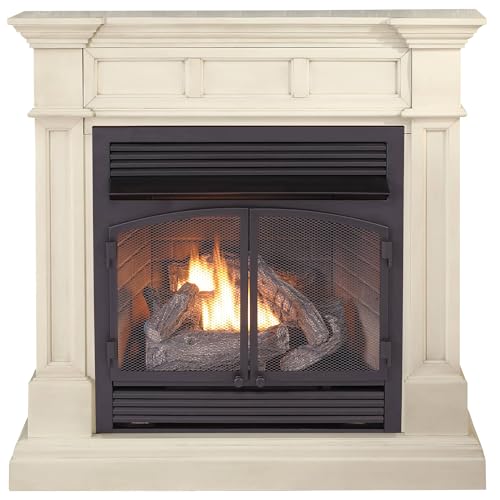
Duluth Forge Dual Fuel Ventless Gas Fireplace with Mantel - 32,000 BTU, Remote Control, Antique White Finish - Model# DFS-400R-2AW
Check price on AmazonInstallation and Maintenance
Proper installation is key to safety and performance. While a DIY enthusiast might be tempted, connecting a gas line and installing venting is a job for a licensed professional. A poorly installed unit can be a serious safety hazard. For a detailed look, see our fireplace installation guide overview. The cost to install can vary, and our guide on fireplace cost breakdown provides a helpful overview.
Routine maintenance is simple but important. This includes:
- Annual Inspection: Have a professional inspect the unit, venting, and gas connections annually. Our guide on annual fireplace inspection details what to expect. A professional can also check for any issues like a pilot light that keeps going out.
- Cleaning: Dust the exterior and glass regularly. If you have a vented model, ensure the vent is clear of obstructions. For specific instructions, see our guide on how to clean fireplace glass.
- Seasonal Care: Before winter, follow our winter fireplace preparation guide. In the off-season, consult our summer fireplace care tips.
By following a proper fireplace maintenance schedule, you can ensure your propane stove runs safely and efficiently for many years.
Common Troubleshooting
While propane stoves are reliable, you may encounter occasional issues. Knowing how to troubleshoot them can save you time and a service call. Our main fireplace troubleshooting guide is a great starting point.
- Pilot Light Issues: A common problem is a pilot light that won't stay lit. This could be due to a faulty thermocouple or a dirty pilot assembly. Our article on pilot light keeps going out offers solutions, including how to handle replacing the thermocouple on a gas fireplace.
- Weak Flame: If the flame is weak or uneven, it could indicate a problem with the gas pressure or a clogged burner. See our guide on gas fireplace weak flame for diagnostic steps.
- Odors: A slight smell when first turned on is normal (burning off manufacturing oils). However, a persistent gas smell is a serious concern. Evacuate and call a professional immediately. Learn more in our article on fireplace smells like gas.
Frequently Asked Questions (FAQ)
Can a free standing propane fireplace be used during a power outage?
Yes, many models feature a millivolt ignition system that doesn't require electricity to operate. This makes them an excellent choice for emergency heating. However, models with a blower fan will not be able to circulate air without power. For more on this, see our guide on can you use a gas fireplace without electricity.
Do I need a chimney for a propane gas stove?
No, not necessarily. Vent-free models require no venting at all. Direct-vent models need a horizontal or vertical pipe that goes directly outside, but no full chimney. B-vent models require a vertical vent pipe. Our article on do fireplaces need a chimney explains this in more detail.
Is a vent-free propane heater safe?
When installed and operated correctly, vent-free heaters are considered safe. They are designed to burn fuel almost completely. However, they do release water vapor and a small amount of carbon dioxide, so it's important to follow the manufacturer's guidelines for room size and ventilation. To understand the safety aspects better, you can review our FAQ on carbon monoxide signs from a fireplace.
How much does it cost to run a propane fireplace?
The running cost depends on your local propane prices, the unit's efficiency, and how often you use it. It is often more cost-effective for zone heating than running a central furnace for the entire house. Our detailed guide on fireplace daily running cost can help you estimate your expenses.
What is the lifespan of a free standing propane gas fireplace?
With proper maintenance, a high-quality propane stove can last for 15 to 20 years or more. Regular servicing is key to maximizing its lifespan. See our article on fireplace lifespan for more information.
Final Thoughts
A free standing propane gas fireplace is a versatile, efficient, and beautiful addition to any home. It provides the charm of a traditional fire without the mess and maintenance of wood, and offers the flexibility to heat your space even when the power is out. By carefully considering your heating needs, venting options, and style preferences, you can choose a model that will provide warmth and comfort for years to come. Whether you are looking for a primary heat source for a cabin or a supplemental heater for your living room, a propane stove is a reliable and stylish choice.