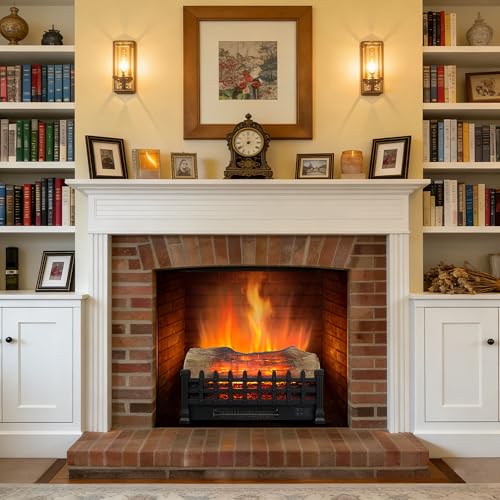
Fireplace Insert for Wood Burning Fireplace
Transform your inefficient open fireplace into a high-performance heating machine with a wood burning insert. Learn everything you need to know before you buy.
START LEARNINGWhy a Wood Burning Insert? If you have an open masonry fireplace, you already know the struggle: most of the heat goes up the chimney, and you burn through wood without feeling the warmth. A wood burning insert is a closed-combustion appliance that fits into your existing fireplace opening, dramatically improving efficiency and turning your fireplace into a serious heating source. This guide covers everything — from sizing and efficiency to installation and top product recommendations — so you can make a confident, informed decision.
What Exactly Is a Wood Burning Fireplace Insert?
A wood burning insert is essentially a wood stove designed to be installed inside an existing fireplace. It's a closed metal box with a glass door, a firebox, a baffle system, and often a blower. Unlike an open fireplace, which operates at very low efficiency (often 10% or less), a modern insert can achieve 70–80% efficiency or higher. This means more heat stays in your home and less escapes through the chimney. Inserts also produce far less smoke and creosote, making them safer and cleaner. They are an excellent solution for homeowners who love the ambiance of a real fire but want real heating performance. For a deeper look at high-efficiency options, see our guide on high-efficiency wood burning inserts.
Key Benefits of Installing a Wood Burning Insert
🔥 Dramatically Higher Efficiency
Closed combustion and secondary burn technology capture heat that would otherwise be lost. You get more heat from less wood, reducing your fuel costs and environmental impact.
💨 Cleaner Indoor Air
Because the fire is sealed behind glass, smoke and particulates are drawn up the chimney, not into your living room. This is a major improvement over open fireplaces.
🌳 Less Wood, More Heat
A high-efficiency insert can produce the same heat as an open fireplace using a fraction of the wood. You'll save on firewood and reduce trips to the woodpile.
🏠 Increased Home Value
A functional, efficient heating appliance is an attractive feature for buyers. It signals a well-maintained, energy-conscious home. Learn more about how fireplaces add value.
🔧 Blower Options for Heat Distribution
Many inserts come with blowers that circulate warm air into the room. This makes a huge difference in heating larger spaces. Explore fireplace blower fans.
♻️ Lower Emissions
Modern inserts are EPA-certified and burn much cleaner than older fireplaces or stoves. They're a more environmentally responsible choice for wood heating.
Types of Wood Burning Inserts: Which One Fits Your Fireplace?
Not all inserts are the same. The right choice depends on your existing fireplace, your heating goals, and your budget tier. Here are the main categories:
| Type | Best For | Key Features |
|---|---|---|
| Basic / Entry-Level Inserts | Occasional use, smaller rooms, budget-conscious buyers | Single burn rate, basic firebox, no frills. Good for ambiance and supplemental heat. |
| Mid-Range Inserts | Regular heating, medium-sized homes, efficiency-focused | Secondary burn tubes, baffle system, optional blower. Better efficiency and cleaner burn. |
| Premium / High-Efficiency Inserts | Serious heating, large homes, off-grid or primary heat source | Catalytic or advanced secondary combustion, 75%+ efficiency, large firebox, thermostatic control. |
| Zero-Clearance Inserts | Prefab fireplaces with limited clearance | Designed to fit into factory-built fireplaces with proper clearances. See zero clearance wood burning inserts. |
| Insert with Blower | Larger rooms, open floor plans, maximum heat distribution | Integrated fan moves heated air into the room. Essential for many installations. See 36-inch inserts with blower. |
Sizing Your Insert: Why BTU and Firebox Size Matter
Choosing the right size insert is critical. Too small, and it won't heat your space. Too large, and you'll be forced to burn low, smoldering fires that create creosote and smoke. The key is to match the insert's heating capacity (measured in BTUs) to your room size and climate. As a general rule, you need roughly 20–30 BTU per square foot for a moderately insulated home in a cold climate. However, many other factors come into play — ceiling height, insulation, window area, and layout. For a detailed method, read our heating capacity and BTU guide and use our fireplace sizing guide. Also consider the physical dimensions: measure your existing fireplace opening carefully (width, height, depth) to ensure the insert fits. Most manufacturers provide a spec sheet with required clearances.
Installation: What's Involved?
Installing a wood burning insert is not a DIY project for most homeowners. It typically involves:
- Removing the existing damper and sometimes modifying the firebox.
- Running a stainless steel flue liner from the insert up through the chimney to the top. This is essential for safety and efficiency. See stainless steel flue liners.
- Connecting the insert to the liner and securing it.
- Installing a blower, thermostat, or outside air kit if applicable.
- Ensuring proper clearances to combustibles and meeting local codes.
Because of the complexity and safety requirements, professional installation is strongly recommended. For an overview of the process, see our installation guide. Also check if you need a permit. If you're comparing insert vs. freestanding, read built-in vs freestanding fireplaces.
Efficiency, Emissions, and Maintenance
Modern wood inserts are engineered for clean, efficient burns. Key terms to know:
- EPA Certification: Ensures the insert meets strict emission standards. Look for a certified model.
- Secondary Burn: Re-burns gases and smoke in a secondary chamber, increasing efficiency and reducing emissions.
- Catalytic Combustor: A ceramic honeycomb that lowers the ignition temperature of smoke, burning it for more heat and less pollution. Premium inserts often have this.
- Blower: Moves heat into the room. Can be manual or thermostatically controlled.
Maintenance is relatively straightforward but important. You'll need to clean the glass regularly, remove ash, and have the chimney and liner inspected annually. See our wood fireplace maintenance guide and chimney cleaning guide. For troubleshooting, visit fireplace troubleshooting.
Pros and Cons of Wood Burning Inserts
✅ Advantages
- High efficiency (70–80%+)
- Significant heat output
- Cleaner indoor air
- Less wood consumption
- Lower emissions than open fireplaces
- Can be used as a primary heat source in some homes
- Increases home value
❌ Disadvantages
- Requires professional installation
- Upfront cost can be significant
- Need to source and store firewood
- Regular maintenance (ash, glass, chimney)
- Not suitable for all existing fireplaces
- Blower may be needed for best heat distribution
Frequently Asked Questions
Not always. Your existing fireplace must have adequate clearance, a suitable chimney, and be structurally sound. Zero-clearance prefab fireplaces require specific inserts. Always consult a professional.
Yes, almost always. A stainless steel liner is required to safely vent the insert and maintain efficiency. Without it, you risk chimney fires and poor performance. Learn more in our chimney/vent guide.
You can expect to use 30–50% less wood compared to an open fireplace for the same amount of heat, depending on the insert's efficiency and your burning habits.
It can, especially in well-insulated homes with open floor plans. However, distribution is key. A blower helps, but you may need supplemental heating in distant rooms. See can a fireplace heat an entire house.
A quality insert can last 20–30 years or more with proper maintenance. See fireplace lifespan for details.
Ready to Choose Your Wood Burning Insert?
Explore our recommended models below, hand-picked for performance, efficiency, and value.
View Recommendations ↓Related Guides & Resources
Still researching? These articles will help you make a well-rounded decision:
- Wood Burning Inserts for Existing Fireplaces
- Most Efficient Wood Burning Fireplace Insert
- Best Wood Burning Fireplace Insert with Blower
- High Efficiency Wood Burning Inserts
- Wood Burning Fireplace Insert Installation Cost
- Electric Inserts for Wood Burning Fireplace
- Gas Fireplace Insert for Wood Burning Fireplace
- Complete Fireplace Buying Guide
Final Thoughts: A wood burning insert is one of the most effective upgrades you can make to an existing fireplace. It transforms a decorative feature into a powerful heating appliance. By understanding sizing, efficiency, installation, and maintenance, you're well-equipped to choose the right model. Use the recommendations below as a starting point, and always consult a certified installer for your specific situation.