
Gas Fireplace Insert for Wood Burning Fireplace: The Complete Guide
Transform your existing wood burning fireplace into an efficient, clean-burning gas heating source. Learn everything you need to know before making the switch.
Why Consider a Gas Insert? If you love your existing fireplace but want cleaner operation, better efficiency, and the convenience of instant heat, a gas fireplace insert is the ideal solution. This guide covers everything from types and sizing to installation and maintenance.
A gas fireplace insert for a wood burning fireplace is a self-contained unit designed to fit directly into your existing masonry or prefabricated firebox. Unlike a simple gas log set, an insert is sealed and engineered for high efficiency, converting your old fireplace from a drafty, inefficient heat loser into a powerful zone heater.
Many homeowners choose this upgrade because it combines the ambiance of a real fire with the convenience of push-button ignition. You no longer need to haul firewood, manage ashes, or worry about chimney creosote buildup. For those researching the broader landscape of options, our fireplace buying guide provides foundational context, while this article focuses specifically on the conversion path.
Before diving into product recommendations and installation details, it is helpful to understand the basic principles that govern how these inserts work. If you are new to fireplace terminology, our guide on what is a fireplace offers a solid starting point. Additionally, comparing types of fireplaces can help you confirm that gas is the right fuel choice for your lifestyle.
Why Convert Your Wood Burning Fireplace to Gas?
The traditional open wood burning fireplace is charming but notoriously inefficient. Most of the heat escapes up the chimney, and in some cases, an open fireplace can actually make your home colder by drawing warm room air up and out. A gas insert solves this problem by acting as a sealed combustion chamber that radiates heat into the room.
✅ Advantages of Gas Inserts
- High Efficiency: 70%–90%+ AFUE, compared to 10%–20% for open wood fires
- Convenience: Instant ignition, no wood hauling or ash cleanup
- Clean Burning: Low emissions, no creosote buildup
- Consistent Heat: Thermostat and blower options for even warmth
- Safety: Sealed combustion reduces indoor air quality concerns
- Aesthetics: Realistic flames and ember beds
⚠️ Considerations
- Upfront Investment: Higher initial cost than gas logs
- Fuel Dependency: Requires natural gas or propane supply
- Installation Complexity: Professional installation recommended
- Venting Requirements: Most models need a liner or direct vent
- Loss of Wood Burning: You cannot burn wood in the same firebox after conversion (in most cases)
For a deeper dive into how gas compares to other fuel types, see our electric vs gas vs wood comparison. If you are specifically weighing the pros and cons of each type, the pros and cons by type article is a valuable resource.
Types of Gas Fireplace Inserts
Not all gas inserts are the same. The two primary categories are vented (direct vent) and ventless (vent-free). Each has distinct advantages and installation requirements.
1. Direct Vent Gas Inserts (Vented)
Direct vent inserts use a sealed combustion system that draws outside air for combustion and exhausts combustion byproducts outdoors through a dedicated vent pipe or liner. This is the most common type for converting an existing wood burning fireplace because the existing chimney can often be used to route the venting.
- Efficiency: Typically 70%–85% AFUE
- Indoor Air Quality: Excellent — no combustion gases enter the room
- Venting: Requires a liner or direct vent kit; can often use existing chimney
- Best For: Homeowners who want maximum efficiency and safety
A direct vent gas fireplace insert with blower is a popular choice because the blower distributes heat more effectively. You can also explore models with remote control in our guide to vented gas inserts with blower and remote.
2. Ventless Gas Inserts (Vent-Free)
Ventless inserts burn gas and release combustion byproducts directly into the room. They are nearly 100% efficient because no heat is lost through a chimney, but they require careful attention to room size and ventilation. Some jurisdictions restrict their use, so always check local codes.
- Efficiency: Up to 99% (all heat stays in the room)
- Indoor Air Quality: Requires adequate ventilation; not recommended for small or tightly sealed rooms
- Venting: No chimney or vent required
- Best For: Homes without a usable chimney or where venting is impractical
For a detailed comparison, see our article on ventless gas fireplace inserts with blower and remote. If you are considering a ventless model with a glass front, the ventless gas insert with glass front guide covers aesthetic and safety considerations.
Vented vs Ventless Gas Inserts: Quick Comparison
| Feature | Direct Vent (Vented) | Ventless (Vent-Free) |
|---|---|---|
| Efficiency | 70%–85% AFUE | Up to 99% |
| Venting Required | Yes (liner or direct vent) | No |
| Indoor Air Quality | Excellent (sealed combustion) | Requires ventilation; some moisture produced |
| Installation Complexity | Moderate to high | Low to moderate |
| Best For | Maximum efficiency and safety | No chimney access; smaller spaces |
| Local Restrictions | Generally allowed | Restricted in some states/regions |
For a side-by-side comparison of venting approaches, see our guide on vent-free gas fireplace inserts with logs and blower. If you are leaning toward a natural gas setup, the natural gas ventless insert with blower article provides specific product insights.
Sizing Your Gas Insert: BTU and Dimensions
Choosing the right size gas insert involves two key factors: physical dimensions (will it fit?) and heating capacity (will it heat your space?).
Physical Dimensions
Measure your existing firebox carefully. You need the width, height, and depth of the opening, as well as the dimensions of the surrounding hearth and mantel. Most manufacturers provide a specification sheet with minimum firebox requirements. If your firebox is particularly small, you may need a compact insert. Our article on fireplaces for small spaces offers additional guidance for tight installations.
Heating Capacity (BTU)
Gas inserts are rated in BTUs (British Thermal Units). As a general rule, you need approximately 20–30 BTUs per square foot of living space in a moderately insulated home. However, climate, ceiling height, and insulation play significant roles. Our comprehensive BTU guide explains the calculation in detail, and the how to size a fireplace article walks you through the process step by step.
If you are heating an open-concept area, consider a larger insert with a blower to distribute air effectively. The sizing for open concept rooms guide is particularly useful for modern floor plans.
Installation Process: What to Expect
Installing a gas insert is not a DIY project for most homeowners. It involves gas line connections, venting, and electrical work (for blowers and ignition systems). Here is a general overview of the process:
- Inspection and Measurement: A qualified technician inspects your existing fireplace and chimney to determine feasibility and venting options.
- Gas Line Installation: If you do not already have a gas line near the fireplace, one must be run. This is typically the most labor-intensive part. Our article on gas fireplaces without a gas line discusses alternatives like propane.
- Venting Setup: For direct vent models, a flexible or rigid liner is run through the existing chimney. Ventless models skip this step.
- Insert Placement: The insert is slid into the firebox and connected to the gas line and venting.
- Electrical Connection: If the insert has a blower or electronic ignition, it must be connected to a power source. Some models plug into a standard outlet; others require hardwiring.
- Testing and Commissioning: The technician tests for leaks, checks flame appearance, and verifies safe operation.
For a broader overview of installation requirements, see our gas fireplace installation requirements guide. If you are comparing installation types, the wall-mounted vs insert vs freestanding article clarifies the differences.
Permits may be required depending on your location. Check our fireplace permit requirements article for general guidance. To understand the full scope of professional vs DIY installation, see DIY vs professional installation.
Understanding the Investment: Cost Factors
The total investment for converting a wood burning fireplace to gas depends on several variables. While we do not list specific prices (as they vary by region and over time), here is a breakdown of the cost components:
- Insert Unit: Entry-level models are basic but functional; mid-range models offer better efficiency and features; premium and luxury models provide the most realistic flames and advanced controls.
- Venting Materials: Direct vent liners and kits add to the project cost. Ventless models eliminate this expense.
- Gas Line: If a gas line needs to be run, this can be a significant portion of the budget.
- Labor: Professional installation is highly recommended for safety and warranty compliance.
- Optional Accessories: Blowers, remote controls, thermostats, and decorative media (logs, stones) can increase the total.
For a detailed breakdown of cost components, see our article on the cost of gas fireplace insert and installation. If you are specifically interested in the conversion process, the cost of converting a wood burning fireplace to gas guide provides additional context. You may also find the fireplace cost breakdown useful for budgeting across different fuel types.
For running costs after installation, see electric vs gas running costs and daily running cost.
Efficiency Ratings and Energy Savings
One of the strongest arguments for a gas insert is efficiency. Traditional wood burning fireplaces are notoriously inefficient, often losing more heat than they produce. Gas inserts, especially direct vent models, are engineered to maximize heat transfer.
- AFUE (Annual Fuel Utilization Efficiency): This is the standard metric for gas appliances. Look for inserts with AFUE ratings above 70% for good performance; premium models can exceed 90%.
- Steady State Efficiency: Measures efficiency after the unit has warmed up. This is often higher than AFUE.
- Blower Impact: A blower significantly improves heat distribution. Our fireplace blower fan guide explains how they work and why they matter.
To maximize savings, consider a programmable thermostat or remote control. Our fireplace thermostat guide covers manual vs digital options, and the smart Wi-Fi fireplace controller article explores advanced automation. For general energy-saving tips, see fireplace energy saving tips and most energy efficient fireplace types.
If you are wondering whether a fireplace can heat an entire house, see can a fireplace heat an entire house and best fireplace for heating FAQ.
Maintenance and Care
Gas inserts are relatively low-maintenance compared to wood burning fireplaces, but they still require regular care to operate safely and efficiently.
- Annual Inspection: Have a qualified technician inspect the unit, venting, and gas connections yearly. See our annual fireplace inspection guide and gas fireplace inspection article.
- Cleaning Glass: The glass front can develop a film from combustion byproducts. Our guide on how to clean fireplace glass provides safe cleaning methods.
- Burner Cleaning: Dust and debris can accumulate on the burner. See how to clean a gas fireplace burner.
- Seasonal Checks: Before winter, follow our winter fireplace preparation guide and seasonal maintenance checklist.
- Chimney: Even with a direct vent insert, the chimney should be inspected for obstructions. See chimney cleaning guide and when to call a chimney sweep.
For a complete maintenance schedule, see fireplace maintenance schedule and gas fireplace maintenance guide. If you notice issues like weak flames or odd smells, our fireplace troubleshooting section covers common problems. Specific issues like gas fireplace won't light, pilot light keeps going out, and fireplace smells like gas are addressed in dedicated articles.
Safety Considerations
Gas appliances are safe when installed and maintained correctly. However, there are important safety points to keep in mind:
- Carbon Monoxide: Direct vent inserts are sealed and do not release CO into the home. Ventless models produce trace amounts and require adequate ventilation. Learn the signs of carbon monoxide from fireplace.
- Clearances: Maintain safe distances between the insert and combustible materials like furniture and drapes. See how close furniture can be to a fireplace.
- Overnight Use: Can you leave a gas insert on overnight? See leaving fireplace on overnight and sleeping with fireplace on.
- TV Placement: If you plan to mount a TV above the fireplace, see TV above fireplace safety.
- Ember Safety: Although gas inserts are sealed, understand fireplace ember safety for peace of mind.
Essential Accessories for Your Gas Insert
Enhance the functionality and aesthetics of your gas insert with these accessories:
- Blower Fan: Distributes heat more effectively. See blower fan guide and blower vs fan.
- Remote Control: Convenient operation. See remote control replacement if you need a new one.
- Thermostat: Maintains consistent temperature. See thermostat guide.
- Decorative Media: Logs, stones, or crystals can enhance the look. See logs for gas fireplace and ceramic fireplace logs.
- Screen or Doors: Adds a layer of safety and style. See fireplace screens and fireplace doors.
- Mantel: Complete the look with a new mantel. See fireplace mantels.
Frequently Asked Questions
Can I put a gas insert in my wood burning fireplace?
Yes, in most cases. A gas insert is specifically designed to fit into an existing wood burning fireplace opening. However, you must check the dimensions, venting requirements, and local building codes before proceeding. Some older fireplaces may require modifications.
How much does it cost to convert a wood burning fireplace to gas?
Costs vary based on the type of insert (vented vs ventless), whether a gas line needs to be installed, and labor rates. A mid-range conversion project typically involves the insert unit, professional installation, and possibly a gas line extension. For a detailed breakdown, see our cost of converting wood burning fireplace to gas guide.
Do gas fireplace inserts need electricity?
Many modern gas inserts use electronic ignition and blowers that require electricity. However, some models with standing pilot lights can operate during a power outage. Check the specific model requirements. Our article on can you use a gas fireplace without electricity provides more details.
How efficient are gas fireplace inserts?
Gas fireplace inserts are highly efficient, typically ranging from 70% to over 90% AFUE depending on the model. Direct vent inserts tend to be more efficient than ventless models.
Can I still burn wood after installing a gas insert?
No. Once a gas insert is installed, the fireplace is converted to gas only. In most cases, you cannot burn wood in the same firebox. If you want the option to burn wood, a wood burning insert might be more appropriate. See our best wood burning fireplace insert with blower guide.
Do gas inserts require a chimney?
Direct vent gas inserts require a venting system, which can often utilize the existing chimney with a liner. Ventless inserts do not require a chimney or vent. For general information, see do fireplaces need a chimney and do you need a chimney or vent fireplace.
Ready to Explore Gas Inserts?
Browse our recommended gas fireplace inserts for wood burning fireplaces below. These models are selected for their efficiency, reliability, and customer satisfaction.
View Recommended InsertsRecommended Gas Fireplace Inserts for Wood Burning Fireplaces
⚠️ AFFILIATE DISCLOSURE: This website contains affiliate links. As an Amazon Associate, we earn from qualifying purchases. If you make a purchase through these links, we may receive a small commission at no additional cost to you. Read our full affiliate policy.
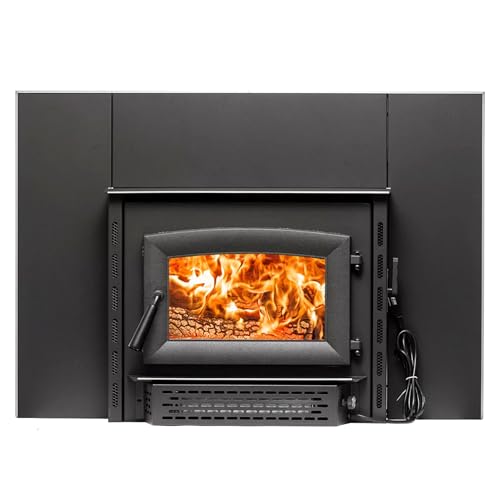
US Stove US1800E 1,200 sqft Wood Fireplace Insert | Freight Shipping Required
Check price on Amazon
Comfort Glow Wood Fireplace Insert, Indoor Wood Stove - CGWI1800 | Indoor Wood Stove Insert, Fits 18" Logs, Heats Up To 1,200 Sq Ft, Blower & Face Plate, Heavy-Duty Steel, 100 CFM Blower
Check price on Amazon
Barton 10-Piece Ceramic Gas Fireplace Logs, Realistic Wood-Look Stackable Decorative Log Set for Vented Gas Fireplaces, Fire Pits & Fireplace Inserts
Check price on Amazon
White Birch Ceramic Gas Fireplace Logs Set, 6Pcs Large Decorative Firewood, Indoor Outdoor Firepit Logs for Vented Ventless Gas Inserts, Electric, Ethanol, Gel & Propane Fireplaces, 16inch
Check price on Amazon
Barton 8-Piece Realistic Ceramic Fireplace Log Set, Ash Wood Style Fake Firewood, Stackable Heat-Resistant Gas Logs for Indoor Outdoor Gas Fireplaces, Fire Pits, Fireplace Inserts & Vented Burners
Check price on Amazon
JossaColar Wood Stove Fan Heat Powered Fireplace Fan Non Electric, Thermal Fan for Wood Burning Stove/Log Burner, w/Stove Accessories Thermometer
Check price on Amazon
Midwest Hearth Gas Log Lighter/Starter, Wood Burning Fireplace, Natural Gas | Adjustable Air/Fuel Mixer for a Clean Blue Flame, Universal Straight or Angled Fit, Solid Iron Pipe, 19.5 in Total Length
Check price on Amazon
Skyflame Small Gas Fireplace Logs - 4 Pcs Ceramic Wood Logs | Indoor Gas Inserts, Ventless, Propane, Gel, Ethanol, Electric or Outdoor Fireplaces, Fire Pits Decorative
Check price on AmazonRelated Topics and Further Reading
If you are still exploring your options, the following resources may be helpful:
- Built-in vs freestanding fireplace — Understand the differences before committing to an insert.
- Which fireplace is right for your home — A decision-making guide.
- Does a fireplace add value to your home — Consider the resale impact.
- Fireplace lifespan — How long can you expect your insert to last?
- Fireplace maintenance cost — Budget for ongoing care.
- Hidden costs of owning a fireplace — What to plan for beyond the purchase.
- How to stop cold air from coming down your chimney — A common issue after conversion.
- Why does my fireplace make the room colder — Troubleshooting negative pressure issues.
- Fireplace FAQ — A broad collection of common questions.