Fireplace Insert for Corner Fireplace: The Complete Buying Guide
Everything you need to know about choosing, sizing, and installing a fireplace insert for a corner fireplace — electric, gas, or wood. Make a confident, well-informed decision before you buy.
See Recommended ModelsQuick Answer: The best insert for a corner fireplace is usually an electric insert (easiest fit, no venting), a corner-specific gas insert (realistic flame, efficient heat), or a small wood insert (traditional ambiance, requires a chimney). The right choice depends on your firebox dimensions, venting options, and heating goals.
Why a Corner Fireplace Insert Makes Sense
A corner fireplace is a beautiful architectural feature, but it often comes with a few practical drawbacks: limited heat output, an outdated firebox, or an open design that loses warmth up the chimney. A fireplace insert for a corner fireplace solves these problems by converting an inefficient opening into a sealed, high-efficiency heating appliance — while keeping the charm of the original corner layout.
Homeowners searching for a corner insert are typically in the research stage. They already know they want to upgrade their fireplace, but they still need clarity on which insert type fits an angled firebox, how to measure correctly, and what venting is required. This guide answers those questions in plain language, so you can move from research to purchase with confidence. If you are still exploring broader options, start with our fireplace buying guide and types of fireplaces explained.
What Exactly Is a Corner Fireplace Insert?
A fireplace insert is a self-contained firebox and heating unit designed to fit inside an existing fireplace opening. Unlike a freestanding stove, an insert sits flush or nearly flush with the fireplace face, using the existing firebox as its housing. In a corner fireplace, the opening is typically triangular or angled, which changes how an insert must be sized and vented.
There are three main categories of inserts you can install in a corner fireplace:
- Electric inserts — plug-in or hardwired, no venting, flexible sizing, best for apartments and rooms without a chimney.
- Gas inserts — natural gas or propane, realistic flame, sealed combustion, requires a vent or direct-vent kit.
- Wood inserts — traditional ambiance, high heat output, requires a chimney liner and proper draft.
Each type has trade-offs in installation complexity, heating capacity, and ambiance. Understanding these differences is the first step in choosing wisely. For a broader comparison, see built-in vs freestanding fireplace and wall-mounted vs insert vs freestanding.
Types of Inserts That Fit a Corner Fireplace
Not every insert is a good match for an angled firebox. Here is a practical breakdown of how each type performs in a corner installation.
1. Electric Inserts — The Most Flexible Option
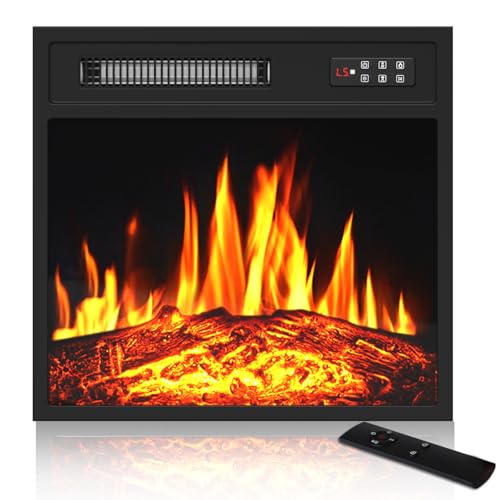
Electric inserts are the easiest to fit into a corner fireplace because they do not need a chimney or vent. They can be placed inside the existing firebox, and many models are designed to be slightly smaller than the opening so they slide in without modification. Most plug into a standard outlet, though some can be hardwired for a cleaner look.
Because they generate heat with infrared or fan-forced elements, electric inserts are ideal for rooms where a gas line or chimney is unavailable. They are also the safest choice for apartments and rentals. To compare options, see installing an electric fireplace insert and electric fireplace insert into existing fireplace.
2. Gas Inserts — Realistic Flame and Efficient Heat
Gas inserts deliver a realistic flame and consistent heat, and they can be vented through the existing chimney with a flexible liner or installed as a direct-vent unit with a horizontal termination. In a corner fireplace, the angled firebox may require a flexible vent kit or a corner-specific gas insert model.
Gas inserts are a strong choice if you already have a gas line nearby or are willing to run one. They are available in natural gas and propane versions, and many include a blower and thermostat for better heat distribution. For related reading, see propane gas fireplace insert vent-free and direct vent gas fireplace insert with blower.
3. Wood Inserts — Traditional Ambiance with Higher Heat
Wood inserts offer the authentic crackle and aroma of a real fire, plus strong heat output when paired with a blower. However, they require a properly sized chimney liner, adequate draft, and regular maintenance. In a corner fireplace, the angled firebox can make liner installation more challenging, so professional installation is strongly recommended.
Wood inserts are best for homeowners who already burn wood, have a sound chimney, and want to reduce smoke and improve efficiency. Learn more in wood burning fireplace insert for sale and high efficiency wood burning fireplace insert.
Basic Electric Insert
Plug-in, no venting, simple remote. Best for ambiance and light supplemental heat in small rooms.
Gas Insert with Blower
Realistic flame, thermostat control, efficient heat distribution. Requires a vent or direct-vent kit.
High-Efficiency Wood Insert
Long burn times, high heat output, glass door with air wash. Requires a chimney liner and professional install.
Corner Fireplace Insert Comparison at a Glance
| Feature | Electric Insert | Gas Insert | Wood Insert |
|---|---|---|---|
| Venting Required | None | Yes (vent or direct-vent) | Yes (chimney liner) |
| Fit in Corner Firebox | Excellent — many sizes | Good — measure carefully | Moderate — needs liner space |
| Heat Output | Low to moderate | Moderate to high | High |
| Installation Complexity | Low (DIY-friendly) | Moderate (pro recommended) | High (pro required) |
| Best For | Apartments, rentals, no chimney | Efficient heat + realism | Traditional ambiance + strong heat |
| Maintenance Level | Low | Moderate | High |
How to Measure a Corner Fireplace for an Insert
Measuring a corner fireplace is different from measuring a standard rectangular firebox. Because the opening is angled, you need to account for the triangular shape and the depth at the center. Follow these steps:
- Measure the front width — the widest point across the opening.
- Measure the rear width — the narrower back wall of the firebox.
- Measure the depth — from the front face to the back wall at the center.
- Measure the height — from the hearth to the top of the opening.
- Note the side-wall angle — this determines whether a rectangular insert can slide in without hitting the angled walls.
Compare your measurements with the insert's specification sheet. Leave a small clearance gap on all sides for safe installation and airflow. If your firebox is unusually small or shallow, consider a compact electric insert or a corner-specific gas model. For more detail, see how to size a fireplace and fireplace sizing worksheet.
Choosing the Right Heating Capacity (BTU) for Your Corner Insert
The heating capacity of an insert is measured in BTUs (British Thermal Units). A rough rule of thumb is that you need about 20 BTUs per square foot of living space, but this varies with insulation, ceiling height, and climate. A corner fireplace insert in a small living room may only need a modest output, while an open-concept space may require a larger unit.
Electric inserts are often rated in watts rather than BTUs, but the conversion is straightforward: 1,000 watts is roughly 3,412 BTUs. Gas and wood inserts are rated directly in BTUs. To go deeper, read fireplace heating capacity BTU guide and can a fireplace heat an entire house.
Tip: If your goal is whole-room heating rather than ambiance, prioritize an insert with a blower, thermostat, and sealed combustion. These features make a mid-range gas or wood insert far more effective than an open fireplace.
Venting and Installation Considerations for Corner Fireplaces
Venting is the single biggest installation difference between insert types. Electric inserts need no venting at all, which is why they are the easiest to install in a corner fireplace. Gas and wood inserts, however, must exhaust combustion byproducts safely.
In a corner fireplace, the chimney often runs at an angle, which can make rigid venting difficult. Flexible liners and direct-vent kits are common solutions. Direct-vent gas inserts can terminate horizontally through an exterior wall, which is sometimes easier in a corner layout. Wood inserts require a stainless steel chimney liner sized to the insert's flue collar.
Always follow the manufacturer's clearance requirements and local building codes. For a step-by-step overview, see fireplace installation guide overview and do you need a chimney or vent.
Typical Installation Steps for a Corner Insert
- Measure the firebox and confirm insert fit.
- Prepare the opening — clean the firebox, remove debris, and check for damage.
- Install venting or liner (gas and wood only).
- Slide the insert into place and secure it.
- Connect gas line or electrical supply.
- Seal gaps with non-combustible material.
- Test operation, check for leaks, and verify draft.
For electric models, the process is much simpler: place the insert, plug it in or hardwire it, and test the flame and heater. See installing electric fireplace in wall and electric fireplace installation plug and play.
Key Features to Look For in a Corner Fireplace Insert
Not all inserts are created equal. When comparing models for a corner fireplace, focus on these features:
- Adjustable sizing or trim kits — helps fill gaps around angled openings.
- Blower or fan — improves heat distribution into the room.
- Thermostat or remote control — convenient temperature management.
- Realistic flame technology — LED, holographic, or water vapor for electric; ceramic logs for gas.
- Safety features — auto shut-off, cool-touch glass, and oxygen depletion sensors.
- Efficiency rating — higher efficiency means more heat per unit of fuel.
For electric models, see electric fireplace insert with remote control and realistic electric fireplace insert with heat. For gas, see gas fireplace insert with blower and thermostat.
Maintenance Tips for a Corner Fireplace Insert
Regular maintenance keeps your insert safe, efficient, and long-lasting. The exact routine depends on the type:
- Electric: Dust the vents, clean the glass with a soft cloth, and inspect the cord and plug. See electric fireplace maintenance and cleaning electric fireplace.
- Gas: Clean the glass, check the burner for debris, and schedule an annual inspection. See gas fireplace maintenance and clean gas fireplace burner.
- Wood: Remove ash regularly, inspect the liner, and prevent creosote buildup. See wood fireplace maintenance and creosote buildup prevention.
A seasonal checklist helps you stay on track. See seasonal fireplace checklist and fireplace maintenance schedule.
Common Corner Insert Problems and Fixes
Even a well-installed insert can develop issues over time. Here are a few common problems and where to find solutions:
- Gas insert won't light — see gas fireplace won't light.
- Electric insert not heating — see electric fireplace not heating.
- Smoke entering the room — see fireplace smoke problem.
- Blower fan not working — see fireplace blower fan not working.
- Remote not responding — see electric fireplace remote fix.
Frequently Asked Questions
Can I put a fireplace insert in a corner fireplace?
Yes. Corner fireplaces can accept inserts, but the triangular firebox shape limits options. Electric inserts are the easiest fit, while gas and wood inserts require precise measurement and sometimes custom sizing or a corner-specific model.
What is the best type of insert for a corner fireplace?
Electric inserts are the most flexible because they need no venting and come in many sizes. Gas inserts offer realistic flames and efficient heat, while wood inserts suit homeowners who want traditional ambiance and already have a chimney.
Do corner fireplace inserts need special venting?
Electric inserts need no venting. Gas and wood inserts require a vent or chimney system, and corner installations may need flexible liners or direct-vent kits designed to fit the angled firebox.
How do I measure a corner fireplace for an insert?
Measure the front width, rear width, depth at the center, and height of the firebox. Also note the angle of the side walls. Compare these dimensions with the insert's specification sheet, leaving at least a small clearance gap for safe installation.
Can a corner fireplace insert heat a whole room?
Yes, many mid-range and high-end inserts produce enough heat to warm a medium to large room. The exact coverage depends on the insert's heating capacity, the room's insulation, and ceiling height.
Ready to Choose Your Corner Fireplace Insert?
Browse our recommended models below. We've selected options across electric, gas, and wood categories so you can compare features and find the right fit for your corner fireplace.
View Recommended InsertsFinal Thoughts
A fireplace insert for a corner fireplace is a smart upgrade that improves efficiency, adds warmth, and modernizes the look of an underused feature. The key is to match the insert type to your firebox dimensions, venting options, and heating goals. Electric inserts are the most forgiving for corner layouts, gas inserts offer the best balance of realism and efficiency, and wood inserts deliver traditional ambiance with strong heat output.
Take your measurements carefully, review the comparison table, and choose a model that fits your space and lifestyle. With the right insert, your corner fireplace can become the warm, efficient centerpiece of the room.