
Electric Fireplace Insert with Remote Control
Your complete guide to choosing, installing, and enjoying a remote-controlled electric fireplace insert that transforms your existing fireplace into an efficient, modern heating solution.
Explore Recommended ModelsWhy Choose an Electric Insert with Remote? An electric fireplace insert with remote control offers the perfect blend of convenience, efficiency, and aesthetic appeal. You get instant ambiance and supplemental heat at the touch of a button—no chimney, no gas lines, no hassle.
What Is an Electric Fireplace Insert with Remote Control?
An electric fireplace insert with remote control is a self-contained heating unit designed to fit into an existing fireplace opening—whether it's a traditional wood-burning fireplace or a prefabricated firebox. Unlike built-in electric fireplaces that require new construction, inserts slide directly into your current fireplace cavity, instantly converting an unused or inefficient hearth into a functional, stylish focal point.
The remote control adds a layer of convenience that modern homeowners appreciate. Instead of bending down to adjust settings manually, you can power the unit on or off, adjust flame brightness, change the thermostat, and set timers—all from across the room. This is especially valuable for people with limited mobility, families with young children, or anyone who simply wants a more effortless experience.
If you're still deciding between different fireplace styles, our guide on which fireplace is right for your home can help clarify your options. For those specifically interested in how electric inserts compare to other fuel types, the electric vs gas vs wood fireplace comparison provides a thorough breakdown.
Why Choose an Electric Fireplace Insert with Remote Control?
Electric inserts have surged in popularity for good reason. They address many of the pain points associated with traditional fireplaces while offering features that modern homeowners expect. Here are the primary advantages:
No Venting or Chimney Required
Unlike gas or wood inserts, electric models don't produce combustion byproducts, so no chimney, flue, or venting is needed. This makes them ideal for apartments, condos, and homes without existing chimney infrastructure. Learn more about whether all fireplaces need a chimney.
Easy Installation
Most electric inserts are plug-and-play—simply slide them into the existing opening and connect to a standard household outlet. Our electric fireplace installation guide walks you through the process step by step.
Remote Control Convenience
The included remote lets you control power, flame effects, heat settings, and timers from anywhere in the room. Some models even support smartphone apps and voice assistants via smart Wi-Fi fireplace controllers.
Energy Efficiency
Electric inserts convert nearly all consumed energy into heat, and many include thermostat-controlled operation to avoid wasted energy. Compare options in our guide to the most energy-efficient fireplace types.
Safe Operation
With no open flames, no gas leaks, and no creosote buildup, electric inserts are among the safest fireplace options. They do not produce carbon monoxide, as explained in our article on whether electric fireplaces produce CO.
Zone Heating
Use your insert to heat only the room you're in, rather than warming the entire house. This strategy can reduce overall heating costs. See do electric fireplaces really heat a room for realistic expectations.
How Does an Electric Fireplace Insert Work?
Understanding the mechanics helps you make a more informed purchase. Here's what happens inside a typical electric insert:
- Flame Effect: Most modern inserts use LED lights and rotating mirrors or reflectors to create a realistic flame illusion. Some premium models use water vapor technology for even greater realism, as discussed in our most realistic-looking electric fireplace insert guide.
- Heating Element: A metal coil or infrared quartz tube generates heat when electricity passes through it. A fan then blows air across the heated element and into the room.
- Thermostat: Built-in thermostats cycle the heater on and off to maintain your desired temperature, improving efficiency. Learn more in our fireplace thermostat guide.
- Remote Receiver: An infrared or radio-frequency receiver inside the unit responds to signals from the remote control, allowing you to adjust settings without leaving your seat.
For a deeper dive into the differences between heating technologies, see our comparison of infrared vs fan-forced heating.
Key Features to Consider When Buying
Not all electric inserts are created equal. Here are the features that matter most:
| Feature | Why It Matters | What to Look For |
|---|---|---|
| Heating Capacity (BTU) | Determines how large a space the insert can effectively warm. | Match BTU to room size using our BTU guide and fireplace sizing worksheet. |
| Remote Control Type | Affects convenience and range of control. | Infrared remotes require line-of-sight; RF remotes work through walls. Some support app control. |
| Flame Realism | Impacts aesthetic appeal and ambiance. | Look for adjustable flame brightness, color options, and realistic ember beds. See are electric fireplaces tacky for realism discussion. |
| Thermostat | Maintains consistent temperature and saves energy. | Digital thermostats are more precise than manual dials. Some offer programmable schedules. |
| Timer Function | Allows automatic shut-off for safety and convenience. | Look for adjustable timers (30 minutes to 8 hours). Useful for sleeping with a fireplace on. |
| Installation Requirements | Determines how easily the insert fits your existing fireplace. | Measure your firebox carefully. Check electric fireplace insert into existing fireplace guide. |
| Safety Features | Protects your home and family. | Look for overheat protection, cool-touch glass, and automatic shut-off. |
| Noise Level | Affects comfort, especially in bedrooms or living areas. | Fan noise varies by model. Some are nearly silent on flame-only mode. |
Installation: What to Expect
One of the biggest advantages of electric inserts is their straightforward installation. Here's a general overview:
- Measure Your Firebox: Record the width, height, and depth of your existing fireplace opening. Compare these to the insert's dimensions—most manufacturers provide a sizing chart.
- Prepare the Space: Clean out any debris, ash, or old logs. If your fireplace has a gas line, have it capped by a professional. For wood-burning fireplaces, ensure the damper is closed or sealed to prevent drafts.
- Slide the Insert In: Carefully position the insert into the opening. Most units are designed for a snug fit but may require minor adjustments.
- Connect Power: Plug the insert into a standard grounded outlet. Avoid using extension cords if possible; if you must, use a heavy-duty cord rated for the amperage.
- Secure and Finish: Some inserts include mounting brackets or trim kits to secure them and cover gaps. Optional surrounds or mantels can complete the look.
For a more detailed walkthrough, see our electric fireplace installation guide. If you're considering a DIY approach, our DIY electric fireplace resource covers what's involved. Also, check whether you need a fireplace permit in your area.
Pros and Cons of Electric Inserts with Remote
Advantages
- No venting, chimney, or gas line required
- Easy DIY installation in most cases
- Remote control adds convenience and accessibility
- Energy-efficient zone heating
- Safe—no open flame, no carbon monoxide
- Works during power outages? (No, but see below)
- Low maintenance compared to wood or gas
- Can be used with or without heat for year-round ambiance
Limitations
- Requires electricity to operate—won't work during outages
- Flame realism may not match gas or wood
- Heating capacity limited to supplemental, not primary
- Fan noise may be noticeable in quiet rooms
- Higher upfront cost than some space heaters
- Remote may require line-of-sight (IR models)
For a balanced view of electric fireplace ownership, see our articles on pros and cons of each fireplace type and are electric fireplaces expensive to run.
Maintenance and Care
Electric inserts are remarkably low-maintenance, but a few simple habits will keep yours running smoothly:
- Dust the Vents: Use a vacuum brush attachment or microfiber cloth to remove dust from intake and output vents every few weeks.
- Clean the Glass: If your insert has a glass front, wipe it with a non-ammonia glass cleaner. Our how to clean fireplace glass guide has detailed instructions.
- Check the Remote: Replace batteries annually. If the remote stops working, see our electric fireplace remote fix troubleshooting guide.
- Inspect the Cord: Periodically check the power cord for damage. Never use a frayed cord.
- Annual Once-Over: Before each heating season, inspect the unit for any signs of wear. Our electric fireplace inspection guide covers what to look for.
For a broader maintenance schedule, see our monthly and yearly maintenance schedule and electric fireplace maintenance tips.
Common Issues and Troubleshooting
Even reliable appliances can develop quirks. Here are frequent issues and where to find solutions:
- Remote Not Working: Check batteries, ensure line-of-sight for IR remotes, and try resetting the unit. See remote control not working.
- No Heat: Verify the thermostat setting is higher than room temperature. Check if the heater has tripped a safety switch. See electric fireplace not heating.
- Flame Not Working: If heat works but flames don't, the LED module may need resetting. See flame not working.
- Tripping Breaker: The unit may be drawing too much power for the circuit. See keeps tripping the breaker.
- Buzzing Noise: Often caused by a fan imbalance or loose component. See making buzzing noise.
- Reset Procedure: Many issues resolve with a simple reset. See how to reset an electric fireplace.
For a comprehensive list, visit our fireplace troubleshooting hub.
Safety Considerations
Electric inserts are generally very safe, but responsible use matters:
- Keep Clearances: Maintain at least 3 feet of clearance between the insert and flammable materials like furniture, curtains, and bedding. See how close can furniture be to a fireplace.
- Don't Leave Unattended: While electric inserts are safer than open flames, it's still wise to turn them off when leaving home. See can you leave a fireplace on overnight.
- Child and Pet Safety: Use a fireplace gate if you have young children or pets. The glass front can become warm.
- No Carbon Monoxide Risk: Electric inserts produce no CO, but it's still good practice to have CO detectors if you have other fuel-burning appliances. See signs of carbon monoxide from fireplace.
- Electrical Safety: Don't overload circuits. If the insert trips the breaker repeatedly, consult an electrician.
For more safety guidance, visit our fireplace FAQ.
Cost and Efficiency: What to Expect
Electric inserts vary widely in their market positioning, from budget-friendly entry-level models to premium high-end units with advanced features. Rather than focusing on specific prices, consider the long-term value:
- Entry-Level Models: Typically offer basic flame effects, a simple IR remote, and standard heating capacity. Good for occasional use and smaller spaces.
- Mid-Range Models: Often include more realistic flames, digital thermostats, better remotes (sometimes RF), and improved heating efficiency.
- Premium Models: Feature the most realistic flame technology (including water vapor), smart home integration, whisper-quiet operation, and superior build quality.
Running costs depend on your electricity rate, the insert's wattage, and how often you use it. For a detailed analysis, see our guides on daily running cost and are electric fireplaces expensive to run. Also, consider energy-saving tips to maximize efficiency.
When comparing overall ownership, our long-term cost analysis and hidden costs of owning a fireplace articles provide useful context.
How Electric Inserts Compare to Alternatives
If you're replacing an old wood-burning fireplace or considering a conversion, here are some relevant comparisons:
- Electric fireplace insert into existing fireplace — the process and benefits.
- Converting wood-burning fireplace to electric — what's involved.
- Replacing wood-burning fireplace with electric — a step-by-step consideration.
- Electric fireplace insert into wood burning fireplace — specific guidance.
- Electric fireplace insert to replace wood burning — a direct replacement scenario.
- Best electric fireplace insert for existing fireplace — selection tips.
For those also considering gas options, see gas fireplace insert for wood burning fireplace and ventless gas fireplace insert with blower and remote.
Remote Control Features: What to Look For
Not all remotes are created equal. Here's what differentiates a basic remote from a premium one:
| Remote Type | Features | Best For |
|---|---|---|
| Basic IR Remote | On/off, flame brightness, heat toggle. Requires line-of-sight. | Entry-level inserts, occasional use. |
| Advanced IR Remote | Thermostat control, timer, multiple flame colors. Still line-of-sight. | Mid-range models, users who want more control. |
| RF Remote | Works through walls and around corners. Usually includes all advanced features. | Premium inserts, larger homes, mounted units. |
| Smartphone App / Wi-Fi | Control from anywhere, scheduling, voice assistant integration. | Tech-savvy users, smart homes. |
If your remote is lost or damaged, see our guide to fireplace remote control replacement and universal remote control for electric fireplace. For wall-mounted control options, consider a fireplace wall switch timer.
Recommended Electric Fireplace Inserts with Remote Control
⚠️ AFFILIATE DISCLOSURE: This website contains affiliate links. As an Amazon Associate, we earn from qualifying purchases. If you make a purchase through these links, we may receive a small commission at no additional cost to you. Read our full affiliate policy.
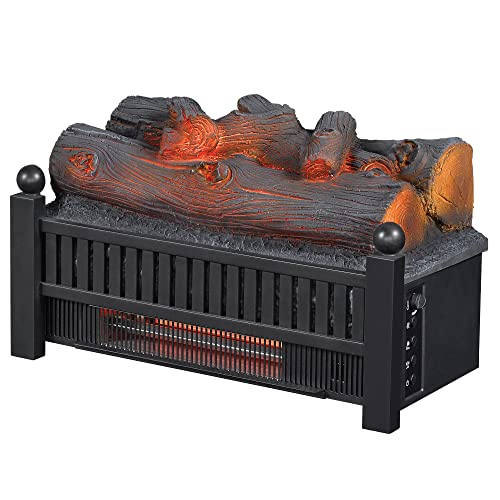
duraflame® Electric Log Set 1,000 Sq Ft Infrared Heater, Faux Logs Insert with LED Flames for Existing Fireplaces, Crackling Sounds, Remote Control Included
Check price on Amazon
21 Inches Electric Fireplace Insert Log Heater Set, Freestanding Heater with Adjustable Flame Brightness and Flicker Speed, 750w/1500w Heating, Overheat Protection, Remote Control
Check price on Amazon
LegendFlame 25" W Free Standing Electric Fireplace Log Set (EF484), Fireplace Insert, Heater 750W/1500W, Crackling Sound, Remote Control…
Check price on Amazon
Giantex 28.5" Electric Fireplace Insert, Wall Recessed/Mounted, Freestanding Fireplace with Remote Control, 3 Color Adjustable Flames, 2 Modes Heat, 8 H Timer, 5 Brightness Settings, 750/1500W Heater
Check price on Amazon
duraflame Electric Log Set 1,000 Sq Ft Heater, Faux Logs Insert with Infrared Flames for Existing Fireplaces, Remote Control Included
Check price on Amazon
Efiretric® Adam Electric Fireplace Insert with Front Trim Kit, 23" W x 17" H (EF447) with Front Trim Kit, 1500W Heater, Remote Control and Timer
Check price on AmazonFrequently Asked Questions
Do electric fireplace inserts with remote control really heat a room?
Yes, but they are best suited for supplemental zone heating rather than whole-home heating. Most models produce between 1,500 and 5,000 BTUs, which can effectively warm a room up to about 400 square feet. For larger spaces, you may need a higher-capacity unit. See our detailed article on do electric fireplaces really heat a room.
Can I install an electric insert myself?
In most cases, yes. Electric inserts are designed for DIY installation as long as you have a standard electrical outlet nearby. No chimney, venting, or gas line work is required. However, always follow the manufacturer's instructions and local building codes. Our DIY electric fireplace guide and plug-and-play installation guide can help.
Do I need a permit to install an electric fireplace insert?
Permit requirements vary by location. In many areas, a simple plug-in electric insert does not require a permit, but built-in or hardwired units might. Check with your local building department. Our fireplace permit requirements article provides general guidance.
Can I use an electric insert in an apartment?
Absolutely. Electric inserts are ideal for apartments because they require no venting or chimney and don't produce smoke or odors. They are also quieter and safer than many alternatives. See our apartment fireplace installation guide.
How do I clean my electric fireplace insert?
Regular dusting of vents and wiping the glass with a non-ammonia cleaner is usually sufficient. Avoid getting moisture inside the unit. Our cleaning electric fireplace article covers dust and vent maintenance in detail.
What if my remote control stops working?
First, replace the batteries. If that doesn't work, ensure you're pointing the remote directly at the sensor (for IR remotes) and that nothing is blocking the signal. If the remote is damaged, you may need a replacement. See our electric fireplace remote fix and remote control replacement guides.
Can I leave my electric fireplace insert on overnight?
While electric inserts are generally safe, it's not recommended to leave any heating appliance unattended for extended periods. If you choose to do so, ensure the unit has automatic shut-off features and is placed away from flammable materials. See can you leave a fireplace on overnight and is it safe to sleep with a fireplace on.
How long does an electric fireplace insert last?
With proper care, a quality electric insert can last 10 to 20 years. LED components typically have very long lifespans, and heating elements are durable. See our article on fireplace lifespan for more details.
Ready to Transform Your Fireplace?
An electric fireplace insert with remote control is one of the easiest and most rewarding upgrades you can make to your home. Whether you're replacing an old wood-burning unit or adding ambiance to a modern living space, there's a model that fits your needs.
Browse our recommended products above to find the perfect fit. For more buying guidance, visit our fireplace buying guide and installation guide.
View Recommended Models