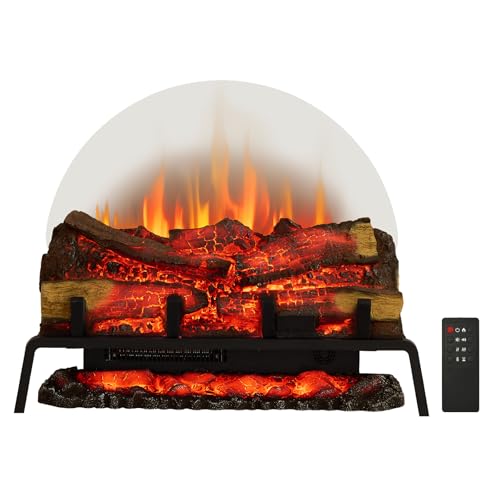
Extra Large Freestanding Electric Fireplace: The Ultimate Guide
Discover how a spacious, portable electric fireplace can transform your large room with ambiance and supplemental heat—without the need for venting or installation.
Why consider an extra large freestanding electric fireplace? Unlike built-in or wall-mounted units, freestanding models offer unmatched flexibility. You can move them from room to room, and they require no chimney, gas line, or professional installation. For large living rooms, open-concept spaces, or basements, a bigger unit provides a more proportional focal point and can distribute heat more effectively.
What Defines an "Extra Large" Freestanding Electric Fireplace?
While there is no universal standard, an extra large freestanding electric fireplace typically refers to a unit that is wider than 50 inches, often ranging from 60 to 100 inches or more. These models are designed to serve as a primary visual anchor in spacious rooms, mimicking the scale of a traditional built-in hearth. They often come with a mantel, cabinet, or a sleek, minimalist frame.
Key characteristics include:
- Substantial Width: Generally 50 inches and above, with some models exceeding 80 inches.
- Freestanding Design: Self-contained and portable, often on casters or with a cabinet base, allowing flexible placement.
- High Heat Output: Many models are capable of heating areas up to 1,000 square feet or more, making them suitable for large rooms.
- Realistic Flame Effects: Advanced LED and water-vapor technologies create convincing flames with adjustable colors and brightness.
- Multiple Installation Options: While freestanding, many can be placed against a wall, in a corner, or even used as a room divider.
For those comparing different form factors, our guide on built-in vs freestanding fireplaces provides a detailed breakdown. If you are specifically looking for a model that can fit into an existing traditional fireplace opening, you might also explore options for an electric fireplace insert to fit in an existing fireplace.
Key Benefits of a Large Freestanding Electric Fireplace
1. Unmatched Flexibility and Portability
The primary advantage is the freedom to place it anywhere with a standard electrical outlet. You can move it from the living room to the bedroom, or even take it to a new home. This is particularly beneficial for renters or those who frequently rearrange their living spaces. For more ideas on placement, see our article on wall fireplace ideas (even though yours is freestanding, the principles of wall adjacency apply).
2. No Venting or Chimney Required
Unlike gas or wood-burning fireplaces, electric models produce no smoke, carbon monoxide, or creosote. This means you can enjoy a fire without any venting, making them ideal for apartments, basements, and rooms without a chimney. This is a major reason why many homeowners choose an electric fireplace insert to fit in an existing fireplace or a freestanding unit.
3. Zone Heating for Large Spaces
An extra large electric fireplace can serve as an effective zone heater, allowing you to warm only the room you are using and lower the thermostat for the rest of the house. This can lead to significant energy savings. Our guide on fireplace energy saving tips offers more strategies. To understand the heating capacity you need, refer to our heating capacity BTU guide.
4. Aesthetic Versatility
These fireplaces come in a wide range of styles, from modern linear designs to traditional cabinet models with mantels and bookshelves. You can find a unit that complements your existing decor, whether your style is contemporary, farmhouse, or industrial. For inspiration, browse our electric fireplace wall ideas.
5. Safety and Ease of Use
Electric fireplaces are generally considered safe. They stay cool to the touch (except for the heater vent), and many have automatic shut-off features. They are also simple to operate, often coming with a remote control or smart home integration. You can learn more about safety in our articles on TV above fireplace safety and whether electric fireplaces produce carbon monoxide.
Sizing and Placement for Your Space
Choosing the right size is crucial for both aesthetics and functionality. An extra large fireplace should be proportional to your room. As a rule of thumb, the fireplace width should be about one-third to one-half the width of the wall it is placed against, or the main seating area. For a detailed guide, see our article on matching fireplace proportions to room shape.
Placement Ideas:
- Against a Main Wall: The most common placement, serving as a focal point. Ensure it is not blocking traffic flow.
- In a Corner: A corner placement can save space and create a cozy nook. Look for corner-specific designs or use a flat unit in a corner with adequate clearance. Check out our corner fireplace ideas for more.
- As a Room Divider: Some large freestanding models with a double-sided or see-through design can act as a stylish room divider. Explore our double-sided fireplace ideas.
- In a Large Open Concept Space: Place it to define a living area without blocking sightlines. Our guide on fireplace sizing for open concept rooms is essential reading.
Always maintain clearance from combustible materials like curtains and furniture. A general rule is at least 3 feet of clearance in front and 1 foot on the sides, but always check the manufacturer's instructions. For more on safe distances, see our article on furniture distance from a fireplace.
Essential Features to Look For
| Feature | Why It Matters |
|---|---|
| Heating Capacity (BTU) | Determines the size of the room it can effectively heat. For large rooms, look for models with higher BTU output. Refer to our BTU guide. |
| Flame Technology | LED and water-vapor (or "vapor") flames are the most realistic. Some models offer adjustable flame colors, speeds, and brightness. See our article on the most realistic-looking electric fireplace inserts. |
| Thermostat and Remote | A built-in thermostat helps maintain a consistent temperature, while a remote control adds convenience. Learn about fireplace thermostats. |
| Crackling Sound | Adds to the ambiance. Some models feature adjustable volume. Explore electric fireplaces with crackling sound. |
| Smart Home Integration | Allows control via Wi-Fi, Alexa, or Google Assistant. See our guide on smart home fireplace integration. |
| Safety Features | Look for automatic shut-off, cool-to-touch glass, and overheat protection. Our article on fireplace TV stands with safety features covers this in more detail. |
| Mantel and Storage | Many extra large freestanding models come with a mantel, shelves, or a cabinet for media components. See our large electric fireplace with mantel guide. |
Maintenance and Troubleshooting Basics
Electric fireplaces are relatively low-maintenance, but a few simple steps will keep yours running smoothly and safely.
Routine Maintenance
- Dusting: Wipe down the exterior and glass with a soft, dry cloth. For glass, you can use a specialized cleaner. See our guide on how to clean fireplace glass.
- Vent Cleaning: Ensure the heater vents are free of dust and debris. Vacuum them gently with a brush attachment.
- Inspection: Periodically check the power cord for damage. Our electric fireplace inspection guide provides a checklist.
For a comprehensive schedule, refer to our fireplace maintenance schedule and electric fireplace maintenance tips.
Common Issues and Quick Fixes
- Fireplace Not Heating: Check if the thermostat is set higher than the room temperature. Ensure the unit is not in "flame only" mode. See our article on electric fireplace not heating.
- Flame Not Working (But Heat Is On): This could be a loose connection or a failed LED. Consult your manual. More details in our guide on electric fireplace flame not working.
- Remote Control Not Working: Replace the batteries. If that fails, try resetting the unit. See our article on electric fireplace remote fix.
- Tripping the Breaker: Ensure you are not overloading the circuit. The fireplace should be on a dedicated circuit if possible. Read about this in our electric fireplace tripping breaker guide.
- Noise: A slight hum from the heater fan is normal. A buzzing or rattling noise may indicate a problem. See our article on electric fireplace buzzing noise and electric fireplace making noise.
How It Compares to Other Fireplace Types
When deciding on the best fireplace for your home, it helps to see how an extra large freestanding electric model stacks up against alternatives.
| Feature | Freestanding Electric | Gas Fireplace | Wood-Burning Fireplace |
|---|---|---|---|
| Installation | Plug-and-play; no venting. | Requires gas line and venting (or ventless). | Requires chimney and professional installation. |
| Realism | High (with advanced LED/vapor tech). | Very High (real flames). | Highest (real wood fire). |
| Heat Output | Supplemental; up to 1,000+ sq ft. | High; can heat large areas. | High, but efficiency varies. |
| Maintenance | Low; dusting and occasional cleaning. | Moderate; annual inspection recommended. | High; chimney cleaning, ash removal. |
| Cost | Entry-level to premium (varies by size/features). | Mid-range to luxury (plus installation). | Mid-range to luxury (plus installation and maintenance). |
| Portability | Yes; can be moved. | No; fixed installation. | No; fixed installation. |
For a deeper dive into the pros and cons of each type, read our articles on electric vs gas vs wood fireplaces and fireplace pros and cons by type. If you are considering a switch, you might find our guides on converting a wood-burning fireplace to electric or converting a gas fireplace to electric helpful.
Cost and Efficiency: What to Expect
While we cannot list specific prices, we can discuss the value tiers and running costs associated with extra large freestanding electric fireplaces.
Value Tiers
You will find these fireplaces across several quality tiers:
- Budget-Friendly / Entry-Level: These models offer basic flame effects, a simple heater, and may have a smaller size within the "large" category. They are a good option for those who want the look and supplemental heat without advanced features.
- Mid-Range: Expect more realistic flames, better build quality, a thermostat, remote control, and often a more substantial cabinet or mantel. This tier often provides the best balance of features and value.
- Premium / High-End: These units feature the most advanced flame technology (e.g., water-vapor, multi-color LED), larger sizes, smart home integration, superior materials, and enhanced safety features.
- Luxury: The top-tier models may include custom cabinetry, designer finishes, and commercial-grade heating components, often serving as a statement piece in a high-end home.
Running Costs and Efficiency
Electric fireplaces are generally 100% efficient at the point of use, meaning all the electricity consumed is converted to heat. However, the cost to run them depends on your local electricity rates and the unit's wattage. Most large units operate on 1,500 watts, which can be a significant draw. To estimate running costs, you can use our guide on electric fireplace running costs. For a broader comparison, see our article on electric vs gas running costs and are electric fireplaces expensive to run?.
To maximize efficiency, use the thermostat to maintain a comfortable temperature rather than running it continuously on high. You can also explore general energy saving tips.
Installation and Setup: What to Expect
One of the biggest advantages of a freestanding electric fireplace is the simplicity of installation. Here is what you need to know:
- Unboxing and Placement: Choose a location near a grounded electrical outlet. Ensure the surface is level and stable.
- Clearance: Maintain the manufacturer's recommended clearances from walls, furniture, and curtains. This is typically a few inches on the sides and back, and several feet in front.
- Power: Plug the unit into a dedicated circuit if possible, to avoid overloading. If using an extension cord, ensure it is a heavy-duty model rated for the fireplace's amperage. For more details, see our guide on hardwired vs plug-in electric fireplaces and electric fireplace installation (plug and play).
- Assembly: Some models require minimal assembly, such as attaching legs or a mantel. This is usually straightforward and can be done with basic tools.
- No Permit: Generally, no building permits are required for a plug-in electric fireplace. However, if you are hardwiring it, you may need to check local codes. Our article on fireplace permit requirements provides more context.
If you are considering a permanent installation or have a complex setup, you may want to consult a professional. Our guide on DIY vs professional fireplace installation can help you decide.
Frequently Asked Questions
Can an extra large freestanding electric fireplace heat a whole house?
No, it is designed for zone heating, meaning it heats the room it is in. While some powerful models can heat up to 1,000 square feet or more, they are not intended to replace a central heating system. For more information, see our article on can a fireplace heat an entire house?.
Do I need a chimney or vent for a freestanding electric fireplace?
No. Electric fireplaces do not produce smoke or harmful gases, so they require no venting or chimney. This is one of their main advantages. Learn more in our guide on do you need a chimney or vent for a fireplace?.
Is it safe to leave an electric fireplace on overnight?
Most modern electric fireplaces are designed with safety features like automatic shut-off and cool-to-touch exteriors, making them safe for overnight use. However, always follow the manufacturer's instructions. Our article on leaving a fireplace on overnight and sleeping with a fireplace on provides more details.
How much electricity does a large electric fireplace use?
A typical large electric fireplace uses around 1,500 watts on its highest heat setting. This is comparable to a space heater. The actual consumption depends on the setting and how long it runs. For a detailed breakdown, see our guide on fireplace electricity usage.
Can I put a TV above an extra large freestanding electric fireplace?
Many freestanding models are designed with a mantel that can support a TV. However, you should always check the manufacturer's weight limit and heat clearance recommendations. Our articles on TV above fireplace safety and can you put a TV above a fireplace? provide important guidance.
What is the lifespan of an electric fireplace?
With proper care, a quality electric fireplace can last 10 to 20 years or more. The lifespan can vary based on usage and maintenance. See our article on fireplace lifespan for more information.
Conclusion: Is an Extra Large Freestanding Electric Fireplace Right for You?
An extra large freestanding electric fireplace is an excellent choice for homeowners who want the ambiance and supplemental heat of a fireplace without the hassle and expense of installation, venting, or maintenance. It is particularly well-suited for large living rooms, open-concept spaces, basements, and apartments where a traditional fireplace is not feasible.
When choosing, focus on the size, heating capacity, flame realism, and features that matter most to you. Remember to consider your room's dimensions and your heating needs. For further reading, explore our comprehensive fireplace buying guide and our guide on which fireplace is right for your home.
With the right model, you can enjoy a beautiful, warm, and inviting focal point in your home for years to come.