Electric Log Inserts for Fireplaces
Transform your existing fireplace with realistic flames and efficient heating — no chimney, no venting, no hassle
Why Electric Log Inserts? If you have an old wood-burning fireplace that sits unused, an electric log insert offers a practical and visually appealing solution. It fits directly into your existing firebox, requires no venting or gas line, and can provide both ambiance and supplemental heat at the push of a button.
What Is an Electric Log Insert?
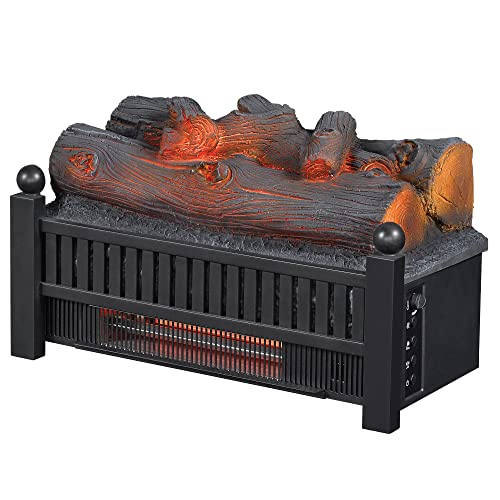
An electric log insert is a self-contained unit designed to sit inside an existing fireplace opening. Unlike traditional electric fireplace logs, which are often freestanding, an insert is specifically shaped to fit into a masonry or prefabricated firebox. It typically includes molded logs, an LED or mechanical flame mechanism, and an integrated heater.
These units are part of the broader category of electric fireplace types, and they are particularly popular among homeowners who want to convert an unused or inefficient fireplace without major renovation. If you are still exploring your options, our fireplace buying guide can help you compare insert styles against other solutions.
How Electric Log Inserts Work
Understanding the mechanics helps you evaluate quality. Most electric log inserts operate on a simple principle:
Flame Effect
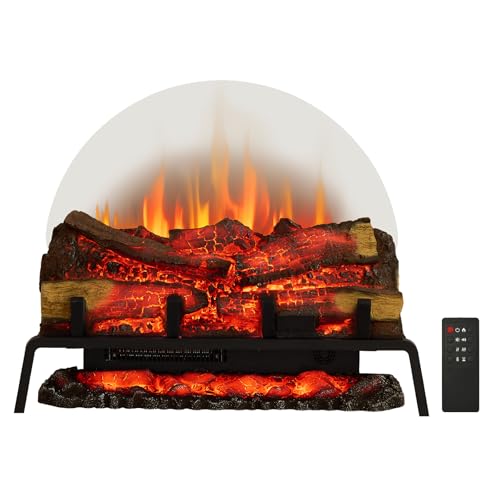
LED lights or rotating reflectors create the illusion of flickering flames. Premium models use multiple light sources and translucent screens to produce depth and movement that closely mimic real fire.
Heating Element
A fan-forced or infrared heater pushes warm air into the room. Fan-forced models distribute heat quickly, while infrared units tend to be quieter and provide more directed warmth.
Controls
Most inserts include a remote control, adjustable thermostat, and multiple flame brightness settings. Some advanced models offer smart Wi-Fi controllers for app-based operation.
Installation
Simply slide the unit into the firebox and plug it into a standard outlet. For a cleaner look, some homeowners hardwire the unit or conceal the cord behind a fireplace glass door assembly.
Pros and Cons of Electric Log Inserts
Advantages
- No chimney or venting required
- Zero emissions — safe for apartments and sealed rooms
- Installation is simple and often DIY-friendly
- Can be used with or without heat
- Lower maintenance than gas or wood
- Compatible with existing fireboxes
Limitations
- Heating capacity is limited compared to gas or wood
- Requires a nearby electrical outlet
- Flame realism varies by model tier
- Not a primary heat source for large homes
- Cord may be visible in some installations
Types of Electric Log Inserts
Not all inserts are built the same. The market generally segments into three quality tiers:
| Tier | Flame Realism | Heating Feature | Best For |
|---|---|---|---|
| Entry-Level | Basic LED glow, minimal movement | Simple fan-forced heater | Occasional ambiance, tight spaces |
| Mid-Range | Multi-layer LED with flicker | Adjustable thermostat, quieter fan | Daily use, supplemental heating |
| Premium | 3D flame effect, crackling sound | Infrared quartz, precise thermostat | Year-round ambiance, larger rooms |
If you want the most convincing visual experience, look for models with crackling sound and holographic flame technology. These features push the realism close to that of a gas fireplace.
Sizing and Heating Capacity
Before buying, measure your firebox opening carefully. Most electric log inserts come in standard widths such as 23-inch, 30-inch, and 36-inch. A unit that is too large will not fit; one that is too small will look out of proportion.
Heating capacity is usually expressed in BTU or square feet. A typical mid-range insert can warm a room up to 400 square feet. Larger models, such as the electric fireplace insert for 1000 sq ft, are available for open-concept spaces. For guidance on matching BTU to room size, see our BTU guide.
If you only need ambiance, you can run the flame without heat. If you want supplemental warmth, look for a model with a thermostat so the unit cycles on and off automatically.
Installation: What to Expect
One of the biggest advantages of electric log inserts is ease of installation. In most cases, you can complete the job in under an hour:
Step 1: Measure
Record the width, height, and depth of your firebox. Leave at least one inch of clearance on all sides for airflow.
Step 2: Prepare the Space
Clean the firebox and remove any old grate or log holder. If you have a gas line, cap it professionally before proceeding.
Step 3: Position the Insert
Slide the unit into place. Adjust the leveling feet if provided. Ensure the front face is flush or slightly recessed.
Step 4: Connect Power
Plug into a nearby outlet. For a cleaner look, consider a hardwired installation or use a draft stopper to hide gaps.
For a full walkthrough, see our plug-and-play installation guide. If you are replacing a wood-burning unit, you may also want to review converting a wood-burning fireplace to electric.
Maintenance Tips
Electric log inserts are low-maintenance, but a few habits will extend their lifespan:
- Dust the logs and glass with a soft cloth monthly. See cleaning an electric fireplace.
- Check the heater vents for obstructions before each season. Refer to electric fireplace maintenance.
- Inspect the power cord for damage annually. Our inspection guide covers key checkpoints.
- If the flame stops working but heat continues, see flame not working.
For a seasonal checklist, download our seasonal maintenance checklist.
Common Issues and Fixes
Even reliable units can develop quirks. Here are the most frequent problems:
Heater Not Blowing Warm Air
Check the thermostat setting and ensure the unit is not in flame-only mode. If the issue persists, see electric fireplace not heating.
Remote Control Not Responding
Replace batteries and ensure the sensor is not blocked. For pairing instructions, see remote control fix.
Unit Trips the Breaker
This usually indicates the circuit is overloaded. Try a different outlet or consult tripping breaker guide.
Buzzing or Rattling Noise
Often caused by a loose fan blade or debris. See buzzing noise troubleshooting.
For a complete list, visit our fireplace troubleshooting hub.
Safety Considerations
Electric log inserts are generally very safe. They produce no carbon monoxide, so they are suitable for apartments and apartment installations. Still, keep these points in mind:
- Keep flammable materials at a safe distance. See furniture distance from fireplace.
- Do not run the heater unattended for extended periods. Review leaving a fireplace on overnight.
- Ensure the unit is on a stable, non-combustible surface. A non-combustible surround is ideal.
- For peace of mind, see do electric fireplaces produce CO.
Ready to Upgrade Your Fireplace?
Browse our curated selection of electric log inserts below. Whether you need a budget-friendly model for occasional ambiance or a premium unit with crackling sound and infrared heat, there is an option for every home.
View Recommended ModelsFrequently Asked Questions
Do electric log inserts really look realistic?
Entry-level models have a basic glow, but mid-range and premium units with multi-layer LED and 3D flame effects are surprisingly convincing. Models with crackling sound add another layer of realism.
Can I install an electric log insert myself?
Yes. Most units are plug-and-play and require no special tools. For a more integrated look, you can hardwire the unit, but that may require an electrician. See DIY vs professional installation.
Will an electric log insert heat my whole house?
No. These are supplemental heaters, not primary heat sources. For whole-home heating, see can a fireplace heat an entire house.
Do I need a chimney or vent?
No. Electric log inserts are ventless and require only a standard electrical outlet. See do fireplaces need a chimney.
How much does it cost to run an electric log insert?
Running costs depend on your local electricity rates and usage. For a detailed breakdown, see fireplace daily running cost and electric vs gas running costs.
Can I put an electric log insert in an old wood-burning fireplace?
Yes, this is one of the most common uses. The insert fits into the existing firebox and eliminates the need for chimney maintenance. See electric fireplace in old fireplace.
What size electric log insert do I need?
Measure your firebox opening and choose a unit that fits with at least one inch of clearance. Common widths are 23, 30, and 36 inches. See fireplace sizing worksheet.
Are electric log inserts energy efficient?
They are efficient at converting electricity to heat, but overall efficiency depends on your home's insulation and the unit's features. See energy-efficient electric fireplaces and most energy-efficient fireplace types.
Related topics: electric fireplace logs, electric fireplace insert with remote control, best electric fireplace insert for existing fireplace, electric fireplace inserts for wood burning fireplace, electric fireplace insert into existing fireplace, electric fire inserts for existing fireplaces, most realistic looking electric fireplace insert, realistic electric fireplace insert with heat, electric fireplace to fit in existing fireplace.