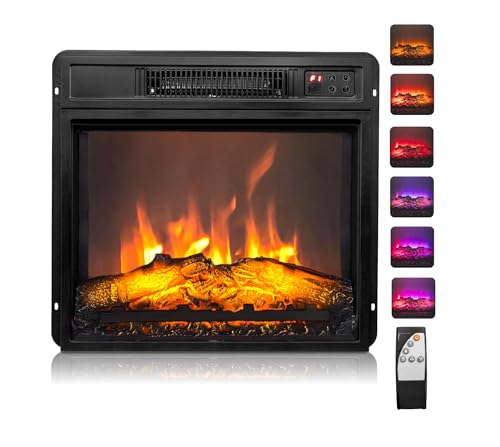
Electric Fireplace Insert Replacements
Everything you need to know about replacing your electric fireplace insert — from measuring and choosing to installation and maintenance
START YOUR REPLACEMENT PROJECTWhy Replace Your Electric Fireplace Insert? Whether your current insert has stopped heating, the flame effect no longer works, or you simply want a more realistic look and better efficiency, replacing just the insert — rather than the entire fireplace — is often the most practical and cost-effective solution. This guide walks you through every step of the process.
What Is an Electric Fireplace Insert Replacement?
An electric fireplace insert is the self-contained unit that fits inside an existing fireplace opening — whether that opening was originally designed for wood, gas, or another electric insert. A replacement means you are swapping out only that insert while keeping the surrounding mantel, surround, and hearth intact. This is different from installing a brand-new fireplace from scratch.
Most modern electric inserts are designed as "drop-in" replacements. They slide into the existing cavity, plug into a standard household outlet (or can be hardwired), and immediately provide both flame ambiance and supplemental heat. Because they require no venting, no gas line, and no chimney, they are among the easiest fireplace upgrades a homeowner can perform. If you are still exploring whether an electric insert is right for your situation, our guide on electric fireplace inserts for wood burning fireplaces explains the conversion process in detail.
Replacement inserts are available in a wide range of sizes, from compact units designed for 22-inch wide openings up to large-format models. They also come in different quality tiers — entry-level units typically offer basic flame effects and fan-forced heat, while mid-range and premium models add more realistic logs, adjustable flame speeds, crackling sound, and infrared or quartz heating elements.
Signs It's Time to Replace Your Electric Fireplace Insert
Electric inserts are durable, but they don't last forever. Here are the most common indicators that a replacement is due:
Replace If You Notice:
- No heat output — the heating element has failed, a common issue covered in our guide on electric fireplace not heating.
- Flame effect not working — the LED or rotating flame mechanism has stopped, even though heat may still function. See flame not working but heat is on.
- Buzzing or grinding noise — the fan or motor is wearing out, as described in electric fireplace buzzing noise.
- Tripping the breaker — an electrical fault that makes the unit unsafe; see keeps tripping the breaker.
- Remote or controls unresponsive — sometimes a simple reset helps, but if not, replacement may be needed.
- Outdated look — older inserts with flat, unrealistic flames can be upgraded to models with realistic electric fireplace logs.
- Physical damage — cracked glass, corroded housing, or damaged wiring.
If your unit is still under warranty, check with the manufacturer before replacing. But for out-of-warranty units, replacing the insert is almost always more practical than repairing an aging heater. For general care that can extend the life of your insert, see our electric fireplace maintenance guide and our electric fireplace inspection guide.
How to Measure for a Replacement Insert
Getting the measurements right is the single most important step. A replacement insert must fit the existing opening — there is very little room for error. Here is what to measure:
| Measurement | What to Measure | Why It Matters |
|---|---|---|
| Width | The narrowest point of the opening, side to side | The insert must be narrower than this to slide in |
| Height | From the hearth floor to the top of the opening | Determines whether the insert will fit vertically |
| Depth | From the front face to the back wall of the cavity | Ensures the insert does not protrude excessively |
| Opening Shape | Rectangular, arched, or angled | Some inserts come with trim kits to match |
| Power Source | Distance to nearest outlet | Affects cord routing and plug-in vs. hardwired choice |
Always measure at the tightest point of the opening, not the widest. If your opening is irregular, measure at multiple points and use the smallest number. For a broader overview of sizing principles that apply to all fireplace types, see our how to size a fireplace guide and our fireplace sizing worksheet.
Types of Electric Fireplace Insert Replacements
Not all electric inserts are the same. Understanding the differences helps you choose the right replacement for your needs and budget tier.
By Heating Method
- Fan-forced heat — the most common and affordable option. A fan blows air over a heating element. Entry-level and mid-range models typically use this method.
- Infrared quartz heat — provides more direct, radiant warmth. Often found in mid-range and premium inserts. Pairs well with models that have a blower for better circulation.
- Infrared + fan hybrid — combines both methods for faster, more even heating. Usually a premium feature.
By Flame Technology
- LED-lit flame — standard in most inserts. Simple, reliable, and energy-efficient.
- 3D flame effect — uses multiple layers of LEDs and mirrors to create depth. Found in mid-range and premium units.
- Water vapor flame — the most realistic option, using mist and LED light to mimic real fire. Typically a luxury feature. For more on realism, see our guide on most realistic electric fireplace logs.
- Crackling sound — an audio feature that adds to the realism. See electric fireplace with crackling sound effects.
By Installation Style
- Plug-in — the simplest option. Plugs into a standard outlet. Ideal for renters and DIYers. See our plug-and-play installation guide.
- Hardwired — connects directly to household wiring. Cleaner look, no visible cord. Requires an electrician.
- Built-in / flush mount — designed to sit flush with the wall or fireplace face. See flush wall mounted electric fireplaces.
Will a Replacement Insert Fit Your Existing Fireplace?
This is the question that causes the most anxiety — and rightly so. Here is how to think about compatibility:
If you are replacing an electric insert with another electric insert: You are in the easiest position. As long as the new insert's dimensions are equal to or smaller than the opening, and the power source is accessible, it will fit. Many manufacturers make inserts in standard sizes specifically for this purpose.
If you are replacing a wood-burning or gas insert with an electric one: You have more flexibility. Electric inserts do not need venting, so the old flue or gas line can simply be capped or left unused (consult a professional for gas line safety). The main considerations are the size of the opening and whether you want the insert to sit flush or be framed in. Our guides on converting a wood burning fireplace to electric and converting a gas fireplace to electric cover these scenarios in depth.
If your opening is an unusual size: Look for inserts with adjustable trim kits or consider a slightly smaller insert paired with a custom surround. See fireplace surrounds for ideas on framing.
Buying Guide: How to Choose the Best Replacement Insert
With so many options available, it helps to know what separates a good replacement from a great one. Use the following criteria to evaluate any insert you are considering.
| Feature | Entry-Level | Mid-Range | Premium / Luxury |
|---|---|---|---|
| Flame Realism | Basic LED, flat look | 3D LED, adjustable brightness | Water vapor or multi-layer 3D, highly realistic |
| Heating | Fan-forced, single setting | Fan-forced or infrared, multiple settings | Infrared + fan hybrid, thermostat control |
| Controls | Manual switches | Remote control | Remote, app, smart home compatible |
| Sound | None | Optional crackling | Adjustable crackling and ambient sounds |
| Build Quality | Basic materials | Metal housing, tempered glass | Heavy-duty construction, premium finishes |
| Warranty | Short-term | Standard | Extended |
For a broader look at how electric inserts compare to other fireplace types in terms of running costs and efficiency, see our guides on are electric fireplaces expensive to run and most energy-efficient fireplace types.
Installation: What to Expect
One of the biggest advantages of electric inserts is how simple they are to install. Here is the typical process:
- Unbox and inspect — check for shipping damage before installation.
- Turn off power — if hardwiring, switch off the circuit breaker.
- Remove the old insert — unplug it, disconnect any hardwiring, and slide it out.
- Prepare the opening — clean the cavity, check for obstructions, and ensure the surface is level.
- Slide in the new insert — position it carefully and secure it according to the manufacturer's instructions.
- Connect power — plug in or hardwire as appropriate.
- Attach trim or surround — if included, this covers the gap between the insert and the opening.
- Test — turn on the flame and heat to verify everything works.
Most plug-in replacements take under an hour. Hardwired installations may require an electrician, especially if a new circuit is needed. For a full walkthrough, see our electric fireplace insert installation guide and our plug-and-play installation guide.
If you are not comfortable working with electrical connections, hiring a professional is always the safer choice. Our guide on DIY vs professional fireplace installation helps you decide.
Maintaining Your New Insert
Once your replacement is installed, a little care will keep it running well for years:
- Dust the vents regularly — blocked vents reduce heating efficiency and can cause overheating. See cleaning electric fireplace.
- Clean the glass — use a soft cloth and appropriate cleaner. See how to clean fireplace glass.
- Inspect the cord and plug — look for fraying or damage during your annual electric fireplace inspection.
- Follow the seasonal checklist — our seasonal maintenance checklist covers what to do each season.
- Address issues early — if you notice unusual noises or reduced heat, consult our fireplace troubleshooting section before the problem worsens.
Common Mistakes to Avoid
- Not measuring the tightest point — always measure at the narrowest part of the opening.
- Ignoring the power source — make sure an outlet is within reach, or plan for hardwiring.
- Choosing based on looks alone — a beautiful flame effect is worthless if the heater cannot warm your room. Check the heating capacity against your square footage.
- Skipping the trim kit — a trim kit covers gaps and gives a finished look. Many inserts include one, but not all.
- Forgetting about clearance — keep flammable materials away from the insert. See furniture distance from fireplace.
- Not checking for recalls — before buying any insert, check the manufacturer's website for safety recalls.
Frequently Asked Questions
Yes — that is exactly what an insert replacement is. As long as the new insert fits the existing opening and the power source is compatible, you can swap out the insert while keeping the mantel, surround, and hearth. This is one of the most cost-effective ways to upgrade a fireplace.
Measure the width, height, and depth of your existing opening at the tightest points. Write these numbers down and compare them to the specifications of any insert you are considering. The insert must be equal to or smaller than your opening. For more detail, see our how to size a fireplace guide.
Yes. Electric inserts do not require venting, so converting from gas or wood is possible. For gas, the line should be professionally capped. For wood, the flue can be left unused or sealed. See our guides on converting a gas fireplace to electric and converting a wood burning fireplace to electric.
Plug-in models are DIY-friendly and typically take under an hour to install. Hardwired models require an electrician. If you are unsure, consult a professional. See our DIY vs professional installation guide.
With proper maintenance, a quality electric insert can last many years. Lifespan depends on usage, build quality, and care. Our guide on fireplace lifespan covers this in more detail.
If the insert is too large, you may need to return it and choose a smaller size. If it is slightly too small, a trim kit or custom surround can bridge the gap. Always measure carefully before ordering to avoid this situation. See fireplace surrounds for framing options.
Ready to Choose Your Replacement Insert?
Replacing an electric fireplace insert is one of the most straightforward upgrades you can make to your home. It restores the warmth and ambiance of your fireplace without the expense and disruption of a full remodel. By measuring carefully, understanding the different heating and flame technologies, and choosing an insert that matches your room's needs, you can enjoy a beautiful, functional fireplace for years to come.
If you are still in the research phase, our fireplace buying guide and which fireplace is right for your home guides can help you see the bigger picture. And if you are weighing electric against other fuel types, our electric vs gas vs wood comparison lays out the pros and cons clearly.
Below, you will find our recommended electric fireplace insert replacements — carefully selected to cover a range of sizes and feature sets. Each product is available through our affiliate partners, and every purchase supports our work at no extra cost to you.