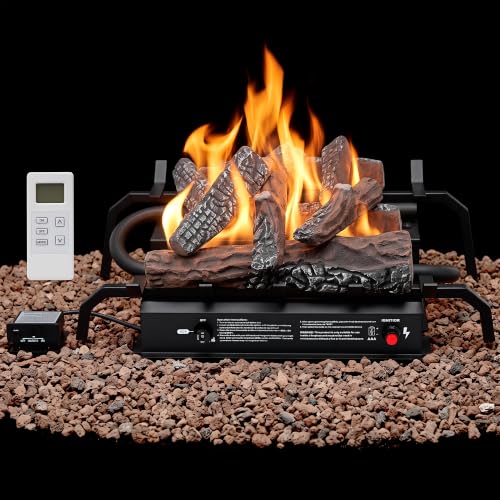
Venting Requirements for Gas Logs: Complete Guide
Understand the essential venting requirements for gas logs. Learn the differences between vented and ventless gas logs, clearance needs, and safety codes for proper installation.
Why Venting Matters: Proper venting is crucial for safety, efficiency, and compliance when installing gas logs. Whether you choose vented or ventless gas logs, understanding the requirements ensures your fireplace operates safely and effectively, protecting your home from carbon monoxide and other hazards.
Vented vs Ventless Gas Logs: Key Differences
The choice between vented and ventless gas logs is one of the most important decisions you'll make. Each type has different venting requirements, safety considerations, and performance characteristics. Here's what you need to know:
| Feature | Vented Gas Logs | Ventless (Vent-Free) Gas Logs |
|---|---|---|
| Venting Required | Yes - Requires functional chimney or flue | No - No chimney or venting needed |
| Flame Appearance | Tall, yellow, realistic flames | Lower, blue-tipped flames for clean burning |
| Heat Output | Lower efficiency (heat goes up chimney) | Higher efficiency (100% heat stays in room) |
| Installation Tier | Mid-range (if chimney exists) | Entry-level to mid-range (no venting needed) |
| Safety Requirements | Regular chimney cleaning and inspection | Oxygen depletion sensor required |
| Best For | Existing wood-burning fireplaces with chimneys | Homes without chimneys or for maximum efficiency |
Venting Requirements for Vented Gas Logs
Vented gas logs require a functional chimney or flue to exhaust combustion gases safely. Here are the specific requirements:
🏠 Chimney Requirements
- Functional Flue: The chimney must be open and free of blockages.
- Damper Position: The damper must be fully open during operation.
- Chimney Height: Minimum height of 12 feet for proper draft.
- Chimney Inspection: Annual chimney inspection is required.
- Clearance: Ventilation requirements must be met.
- Mid-range tier
⚡ Draft & Clearance Requirements
- Positive Draft: The chimney must create a positive draft to exhaust gases.
- Combustion Air: Adequate combustion air supply is essential.
- Clearance: Keep furniture and flammable materials at least 3 feet away.
- Smoke Test: Perform a smoke test to verify proper venting.
- Carbon Monoxide: Install CO detectors in the room.
🛠️ Installation Requirements
- Gas Line: Proper gas line sizing and connection.
- Burner Pan: Proper positioning of the burner and logs.
- Venting Options: Venting options for gas logs vary by setup.
- Professional Installation: Recommended for safety and compliance.
- Local Codes: Compliance with local building and fire codes.
Ventless (Vent-Free) Gas Logs: Requirements & Safety
Ventless gas logs are designed to burn cleanly without a chimney or vent. However, they have specific safety requirements that must be followed:
🛡️ Safety Requirements
- Oxygen Depletion Sensor (ODS): Required for all ventless gas logs to shut off if oxygen levels drop.
- Room Size: Minimum room size of 1,000 cu ft for most models.
- Airflow: Adequate air circulation is essential.
- Carbon Monoxide: CO detectors are strongly recommended.
- Mid-range tier
📏 Clearance & Installation
- Combustible Materials: Minimum 3 feet clearance from flammable items.
- Mantel Clearance: Mantel clearance varies by manufacturer (typically 6–12 inches).
- Wall Clearance: At least 6 inches from side walls.
- Installation: Ventless safety guidelines must be followed.
- Venting Options: Venting vs ventless comparison.
Best Gas Logs for 2026
Here are the top-rated gas logs on the market, categorized by venting type and style:
🔥 Peterson Gas Logs (Vented)
- Type: Vented, realistic split oak design
- BTU: 40,000–90,000 BTU
- Features: Hand-painted, realistic flames, multiple sizes
- Best For: Existing fireplaces with chimneys
- Premium tier
🔥 MHG Gas Logs (Ventless)
- Type: Ventless, glowing embers design
- BTU: 18,000–28,000 BTU
- Features: ODS sensor, remote control option, high efficiency
- Best For: Homes without chimneys, maximum heat output
- Mid-range tier
🔥 Empire Gas Logs (Ventless)
- Type: Ventless, natural or propane
- BTU: 20,000–30,000 BTU
- Features: Easy installation, thermostatic control, ODS
- Best For: Small to medium rooms
- Entry-level tier
🔥 Hargrove Gas Logs (Vented)
- Type: Vented, ceramic fiber construction
- BTU: 30,000–70,000 BTU
- Features: Lifelike appearance, glowing embers, multiple styles
- Best For: Traditional fireplaces
- Mid-range tier
Gas Log Installation & Safety Tips
Follow these essential tips to ensure your gas logs are installed safely and perform optimally:
🔥 Essential Installation Guidelines
- Read the Manual: Always follow the manufacturer's instructions for installation and clearance requirements.
- Professional Installation: For gas connections, hire a licensed professional to ensure safety and compliance.
- Gas Line Inspection: Check the gas line and connections for leaks before use.
- Chimney Inspection: For vented logs, inspect the chimney annually.
- Carbon Monoxide Detectors: Install CO detectors in the room and check them regularly.
- Combustible Materials: Keep flammable materials at least 3 feet away from the fireplace.
- Ventilation: For ventless logs, ensure adequate ventilation and room size requirements are met.
- Regular Maintenance: Schedule regular maintenance to keep your gas logs in top condition.
- Know When to Call a Pro: If you experience issues like gas fireplace won't light or gas smell, contact a professional immediately.
Frequently Asked Questions
🔥 Do ventless gas logs require any venting?
No, ventless gas logs are designed to burn cleanly without a chimney or vent. They use an oxygen depletion sensor for safety.
⚡ Can I install ventless gas logs in any fireplace?
No, there are installation requirements. The fireplace must be large enough, and the room must meet minimum size requirements.
🔥 Are vented gas logs more realistic than ventless?
Yes, vented gas logs typically produce taller, yellow flames that look more like a real wood fire compared to the lower, blue-tipped flames of ventless models.
💰 Which is more efficient to operate?
Ventless gas logs are more efficient because 100% of the heat stays in the room. Vented logs lose some heat up the chimney.
🛠️ Can I convert my wood fireplace to gas logs?
Yes! You can convert your wood-burning fireplace to gas logs. The process involves installing a gas log set and burner.
🧪 Do I need a permit for gas log installation?
Many jurisdictions require a permit for gas log installation. Check with your local building department before starting.
🔧 How often should I service my gas logs?
Schedule an annual inspection and cleaning. For vented logs, chimney cleaning is also recommended annually.
🌡️ What if my chimney doesn't have a good draft?
If you're having draft issues, consider venting options like a direct-vent system or switch to ventless logs.
🌟 Final Thoughts: Understanding the venting requirements for gas logs is essential for a safe and efficient fireplace. Whether you choose vented or ventless gas logs, always follow manufacturer guidelines, local codes, and safety best practices. With proper installation and maintenance, gas logs provide beautiful flames, efficient heat, and years of enjoyment.
Explore More: Learn more about gas fireplace logs and gas log sets. For venting options, check out venting options for gas logs and venting vs ventless comparison. If you're considering a conversion, read about converting to gas logs and conversion considerations. For safety, review fireplace safety tips and carbon monoxide safety.