Venting Options for Gas Logs: A Complete Guide to Safe Installation
Understand the critical differences between vented and ventless gas logs, and learn how to choose the right venting system for your home's safety and efficiency.
START EXPLORINGYour Safety Comes First: Choosing the right venting option for your gas logs is not just about installation convenience—it's about protecting your indoor air quality and your family's health. This guide will walk you through every option so you can make an informed decision.
Understanding Gas Log Venting Basics
Gas logs are a popular way to enjoy the ambiance of a real fire without the mess of wood. However, the combustion process produces byproducts that must be managed. The two primary approaches are vented gas logs, which send exhaust outdoors, and ventless gas logs, which are designed to burn more cleanly and release minimal exhaust into the room. Understanding the difference is fundamental to a safe installation. The choice you make will impact everything from indoor air quality to the heat output you can expect.
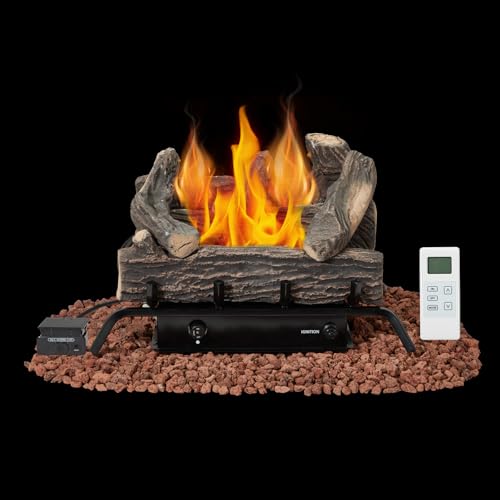
When you are exploring venting options for a gas fireplace, the same principles apply. It's essential to recognize that a gas log set is essentially a burner assembly placed inside an existing fireplace. Therefore, the venting capabilities of that fireplace—whether it has a chimney or not—will dictate which type of log set you can use. This guide will help you navigate those constraints. For a broader understanding of how venting works across different fireplace types, you can refer to our guide on whether you need a chimney or vent.
Vented Gas Logs: Traditional Safety and Realism
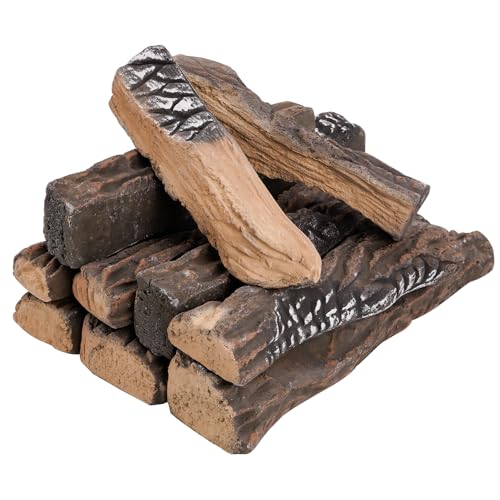
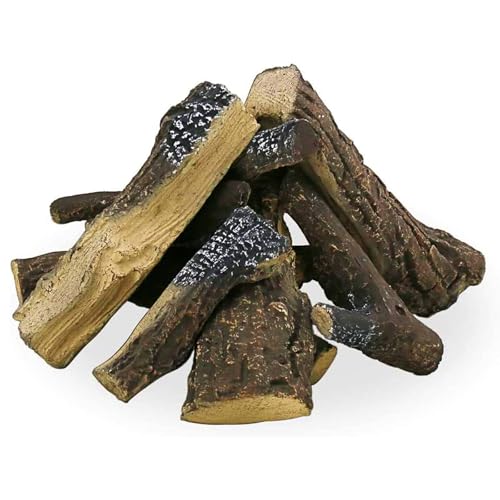
Vented gas logs are designed to be used in a fireplace that has a working chimney or flue. They produce a large, realistic flame that closely mimics a wood fire, but they also generate significant amounts of carbon monoxide and other combustion byproducts. The chimney's job is to safely exhaust these gases outdoors, away from your living space.
How Vented Gas Logs Work
The burner in a vented log set is designed to operate with the damper fully open. This allows for a strong draft that pulls the exhaust gases up and out of the chimney. Because a large amount of air is required for combustion and venting, much of the heat produced also escapes up the chimney. This makes vented logs less efficient as a heat source, but they offer superior flame realism. If you already have a wood-burning fireplace and want to convert it, a vented log set is often the most straightforward option. You can learn more about this process in our article on converting a wood-burning fireplace to gas logs.
Key Requirements for Vented Logs
- Working Chimney: You must have a functional chimney and flue that is in good condition. A chimney inspection is highly recommended before installation.
- Damper: The fireplace damper must be permanently fixed in the open position to prevent accidental operation with the flue closed.
- Gas Line: A gas line must be routed to the fireplace, either from a natural gas supply or a propane tank.
The venting requirements for these logs are strict, and for good reason. Our detailed guide on venting requirements for gas logs provides a deeper dive into the specifics. You'll also find that vented logs are often a key component of a more traditional vented gas fireplace setup.
Ventless Gas Logs: Efficient and Flexible
Ventless gas logs, also known as vent-free logs, are engineered to burn at a much higher efficiency—typically 99% or more. This means almost all the fuel is converted into heat, with very little waste. They are designed to operate without a chimney or flue, making them a great choice for homes without an existing fireplace or for those who want to maximize heat output.
How Ventless Gas Logs Work
These systems use a special burner and a mechanism that ensures a complete and clean burn. While they still produce some moisture and carbon dioxide, the levels are low enough to be considered safe for indoor use without venting, provided the installation instructions are followed precisely. They are equipped with an oxygen depletion sensor (ODS), a critical safety feature that automatically shuts off the gas if oxygen levels in the room drop below a safe threshold.
Key Requirements for Ventless Logs
- No Chimney Required: They can be installed in a masonry fireplace with the damper closed and sealed, or in a prefabricated ventless firebox.
- Room Size: Ventless logs have specific BTU input limits based on the room's cubic footage. A larger room can accommodate a higher BTU output. You can calculate your needs with our guide on fireplace heating capacity.
- Safety Features: A working ODS is mandatory. Regular inspection of this component is a key part of gas fireplace maintenance.
While ventless logs are very efficient, they are not without considerations. Some people are sensitive to the slight odors or increased humidity they can produce. Our article on ventless fireplace safety provides a balanced view of the pros and cons. For a direct comparison between these two systems, see our guide on ventless vs vented gas fireplace.
Vented vs. Ventless Gas Logs: A Direct Comparison
To help you decide, here is a side-by-side comparison of the key characteristics of each system.
| Feature | Vented Gas Logs | Ventless Gas Logs |
|---|---|---|
| Venting Requirement | Requires a functional chimney or flue. | No chimney or flue required. |
| Efficiency | Lower (much heat escapes up the chimney). | Very high (up to 99% efficient). |
| Flame Realism | High, with large, dancing flames and glowing embers. | Good, but generally less realistic than vented logs. |
| Indoor Air Quality | Excellent, as all byproducts go outdoors. | Good, but adds slight moisture and CO2 to the room. |
| Installation Flexibility | Limited to homes with an existing chimney. | Highly flexible; can be installed in almost any room. |
| Best For | Ambiance and homeowners with an existing chimney. | Supplemental heat and homes without a chimney. |
Exploring Other Venting Options for Gas Logs
While vented and ventless are the two main categories, there are other considerations. If you are installing a new gas fireplace rather than just logs, you might encounter direct vent and B-vent options. Direct vent systems are sealed combustion units that draw air from outside and exhaust directly back outside through a single horizontal or vertical pipe. They are highly efficient and safe, and they don't require a traditional chimney. B-vent systems, on the other hand, use a natural draft to pull air from the room and exhaust it vertically, similar to a traditional chimney but with a metal vent pipe.
These systems are typically used for gas inserts rather than simple log sets, but they represent the broader spectrum of venting options for gas fireplace inserts. If you're considering an insert, it's important to understand these differences. For instance, the venting requirements for a gas fireplace insert are more complex than for a simple log set.
How to Choose the Right Venting Option
Your decision should be based on a few key factors:
- Do you have a chimney? If you have a safe, working chimney, vented logs are a great choice for maximum realism. If not, ventless logs are your primary option.
- Are you looking for heat or ambiance? If your primary goal is supplemental heat, ventless logs are far more efficient. If you just want the look of a fire, vented logs are unbeatable.
- What are your local codes? Some municipalities have restrictions on ventless logs. Always check with your local building department before making a purchase.
- What is your budget? While we don't discuss specific prices, it's worth noting that the overall cost of installation can vary. A ventless system may be more budget-friendly as it doesn't require chimney work, while a vented system might be more cost-effective if you already have a suitable chimney.
No matter which option you choose, proper installation is paramount. Our guide on gas fireplace installation requirements provides a comprehensive overview. For a broader perspective on fireplaces in general, you might also be interested in our fireplace buying guide.
Maintenance Considerations for Your Gas Logs
Both vented and ventless gas logs require regular maintenance to ensure they operate safely and efficiently. For vented logs, this includes annual chimney cleaning and inspection. For ventless logs, the ODS and burner must be kept clean. You can learn more about general upkeep in our articles on gas fireplace maintenance and propane fireplace maintenance. A key part of this is knowing how to clean fireplace glass if your setup has a glass front, and how to clean a gas fireplace burner.
If you encounter issues, such as a gas fireplace that won't light or a weak flame, our troubleshooting section can help you diagnose the problem. For instance, a pilot light that keeps going out is a common issue that can often be resolved with a simple cleaning, but it could also indicate a more serious problem. If you ever smell gas, turn off the unit immediately and contact a professional.
Frequently Asked Questions About Gas Log Venting
Can I use vented gas logs in a ventless fireplace?
No, you cannot. A ventless fireplace is not designed to handle the exhaust volume of a vented log set. Using vented logs in a ventless firebox would release dangerous levels of carbon monoxide into your home. Always match the log set to the fireplace's venting capabilities.
Can I use ventless gas logs in a vented fireplace?
Yes, you can, but you must seal the damper closed to prevent the heat from escaping up the chimney. While it is technically possible, it's often more practical to use vented logs in a vented fireplace to take advantage of the chimney's draft for maximum realism.
Do ventless gas logs produce carbon monoxide?
Ventless gas logs are designed to burn very cleanly, producing extremely low levels of carbon monoxide—well below what is considered hazardous. However, they are not zero-emission. They are equipped with an oxygen depletion sensor (ODS) as a safety backup. It is crucial to follow the manufacturer's instructions regarding room size and ventilation.
How do I know if I have a vented or ventless fireplace?
Look for a chimney. If your fireplace has a traditional chimney and a damper that opens to the outside, it is a vented fireplace. If it has no chimney and is a self-contained box, it is likely a ventless or direct-vent system. You can also check the data plate on the unit, which will specify the venting type.