
Two Sided Gas Fireplace Indoor Outdoor: The Complete Guide
Discover how a see-through gas fireplace can connect your indoor living space with an outdoor patio, expanding your usable area and creating a stunning architectural focal point. This guide covers types, venting, installation, efficiency, and how to choose the right model.
Start Your ResearchQuick Answer: A two sided gas fireplace indoor outdoor — also called a see-through, double-sided, or peninsula fireplace — features a firebox with glass on two opposite sides, allowing you to enjoy the flames from both inside your home and outside on a patio or deck. These units are available in vented (direct vent) and ventless (vent-free) configurations, with vented models being strongly preferred for outdoor exposure due to safety and performance. Installation is complex and typically requires a professional, but the result is a dramatic, functional feature that bridges indoor comfort and outdoor living.
What Is a Two Sided Gas Fireplace Indoor Outdoor?
A two sided gas fireplace indoor outdoor is a gas-powered hearth designed with a firebox that is open — and glazed — on two opposite sides. This configuration is commonly referred to as a see-through fireplace, double-sided fireplace, or peninsula fireplace. The unit is typically installed within a wall that separates an interior room from an exterior space, such as a living room and a covered patio, so that the flames are visible and enjoyable from both sides.
Unlike a traditional single-sided fireplace, which radiates heat primarily in one direction, a two sided unit distributes radiant and convective heat to both sides. This makes it an excellent choice for homeowners who want to extend their living area and create a seamless transition between indoors and outdoors. The concept is similar to a double-sided fireplace idea, but specifically uses gas as the fuel source, offering convenience, consistent performance, and clean operation compared to wood.
Gas two sided fireplaces are available in natural gas and propane versions, and they come in a range of sizes, heat outputs, and efficiency ratings. Some models are designed for indoor use only, while others are specifically engineered to withstand outdoor exposure and are rated for both indoor and outdoor installation. Understanding these distinctions is essential before you begin shopping.
How a Two Sided Gas Fireplace Works
The basic operation of a two sided gas fireplace is similar to any gas hearth: fuel is delivered to a burner assembly, ignited by a pilot light or electronic ignition, and the resulting flames are visible through the glass panels. The key difference lies in the firebox design and the venting system.
In a vented (direct vent) two sided gas fireplace, combustion air is drawn from outside through a concentric vent pipe, and exhaust gases are expelled to the exterior. This sealed combustion system is highly efficient, safe, and suitable for outdoor installations because it does not rely on indoor air for combustion. The glass panels on both sides remain relatively cool to the touch, and the unit can be installed in tighter spaces without compromising air quality.
In a ventless (vent-free) two sided gas fireplace, there is no external vent. Combustion gases are released directly into the room — or in the case of an indoor/outdoor unit, into both spaces. Ventless models are more affordable and easier to install, but they are generally not recommended for outdoor use because wind, moisture, and temperature fluctuations can affect performance and safety. They also produce higher indoor humidity and require strict adherence to manufacturer clearances and room size requirements.
For a detailed comparison of these two venting approaches, see our guide on ventless vs vented fireplace systems. Understanding the differences will help you make an informed decision based on your home's layout, climate, and safety priorities.
Types and Configurations of Two Sided Gas Fireplaces
Two sided gas fireplaces are not a one-size-fits-all product. They vary by venting method, installation style, and intended use. Here are the primary categories:
Direct Vent (Vented) Indoor/Outdoor
Sealed combustion system that draws air from outside and vents exhaust externally. Best for outdoor exposure and high-efficiency heating. Requires vertical or horizontal venting through a wall or roof.
Ventless (Vent-Free) Indoor Only
No external venting. Releases combustion byproducts into the room. Suitable for indoor use only in well-ventilated spaces. Not recommended for outdoor installation due to wind and moisture.
Built-In See-Through
Installed into a wall cavity with finished framing and surround. Offers a clean, integrated look. Requires planning during construction or renovation. Common in modern and contemporary homes.
Freestanding Peninsula
A standalone unit with glass on two sides, often placed in the center of a room or between two spaces. Less common in gas, but available in some specialty models. Flexible placement but requires clearance on all sides.
Linear See-Through
Features a long, narrow firebox with a contemporary aesthetic. Ideal for modern homes and outdoor living areas. Often paired with decorative media like glass or stone. See linear fireplaces for more inspiration.
Traditional See-Through
Classic firebox shape with logs and ember bed. Suits traditional and transitional decor. Available in both vented and ventless configurations. Works well in family rooms and patios with classic architecture.
When selecting a type, consider how you plan to use the fireplace. If you want year-round enjoyment and live in a climate with cold winters, a direct vent model is the most reliable choice. If you only need occasional ambiance and have a covered, protected outdoor area, a ventless indoor-only unit might suffice for the interior side, but it should not be exposed to the elements.
For those exploring broader design possibilities, our article on double-sided fireplace ideas offers creative layout and styling inspiration that applies to both gas and electric models.
Indoor and Outdoor Installation Considerations
Installing a two sided gas fireplace that serves both an indoor and outdoor space is a significant project. It requires careful planning, compliance with local building codes, and typically the expertise of a licensed gas fitter and contractor. Here are the key factors to evaluate:
- Wall Placement: The unit must be installed in a wall that separates an interior room from an exterior area. The wall must be framed to accommodate the firebox depth and venting requirements.
- Venting Route: Direct vent models require a path for the vent pipe to reach the exterior. This may go through the wall (horizontal) or up through the roof (vertical). The route must avoid obstructions and meet clearance requirements.
- Gas Supply: A dedicated gas line must be run to the fireplace location. Natural gas is convenient if your home already has a supply; propane requires a tank and regulator. See adding a gas fireplace to an existing home for more details.
- Electrical: Most modern gas fireplaces require electricity for ignition, blowers, remote controls, and lighting. An electrical outlet or hardwired connection must be provided.
- Weather Protection: Outdoor-facing glass and components must be rated for exposure to rain, wind, and temperature swings. Not all indoor fireplaces are suitable for outdoor use; check the manufacturer's rating.
- Clearances: Maintain required clearances from combustibles, including framing, flooring, and furniture. Clearances differ between indoor and outdoor sides.
- Permits and Inspection: Most jurisdictions require a permit for gas fireplace installation. Work must be inspected to ensure code compliance. See fireplace permit requirements for general guidance.
Because of the complexity, a DIY installation is rarely advisable for gas appliances. Our article on DIY vs professional fireplace installation explains why professional installation is the safer and often more cost-effective choice in the long run.
Important Safety Note: Never install a ventless gas fireplace in an outdoor location unless the manufacturer explicitly rates it for outdoor use. Wind can cause pilot outages, and moisture can damage components. Vented direct vent models are the standard for indoor/outdoor applications.
Efficiency and Heating Performance
The heating efficiency of a two sided gas fireplace depends on its venting type, insulation, and design. Direct vent models are generally more efficient because they use a sealed combustion chamber and can be equipped with blowers and heat exchangers to distribute warm air. Ventless models are nearly 100% efficient in terms of heat conversion, but they introduce moisture and combustion byproducts into the living space, which may be undesirable in tightly sealed homes.
When evaluating a two sided gas fireplace for indoor/outdoor use, consider the following:
- Heating Capacity: Measured in BTUs, the heating capacity determines how much space the fireplace can effectively warm. For indoor/outdoor units, the heat output is divided between two areas, so you may need a higher BTU rating to achieve comfortable temperatures on both sides. Our fireplace heating capacity BTU guide explains how to calculate your needs.
- Efficiency Rating: Look for annual fuel utilization efficiency (AFUE) ratings where available. Direct vent gas fireplaces typically range from 70% to over 90% efficiency, depending on the model and features.
- Blower and Thermostat: A built-in blower circulates heated air more effectively, while a thermostat allows you to maintain a consistent temperature. These features are especially valuable for indoor/outdoor units that need to perform in varying conditions. See gas fireplace with blower and thermostat for examples.
- Zone Heating: A two sided fireplace can serve as a zone heating source for both the indoor room and the outdoor patio, reducing the load on your central HVAC system. However, outdoor heating is inherently less efficient due to air movement and temperature loss. Manage expectations accordingly.
If energy efficiency is a top priority, compare the operating costs of different fuel types in our guide on electric vs gas fireplace running costs, and explore most energy efficient fireplace types for a broader perspective.
Pros and Cons of Two Sided Gas Fireplaces
Advantages
- Creates a seamless visual and functional connection between indoor and outdoor living spaces
- Doubles the enjoyment of a single fireplace — flames visible from two rooms or areas
- Gas operation offers convenience, instant ignition, and consistent heat
- Direct vent models are safe, efficient, and suitable for outdoor exposure
- Adds architectural interest and can increase home value
- No ash, soot, or wood storage required
- Available in a wide range of styles, sizes, and media options
Disadvantages
- Higher installation cost and complexity compared to single-sided fireplaces
- Requires professional gas line installation and venting
- Limited wall placement options — must be on an exterior wall
- Ventless models are not suitable for outdoor use
- Heat output is divided between two spaces, which may reduce effectiveness in extreme cold
- Outdoor glass may require more frequent cleaning due to weather exposure
- Not all models are rated for indoor/outdoor use — careful product selection is essential
Comparing Two Sided Gas Fireplace Options
The table below summarizes the key differences between common configurations to help you narrow down your choices. Note that specific features vary by manufacturer and model.
| Feature | Direct Vent Indoor/Outdoor | Ventless Indoor Only | Linear See-Through | Traditional See-Through |
|---|---|---|---|---|
| Venting | Sealed direct vent (horizontal or vertical) | None (vent-free) | Direct vent or ventless | Direct vent or ventless |
| Outdoor Use | Yes, if rated by manufacturer | No | Depends on model rating | Depends on model rating |
| Efficiency | High (70–90%+ AFUE) | Near 100% heat conversion | Moderate to high | Moderate to high |
| Installation Complexity | High — requires venting and gas line | Moderate — gas line only | High — venting and framing | High — venting and framing |
| Best For | Year-round indoor/outdoor enjoyment | Indoor ambiance and supplemental heat | Modern, contemporary spaces | Traditional and transitional homes |
| Maintenance | Annual inspection recommended | Frequent cleaning due to residue | Annual inspection recommended | Annual inspection recommended |
For a deeper dive into venting options, see our articles on ventless vs vented fireplace and do you need a chimney or vent fireplace. These resources explain the trade-offs in detail.
Design Ideas for Two Sided Gas Fireplaces
A two sided gas fireplace is a natural focal point. How you design around it will determine whether it feels like a seamless architectural feature or an afterthought. Here are some design directions to consider:
- Modern Linear: Pair a long, narrow see-through fireplace with large-format tile, a floating hearth, and minimalist media. This works especially well in contemporary homes and covered outdoor lounges. See linear fireplaces for inspiration.
- Stone and Timber: Use stacked stone or ledgestone on both the indoor and outdoor faces to create a rustic, textured look. This approach blends well with stone fireplace wall ideas and natural outdoor surroundings.
- Two-Tone Finishes: Treat each side differently — for example, a smooth plaster finish indoors and a weather-resistant stucco or stone veneer outdoors. This allows each space to have its own identity while sharing the same firebox.
- Integrated Shelving: Built-in shelves or niches on either side of the fireplace can provide storage and display space. Our article on fireplace with bookshelves on each side ideas offers practical layouts.
- Outdoor Kitchen Integration: In an outdoor living area, a two sided fireplace can serve as a divider between a cooking zone and a seating area. Consider pairing it with an outdoor covered patio with fireplace and kitchen design.
- Cozy Indoor Nook: Indoors, use the fireplace as the anchor for a reading nook or conversation area. Add comfortable seating, warm textiles, and layered lighting to maximize the cozy factor.
For more inspiration on styling the interior side, explore family room fireplace ideas and living room fireplace ideas. On the exterior, contemporary outdoor fireplace designs can help you create a cohesive look.
Buying Checklist: What to Look For
Before you purchase a two sided gas fireplace, work through this checklist to ensure you select a model that fits your space, climate, and lifestyle. This is especially important for indoor/outdoor units, where product ratings and safety certifications are critical.
Two Sided Gas Fireplace Buying Checklist
- Indoor/Outdoor Rating: Confirm the manufacturer explicitly rates the unit for both indoor and outdoor installation. Do not assume.
- Venting Type: Choose direct vent for outdoor exposure. Ventless is for indoor use only in most cases.
- Fuel Type: Natural gas or propane? Check availability and cost in your area. Propane requires a tank and may have higher operating costs.
- BTU Output: Match the heating capacity to the combined square footage of both spaces. Use our how to size a fireplace guide for calculations.
- Efficiency Rating: Look for high AFUE or equivalent efficiency metrics, especially if you plan to use the fireplace as a heat source.
- Dimensions and Framing: Measure your wall cavity and confirm the firebox dimensions, framing requirements, and clearances.
- Glass and Safety: Look for tempered or ceramic glass, cool-touch technology, and safety barriers if children or pets are present.
- Controls: Consider remote control, wall switch, thermostat, and smart home compatibility. See smart home fireplace integration for options.
- Blower and Heat Exchanger: A blower improves heat distribution. Check if the model includes one or supports an optional blower.
- Media Options: Logs, glass rocks, stones, or driftwood — choose a media style that suits your decor. See gas fireplace insert with glass rocks for ideas.
- Warranty and Support: Review the warranty coverage for parts and labor, and check for local service availability.
- Professional Installation: Budget for a licensed gas fitter and contractor. This is not a DIY-friendly project for most homeowners.
Maintenance Tips for Indoor/Outdoor Gas Fireplaces
Regular maintenance keeps your two sided gas fireplace operating safely and efficiently. Because the unit is exposed to both indoor and outdoor environments, it requires a slightly more attentive maintenance routine than a single-sided indoor fireplace.
- Annual Inspection: Schedule a professional inspection each year. This should include checking the burner, pilot assembly, venting, gas connections, and glass condition. See annual fireplace inspection for a detailed checklist.
- Clean the Glass: Outdoor-facing glass accumulates dust, pollen, and residue faster than indoor glass. Clean both sides regularly with a non-abrasive fireplace glass cleaner. Our guide on how to clean fireplace glass provides step-by-step instructions.
- Inspect the Venting: For direct vent models, check the exterior vent cap for blockages, nests, or debris. Clear any obstructions to maintain proper airflow. See fireplace chimney inspection for related tips.
- Check the Burner: Dust and debris can accumulate on the burner and pilot assembly. Clean gently with a soft brush. Our article on how to clean a gas fireplace burner explains the process.
- Seasonal Preparation: Before winter, test the ignition, inspect the glass, and verify that the outdoor area is clear of flammable materials. See winter fireplace preparation for a seasonal guide.
- Off-Season Care: In warmer months, cover or protect the outdoor side if the unit is not in use. Check for moisture intrusion and pest activity. Summer fireplace care offers off-season tips.
- Ventless-Specific Maintenance: If you have a ventless model, clean the glass and burner more frequently and monitor indoor humidity levels. See ventless fireplace maintenance for details.
For a comprehensive schedule, download our fireplace maintenance checklist and adapt it to your indoor/outdoor setup.
Common Issues and Troubleshooting
Two sided gas fireplaces are generally reliable, but they can develop issues — especially when exposed to outdoor conditions. Here are some common problems and where to find solutions:
- Pilot Light Keeps Going Out: Wind, drafts, or a dirty pilot assembly can cause this. See pilot light keeps going out for troubleshooting steps.
- Fireplace Won't Light: Could be a gas supply issue, ignition failure, or thermocouple problem. Our guide on gas fireplace won't light covers the basics.
- Weak Flame: Low gas pressure, blocked burner ports, or a faulty regulator can reduce flame height. See gas fireplace weak flame for diagnostics.
- Smells Like Gas: If you smell gas, turn off the unit and ventilate immediately. Do not attempt to relight. Contact a professional. See fireplace smells like gas for safety guidance.
- Making Noise: Blowers, fans, or expansion of metal components can cause noise. See fireplace making noise for common causes.
- Condensation on Glass: Temperature differences can cause condensation, especially on outdoor-facing glass. See condensation inside fireplace glass for solutions.
For more general troubleshooting, visit our fireplace troubleshooting hub.
Frequently Asked Questions
Final Thoughts
A two sided gas fireplace indoor outdoor is a premium feature that transforms how you experience both your home and your outdoor living area. It creates a visual and functional bridge between spaces, extends your enjoyment of the fire, and adds architectural value. However, it is not a simple purchase or installation. Careful planning, professional guidance, and a clear understanding of venting, safety, and performance are essential.
As you continue your research, explore our related guides on double-sided fireplace ideas, outdoor fireplace with chimney, and fireplace buying guide to build a complete picture of your options. When you are ready to compare specific products, the recommendations below can serve as a starting point.
Recommended Two Sided Gas Fireplaces & Accessories
⚠️ AFFILIATE DISCLOSURE: This website contains affiliate links. As an Amazon Associate, we earn from qualifying purchases. If you make a purchase through these links, we may receive a small commission at no additional cost to you. Read our full affiliate policy.
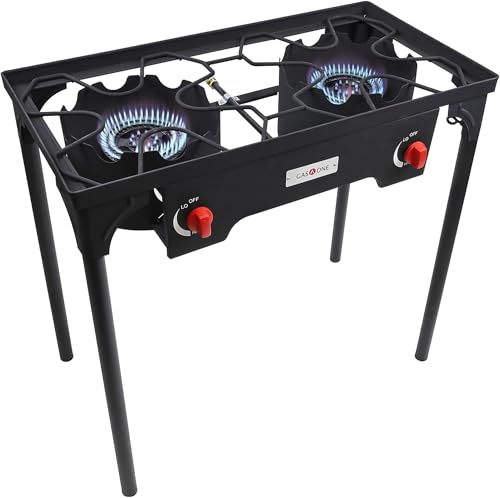
Gas One Propane Double Burner Two Burner Camp Stove Outdoor High Pressure Propane 2 Burner Adjustable PSI Regulator and 4ft Hose With Removable Legs
Check price on Amazon
Flame King ALOGFIRE Propane Ambiance Log Fireplace Heater, Clean and Smokeless Dancing Flames, Indoor and Outdoor Use, for Campers, Patios, and Workshops
Check price on Amazon
ProCom Dual Fuel Ventless Gas Fireplace System - 10,000 BTU, T-Stat Control, Apple Spice Finish - Model# FS100T-3AS
Check price on Amazon
Duluth Forge Dual Fuel Ventless Gas Fireplace Insert - 32,000 BTU, Remote Control - Model# FDI32R
Check price on Amazon
43" Propane Fire Pit Table with Glass Wind Guard & Lid, 50,000 BTU Outdoor Gas Fireplace, Weather-Resistant, Smokeless 2-in-1 Rectangular Coffee Table for Patio Garden
Check price on Amazon
Panovue 39 Inch Fire Pits with Outdoor Chimney and Wood Storage | Large Outdoor Fireplace, Mesh Spark Screen, Fire Poker Included, Built-In Log Storage, For Backyard Patio Camping
Check price on Amazon
Bestfire 2 Burner Propane Stove, 150,000 BTU Outdoor Gas Stove with Auto | Ignition, Regulator, Side Shelves & Wheels, Portable Propane Camp Stove for Patio Cooking, Frying, Camping and Tailgating
Check price on Amazon