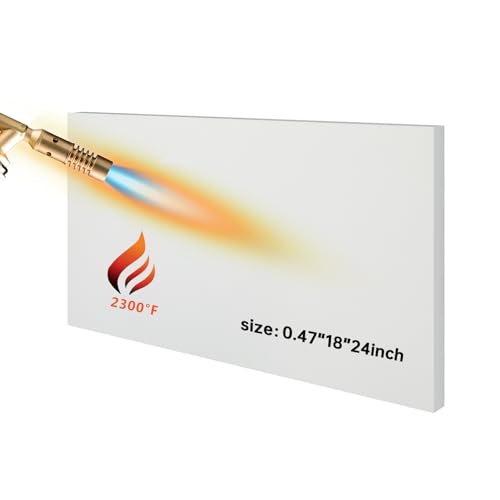
Heat Resistant Boards for Fireplace: The Ultimate Safety & Efficiency Guide
Protect your walls, improve performance, and choose the right fireproof board for your wood, gas, or electric fireplace installation
EXPLORE MATERIALSWhy Heat Resistant Boards Matter: A fireplace adds warmth and charm, but without proper heat shielding, it can pose serious safety risks and reduce efficiency. Heat resistant boards are the invisible heroes of any safe fireplace installation — they protect combustible materials, reflect heat back into the room, and ensure your fireplace operates within safe temperature limits.
What Are Heat Resistant Boards for Fireplaces?
Heat resistant boards — also called fireproof boards, heat shields, or thermal barriers — are specialized construction panels designed to withstand high temperatures without degrading, warping, or transferring dangerous heat to surrounding structures. When installed around a fireplace, wood stove, or insert, they create a protective layer between the heat source and combustible materials like drywall, wood framing, or cabinetry.
Unlike ordinary drywall or plywood, which can ignite at temperatures as low as 250°F (121°C), quality heat resistant boards can handle continuous exposure to 1,000°F (538°C) or more, depending on the material. This makes them essential for fireplace installation where clearances to combustibles must be maintained — or reduced with proper shielding.
Top Heat Resistant Board Materials Compared
Not all fireproof boards are created equal. The best choice depends on your fireplace type, installation location, budget tier, and desired aesthetic. Here's a detailed breakdown of the most popular options:
🔥 Cement Board Most Popular
Best for: Wood-burning fireplaces, surrounds, and hearths
Cement board (often called backer board) is the gold standard for fireplace heat protection. Made from Portland cement and aggregate fibers, it's non-combustible, moisture-resistant, and can handle extreme temperatures. It's the same material used behind tile in showers, but rated for far higher heat.
Heat rating: Up to 1,200°F+ continuous
Tier: Budget-friendly to mid-range
Installation: Cut with carbide tools, attach with screws, cover with tile, stone, or veneer
🛡️ Calcium Silicate Board Premium
Best for: High-efficiency inserts, zero-clearance applications
Calcium silicate boards offer superior thermal insulation with a lower density than cement board. They're often used in commercial and industrial settings, but increasingly popular for residential fireplace heat shields where maximum protection is needed in tight spaces.
Heat rating: Up to 1,800°F continuous
Tier: Mid-range to premium
Installation: Lighter than cement board, easier to cut, but more brittle
🧱 Firebrick & Refractory Panels Traditional
Best for: Firebox liners, wood stoves, masonry heaters
Firebricks are dense, heat-resistant bricks designed specifically for the interior of fireboxes. Refractory panels are pre-cast versions that are easier to install. They handle direct flame contact and extreme thermal cycling.
Heat rating: Up to 2,000°F+ continuous
Tier: Mid-range to premium
Installation: Requires fire mortar or refractory cement; best for interior firebox use
See our guide on heat resistant bricks for fireplace for more details.
✨ Ceramic Fiber Board Lightweight
Best for: Gas fireplaces, inserts, and manufactured housing
Ceramic fiber boards are lightweight, flexible, and excellent thermal insulators. They're often used as backer panels in gas fireplace inserts and as heat shields in tight installations where weight is a concern.
Heat rating: Up to 2,300°F continuous
Tier: Mid-range
Installation: Easy to cut with a utility knife; must be covered with a rigid facing material
Material Comparison at a Glance
| Material | Max Temp | Best Use | Weight | Cost Tier | DIY Friendly |
|---|---|---|---|---|---|
| Cement Board | 1,200°F+ | Surrounds, hearths, walls | Heavy | Budget to Mid | Yes |
| Calcium Silicate | 1,800°F | Zero-clearance, inserts | Medium | Mid to Premium | Moderate |
| Firebrick / Refractory | 2,000°F+ | Firebox interior | Very Heavy | Mid to Premium | No (pro recommended) |
| Ceramic Fiber | 2,300°F | Gas inserts, tight spaces | Very Light | Mid | Yes |
When Do You Need a Heat Resistant Board?
Not every fireplace installation requires additional heat shielding — but many do, especially in modern homes with tighter clearances and combustible wall materials. Here are the most common scenarios:
✅ You Likely Need Heat Resistant Boards If:
- Your fireplace is installed near combustible walls (drywall, wood paneling, framing)
- You want to reduce clearance to combustibles below the manufacturer's default
- You're installing a wood-burning stove or insert into an existing fireplace
- Your fireplace is a zero-clearance gas fireplace that still requires a thermal barrier
- You're building a DIY fireplace surround and want to ensure safety
- You're installing a TV above the fireplace and need extra heat protection
❌ You May Not Need Them If:
- Your fireplace is a freestanding electric model with built-in thermal cutoff
- The manufacturer specifies zero clearance to combustibles (rare for wood/gas)
- You're using a ventless fireplace log set in a fully non-combustible masonry firebox
- Your installation already includes a factory-approved heat shield kit
- You're placing a tabletop fireplace on a non-combustible surface
How to Install Heat Resistant Boards Around a Fireplace
Installing heat resistant boards is a manageable DIY project for many homeowners, but it requires precision and respect for safety standards. Here's a step-by-step overview:
- Check your fireplace manual for required clearances and approved materials. This is non-negotiable.
- Measure and plan the area to be covered. Heat resistant boards should extend beyond the minimum clearance zone — typically 12–18 inches on all sides for wood-burning units.
- Cut the boards to size. Cement board can be scored and snapped or cut with a carbide blade. Ceramic fiber cuts easily with a utility knife.
- Attach to framing using screws rated for the material (cement board screws for cement board, etc.). Ensure boards are flush and secure.
- Seal joints with fire-rated sealant or alkali-resistant mesh tape and mortar for cement board.
- Finish with a non-combustible surface — tile, stone, brick veneer, or heat resistant stone — for both aesthetics and additional protection.
- Maintain proper ventilation behind the board if required by your fireplace type. Some installations need an air gap for convection.
Common Mistakes to Avoid with Fireplace Heat Shields
❌ Using Regular Drywall
Standard drywall is combustible and will degrade rapidly under heat. Always use a rated fireproof board.
❌ Skipping the Air Gap
Some heat shields require a 1-inch air gap to dissipate heat. Without it, the board itself can overheat and transfer heat to the wall.
❌ Ignoring Local Codes
Building codes vary by region. What's acceptable in one state may be prohibited in another. Always pull permits when required.
❌ Covering with Combustible Trim
Wood trim, plastic molding, or combustible decor near the heat zone defeats the purpose of the heat shield. Keep all combustibles outside the clearance zone.
How to Choose the Best Heat Resistant Board for Your Fireplace
With so many options, the decision comes down to four key factors: fireplace type, installation location, desired finish, and your DIY comfort level. Here's a quick decision framework:
Quick Selection Guide
- → For wood-burning fireplaces: Cement board is your best all-around choice. It's affordable, widely available, and handles the heat. Pair it with a fireplace surround with bookshelves for a complete look.
- → For gas fireplaces: Ceramic fiber board or calcium silicate offers excellent protection with less weight. If you're installing a ventless fireplace log set with remote, check the manual for specific board requirements.
- → For electric fireplaces: Most electric models don't produce enough heat to require a fireproof board, but if you're building a custom surround, cement board is a safe, affordable option. See our DIY fireplace frame guide for inspiration.
- → For tight spaces or zero-clearance: Calcium silicate provides the highest thermal performance per inch. Ideal for fireplace TV stands for small spaces where every inch counts.
Maintaining Your Heat Resistant Board Installation
Heat resistant boards are built to last, but they're not maintenance-free. Regular inspections ensure your fireplace remains safe season after season:
- Inspect annually for cracks, crumbling, or discoloration — especially after the first heating season.
- Check seals and joints for gaps where heat could penetrate. Re-seal with fire-rated caulk as needed.
- Clean gently with a dry brush or vacuum. Avoid wetting cement board excessively, as it can degrade over time.
- Monitor clearances if you rearrange furniture or decor near the fireplace. Combustibles should never be closer than the rated clearance.
- Replace damaged boards immediately — a compromised heat shield is worse than no shield because it gives false confidence.
For a complete seasonal maintenance routine, see our seasonal fireplace checklist.
Frequently Asked Questions
Can I use regular cement board from a hardware store for my fireplace?
Yes, in many cases. Standard cement board (like Durock or Hardiebacker) is non-combustible and rated for high heat. However, always verify the manufacturer's temperature rating and check your fireplace manual for approved materials. Some high-output wood stoves may require a more specialized board.
How thick should a heat resistant board be?
Common thicknesses range from 1/4 inch to 1 inch. For most residential fireplace surrounds, 1/2-inch cement board is sufficient. For zero-clearance or high-heat applications, 1-inch calcium silicate may be required. Thicker boards provide more thermal mass but also more weight.
Do I need a heat resistant board behind a ventless gas fireplace?
Ventless gas fireplaces are designed to operate without a chimney, but they still produce heat. Most manufacturers specify a minimum clearance to combustibles, and some require a non-combustible backer board. Always follow the installation manual — skipping this step can void your warranty and create a safety hazard. Learn more in our ventless fireplace logs guide.
Can I paint or tile directly over a heat resistant board?
Cement board can be painted with high-heat paint, but it's more commonly covered with tile, stone, or brick veneer. Use a heat resistant mortar and grout for tile installations. Never use standard drywall compound or latex paint near the heat zone.
What's the difference between heat resistant board and fireproof board?
In practice, the terms are often used interchangeably. "Fireproof" typically implies a higher rating and longer resistance to direct flame, while "heat resistant" focuses on thermal insulation and preventing heat transfer. For fireplace applications, look for boards rated for continuous exposure to at least 1,000°F.
Can I install a heat resistant board myself, or should I hire a pro?
Many homeowners successfully install cement board and ceramic fiber boards as DIY projects. However, if you're modifying a fireplace's clearance to combustibles, working with gas lines, or installing a wood stove, professional installation is strongly recommended. See our DIY vs professional fireplace installation guide for more guidance.
Ready to Protect Your Fireplace Installation?
Browse our recommended heat resistant boards and fireplace safety accessories below. We've curated top-rated options for every fireplace type and budget tier.
VIEW RECOMMENDED PRODUCTS