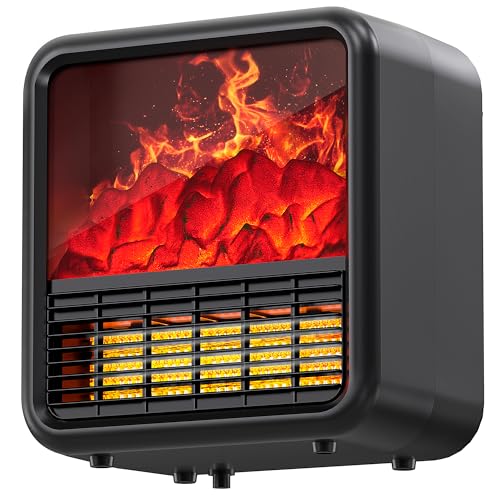
Small Space Heater That Looks Like a Fireplace
A complete guide to finding a compact, stylish heater with realistic flame effects that actually warms your small room — without the mess, venting, or installation of a traditional fireplace.
See Recommended ModelsWhy this matters: If you live in a small apartment, dorm, RV, or a room without a chimney, a full-size fireplace is not an option. A compact fireplace-style space heater gives you the ambiance of a real fire and functional warmth in a footprint smaller than a nightstand. This guide explains exactly how to choose one that fits your space, your heating needs, and your safety requirements.
What Is a Small Space Heater That Looks Like a Fireplace?
A small space heater that looks like a fireplace is a portable or semi-portable electric heating unit designed to mimic the appearance of a traditional fireplace. These units typically feature a simulated flame effect — often created with LEDs, rotating mirrors, or water vapor — combined with a functional heating element. They are engineered for rooms where a built-in fireplace is impractical, such as apartments, bedrooms, offices, basements, and mobile homes.
Unlike traditional fireplace types that require chimneys, gas lines, or professional installation, these compact heaters plug into a standard household outlet. That makes them one of the most practical solutions for small spaces and apartments where permanent modifications are not allowed or not affordable.
The category has grown significantly in recent years. Manufacturers now offer freestanding stove-style units, wall-mounted panels, and even models designed to resemble electric fireplaces that look like wood stoves. The best models combine convincing flame realism with genuinely useful heating performance.
Why Choose a Fireplace-Style Space Heater?
The appeal of these heaters goes beyond aesthetics. Here are the practical reasons why homeowners and renters choose them over conventional space heaters:
No Installation Required
Plug into any standard outlet and you are ready to go. No chimney, no venting, no gas line, no permits. This makes them ideal for renters and anyone who wants a plug-and-play electric fireplace experience.
Ambiance Plus Warmth
Unlike a basic space heater that looks like a plastic box, these units add visual warmth. The flickering flame effect creates a cozy atmosphere that makes a small room feel inviting, especially during winter evenings.
Compact Footprint
Most models are under 20 inches tall and less than 12 inches deep. They fit on desks, nightstands, floors, and even small electric fireplace heater with thermostat configurations that tuck into tight corners.
Zone Heating Efficiency
Instead of heating an entire house, you heat only the room you are using. This is often more energy-efficient than running central heating for a single occupied space. Learn more in our fireplace energy saving tips.
Safe for Rentals
Since no structural changes are needed, you can enjoy a fireplace-like experience without violating lease agreements. Just check your building's rules on portable heaters and follow apartment fireplace installation safety guidelines.
Year-Round Decoration
Many people use the flame effect even when the heater is off, treating the unit as a decorative piece. This is similar to how people use flameless taper candles with flickering flame for ambiance without heat.
How Do These Heaters Work?
Understanding the technology helps you choose the right model. There are two main heating methods used in fireplace-style space heaters, and they perform very differently.
Infrared Quartz Heating
Infrared heaters use quartz tubes to emit infrared radiation. This radiation warms objects and people directly rather than heating the air. The sensation is similar to feeling sunlight through a window. Infrared models are typically silent, which makes them excellent for bedrooms and offices. They also tend to be more gentle on indoor humidity levels.
The trade-off is that infrared heat does not travel as far or circulate as evenly as fan-forced heat. In a small, enclosed room, however, this is rarely a problem. Many premium models combine infrared elements with a subtle fan to improve distribution.
Fan-Forced Heating
Fan-forced heaters use a metal coil or ceramic element and blow air across it with a fan. The warmed air circulates through the room, raising the ambient temperature. These models heat a space faster than infrared units and are better for drafty rooms or rooms with high ceilings.
The downside is noise. Even quiet fans produce some sound, which may be noticeable in a bedroom. Fan-forced models also tend to dry out the air slightly more than infrared models. If noise is a concern, look for units advertised as "quiet" or choose an infrared model.
Flame Effect Technology
The flame effect is separate from the heating system. Most compact units use one of three technologies:
- LED simulation: LEDs illuminate a rotating mirror or reflective surface to create the illusion of dancing flames. This is the most common and affordable method. Quality varies widely — entry-level models can look artificial, while premium models are surprisingly convincing.
- Water vapor (vapor fireplace): A misting system and colored lighting create a flame-like effect using water vapor. These are among the most realistic, as discussed in our guide to most realistic looking electric fireplace inserts.
- 3D holographic: A newer technology that projects a three-dimensional flame image. These are typically found in higher-end units and offer the best realism.
If realism matters to you, prioritize models that use water vapor or 3D holographic effects. If you mainly want warmth with a pleasant visual, LED models are perfectly adequate and generally more energy-efficient.
Heating Capacity: How Much Warmth Do You Need?
The most common mistake buyers make is choosing a heater that is too weak or too powerful for their room. A heater that is too small will run constantly without reaching the desired temperature. A heater that is too large will cycle on and off frequently, wasting energy and creating temperature swings.
Heating capacity is measured in BTU (British Thermal Units) or watts. Most compact fireplace-style heaters operate at either 750 watts (low) or 1,500 watts (high). A 1,500-watt heater produces approximately 5,120 BTU, which is generally sufficient for a well-insulated room up to 400 square feet.
For a more precise calculation based on your room's dimensions, insulation, and climate, see our detailed fireplace heating capacity BTU guide. If you are heating a space larger than 400 square feet, you may need a more powerful unit, such as one of the electric fireplaces that heat up to 1000 square feet.
| Room Size | Recommended Wattage | Approximate BTU | Best Use Case |
|---|---|---|---|
| Up to 150 sq ft | 750W (low) or 1,500W | 2,500 – 5,120 | Bedrooms, offices, bathrooms |
| 150 – 300 sq ft | 1,500W | 5,120 | Small living rooms, dorms, RVs |
| 300 – 400 sq ft | 1,500W (high setting) | 5,120 | Studio apartments, basements |
| 400 – 1,000 sq ft | Dual or larger unit | 5,200+ | Open living areas (may need supplement) |
Keep in mind that these figures assume average insulation and a ceiling height of about eight feet. If your room has large windows, poor insulation, or high ceilings, you may need to size up. For more on this, see our guide on how to size a fireplace, which applies the same principles to portable units.
Key Features to Look For
Not all fireplace-style space heaters are created equal. The following features separate a frustrating purchase from a satisfying one.
Thermostat and Timer
A built-in thermostat allows the heater to cycle on and off automatically to maintain your desired temperature. This is not just a convenience — it is a significant energy saver. Without a thermostat, the heater runs continuously, consuming maximum power and often overheating the room.
A timer is equally useful. You can set the heater to run for one, two, or eight hours and then shut off automatically. This is particularly valuable for bedtime use. Look for models with digital controls and remote operation for the best experience. Our fireplace thermostat guide explains the difference between manual and digital thermostats in more detail.
Safety Features
Safety should be non-negotiable, especially in small spaces where the heater may be close to furniture, curtains, or bedding. The following features are essential:
- Overheat protection: Automatically shuts off the unit if internal temperatures exceed safe limits.
- Tip-over shutoff: Cuts power instantly if the unit is knocked over.
- Cool-touch exterior: Keeps the outer housing safe to touch, important in homes with children or pets.
- ETL or UL certification: Indicates the product has passed independent safety testing. Always verify this before purchasing.
For a deeper look at safety considerations, including carbon monoxide risks (relevant for gas models, not electric), see our guide to whether electric fireplaces produce CO and our furniture distance from fireplace recommendations.
Noise Level
If you plan to use the heater in a bedroom, office, or nursery, noise matters. Infrared models are typically silent because they have no fan. Fan-forced models produce noise ranging from a soft hum to a noticeable whir. Some manufacturers publish decibel ratings; anything under 45 dB is generally considered quiet.
A common complaint among buyers is that a heater is louder than expected. If you are sensitive to sound, prioritize infrared or specifically quiet models. You can also read our fireplace making noise troubleshooting guide for tips on reducing operational sounds.
Flame Realism and Adjustability
The quality of the flame effect varies dramatically across price tiers. Entry-level models often have a repetitive, obviously artificial flicker. Mid-range and premium models offer more organic flame movement, adjustable brightness, and sometimes multiple flame colors.
Some units allow you to operate the flame effect independently of the heater. This means you can enjoy the ambiance in summer without adding heat. This feature is common in freestanding electric fireplaces with crackling sound, which add an auditory dimension to the experience.
Remote Control and Smart Features
A remote control is more than a luxury in a space heater. It lets you adjust settings without getting up, which is especially useful if the unit is placed on the floor or in a corner. Some models offer Wi-Fi connectivity and app control, allowing you to schedule heating and monitor energy use from your phone. See our smart Wi-Fi fireplace controller guide for more on this emerging category.
Realism vs. Heating Performance: Finding the Balance
There is an inherent tension in this product category. The most realistic flame effects — water vapor and 3D holographic — often come in units that prioritize ambiance over raw heating power. Conversely, the most powerful heaters sometimes look the most artificial.
Your priority should guide your choice:
- If ambiance is primary: Choose a water vapor or high-quality LED model. Accept that heating capacity may be moderate. These are best for mild climates or as supplemental heat.
- If heating is primary: Choose a fan-forced or infrared model with a decent but not necessarily perfect flame effect. You will get more reliable warmth.
- If you need both: Look for mid-range and premium models that combine infrared heating with a convincing flame. These tend to be the best all-around choices. Our guide to the most realistic freestanding electric fireplace options covers this balance in detail.
It is also worth noting that some people buy these units purely for decoration, running only the flame effect and using a separate heater for warmth. If that is your plan, you can prioritize realism without worrying about BTU output.
Types of Compact Fireplace Heaters
Fireplace-style space heaters come in several form factors. Each has distinct advantages depending on your space and needs.
Freestanding Stove-Style Heaters
These mimic the look of a wood-burning stove or a small freestanding fireplace. They typically sit on the floor and are often the most powerful option in the compact category. Many feature a realistic log set and a glass front. If you want the look of a stove without the maintenance, an electric fireplace that looks like a wood stove is an excellent choice. For those who prefer a wood-burning aesthetic, there is also the option of a wood burning stove that looks like a fireplace, though those require venting and are not suitable for apartments.
Wall-Mounted Panels
These are flat units designed to be mounted on a wall, similar to a flat-screen TV. They save floor space entirely, which is a major advantage in tiny homes and studios. However, wall-mounted units tend to have lower heating capacity than floor-standing models. They are best for supplemental warmth or ambiance. See our guide to most realistic wall mounted electric fireplace options for more.
Tabletop and Desktop Units
The smallest category. These units are typically under 12 inches tall and are designed for desks, nightstands, or countertops. They provide a small amount of directed warmth and a pleasant flame effect. They are not intended to heat an entire room but can take the chill off a personal workspace. These are similar in concept to small outdoor table with fire pit in the middle, but designed for indoor use.
Corner and Compact Floor Units
Some models are specifically shaped to fit into corners, maximizing space efficiency. These are popular in small living rooms and bedrooms. If you are furnishing a tight space, you may also want to explore corner TV stands with fireplace or electric fireplace TV stands for small spaces that combine heating with media furniture.
Pros and Cons of Fireplace-Style Space Heaters
Like any product, these heaters have trade-offs. Understanding them helps you set realistic expectations.
✅ Advantages
- No installation, venting, or chimney required
- Portable and easy to move between rooms
- Adds ambiance and decorative value
- Safe for apartments and rentals
- Zone heating can reduce energy bills
- Many models operate quietly
- Flame effect can often be used without heat
- Lower upfront cost than built-in fireplaces
⚠️ Limitations
- Heating capacity limited to small rooms
- Fan-forced models can be noisy
- Can dry out indoor air
- Requires a nearby electrical outlet
- Not a replacement for central heating
- Flame realism varies by price tier
- Some cheap models feel flimsy
- Ongoing electricity consumption adds up
The most important limitation to understand is heating capacity. These are zone heaters, not whole-house solutions. For a realistic assessment of what a fireplace can and cannot heat, see our article on whether a fireplace can heat an entire house. Also, be aware that electric heaters do consume significant electricity — our guide to electric vs gas fireplace running costs and are electric fireplaces expensive to run can help you estimate operating expenses.
Safety Considerations for Small Spaces
Small spaces present unique safety challenges. When a heater is close to furniture, bedding, and curtains, the margin for error is thin. Follow these guidelines:
- Maintain clearance: Keep at least three feet of space between the heater and any combustible material. Our furniture distance from fireplace guide provides specific recommendations.
- Never use an extension cord: Space heaters draw high current. Extension cords can overheat and start a fire. Plug directly into a wall outlet.
- Do not use in bathrooms unless rated: Moisture and electricity are a dangerous combination. Only use heaters specifically rated for damp locations.
- Unplug when not in use: Even with safety features, unplugging the unit eliminates all risk when you are away or asleep.
- Check the cord periodically: Look for fraying, discoloration, or warmth. Any of these signs means the unit should be replaced.
- Do not leave unattended for long periods: While many models are designed for extended use, the safest practice is to turn off and unplug the heater when leaving the room for an extended time. For overnight use, see our guide to leaving a fireplace on overnight and sleeping with a fireplace on.
If you have pets or small children, choose a model with a cool-touch exterior and tip-over shutoff. Place the unit where it cannot be easily knocked over. Also, be mindful of fireplace ember safety, though this is more relevant to wood-burning units than electric ones.
Comparison of Popular Compact Fireplace Heater Styles
| Style | Typical Heating | Best For | Space Required | Price Tier |
|---|---|---|---|---|
| Freestanding Stove | 1,500W (5,120 BTU) | Small living rooms, basements | Floor space ~2 sq ft | Mid-range |
| Wall-Mounted Panel | 750W – 1,500W | Tiny homes, studios, offices | No floor space | Entry-level to Mid-range |
| Tabletop / Desktop | 400W – 750W | Desks, nightstands, personal space | 1 sq ft surface | Entry-level |
| Corner Unit | 1,500W | Small living rooms, bedrooms | Corner floor space | Mid-range |
| Vapor / 3D Holographic | 750W – 1,500W | Ambiance-focused spaces | Varies by model | Premium to Luxury |
As a general rule, mid-range models offer the best balance of realism, heating performance, and durability. Entry-level units are suitable for occasional use or very small spaces but may feel less convincing. Premium and luxury models deliver the most realistic flames and often include advanced features like crackling sound and smart controls, as seen in electric fireplaces with crackling sound effects.
Maintenance and Care
Fireplace-style space heaters are low-maintenance, but a few simple habits will keep them running safely and efficiently for years.
- Dust the exterior and vents regularly: Dust buildup can block airflow and cause overheating. Wipe down the unit with a dry or slightly damp cloth.
- Clean the flame effect components: If the unit has a glass front, clean it with a soft cloth and mild glass cleaner. Avoid abrasive materials that can scratch the surface. Our guide to how to clean fireplace glass applies to electric units as well.
- Inspect the power cord: Check for damage before each heating season. Replace the unit if the cord is frayed or the plug is discolored.
- Store properly in off-season: If you do not use the heater in summer, clean it, cover it, and store it in a dry place. See our summer fireplace care tips for more.
- Follow the manufacturer's service schedule: Some units recommend professional inspection every year or two. Our fireplace service frequency guide provides general guidance.
If you notice any of the following, stop using the heater immediately and consult the troubleshooting guide or a professional:
- Burning smell that does not fade after the first use
- Sparkling or arcing from the plug or cord
- Unit does not shut off when it should
- Flame effect flickers erratically or stops working
- Heater trips the circuit breaker repeatedly
For specific issues, refer to our electric fireplace not heating guide, electric fireplace tripping breaker troubleshooting, and electric fireplace buzzing noise solutions.
How to Choose the Right Model for Your Space
Use the following step-by-step approach to narrow down your options:
- Measure your room: Calculate square footage (length × width). This determines the minimum wattage you need.
- Identify your primary goal: Is it ambiance, supplemental heat, or both? This guides your choice between infrared and fan-forced, and between realism-focused and power-focused models.
- Determine placement: Floor, wall, tabletop, or corner? This narrows the form factor.
- Check safety certifications: Look for ETL, UL, or equivalent marks. Avoid uncertified products regardless of price.
- Read real user reviews: Pay attention to comments about noise, flame realism, durability, and customer service. Reviews often reveal issues that specifications miss.
- Verify the return policy: If you are buying online, make sure you can return the unit if it does not meet expectations.
- Consider future needs: If you might move to a larger space, a slightly more powerful unit may be a better long-term investment.
For a broader framework that applies to all fireplace types, see our fireplace buying guide and our beginner-friendly what is a fireplace beginner guide. If you are still deciding between electric, gas, and wood options, our electric vs gas vs wood fireplace comparison and pros and cons of each fireplace type will help.
Frequently Asked Questions
Yes, many models generate between 1,500 and 5,200 BTU, which is sufficient for small rooms up to 400 square feet. Models with infrared quartz heating tend to provide the most consistent warmth, while fan-forced models distribute heat more quickly. The flame effect is decorative, but the heating element is fully functional. The key is to match the heater's capacity to your room size — a 750-watt unit will not adequately heat a 300-square-foot room on a cold day.
Most modern units include overheat protection, tip-over shutoff, and cool-touch exteriors. However, manufacturers generally recommend against leaving any space heater unattended for extended periods. If you plan to use it overnight, choose a model with a timer and thermostat, and keep it at least three feet away from bedding and curtains. Never use an extension cord, and place the unit on a flat, stable surface. If you have doubts, it is always safer to turn the heater off before sleeping.
Infrared quartz heaters warm objects and people directly, similar to sunlight, and operate silently. Fan-forced heaters blow warm air across the room, heating the space faster but producing some noise. For bedrooms and quiet spaces, infrared models are usually preferred. For quick warmth in a drafty room, fan-forced models are more effective. Some premium models combine both technologies for the best of both worlds.
Only if the unit is specifically rated for damp or wet locations. Most standard space heaters are not designed for bathrooms, and using them near water creates a serious shock hazard. For RVs, check the amperage draw and ensure your electrical system can handle the load. Low-wattage models are typically safer for mobile installations. Always follow the manufacturer's guidelines and never exceed the electrical capacity of your RV or bathroom circuit.
Most units operate at 750 watts on low and 1,500 watts on high. Running a 1,500-watt heater for eight hours uses roughly 12 kilowatt-hours. Actual cost depends on your local electricity rate. Using the thermostat and timer functions significantly reduces consumption by cycling the heater on and off as needed. For a detailed breakdown, see our guide to fireplace electricity usage and fireplace daily running cost.
Final Verdict: Is a Small Fireplace-Style Space Heater Right for You?
Choose a fireplace-style space heater if:
- You live in a small apartment, dorm, RV, or room without a chimney
- You want the ambiance of a fire without the maintenance of wood or gas
- You need supplemental heat for a single room, not the whole house
- You value portability and the ability to move the unit between rooms
- You want a plug-and-play solution with no installation
Look elsewhere if:
- You need to heat a space larger than 400 square feet as a primary heat source
- You want the crackle and smell of a real wood fire
- You are unwilling to accept any fan noise (unless choosing infrared)
- You want a permanent, built-in architectural feature
For most people in small spaces, a fireplace-style space heater is a practical, attractive, and affordable way to add warmth and atmosphere. The key is to choose a model that matches your room size, prioritize safety features, and set realistic expectations about heating performance. A mid-range infrared model with a convincing flame effect and a digital thermostat is often the sweet spot for small-space living.
If you are still exploring broader options, our guide to which fireplace is right for your home can help you compare categories. And for those considering a more permanent solution, our overview of built-in vs freestanding fireplace options is a good next step.
View Recommended Models →