Most Realistic Freestanding Electric Fireplace: The Complete Buying Guide
If you want the ambiance of a real fire without the mess, venting, or installation headaches, a freestanding electric fireplace can deliver surprisingly lifelike flames. This guide explains how modern flame technology works, what to look for, and how to choose the most realistic model for your space.
Jump to Buying ChecklistWhy realism matters: Early electric fireplaces looked flat and artificial. Today, premium freestanding models use layered LED projections, reflective ember beds, and randomized flame motion to create a convincing fire-like effect. Understanding these differences helps you avoid disappointing purchases and find a unit that truly enhances your room.
What Is a Freestanding Electric Fireplace?
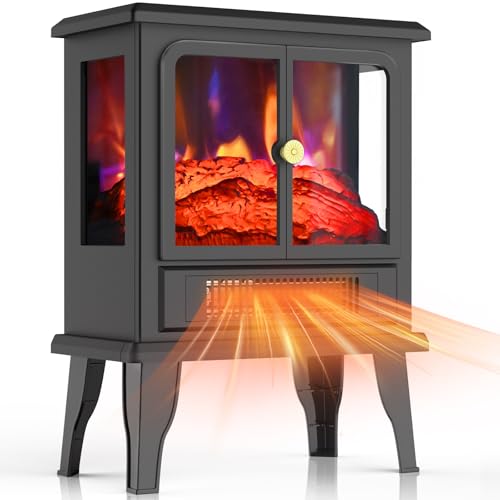
A freestanding electric fireplace is a self-contained unit that plugs into a standard household outlet and does not require a chimney, vent, or gas line. Unlike wall-mounted or built-in models, a freestanding unit stands independently on the floor, often resembling a traditional stove, cabinet, or mantel-style piece of furniture. This makes it an excellent choice for renters, apartments, and homeowners who want flexibility in placement.
Because there is no combustion, these fireplaces produce no smoke, ash, or carbon monoxide. That means you can enjoy the look of a fire in rooms where a real fireplace would be impractical. If you are still comparing broader options, our guide on built-in vs freestanding fireplace explains the trade-offs in detail.
Freestanding models are especially popular in living rooms, bedrooms, and home offices. They can serve as a focal point or as supplemental heating. For smaller rooms, a compact design may be ideal — see our recommendations for a small space heater that looks like a fireplace.
How Realistic Flame Technology Works
The realism of an electric fireplace depends almost entirely on its flame mechanism. Manufacturers use several approaches, and understanding them will help you judge product descriptions more critically.
LED Projection with Reflective Elements
This is the most common method in mid-range and premium freestanding units. A set of LEDs shines onto a rotating drum or mirror, which reflects light onto a translucent screen. The result is a flame that appears to move and flicker. Higher-end versions use multiple light sources and randomized rotation speeds to avoid a repetitive, mechanical look.
Layered Flame and Ember Bed Effects
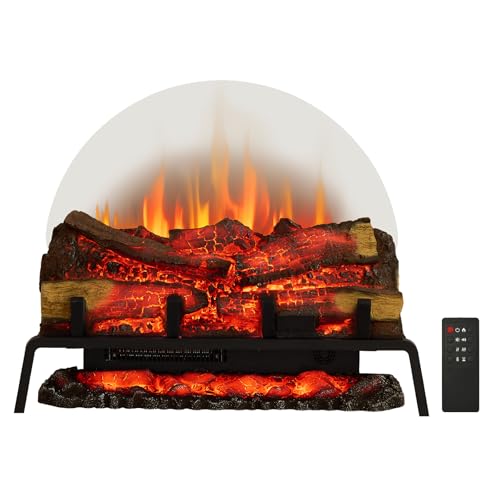
Better models include a separate ember bed with glowing logs or crystals. The flame effect is layered above the ember bed, creating depth. Some units also add a subtle pulsing glow that mimics the dying down and reigniting of real flames. This layering is a strong indicator of a more realistic appearance.
Crackling Sound and Realistic Logs
Sound plays a surprisingly large role in perceived realism. A unit with a crackling sound effect can feel far more authentic than a silent one with the same flame mechanism. Some models also use hand-painted logs or molded ceramic logs with realistic bark texture. If audio ambiance matters to you, look for a model described as a freestanding electric fireplace with crackling sound.
It is worth noting that no electric fireplace is indistinguishable from a real wood fire. However, the best freestanding models come close enough that guests may do a double-take, especially when the room lighting is dim.
Key Features That Affect Realism
When comparing models, focus on these specific features rather than marketing language alone.
- Flame brightness control: Adjustable brightness lets you match the flame intensity to the time of day. A dim, warm glow in the evening often looks more realistic than a bright, constant flame.
- Flame speed variation: Some units allow you to slow down or speed up the flame flicker. Slower, irregular motion tends to look more natural.
- Ember bed realism: Look for glowing logs, faux coal, or crystal embers that are illuminated from below. A dull or poorly lit ember bed is a common giveaway of a lower-tier unit.
- Flame color options: Many modern models offer orange, blue, and multi-color flame settings. While colored flames can be fun, the most realistic look is usually the traditional orange-yellow setting.
- Viewing angle: A fireplace that looks convincing from the front may look flat from the side. If the unit will be visible from multiple angles, check whether the flame effect has depth.
- Glass quality: Tempered glass with minimal distortion enhances the flame appearance. Some premium units use curved glass to add depth.
For a deeper look at how realism compares across electric fireplace styles, see our article on the most realistic looking electric fireplace insert, which covers similar flame technology in insert form.
Heating Performance and Room Fit
Realism is the headline feature, but heating performance is what makes a freestanding electric fireplace practical. Most units use either a fan-forced heater or an infrared quartz heater. Infrared models tend to produce a more gentle, even heat, while fan-forced models circulate air more quickly.
Heating capacity is typically measured in British Thermal Units (BTU) or in square feet of coverage. A common entry-level unit may heat a small room, while a more powerful model can warm a larger living area. If you need to heat a bigger space, explore options designed as an electric fireplace that puts out the most heat.
Key heating considerations:
- Thermostat control: A built-in thermostat lets the unit maintain a consistent temperature instead of running continuously. This is a major convenience feature. See our guide to an electric fireplace with thermostat and blower.
- Flame-only mode: Many units allow you to run the flame without heat. This is useful for ambiance in warmer months.
- Timer and remote: A remote control and programmable timer add convenience and safety.
- Safety features: Overheat protection and cool-touch surfaces are important, especially in homes with children or pets.
If you are unsure how much heat you need, our fireplace heating capacity BTU guide walks through the calculation step by step.
Quality Tiers and What to Expect
Freestanding electric fireplaces generally fall into three broad tiers. Understanding these tiers helps you set realistic expectations without relying on specific prices.
Entry-Level
These units typically offer a basic LED flame effect with limited brightness control. The flame may look somewhat repetitive, and the ember bed is often simple. Heating is usually fan-forced and suitable for smaller rooms. They are a good starting point if you mainly want ambiance on a modest scale.
Mid-Range
Mid-range models step up flame realism with layered effects, better ember beds, and adjustable flame speed. They often include a thermostat, remote control, and multiple flame color options. Heating capacity is generally higher, making them suitable for medium-sized living rooms or bedrooms.
Premium / High-End
Premium freestanding fireplaces focus on maximum realism. They may use advanced projection systems, multiple flame layers, curved glass, and high-quality log sets. Some include crackling sound, smart home connectivity, and refined cabinet finishes. These are the models most likely to be described as the most realistic freestanding electric fireplace options available.
If you prefer a unit with a built-in mantel for a more traditional furniture look, browse our selection of the best freestanding electric fireplace with mantel.
Freestanding vs Other Electric Fireplace Styles
Freestanding units are not the only option. Here is a quick comparison to help you decide whether freestanding is the right format for your home.
| Feature | Freestanding | Wall-Mounted | Built-In / Insert |
|---|---|---|---|
| Installation | Plug and play; no mounting required | Wall bracket required | Requires cabinet or existing fireplace opening |
| Placement flexibility | High — can be moved between rooms | Fixed to one wall | Fixed once installed |
| Realism potential | Very high in premium models | High, but often shallower depth | High, especially with log sets |
| Best for | Renters, apartments, flexible spaces | Modern minimalist rooms | Renovations and permanent focal points |
| Mantel or cabinet options | Common | Rare | Depends on surround |
If you are considering a wall-mounted alternative, our page on the most realistic wall-mounted electric fireplace covers that format in detail. For a contemporary freestanding look, see the contemporary free standing electric fireplace guide.
Buying Checklist
Use this checklist before you commit to a purchase. It covers the factors that matter most for realism, heating, and long-term satisfaction.
- Flame technology: Does the product description mention layered flame effects, LED projection, or adjustable flame speed?
- Ember bed quality: Are the logs or embers illuminated and detailed, or flat and dull?
- Sound effect: Does it include crackling audio, and can the volume be adjusted or muted?
- Heating capacity: Is the BTU or square-foot coverage suitable for your room size?
- Thermostat: Does it have a built-in thermostat for consistent temperature control?
- Flame-only mode: Can you run the flames without heat during warmer months?
- Remote and timer: Are these included, and are they easy to use?
- Safety: Does it have overheat protection and cool-touch exterior surfaces?
- Dimensions: Will the unit fit your space without overwhelming the room?
- Assembly: How much setup is required, and are tools needed?
For a broader framework, our fireplace buying guide covers the full decision process from room assessment to final selection.
Common Mistakes to Avoid
Many buyers focus only on the flame image in online listings, then feel disappointed when the unit arrives. Here are the most common pitfalls.
- Judging realism from a single photo: Photos are often taken in dark rooms with enhanced contrast. Look for video demonstrations when possible.
- Ignoring the ember bed: A great flame with a weak ember bed still looks artificial. The ember bed anchors the fire visually.
- Overlooking noise: Fan-forced heaters can be louder than expected. If the fireplace will be in a bedroom or office, check noise level reviews.
- Underestimating size: A freestanding unit that looks compact online may dominate a small room. Measure your space first.
- Forgetting about clearance: Even though electric fireplaces are safer than combustion models, they still need space around them for airflow and safety. See our guidance on furniture distance from fireplace.
- Assuming all electric fireplaces are cheap to run: Running costs depend on wattage and usage. Our article on whether electric fireplaces are expensive to run breaks this down.
If you are comparing electric against other fuel types, the electric vs gas vs wood fireplace comparison offers a side-by-side look at cost, convenience, and ambiance.
Frequently Asked Questions
Are freestanding electric fireplaces realistic enough to fool guests?
Do freestanding electric fireplaces require any venting or chimney?
Can I use a freestanding electric fireplace in an apartment?
How much heat can a freestanding electric fireplace produce?
Do electric fireplaces produce carbon monoxide?
What is the lifespan of a freestanding electric fireplace?
How do I maintain a freestanding electric fireplace?
Can a freestanding electric fireplace be used as the main heat source?
For more general questions, visit our fireplace FAQ hub.