Portable Propane Fire Pits for Camping: The Complete Guide
Discover how a portable propane fire pit can transform your camping experience with instant warmth, safe operation, and hassle-free setup—even when campfires are restricted.
Start ReadingWhy Choose a Portable Propane Fire Pit for Camping?
Camping is all about connecting with nature, but that doesn't mean you have to sacrifice comfort or convenience. A portable propane fire pit for camping offers the warmth and ambiance of a traditional campfire without the smoke, sparks, or the time-consuming task of gathering and lighting firewood. Whether you're an RV enthusiast, a tent camper, or a tailgater, these devices have become an essential piece of outdoor gear for good reason.
Unlike traditional wood-burning fire pits, propane models are often permitted during fire bans because they don't produce embers or open flames that can escape. This makes them a reliable choice in regions prone to dry conditions. They also offer instant heat, adjustable flame control, and a much cleaner burn. If you're new to the world of fireplaces and heating appliances, our beginner's guide to fireplaces can provide helpful foundational knowledge.
Key Benefit: A portable propane fire pit can be used in many areas where open wood fires are prohibited, making it a versatile and responsible choice for campers who want to enjoy a fire without violating local regulations.
How Do Portable Propane Fire Pits Work?
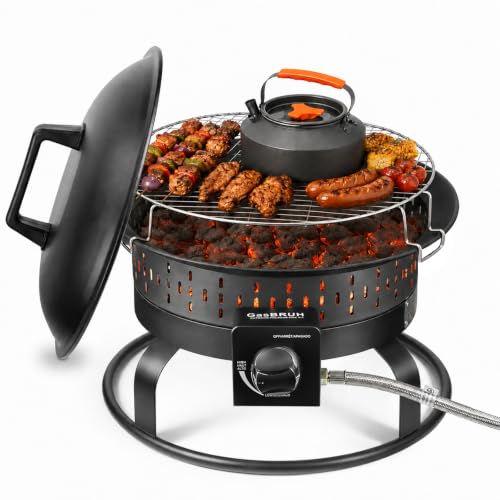
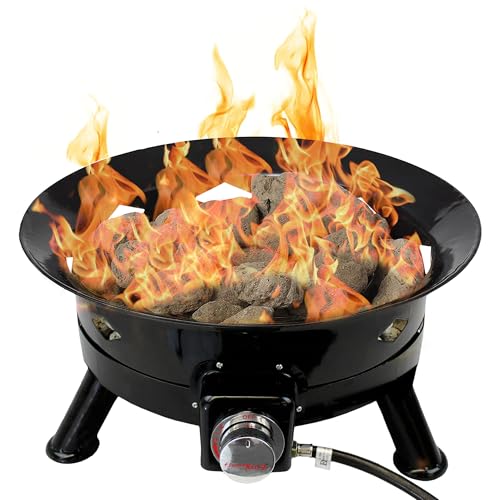
At its core, a portable propane fire pit is a simple yet effective appliance. It connects to a propane tank—either a small 1-pound disposable cylinder or a larger refillable tank via a hose—and uses a burner system to create a controlled flame. The flame is typically diffused through a bed of lava rocks, ceramic logs, or glass beads, which helps to mimic the look of a real fire and distribute heat evenly.
Most models feature an ignition system, which can be manual (push-button) or electronic (battery-powered). The flame height is usually adjustable, allowing you to go from a low, romantic flicker to a roaring fire for warmth. Some high-end models even include a thermostat or remote control for added convenience. For those interested in comparing different fuel types, our article on electric vs gas vs wood fireplaces offers a broader perspective on heating options.
Types of Portable Propane Fire Pits for Camping
Not all portable fire pits are created equal. The right choice depends on your camping style, the amount of space you have, and the features you value most.
1. Tabletop Fire Pits
These are the smallest and most portable options. They are designed to sit on a picnic table or a small stand, making them perfect for compact campsites or balconies. They typically use 1-pound propane cylinders and are ideal for ambiance rather than serious heat output. If you're looking for a space-saving heating solution for your home, you might also explore options like a small corner electric fireplace heater.
2. Freestanding Fire Pits
These are larger, often bowl-shaped units that come with legs or a base. They offer more heat and a more substantial flame. Many freestanding models are designed to be used with a standard 20-pound propane tank, which can be connected via a hose. They are a popular choice for car camping and RV trips. For those who appreciate the look of a traditional stove, a freestanding electric fireplace that looks like a wood-burning stove can bring similar charm indoors.
3. Low-Profile Fire Pits
These are designed to be low to the ground, providing a more traditional campfire experience. They are often lighter and easier to pack than freestanding models, but they may not provide as much heat. They are a great option for backpackers who want a small, packable fire solution.
4. Fire Pit Tables
These are multi-functional units that combine a fire pit with a table. They are excellent for tailgating or camping trips where you want a surface for drinks and snacks while enjoying the fire. They are generally bulkier and heavier, so they are best suited for car camping or RV use.
Comparison: Portable Propane Fire Pit Types
To help you visualize the differences, here is a comparison of the main types based on key characteristics. Remember that quality tiers—entry-level, mid-range, and premium—can affect performance and durability within each category.
| Feature | Tabletop | Freestanding | Low-Profile | Fire Pit Table |
|---|---|---|---|---|
| Portability | Excellent | Good | Very Good | Fair |
| Heat Output | Low | High | Medium | Medium-High |
| Fuel Source | 1 lb cylinder | 1 lb or 20 lb tank | 1 lb cylinder | 20 lb tank |
| Best For | Ambiance, small spaces | Warmth, group gatherings | Backpacking, minimal gear | Tailgating, luxury camping |
| Typical Tier | Entry-level to Mid-range | Mid-range to Premium | Entry-level | Premium to Luxury |
Key Features to Look For
When shopping for a portable propane fire pit, pay attention to these features to ensure you get the best value for your needs:
- BTU Rating: This indicates heat output. Higher BTUs mean more heat. For camping, a range of 30,000 to 60,000 BTUs is common. For a deeper dive into heating capacity, see our guide to fireplace heating capacity and BTU.
- Ignition Type: Push-button ignition is standard and reliable. Electronic ignition is more convenient but requires a battery.
- Materials: Look for stainless steel or powder-coated steel for durability and rust resistance.
- Safety Features: An automatic shut-off valve (thermocouple) is crucial. It cuts the gas supply if the flame goes out. Also, look for a sturdy base and cool-touch handles.
- Included Accessories: Many kits come with lava rocks, a cover, and a hose/regulator for a 20-pound tank. Some may include a carry bag.
- Portability: Consider the weight and whether it has a carrying handle or folds down.
Safety and Maintenance Tips
Safety should always be your top priority when using any propane appliance. Here are some essential guidelines:
- Always use outdoors: Never use a propane fire pit inside a tent, RV, or any enclosed space. Carbon monoxide is a silent killer. For more on this, read about signs of carbon monoxide from fireplaces.
- Check for leaks: Before each use, apply soapy water to the connections. If bubbles form, you have a leak. Tighten or replace the hose.
- Keep away from flammables: Maintain a safe distance from tents, awnings, and dry vegetation. Our article on how close furniture can be to a fireplace offers guidance that can be adapted for camping.
- Store propane properly: Keep cylinders upright and in a well-ventilated area. Never store them in a hot vehicle.
- Clean regularly: Wipe down the unit and inspect the burner for blockages. For general maintenance principles, see our outdoor fireplace maintenance tips.
Pro Tip: A portable propane fire pit is a great alternative to a traditional campfire, but it's not a toy. Always follow the manufacturer's instructions and local fire regulations.
Setting Up Your Camping Fire Pit
Setting up a portable propane fire pit is usually a quick process. Here's a general overview:
- Find a level, stable surface away from overhanging branches and flammable materials.
- If using a 20-pound tank, connect the hose and regulator. Hand-tighten only.
- If using a 1-pound cylinder, screw it into the regulator.
- Check for leaks with soapy water.
- Add lava rocks or other media as instructed.
- Turn on the gas supply slowly and press the igniter. Adjust the flame to your desired level.
- When finished, turn off the gas supply and allow the unit to cool completely before packing it away.
For those who enjoy a more permanent outdoor setup at home, exploring options like a concrete block outdoor fireplace can be a rewarding DIY project.
Frequently Asked Questions
Can I use a portable propane fire pit on a wooden deck?
Yes, but you must place a heat-resistant barrier underneath it to protect the deck from heat damage. Always check the manufacturer's guidelines and local fire codes.
How long does a 1-pound propane cylinder last?
On a low setting, a 1-pound cylinder might last 1-2 hours. On high, it could be less than an hour. For longer trips, a 20-pound tank is more economical and practical.
Are propane fire pits allowed during fire bans?
In many jurisdictions, propane fire pits are permitted during fire bans because they have a controlled flame and no embers. However, you must always check with local authorities before use.
Do portable propane fire pits produce smoke?
No, they produce very little to no smoke. This is one of their main advantages over wood-burning fires, making them ideal for campers with respiratory issues or those who dislike the smell of smoke.
Can I cook on a portable propane fire pit?
Most are not designed for cooking, but some models come with a cooking grate or are compatible with one. If cooking is a priority, look for a model specifically designed for it, or consider a dedicated stainless steel fire pit cooking grate.
Ready to Elevate Your Camping Experience?
A portable propane fire pit is a game-changer for any camper. Enjoy instant warmth, a beautiful flame, and peace of mind, all without the hassle of wood.
Browse Recommended Models