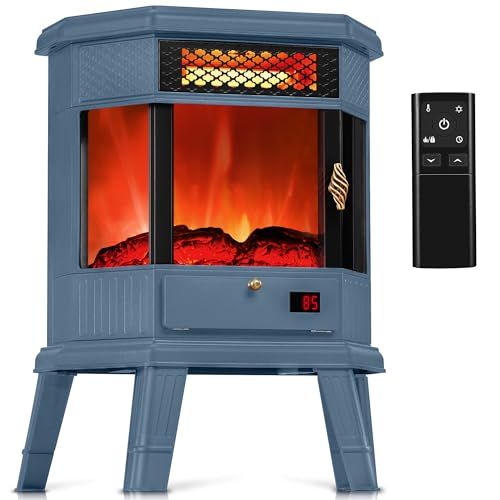
Small Corner Electric Fireplace Heater: The Complete Guide
Maximize warmth and style in tight spaces. Learn how corner electric fireplace heaters work, what to look for, and how to choose the perfect model for your small room.
See Recommended ModelsWhy a corner electric fireplace heater? In small apartments, bedrooms, and compact living rooms, floor space is precious. A corner unit tucks neatly into unused angles, delivers focused warmth, and adds ambiance without the venting, chimney, or installation headaches of gas and wood alternatives.
What Is a Small Corner Electric Fireplace Heater?
A small corner electric fireplace heater is a compact, freestanding or wall-mounted unit designed to fit into the corner of a room. Unlike traditional fireplaces, it requires no chimney, no gas line, and no venting. It plugs into a standard household outlet and uses electricity to generate both flame effects and supplemental heat.
These units typically measure between 12 and 36 inches in width and produce heat output ranging from 750 to 1,500 watts — enough to warm a small room, den, bedroom, or office. Many models offer dual heat settings, adjustable thermostats, and flame-only modes for year-round ambiance.
If you are still exploring your options, our guide on fireplaces for small spaces covers a broader range of space-saving solutions. For a wider look at how electric units compare to other fuel types, see our breakdown of fireplace types.
How Does a Corner Electric Fireplace Heater Work?
Understanding the mechanics helps you evaluate what you are buying. Here is the basic process:
1. Electricity powers a heating element. Most units use either a fan-forced heater or an infrared quartz element. Fan-forced models blow warm air into the room; infrared models radiate heat directly to objects and people nearby.
2. A blower or fan distributes the heat. The internal fan pushes air across the heating element and out into the room. This is why you feel warmth quickly when standing near the unit.
3. Flame effects operate independently. The LED or water-vapor flame display can run without heat, so you can enjoy the look of a fire in summer without adding warmth. This is a key advantage over gas and wood fireplaces.
4. Safety features regulate operation. Overheat protection, tip-over switches, and auto shut-off timers are common. These features make electric units among the safest fireplace options for households with children or pets.
For a detailed explanation of heating capacity and how many BTU you need, see our BTU guide. If you are wondering whether an electric fireplace can actually heat a room, our article on whether electric fireplaces heat a room answers that directly.
Key Features to Look For
Heating Capacity
Look for 1,500W models for rooms up to 400 sq ft. Lower-wattage units suit bedrooms and offices where supplemental warmth is enough.
Thermostat Control
An adjustable thermostat lets you set a target temperature instead of cycling manually. Digital thermostats offer more precision than dial types.
Flame-Only Mode
Runs the flame effect without heat. Essential if you want ambiance in warmer months without adding unwanted warmth.
Timer & Remote
Auto shut-off timers add safety and convenience. A remote control lets you adjust settings from across the room.
Safety Certifications
Look for UL or ETL certification. Overheat protection and tip-over shut-off are standard on quality units.
Corner Fit & Clearance
Measure your corner angle and available floor or wall space. Most units need 12–36 inches of width and a few inches of clearance.
Quality Tiers: What to Expect at Each Level
Rather than quoting prices, it helps to understand what different quality tiers offer. This classification focuses on build quality, features, and longevity.
| Tier | Build & Materials | Features | Best For |
|---|---|---|---|
| Entry-Level | Lightweight MDF or basic metal frame; simpler flame mechanism | Basic on/off heat, manual dial, limited flame settings | Occasional use, guest rooms, tight budgets |
| Mid-Range | Sturdier construction, better flame realism, improved fan | Digital thermostat, remote control, timer, multiple flame brightness levels | Daily use in living rooms and bedrooms |
| Premium | Solid wood or high-grade metal, realistic log sets, quiet blower | Smart home integration, crackling sound, adjustable flame color, precise thermostat | Primary heating in small spaces, design-focused rooms |
Mid-range models typically offer the best balance of realism, durability, and features for most households. Entry-level units work well for occasional use, while premium models justify their higher position with quieter operation, smarter controls, and more convincing flame displays.
For those who want to understand how electric running costs compare to gas, our article on electric vs gas running costs provides a side-by-side analysis. You can also explore whether electric fireplaces are expensive to run for a focused cost breakdown.
Pros and Cons of Corner Electric Fireplace Heaters
Advantages
- No venting, chimney, or gas line required
- Space-saving corner design frees up floor area
- Installation is plug-and-play in most cases
- Flame effect works year-round without heat
- Safe for apartments, rentals, and condos
- Lower installation cost compared to gas or wood
- Portable options can be moved between rooms
Limitations
- Heats only small areas, not whole homes
- Requires a nearby electrical outlet
- Flame realism varies by model tier
- Higher-tier models needed for quiet operation
- Not a substitute for central heating in cold climates
- Some entry-level units have short lifespans
How to Size a Corner Electric Fireplace Heater
Getting the size right ensures you get enough heat without overwhelming a small room. Here is a simple approach:
Step 1: Measure your room. Multiply length by width to get square footage. A 10 ft × 12 ft room is 120 sq ft.
Step 2: Estimate BTU needs. A rough rule is 20 BTU per square foot for average insulation. A 120 sq ft room needs roughly 2,400 BTU. Most 1,500W electric fireplaces produce about 5,100 BTU, which comfortably covers rooms up to 400 sq ft.
Step 3: Match wattage. 750W is suitable for small bedrooms and offices. 1,500W suits living rooms and open areas. Many units offer both settings.
Step 4: Check corner dimensions. Measure the width and depth of your corner. Ensure the unit fits without blocking walkways, outlets, or furniture.
For a deeper dive into sizing calculations, see our fireplace sizing guide. If you are working with an open-concept layout, our article on sizing for open concept rooms explains how to adjust your approach.
Installation: What to Expect
One of the biggest advantages of electric corner fireplaces is ease of installation. Here is what the process typically involves:
Freestanding models: Place the unit in the corner, plug it into a standard outlet, and turn it on. No tools required. These are ideal for renters and anyone who wants flexibility.
Wall-mounted models: Most come with a mounting bracket and require basic tools. You will need to locate a stud or use appropriate anchors. Some models can be recessed into the wall for a flush look.
Electrical considerations: Most units run on standard 120V household current. Avoid using extension cords for extended periods, and do not overload the circuit. If you plan to run the heater on high regularly, consider a dedicated circuit.
For a complete walkthrough, see our plug-and-play installation guide. If you are comparing installation methods, our article on wall-mounted vs insert vs freestanding breaks down the differences. Renters should also check our guide on apartment fireplace installation.
Maintenance and Care
Electric fireplaces require far less maintenance than gas or wood units, but a few simple habits keep them running efficiently:
Dust the vents regularly. Use a vacuum brush attachment or a soft cloth to remove dust from intake and exhaust vents. Blocked vents reduce heating efficiency and can trigger overheat protection.
Clean the glass or screen. A microfiber cloth lightly dampened with water is usually enough. Avoid harsh chemicals that could damage the finish.
Inspect the cord and plug. Check for fraying, discoloration, or loose connections. Replace damaged cords immediately.
Store properly in off-season. If you pack the unit away, cover it to prevent dust buildup and store it in a dry place.
Our electric fireplace maintenance guide covers these steps in more detail. For troubleshooting common issues, see our article on what to do when your electric fireplace is not heating.
Safety Considerations
Electric fireplaces are generally considered safe, but responsible use matters:
Keep clearance around the unit. Do not place furniture, curtains, or bedding within a few feet of the heater. Follow the manufacturer's clearance recommendations.
Use the timer. If you tend to fall asleep with the heater on, set the auto shut-off timer. This is especially important in bedrooms.
Supervise children and pets. The exterior of most units stays relatively cool, but the front grille and heating element area can get warm. A safety gate or barrier helps in households with curious toddlers.
Do not use in damp areas. Unless the unit is specifically rated for bathroom or outdoor use, keep it in dry, indoor spaces.
For more on safe operation, see our articles on leaving a fireplace on overnight and whether electric fireplaces produce carbon monoxide. Our guide on how close furniture can be to a fireplace also provides practical clearance advice.
Corner Electric vs Other Small Fireplace Options
How does a corner electric heater compare to other compact fireplace types?
vs. Flat-wall electric fireplaces: Corner units use otherwise wasted space and create a natural focal point. Flat-wall models require more available wall length. See our comparison of built-in vs freestanding fireplaces for related guidance.
vs. Gas fireplaces: Gas offers higher heat output and a real flame, but requires venting, a gas line, and professional installation. For small rooms, electric is often more practical.
vs. Wood fireplaces: Wood provides unmatched ambiance but needs a chimney, regular cleaning, and fuel storage. Not suitable for apartments or most small rooms.
vs. Portable space heaters: A corner electric fireplace does everything a space heater does while also serving as a design feature. The trade-off is a higher upfront position in the market compared to basic heaters.
For a broader comparison, see our article on electric vs gas vs wood fireplaces and our guide on pros and cons by type. If you are evaluating whether a fireplace fits your home, our article on which fireplace is right for your home walks through the decision process.
Buying Checklist
Before You Buy, Confirm These Details:
- Measure your corner space: width, depth, and height clearance
- Calculate room square footage to determine BTU needs
- Confirm a nearby electrical outlet is available
- Decide between freestanding, wall-mounted, or recessed
- Check for thermostat control and flame-only mode
- Verify safety certifications (UL, ETL)
- Consider noise level if the unit will be in a bedroom or office
- Review warranty length and customer support reputation
- Confirm return policy in case the flame realism or heat output does not meet expectations
Who Is This For?
Apartment dwellers: No permanent installation, no venting, and no landlord approval needed in most cases.
Homeowners with small rooms: Bedrooms, home offices, reading nooks, and basements benefit from focused, efficient warmth.
Renters: Portable and plug-in models move with you when you relocate.
Anyone wanting ambiance without commitment: Electric models offer the look of a fire without the maintenance, fuel, or safety concerns of combustion.
If you are considering a fireplace primarily for heating rather than ambiance, our guide on the best fireplace for actual heating provides a focused analysis. Our article on whether a fireplace can heat an entire house also clarifies realistic expectations.
Frequently Asked Questions
Yes. Most models produce between 1,500 and 5,100 BTU, which is enough to warm a small room of up to 400 square feet. They work best as supplemental zone heaters rather than primary whole-home heating systems. For a detailed explanation, see our guide on whether electric fireplaces heat a room.
Most manufacturers allow placement on carpet as long as the unit has adequate clearance and stable footing. Always check the specific manual, and never block the air intake or exhaust vents. If you are concerned about stability, a small heat-resistant mat underneath can help.
Many modern units include overheat protection and auto shut-off timers. However, for maximum safety, use the timer function rather than leaving it running unattended for extended periods. Our article on sleeping with a fireplace on covers this topic in more detail.
A typical unit draws 750 to 1,500 watts. Running it on the low setting costs roughly the same as running a standard space heater, and flame-only mode uses a fraction of that power. See our article on fireplace electricity usage for a full breakdown.
In most cases, no. Plug-in and freestanding electric fireplaces are considered appliances, not permanent fixtures. However, if you plan to hardwire a wall-mounted unit or modify electrical wiring, check local building codes. Our guide on fireplace permit requirements provides more context.
With proper care, most quality electric fireplaces last 10 to 20 years. Entry-level units may have shorter lifespans, while premium models with better components and construction tend to last longer. Our article on fireplace lifespan covers what affects longevity.
Ready to Find the Perfect Corner Electric Fireplace Heater?
Browse our curated selection of recommended models below. Each one is chosen for its balance of heating performance, corner fit, and value.
View Recommended Models