Outdoor Recessed Electric Fireplace: The Complete Guide
Everything you need to know about choosing, installing, and enjoying a recessed electric fireplace for your patio, porch, or outdoor living space.
What You'll Learn
- What Is an Outdoor Recessed Electric Fireplace?
- Why Choose a Recessed Electric Fireplace for Outdoors?
- Types of Outdoor Recessed Electric Fireplaces
- Weather Resistance and Safety Ratings
- Installation Guide for Outdoor Recessed Units
- Sizing and Placement Considerations
- Key Features to Look For
- Maintenance and Care
- Frequently Asked Questions
What Is an Outdoor Recessed Electric Fireplace?
An outdoor recessed electric fireplace is a heating and ambiance unit designed to be built into a wall, column, or custom structure in an outdoor living area. Unlike freestanding models that sit on the floor or a table, a recessed unit is installed so that its face sits flush with the surrounding surface, creating a clean, architectural look that blends seamlessly with your outdoor design.
These fireplaces use electricity to generate both flame effects and, in many cases, supplemental heat. Because they do not burn fuel, they produce no smoke, no ash, and no harmful exhaust. This makes them suitable for covered patios, screened porches, gazebos, and other outdoor spaces where a traditional wood or gas fireplace would be impractical or unsafe.
The recessed design is particularly popular in modern outdoor kitchens and living rooms because it saves floor space and allows the fireplace to serve as a focal point without interrupting the flow of the area. If you are still exploring the broader category, our guide to outdoor fireplaces covers all fuel types and installation styles.
Why Choose a Recessed Electric Fireplace for Outdoors?
Homeowners choose recessed electric models for outdoor spaces for several compelling reasons. Understanding these benefits will help you decide whether this type of fireplace is right for your patio or porch project.
No Venting or Chimney Required
Because electric fireplaces do not produce combustion byproducts, they need no chimney, flue, or vent. This dramatically simplifies installation and reduces cost compared to gas or wood-burning alternatives. You can install a recessed electric unit in locations where running a gas line or building a chimney would be impossible or prohibitively expensive. For a deeper dive into venting requirements, see our article on whether fireplaces need a chimney.
Clean and Convenient Operation
There is no fuel to store, no ash to clean, and no fire to tend. You simply plug the unit in or connect it to a hardwired circuit, and it is ready to use. Many models include remote controls, thermostats, and programmable timers, allowing you to enjoy warmth and ambiance at the touch of a button. This convenience is a major advantage for outdoor entertaining, where you want to focus on your guests rather than managing a fire.
Design Flexibility
Recessed electric fireplaces come in a wide range of sizes, flame styles, and trim options. You can choose a linear unit for a sleek, modern look, a traditional insert style for a classic feel, or a see-through model to divide two outdoor spaces. Because they are electric, you can install them on walls, columns, or even outdoor kitchen islands. If you are considering a larger outdoor remodel, our covered patio with fireplace and kitchen guide offers inspiration.
Safe for Enclosed Outdoor Spaces
Since electric fireplaces produce no carbon monoxide or other combustion gases, they are safe to use in screened porches and covered patios with limited airflow. This makes them a popular choice for homeowners who want the ambiance of a fireplace without the safety concerns of gas or wood. Our article on whether electric fireplaces produce CO explains this in more detail.
Types of Outdoor Recessed Electric Fireplaces
Not all recessed electric fireplaces are the same. Understanding the different types will help you select the right model for your outdoor space.
Linear Recessed Electric Fireplaces
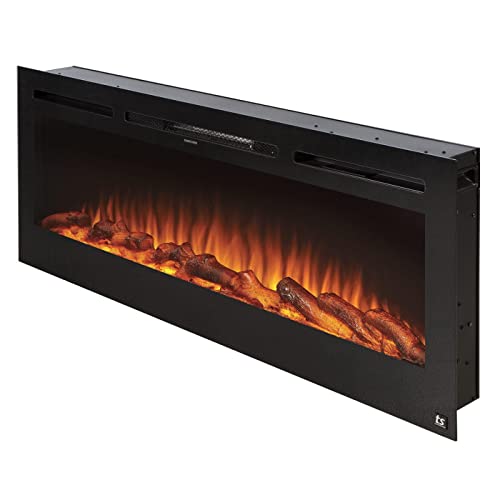
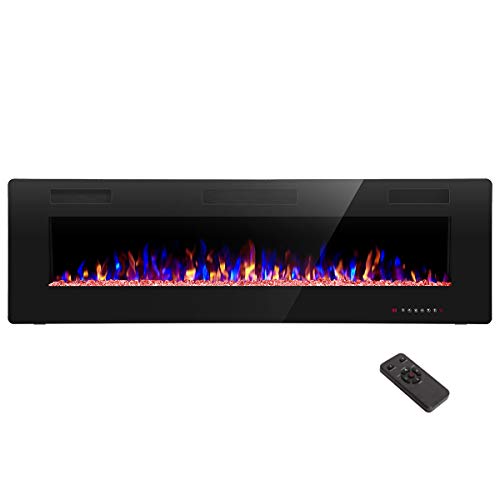
Linear models feature a wide, narrow flame bed that creates a modern, minimalist look. They are typically installed horizontally and are available in widths ranging from compact units suitable for small patios to extra-long models that can span an entire wall. Linear fireplaces are often chosen for contemporary outdoor living rooms and outdoor kitchens.
Traditional Recessed Electric Fireplaces
Traditional models mimic the look of a classic wood-burning fireplace, with a more square or rectangular firebox and realistic log sets. They are a good choice for homeowners who want a cozy, familiar aesthetic on a screened porch or covered patio. Many traditional recessed units include adjustable flame brightness and ember bed options.
See-Through and Double-Sided Models
See-through or double-sided recessed electric fireplaces allow you to enjoy the flames from two sides. They are ideal for dividing an outdoor living area from an outdoor kitchen, or for creating a dramatic focal point in a gazebo or pergola. These models are installed into a partition wall and require careful planning to ensure both sides are finished properly.
Wall-Mounted vs. Fully Recessed
It is important to distinguish between wall-mounted and fully recessed units. A wall-mounted electric fireplace hangs on the surface of the wall, while a recessed unit is built into the wall cavity. For outdoor applications, fully recessed models generally provide a more polished, built-in appearance and are less likely to be damaged by wind or accidental contact. Our comparison of wall-mounted vs insert vs freestanding fireplaces explains the differences in detail.
Weather Resistance and Safety Ratings
The single most important factor when choosing an outdoor recessed electric fireplace is whether it is rated for outdoor use. Standard indoor electric fireplaces are not designed to withstand moisture, temperature swings, or UV exposure. Installing an indoor unit outdoors can void the warranty and create a safety hazard.
Understanding IP Ratings
Outdoor electric fireplaces are typically rated using the Ingress Protection (IP) system. This two-digit rating indicates how well the unit is protected against dust and water. For outdoor use, look for a minimum rating of IP44, which means the unit is protected against solid objects larger than 1mm and water splashes from any direction. Higher ratings such as IP55 or IP65 offer even greater protection and are suitable for more exposed locations.
Materials and Construction
Outdoor-rated units are built with corrosion-resistant materials such as stainless steel, powder-coated steel, and weather-treated composites. The glass front should be tempered and sealed to prevent moisture ingress. If you are installing the fireplace into a masonry or stone structure, consider using heat-resistant stone for fireplaces and heat-resistant mortar to ensure the surround can handle temperature fluctuations.
Electrical Safety Outdoors
All outdoor electrical installations must comply with local building codes and should be performed by a licensed electrician. Ground fault circuit interrupter (GFCI) protection is typically required for outdoor outlets. If you are hardwiring the fireplace, ensure the circuit is properly grounded and protected. For more information on installation requirements, see our fireplace installation guide overview.
Installation Guide for Outdoor Recessed Units
Installing a recessed electric fireplace outdoors is a project that requires careful planning. While some homeowners choose to do it themselves, professional installation is recommended for hardwired units and for any installation that involves modifying a structural wall.
Step-by-Step Installation Overview
- Choose the location. Select a wall or structure that is protected from direct rain and has access to electrical power. Ensure the location is visible from your main seating area.
- Verify dimensions. Measure the rough opening required by the fireplace manufacturer. This includes the width, height, and depth of the recess. Add a small clearance margin for framing and finishing.
- Prepare the opening. If you are building a new wall or structure, frame the opening according to the manufacturer's specifications. If you are retrofitting an existing wall, carefully cut the opening and reinforce the framing as needed.
- Run electrical power. For plug-in models, install a weatherproof outdoor outlet within reach of the power cord. For hardwired models, have a licensed electrician run a dedicated circuit to the fireplace location. Always use GFCI protection.
- Install the fireplace. Slide the unit into the opening and secure it according to the manufacturer's instructions. Check that the unit is level and that the face is flush with the surrounding surface.
- Finish the surround. Complete the wall or structure around the fireplace using materials suitable for outdoor use. This may include stone, tile, stucco, or weather-resistant wood. Seal all gaps to prevent water intrusion.
- Test the unit. Before finalizing the installation, plug in or turn on the fireplace to verify that the flame effects and heater are working properly. Check for any unusual noises or odors.
DIY vs. Professional Installation
Plug-in models can often be installed by a competent DIYer, especially if the wall opening is already prepared. However, hardwired installations and any work that involves cutting into a structural wall or running new electrical circuits should be handled by a professional. Our article on DIY vs professional fireplace installation can help you decide which approach is right for your skills and situation.
Permits and Codes
Many municipalities require a permit for outdoor electrical work and for modifications to decks, porches, or patios. Check with your local building department before starting your project. Our guide to fireplace permit requirements provides a general overview, but always confirm with your local authority.
Sizing and Placement Considerations
Choosing the right size for your outdoor recessed electric fireplace is about balancing aesthetics, heat output, and the proportions of your space. A unit that is too small will look lost on a large wall, while one that is too large can overwhelm a small patio.
Matching the Fireplace to Your Space
As a general guideline, the fireplace should occupy roughly 25% to 40% of the wall width where it is installed. For a typical covered patio wall measuring 10 feet wide, a 30-inch to 48-inch fireplace is usually appropriate. For larger outdoor living rooms, linear models up to 60 inches or more can serve as a dramatic focal point.
Heat Output and BTU Ratings
Most outdoor recessed electric fireplaces produce between 1,500 and 5,000 BTUs. This is sufficient to take the chill off a covered patio in mild weather but is not intended to replace a full outdoor heating system in cold climates. If you plan to use the fireplace for meaningful heat, consider a higher-BTU model and ensure your patio is enclosed or well-protected. For a detailed explanation of heating capacity, see our BTU guide.
Placement Tips
- Position the fireplace at eye level or slightly below for comfortable viewing from seating areas.
- Avoid placing the fireplace directly under a ceiling fan or air conditioning vent, which can interfere with heat distribution.
- If installing a TV above the fireplace, maintain the recommended clearance and consult our guide on TV above fireplace safety.
- For outdoor kitchens, consider a see-through model that can be enjoyed from both the cooking and dining areas.
Wall Construction Considerations
Recessed fireplaces require a cavity deep enough to accommodate the unit. Most models require a depth of 6 to 12 inches, depending on the size and heater capacity. If you are building a new outdoor wall, plan the framing accordingly. If you are retrofitting an existing wall, verify that there is enough space behind the finished surface. For more on wall construction, see our article on fireplace wall ideas.
Key Features to Look For
When comparing outdoor recessed electric fireplaces, focus on the features that matter most for outdoor use. The following checklist will help you evaluate different models.
Flame Realism and Effects
Modern electric fireplaces use LED lighting and reflective materials to create realistic flame effects. Some models offer multiple flame colors, adjustable brightness, and even crackling sound effects. Higher-end models tend to have more convincing flames and more customization options. Our article on the most realistic-looking electric fireplace inserts explores this in depth.
Heating Capacity
Look for a model with a heater that is appropriate for your climate and the size of your space. Many outdoor recessed fireplaces offer dual heat settings (high and low) and a flame-only mode for use in warm weather. Some models include a thermostat for automatic temperature control.
Controls and Connectivity
Remote controls are standard on most quality models. Some fireplaces also offer smartphone app control, voice assistant integration, and programmable timers. If you plan to integrate the fireplace into a smart home system, look for Wi-Fi or Bluetooth connectivity. Our guide to smart Wi-Fi fireplace controllers covers this topic.
Build Quality and Materials
Outdoor fireplaces should be constructed from corrosion-resistant materials. Stainless steel and powder-coated steel are common choices. The glass should be tempered and sealed. Check the warranty to see what is covered and for how long—a longer warranty typically indicates a more durable product.
Safety Features
Look for features such as automatic shut-off, overheat protection, and cool-touch glass. These are especially important in outdoor settings where children and pets may be present. Our electric fireplace inspection guide provides tips on checking safety features.
Quick Comparison: Entry-Level vs Mid-Range vs Premium Outdoor Recessed Electric Fireplaces
| Feature | Entry-Level | Mid-Range | Premium |
|---|---|---|---|
| Flame Realism | Basic LED effects, limited color options | Multi-color flames, adjustable brightness | Highly realistic flames, crackling sound, customizable ember bed |
| Heating Output | 1,500–2,500 BTUs | 2,500–4,000 BTUs | 4,000–5,000+ BTUs, dual-zone heating |
| Weather Resistance | IP44 or basic outdoor rating | IP44–IP55, corrosion-resistant materials | IP55+ or IP65, marine-grade stainless steel |
| Controls | Manual switches, basic remote | Remote with thermostat, timer | Smart app, voice control, programmable schedules |
| Build Quality | Standard steel, 1-year warranty | Powder-coated steel, 2–3 year warranty | Stainless steel, 3–5 year warranty, premium components |
| Best For | Occasional use, mild climates, budget-conscious buyers | Regular use, year-round enjoyment, balanced value | Frequent use, harsh climates, high-end outdoor living spaces |
Maintenance and Care
Outdoor recessed electric fireplaces require less maintenance than gas or wood-burning units, but they still need regular care to perform well and last. The following maintenance routine will help keep your fireplace in good condition.
Routine Cleaning
- Glass front: Wipe with a soft, damp cloth and a mild glass cleaner. Avoid abrasive cleaners that can scratch the surface. Our guide to cleaning fireplace glass provides detailed instructions.
- Exterior surfaces: Dust and wipe down the surround and trim regularly. For stainless steel, use a stainless steel cleaner to maintain the finish.
- Vents and air intakes: Keep vents free of dust, leaves, and debris. A soft brush or vacuum with a brush attachment works well. See our article on cleaning an electric fireplace for more tips.
Seasonal Maintenance
Before the outdoor entertaining season begins, inspect your fireplace for signs of wear or damage. Check the power cord for cracks or fraying, test the remote control, and verify that the heater is working properly. If you live in a region with harsh winters, consider covering the fireplace or installing it in a location that is protected year-round. Our seasonal maintenance checklist covers tasks for every season.
When to Call a Professional
If you notice unusual noises, a burning smell, or a heater that is not producing adequate warmth, turn off the unit and consult a qualified electrician or the manufacturer. Do not attempt to repair a hardwired fireplace yourself. Our electric fireplace maintenance guide covers common issues and when to seek help.
Storing for Winter
If your outdoor fireplace is in an exposed location and you live in a cold climate, consider covering it during the off-season. A waterproof cover will protect it from snow, ice, and debris. If the unit is plug-in, you may also want to unplug it and store the remote control indoors.
Frequently Asked Questions
Ready to Transform Your Outdoor Space?
Explore our top-rated outdoor recessed electric fireplaces below. Whether you are looking for a compact unit for a small porch or a large linear model for a sprawling patio, we have options to suit every outdoor living area.
View Recommended Fireplaces