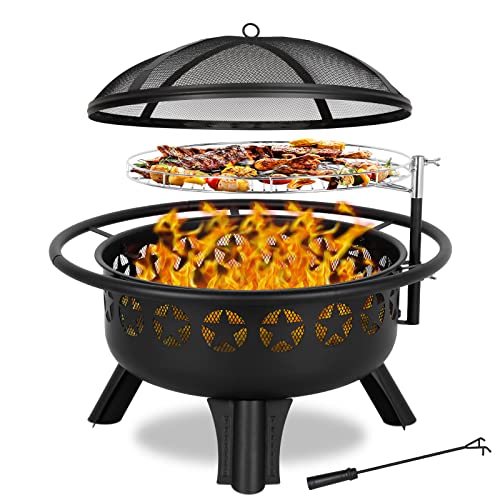
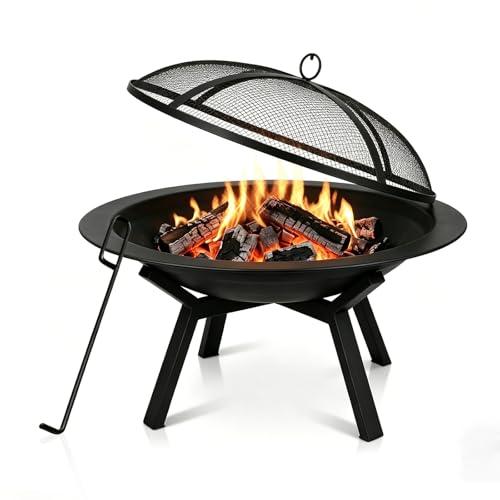
Large Outdoor Wood Burning Fire Pit: The Ultimate Buying Guide
Everything you need to know about choosing a large outdoor wood burning fire pit — sizing, materials, safety, and maintenance — so you can create the perfect gathering spot in your backyard.
A large outdoor wood burning fire pit is more than just a source of warmth — it is the heart of your outdoor living space. It draws people together, extends your patio season well into the cooler months, and adds a timeless, elemental beauty that no gas or electric unit can fully replicate. If you have been searching for a fire feature that delivers authentic crackling flames, generous heat output, and a genuine campfire atmosphere, a wood burning model is likely the right choice.
However, the market is crowded with options that vary wildly in build quality, material durability, and smoke management. This guide walks you through every critical decision — from sizing and placement to safety clearances and long-term care — so you can buy with confidence and enjoy your fire pit for years.
🔥 Key Takeaways
- Size matters: A large fire pit (36–48 inches) comfortably serves 6–10 people and produces significantly more heat than standard models.
- Material determines lifespan: Steel, cast iron, and stone each offer different trade-offs between durability, weight, and aesthetics.
- Smoke management is key: Smokeless designs and proper airflow reduce smoke irritation without sacrificing the wood-burning experience.
- Safety first: Maintain a minimum of 10 feet of clearance from structures and never use a wood fire pit on a wooden deck without a heat shield.
- Maintenance is simple: Regular ash removal and a seasonal cover are often all you need to keep your fire pit in top condition.
Why Choose a Large Wood Burning Fire Pit?
While gas and electric fire pits offer convenience, wood burning models remain the preferred choice for homeowners who value authenticity and ambiance. The crackle of burning logs, the earthy aroma, and the radiant heat that reaches deep into your bones are experiences that simply cannot be replicated artificially.
Beyond ambiance, a large wood burning fire pit offers practical advantages. It can serve as a primary heat source for an outdoor gathering area, allowing you to host dinners and conversations comfortably even when temperatures drop. For those who also enjoy cooking outdoors, many models accept a grill grate or swing-arm cooking attachment — a feature you can explore in our guide to the outdoor fire pit with cooking grate.
If you are still weighing wood against other fuel types, our comparison of electric vs gas vs wood fireplace options provides a broader framework that applies equally well to outdoor fire features.
✔ Pros of Wood Burning
- Authentic crackling flames and natural aroma
- Highest heat output among fire pit types
- No fuel lines, tanks, or electrical connections
- Can be used for cooking with the right accessories
- Works during power outages
✘ Cons of Wood Burning
- Requires dry firewood storage and replenishment
- Produces ash that must be disposed of
- More smoke than gas or electric alternatives
- Needs consistent cleaning and seasonal care
For homeowners who want the look of a built-in structure rather than a portable unit, a free standing outdoor wood burning fireplace or a wood outdoor fireplace with chimney may be a better fit, as these designs direct smoke upward and away from seating areas.
How to Size a Large Outdoor Wood Burning Fire Pit
The term "large" is relative, but in the fire pit industry, a large model generally has a bowl diameter between 36 and 48 inches. This size range comfortably accommodates 6 to 10 people seated around the perimeter and produces enough radiant heat to warm an area of roughly 15 to 20 feet in diameter.
When selecting a size, consider three factors: the number of people who will regularly gather around it, the dimensions of your patio or yard, and the local burn regulations in your area. Some municipalities restrict open burning based on fire pit diameter or distance from property lines.
| Fire Pit Size | Typical Diameter | Best For | Seating Capacity |
|---|---|---|---|
| Small | 24–30 inches | Intimate settings, small patios, apartments | 2–4 people |
| Medium | 30–36 inches | Average family use, standard backyards | 4–6 people |
| Large | 36–48 inches | Entertaining, large patios, group gatherings | 6–10 people |
| Extra-Large | 48+ inches | Commercial use, expansive outdoor areas | 10+ people |
If your outdoor space is limited but you still want the look and feel of a larger unit, consider placement in a corner or along a wall to maximize usable area. Our article on fireplace in the corner of the room discusses similar spatial strategies that translate well to outdoor layouts.
For a more rigorous approach to matching heat output with room or patio size, the principles in our fireplace heating capacity BTU guide apply directly to outdoor fire pits as well — larger areas simply require more radiant output.
Choosing the Right Material for Durability
The material of your fire pit determines not only its appearance but also its lifespan, weight, and maintenance requirements. Here are the most common options for large outdoor wood burning models.
Steel
Steel is the most popular material for large fire pits due to its balance of durability, heat resistance, and relatively manageable weight. Entry-level steel models may use thinner gauge metal, while premium and luxury units often feature heavy-gauge corten steel that develops a protective rust patina over time.
Cast Iron
Cast iron offers exceptional heat retention — it continues radiating warmth long after the fire has died down. However, cast iron fire pits are extremely heavy and require protection from moisture to prevent cracking. They are best suited to permanent installations.
Stone and Concrete
Natural stone and cast concrete fire pits deliver a permanent, architectural look that integrates beautifully with landscaping. They are typically the heaviest option and may require professional installation. For a rustic, built-in aesthetic, explore our guide on building your own outdoor fireplace, which covers masonry techniques that apply to fire pit construction as well.
| Material | Durability | Weight | Maintenance | Best For |
|---|---|---|---|---|
| Powder-Coated Steel | Mid-Range | Moderate | Low — touch up paint as needed | Portable use, flexible placement |
| Corten Steel | Premium | Moderate to Heavy | Very Low — self-protecting patina | Modern aesthetics, long-term outdoor use |
| Cast Iron | Premium | Very Heavy | Moderate — rust prevention required | Permanent placement, maximum heat retention |
| Natural Stone | Luxury | Very Heavy | Low — occasional sealing | Built-in landscaping features |
| Cast Concrete | Mid-Range | Heavy | Low — inspect for cracks annually | Contemporary designs, uniform finish |
If your fire pit is part of a broader outdoor living build, you may also want to consider how it coordinates with other hardscaping materials. Our guide on heat resistant stone for fireplaces discusses stone types that perform well under repeated thermal cycling.
Smokeless vs Traditional Wood Burning Fire Pits
One of the most common complaints about wood burning fire pits is smoke. Traditional designs rely on natural convection, which often sends smoke directly into the faces of anyone seated nearby. Smokeless fire pits solve this problem through a double-wall design that pre-heats air and injects it into the fire at the top of the burn chamber, creating a secondary combustion that consumes most smoke particles before they escape.
The result is a fire that produces significantly less smoke, burns more efficiently, and requires less wood to maintain. If you are curious about the mechanics, our article on smokeless fire pit how does it work explains the science in detail.
Smokeless models are generally classified in the mid-range to premium tiers due to their more complex construction. Stainless steel versions tend to be more durable in coastal or humid environments — see our coverage of stainless steel smokeless fire pits for specific considerations.
If you are interested in reducing smoke output without switching to a full smokeless design, using properly seasoned hardwood and ensuring adequate airflow from below the fire are the two most effective traditional remedies. Our guide on wood pellets for smokeless fire pit explores an alternative fuel option that burns cleaner than traditional logs in many setups.
Placement, Safety, and Local Regulations
Proper placement is critical for both safety and enjoyment. A large wood burning fire pit should be positioned on a non-combustible surface such as concrete, brick, stone, or compacted gravel. Never place a wood burning fire pit directly on a wooden deck, dry grass, or mulched garden bed unless the unit includes a heat shield and the manufacturer explicitly approves such placement.
Clearance Guidelines
- 10 feet minimum from any structure, fence, or overhead branch
- 3 feet minimum from combustible furniture or decor
- 20 feet recommended from property lines in many jurisdictions
- Never under a covered patio or awning unless specifically rated for such use
Before purchasing, check with your local fire department or municipal office regarding burn bans, permit requirements, and seasonal restrictions. Our detailed guide on fireplace permit requirements covers the general framework that applies to outdoor fire features as well.
For additional safety guidance that applies to all fire features, see our articles on how close furniture can be to a fireplace and fireplace ember safety. Both contain principles that translate directly to outdoor fire pit use.
If you are building a dedicated outdoor cooking and gathering area, our guide on outdoor covered patio with fireplace and kitchen offers layout ideas that incorporate fire features safely into covered structures.
Maintenance for Long-Term Performance
A large outdoor wood burning fire pit is a long-term investment, and basic maintenance will keep it performing well for many seasons.
Routine Care
- Ash removal: Wait at least 48 hours after the last fire, then dispose of ash in a metal container. Our ash removal & disposal guide covers safe handling in detail.
- Bowl inspection: Check for rust, cracks, or burn-through, especially in steel models. Touch up powder coating as needed.
- Coverage: Use a fitted cover when the fire pit is not in use to prevent water accumulation and debris buildup.
- Seasonal deep clean: At the start and end of each burning season, scrub the interior and inspect welds and fasteners.
Our broader outdoor fireplace maintenance guide expands on these practices and includes a seasonal checklist you can adapt to any outdoor fire feature.
If you store firewood outdoors, proper storage is essential to keep fuel dry and ready to burn. See our recommendations for outdoor firewood storage waterproof solutions that protect your wood supply from the elements.
Off-Season Care
When the burning season ends, clean the fire pit thoroughly, apply a protective coating if recommended by the manufacturer, and store portable units in a dry location. For permanent installations, a waterproof cover is sufficient. Our summer fireplace care article, while focused on indoor units, includes principles that apply to off-season outdoor fire feature maintenance as well.
Ready to Find Your Perfect Fire Pit?
Browse our curated selection of large outdoor wood burning fire pits, tested and rated for durability, heat output, and ease of use.
View Recommended Models ↓Frequently Asked Questions
For a family of six, a fire pit with a bowl diameter of 36 to 40 inches is ideal. This size provides comfortable seating for six adults with room to spare, and it produces enough heat to keep everyone warm on a cool evening. If you frequently host larger groups, consider stepping up to a 44- or 48-inch model.
Only if the fire pit is specifically rated for deck use and includes a heat shield or stand that elevates the fire bowl sufficiently above the deck surface. Even then, always place a non-combustible mat underneath and maintain at least 3 feet of clearance from railings and combustible furniture. When in doubt, place the fire pit on a concrete or stone patio instead. See our fireplace ember safety guide for more detail.
Heat output depends on the size of the fire, the type and dryness of the wood, and the fire pit's design. A large wood burning fire pit with a good load of seasoned hardwood can radiate comfortable warmth in a 15- to 20-foot diameter circle. Smokeless designs tend to burn hotter and more efficiently than traditional open bowls. Our fireplace heating capacity BTU guide explains the underlying principles.
Hardwoods such as oak, maple, hickory, and ash are excellent choices because they burn hot, produce long-lasting coals, and generate less creosote. Avoid softwoods like pine and cedar for regular burning, as they burn quickly and produce more sparks and smoke. Always use seasoned wood with a moisture content below 20 percent. Our wood pellets for smokeless fire pit guide covers an alternative fuel option.
Three strategies work best: (1) use only dry, seasoned hardwood; (2) ensure adequate airflow by keeping the fire elevated on a grate and not overloading the bowl; and (3) consider a smokeless fire pit design, which uses secondary combustion to consume smoke particles. Our article on smokeless fire pit how does it work explains the technology in detail. If smoke is blowing into your home, you may also be experiencing a downdraft issue — see our guide on how to stop fireplace downdraft for related solutions.
Permit requirements vary widely by municipality. Some jurisdictions require a permit for any permanent fire feature, while others only regulate open burning during certain seasons. Portable fire pits typically have fewer restrictions. Always check with your local fire department or building authority before purchasing or installing. Our fireplace permit requirements guide provides a general framework for understanding these regulations.
With proper care, a high-quality steel or cast iron fire pit can last 10 to 15 years or more. Corten steel and stone models may last even longer. Entry-level models with thinner metal may need replacement after 5 to 7 years of regular use. The key factors are material thickness, protective coatings, and whether the unit is covered when not in use.
Yes, many large wood burning fire pits are designed to accept cooking accessories such as grill grates, skewers, or swing-arm grills. Look for models that explicitly support cooking or offer compatible accessories. Our guide on outdoor fire pit with cooking grate covers the options in detail. Always use a dedicated cooking grate and never cook directly over treated or painted wood.
Final Thoughts
A large outdoor wood burning fire pit is one of the most rewarding investments you can make in your outdoor living space. It transforms a patio or backyard from a place you pass through into a destination where family and friends gather, relax, and connect. By understanding the factors that matter most — size, material, smoke management, safety, and maintenance — you can choose a fire pit that not only looks beautiful but also serves your needs for years to come.
Whether you are drawn to the rugged simplicity of a corten steel bowl, the timeless appeal of cast iron, or the architectural presence of a stone design, there is a large wood burning fire pit that fits your space and your style. Use the recommendations above, check your local regulations, and prepare to enjoy countless evenings around the fire.
For more guidance on selecting and caring for fire features of all types, explore our fireplace buying guide and our fireplace FAQ.