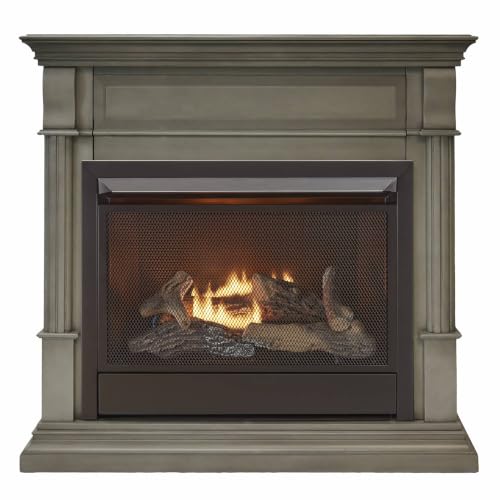
Gas Fireplace Inserts with Blower and Remote Control
Transform your inefficient open fireplace into a powerful, convenient, and stylish heat source. Discover how a gas insert with a blower and remote can redefine your home comfort.
View Top RecommendationsWhy Upgrade? An open masonry fireplace is charming but notoriously inefficient, often sending more heat up the chimney than into your room. A modern gas insert with a blower and remote control is the ultimate solution, converting your existing fireplace into a high-efficiency heating appliance that is both beautiful and practical.
What Exactly Is a Gas Fireplace Insert with a Blower and Remote?
A gas fireplace insert is a self-contained unit designed to fit inside your existing fireplace opening. Unlike a traditional open fire, it's a sealed system that burns natural gas or propane with remarkable efficiency. When you combine this with a blower (a fan that circulates heated air into the room) and a remote control, you get a heating solution that is powerful, convenient, and easy to use. It's a complete upgrade for any home with an existing, underperforming fireplace.
This combination directly addresses the biggest drawbacks of a traditional fireplace: low heat output, high energy waste, and manual operation. By choosing a model with a blower, you ensure the heat generated is pushed into your living space rather than being lost. The remote control adds a layer of modern convenience, allowing you to adjust the flame height, fan speed, and even thermostat settings from across the room. For those considering a full replacement, it's helpful to understand the fireplace cost breakdown and compare it with the long-term savings of a high-efficiency insert.
Key Benefits of Choosing a Gas Insert with Blower and Remote
Upgrading to a modern gas insert is a decision that pays off in comfort, convenience, and efficiency. Here are the primary advantages you can expect:
Superior Heating Efficiency
A sealed combustion chamber and a heat exchanger allow these units to achieve efficiency ratings of 70% or higher, compared to the 10-20% of a traditional open fireplace. The blower is crucial for distributing this heat effectively.
Ultimate Convenience
No more hauling wood, cleaning up ash, or struggling to light a fire. With a remote control, you can start, stop, and adjust the fire and fan from the comfort of your sofa. Some models even offer thermostatic control.
Cleaner and Safer
Gas inserts burn cleanly, producing very little ash or creosote. They are also a safer option for households with children or pets, as the fire is completely enclosed behind a glass front.
Enhanced Aesthetics
Modern inserts feature incredibly realistic flames, glowing embers, and ceramic logs that mimic the look of a real wood fire, without the mess. They can dramatically improve the look of any room.
For a deeper dive into how these units compare to other options, you can read our guide on electric vs gas vs wood fireplaces. This will help you determine if a gas insert is the right fireplace for your home.
How to Choose the Right Gas Insert for Your Home
Selecting the perfect gas insert involves a few key considerations. Getting these right ensures you end up with a unit that heats effectively and fits your space perfectly.
1. Sizing and BTU Output
The size of the insert must match your existing fireplace opening. More importantly, its heating capacity (measured in BTU) must be appropriate for the room's size. A unit that's too powerful will cycle on and off frequently, while one that's too small won't heat the space adequately. Our guide on how to size a fireplace and our BTU guide can help you calculate your needs.
2. Venting Options
Most modern gas inserts are "direct vent," meaning they draw combustion air from outside and exhaust fumes directly outside through a sealed pipe system. This makes them highly efficient and safe. Some models are "ventless" or "vent-free," which do not require an external vent but have specific installation and safety requirements. A ventless model, like a ventless gas fireplace insert with a glass front, can be a good option if you cannot install a vent. However, be aware of the differences by checking our guide on whether you need a chimney or vent.
3. The Importance of a Blower
The blower is not just an accessory; it's a critical component for maximizing the insert's heating potential. It circulates air around the hot firebox and pushes it into the room. Without a blower, much of the heat can remain trapped near the unit. A model like a gas fireplace insert with blower and thermostat offers the best of both worlds: powerful heat distribution and automated temperature control.
4. Features: Remote Control and Thermostat
A remote control is a standard feature on most premium models. It allows for easy operation of the flame, fan, and heat output. For a more advanced setup, consider a unit with a smart Wi-Fi fireplace controller, which lets you control your fireplace from your smartphone. This is perfect for pre-heating a room before you arrive home.
Installation and Maintenance Considerations
While a professional installation is always recommended, understanding the process helps you plan. Installing a gas insert is more complex than a plug-and-play electric unit. It requires a gas line connection, proper venting, and electrical work for the blower and remote receiver.
Professional installation ensures the unit is vented correctly, which is critical for safety and performance. The cost to install a gas fireplace in an existing fireplace can vary, but it's an investment that adds value and comfort to your home. You can learn more by checking our resources on gas fireplace installation requirements and the cost to install a gas fireplace in an existing fireplace.
Regular maintenance is minimal but important. It's wise to have the unit professionally serviced annually to check for leaks, clean the burner, and inspect the venting. For a complete overview, refer to our gas fireplace maintenance guide. If your insert ever won't light or has a weak flame, a service technician can diagnose the issue quickly.
Frequently Asked Questions (FAQ)
Can I install a gas insert in my old wood-burning fireplace?
Yes, this is the most common application. A gas insert is designed to fit into an existing masonry or prefabricated wood-burning fireplace. In some cases, a gas fireplace insert for a wood-burning fireplace may require a stainless steel liner, but many modern direct-vent models come with a flexible venting kit that makes installation straightforward.
Do gas fireplace inserts with a blower require electricity?
Yes, most do. The blower, remote control receiver, and often the ignition system require electricity to operate. It's important to know if you can use a gas fireplace without electricity, as some models have a battery backup for ignition during a power outage, but the blower will not function.
Are gas inserts more efficient than a traditional fireplace?
Absolutely. A traditional open fireplace is very inefficient, with up to 90% of heat escaping up the chimney. A modern gas insert with a blower and sealed combustion chamber can be 70-90% efficient, making it a far more effective and economical way to heat your home.
How do I know what size gas insert I need?
First, measure your fireplace opening (width, height, and depth). Then, calculate the BTU requirement based on your room's square footage and insulation. Our fireplace sizing worksheet & checklist can guide you through the process step-by-step.
Ready to Upgrade Your Home's Comfort?
A gas fireplace insert with a blower and remote control is more than just a home improvement project; it's an upgrade to your lifestyle. It transforms a drafty, inefficient fireplace into a source of reliable, clean, and convenient warmth. The combination of high efficiency, ease of use, and beautiful design makes it one of the best investments for any home with an existing fireplace.
Take the next step by exploring our curated selection of top-rated models below. Your perfect fireplace is waiting to be discovered.
See Recommended Models