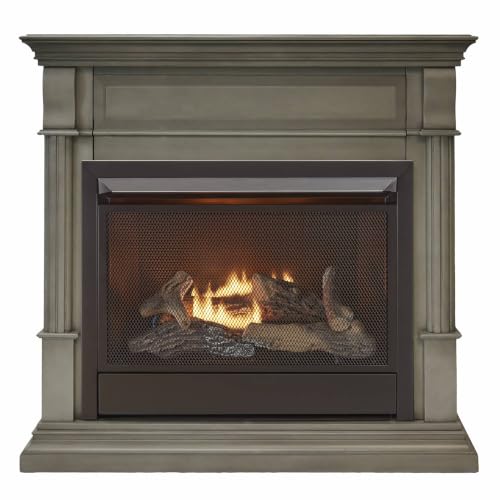
Gas Fireplace Insert with Blower and Remote
Discover how a gas insert with a blower and remote control can transform your existing fireplace into an efficient, convenient, and beautiful heat source. This guide covers everything you need to know before you buy.
View Recommended ModelsWhy Upgrade to a Gas Insert with Blower & Remote? If you have an old, inefficient wood-burning fireplace, a gas insert is a smart modernization. Adding a blower and remote control takes it to the next level: the blower circulates heat effectively, while the remote gives you effortless control from across the room. This combination delivers the perfect blend of efficiency, convenience, and ambiance.
What Exactly Is a Gas Fireplace Insert?
A gas fireplace insert is a self-contained unit designed to fit inside your existing masonry or prefabricated wood-burning fireplace. Unlike a gas log set, which is mainly decorative, an insert is a sealed combustion system that acts as a powerful space heater. It typically includes a firebox, a burner, artificial logs or stones, and a heat exchanger. When you add a blower (a fan that pushes heated air into the room) and a remote control, you get a fully automated, high-efficiency heating appliance.
This type of insert is an excellent solution for homeowners who want to improve the performance of a drafty fireplace without a major renovation. To understand how it compares to other options, see our guide on which fireplace is right for your home. It's also a popular choice for those considering replacing a wood-burning fireplace with gas.
Key Benefits of a Blower and Remote Combination
🔥 Superior Heating Efficiency
Without a blower, much of the heat from a gas insert can get trapped inside the firebox or escape up the chimney. A blower actively circulates warm air into your living space, dramatically improving the unit's heating capacity. This can make a mid-range insert perform like a premium model. For more details, see our fireplace blower fan guide.
📱 Ultimate Convenience
A remote control lets you turn the fireplace on, adjust the flame height, and set the thermostat without leaving your seat. This is especially useful for elderly individuals or anyone who wants instant comfort. It's a standard feature on most modern mid-range and high-end models. Learn about smart Wi-Fi fireplace controllers for even more automation.
💨 Improved Air Quality
Because a gas insert is a sealed system, it doesn't draw air from your home for combustion. This means no drafts, no smoke, and no creosote. It also produces fewer emissions than a traditional wood fire. See our guide on gas fireplace pros and cons by type for a deeper analysis.
💰 Long-Term Savings
An efficient gas insert with a blower can reduce your reliance on your central heating system, potentially lowering your energy bills. While the upfront cost of a premium model is higher, the long-term savings can be significant. Check our article on which fireplace saves money long-term.
How to Choose the Right Gas Insert for Your Home
Selecting the perfect model involves several key decisions. Here are the most important factors to consider:
1. Venting Options: Direct Vent vs. Ventless
Your choice of venting is critical. Direct vent inserts use a sealed pipe to pull in outside air and exhaust combustion gases, making them safe for almost any home and very efficient. Ventless (or vent-free) inserts burn gas so cleanly they don't require a chimney, but they release some moisture and are not allowed in all states or on all homes. For a detailed breakdown, read our article on ventless vs vented fireplaces.
2. Heating Capacity and BTU
Fireplace heating power is measured in BTUs (British Thermal Units). The right size depends on your room's square footage and insulation. A common mistake is buying an oversized unit, which can make the room uncomfortably hot. Use our heating capacity BTU guide to calculate your needs precisely.
3. Blower and Remote Features
Most quality inserts come with a blower, but check if it's a standard feature or an add-on. Variable-speed blowers are best as they let you control the fan noise and heat output. The remote should offer more than just on/off—look for models that can control flame height, fan speed, and thermostat settings. If you need to replace an old remote, you can find a guide on fireplace remote control replacement.
4. Sizing and Installation
You need to measure your existing fireplace opening carefully to ensure the insert will fit. Most inserts are designed to fit standard dimensions, but it's always best to consult a professional. While some advanced DIYers can handle it, professional installation is often required for gas line hookup and venting. Our DIY vs professional fireplace installation article can help you decide.
Direct Vent vs. Ventless Inserts: A Quick Comparison
| Feature | Direct Vent Insert | Ventless Insert |
|---|---|---|
| Installation | Requires exterior wall or chimney for venting. More complex. | No venting required. Can be placed in almost any room with a gas line. |
| Air Quality | Sealed system. Uses outside air for combustion. Excellent indoor air quality. | Releases heat and moisture into the room. May slightly reduce oxygen levels. |
| Efficiency | Very high. Does not lose heat through a chimney in the same way as a traditional fireplace. | Extremely high (up to 99%). Almost all heat is transferred into the room. |
| Regulations | Generally permitted everywhere. | Restricted or banned in some states and municipalities due to indoor air quality concerns. |
| Best For | Homeowners who want the best safety and air quality, and have an exterior wall available. | DIY-friendly installations in homes with a gas line but no easy access for venting. |
For a more detailed look at specific models, you might want to review natural gas ventless fireplace inserts or direct vent gas inserts with blower.
Maintenance and Troubleshooting Tips
To keep your gas insert running smoothly and safely, regular maintenance is essential. This includes cleaning the glass, inspecting the burner, and checking the pilot light. A blower also requires occasional dusting to prevent overheating. For a full checklist, see our gas fireplace maintenance guide.
If you encounter issues, common problems include the fireplace not lighting, a weak flame, or strange smells. Our gas fireplace won't light guide and fireplace smells like gas article can help you troubleshoot. If your blower stops working, refer to our guide on fireplace blower fan not working.
Frequently Asked Questions
Yes, this is one of the most common uses for a gas insert. The insert is designed to fit into the existing firebox and can be vented through the existing chimney with a liner. This is a great way to improve efficiency and reduce maintenance. Learn more in our guide on gas fireplace inserts for wood-burning fireplaces.
While not strictly necessary, a blower is highly recommended. Without one, a gas insert primarily heats the room through radiant heat, which is less effective. A blower circulates the heated air, making the unit far more capable of heating a larger space. It significantly improves the return on your investment.
Yes, you can often purchase a replacement remote. Many manufacturers offer universal remotes or specific replacements for their models. You can find more information in our article on remote control not working (the principles are similar for gas remotes).
The cost of a gas insert and installation varies widely based on the unit's quality tier, the complexity of the venting, and local labor rates. For a breakdown of what to expect, see our article on the cost of a gas fireplace insert and installation.
Ready to Upgrade Your Fireplace?
Now that you understand the benefits of a gas insert with blower and remote, you're ready to explore specific models. Our recommended list below features top-performing options for every home and need.
See Our Top Picks