Freestanding Wood Stove with Blower: The Complete Guide
A freestanding wood stove with a blower combines old-world charm with modern heating efficiency. This guide covers everything you need to know — from how blowers work to sizing, installation, and choosing the right model for your home.
Why a Blower Matters: A wood stove without a blower relies on natural convection to distribute heat. Adding a blower — also called a fan — actively pushes warm air into your room, dramatically improving heat distribution and reducing the time it takes to warm a space.
If you are researching the best way to heat your home with wood, this guide will help you understand exactly what a freestanding wood stove with blower offers and how to choose wisely.
What Is a Freestanding Wood Stove with Blower?
A freestanding wood stove is a self-contained heating appliance that burns wood logs to produce heat. Unlike a fireplace insert, which is installed inside an existing fireplace opening, a freestanding stove stands independently — either on its own legs, a pedestal, or a base — and connects to a chimney or stovepipe.
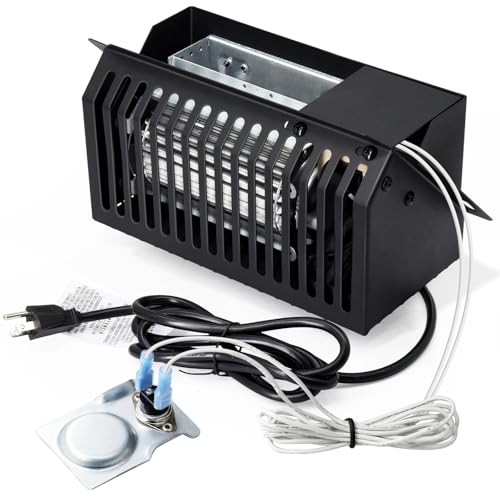
When you add a blower, the stove gains a significant advantage. The blower is a fan assembly mounted at the back or bottom of the stove. It draws cooler air from the room, passes it over the hot heat exchanger surfaces of the stove, and pushes warmed air back into the room. This forced-air circulation makes the stove far more effective at heating larger areas compared to a purely radiant model.
Many modern freestanding stoves come with blowers pre-installed or as optional add-ons. If you already own a stove without one, you may be able to add an aftermarket blower — though it is important to match the blower to your stove model for safety and performance. For a broader look at how blowers work and how to install one, see our guide on installing a fireplace blower and the differences between a blower vs fan.
How a Wood Stove Blower Works
Understanding the mechanics helps you appreciate why a blower-equipped stove performs differently from a radiant-only model. Here is the process:
- Air Intake: The blower draws cool air from the floor level, where air is typically cooler.
- Heat Exchange: This air passes through channels or over surfaces heated by the firebox.
- Warm Air Distribution: The heated air is pushed out into the room, often through vents at the front or top of the stove.
- Continuous Circulation: The cycle repeats, creating a steady flow of warm air rather than relying solely on radiant heat.
Radiant heat warms objects and people directly, but it drops off quickly with distance. A blower extends the reach of that heat by moving warm air throughout the space. This is especially valuable in open-concept homes or rooms with high ceilings where heat stratification is a problem.
Key Benefits of a Freestanding Wood Stove with Blower
Advantages
- Faster room heating compared to radiant-only stoves
- Better heat distribution across large or irregular spaces
- Improved efficiency by capturing more usable heat
- Reduced temperature stratification (cold floors, hot ceilings)
- Often includes thermostatic control for automatic operation
- Can be run without the blower during power outages (radiant mode)
- Many models qualify for tax incentives due to high efficiency
Considerations
- Requires electricity to run the blower (though stoves work without it)
- Blower noise can be noticeable on higher settings
- Adds to the initial cost of the stove
- Needs periodic cleaning to prevent dust buildup
- Blower may cycle on/off if not thermostatically controlled
- Installation must account for power access
Types of Blowers for Freestanding Wood Stoves
Not all blowers are the same. Understanding the different types helps you choose the right one for your stove and your home.
1. Manual Blowers
These are the simplest and most affordable option. You turn the blower on and off manually using a switch. They often have multiple speed settings. Manual blowers are common on entry-level and mid-range stoves.
2. Thermostatically Controlled Blowers
These blowers activate automatically when the stove reaches a certain temperature and turn off when it cools down. This is more convenient and prevents blowing cold air when the fire is low. Many premium stoves include thermostatic blowers as standard.
3. Variable-Speed Blowers
Variable-speed blowers let you adjust the fan speed to match your heating needs. Lower speeds are quieter and gentler; higher speeds move more air but produce more noise. This flexibility is a hallmark of mid-range and high-end models.
4. Aftermarket Blowers
If your stove did not come with a blower, you may be able to add one. Aftermarket blowers are available for many popular stove models. However, you must ensure compatibility — the blower must be designed for your specific stove to avoid overheating or voiding warranties.
How to Choose the Right Size Wood Stove with Blower
Choosing the right size is critical. A stove that is too small won't heat your space adequately; one that is too large will burn inefficiently and may overheat your room.
| Room Size (sq ft) | Recommended BTU Output | Typical Stove Size |
|---|---|---|
| Up to 1,000 | 40,000 – 50,000 BTU | Small (1.5 – 2.0 cu ft firebox) |
| 1,000 – 1,500 | 50,000 – 60,000 BTU | Medium (2.0 – 2.5 cu ft firebox) |
| 1,500 – 2,000 | 60,000 – 75,000 BTU | Large (2.5 – 3.0 cu ft firebox) |
| 2,000 – 2,500+ | 75,000 – 90,000+ BTU | Extra-Large (3.0+ cu ft firebox) |
Keep in mind that climate, insulation, ceiling height, and window area all affect heating needs. A well-insulated home in a moderate climate may need less; a drafty home in a cold climate may need more. For a deeper dive into heating capacity and BTU calculations, see our heating capacity BTU guide and our article on how to size a fireplace.
Efficiency Ratings and What They Mean
Wood stove efficiency is measured by how much of the heat energy in the wood is converted into usable heat for your home, rather than lost up the chimney. Modern EPA-certified wood stoves typically achieve efficiency ratings between 60% and 80%.
| Efficiency Tier | Rating Range | Characteristics |
|---|---|---|
| Entry-Level | 60% – 65% | Basic models, often without advanced reburn technology |
| Mid-Range | 65% – 72% | Secondary combustion, good blower options |
| Premium | 72% – 78% | Catalytic or hybrid combustion, thermostatic blowers |
| Luxury | 78%+ | Top-tier efficiency, advanced emissions controls, premium build |
Higher efficiency means less wood for the same heat, lower emissions, and often eligibility for federal tax credits. When combined with a blower, a high-efficiency stove delivers maximum comfort with minimum fuel. To learn more about efficiency across different fireplace types, see our guide on the most energy-efficient fireplace types.
Installation Considerations for Freestanding Wood Stoves
Installing a freestanding wood stove with a blower involves more than just placing it and lighting a fire. Proper installation ensures safety, efficiency, and compliance with local codes.
Clearances
Wood stoves require specific clearances from combustible materials such as walls, floors, and furniture. These clearances are typically listed in the manufacturer's manual and on the stove's UL label. Reducing clearances with heat shields is possible but must be done according to code.
Hearth Pad and Floor Protection
A non-combustible hearth pad is required beneath and in front of the stove. The size and R-value (thermal resistance) depend on the stove and local codes. For detailed guidance, see our article on wood burning stove floor protection.
Chimney and Venting
Freestanding stoves can vent through a masonry chimney, a metal chimney, or a direct-vent system, depending on the model. Proper draft is essential for safe and efficient operation. A stainless steel chimney liner is often recommended when installing a stove into an existing masonry chimney. For flexible options, see flexible stove pipe for wood stoves.
Power for the Blower
The blower requires a standard electrical outlet. Plan the stove placement so the blower cord can reach an outlet without creating a tripping hazard or running across hot surfaces. Some models offer hardwired options for a cleaner installation.
Maintenance Tips for Wood Stoves with Blowers
Regular maintenance keeps your stove running safely and efficiently. Here is a checklist:
- Clean the blower: Dust and debris can accumulate on blower blades and reduce airflow. Vacuum or brush the blower periodically, especially before the heating season.
- Inspect the door gasket: A worn gasket lets air leak, reducing efficiency. Replace if it no longer seals tightly.
- Check the firebox: Look for cracks or deterioration in firebricks and refractory panels. Replace as needed.
- Remove ash regularly: Excessive ash reduces airflow and insulation. Follow proper ash removal and disposal procedures.
- Inspect the chimney: Creosote buildup is a fire hazard. Schedule regular chimney cleaning and annual inspections.
- Lubricate moving parts: Some blowers have bearings that benefit from occasional lubrication. Check your manual.
- Test the blower: Before each heating season, test the blower on all speed settings to ensure it works properly.
For a complete seasonal schedule, see our fireplace maintenance schedule and seasonal fireplace checklist. If you encounter issues, our troubleshooting guide and blower fan not working article can help.
Freestanding Wood Stove vs Other Heating Options
How does a freestanding wood stove with blower compare to other heating solutions?
vs. Fireplace Insert
Inserts fit into existing fireplaces and are often more efficient, but freestanding stoves offer more placement flexibility and typically produce more radiant heat.
vs. Gas Stove
Gas stoves offer convenience and precise control, but wood stoves provide independence from utility companies and can be more economical if you have access to firewood.
vs. Pellet Stove
Pellet stoves are cleaner and easier to operate, but wood stoves offer the traditional look and feel of a real fire and do not require electricity for fuel feeding.
For more detailed comparisons, see our guides on built-in vs freestanding fireplaces and electric vs gas vs wood fireplace comparison.
Buying Tips: What to Look For
- EPA Certification: Ensure the stove is EPA-certified for emissions and efficiency.
- Blower Included or Optional: Check whether the blower is included or sold separately. Factor this into your decision.
- Thermostatic Control: A thermostatic blower adds convenience and efficiency.
- Firebox Size: Match the firebox size to your heating needs and the length of wood you plan to burn.
- Burn Time: Look for stoves with long burn times (8–12 hours) if you want overnight heating.
- Construction Quality: Cast iron, steel plate, and soapstone each have different heat retention and aesthetic qualities.
- Warranty: A good warranty indicates manufacturer confidence in the product.
- Availability of Parts: Ensure replacement parts (gaskets, blowers, firebricks) are readily available.
For more guidance, see our fireplace buying guide and which fireplace is right for your home.
Frequently Asked Questions
Does a wood stove blower really make a difference?
Yes. A blower can significantly improve heat distribution and make a room feel warmer faster. It is especially beneficial in larger rooms or homes with open floor plans where radiant heat alone is insufficient.
Can I use a wood stove without the blower?
Absolutely. The stove will still function as a radiant heater. The blower is an enhancement, not a requirement. In fact, many people run their stoves without the blower during power outages or when they prefer silent operation.
How noisy is a wood stove blower?
Noise levels vary by model and speed setting. On low, most blowers are barely noticeable. On high, they produce a white-noise-like sound that many find unobtrusive. Premium models tend to have quieter, better-balanced fans.
Can I add a blower to an existing wood stove?
In many cases, yes. Aftermarket blowers are available for popular stove models. However, you must ensure compatibility. Check with the stove manufacturer or a reputable dealer before purchasing.
How much electricity does a wood stove blower use?
Most blowers use between 50 and 150 watts, which is comparable to a small fan or a few light bulbs. The cost to run a blower is minimal compared to the heat it helps distribute.
What size wood stove do I need for my home?
It depends on your climate, insulation, and layout. As a general rule, match the stove's BTU output to your square footage (see the sizing table above). A blower can help a smaller stove heat a larger space more effectively.
Are freestanding wood stoves safe?
Yes, when installed and maintained properly. Modern stoves are engineered for safety and efficiency. Follow clearance requirements, use a proper hearth pad, and maintain your chimney regularly.
Do I need a chimney for a freestanding wood stove?
Yes, wood stoves require proper venting. This can be a masonry chimney, a metal chimney, or a direct-vent system, depending on the stove and installation. See our guide on whether fireplaces need a chimney.
Ready to Choose Your Freestanding Wood Stove with Blower?
Use the information in this guide to make an informed decision. Compare models, check efficiency ratings, and consider how a blower can improve your heating experience.
View Recommended Models ↓Final Thoughts
A freestanding wood stove with blower is one of the most effective ways to heat your home with wood. The blower actively distributes warm air, making your stove more efficient and your home more comfortable. By understanding how blowers work, sizing your stove correctly, and following proper installation and maintenance practices, you can enjoy reliable, efficient heat for years to come.
Whether you are upgrading from a radiant-only stove or buying your first wood stove, the information in this guide will help you make a confident, informed decision.