Electric Fireplace Heating Capacity: The Complete BTU Guide
Stop guessing which electric fireplace will actually heat your room. Learn how BTU ratings, wattage, and room size work together — so you can choose with confidence.
You've browsed dozens of electric fireplace ideas, saved a few favorites, and narrowed down your style. But one question keeps nagging: will this thing actually heat my room? It's the single most common source of buyer's remorse in the electric fireplace market — and it stems from a widespread misunderstanding of how heating capacity works.
Unlike a gas fireplace that generates heat through combustion, an electric fireplace converts electricity into heat with near-perfect efficiency. That sounds simple, but the numbers on the box — wattage, BTU, square footage recommendations — can be confusing and, frankly, sometimes misleading. This guide cuts through the noise. By the end, you'll know exactly how to match an electric fireplace's heating capacity to your actual living space, without overpaying for power you don't need or settling for a unit that leaves you cold.
1. What Is BTU and Why It Matters for Electric Fireplaces
BTU stands for British Thermal Unit. It's the standard measurement of heat energy — specifically, the amount of energy required to raise the temperature of one pound of water by one degree Fahrenheit. When you see a BTU rating on a fireplace, it's telling you how much heat the unit can produce per hour.
For electric fireplaces, BTU is directly tied to wattage. The conversion is straightforward and fixed:
1 Watt ≈ 3.412 BTU per Hour
This means a 1,500-watt electric fireplace produces roughly 5,118 BTU per hour.
Most residential electric fireplaces in North America run on standard 120-volt household circuits and max out at 1,500 watts. This is a deliberate limitation — drawing more power would trip standard breakers. Some larger, hardwired units can reach 240 volts and produce significantly more heat, but these are the exception. Understanding this ceiling is crucial: no plug-in electric fireplace can match the raw heating output of a wood or gas unit. However, that doesn't mean they're ineffective. It means they're designed for a specific purpose: zone heating and ambiance in well-defined spaces.
💡 Key Insight: The maximum heat output of a standard 120V electric fireplace is approximately 5,100 BTU. Anything claiming significantly more from a standard outlet should be scrutinized carefully.
2. The Wattage-to-BTU Relationship Explained
Every electric fireplace heater operates on one of a few common wattage levels. Understanding these tiers helps you compare units accurately, regardless of marketing language.
| Wattage | Approximate BTU/hr | Typical Use Case |
|---|---|---|
| 750W (Low Setting) | ~2,560 BTU | Supplemental warmth, small rooms, mild climates |
| 1,000W | ~3,410 BTU | Small to medium rooms, occasional use |
| 1,200W | ~4,090 BTU | Medium rooms, moderate climates |
| 1,500W (High Setting) | ~5,120 BTU | Maximum output for standard plug-in units |
| 2,500W+ (240V Hardwired) | 8,500+ BTU | Large rooms, permanent installation, professional wiring |
A quality electric fireplace typically offers multiple heat settings — often 750W and 1,500W — so you can dial in the right output for the conditions. Some mid-range and premium models include a thermostat that automatically modulates between settings to maintain a target temperature. This is where the electric fireplace thermostat guide becomes useful: a well-calibrated thermostat prevents the unit from cycling on and off aggressively, which improves both comfort and energy efficiency.
3. How to Calculate the Right BTU for Your Room
The most common rule of thumb in the heating industry is 20 BTU per square foot of living space. This assumes standard ceiling height (8 feet), average insulation, and a moderate climate. However, this is a starting point, not a universal law. Several factors can push the requirement higher or lower.
Room Area (sq ft) × 20 = Minimum BTU Required
Example: A 300 sq ft room needs at least 6,000 BTU — which exceeds the capacity of a standard 1,500W electric fireplace.
This is where many buyers get surprised. A standard 1,500-watt electric fireplace (≈5,120 BTU) can effectively heat a room up to roughly 250 square feet under ideal conditions. But real-world conditions are rarely ideal. Here's how to adjust:
- Poor insulation or old windows: Add 20–30% to the BTU requirement.
- High ceilings (over 8 feet): Add 10% for every additional foot of height.
- Cold climate (below freezing winters): Add 15–25% to compensate for heat loss.
- Open floor plan: Treat adjacent spaces as part of the total area unless doors separate them.
- Well-insulated, modern construction: You may be able to subtract 10% from the estimate.
For a more precise starting point, our fireplace BTU calculator can help you plug in your specific room dimensions and get a tailored recommendation. And if you're specifically targeting a larger space, there are dedicated models designed for that purpose — see our guide to the best electric fireplace heater for large rooms.
4. Setting Realistic Expectations: What Electric Fireplaces Can and Can't Do
The biggest mistake buyers make is expecting an electric fireplace to function as a primary heating source for an entire home. It won't. But that doesn't mean it's a decorative toy either. Understanding its role is key to satisfaction.
✅ What Electric Fireplaces Do Well
Zone heating a single room, providing supplemental warmth in transitional seasons, adding ambiance with or without heat, and offering a safe, vent-free heating option for apartments and condos.
⚠️ What They Struggle With
Heating large open-concept spaces, overcoming poor insulation, functioning as a whole-home furnace replacement, and operating during power outages.
💡 The Sweet Spot
A 1,500W unit in a 150–250 sq ft room with average insulation. This is where electric fireplaces deliver the best balance of comfort, efficiency, and cost-effectiveness.
If your goal is to heat a space larger than 400 square feet, you'll likely need either multiple units, a hardwired 240V model, or a different fuel type altogether. Our comparison of electric vs gas fireplaces breaks down the scenarios where each type excels.
5. Infrared vs. Fan-Forced Heating: Does It Change BTU?
You'll often see electric fireplaces marketed as either "infrared" or "fan-forced." Both produce the same BTU per watt — the difference lies in how that heat is delivered, not how much is produced.
| Feature | Fan-Forced | Infrared |
|---|---|---|
| Heating Method | Heats air, then circulates it | Radiates heat directly to objects and people |
| Warm-Up Speed | Slower (heats the air first) | Faster (immediate radiant warmth) |
| Noise Level | Audible fan noise | Near-silent operation |
| BTU Output | Same per watt | Same per watt |
| Best For | Consistent room heating | Spot heating, quiet environments |
The choice between infrared and fan-forced comes down to personal preference and use case, not heating capacity. A 1,500W infrared unit and a 1,500W fan-forced unit both produce approximately 5,120 BTU. The infrared unit may feel warmer faster because it heats you directly rather than the air around you, but it won't raise the ambient temperature of the room any more than its fan-forced counterpart.
6. Efficiency Ratings: Why Electric Fireplaces Are Nearly 100% Efficient
Unlike gas or wood fireplaces, which lose a significant portion of their heat up the chimney, electric fireplaces convert virtually all consumed electricity into usable heat. There's no vent, no chimney, and no combustion byproducts. This near-100% efficiency is a genuine advantage — it means every watt you pay for becomes heat in your room.
However, efficiency doesn't mean low operating cost. Electricity rates vary widely by region, and a 1,500W unit running continuously can add noticeably to your utility bill. For a detailed breakdown, see our article on whether electric fireplaces are expensive to run. The key is using the unit strategically: heat only the room you're in, use the thermostat to avoid overheating, and rely on the flame-only setting when you want ambiance without heat.
💡 Money-Saving Tip: Running your electric fireplace on its low (750W) setting for extended periods is often more cost-effective than blasting it on high (1,500W) for short bursts, especially in well-insulated rooms.
If long-term operating cost is a major concern, you may also want to explore energy-efficient fireplace types to see how electric compares to other options in your specific situation.
7. Practical Sizing Examples: Matching BTU to Real Rooms
Let's walk through a few common scenarios to make the math concrete.
| Room Scenario | Estimated BTU Need | Recommended Electric Fireplace |
|---|---|---|
| Small bedroom (120 sq ft, good insulation) | ~2,400 BTU | Any 750W setting or entry-level 1,500W unit on low |
| Home office (150 sq ft, average insulation) | ~3,000 BTU | 1,000W–1,500W unit |
| Living room (250 sq ft, average insulation) | ~5,000 BTU | 1,500W unit (at or near maximum capacity) |
| Open living area (400+ sq ft) | 8,000+ BTU | Not suitable for a single plug-in unit; consider 240V or alternative fuel |
| Drafty older home (200 sq ft, poor insulation) | ~6,000 BTU | Likely insufficient with a single 1,500W unit; supplemental heating may be needed |
Notice how quickly the BTU requirement climbs. A room that seems "medium-sized" on paper can easily exceed the capacity of a standard electric fireplace once real-world factors are accounted for. This is why measuring your space and honestly assessing its insulation and layout is essential before buying.
8. Features That Impact Real-World Heating Performance
Beyond raw BTU, several features influence how effectively an electric fireplace heats your space.
Thermostat Control
A built-in thermostat is one of the most valuable features for consistent comfort. Without one, the unit either runs continuously or you have to manually toggle it on and off. With a thermostat, the fireplace cycles automatically to maintain your set temperature. Digital thermostats tend to be more accurate than manual dials. Our electric fireplace thermostat guide covers the differences in detail.
Blower Fan Quality
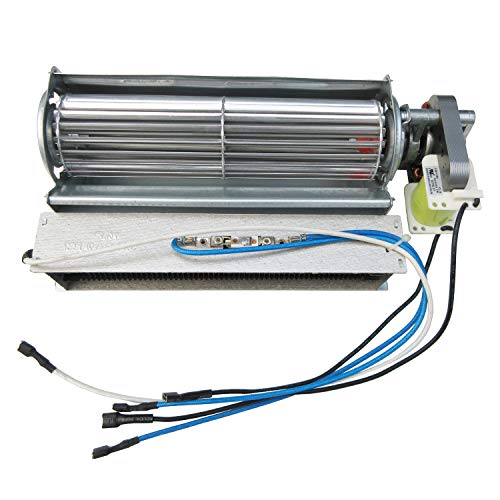
While the fan doesn't change BTU output, a higher-quality blower distributes heat more evenly and quietly. Cheaper units often have noisy fans that cycle on and off abruptly. If the fireplace is in a bedroom or home office, fan noise is a legitimate consideration. Premium models tend to use quieter, more efficient blowers.
Flame-Only Mode
Almost all electric fireplaces allow you to operate the flame effect without heat. This is perfect for warm months when you want ambiance but not warmth. It also means the unit isn't consuming 1,500 watts just to look pretty — flame-only mode typically draws less than 50 watts. This feature is standard on even entry-level models, but worth confirming before purchase.
Remote Control and Smart Features
Remote control is convenient, but smart Wi-Fi connectivity takes it further — allowing you to schedule heating, adjust temperature from your phone, and integrate with home automation systems. These features don't affect heating capacity, but they improve the overall experience and can help you use the fireplace more efficiently. For more on this, see our guide to smart Wi-Fi fireplace controllers.
9. Common Mistakes Buyers Make (And How to Avoid Them)
After reviewing countless buyer experiences and product specs, a few recurring mistakes stand out.
- Overestimating square footage coverage: Manufacturers often list optimistic square footage ratings based on ideal conditions. Always assume the real-world coverage is 20–30% less than advertised.
- Ignoring ceiling height: A room with 12-foot ceilings has 50% more air volume than one with 8-foot ceilings. BTU requirements scale accordingly.
- Assuming all 1,500W units perform identically: While BTU output is the same, build quality, thermostat accuracy, and heat distribution vary significantly between electric fireplace types.
- Placing the fireplace in a location with poor air circulation: Heat rises and pools near the ceiling. A unit placed in a corner or behind furniture won't distribute warmth effectively.
- Neglecting the electrical circuit: A 1,500W fireplace draws about 12.5 amps. If it shares a circuit with other high-draw appliances, you may experience tripped breakers. If this happens, see our guide to electric fireplaces tripping breakers.
10. Frequently Asked Questions
Ready to Choose the Right Electric Fireplace?
Now that you understand BTU and heating capacity, you're equipped to make a confident decision. Browse our curated selection of electric fireplaces tested for real-world heating performance.
View Recommended Models ↓